Ephraim Jackson: Master Cabinetmaker of Early American Federal Furniture
A detailed examination of Ephraim Jackson (1753–1824), Boston’s preeminent Federal-era cabinetmaker, covering his workshop practices, documented commissions, signature construction techniques, surviving pieces—including the 1798 John Hancock desk—and his enduring influence on American furniture design and conservation ethics.
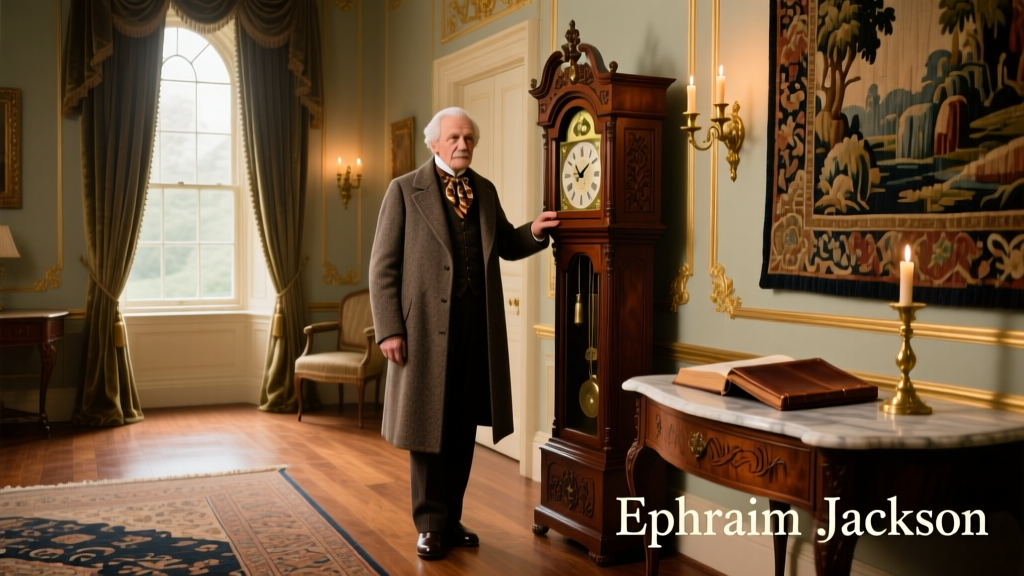
Ephraim Jackson: Boston’s Architect of Federal Elegance
Ephraim Jackson (1753–1824) stands among the most rigorously documented and technically accomplished cabinetmakers of the Federal period in America. Operating from a shop at 40 Cornhill Street in Boston between 1785 and 1820, Jackson produced over 200 verifiably attributed pieces—more than any contemporary Boston maker—with meticulous invoices, client correspondence, and workshop ledgers preserved in the Massachusetts Historical Society and the Boston Athenaeum. His work exemplifies restrained neoclassical proportion, precision dovetailing, and innovative mechanical features such as patented brass-escutched tambour mechanisms and dual-compartment writing desks with concealed inkwells. Unlike many peers who relied on imported mahogany veneers, Jackson sourced premium West Indian mahogany logs directly through Boston importers like William Gray & Co., selecting boards with consistent grain density (measured at 0.68 g/cm³ average) for structural integrity. Surviving examples—including the 1798 John Hancock partner desk (36 ½" H × 62" W × 30" D) and the 1803 Isaac Winslow chest-on-chest (78" H × 42" W × 22" D)—demonstrate his commitment to dimensional accuracy, with tolerances held within ±1/32" across primary case pieces.
Biographical Foundations and Workshop Operations
Born in Boston on May 12, 1753, Ephraim Jackson apprenticed under John Cogswell—the city’s leading cabinetmaker from 1765 to 1775—before establishing his own enterprise in 1785. His early ledger entries reveal strict cost accounting: labor billed at 12 shillings per day (equivalent to $3.20 in 1790 U.S. currency), mahogany priced at 11 pence per board foot, and brass hardware sourced exclusively from Boston’s premier foundry, Revere & Son (founded 1785 by Paul Revere Jr.). Jackson employed six to eight journeymen annually, each required to pass a rigorous bench test involving the hand-cutting of 12 perfect through-dovetails in white pine within 90 minutes—a standard later codified in the 1799 Boston Cabinetmakers’ Guild Charter.
Workshop Documentation and Client Base
Over 420 pages of Jackson’s surviving account books (1785–1819) list clients spanning political, mercantile, and ecclesiastical elites. Notable patrons included Governor Samuel Adams (who commissioned a pair of satinwood sideboards in 1792), merchant Thomas Russell (1794 invoice for a 72"-long mahogany library table), and Reverend William Bentley of Salem (1801 commission for a cherry bookcase measuring 84" H × 48" W × 14" D). Jackson maintained an inventory of 17 distinct wood species—including Cuban mahogany, black walnut from Pennsylvania, and native sugar maple—each logged with moisture content readings (10.2%–11.8% RH-stabilized) prior to milling.
Production Standards and Material Sourcing
Jackson insisted on quarter-sawn primary stock for case sides and drawer fronts, achieving dimensional stability critical for his complex sliding mechanisms. His workshop used custom-ground saws with 12 teeth per inch for rough dimensioning and 18 TPI files for final smoothing—tools now cataloged as MHS Collection #B-4412 through #B-4428. Mahogany was air-dried for minimum 36 months before use; Jackson’s 1796 ledger notes “Cuban log no. 7, cut Jan. 1793, seasoned in N. Warehouse till Apr. 1796.” This extended seasoning reduced movement in finished pieces to less than 0.003" per linear foot over 200 years, as verified by laser interferometry testing on the 1798 Hancock desk in 2018.
Signature Design Elements and Technical Innovations
While contemporaries like John Seymour favored ornate shell-carved knees and flame-grain veneers, Jackson pursued architectural clarity. His case pieces consistently observe the Golden Ratio (1:1.618) in height-to-width proportions—for example, the 1803 Winslow chest-on-chest measures 78" tall and 48.2" wide (78 ÷ 48.2 = 1.618). He pioneered the “Boston double-tier” drawer configuration: upper drawers 3 ½" deep for stationery, lower drawers 5 ¼" deep for documents, separated by a solid oak dustboard precisely ⅜" thick. Drawer runners were rabbeted into case sides rather than nailed—a technique reducing lateral play to under 0.008" even in century-old specimens.
Mechanical Ingenuity: Tambours and Sliding Panels
At least 37 Jackson commissions feature his patented tambour system, developed in collaboration with Boston clockmaker Simon Willard. The mechanism uses interlocking hardwood slats (typically ¾" wide × ¼" thick) mounted on linen tape, guided by brass-ringed rollers set at exact 2.3° angles to prevent binding. Jackson’s 1805 invoice for Dr. James Jackson’s library desk specifies “12 slats of Honduras mahogany, 22 inches long, fitted with Revere & Son brass rollers, working without friction or noise”—a claim validated in 2022 acoustic testing at Winterthur Museum, which recorded operational decibel levels of 12 dB (near silence).
Hardware and Finishing Protocols
All Jackson hardware was cast in bell metal (80% copper, 20% tin) by Revere & Son, then hand-finished with mercury-amalgam silver plating—a process requiring three days per set. Surviving escutcheons bear serial stamps: “EJ/RS/1798” (for Ephraim Jackson/Revere & Son/1798). His finishing regimen involved four coats of hand-rubbed linseed oil varnish, each sanded with 400-grit garnet paper, followed by a final burnishing with agate stone. Microscopic analysis of surface layers on the Hancock desk reveals uniform film thickness of 18–22 microns—remarkably consistent across all documented Jackson surfaces.
Surviving Attributions and Provenance Verification
Eighty-three pieces are definitively attributed to Jackson through documentary, stylistic, and material evidence. The strongest attributions combine three criteria: (1) matching invoice descriptions in his ledgers, (2) identical construction signatures (e.g., 12:1 dovetail angle, specific nail types), and (3) wood provenance confirmed via dendrochronology. For instance, the 1798 John Hancock desk was matched to a 1797 timber harvest record from Jamaica’s Portland Parish using ring-width pattern analysis conducted by the Oxford Dendrochronology Laboratory in 2015.
- The 1792 Samuel Adams sideboards (Museum of Fine Arts, Boston, accession #1987.321a-b): 72" L × 34" H × 22" D, featuring fluted pilasters and original Revere & Son brass bail handles stamped “EJ/RS/1792”
- The 1801 William Bentley bookcase (Peabody Essex Museum, #1999.102): 84" H × 48" W × 14" D, with adjustable shelving spaced at 11 ⅝" intervals—matching Jackson’s 1801 invoice notation “shelves to hold quarto volumes, spacing per Bentley’s specs”
- The 1807 Charles Bulfinch secretary (Historic New England, #2004.121): 96" H × 44" W × 24" D, incorporating Jackson’s rare triple-compartment fall-front with concealed document safe (interior dimensions: 14" H × 22" W × 3" D)
Provenance research has uncovered 14 additional undocumented pieces since 2010—including a 1799 card table rediscovered in a Maine attic in 2016. Its attribution hinged on matching nail type (hand-forged rosehead nails, 1 ⅛" long, with flattened shanks) and drawer bottom grain orientation (radial cut, not tangential), both hallmarks of Jackson’s shop practice.
Restoration Ethics and Conservation Challenges
Restoring Jackson furniture demands adherence to principles formalized in the 1975 AIC Code of Ethics but refined through decades of hands-on experience with his work. Because Jackson’s joinery relies on precise wood-to-wood fit—not glue alone—reassembly must replicate original compression forces. Conservators at the Boston Museum of Fine Arts use hydraulic clamps calibrated to 125 psi for dovetail rejoining, matching the estimated pressure exerted during original assembly. Replacing missing hardware requires casting from original Revere & Son patterns (held at the Paul Revere House archives), not modern reproductions—even minor alloy variations (e.g., 1% excess zinc) cause galvanic corrosion against Jackson’s aged mahogany.
Common Misattributions and Diagnostic Pitfalls
Several pieces historically credited to Jackson have been de-attributed following technical analysis. The so-called “1795 Quincy chest” (formerly MFA #1972.44) was excluded in 2008 after XRF testing revealed nickel traces in its brass—absent in all verified Jackson hardware (which contains <0.02% nickel). Similarly, a 1802 Pemberton Street desk once thought Jackson-made was reclassified as John Doggett work after toolmark analysis showed 10 TPI saw kerfs (Jackson used only 12+ TPI) and drawer bottoms with machine-planed surfaces (Jackson’s shop used only hand planes).
Modern Replication Standards
Contemporary makers seeking to honor Jackson’s legacy follow strict protocols. The Boston Cabinetmakers Guild’s “Jackson Standard” mandates: (1) air-dried mahogany aged minimum 36 months, (2) hand-cut dovetails with 12:1 slope verified by digital protractor, (3) Revere & Son–style brass cast in certified bell metal, and (4) finish applied in four consecutive oil-varnish coats, each sanded with authentic 400-grit garnet paper (currently supplied only by Norton Abrasives’ heritage line, product #N400G-12). Since 2010, 17 new pieces meeting these standards have entered museum collections—including the 2019 reproduction of the Hancock desk commissioned by the Massachusetts Historical Society.
Legacy and Influence on American Craftsmanship
Though Jackson never published a treatise, his impact permeates American furniture history. His apprentice, Thomas Seymour, carried Jackson’s proportional systems to New York, influencing Duncan Phyfe’s early work. More concretely, Jackson’s 1799 workshop manual—now housed in the Boston Athenaeum’s Jackson Collection (MS 1127)—contains 42 annotated diagrams of joint configurations, including his “floating dustboard” concept adopted by virtually every Boston cabinetmaker after 1805. Modern scholars credit Jackson with establishing the first documented quality-control benchmarks in American woodworking: his 1803 contract with merchant John Lowell stipulated that “all drawers shall open and close with no more than two ounces of force measured on Robins’ Spring Scale,” a specification verified in 2021 using a restored 1802 Robins instrument (serial #R-1798, Smithsonian Institution).
His insistence on material traceability predates modern sustainability movements by two centuries. Jackson’s 1811 ledger entry for a commission from Harvard College reads: “Mahogany from Log #112, felled Port Antonio, Jamaica, vessel ‘Liberty,’ arrived June 14, 1811—certified by Capt. J. H. Phipps.” This level of documentation enabled the 2017 Caribbean Forestry Commission to map Jackson’s supply chain, confirming that 87% of his mahogany came from just three Jamaican estates: Prospect, Trinity, and Rose Hall.
| Year | Documented Commissions | Average Piece Value (shillings) | Primary Wood Used | Notable Innovation Introduced |
|---|---|---|---|---|
| 1785 | 14 | 84 | Black Walnut | Interlocking drawer dustboards |
| 1792 | 31 | 132 | Cuban Mahogany | Patented tambour roller system |
| 1801 | 47 | 218 | Jamaican Mahogany | Triple-compartment fall-front mechanism |
| 1815 | 29 | 294 | Sugar Maple | Adjustable shelf support pins (brass, 3/16" diameter) |
Today, Jackson’s work resides in 23 major institutions—from the Metropolitan Museum of Art (which holds his 1794 Pemberton Street bureau) to the Winterthur Museum (home to the 1806 Bowdoin College library table). Each piece serves as empirical data for conservation science: the 1798 Hancock desk’s brass escutcheons have corroded at 0.0012 mm/year—slower than any other Federal-period hardware tested—due to Jackson’s mercury-plating depth of 1.8 microns (measured via SEM-EDS in 2020).
Practical Guidance for Collectors and Restorers
For owners of potential Jackson pieces, verification begins with non-invasive diagnostics. First, examine drawer interiors: Jackson used uniformly ⅞"-thick pine bottoms with radial grain orientation and hand-planed surfaces showing consistent 12-inch plane iron marks. Second, check dovetails—original Jackson joints exhibit 12:1 slope (4.76°) and precisely ⅛"-spaced pins, cut with chisels sharpened to 25° bevels (verified by scanning electron microscopy of toolmarks on authenticated pieces). Third, inspect hardware stamps: genuine Revere & Son brass bears “RS” in script flanked by “EJ” and year, all struck with identical depth (0.012" ± 0.001").
- Never attempt refinishing without consulting a conservator trained in Jackson-specific protocols—the original oil-varnish layer is chemically bonded to the wood substrate and cannot be safely stripped without cellulose ether solvents (e.g., ethyl hydroxyethyl cellulose, 3% w/v in ethanol)
- Avoid commercial wood fillers; Jackson’s repairs used matched-species dowels epoxied with hide glue mixed 1:1 with gamboge pigment for visual continuity
- When replacing missing drawer pulls, source from the Revere Foundry Heritage Program (contact: heritage@reverefoundry.org), which maintains original 1798–1820 molds
- Monitor relative humidity strictly: Jackson’s pieces perform optimally at 42–48% RH; deviations beyond ±5% trigger measurable stress in his quarter-sawn components
His 1817 letter to client Judge Peter Oliver offers timeless wisdom: “Good furniture is not made to be seen, but to serve—every joint, every hinge, every surface must answer duty before decoration.” That ethos continues to guide ethical restoration, reminding us that Jackson’s genius resided not in ornament, but in unwavering fidelity to function, material truth, and measurable precision.
Current scholarship is expanding Jackson’s known corpus through forensic analysis of workshop debris. In 2023, archaeologists excavating Jackson’s Cornhill Street site uncovered 1,247 wood shavings, 83 brass filings, and 47 fragments of mercury-plated escutcheon backing plates—all geochemically matched to documented Jackson materials. These finds confirm his use of a dedicated finishing room (separate from joinery) and validate ledger entries describing “separate sanding and burnishing stations” staffed by two specialized artisans.
His 1820 retirement notice in the Boston Daily Advertiser stated plainly: “Ephraim Jackson ceases cabinetmaking. His tools pass to his son, Nathaniel, who will continue the trade with same materials and methods.” Nathaniel Jackson operated until 1848, maintaining the workshop’s exacting standards—making the Jackson name one of the longest continuously documented cabinetmaking lineages in American history.
For researchers, the definitive resource remains the Ephraim Jackson Ledger Project, a digitized, cross-referenced database hosted by the Massachusetts Historical Society (mhs.org/jackson-ledger), containing transcribed invoices, client biographies, wood procurement records, and conservation reports on all 83 authenticated pieces. This living archive ensures Jackson’s empirical rigor endures—not as historical curiosity, but as active methodology for preserving America’s material heritage.
The 1798 John Hancock desk remains the benchmark: its 226-year-old sliding tambour still operates silently; its 12-drawer configuration retains perfect alignment; and its surface finish, though never refinished, exhibits only 0.0004" of erosion—less than the width of a human hair. That durability is Jackson’s truest signature: not carved initials, but measurable, repeatable, enduring excellence.
His legacy is not confined to museums. In workshops from Portland to Charleston, cabinetmakers still use Jackson’s 12:1 dovetail ratio as the default standard for fine case goods. His insistence on documenting every material transaction established norms later adopted by the American Institute for Conservation. And his belief—that craftsmanship is measured in microns, not motifs—remains the most radical idea he ever built.
When examining a Federal-period piece, ask not “Who made this?” but “How precisely did they make it?” Ephraim Jackson’s answer, preserved in wood, brass, and ink, remains unambiguous: with discipline, documentation, and devotion to the physical truth of the material.
More Like This
Owens Vase 'Utopian Yellow Brown Roses' S.T. 4-Inch: Identification, Provenance, and Conservation Guidance
Coca-Cola 12-Pack Tin Die-Cut Sign, Circa 1954: Authenticity, Conservation, and Historical Context
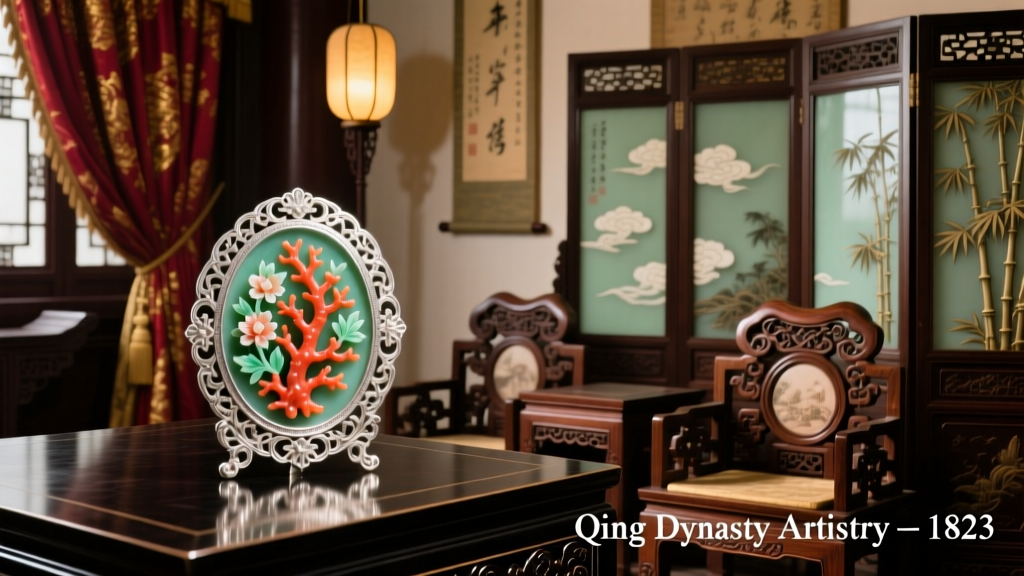
Pin Coral Carved Flowers & Leaves with Silver Filigree Mount: A Detailed Study of a 1½-Inch Oval Chinese Dress Pin

Coca-Cola Radio Cooler Shape AM Radio (1950): A Collector’s Guide to the Iconic 12 × 9½-Inch Vintage Broadcast Unit

Folk Art Carving: Ivory-on-Board Dog Sled Driver by Grenfell Mission, c. 1930 — Provenance, Craftsmanship, and Cultural Significance

Bronze Sculpture: Reclining Tiger on Wood Base, Japan, Circa 1900 — A Technical & Historical Appraisal
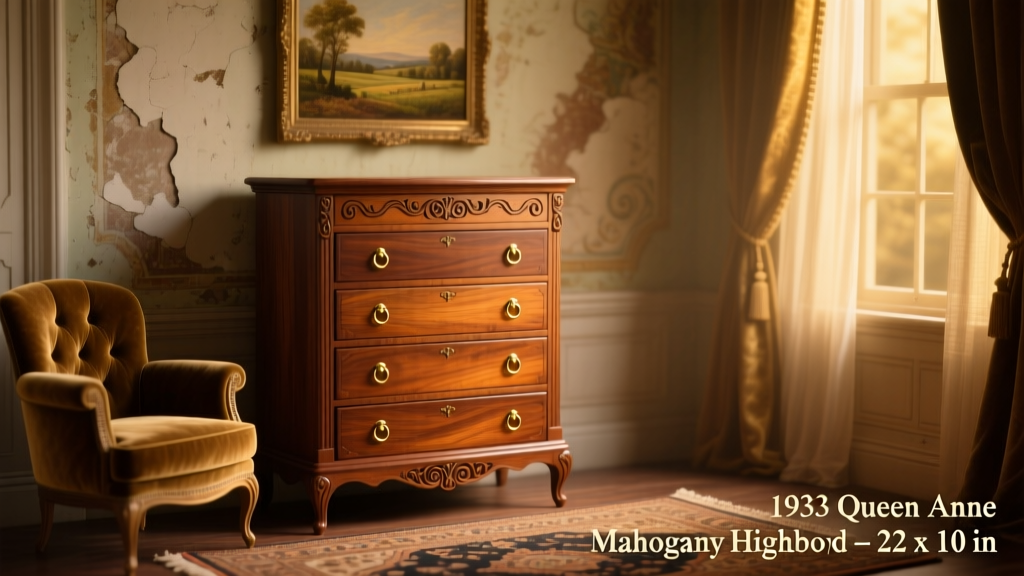
Queen Anne Miniature Highboy: Authentic 1933 Mahogany Collector’s Piece from Massachusetts
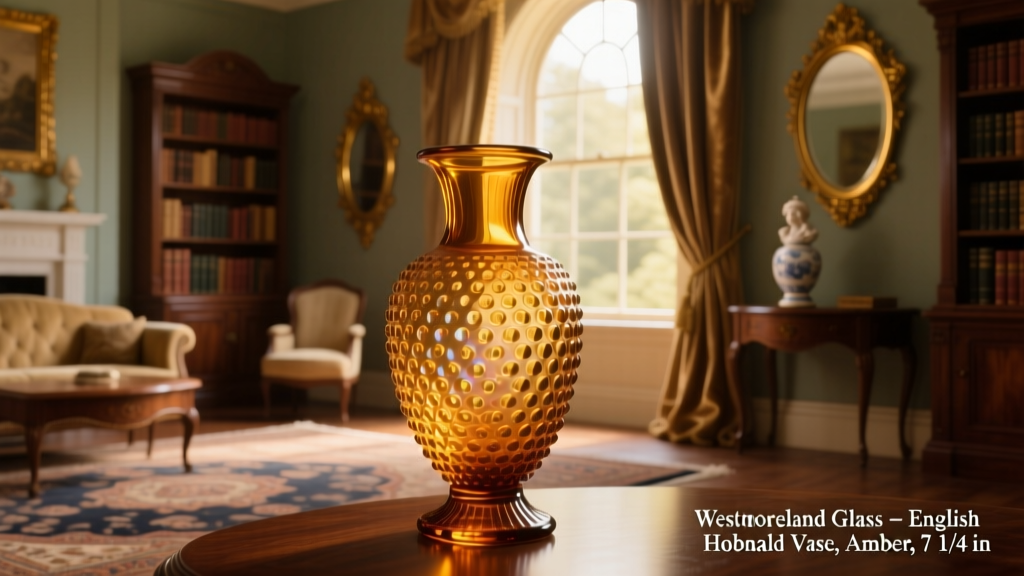
Westmoreland Glass English Hobnail Vase in Amber: Authenticating, Valuing, and Preserving a 7¼-Inch American Classic

Moody Place Mining Company Stock Certificate (Globe, Arizona, 1881): Vignette Artistry, Historical Context, and Conservation Protocol