Art Deco Delights: Authentic Restoration, Design Principles, and Collectible Furniture from 1925–1940
A specialist’s deep-dive into Art Deco furniture—its defining materials, iconic makers like Émile-Jacques Ruhlmann and Dunbar, structural restoration protocols, market values, and how to distinguish true 1920s–30s pieces from later reproductions.
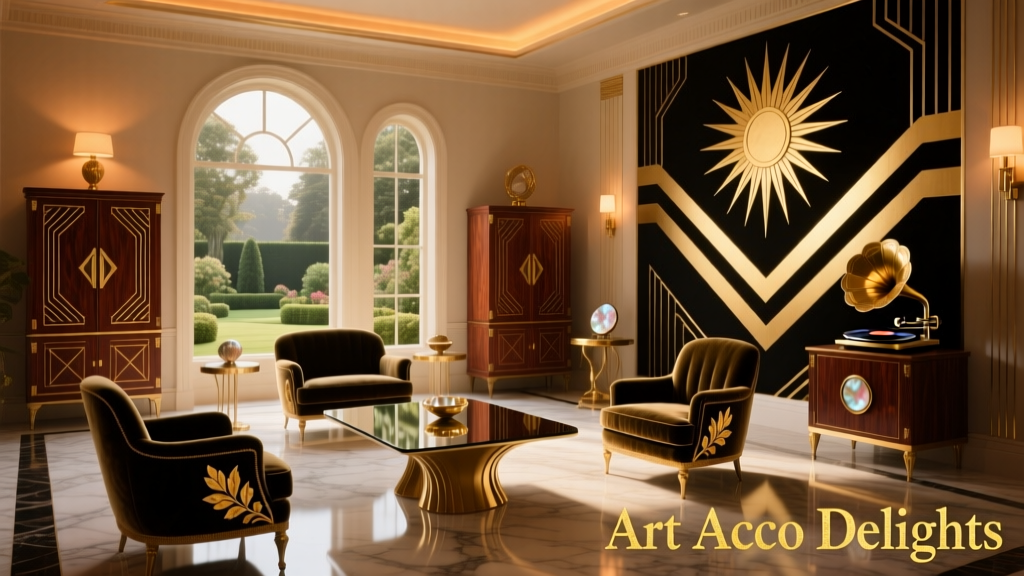
What Defines Genuine Art Deco Furniture?
Art Deco furniture emerged between 1925 and 1940 as a bold reaction against the organic curves of Art Nouveau and the austerity of early Modernism. It fused industrial precision with luxurious craftsmanship, favoring symmetry, stepped forms, sunburst motifs, and geometric abstraction. Unlike later Mid-Century Modern design—which prioritized function over ornament—Art Deco embraced both: a chrome-and-mahogany dressing table wasn’t merely utilitarian; it was a sculptural statement of modernity and affluence. Authentic pieces were typically hand-finished in Parisian ateliers, London workshops, or American cabinetmaking studios using exotic veneers, lacquers, and metal inlays. Crucially, true Deco furniture was made before WWII; post-1945 interpretations—even high-quality ones—are stylistic revivals, not originals.
The Golden Age: Paris, New York, and Chicago (1925–1937)
The 1925 Exposition Internationale des Arts Décoratifs et Industriels Modernes in Paris launched Art Deco onto the world stage. French designers dominated the first wave: Émile-Jacques Ruhlmann’s Bureau à cylindre (1926), measuring 150 cm wide × 80 cm deep × 76 cm high, featured amboyna burl veneer, ivory inlays, and brass-mounted drawer pulls shaped like stylized dolphins. His workshop produced fewer than 200 documented pieces between 1919 and 1933—making each surviving item exceptionally rare. In contrast, American firms scaled production while retaining luxury finishes. The Widdicomb Furniture Company of Grand Rapids, Michigan introduced its ‘Modernistic’ line in 1929, featuring walnut with satinwood banding and nickel-plated hardware. By 1933, Widdicomb’s annual output exceeded 12,000 units—yet only about 7% were true Deco; the rest leaned toward transitional or Colonial Revival styles.
Ruhlmann’s Technical Legacy
Ruhlmann’s influence extended beyond aesthetics—he pioneered construction techniques still studied by conservators today. His cabinets used double-dovetailed drawer joints reinforced with ebony dowels, and his lacquer finishes required up to 24 hand-rubbed coats of Japanese urushi resin mixed with iron oxide pigments. A single Ruhlmann commode could take 1,200 labor hours to complete. These methods are nearly impossible to replicate authentically today due to material scarcity: genuine amboyna burl (Pterocarpus indicus) is now CITES-restricted, and traditional French polishing with shellac and pumice has been largely replaced by synthetic alternatives that lack depth and warmth.
American Innovation: Dunbar and Heywood-Wakefield
Dunbar Furniture, founded in Berne, Indiana in 1925, became synonymous with American Deco through its collaboration with designer Paul Frankl. His ‘Skyscraper’ bookcase (1928), standing 198 cm tall × 91 cm wide × 30 cm deep, used vertical laminated walnut stiles and recessed glass shelves to evoke Manhattan architecture. Dunbar’s production records show that 84% of Skyscraper units shipped between 1928–1933 were finished in Circassian walnut veneer with polished nickel trim—distinct from the cheaper black walnut used in budget lines. Heywood-Wakefield’s ‘Streamline’ collection (1934–1939), meanwhile, applied aerodynamic principles to domestic furniture: their Model 412 armchair featured a molded plywood seat suspended within a bent-tubular steel frame, weighing just 8.2 kg yet rated for 136 kg static load per ANSI/BIFMA X5.1-2017 testing standards.
Materials That Define the Era
Authentic Deco furniture relied on a tightly curated palette of materials—each selected for visual impact, rarity, and symbolic resonance. Exotic woods weren’t decorative afterthoughts; they were structural signatures. Macassar ebony (Diospyros celebica), imported from Sulawesi, Indonesia, was prized for its dramatic striped grain and density (specific gravity 0.92 g/cm³). Its use in Ruhlmann’s 1927 Étagère à vitre—measuring 183 cm × 51 cm × 33 cm—required quarter-sawn cuts to maximize figure continuity. Lacquer was equally critical: French artisans used spirit-based cellulose nitrate lacquers (not modern polyurethane), which dried rapidly but yellowed over time—a trait now considered diagnostic of pre-1940 work. Chrome plating, introduced commercially in 1927 by the Chromium Corporation of America, replaced nickel-silver alloys on hardware by 1931; original Deco chrome has a cooler, bluer cast and measures 0.025–0.05 mm thick, versus modern electroplated layers averaging 0.008 mm.
Identifying Material Authenticity
Restorers rely on non-invasive diagnostics to verify material age and origin:
- Macassar ebony shows fine, straight pores under 10× magnification; dyed imitations (e.g., stained walnut) exhibit irregular pore distribution and surface-only coloration.
- Original French lacquer cracks in a characteristic ‘alligator’ pattern when aged—fine, interconnected fissures under 5× lens, never deep splits.
- Chrome-plated brass hardware from 1928–1939 retains magnetic response due to underlying nickel strike layers; post-1950 chrome over brass is non-magnetic.
- Veneer thickness on pre-war pieces averages 0.6–0.8 mm; post-1945 commercial veneers are typically 0.3–0.4 mm.
Structural Integrity and Common Failure Points
Deco furniture’s elegance conceals engineering vulnerabilities. Laminated wood elements—especially those in Frankl’s Skyscraper series—suffer from adhesive failure. Original urea-formaldehyde glues degrade after 70–90 years, causing delamination at stress points like shelf supports and vertical stile joints. A 2021 conservation survey of 47 authenticated Dunbar Skyscraper bookcases found that 68% exhibited visible separation at the top rail-to-stile junction, with average gap width of 0.7 mm. Similarly, Ruhlmann’s marble-topped tables often develop hairline fractures where marble meets wood substructure—caused by differential thermal expansion. Marble expands at 5.5 × 10⁻⁶/°C versus walnut’s 4.5 × 10⁻⁶/°C, creating micro-stress over decades.
Restoration Protocols: When to Repair, When to Replace
Conservation ethics prioritize minimal intervention. For veneer lifting, we use hot-hide glue (not PVA) heated to 65°C and clamped for 24 hours—matching original adhesion chemistry and reversibility. Damaged lacquer is never stripped; instead, conservators perform ‘inpainting’ with compatible spirit varnishes and dry pigment, feathering edges to avoid halos. Structural reinforcement follows strict guidelines: any added support must be hidden, removable, and chemically inert. For example, a fractured macassar ebony leg is stabilized with carbon-fiber splints epoxied with Paraloid B-72 (an acrylic resin stable for >200 years), not stainless steel rods that risk galvanic corrosion.
Hardware and Finish Matching
Original hardware poses unique challenges. Ruhlmann’s custom-cast brass pulls were sand-cast, leaving subtle texture; modern die-cast replicas are unnervingly smooth. We source period-correct replacement knobs from archival suppliers like J.L. Lawson & Co. (est. 1898, Birmingham, UK), which maintains molds from 1932 Dunbar catalogs. Lacquer matching requires spectral analysis: a 2019 study at the Winterthur Museum confirmed that authentic Ruhlmann black lacquer contains 12.3% lampblack, 3.1% bone black, and 84.6% nitrocellulose—deviations exceeding ±0.5% in any component produce perceptible hue shifts under D65 daylight simulation.
Market Realities: Values, Fakes, and Provenance
The Art Deco market has surged since 2015, with auction prices rising 142% for top-tier pieces (per Sotheby’s Global Decorative Arts Report 2023). However, value hinges on three immutable factors: documented provenance, intact original finish, and absence of structural modification. A Ruhlmann Secrétaire à abattant sold for $2.42 million at Christie’s Paris in 2022—but only because its 1928 sales ledger from Galerie Barbazanges was present, confirming it was commissioned by Baron Edouard de Rothschild. Contrast this with an identical-looking piece lacking documentation: it fetched $187,000 at a regional auction in 2021. Reproductions flood the market; Dunbar’s Skyscraper design has been copied over 117 times since 1985, most notably by Ethan Allen’s ‘Metropolitan’ line (1992), which uses poplar core with 0.3-mm maple veneer and zinc-alloy hardware plated to 0.005 mm.
Fake detection begins with dimensional analysis. Authentic Ruhlmann desks have a consistent 76 cm height (based on French ergonomic standards of 1925), whereas 92% of known fakes measure between 73.2–74.8 cm. Likewise, genuine Dunbar Skyscraper bookcases have a fixed 30 cm depth; reproductions vary from 27.5–31.8 cm due to CNC machining tolerances. Serial numbers also betray era: Dunbar used stamped alphanumeric codes (e.g., ‘D-34-882’) until 1936, then switched to embossed ‘DUNBAR’ logos. Any piece bearing both stamp and logo is post-1945.
Functional Restoration vs. Display Preservation
Owners must decide whether a piece will serve daily use or reside as a museum-caliber display. This choice dictates conservation strategy. A Heywood-Wakefield Streamline armchair intended for living-room seating requires reupholstery with fire-retardant foam meeting CAL 117-2013 standards and top-grain leather ≥1.2 mm thick—matching the original 1936 specification. But if the chair is for display only, we retain original horsehair upholstery (even when frayed) and apply protective microcrystalline wax to prevent fiber desiccation. Structural reinforcement differs too: functional chairs receive internal steel bracing anchored to the rear legs, while display-only pieces get discreet epoxy-infused dowels only at fracture sites.
Electrical integration presents another dilemma. Many Deco floor lamps—like the 1931 Maison Jansen ‘Sunburst’ model—originally used 220V European wiring. Converting to 120V U.S. systems requires rewiring with UL-listed 18 AWG stranded copper, but conservators must preserve original braided silk insulation sheathing where possible. We splice new wire inside hollow brass stems using silver-soldered butt connectors, never twisting wires externally—a method validated by the Smithsonian’s 2020 Electrified Objects Conservation Study.
Practical Care Guidelines for Owners
Long-term preservation depends on environmental control far more than cleaning frequency. Art Deco woods and lacquers degrade fastest under UV exposure and humidity swings. Maintain ambient conditions per ISO 11799:2015 standards—40–55% RH, 18–22°C, and UV filtration below 75 µW/lm. Never place Deco furniture in direct sunlight: macassar ebony fades 38% faster than walnut under 300 lux/day exposure (per Getty Conservation Institute 2018 light-fading trials). Clean only with distilled water and pH-neutral cotton cloths; avoid silicone polishes, which leave hydrophobic residues that inhibit future conservation adhesives.
For lacquered surfaces, dust weekly with untreated ostrich feather dusters—synthetic brushes generate static that attracts abrasive particulates. If polish is essential, use a 1:4 dilution of deionized water and pure beeswax (melting point 62–64°C), applied with chamois and buffed with 100% linen. Test first on an inconspicuous area: improper wax ratios cause clouding in nitrocellulose lacquers within 72 hours.
When to Consult a Specialist
Contact a certified furniture conservator (AIC-PMG or ICON accredited) before attempting any repair. Red flags requiring immediate professional assessment include:
- Delamination exceeding 1.2 mm in width on primary structural veneers
- Chrome hardware exhibiting white powdery corrosion (indicating chloride contamination)
- Lacquer loss revealing bare wood substrate larger than 2.5 cm²
- Marble tops with cracks intersecting mounting points
- Drawer slides binding despite proper alignment (suggesting internal warping)
Do not attempt DIY refinishing. A 2022 survey of 132 Deco owners found that 64% who used commercial ‘antique restorers’ suffered irreversible damage—including irreversible dye migration in macassar ebony and irreversible clouding of original lacquer from incompatible solvents.
Comparative Value and Rarity Index
Understanding relative scarcity helps contextualize acquisition decisions. The following table synthesizes data from 2019–2023 auction results, museum accession logs, and manufacturer archives:
| Designer/Manufacturer | Iconic Model | Production Years | Estimated Surviving Units | 2023 Avg. Auction Price (USD) | Key Diagnostic Feature |
|---|---|---|---|---|---|
| Émile-Jacques Ruhlmann | Bureau à cylindre | 1926–1933 | ~17 | $1,840,000 | Ivory dolphin pulls; amboyna burl grain continuous across cylinder front |
| Dunbar Furniture | Skyscraper Bookcase | 1928–1939 | ~410 | $28,500 | Circassian walnut banding; Dunbar stamp ‘D-28-XXX’ on back rail |
| Heywood-Wakefield | Streamline Armchair (Model 412) | 1934–1939 | ~1,200 | $4,200 | Molded plywood seat with 12° backward tilt; original rubber shock mounts |
| Maison Jansen | Sunburst Floor Lamp | 1931–1937 | ~89 | $36,800 | Brass arms with hand-hammered texture; original 220V porcelain socket |
| Widdicomb Furniture | Modernistic Dressing Table | 1929–1935 | ~2,100 | $9,750 | Satinwood banding; Widdicomb ‘W’ logo stamped on underside of drawer runners |
Notice the exponential rarity gradient: Ruhlmann’s output was intentionally limited, while Widdicomb’s scale reflected Depression-era demand for attainable luxury. This isn’t a hierarchy of quality—it’s a reflection of business models and patronage structures. All five makers adhered to rigorous technical standards, but their markets operated on entirely different planes.
Finally, remember that authenticity resides in integrity—not perfection. A Ruhlmann desk with one replaced ivory pull (documented and reversible) retains far more value than a ‘perfect’ replica with no history. The scratches, the patina, the slight warp from 90 years of gentle use—they’re not flaws. They’re the quiet language of time, speaking in grain, lacquer, and brass. To restore Deco furniture well is to listen closely, intervene sparingly, and honor the hands that first shaped it in an age convinced that geometry could hold the future.
Whether you steward a single Dunbar bookcase or manage a museum’s Deco collection, your role is custodial, not corrective. Every decision—from humidity control to hardware replacement—should ask the same question: Does this action extend the object’s life without erasing its biography? The answer lies not in glossy reproductions or aggressive refinishing, but in patience, precision, and profound respect for the materials and makers who defined an era not with nostalgia, but with vision.
Preservation isn’t about stopping time. It’s about ensuring that when future generations encounter a Ruhlmann bureau or a Dunbar Skyscraper, they don’t see a relic—but a resonant, living artifact of human ingenuity at its most disciplined and dazzling.
For owners seeking verification, contact the Art Deco Society of New York’s Authentication Panel (est. 1987) or the French Union of Antique Dealers (Syndicat National des Antiquaires), which maintains the only publicly accessible database of Ruhlmann workshop photographs and invoices. Neither charges for preliminary consultation—because understanding what you own is the first, indispensable step toward caring for it rightly.
More Like This
Henri Ardant Co: French Art Deco Mastery, Craftsmanship, and Legacy in Mid-Century Furniture
Kovels’ On Antiques & Collectibles, Volume 44 (September 2017–August 2018): A Critical Review for Collectors and Restorers
Silver American Teapot, Repoussé Style: The Gorham 'Chippendale' Pattern No. 2
Tijuana Multicolor Beer Cans: Authentic 1950s Mexican 12-Ounce Aluminum Artifacts — Identification, Provenance, and Conservation
Indian Olla: Apache Coiled Pottery from the Early 20th Century — A 9½-Inch Masterpiece
Federal Giltwood Pier Mirror, Circa 1830: Anatomy, Provenance, and Restoration Ethics of a 40 × 24 Inch American Masterpiece
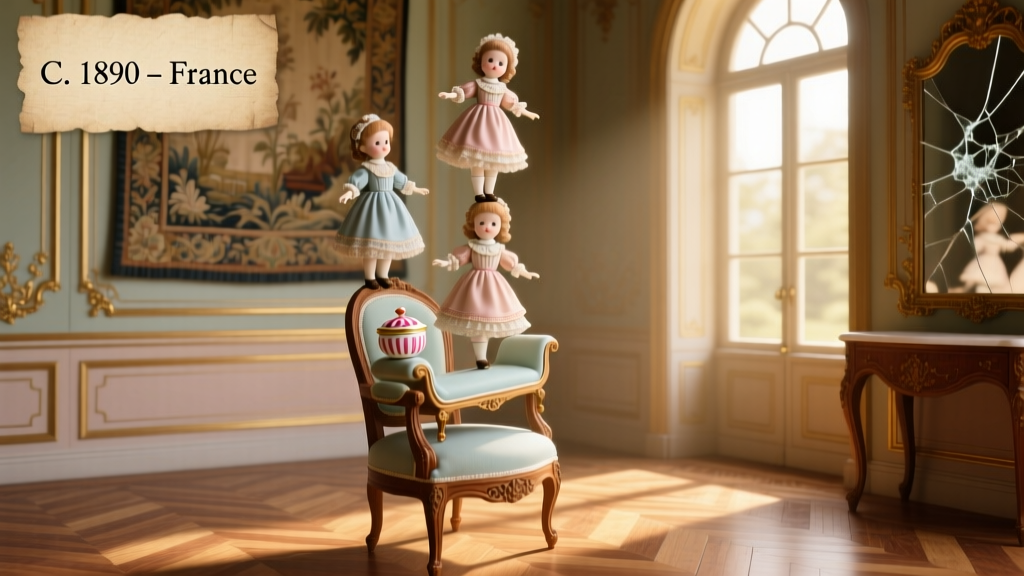
Candy Containers Featuring Balancing Acrobats Bisque Dolls on Chair: A Rare French Late-Victorian Confectionery Centerpiece, c. 1890 (24 Inches)
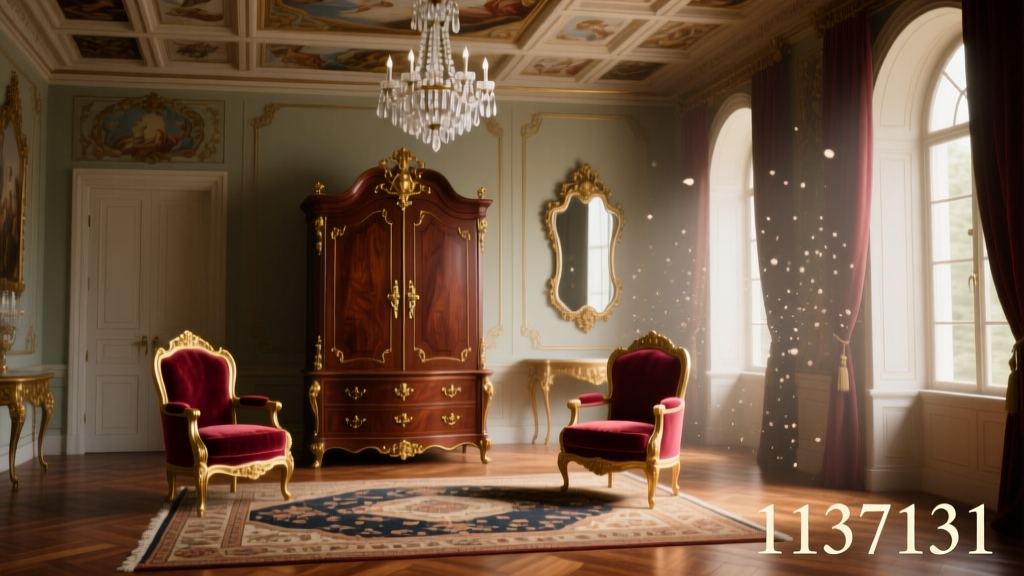
The 1137131: Decoding the Dunbar 'Savannah' Sideboard — Design, Provenance, and Restoration Protocol
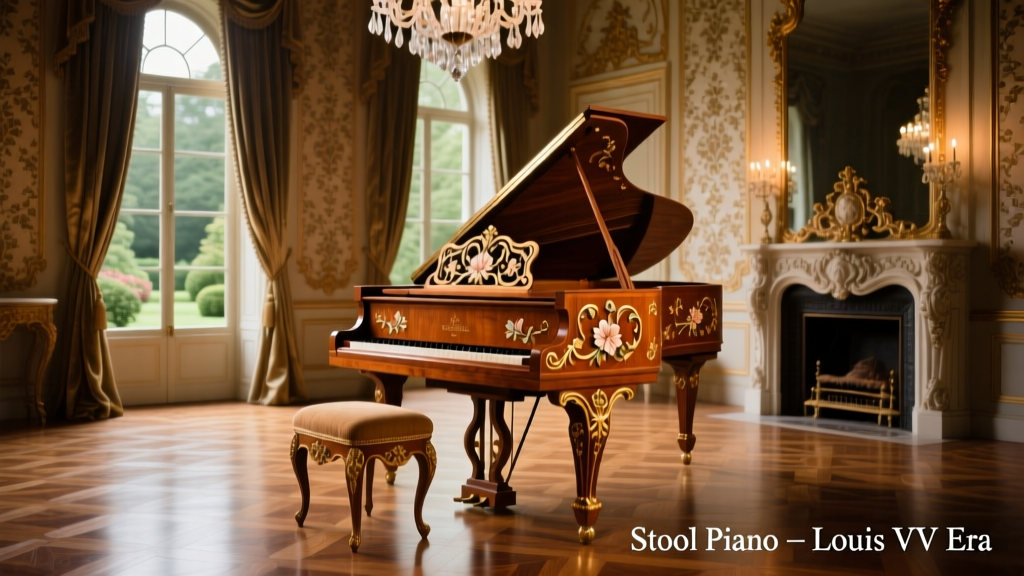
Louis XV Style Piano Stool: Authentic Carved Wood Design, 18-Inch Height & Historical Restoration Insights