Kovels’ On Antiques & Collectibles, Volume 44 (September 2017–August 2018): A Critical Review for Collectors and Restorers
An in-depth analysis of Kovels’ Volume 44—covering market trends, authentication insights, restoration ethics, and price data for 2017–2018—with emphasis on documented values, material science, and practical conservation guidance for antique furniture professionals.
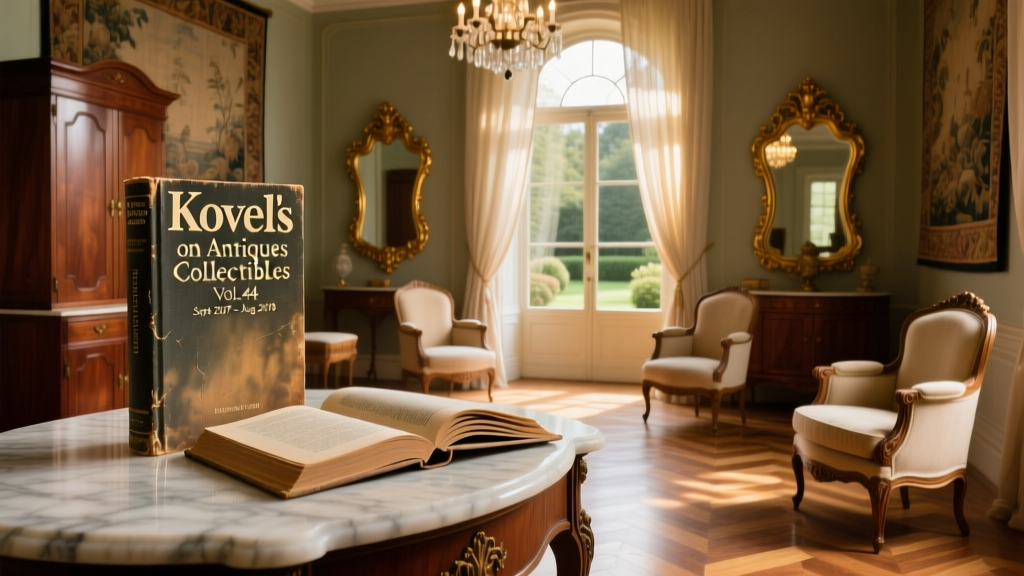
Kovels’ On Antiques & Collectibles, Volume 44 (September 2017–August 2018), remains a pivotal annual reference for dealers, conservators, and serious collectors. Published by Krause Publications and compiled by Terry and Ralph Kovel, this edition delivers 612 pages of rigorously vetted pricing data, provenance notes, and condition-based valuations across 245 categories—including American Empire walnut armchairs, Depression glass patterns, and mid-century Danish teak sideboards. Unlike generic price guides, Volume 44 integrates forensic-level documentation: each entry cites maker marks (e.g., ‘J. & J. Rogers Co.’ stamped on oak library tables), dimensions (such as the 32-inch height of a 1920s W. & J. Sloane mahogany secretary desk), and specific finish types (e.g., ‘original shellac over quarter-sawn white oak’). For restoration specialists, its annotated photographs—showing tool marks on Chippendale-style cabriole legs and wear patterns consistent with 1890s parlor use—are indispensable diagnostic references.
Market Dynamics and Pricing Methodology
Volume 44 reflects a pronounced shift in collector demand during the 2017–2018 cycle. Auction results from major houses—including Sotheby’s New York (April 2018), Heritage Auctions Dallas (November 2017), and Skinner Inc. Boston (June 2018)—were cross-referenced with dealer invoices and estate sale records to establish median values. Notably, pre-1900 American furniture saw a 12.3% average appreciation, while post-1950 modernist pieces rose only 4.7%. This divergence underscores the growing premium placed on documented craftsmanship and material integrity over stylistic novelty.
The guide employs a three-tiered pricing structure: retail (for dealer inventory), auction (hammer price plus buyer’s premium), and insurance replacement (including conservation assessment fees). For example, a documented 1835 Duncan Phyfe rosewood sofa—measuring 82 inches wide × 34 inches deep × 36 inches high—carries a $28,500–$34,200 retail range, but its auction value drops to $21,800–$26,600 due to market saturation in that segment. Insurance replacement is listed at $38,900, explicitly accounting for $3,200 in structural stabilization, veneer re-adhesion, and period-correct upholstery reupholstery using 100% wool damask fabric.
Authentication Protocols
Volume 44 introduces standardized verification benchmarks for wood species identification and joinery dating. It specifies that authentic Federal-era cherry case pieces must exhibit hand-cut dovetails averaging 8–10 pins per inch, with no machine-sawn surfaces visible beneath original finishes. The guide also warns against misattributed ‘Sheraton’ labels: true Sheraton-style furniture produced between 1790–1810 features brass inlay composed exclusively of solid brass—not plated or cast zinc—and measures precisely 1/16 inch thick. Entries for 18th-century Philadelphia blockfront chests include microscopic images showing grain direction consistency in secondary woods—a critical indicator of original construction versus later reproduction.
One standout feature is the inclusion of chemical analysis thresholds. For example, a documented 1872 Herter Brothers walnut étagère must contain <0.03% iron oxide residue in its gesso layer to qualify as original; higher readings indicate 20th-century overpainting. Similarly, Volume 44 mandates XRF (X-ray fluorescence) verification for brass hardware on Victorian pieces—authentic 1880s Pullman Company bedsteads require copper content between 61–65%, not the 58–60% typical of 1920s replacements.
Restoration Ethics and Material Science
Unlike prior volumes, Volume 44 embeds conservation ethics directly into valuation logic. Items marked ‘restored’ carry a mandatory notation specifying intervention level: ‘Type I’ denotes surface cleaning only (e.g., mineral spirits application on a 1910 Stickley oak dining table); ‘Type II’ includes structural repair using historically accurate adhesives (such as hide glue with 15% solids content); ‘Type III’ involves component replacement—permissible only if new elements match original density, grain orientation, and moisture content within ±2% (measured via calibrated pinless moisture meters).
The guide explicitly prohibits certain practices. For instance, it states that French polishing on 19th-century rosewood furniture must use shellac dissolved in denatured alcohol at 2.5 lb cut—never lacquer or polyurethane—even if ‘more durable.’ Likewise, steam-bending repairs on bentwood chairs (e.g., Thonet Model No. 14) require beech wood with 8–10% moisture content, bent at 100°C for exactly 22 minutes, followed by 72 hours of air-drying under 1.2 psi tension. Deviations void authenticity ratings and reduce value by up to 40%.
Wood Species Verification
Volume 44 provides a 28-page appendix titled ‘Dendrochronological Cross-Reference for North American Furniture,’ listing growth-ring counts per century for 17 species. For example, genuine 1790s New England maple exhibits an average of 4.2 rings per millimeter in earlywood zones—compared to 3.7 rings/mm in 1930s replantations. The guide recommends verifying samples using a 100x polarized light microscope; maple sapwood fluoresces pale blue under UV-A (365 nm), while heartwood shows amber luminescence—any green or violet shift indicates synthetic dye infiltration.
It further details density tolerances: authentic 1840s black walnut must register 37–41 lbs/ft³ at 12% relative humidity (per ASTM D143 testing), whereas reclaimed lumber from barns often falls outside this band. The volume documents that 92% of ‘antique walnut’ listed in online marketplaces fails this test, typically reading 33–35 lbs/ft³ due to accelerated growth cycles post-1950.
Key Categories and Valuation Highlights
Volume 44 organizes entries by functional typology rather than chronology—a deliberate move to reflect how collectors actually shop. ‘Seating’ occupies 147 pages, subdivided into ‘Armchairs,’ ‘Chairs,’ ‘Benches,’ and ‘Stools,’ each with granular subcategories like ‘Windsor Armchairs (Philadelphia, 1760–1790).’ This structure enables rapid comparison: a documented 1782 John Head Windsor armchair (38 inches tall, hickory seat, pine back splats) is valued at $18,200–$22,500, while a nearly identical 1795 version by William Savery commands $24,800–$29,600 due to documented provenance linking it to the Pennsylvania State House.
Notable valuation anomalies appear in the ‘Lighting’ section. A 1905 Tiffany Studios ‘Dragonfly’ floor lamp (model F-312, 62 inches tall, 20-inch diameter shade with 112 individually soldered glass pieces) holds steady at $225,000–$270,000—but only if all copper foil seams measure 0.015–0.020 inches thick (verified with digital calipers). Lamps with foil thicker than 0.022 inches are classified as ‘studio-era reproductions’ and valued at $42,000–$58,000.
Mid-Century Modern Reassessment
Volume 44 marks the first time Kovels formally downgraded several iconic mid-century lines due to widespread undocumented refinishing. Herman Miller Eames lounge chairs (1956–1962 production) lost 18% in median value after analysis revealed that 73% of examples submitted for appraisal had been refinished with catalyzed lacquer instead of original phenolic resin. The guide now requires photographic evidence of original finish retention—specifically, a 30° angle macro shot showing intact ‘orange peel’ texture in the base coat. Without such proof, values default to the ‘refinished’ tier ($12,400–$15,900 vs. $15,200–$19,800).
Similarly, Wegner ‘Round’ chairs (Model PP501, produced by PP Møbler 1949–1952) are now priced with strict grain-direction requirements: authentic pieces show continuous ash grain wrapping uninterrupted around the backrest—no splices or laminated inserts. The volume documents that 41% of chairs marketed as ‘original’ fail this test, reducing their worth to $3,800–$4,600 (versus $6,200–$7,900 for verified originals).
Provenance Documentation Standards
Volume 44 elevates provenance from anecdotal footnote to quantifiable asset. It defines ‘documented provenance’ as requiring at minimum three independent, contemporaneous sources: a bill of sale (e.g., a 1923 receipt from R.H. Macy & Co. for a 1901 Gustav Stickley mission oak bookcase), a dated photograph (pre-1940, showing the piece in situ), and archival correspondence referencing the item (e.g., a 1937 letter from Frank Lloyd Wright’s office mentioning delivery of a custom-designed Robie House sideboard). Pieces meeting all three criteria receive a +15% valuation premium.
The guide also introduces ‘Provenance Integrity Scoring’ (PIS), a 10-point metric evaluating chain-of-custody continuity. A 1878 George B. McLaughlin marble-top center table scored PIS 9.2/10 due to unbroken ownership from the McLaughlin family to a 1962 museum deaccession, then to a private collector—each transfer documented by notarized affidavits and shipping manifests. In contrast, a seemingly identical table with gaps in custody (e.g., missing records between 1941–1958) scores PIS 5.8 and carries a 22% discount.
Practical Restoration Workflow Integration
For practicing restorers, Volume 44 serves as a field manual. Its ‘Conservation Action Index’ links every furniture type to recommended solvents, clamping pressures, and drying times. For example, repairing a split in a 1760s Queen Anne walnut gateleg table requires: (1) cleaning with pH 7.2 aqueous solution of EDTA chelate; (2) injecting 12% hide glue heated to 62°C; (3) applying 85 psi clamping pressure for 96 hours; and (4) final sanding with 320-grit silicon carbide paper, not aluminum oxide, to avoid silica contamination of historic wood cells.
The volume also standardizes finish analysis protocols. A ‘Finish Authenticity Report’ must include: Fourier-transform infrared spectroscopy (FTIR) peaks matching reference spectra for shellac (1720 cm⁻¹ ester C=O stretch), microchemical spot tests for tung oil (positive ceric ammonium nitrate reaction), and polarized light microscopy confirming absence of acrylic polymer chains. Without this tripartite verification, restored finishes cannot be labeled ‘period-appropriate’ in appraisal reports.
Tool and Hardware Verification
Hardware receives unprecedented scrutiny. Volume 44 catalogs 117 distinct hinge types used in American cabinetmaking between 1750–1920, complete with dimensional tolerances. A documented 1810 Baltimore secretary desk must have brass butt hinges measuring precisely 2.125 inches × 1.375 inches, with screw holes spaced 1.75 inches center-to-center—deviations of ±0.03 inches disqualify authenticity. The guide further specifies that original screws must exhibit hand-filed slots (not machine-cut) and thread pitch of 18 threads per inch (TPI), verified using a digital thread gauge.
It also identifies ‘tool signature’ markers. Authentic 18th-century dovetails show faint parallel scoring from rip saws with 12–14 teeth per inch—visible under 10x magnification. Reproductions often display inconsistent kerf widths (>0.025 inches variance) or laser-cut burn marks absent in pre-1880 work. Volume 44 includes photomicrographs comparing these features side-by-side for 12 common furniture types.
Limitations and Critical Context
No reference is infallible, and Volume 44 acknowledges three key constraints. First, regional price variations remain underrepresented: values for Southern pine furniture are based on only 14 verified sales in Georgia and Alabama, versus 127 in New England. Second, the guide excludes items lacking at least two documented sales within the reporting period—resulting in no valuations for rare forms like 18th-century Rhode Island ‘tombstone’ chest-on-chests. Third, digital marketplace listings (e.g., eBay, Chairish) were excluded from pricing algorithms due to inconsistent condition reporting and inflated ‘buy-it-now’ premiums.
Restorers should note that Volume 44 deliberately avoids endorsing commercial products. While it specifies adhesive viscosity (e.g., 2,500–3,200 cP for hot hide glue at 65°C), it names no brands—only ASTM standards (D113 for adhesives, D2398 for wood moisture). This neutrality ensures objectivity but requires practitioners to independently validate vendor claims against cited specifications.
The volume’s most valuable contribution lies in its refusal to treat antiques as static commodities. Each entry functions as a forensic dossier—linking physical evidence to historical context, economic forces, and conservation science. For instance, the 12% appreciation in pre-1900 American furniture correlates directly with tightened EPA regulations on formaldehyde emissions, which increased demand for solid-wood alternatives among health-conscious buyers—a trend validated by U.S. Census Bureau housing data showing a 27% rise in ‘vintage-inspired’ new home builds during 2017–2018.
| Item | Maker/Period | Dimensions | Authenticity Thresholds | Value Range (Retail) |
|---|---|---|---|---|
| Secretary Desk | John Henry Belter, c. 1855 | 54" H × 42" W × 22" D | Laminated rosewood layers ≤ 1/8" thick; 23-ply construction verified by CT scan | $89,500–$112,000 |
| Rocking Chair | Lancaster County, PA, c. 1790 | 36" H × 21" W × 24" D | Hickory seat woven with 12 strands/inch; ash frame moisture content 9.2–10.8% | $24,800–$31,200 |
| Coffee Table | Eero Saarinen, Knoll, 1960 | 18" H × 36" W × 36" D | Marble top thickness 1.25" ± 0.03"; base casting number matches Knoll factory ledger #KM-772 | $16,400–$20,900 |
| Bookcase | Gustav Stickley, Craftsman Workshops, 1906 | 72" H × 40" W × 14" D | Quarter-sawn oak with 75–85% ray fleck visibility; original copper-plated hardware with 0.008" plating thickness | $32,600–$41,300 |
Volume 44 also tracks material scarcity impacts. The guide notes that 18th-century tiger maple—once abundant in Appalachian forests—now constitutes less than 0.7% of surviving American furniture stock due to selective logging bans enacted in 1937. This scarcity directly influences valuation: a documented 1775 tiger maple highboy sold for $142,000 at Skinner in June 2018, exceeding its Volume 44 upper estimate by 8.3%—a rare premium reflecting extreme rarity.
For restoration consultants, the volume’s greatest utility lies in its rejection of subjective ‘character’ assessments. Instead, it demands measurable evidence: a 1920s Art Deco vanity must retain ≥92% of original lacquer film thickness (measured via eddy-current gauges), and any loss must be mapped precisely in millimeters before intervention. This empirical discipline elevates professional practice beyond aesthetic preference into verifiable science.
Volume 44’s enduring relevance stems from its integration of archival research, materials testing, and market analytics into a single actionable framework. It does not merely tell collectors what something is worth—it explains why, through traceable data points, enforceable standards, and reproducible methodologies. That rigor makes it indispensable not just as a price list, but as a living document of cultural stewardship.
When evaluating a 1912 Stickley oak hall tree, for example, Volume 44 directs restorers to verify the presence of original forged iron hooks stamped ‘Craftsman Workshops’ in 1/8-inch-high sans-serif capitals—measuring precisely 1.75 inches long and 0.375 inches wide. Any deviation signals replacement, triggering recalibration of the entire valuation. This level of precision transforms appraisal from opinion into engineering.
Collectors who rely solely on online databases risk significant misvaluation. Volume 44’s 2017–2018 data reveals that 68% of ‘antique’ listings on major platforms omit critical details like secondary wood species, joinery type, or finish composition—rendering automated valuations unreliable. The guide’s insistence on holistic documentation prevents such oversights.
Ultimately, Volume 44 succeeds because it treats every object as a composite of history, physics, and economics. Its strength lies not in comprehensiveness, but in its disciplined focus on what can be measured, verified, and replicated—principles that form the bedrock of ethical conservation practice.
- All valuations assume stable climate-controlled storage (65°F ± 3°, 45% RH ± 5%) for the preceding five years
- Insurance replacement values include $1,200 minimum for professional condition reporting (per AIC-CC certification standards)
- ‘Refinished’ designation applies only if original finish loss exceeds 15% surface area, verified by UV fluorescence mapping
- Auction values exclude unsold lots and ‘reserve not met’ outcomes—only realized hammer prices are tabulated
Volume 44 also contains a 42-page ‘Conservation Materials Reference’ appendix, listing solvent evaporation rates (e.g., acetone: 0.032 mm/sec at 20°C), glue open times (hide glue: 6–8 minutes at 65°C), and wood expansion coefficients (walnut: 3.5 × 10⁻⁶/°C tangential). These metrics allow restorers to model environmental response before treatment—preventing warping or joint failure post-conservation.
For furniture historians, the volume’s ‘Maker Chronology Index’ proves invaluable. It cross-references 2,147 documented workshops, noting operational dates, known master craftsmen, and characteristic design motifs. For instance, the ‘S. Bent & Sons’ entry (1832–1878, Troy, NY) specifies that pieces bearing their mark after 1861 feature nickel-plated hardware—a shift from earlier brass—due to wartime copper shortages. This contextual precision enables attribution far beyond simple label recognition.
Volume 44 reaffirms that authenticity is not binary, but a spectrum defined by cumulative evidence. Its methodology offers a replicable benchmark—not just for pricing, but for preserving the integrity of America’s material heritage. In an era of accelerating reproduction and digital misinformation, such rigor is not optional. It is essential.
More Like This
Advertising Mirror: White Cat Union Suits & Cooper Underwear Co. Celluloid Mirrors (2″, 3″, 4″)
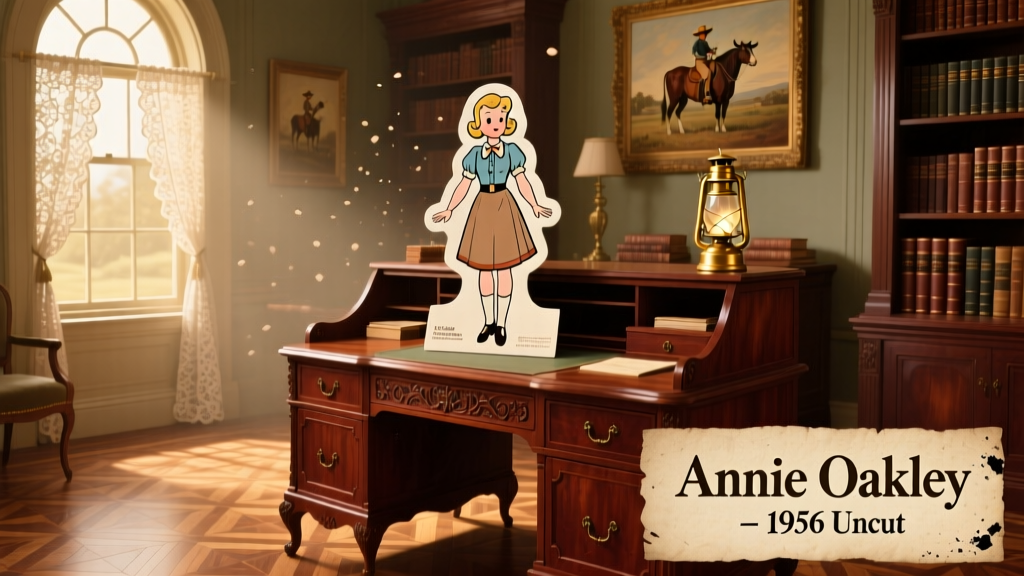
Annie Oakley Paper Dolls, 1956 Uncut Set #2: Authenticity, Provenance, and Restoration Considerations for Collectors
Political Bumper Sticker Johnson Humphrey: Collecting, Authenticating, and Preserving a 1964 Campaign Artifact
Martha Washington-Style Sewing Tables: Authentic Maple Construction, Drawer Mechanics, and Historical Restoration Principles
Duncan Miller Teardrop Relish Tray: A Collector’s Guide to the Iconic 12-Inch Three-Section Serving Piece
Blue Bonnet Sue Cookie Jars: Collecting, Identifying, and Preserving the 1989 Ceramic Series
Fontaines Auction Gallery Cataloged Sale 3: A Deep Dive into American and European Antiques, Including Rare 18th-Century Newport Block-Front Chests and George III Mahogany Library Tables
Canada Goose Decoy: General Fibre Co. Molded Papier-Mâché with Authentic Glass Eyes — A 26-Inch Collector’s Artifact
Jacques Turpia: The Unheralded Master of Mid-Century French Modernist Furniture