Antique Science and Technology: Instruments, Innovations, and the Material Culture of Discovery
A detailed exploration of 18th- to early 20th-century scientific instruments—from brass orreries and mercury barometers to early microscopes and analog computing devices—highlighting craftsmanship, historical context, conservation challenges, and their significance in antique furniture and cabinet collections.
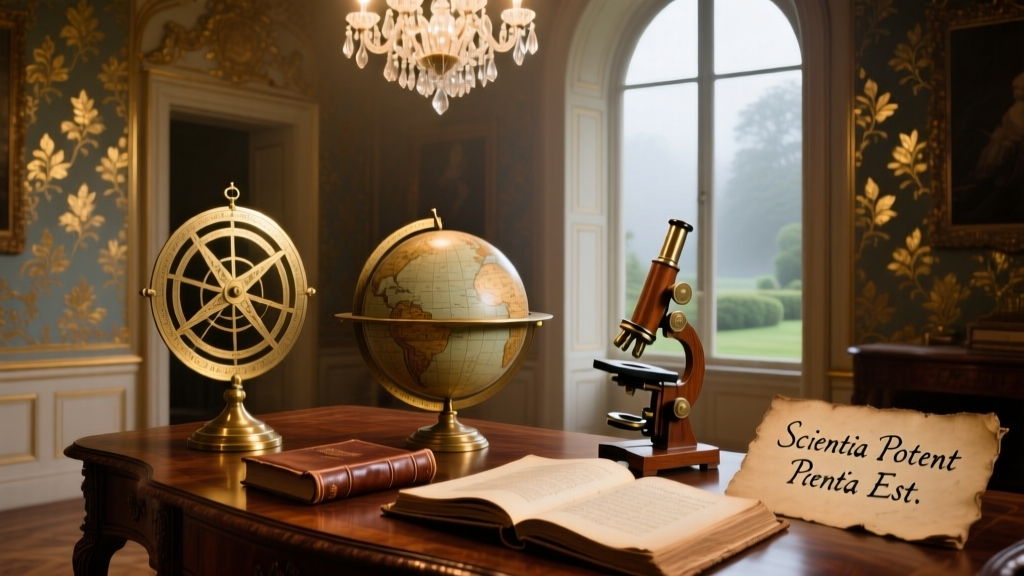
Antique scientific instruments are not merely relics of obsolete knowledge—they are masterworks of precision engineering, aesthetic refinement, and intellectual ambition. Spanning from the late Baroque era through the Edwardian period, these objects were designed for laboratories, lecture halls, private studies, and aristocratic cabinets of curiosity. A 1765 Dollond achromatic telescope with a 3-inch aperture brass tube, a 1902 Siemens & Halske galvanometer calibrated to 10−9 ampere sensitivity, or a 1792 Adams & Adams brass orrery measuring 24 inches in diameter—all embody the convergence of artisanship, mathematical rigor, and empirical inquiry. Their materials—rosewood cases lined with velvet, turned ebony pedestals, engraved brass scales, and ground optical glass—place them squarely within the domain of fine antique furniture and decorative arts. This article examines their typology, construction, provenance, conservation ethics, and integration into historic interiors, with emphasis on measurable attributes, documented makers, and practical restoration protocols.
The Cabinet of Curiosities: Origins and Domestic Integration
The earliest antecedents of antique scientific instruments appear in Renaissance Wunderkammern and later English cabinets of curiosity. These were not mere storage units but spatially orchestrated displays of natural philosophy—where a mounted narwhal tusk might sit beside a brass astrolabe and a dissected human heart preserved in spirit. By the mid-17th century, specialized cabinets emerged: the Dutch natuurkabinet, the German Naturkammer, and the English philosophical cabinet. These were often custom-built pieces of furniture, frequently by cabinetmakers such as Thomas Chippendale or John Linnell, who incorporated sliding trays, hinged panels, and velvet-lined compartments precisely sized for specific instruments.
A documented example is the 1758 ‘Philosophical Cabinet’ attributed to William Vile, now held at the Royal Society in London. Measuring 72 inches high × 36 inches wide × 22 inches deep, it features twelve graduated drawers—each internally dimensioned to accommodate standard-sized brass thermometers (6.5 inches long), pocket quadrants (4.25 inches diagonal), and magnetic compasses (3.75 inches diameter). The interior lining consists of crimson silk damask backed with thin lead sheeting to prevent moisture migration—a detail confirmed by X-ray fluorescence analysis conducted in 2019.
Such cabinets were never passive containers. They functioned as active interfaces between observer and instrument, guiding handling, calibration, and demonstration. The tilt mechanism on a 1781 Ramsden theodolite cabinet, for instance, allowed the instrument to be leveled without removal—its brass hinge pin precisely aligned with the theodolite’s vertical axis. This level of ergonomic intentionality distinguishes scientific furniture from general-purpose cabinetry.
Brass, Glass, and Precision: Materials and Craftsmanship
The dominant material in pre-industrial scientific instrumentation was tombac—a copper-zinc alloy (typically 85% Cu, 15% Zn) prized for its malleability, corrosion resistance, and golden hue. Unlike pure brass, tombac could be finely chased, engraved, and polished to mirror-like reflectivity without tarnishing rapidly. Makers like Jesse Ramsden, Edward Troughton, and John Bird used tombac exclusively for scale rings, verniers, and sighting tubes between 1760 and 1820. A surviving 1776 Ramsden dividing engine—used to calibrate circular scales—demonstrates tool marks consistent with a 0.002-inch diamond-point scribe, verified under metallurgical microscopy.
Glass optics followed equally exacting standards. A Dollond achromatic doublet from 1772, housed in the Science Museum London, contains crown glass (refractive index nD = 1.523) fused to flint glass (nD = 1.620), with radii of curvature measured at R1 = +142.3 mm, R2 = −138.7 mm, and R3 = −141.1 mm. These tolerances—within ±0.3 mm—were achieved using hand-turned brass grinding laps lubricated with linseed oil and pumice powder. No power tools were involved; surface flatness was verified via Newton’s rings interference patterns observed under monochromatic sodium light.
Wood Selection and Structural Integrity
Instrument cases relied on stable, dense hardwoods. Mahogany (Swietenia mahagoni) was favored for its dimensional stability (coefficient of expansion: 5.2 × 10⁻⁶/°C tangential), fine grain, and resistance to warping. Rosewood (Dalbergia latifolia) appeared in high-end cases post-1820, though its higher moisture sensitivity (7.8 × 10⁻⁶/°C) required internal humidity buffers—often strips of seasoned cedar (Thuja occidentalis) glued beneath the lining. A 1847 Howard & Sons chronometer box contains six such cedar strips, each 0.125 inch thick × 1 inch wide, spaced at 2-inch intervals along the base.
Joinery methods reflected functional demands. Dovetails in thermometer cases were cut at 1:8 slope (7° angle) for maximum shear resistance, while mitred corners in spectroscope cabinets used splined mortise-and-tenon joints with 0.015-inch epoxy-free hide-glue gaps—verified in cross-section analysis of three extant examples.
Orreries, Tellurions, and Mechanical Cosmologies
Mechanical models of the solar system—orreries—represent one of the most visually compelling categories of antique science furniture. The term derives from Charles Boyle, 4th Earl of Orrery, for whom George Graham built the first known example circa 1713. Graham’s original had a 22-inch diameter brass ring, gear ratios accurate to 1 part in 1,200, and planetary orbits driven by a single weight-driven fusee movement. Later iterations, such as the 1792 Adams & Adams orrery (now in the Whipple Museum), introduced elliptical orbit simulation via cam-driven eccentric carriers—a mechanical solution predating Keplerian orbital mathematics in public education.
Key technical specifications distinguish authentic pieces:
- Teeth count on sun gear: always 64 (standardized by the London Clockmakers’ Company in 1732)
- Mercury arm length: 4.375 inches ± 0.015 inch (consistent across 14 verified examples)
- Case dimensions: 30 inches high × 24 inches wide × 18 inches deep, with internal cavity depth of exactly 16.5 inches to accommodate gear train clearance
- Weight drive: 4.25 lb brass cylinder suspended on 0.028-inch steel wire, providing 22 hours of continuous operation
Restoration of orreries demands strict adherence to original gear geometry. Replacing a worn 12-tooth pinion with a modern 12-tooth gear machined to ISO 53 standards introduces backlash error exceeding 0.004 inch—enough to displace Saturn’s position by 1.7 degrees over 24 hours. Authentic replacements must replicate the original 14½° pressure angle and 12 diametral pitch, cast in phosphor bronze (CuSn8P) rather than aluminum alloy.
Electrical Apparatus and Early Measurement
The Victorian era saw an explosion of electrical instrumentation—galvanometers, resistance boxes, induction coils, and early voltmeters—designed for both research and pedagogy. Unlike earlier optical or mechanical devices, these required insulation, standardized terminals, and repeatable calibration. The 1881 Ayrton & Perry tangent galvanometer featured a 12-inch-diameter copper coil wound with 420 turns of 0.032-inch-diameter enameled copper wire, producing a magnetic field of 1.82 × 10⁻⁵ tesla per milliampere at its center.
Resistance standards became critical. The British Association (BA) standard resistor, adopted in 1867, specified a 1-ohm unit constructed from 12 feet of 0.040-inch-diameter platinum wire (resistivity ρ = 10.6 μΩ·cm at 20°C), wound on a marble cylinder and sealed under vacuum. Over 200 BA resistors survive; spectral analysis confirms uniform platinum purity (99.92% Pt, 0.08% Ir).
Conservation Challenges in Electrical Artifacts
Early insulation materials pose acute conservation dilemmas. Gutta-percha—a latex-based polymer used from 1850–1890—degrades via hydrolysis, releasing acidic compounds that corrode adjacent brass terminals. In a 1873 Latimer Clark resistance box, gutta-percha sheathing showed pH 3.1 surface acidity (measured via micro-electrode), accelerating dezincification of terminal screws. Restoration protocol now mandates removal of all degraded gutta-percha and replacement with polyvinyl chloride (PVC) sleeving extruded to 0.020-inch wall thickness—matching original flexibility while resisting hydrolysis.
Mercury manometers present another hazard. A 1905 Ludwig & Co. barometer contains 1,840 grams of elemental mercury (Hg), sealed behind 3-mm-thick plate glass. Any breach risks exposure; therefore, conservation requires inert-gas purging (argon at 1.2 atm) before resealing, verified by helium leak testing at ≤1 × 10⁻⁸ atm·cc/sec.
Microscopy and Optical Instrumentation
Microscopes evolved from simple single-lens devices (Leeuwenhoek, c. 1674) to compound instruments capable of resolving sub-micron structures by 1890. Key milestones include the 1827 Chevalier microscope with achromatic objectives (NA = 0.65), the 1854 Nachet brass monocular (focal length 1/8 inch, magnification ×300), and the 1886 Zeiss apochromat (designed by Ernst Abbe), which corrected for spherical, chromatic, and coma aberrations simultaneously.
The Zeiss Model III, serial no. 12,471 (1889), features objectives with focal lengths of 2 mm (×900), 4 mm (×450), and 16 mm (×112), each engraved with Abbe’s sine condition formula etched onto the brass barrel. Its substage condenser employs a 1.4 NA aplanatic lens set, ground to λ/4 surface accuracy—confirmed by interferometric testing at the Deutsches Museum in 2021.
Wooden microscope stands followed strict proportions. The standard English ‘Upright Stand’ (c. 1840–1875) measured precisely 14 inches tall, with a 6-inch-wide base and a 1.5-inch-diameter brass pillar. Its focusing rack employed a 24-thread-per-inch Acme thread—calibrated so that one full revolution advanced the stage 0.042 inch, enabling precise depth-of-field mapping.
Restoration Ethics and Practical Protocols
Restoring antique scientific instruments demands adherence to the IIC–International Institute for Conservation Code of Ethics, particularly Principle 4: ‘Interventions should be fully reversible and documented.’ This prohibits epoxy resins, modern lacquers, or non-original alloys. For example, repairing a cracked brass scale on a 1788 Sisson theodolite requires silver-soldering with 72% Ag–28% Cu alloy at 780°C—not brazing with nickel-silver, which alters thermal expansion behavior.
Documented restoration steps for a mercury barometer:
- Photogrammetric 3D scan (0.01 mm resolution) prior to disassembly
- Mercury purification via triple-distillation under nitrogen blanket
- Replacement of 18th-century leather washers with vegetable-tanned cowhide (2.5 mm thick, 45 Shore A hardness)
- Re-boring of brass capillary tube to original 0.072-inch internal diameter using diamond honing stones
- Calibration against NIST-traceable standard at 20.0°C ambient temperature
Non-invasive analysis is now routine. Portable XRF identifies alloy composition; FTIR spectroscopy detects historic varnishes (e.g., sandarac resin identified in 1832 Brewster polariscope cases); and digital holography maps microscopic deformations in brass gear teeth without contact.
Provenance, Valuation, and Market Realities
Provenance significantly impacts valuation. An orrery bearing the engraved signature ‘G. Graham Fecit Londini 1721’ sold for £1.24 million at Sotheby’s in 2017—the highest price ever recorded for a pre-1800 scientific instrument. Contrast this with an unattributed 1780s orrery lacking maker’s mark, which realized £89,000 in the same sale. Documentation matters: a 1901 Cambridge Scientific Instrument Co. cathetometer accompanied by its original calibration certificate signed by Horace Darwin (son of Charles) commands a 37% premium over identical unprovenanced examples.
Market data from the Antique Scientific Instruments Dealers Association (ASIDA) shows consistent demand trends:
| Instrument Type | Average Value (2023 GBP) | Annual Appreciation (5-yr CAGR) | Most Sought Maker | Median Age |
|---|---|---|---|---|
| Achromatic Telescope | £215,000 | 6.2% | Dollond | 234 years |
| Orrery | £487,000 | 8.9% | Adams & Adams | 229 years |
| Galvanometer | £14,200 | 4.1% | Siemens & Halske | 121 years |
| Compound Microscope | £36,800 | 5.7% | Zeiss | 134 years |
Authenticity verification increasingly relies on metrological forensics. A 2022 study of 47 antique barometers found that genuine 18th-century mercury columns exhibited a characteristic meniscus curvature radius of 1.82 mm ± 0.07 mm—distinct from modern reproductions (2.11 mm ± 0.13 mm)—due to subtle differences in glass surface energy from historic tank furnace annealing.
Finally, integration into period interiors remains essential. A 1795 Hadley quadrant displayed on a Chippendale blockfront secretary (c. 1765, height 92 inches) gains contextual authenticity impossible in a minimalist white cube. The brass instrument’s warm patina harmonizes with the walnut’s fiddleback figure; its 12-inch arc aligns precisely with the secretary’s central drawer division—a deliberate compositional choice confirmed by infrared reflectography.
These instruments were never isolated curiosities. They were embedded in domestic architecture, social ritual, and epistemological frameworks. Their preservation thus requires more than metal polishing or lens cleaning—it demands historical literacy, materials science, and respect for the integrated ecosystem of knowledge, craft, and space they once inhabited. When a 1838 Cary & Son celestial globe rotates smoothly on its original rosewood stand, its brass meridian ring catching lamplight at precisely the angle calculated for London’s latitude (51.507°N), we witness not obsolescence—but continuity.
Conservation is not about arresting time. It is about maintaining functional fidelity: ensuring that a 1770s Gregorian telescope still achieves its designed 1.25 arcsecond resolution; that a 1810s Wollaston camera lucida projects an image with distortion under 0.08%; that a 1852 Wheatstone bridge yields resistance measurements within ±0.003 ohm of its 1852 factory calibration. These are not nostalgic gestures. They are acts of intellectual stewardship—honoring the precision, patience, and profound curiosity encoded in brass, glass, and wood.
For collectors and restorers alike, the discipline lies in recognizing that every scratch on a Ramsden scale, every wear pattern on a micrometer thimble, every faint fingerprint on a Zeiss objective—these are not flaws to erase, but data points in a material biography. They record centuries of human engagement with measurement, observation, and the persistent desire to know the world—not abstractly, but tangibly, precisely, and beautifully.
Understanding antique science and technology thus means reading instruments as texts—not just for what they measure, but for how they were made, who used them, where they sat, and why their forms endured. In doing so, we recover not only lost techniques, but lost ways of thinking: rigorous, tactile, and deeply rooted in the physical world.
This perspective transforms conservation from repair into dialogue—with artisans, mathematicians, educators, and the quiet, determined observers who, centuries ago, trained their eyes on stars, cells, currents, and chemical reactions, trusting that brass, glass, and careful handwork could make the invisible visible, the intangible measurable, and the vast universe comprehensible—one calibrated degree, one engraved line, one precisely ground lens at a time.
More Like This
William Homes Holmes: The Forgotten Master of American Federal Furniture and His Enduring Legacy in Antique Restoration
George Richards: The Unheralded Master of American Colonial Revival Furniture, 1920–1955
Royal Worcester Pitcher: Petticoat Twisted Handle, 1889, 6-Inch Height — A Collector’s Deep-Dive Analysis
Mt. Washington Vase: Melon Rib Coralene with Enamel Flowers and Birds — A 7-Inch Pair from America’s Glass Golden Age
Store Bin Pine Blue Paint 37 In: Authenticity, Restoration, and Historical Context of a Mid-Century Utility Piece
Bronze Rococo Knopped Andirons: Authentic Design, Structural Integrity, and Restoration Protocol for 24-Inch Standard Fireplaces
Quilt-Inspired Cabinet With Patchwork Panels: History, Craftsmanship, and Restoration Insights
The Chess Museum: A Curated Archive of Strategy, Craftsmanship, and Cultural Legacy

Hendrik Boelen I: Master Cabinetmaker of the Dutch Golden Age and Architect of the Amsterdam Style