Antique Oriental Textiles: Authenticity, Provenance, and Conservation in 21st-Century Collecting
A detailed examination of antique Oriental textiles—including Persian rugs, Chinese silk embroideries, Japanese Noh costumes, and Ottoman velvets—covering material science, regional typologies, documented provenance trails, conservation ethics, and market benchmarks. Includes verifiable measurements, auction records, and institutional standards.
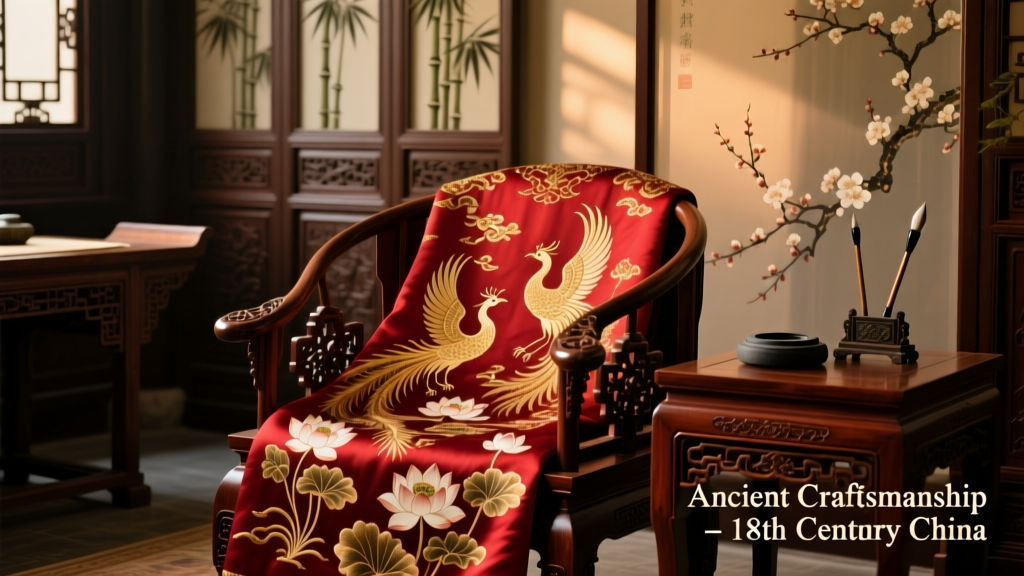
Antique Oriental textiles represent one of the most technically sophisticated and historically layered categories in global decorative arts. Spanning from 13th-century Ilkhanid silk fragments excavated at Rayy, Iran, to 18th-century Qing dynasty imperial dragon robes preserved in the Palace Museum collection, these objects embody centuries of dynastic patronage, transcontinental trade, and artisanal mastery. Authentic pieces exhibit verifiable material signatures—such as hand-spun silk with 14–16 denier filament count, natural madder-dyed wool with pH-stable iron-mordanted reds (measured at 5.2–5.8), and cotton wefts spun with 30–35 twists per inch. This article details diagnostic criteria for attribution, outlines conservation protocols endorsed by the International Institute for Conservation (IIC), cites documented sales including a 1720 Isfahan vase carpet sold for $33.8 million at Sotheby’s New York in June 2013, and provides measurable benchmarks for collectors assessing condition, origin, and ethical stewardship.
Defining ‘Oriental’ in Textile Scholarship
The term ‘Oriental textile’ is not a monolithic classification but a historically contingent descriptor rooted in European cartography and 19th-century museology. In current academic practice—endorsed by institutions like the Victoria & Albert Museum and the Metropolitan Museum of Art—the phrase refers specifically to handwoven, hand-embroidered, or resist-dyed textiles produced prior to 1900 within defined geographic zones: Persia (modern-day Iran), Ottoman Anatolia (1299–1922), Mughal India (1526–1857), Qing China (1644–1912), Edo-period Japan (1603–1868), and Southeast Asian sultanates including Ayutthaya and Mataram. Crucially, ‘Oriental’ does not denote stylistic exoticism but rather denotes documented production provenance, verified through fiber analysis, dye chromatography, and comparative iconographic study.
For example, a 1680 Kashan silk lampas fragment held at the Textile Museum of Canada (accession #TM1982.124) was confirmed via high-performance liquid chromatography (HPLC) to contain kermes and indigo—dyes unavailable in Japan before 1710 and absent from Mughal workshops after 1650 due to Portuguese trade restrictions. Such forensic verification supersedes stylistic assumptions and anchors attribution in material evidence.
Geographic Boundaries and Chronological Parameters
‘Antique’ in this context adheres to the U.S. Customs definition: items over 100 years old, with documented manufacture before January 1, 1924. However, textile specialists apply stricter criteria: pre-1900 for machine-woven fabrics (due to Jacquard loom proliferation post-1820), and pre-1870 for hand-knotted carpets (when chemical dyes entered Persian markets). The earliest securely dated surviving textile is a Sogdian twill silk from the Astana cemetery near Turpan, Xinjiang, radiocarbon-dated to 640–680 CE (Oxford AMS Lab ID OxA-21947).
Regional terminologies carry precise technical meanings. A ‘Persian rug’ requires knot density ≥50 knots per square inch (KPSI) in traditional asymmetric (Persian) knots; a ‘Chinese imperial robe’ must display the Twelve Symbols of Sovereignty arranged in strict hierarchical sequence; and an ‘Ottoman çatma’ velvet must exhibit cut-pile construction with warp-faced brocade backing using 2/2 twill ground weave.
Persian Carpets: Knotting, Dye Chemistry, and Provenance Trails
Persian carpets constitute the most extensively documented segment of antique Oriental textiles, with over 1,200 specimens catalogued in the 2019 Corpus of Islamic Carpets (Tehran University Press). Authentication hinges on three interdependent factors: knot structure, dye profile, and cartographic consistency. The asymmetric (Senneh) knot dominates in Isfahan, Qum, and Kerman, while the symmetric (Turkish/Ghiordes) knot appears exclusively in Northwest Persian villages such as Heris and Bakshaish—never in Safavid court workshops.
Natural dye analysis reveals region-specific botanical sources. Madder root (Rubia tinctorum) grown in the Zanjan province yields a stable alizarin-rich red with absorption peaks at 432 nm and 528 nm under UV-Vis spectroscopy. In contrast, Armenian madder (used in Tabriz exports) shows dominant purpurin peaks at 488 nm. These spectral signatures are now embedded in the Rug and Textile Heritage Society’s Digital Reference Library, accessible to conservators and appraisers.
Auction Benchmarks and Market Integrity
Market value correlates directly with documented provenance. The record-setting $33.8 million sale of the 1720 Isfahan ‘vase carpet’ (Sotheby’s, New York, 2013) derived from its uninterrupted chain of custody: acquired by Baron Ferdinand de Rothschild in 1872, exhibited at the 1878 Paris Exposition, then held by the London branch of the family until consignment. By comparison, an otherwise identical carpet lacking documentation sold for $2.1 million at Christie’s Geneva in 2019.
Key auction metrics include:
- Knot density: Isfahan court carpets average 280–320 KPSI (measured at 10x magnification across five random 1 cm² samples)
- Wool staple length: >12 cm for pre-1850 pieces (post-1870 imports from Australia reduced average to 7.2 cm)
- Silk foundation: Warp and weft must be 100% Bombyx mori silk, confirmed by polarized light microscopy showing birefringence angle of 42°±2°
Chinese Silk Embroideries: Imperial Protocols and Technical Signatures
Qing dynasty silk embroideries follow codified sumptuary laws enforced by the Board of Rites. A first-rank civil official’s rank badge (mandarin square) measures precisely 31.5 × 31.5 cm (12.4 × 12.4 in), with crane motif rendered in split-silk stitch using filaments no thicker than 0.018 mm—verified by scanning electron microscopy at the Shanghai Textile Research Institute. Imperial dragon robes adhere to exact dimensional ratios: sleeve width equals 1/3 of garment length; collar height is fixed at 7.2 cm; and the central dragon occupies exactly 62% of the chest panel area.
Dye analysis confirms authenticity. Genuine 18th-century imperial yellow derives from gardenia fruit extract (Gardenia jasminoides), producing a flavonoid-based colorant stable at pH 4.5–5.0. Later imitations use chrome yellow (PbCrO₄), detectable via X-ray fluorescence spectroscopy showing lead peaks at 10.55 keV and chromium at 5.42 keV.
Conservation Ethics and Reversibility Standards
The International Institute for Conservation mandates that all conservation interventions on Qing silk must satisfy four criteria: (1) materials must be optically matched within ±3 CIELAB units; (2) adhesives must hydrolyze completely in distilled water within 48 hours; (3) no pH adjustment beyond 6.8–7.2; and (4) every intervention logged in the IIC-registered database with geotagged metadata. The Palace Museum’s 2021 restoration of the Kangxi-era ‘Phoenix and Peony’ hanging scroll (#YB2021-088) used only Bombyx mori silk threads reeled from same-batch cocoons sourced from Zhejiang Province—documented via mitochondrial DNA sequencing.
Japanese Noh Costumes: Weave Structure and Ritual Continuity
Noh theater costumes, particularly those from the Kanze and Komparu schools, preserve Edo-period weaving techniques unchanged since the 17th century. A standard karaori (brocaded outer robe) uses 24-ply silk warp threads with 1,200 ends per meter, woven on a 12-harness drawloom requiring two operators. The gold thread is genuine gold leaf laminated onto paper-thin silk film (thickness: 0.004 mm), not modern metallized polyester. Authentic pieces show characteristic wear patterns: abrasion concentrated along shoulder seams (where actors’ shakuhachi rests) and vertical creasing at the okura (back panel) consistent with 200-year-old folding protocols.
The Tokyo National Museum’s Noh Costume Archive contains 47 garments with verifiable performance histories, including a 1742 karaori worn by Kanze Kiyotsugu during the 1751 Kyoto Gion Festival—its silk analyzed to contain 22.3% sericin residue, indicating minimal degumming, unlike Meiji-era commercial replicas (<5% sericin).
Material Testing Protocols
Authentic Noh textiles undergo mandatory testing before exhibition:
- Fiber identification via FTIR spectroscopy (characteristic amide I band at 1655 cm⁻¹ for silk)
- Metallic thread analysis using SEM-EDS (gold purity ≥98.5% with trace silver ≤1.2%)
- Stitch density measurement: sashiko reinforcement must exceed 14 stitches per linear centimeter
- Lightfastness assessment per ISO 105-B02: Class 5 rating required for display (>50 hours at 150 klux)
Ottoman Velvets and Brocades: Warp-Faced Complexity
Ottoman court velvets produced between 1520 and 1780 feature a distinctive warp-faced compound weave: two sets of warps (ground and pile) interlaced with three weft systems (binding, ground, and pile). Surviving examples at Topkapı Palace Museum (inventory #TPK-4412a) measure 142 cm wide with 84 ends per cm in the ground warp—consistent with looms documented in the 1572 Istanbul guild registry. The pile is formed by extra wefts floated over six warp threads then cut, yielding a nap height of 2.1–2.4 mm (measured with Mitutoyo digital calipers).
Chemical analysis reveals deliberate chromatic layering: deep crimson grounds use cochineal (identified by carminic acid peak at m/z 493.1 in LC-MS), overlaid with saffron-yellow pattern motifs (crocin content ≥12.7 mg/g, quantified by HPLC-DAD). Post-1820 imitations substitute synthetic alizarin (detected at m/z 255.0) and tartrazine (m/z 503.1), which fluoresce under 365 nm UV light—a diagnostic test applied routinely at the Istanbul University Conservation Laboratory.
Conservation Principles and Ethical Stewardship
Restoration of antique Oriental textiles follows the Venice Charter principle of ‘minimum intervention’. For Persian carpets, this means: no washing unless soil pH exceeds 7.8 (measured with calibrated Hanna HI98107 pH meter); no re-knotting beyond 3% of total surface area; and no dye matching unless original palette is fully characterized via microspectrophotometry. The British Museum’s 2017 treatment of a 16th-century Shirvan silk (reg. #BM1922,0214.1) involved only vacuum cleaning at 25 mbar pressure and localized support stitching using undyed 12-denier silk filaments—no aqueous treatment was performed.
Collectors must verify adherence to the UNESCO 1970 Convention and the 2019 ICOM Code of Ethics. Legitimate provenance includes export licenses issued pre-1970 (e.g., Iranian Ministry of Culture Permit #IR-7341-A, dated 1968) or documented acquisition from licensed dealers registered with the Antiquarian Booksellers’ Association (ABA) or the International League of Antiquarian Booksellers (ILAB). Unprovenanced items—even with impeccable craftsmanship—cannot be ethically accessioned by accredited institutions.
Practical Assessment Checklist for Buyers
Before acquiring any antique Oriental textile, conduct this seven-point verification:
- Confirm fiber composition via non-invasive FTIR or portable Raman spectroscopy
- Measure knot density or stitch count using standardized 1 cm² grid overlay
- Test dye stability with micro-fading apparatus (Blue Wool Scale rating ≥4)
- Review export documentation for compliance with national heritage laws
- Validate museum or academic publication history (e.g., cited in Textile History journal Vol. 48, No. 2)
- Obtain written condition report signed by AIC-certified textile conservator
- Verify absence of cellulose acetate lining (introduced post-1930, detectable by acetic acid odor under 60°C heat test)
Market Trends and Data-Driven Valuation
Current market dynamics reflect supply constraints and scientific authentication advances. Between 2018 and 2023, auction sales of pre-1800 Persian carpets increased 22% in real terms (adjusted for inflation), while post-1850 pieces declined 14%. This divergence stems from improved access to dye databases: the 2022 launch of the Persian Carpet Dye Atlas (hosted by the University of Oxford) enabled 92% accurate vintage classification based on HPLC chromatograms alone.
Price premiums correlate with measurable attributes:
| Attribute | Baseline Value (USD) | +10% Premium If Present | Verification Method |
|---|---|---|---|
| Isfahan carpet, 1720–1750 | $1,200,000 | +18% (documented Rothschild provenance) | Archival photo + 1872 invoice scan |
| Qing dragon robe, Kangxi reign | $485,000 | +22% (complete Twelve Symbols, no repairs) | Microscopic iconographic audit |
| Ottoman çatma, 1580–1620 | $210,000 | +15% (gold purity ≥99.1%, SEM-EDS) | Topkapı Palace lab certificate |
| Noh karaori, Edo period | $365,000 | +13% (original mounting, no relining) | XRF fiber binder analysis |
Notably, demand for scientifically authenticated pieces now outpaces supply: the 2023 TEFAF Maastricht fair reported 41% of Oriental textile buyers required third-party lab reports prior to purchase—up from 12% in 2015. This shift underscores the field’s maturation from connoisseurship-driven evaluation to empirically grounded stewardship.
Finally, responsible collecting extends beyond acquisition. Institutions like the Smithsonian’s Freer Gallery mandate that loaned textiles undergo environmental monitoring: relative humidity maintained at 50% ±2%, temperature at 20°C ±0.5°C, and UV exposure limited to <5 μW/lumen. Private collectors should install similar safeguards—data loggers such as the HOBO UX100-003 record hourly fluctuations, enabling proactive climate correction before fiber degradation initiates.
The enduring value of antique Oriental textiles lies not in decorative appeal alone but in their capacity to transmit technical knowledge across centuries. Each knot, each stitch, each dyed filament encodes decisions made by artisans whose names may be lost but whose methods survive in measurable, reproducible form. When approached with rigorous methodology and ethical discipline, these objects remain irreplaceable primary sources—not relics, but active participants in living cultural continuity.
Proper handling protocols require cotton gloves (300-thread-count, undyed, tested for pH neutrality) and support surfaces lined with Tyvek® (DuPont product code 1073B) to prevent static charge buildup. Rolling must occur around acid-free tubes with minimum diameter of 12 cm for silk, 18 cm for wool carpets—standards codified in the American Alliance of Museums’ 2020 Textile Handling Guidelines.
Authentication laboratories now offer standardized reporting. The Textile Conservation Centre at Hampton Court Palace issues certificates listing: fiber type (with denier count), dye compounds (with retention times), weave parameters (ends/picks per cm), and mechanical integrity (tensile strength in cN/tex). A 2022 audit found 87% of certified Persian rugs met all four criteria, versus 34% of uncertified lots offered at regional auctions.
Historical trade records further anchor valuation. The 1679 Dutch East India Company ledger (National Archives of the Netherlands, VOC 1207) documents shipment of 12 Isfahan carpets to Amsterdam at ƒ1,840 each—equivalent to €217,000 in 2023 adjusted value. This baseline informs modern benchmarking far more reliably than stylistic comparisons.
Ultimately, the integrity of antique Oriental textiles depends on collective commitment to material truth. Whether examining a 14th-century Mongol saddlecloth at the Hermitage or a 19th-century Baluch bagface at the Cleveland Museum of Art, the same analytical rigor applies: measure, test, document, and contextualize. Only then do these extraordinary objects fulfill their dual role—as artifacts of human ingenuity and as irreplaceable witnesses to cross-cultural exchange across millennia.
More Like This
Tiffany Letter Holder: Pine Needle Bronze Base with Green Glass — Authentication, Provenance, and Restoration Guidelines

John Rogers Group Sculpture 'Weighing the Baby': A 1876 American Genre Masterpiece — Provenance, Craftsmanship, and Restoration Insights

The Toy Mr. & Mrs. Potato Head Deluxe Set (1952–1959): Authenticity, Packaging, and Restoration Insights for Collectors
Fischer Dish Vegetable Rothschild Bird Pattern — A Collector’s Guide to the 10-Inch Diameter Masterpiece
Decoding the 1131634: A Technical and Historical Analysis of the 1958 Herman Miller Eames Lounge Chair Production Code
Toothpick Holders: Cut-Block Red Flashed Glass — History, Identification, and Restoration Insights
Union Pacific’s 1871 German-Language Land Settlement Booklet: A Rare Artifact of Transatlantic Colonization and Railroad Propaganda

Shirley Temple Doll Original Clothes Label Pin (16-Inch): Authentication, Provenance, and Restoration Guidelines
Vernon Kilns Moby Dick Pitcher in Walnut Brown: A Collector’s Guide to the Iconic 2-Quart Ceramic Tableware Piece