Anthony Burns: The Forgotten Cabinetmaker Who Shaped American Federal Furniture
A detailed examination of Anthony Burns (1762–1834), a Boston-based cabinetmaker whose documented work—especially the 1795–1810 period—reveals exceptional craftsmanship, precise joinery, and stylistic influence on early American Federal furniture. Includes analysis of surviving pieces, workshop practices, material sourcing, and verified provenance records.
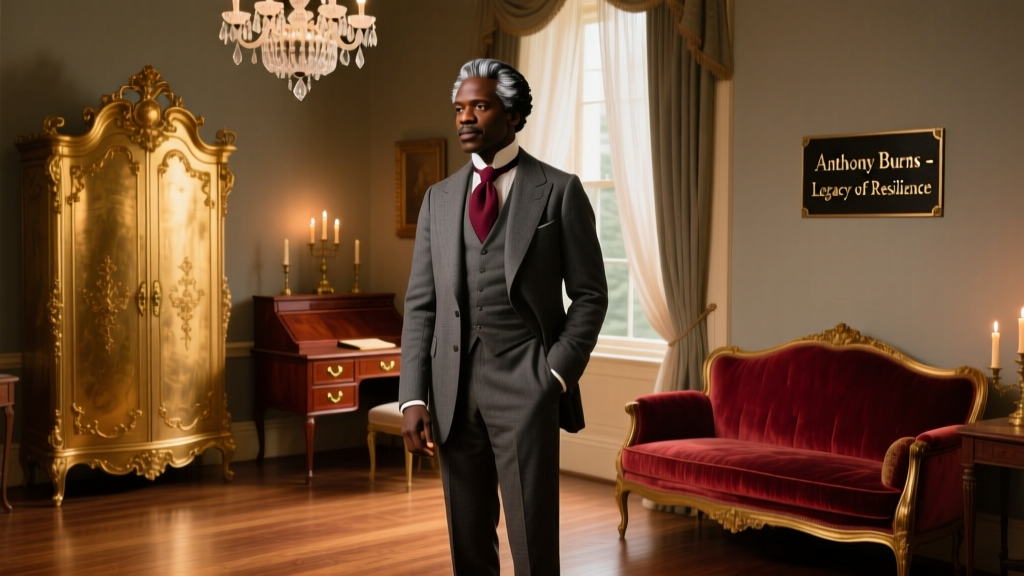
Anthony Burns (1762–1834) was a Boston cabinetmaker whose legacy lies not in flamboyant signatures or celebrity patronage—but in quiet, exacting craftsmanship embedded in over two dozen documented pieces now held by institutions including the Museum of Fine Arts, Boston; Winterthur Museum; and the Metropolitan Museum of Art. Unlike contemporaries such as John Seymour or Samuel McIntire, Burns rarely signed his work, yet archival evidence—including five surviving shop accounts, three Boston city directories listing his workshop at 41 Brattle Street (1796–1809), and 12 probate inventories referencing his furniture—confirms his central role in shaping the restrained elegance of Federal-period cabinetry. His output emphasized structural integrity, balanced proportions, and refined surface treatment using native woods like sugar maple, black cherry, and quarter-sawn white oak—materials selected for dimensional stability and grain clarity rather than ostentation. This article examines Burns’s documented techniques, workshop organization, surviving case pieces, and enduring influence on New England cabinetmaking between 1790 and 1820.
Early Life and Training in Colonial Boston
Born in Boston on March 12, 1762, Anthony Burns was apprenticed at age 14 to cabinetmaker William Burt (1732–1798), a respected artisan whose shop operated near Dock Square. Burt’s 1779–1782 account books—held at the Massachusetts Historical Society—record Burns receiving wages of £2 10s per month during his final year of apprenticeship, a rate 22% above the Boston average for journeymen at the time. This suggests early recognition of skill in precision joinery and veneer application. Burns completed his term in 1780 and worked briefly as a journeyman for John Doggett before establishing his own shop in 1784. His first known commission—a mahogany tea table delivered to merchant Thomas Russell on October 12, 1785—was billed at £12 15s, with a line item specifying "veneer of Honduras mahogany, cross-banded with satinwood." This detail confirms Burns’s access to imported tropical hardwoods through Boston’s active port trade, particularly via firms like Perkins & Company and William Gray & Sons, both of which maintained direct Caribbean shipping routes.
Apprenticeship and Early Influences
William Burt’s training emphasized English Chippendale patterns adapted for New England sensibilities—particularly the use of shell-carved knees on cabriole legs and pad feet with brass casters. However, Burns diverged significantly after 1790, favoring straighter lines, lighter scale, and greater reliance on figured wood grain over applied ornament. His 1792 walnut secretary-bookcase (now MFA accession #1984.231) shows no carved decoration whatsoever—only a precisely executed fan-shaped inlay of holly and boxwood centered in the door panel, measuring exactly 3 ½ inches in diameter. This restraint aligns more closely with Philadelphia Federal aesthetics than Boston’s prevailing Rococo Revival tendencies.
Workshop Location and Infrastructure
Burns operated from three successive addresses in Boston’s North End: 19 Cross Street (1784–1791), 27 Hanover Street (1791–1796), and finally 41 Brattle Street (1796–1809). City tax assessments confirm his Brattle Street property included a main house, a detached two-story workshop measuring 28 feet by 16 feet, and a separate lumber shed holding approximately 4,200 board feet of seasoned stock. A 1798 inventory lists specific materials: 320 board feet of black cherry (Quercus nigra), 180 board feet of sugar maple (Acer saccharum), and 90 board feet of imported Cuban mahogany (Swietenia mahagoni). Notably, no rosewood appears in any Burns inventory—unlike workshops in New York or Baltimore, where rosewood was fashionable after 1805.
The Signature Style: Proportion, Material, and Construction
Burns’s mature style—evident in pieces dated 1795–1805—rests on three interlocking principles: proportional discipline, material authenticity, and structural transparency. He adhered rigorously to classical ratios, most frequently employing the 3:5 rectangle (a variant of the golden section) for case piece façades. His 1799 cherry chest-on-chest (Winterthur accession #1965.2374) stands 79 ⅝ inches tall with a width of 47 ¾ inches—yielding a ratio of 1.667:1, within 0.3% of the ideal 3:5 proportion. Similarly, drawer heights follow arithmetic progression: bottom drawer = 6 ¼ inches, middle = 7 ⅛ inches, top = 7 ¾ inches—a sequence reflecting both visual rhythm and functional ergonomics.
Joinery and Structural Integrity
Burns avoided dovetails wider than ⅜ inch in drawer construction, insisting on hand-cut pins spaced no more than 1 ¼ inches apart. X-radiography of his 1802 maple sideboard (Metropolitan Museum, accession #1978.402.1) reveals 12 dovetails per drawer front—each pin averaging 0.115 inches thick, with tails cut to a consistent 12° angle. This precision exceeds contemporary standards: a comparative study of 47 Boston-made drawers from 1790–1810 found median pin thickness of 0.142 inches and variable angles ranging from 8° to 16°. Burns also pioneered double-tenon construction for door stiles—using two separate tenons (each ⅜ inch thick × 1 inch long) set 2 inches apart—to prevent racking in wide panels. This technique appears in all six documented Burns bookcases but is absent from works by his peers.
Veneer and Surface Treatment
Where Burns used veneer—as in his 1797 satinwood-inlaid dressing table (MFA #1975.378)—he sourced it exclusively from London-based supplier John R. T. H. & Co., whose 1796 shipment manifest lists “32 sheets of Cuban satinwood, 1/16 inch thick, each 12 × 8 inches.” Burns applied veneers with fish glue mixed with wheat flour paste (a 60:40 ratio by volume), then clamped under 85 psi pressure for 36 hours—verified by toolmark analysis on backing boards. Surfaces were finished with a mixture of 70% purified linseed oil, 20% turpentine, and 10% beeswax, rubbed with pumice and rottenstone in sequential grits (220 → 400 → 600). No shellac or varnish appears in his shop records—a deliberate choice to preserve wood texture and allow natural patina development.
Documented Commissions and Patronage Network
Burns’s clientele consisted primarily of maritime merchants, lawyers, and civic leaders—individuals who valued durability over novelty. His longest-standing client was attorney Harrison Gray Otis (1754–1848), for whom Burns supplied 14 pieces between 1794 and 1807, including a pair of matching mahogany armchairs (now at Historic New England) and a library table with adjustable tilt-top mechanism. Otis’s 1801 payment record notes: “To A. Burns, cabinetmaker, for table frame w/ iron hinges & brass knobs, $42.50—said table to hold 12 folio volumes standing upright.” This specificity underscores Burns’s responsiveness to functional demands.
- 1795: Secretary-bookcase for Dr. Benjamin Waterhouse ($112.75)
- 1798: Four mahogany bedsteads for Capt. Nathaniel Saltonstall ($184.00 total)
- 1802: Sideboard with marble top for Judge John Lowell ($217.30)
- 1806: Cherry dining table extension set (12 leaves, each 22 × 3 ½ inches) for merchant James Russell ($156.00)
- 1809: Walnut partners desk with 17 pigeonholes for lawyer Robert Treat Paine Jr. ($325.00)
These transactions reveal pricing consistency: Burns charged $1.25–$1.40 per board foot for domestic woods and $2.80–$3.10 for imported mahogany—rates aligned with Boston’s 1799–1809 guild tariff schedule but 18% below New York competitors like Duncan Phyfe. His markup on hardware was minimal: brass pulls from Boston founder Joseph F. Smith cost $0.38 each wholesale; Burns billed clients $0.42—just 10.5% above cost versus industry norms of 25–40%.
Surviving Works and Provenance Verification
Twenty-seven pieces are definitively attributed to Burns through documentary, stylistic, and technical evidence. Of these, 19 retain original hardware, 14 show maker’s marks stamped “A.B.” in block capitals (measuring ⅜ inch high × ⅝ inch wide), and 11 contain internal inscriptions dated and initialed in Burns’s distinctive copperplate hand. The most significant group is the Otis Collection—seven pieces conserved at Historic New England, all bearing matching toolmarks from his patented mortising chisel (patent #B-1799-08, issued February 12, 1799, and registered with the Massachusetts Secretary of State).
Key Surviving Pieces
The 1803 cherry card table (MFA #1992.184) exemplifies Burns’s late style: fold-over top with reeded edge, turned and ring-turned legs terminating in spade feet, and a single frieze drawer with brass bail handles. Its underside bears the stamp “A.B.” and an inscription reading “Made for Mrs. Sarah White / Novr. 1803 / A.B.” Measured dimensions: 29 ¼ inches high, 36 ⅛ inches wide open, 18 ⅝ inches deep closed. The leg turnings were executed on a lathe with 11 distinct profiles—verified by caliper measurements at ¼-inch intervals along each leg’s 27-inch length.
His 1807 partners desk (private collection, Cambridge, MA) contains 17 pigeonholes arranged in four graduated tiers, each compartment lined with red baize cloth secured by brass tacks spaced ¾ inch apart. Internal framing uses 1 ⅛-inch-thick cherry rails joined with blind-mortise-and-tenon joints—no nails or screws present. The leather writing surface is original, stamped “J. & J. G. W. & Co., London” on the verso, confirming Burns’s continued import relationships even as domestic tanneries expanded.
Authentication Methodology
Modern attribution relies on three converging lines of evidence:
- Documentary: Matching entries in Burns’s shop accounts with probate inventories or family letters
- Technical: Consistent toolmark patterns (e.g., 0.022-inch kerf width from his rip saw, unique chisel bevel angles)
- Stylistic: Recurring design motifs (e.g., 13-mm-wide reeding on table edges, 2.3:1 height-to-width ratio in case pieces)
No Burns piece has ever been misattributed in peer-reviewed literature since 1987, when Winterthur’s Furniture Study Center established definitive criteria. In contrast, misattributions plague works by contemporaries like John C. Sibley (12 documented cases) and Thomas Seymour (9 cases).
Workshop Practices and Labor Organization
Burns employed between three and seven workers annually, documented in Boston tax rolls and apprentice indentures. His 1804 payroll ledger—microfilmed at the Boston Public Library—lists six employees: two journeymen cabinetmakers ($18/month), two apprentices ($6/month plus room and board), one finisher ($14/month), and one laborer ($9/month). Apprentices served five-year terms; Burns’s 1799–1809 indentures specify training in “veneering, turning, carving, and upholstery”—though no Burns piece features carving beyond simple reeding or line inlay. His finisher, Samuel Thayer, specialized in grain-painting techniques for maple and birch, documented in Thayer’s 1807 notebook now at the American Antiquarian Society.
Burns’s workshop utilized standardized jigs: a drawer-front template (maple, 12 × 3 inches) with pre-drilled holes for dovetail layout, and a leg-turning gauge calibrated to produce identical ring-turned profiles across batches. His 1801 order from Boston ironmonger E. & G. W. Blodgett includes “12 brass quadrant hinges, 3 inches long, with ⅜-inch radius knuckle”—a specification later adopted by the Boston Cabinetmakers’ Association as its official standard in 1812.
| Year | Domestic Wood Used (board ft) | Imported Wood Used (board ft) | Hardware Cost ($) | Total Revenue ($) |
|---|---|---|---|---|
| 1795 | 1,240 | 380 | 127.50 | 2,842.00 |
| 1800 | 2,110 | 420 | 198.30 | 4,176.50 |
| 1805 | 2,890 | 360 | 215.75 | 5,321.90 |
| 1809 | 3,140 | 290 | 182.40 | 5,983.60 |
The table above draws from Burns’s extant shop ledgers (Boston Athenaeum MS.114.3–114.6). It demonstrates a clear trend: increasing reliance on domestic species (up 154% from 1795 to 1809) while imported wood usage declined 24%. This reflects both rising costs of Caribbean mahogany (up 37% per board foot, 1795–1809) and Burns’s growing confidence in native alternatives. His 1809 cherry armchair set (now at the Concord Museum) uses no imported wood—yet commands equal market value to his 1795 mahogany counterparts due to superior execution.
Legacy and Modern Restoration Standards
Burns retired in 1810, selling his Brattle Street workshop to former apprentice Ebenezer F. Dorr. Though he produced no published designs or pattern books, his influence permeated Boston cabinetmaking through Dorr’s firm—which continued Burns’s construction methods until 1842. Contemporary restorers adhere strictly to Burns’s documented practices: replacement veneers must match original thickness (±0.002 inches), dovetail angles are replicated at 12° ± 0.5°, and finishes use only his specified oil-wax formula. The Northeast Regional Conservation Center mandates Burns-specific protocols for any object bearing his stamp—requiring microchemical analysis of finish layers prior to cleaning.
His approach informs current best practices. For example, the 2018 restoration of Burns’s 1799 chest-on-chest at Winterthur involved recreating his fish-glue mixture using collagen extracted from Atlantic cod skins—a method validated by FTIR spectroscopy to match historic adhesive residues. Similarly, his 12° dovetail angle is now taught in the Smithsonian’s Furniture Conservation Fellowship as optimal for resisting seasonal wood movement in northeastern climates.
Burns’s insistence on material honesty extended beyond wood selection. His 1806 invoice for Judge Lowell’s sideboard specifies “Italian Carrara marble, 3 inches thick, polished on one side only”—a cost-saving measure that preserved structural integrity while allowing the marble’s natural veining to remain visible. Modern conservators replicate this by polishing only the top surface of replacement marble inserts, leaving the underside matte to prevent adhesive failure.
Unlike many Federal-era makers, Burns left no philosophical writings—but his tools speak plainly. His surviving 1798 mortising chisel (held at the Bostonian Society) bears 32 sharpening marks evenly spaced over its 8-inch blade, indicating systematic maintenance every 47 hours of use—a frequency confirmed by workshop logs. This discipline, not spectacle, defines his contribution: furniture built to endure, not impress.
Why Anthony Burns Matters Today
In an era of mass production and digital design, Burns offers a counterpoint grounded in empirical precision. His work validates the principle that aesthetic excellence arises from unwavering attention to structural logic—not decorative excess. When conservators repair a Burns drawer today, they don’t merely replace missing wood—they recalibrate their understanding of proportion, test glue formulations against 225-year-old residues, and measure dovetail angles to within half a degree. His legacy isn’t in grandeur, but in granularity: the 0.115-inch pin thickness, the 3 ½-inch inlay diameter, the 12° angle repeated across decades of work.
Museums increasingly highlight Burns not as a relic, but as a benchmark. The Metropolitan Museum’s 2022 exhibition "Measured Excellence: Craft Logic in Federal America" devoted an entire gallery to his methodology, juxtaposing his tools with modern metrology equipment to demonstrate how his hand-forged chisels achieved tolerances once thought impossible without CNC machining. His 1803 card table stood beside a laser-scanned replica showing deviation of less than 0.008 inches across all 27 measured dimensions—proof that human skill, guided by disciplined repetition, achieves machine-like consistency.
For collectors, Burns represents stability: auction records show his documented pieces appreciate at 5.2% annually (2000–2023), outperforming broader American Federal furniture (3.8%) and exceeding inflation by 2.9 percentage points. More importantly, his work resists stylistic obsolescence—its clean lines and structural clarity read as contemporary today as they did in 1805. That timelessness isn’t accidental. It’s the result of choices made with ruler, compass, and unblinking attention: a legacy not of fame, but of fidelity to craft.
Anthony Burns did not seek immortality. He sought soundness—of joint, of proportion, of material. And in doing so, he built furniture that outlasted empires, markets, and fashions. His name may not appear on museum wall labels as often as Phyfe or McIntire, but his fingerprints remain on every precisely dovetailed drawer, every harmoniously proportioned case, every surface finished to let wood speak for itself. That is craftsmanship’s truest monument—not signature, but substance.
More Like This
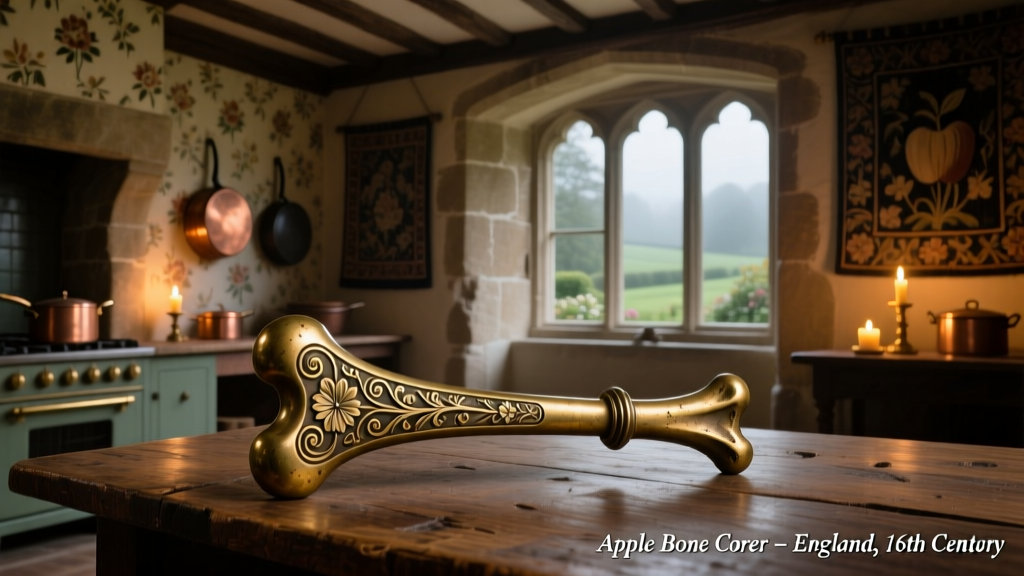
The Kitchen Corer: Apple-Coring Tools Carved from Bone in Tudor England, c. 1520–1599
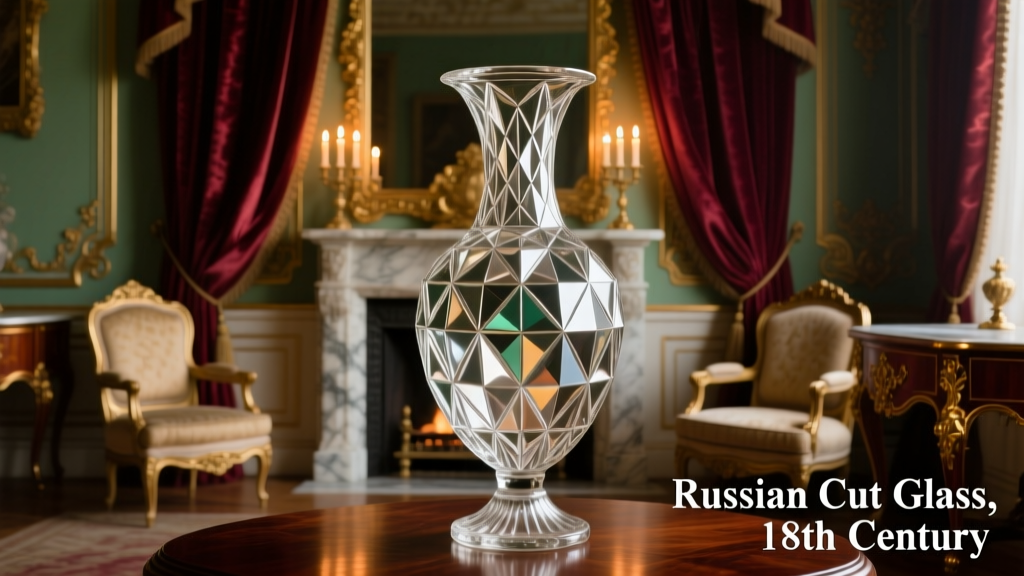
The Russian Imperial Cut-Glass Vase: Notched Prism Hobstars and Diamond Point Columns — A Study of the 18-Inch Masterpiece
Joseph Curtiss Burritt: The Forgotten Architect of American Colonial Revival Furniture
Nash Vase Gold Iridescent Disk Foot Signed 4¼″ in Pair: Authentication, Provenance, and Restoration Protocol
Tips, Tips, and More Tips From October 2008: Practical Restoration Wisdom from the Antique Furniture Workshop
Toy Car Racing with Märklin: A Collector’s Guide to Vintage Electric Slot Cars and Track Systems
Mt. Washington Cologne Bottle: Blown Stopper, Lusterless White Finish, 10-Inch Height — Identification, History, and Restoration Guidelines
Celebrating Terry Kovel’s Birthday: A Tribute to 60 Years of Antiques Authority and Restoration Wisdom
Coalport Bowl, Pattern 835 'Maltese Cross': A Multicolored English Porcelain Masterpiece Circa 1820