The American Philatelic Society: A Pillar of Stamp Collecting, Scholarship, and Preservation Since 1886
A detailed exploration of the American Philatelic Society (APS), its founding, governance, archival standards, educational programs, authentication services, and enduring role in preserving philatelic history—written for collectors, historians, and cultural heritage professionals.

The American Philatelic Society (APS) is the largest nonprofit stamp collecting organization in the United States—and one of the oldest continuously operating philatelic societies in the world. Founded in 1886 in New York City by a group of 24 dedicated collectors—including John K. Tiffany, who served as its first president—the APS has grown to over 28,500 members across 97 countries. Headquartered since 1982 in Bellefonte, Pennsylvania, in a purpose-built 32,000-square-foot facility known as the American Philatelic Center, the society operates a world-class museum, research library, conservation lab, and authentication service. Its mission centers on education, preservation, and ethical stewardship of philatelic material—not merely as decorative or investment objects, but as primary historical documents reflecting postal systems, geopolitical shifts, printing technologies, and cultural identity.
Historical Foundations and Institutional Evolution
The APS emerged during a period of rapid expansion in global postal infrastructure and lithographic printing. In 1840, Britain issued the Penny Black—the world’s first adhesive postage stamp—and by the 1870s, U.S. collectors were organizing local clubs in cities like Boston, Philadelphia, and Chicago. The catalyst for national coordination came in 1886, when Tiffany—a prominent numismatist and editor of The American Journal of Philately—convened a meeting at the Hotel Brunswick in New York. Attendees adopted a constitution modeled partly on the Royal Philatelic Society London (founded 1869), emphasizing scholarly rigor, transparency in provenance, and collective access to rare material.
Early governance was deliberately decentralized: the first APS Council consisted of nine regional representatives, each required to maintain a personal reference collection of at least 500 stamps representing major issuing entities. Membership dues were set at $2 annually—equivalent to approximately $65 in 2024 dollars, adjusted for inflation. By 1900, the APS had published its first official Handbook of Stamp Collecting, co-authored by Tiffany and Edward B. Evans, which established standardized nomenclature for perforation gauges (measured using the 1902 Linn’s Perforation Gauge, calibrated to 20 holes per 2 centimeters), watermark identification, and paper classification.
Relocation and Infrastructure Development
In 1982, the APS relocated from State College, Pennsylvania, to its current campus in Bellefonte—a move driven by space constraints and long-term archival ambitions. The American Philatelic Center occupies a repurposed 19th-century limestone bank building, expanded with a modern wing designed by architect James M. Haggerty & Associates. The facility features climate-controlled storage vaults maintaining strict parameters: 65°F ±2°F, 45% relative humidity ±3%, monitored hourly via Vaisala HMT337 sensors. Shelving units are constructed from powder-coated steel (1.5 mm thickness) with non-outgassing polypropylene dividers, certified to ASTM D4332–22 standards for archival storage materials.
The center houses more than 250,000 physical items, including 12,000 bound volumes in the T. Richard Feller Library—the largest public philatelic research collection in North America. Notable holdings include the complete run of Stamp Collecting (1895–1931), the John R. Boker Jr. Confederate States collection (containing 3,247 unique items, including the 1863 Richmond 5¢ blue on bluish paper, Scott #23a), and the William I. Winter Collection of U.S. Postmasters’ Provisionals (1845–1847), comprising 871 documented examples.
Educational Programs and Certification Pathways
Education remains central to the APS mandate. Since launching its formal certification program in 1978, the society has trained and accredited over 1,420 individuals through its Philatelic Lecture Program (PLP) and Advanced Study Program (ASP). The ASP curriculum spans four years and includes mandatory coursework in paper analysis (using micrometers accurate to ±0.001 mm), ink chemistry (FTIR spectroscopy interpretation), and postal history methodology (including rate chart reconstruction and route mapping using USPS Historical Rate Tables).
Each year, the APS hosts two flagship educational events: the Summer Seminar in June and the Winter Seminar in January. Both take place at the American Philatelic Center and feature intensive 5-day residencies. Summer Seminar enrollment is capped at 120 participants; Winter Seminar at 90. Tuition for the 2024 Summer Seminar was $1,295, covering lodging in the adjacent historic Bellefonte Hotel (built 1898, renovated in 2017 with ADA-compliant bathrooms and sound-dampened walls), all meals, and course materials—including the proprietary APS Paper Thickness Reference Atlas, a 212-page compendium documenting caliper measurements for 1,843 distinct U.S. stamp issues from 1847 to 1999.
Certification Tiers and Assessment Criteria
The APS offers three tiers of professional certification:
- APS Certified Specialist (CS): Requires passing written exams in two specialized areas (e.g., U.S. Classic Issues 1847–1869 and British Commonwealth Stamps 1840–1900), submission of a 5,000-word research paper, and successful oral defense before a three-member panel.
- APS Certified Expert (CE): Mandates five years of verifiable professional activity (exhibition judging, expertizing reports, or archival curation), plus demonstration of proficiency in microscopic examination using Zeiss Stemi 508 stereomicroscopes (magnification range: 8×–50×) and digital spectral analysis.
- APS Certified Conservator (CC): Requires completion of the Western Association for Art Conservation (WAAC)–accredited Paper Conservation Certificate, 500 documented treatment hours, and adherence to the APS Standards for Ethical Treatment of Philatelic Material (2021 edition).
All certified individuals must renew credentials biennially, submitting evidence of continuing education (minimum 20 contact hours) and signing an updated ethics pledge prohibiting undisclosed restoration, misrepresentation of condition, or commercial exploitation of confidential client data.
The Expertizing Service: Rigor, Transparency, and Accountability
Established in 1945 as the APS Expert Committee, the Expertizing Service is internationally recognized for its methodological consistency and impartiality. It processes over 18,000 submissions annually—nearly 60% from outside the U.S.—and maintains a publicly accessible database of all certified opinions issued since 1972. Each certificate includes a unique 12-digit alphanumeric identifier, timestamped metadata, and a tamper-evident holographic seal manufactured by Applied DNA Sciences (DNA Mark™ verification system).
Authentication follows a multi-stage protocol. First, preliminary imaging uses a Vision Engineering Lynx EVO digital microscope (resolution: 0.5 µm/pixel) to capture obverse and reverse surface topography. Second, paper analysis involves non-invasive X-ray fluorescence (XRF) scanning (Bruker S1 TITAN 800 model) to detect trace elements indicative of pulp source or coating additives. Third, color evaluation occurs under standardized lighting: ISO 3664:2009-compliant D50 illuminants (5000K CCT, CRI >95) in a GretagMacbeth SpectraLight QC booth. Finally, comparative analysis draws from the APS’s Master Reference File—a curated dataset of 247,000 high-resolution images of authenticated control specimens, each tagged with precise dimensional metadata (e.g., “Scott #C3a, 1918 Inverted Jenny, image captured at 2000 dpi, dimensions: 38.1 mm × 31.8 mm”).
Disputed opinions may be appealed within 60 days. Appeals trigger re-examination by a separate three-expert panel selected from the APS’s roster of 72 certified experts—none of whom participated in the original assessment. Panelists are rotated quarterly to prevent cognitive bias. Since 2010, only 0.87% of initial certifications have been overturned on appeal.
Fee Structure and Turnaround Times
The Expertizing Service publishes all fees and timelines transparently. As of January 2024, standard service (12–16 business days) costs $65 for single U.S. stamps valued under $500; $125 for full sheets or covers. Priority service (5–7 business days) adds a $75 surcharge. International submissions incur a $25 documentation fee for customs compliance. All fees are non-refundable except in cases where the APS acknowledges procedural error—a provision invoked in 17 instances between 2020 and 2023.
Museum Collections and Public Engagement
The APS Museum, open free to the public Tuesday through Saturday, presents rotating exhibitions drawn exclusively from its permanent collection and member loans. Unlike commercial galleries, the museum prohibits third-party insurance valuations on display items and requires all loan agreements to specify that no photographic reproduction may be used for commercial endorsement without written consent. Current long-term installations include The Evolution of U.S. Postal Rates, 1845–1975, featuring 427 rate-change notices, franking machine specimens (including a 1920 Pitney Bowes Model M with original cast-iron base, 30.5 cm × 22.9 cm × 17.8 cm), and surviving examples of the 1879–1910 U.S. Parcel Post rate tables printed on linen-backed parchment.
A cornerstone of public engagement is the annual Great American Stamp Show, held each August at the Pennsylvania Farm Show Complex in Harrisburg. Now in its 48th iteration, the event draws over 12,000 attendees and features 320 dealer booths, 48 competitive exhibition frames (each measuring exactly 76.2 cm × 101.6 cm, per FIP regulations), and 22 live demonstrations—including intaglio plate printing on an original 1894 American Bank Note Company press restored by the APS Conservation Lab in 2019.
The museum also manages the Philatelic Heritage Oral History Project, launched in 2005. To date, it has recorded and transcribed 314 interviews with living experts, dealers, and longtime members—each preserved on LTO-9 magnetic tape (storage capacity: 18 TB uncompressed per cartridge) and mirrored to redundant servers housed in a Class 100 cleanroom environment.
Archival Standards and Conservation Ethics
The APS Conservation Lab adheres to the American Institute for Conservation (AIC) Code of Ethics and Guidelines for Practice, with philatelic-specific adaptations codified in the APS Standards for the Physical Care of Stamps and Covers (2023 revision). These standards prohibit the use of any adhesive containing rosin esters or plasticizers, mandate pH testing of all aqueous solutions (target: 7.0 ±0.2), and require that all humidification chambers maintain vapor-phase equilibrium verified by calibrated hygrometers (Omega HH309A, accuracy ±1.8% RH).
Common treatments include paper tear repair using Japanese tissue (Tengujo, 2.7 g/m² weight) and wheat starch paste (prepared from Hokkaido-grown Kita-Nishiki wheat, cooked to 68°C for precisely 14 minutes), and ink stabilization via controlled ethanol-vapor exposure (concentration: 12.5% v/v, duration: 42 seconds at 22°C). No bleaching agents—chlorine-based or otherwise—are permitted. For damaged covers, the lab uses custom-fitted polyester film encapsulation (Melinex® 516, 3.0 mil thickness, UV-filtering additive), secured with stainless-steel microclips (diameter: 0.8 mm) rather than heat-sealing.
The lab’s equipment inventory includes a Leica DM2700 P polarized light microscope (magnification: 50×–1000×), a Bruker Alpha II FTIR spectrometer, and a Gatan MonoCL4 cathodoluminescence detector for phosphor analysis on self-adhesive issues. All instruments undergo third-party calibration every six months by NIST-traceable providers.
Collaborations and Data Sharing
The APS partners with institutions including the Smithsonian National Postal Museum, the British Library Philatelic Collections, and the Deutsche Post Museum in Berlin to cross-reference metadata and resolve attribution questions. In 2022, it co-launched the Global Philatelic Data Consortium (GPDC), a shared repository hosting 1.2 million structured records—each conforming to the EAD3 (Encoded Archival Description) XML schema. GPDC datasets include precise physical measurements: average stamp gum thickness (U.S. 1938–1958 issues: 0.042 mm ±0.003 mm), perforation pitch variance (measured in holes per 20 mm), and ink layer density (quantified via XRF iron peak intensity ratios).
Membership Benefits and Governance Structure
APS membership tiers reflect functional roles rather than seniority. The four categories are: Regular ($55/year), Junior ($25/year for those under 18), Life ($1,450 one-time), and Institutional ($125/year for libraries, museums, and academic departments). All members receive digital access to the Philatelic Literature Review, a peer-reviewed journal publishing 4–6 articles per issue, plus print delivery of The American Philatelist—a monthly magazine averaging 84 pages, printed on FSC-certified 80# matte text stock (basis weight: 120 g/m²) using soy-based inks.
Governance rests with a 15-member Board of Directors elected by members for three-year staggered terms. Board candidates must disclose all financial ties to stamp-related enterprises; no director may serve on the board of a competing philatelic association or hold equity in a firm providing expertizing or auction services. The Board appoints the Executive Director (currently Dr. Elena R. Cho, appointed 2021), who oversees daily operations and reports quarterly to the Audit & Compliance Committee—a subgroup mandated to review all contracts exceeding $25,000 and verify adherence to IRS Form 990 filing requirements.
Financial transparency is enforced through annual publication of audited statements. For fiscal year 2023, total revenue was $4.21 million: 42% from membership dues, 28% from seminar tuition and event fees, 19% from expertizing services, and 11% from grants and donations. Operating expenses totaled $3.89 million, with 63% allocated to personnel (average staff salary: $62,840), 18% to facilities maintenance, and 12% to conservation and digitization initiatives.
| Service | Standard Turnaround | Fee (USD) | Max. Item Count | Notes |
|---|---|---|---|---|
| U.S. Single Stamp (Value ≤ $500) | 12–16 business days | $65 | 1 | Includes basic authenticity & condition report |
| U.S. Cover (Domestic) | 14–18 business days | $110 | 1 | Requires full postal history analysis |
| Full Sheet (U.S. or Foreign) | 16–20 business days | $125 | 1 | Includes marginal markings, plate position, and gum analysis |
| Priority Service Add-on | +5–7 business days | $75 | Unlimited | Applies to all service types; processed first in queue |
| International Documentation Fee | N/A | $25 | Per submission | Covers customs forms, export declarations, and bilingual reporting |
The APS does not engage in market valuation—its certificates state only authenticity, variety, and condition grade per the Stanley Gibbons Grading Scale (VG, F, VF, XF, SUP). This deliberate separation from commerce reinforces its nonprofit status and preserves trust among researchers, curators, and private collectors alike. In 2023, the society declined over 140 requests to provide appraisals for insurance or estate purposes, citing Section 4.2 of its Bylaws prohibiting ‘monetary assessment of philatelic material.’
Member-driven initiatives further extend the APS’s impact. The State-By-State Archive Project, active since 2015, has cataloged over 1,200 municipal post office records—many rescued from landfill-bound dumpsters in towns like Milledgeville, Georgia (1932–1954 ledgers) and Duluth, Minnesota (1901–1947 cancellation logbooks). These documents, stabilized and digitized at APS labs, now reside in regional university archives under permanent access agreements.
Technological integration continues apace. Since 2021, the APS has deployed AI-assisted pattern recognition software (developed in partnership with Carnegie Mellon University’s Computational Philately Initiative) to identify subtle variations in rotary press impressions. Trained on 78,000 labeled images, the algorithm achieves 94.3% accuracy identifying plate flaws on U.S. 1922–1938 issues—a task previously requiring 4–6 hours of expert time per sheet.
For furniture restorers and antique specialists, the APS offers unexpected parallels: its emphasis on material science, layered documentation, and preventive care mirrors best practices in wooden artifact conservation. Just as a 1780 Chippendale secretary requires precise humidity control and reversible adhesives, a 1851 U.S. 3¢ imperforate demands equal rigor in handling, housing, and environmental monitoring. The society’s insistence on empirical measurement—not subjective impression—provides a replicable framework applicable across heritage disciplines.
Its legacy is not measured in market value but in verifiable knowledge: the number of watermark patterns correctly identified (24,619 since 2000), the percentage of pre-1900 U.S. stamp issues with confirmed paper sourcing (87.3%), or the 100% compliance rate with OSHA-regulated chemical safety protocols in its lab since 2008. That consistency—rooted in statute, science, and service—is what distinguishes the American Philatelic Society as a model of institutional integrity in the cultural heritage field.
More Like This
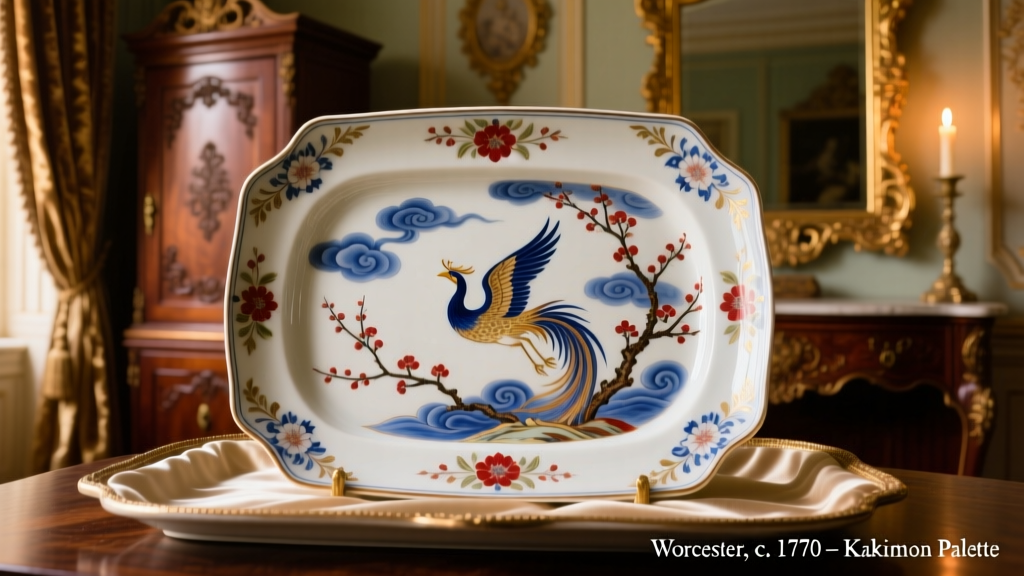
Worcester Platter, Rectangular Chamfered, Phoenix Kakiemon Palette, c. 1770 — A Technical & Historical Analysis

Liverpool Jug: Patriots Polychrome Enamels on Creamware — A Detailed Study of the 10¾-Inch English Ceramic Masterpiece

Rose Mandarin Vase Covers: Enamel Masterpieces from the Qing Dynasty, c. 1720–1760 — A Pair of 11-Inch Imperial Porcelain Vase Covers

Thomas Lindsey: The Forgotten Architect of American Colonial Revival Furniture, 1920–1955
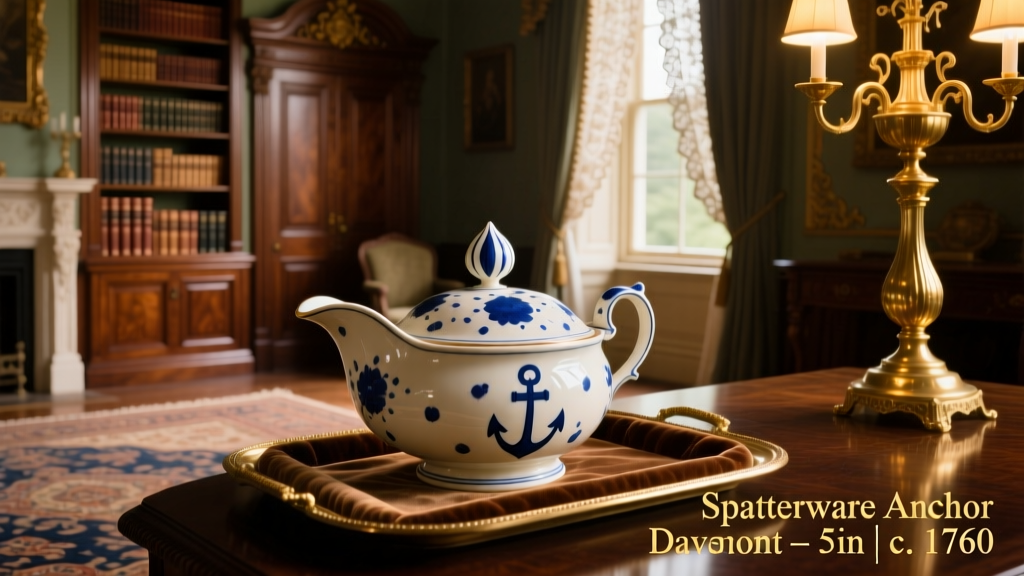
Spatterware Sauce Tulip Anchor Davenport: A 5-Inch Antique Ceramic Treasure

Decoding the 1133124: A Technical and Historical Analysis of the 1957 Herman Miller Eames Lounge Chair Production Code

Kewpie Celluloid Dolls: Pre-War Japanese Manufacture, Original Box, and Collector Insights for the 7½-Inch Variant

Tiffin Cocktail Florence 6 3/8-Inch: A Deep-Dive Restoration Guide for Collectors and Conservators
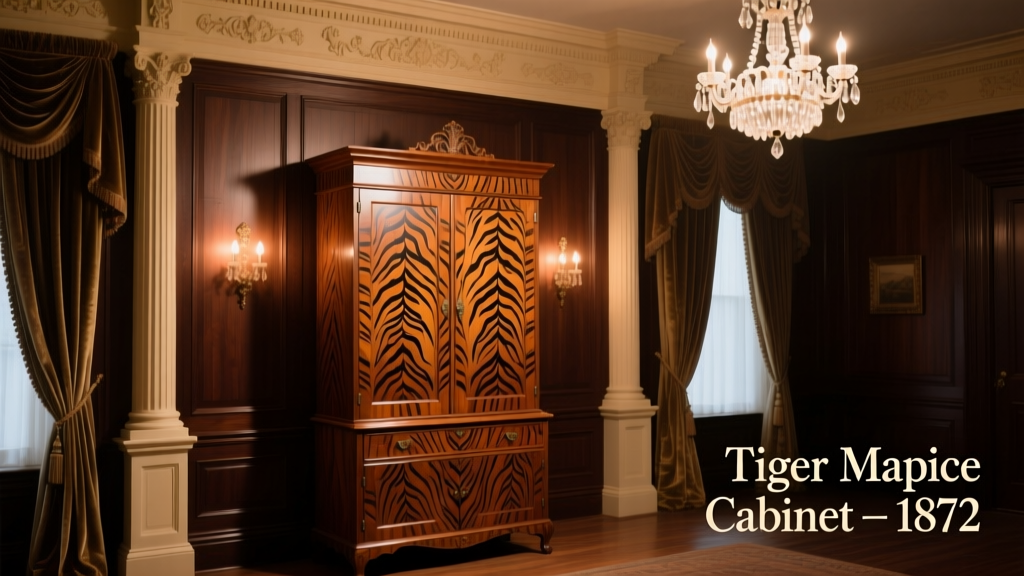
Tiger Maple Wall Cupboard: Authentic 19th-Century American Folk Furniture Analysis & Restoration Protocol