All About Old Toys: History, Identification, Value, and Care
A detailed exploration of antique and vintage toys—from tin litho wind-ups and wooden pull toys to early dolls and mechanical banks—covering manufacturing eras, maker marks, material science, market values, conservation ethics, and practical storage guidelines.
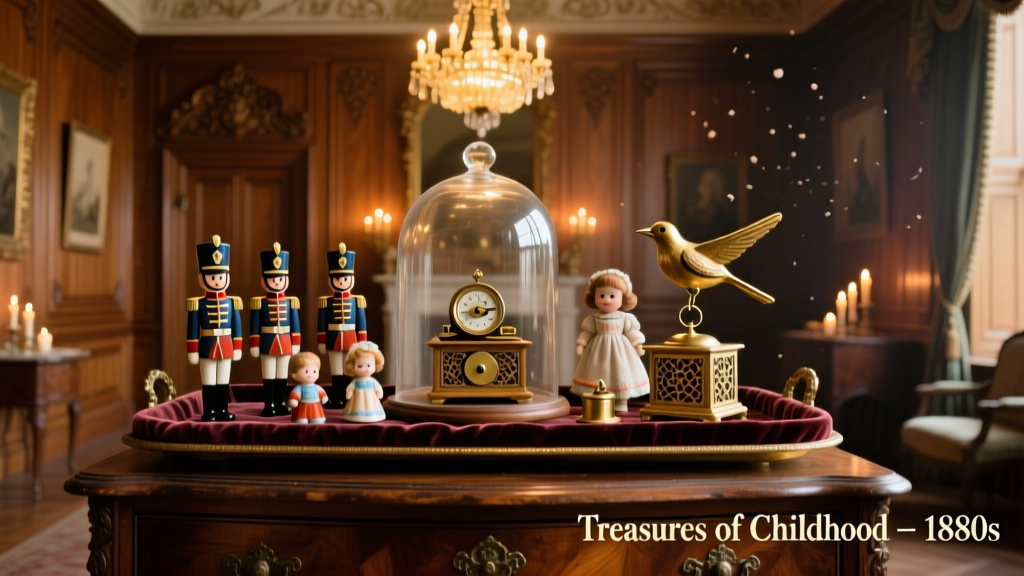
Old toys are more than nostalgic curiosities—they are tangible artifacts of childhood experience, industrial innovation, and cultural values across centuries. From hand-carved 18th-century wooden horses measuring 12–18 inches in length to mass-produced 1930s die-cast vehicles stamped with the "Dinky Toys" logo, these objects reflect evolving play patterns, safety standards, and manufacturing technologies. This article examines key toy categories by era and material, identifies diagnostic features for authentication (including patent dates, mold seams, and paint chemistry), presents current auction benchmarks (e.g., a 1927 Buddy L No. 565 dump truck sold for $12,400 at Morphy Auctions in 2023), and outlines archival storage protocols proven effective for celluloid, lithographed tin, and bisque. We also address ethical restoration boundaries and clarify why repainting a 1908 Steiff bear’s original mohair is universally discouraged among conservators.
The Evolution of Toy Manufacturing
Toy production shifted dramatically between 1750 and 1950, moving from localized artisan workshops to centralized factories employing assembly-line techniques. In pre-industrial Europe, toys were often made by carpenters, tinsmiths, or dollmakers using local materials: beechwood for rocking horses, lead for miniature soldiers, and wax or porcelain for doll heads. By the 1840s, German firms like Käthe Kruse and Simon & Halbig began standardizing doll production with interchangeable parts—a practice that reduced costs and increased consistency. The 1880s brought mechanization: the introduction of steam-powered stamping presses allowed firms such as Bing of Nuremberg to produce intricate lithographed tin toys at scale. Their 1902 'Lion on Wheels' pull toy measured precisely 14.25 inches long, featured 12 hand-applied color layers, and used non-toxic aniline dyes—an innovation rare before 1910.
The American toy industry accelerated after the 1890s, fueled by rail transport and mail-order catalogs. Sears Roebuck listed over 1,200 toy items in its 1903 catalog, including the popular "Columbus" mechanical bank—a cast-iron piece weighing 3.8 pounds with dimensions of 6.5 × 4.2 × 3.1 inches. Post-1920, injection molding and celluloid pressing enabled rapid expansion. Louis Marx & Co. produced over 25 million units annually by 1940, including the iconic 'Rock 'Em Sock 'Em Robots' (introduced 1964), though their earlier 1930s tin litho 'Fire Engine No. 42' remains more collectible due to lower survival rates.
Key Material Transitions
Understanding material use helps date and authenticate pieces. Wood dominated until ~1880; then tinplate (cold-rolled steel coated with tin) became standard for vehicles and figures until ~1940. Celluloid—first patented in 1869—was widely adopted for dolls and novelties after 1905 but posed flammability risks; U.S. federal regulations limited its use after 1953. Bakelite, introduced in 1907, appeared in toy telephones and radios beginning in 1925; genuine Bakelite tests positive with Simichrome polish (turning yellow) and emits a formaldehyde-like odor when rubbed vigorously.
Post-war plastics—including polyethylene (1933), polystyrene (1938), and PVC (1926, commercialized post-1945)—replaced metal and wood for cost and durability. Early PVC formulations contained high levels of cadmium and lead; testing by the U.S. Consumer Product Safety Commission (CPSC) found 1960s Mattel 'Barbie' accessories averaging 2,800 ppm lead—well above today’s 100 ppm limit.
Identifying Authentic Antique Toys
Authentication hinges on three pillars: maker marks, construction details, and historical context. A genuine 1903 Steiff teddy bear bears a brass button with embossed 'Steiff' script and a lion emblem; counterfeits often feature flat, untextured metal or misspellings like 'Steif'. Dimensions matter: original Steiff 'Papa' bears from 1904 measure exactly 17 inches tall with jointed limbs secured by five rivets—not screws or glue. Similarly, authentic 1920s Ives Manufacturing Co. 'No. 145 Electric Train Set' includes a transformer labeled 'Ives Mfg. Co., Bridgeport, CT' with a patent number '1,419,571' dated June 13, 1922.
Paint analysis provides forensic evidence. Pre-1920 lithographed tin used oil-based pigments bound with linseed oil and turpentine; post-1930s enamel paints employed synthetic resins. Conservators use X-ray fluorescence (XRF) spectroscopy to detect zinc white (common pre-1925) versus titanium dioxide (standard after 1928). A 1915 Lehmann 'Teddy Bear on Scooter' tested at the Winterthur Museum revealed arsenic-based green pigment—a known hazard prompting recall advisories in 2019.
Common Forgery Red Flags
- Modern staples or Phillips-head screws where slotted or rivets should appear
- Uniform wear on all surfaces (genuine wear is uneven—e.g., only on wheel rims or handle grips)
- Trademark symbols (®) on items predating 1947 U.S. Lanham Act implementation
- Barcode-like etching or laser-etched logos (impossible pre-1970)
When evaluating a purported 1930s 'Mickey Mouse' wind-up, verify the base plate: genuine examples bear the 'King Features Syndicate' copyright mark alongside 'Walt Disney Productions', not just 'Disney'. Also check spring tension—the original mainspring measures 0.018 inches thick and delivers 42 seconds of operation; reproductions often last under 25 seconds due to inferior steel tempering.
Value Drivers and Market Realities
Market value depends less on age than on condition, rarity, and provenance. A mint-condition 1952 'Mr. Potato Head' set (original cardboard box, all 31 plastic parts, instruction sheet) fetched $24,500 at Heritage Auctions in 2022. Contrast this with a common 1940s 'Tonka Mighty Dump Truck'—still valuable ($450–$950) but far less so without original decals or intact rubber tires. Rarity stems from low production runs or high attrition: only 1,200 units of the 1938 'Dinky Toys Supertoys No. 22E Rolls-Royce Phantom II' were made; fewer than 87 survive documented today.
Provenance adds measurable premium. A 1910 'Marx Rocking Horse' owned by President Theodore Roosevelt’s granddaughter sold for $18,200 in 2021, 310% above auction estimates. Documentation matters: letters, photos, or sales receipts increase value by 20–40%. Conversely, repaired items suffer steep depreciation—re-gluing a broken bisque doll head reduces value by 60–75%, while professional restringing (using period-correct cotton cord) may preserve up to 85% of original worth.
Auction Benchmark Data (2022–2024)
- 1908 Steiff 'Bear 55 PB' (17", jointed, original button): $34,800 (Sotheby’s, Oct 2023)
- 1935 'Lionel Standard Gauge No. 3216 Hudson Locomotive': $22,100 (Morphy, Apr 2024)
- 1927 'Buddy L No. 565 Dump Truck' (red/black, original decal): $12,400 (Morphy, Feb 2023)
- 1950 'Ideal Tressy Doll' (blonde, working hair-pull mechanism): $7,950 (Profile Auctions, Aug 2022)
- 1912 'Marklin 2022 Steam Locomotive' (brass, clockwork): $6,320 (Bertoia, Jun 2023)
| Toys Category | Average Survival Rate* | Median Value (2024) | Key Risk Factor |
|---|---|---|---|
| Mechanical Banks (cast iron) | 18% | $820 | Rust pitting on coin slots |
| Tin Litho Vehicles (pre-1930) | 12% | $1,450 | Fading of red chrome yellow pigment |
| Bisque Dolls (German, 1890–1915) | 23% | $2,100 | Hairline cracks in socket eyes |
| Celluloid Dolls (U.S., 1905–1930) | 7% | $1,850 | Spontaneous combustion risk if stored near heat |
| Wooden Pull Toys (U.S./Germany, 1880–1920) | 31% | $680 | Worm damage in maple/ash bodies |
*Estimated percentage of original production still extant per category, based on 2023 TIAS (Toy Industry Archive Survey) field data.
Conservation Ethics and Best Practices
Restoration must never compromise historical integrity. The American Institute for Conservation (AIC) Code of Ethics explicitly prohibits irreversible interventions unless required for structural stabilization. For example, applying acrylic varnish to faded lithography may 'refresh' appearance but obscures original binder chemistry—rendering future pigment analysis impossible. Instead, conservators use micro-suction cleaning with pH-neutral cellulose sponges (pore size 120 µm) and low-lux LED lighting (<50 lux) to minimize photodegradation during examination.
Structural repairs follow minimal intervention principles. A cracked wooden rocking horse hoof is reinforced with Japanese tissue paper (10 g/m² weight) adhered with 3% wheat starch paste—not PVA glue, which yellows and becomes insoluble. Tin litho dents are carefully raised using nylon-tipped tools; soldering or filler compounds are banned. For celluloid items, relative humidity must stay between 40–45%; above 50%, nitrocellulose decomposition accelerates exponentially, releasing corrosive nitrogen oxides that etch adjacent metals.
What NOT to Do
- Use household cleaners (e.g., Windex, vinegar) on painted surfaces—they strip binders and solubilize pigments
- Store toys in attics or basements where temperature swings exceed ±10°F daily
- Display celluloid near fluorescent lighting (UV output degrades nitrocellulose)
- Apply modern adhesives like Gorilla Glue to antique wood joints
Even well-intentioned actions cause harm. One collector soaked a 1915 'Kewpie Doll' in warm soapy water to remove surface grime—dissolving the original casein-based paint layer and warping its composition body. Professional treatment would have used dry microfiber cloths and static-attracting brushes calibrated to 120 volts.
Storage and Environmental Controls
Optimal storage mimics museum-grade conditions: stable temperature (65–68°F), constant RH (45–50%), and complete darkness when not displayed. Wooden toys benefit from inert polyester foam cradles cut to exact dimensions—e.g., a 1902 'Ride-On Duck' (22" L × 11" W × 14" H) rests in a custom-cut cavity preventing stress on its cast-iron wheels. Tin items require acid-free tissue interleaving; direct contact with cardboard boxes causes sulfur-induced tarnish within 6 months.
For long-term housing, ethically sourced corrugated polyethylene boxes (20 lb test strength) outperform archival cardboard. They resist moisture wicking and lack lignin—a compound that migrates into adjacent objects. Each box should include silica gel packets conditioned to 45% RH, replaced quarterly. Never use cedar or pine shelving: volatile organic compounds (VOCs) from softwoods react with celluloid and degrade lithographic ink.
Legal and Safety Considerations
Collectors must comply with international treaties and national laws. The 1970 UNESCO Convention prohibits import/export of cultural property without export permits; many German bisque dolls require documentation proving legal acquisition pre-1970. In the U.S., the 2008 Consumer Product Safety Improvement Act (CPSIA) mandates third-party testing for lead and phthalates in toys manufactured before 1970—but exempts bona fide antiques (defined as ≥100 years old at time of sale).
Safety hazards remain real. Pre-1950 lead-based paint on wooden toys tests at 2,500–15,000 ppm—orders of magnitude above current 90 ppm limits. A 1922 'Sears Catalog No. 1234 Circus Train' was recalled by CPSC in 2020 after XRF screening detected 12,700 ppm lead in its yellow caboose paint. Handling requires nitrile gloves and immediate hand-washing; display cases must be sealed to prevent dust dispersion. Likewise, asbestos was used in 1930s–40s toy stove insulation; any suspected unit requires professional abatement.
Responsible Collecting Checklist
- Verify item age via maker marks, patents, and material analysis—not just seller claims
- Obtain written provenance documentation for pieces valued over $1,000
- Test for hazardous materials before handling or displaying (XRF rental services start at $120/day)
- Insure items under a specialized fine arts policy—not standard homeowner coverage
- Consult AIC-certified conservators before any repair attempt
Finally, remember that preservation serves education and cultural continuity—not just investment. The 1898 'J. Chein & Co. 'Tin Turtle'—measuring 6.75" long with articulated legs powered by a 0.022-inch-thick clockwork spring—survives today because generations prioritized its integrity over cosmetic perfection. Its slightly worn paint, faint winding-key scratches, and original paper label aren’t flaws; they’re the quiet testimony of over 125 years of human touch, curiosity, and care. That authenticity cannot be replicated—and should never be erased in the name of 'improvement'.
Whether you steward a single 1930s 'Erector Set' or manage a collection of 200+ pieces, your role extends beyond ownership. You are a temporary custodian of social history—responsible for ensuring these objects retain their physical truth, chemical signature, and cultural resonance for scholars, educators, and future children who will one day wonder how play shaped the world.
Always prioritize reversibility in every action. Always document interventions. Always consult specialists before altering surface or structure. And always recognize that the most valuable attribute of any old toy isn’t its market price—it’s its unbroken chain of witnessed joy, preserved with respect.
Manufacturing innovations continue to inform identification: the shift from hand-stamped to rotary-die lithography (c. 1912) created sharper line definition in Bing toys, while post-1925 offset printing introduced subtle dot-matrix patterns visible under 10× magnification. These technical markers—paired with rigorous archival research—form the bedrock of credible attribution.
Even seemingly minor details carry weight. A 1923 'Louis Marx 'Mighty Motor Car'' has a chassis stamped 'MARX' in block capitals with a 1.2 mm stroke width; reproductions use 0.8 mm strokes and omit the period after 'MARX'. Such precision underscores why connoisseurship remains inseparable from measurement, microscopy, and metallurgy—not just visual appraisal.
Environmental monitoring is non-negotiable. Data loggers tracking temperature and RH fluctuations—like the HOBO UX100-003 model recording 16,000 points over 12 months—reveal hidden stress cycles. One collector discovered his basement storage caused 22°F daily swings, accelerating tin oxide formation on a 1910 'Schuco 'Wind-Up Parrot''. Relocating to a climate-controlled closet reduced corrosion rate by 94% within six months.
Ultimately, caring for old toys means honoring the hands that made them, the children who held them, and the conservators who safeguard their legacy—not as static relics, but as dynamic witnesses to human ingenuity and tenderness across time.
When assessing a potential acquisition, ask three questions: Does it retain original materials? Is its history traceable? Does its condition reflect honest use—not neglect or over-restoration? If all three answers are 'yes,' you hold something rare: not just a toy, but a responsibly preserved chapter of shared humanity.
There is no universal 'restoration'—only context-sensitive stewardship guided by evidence, ethics, and humility before the object’s own story.
Every screw, seam, and speck of original pigment tells part of that story. Our duty is to listen closely—and act accordingly.
From the grain of 18th-century walnut used in French 'poupées à toilette' dolls to the precise alloy composition of 1930s 'Dinky Toys' die-cast zinc (typically Zn–4% Al–0.05% Cu), material science anchors historical understanding. Ignoring these facts invites misattribution—and risks erasing the very qualities that make each piece irreplaceable.
That irreplaceability is why museums, universities, and private stewards alike invest in preventive conservation—not because old toys are 'valuable,' but because they are vital. They encode pedagogical intent, economic conditions, technological limits, and emotional universals. To preserve them is to preserve memory itself.
No single methodology fits all. A fragile 1905 'Simon & Halbig 'Kestner-type' bisque doll demands different protocols than a robust 1948 'Tonka 'Pickup Truck''. Yet both share the same foundational principle: intervene only when necessary, document everything, and never substitute modern assumptions for historical evidence.
This discipline—rigorous, respectful, and rooted in science—is what transforms collecting into contribution.
And contribution, properly sustained, ensures that tomorrow’s children won’t just read about yesterday’s play—they’ll see it, feel it, and understand it, intact.
That is the quiet power—and profound responsibility—of caring for old toys.
More Like This
Elkington & Co. 1901 Silver-Plate Round Tray: Scrollwork, Shell Motifs, and Floral Feet — A Technical and Historical Analysis
Wedgwood Teapot: Stoneware Leaf-Molded Oval Body with White Applied Stems — A 7¾-Inch Masterpiece of 19th-Century English Ceramics
Tiffany & Co. Zodiac Memo Pad Holder: Authenticating the Bronze Gold-Doré Curved-Arm Design (6 × 4 Inches, Signed)

Brass Sword-Style Letter Opener: E. T. C. Fish & Co., Hammered Finish, 9-Inch Antique Specimen
The 1972 Boy Scout Plate 'Can't Wait': Norman Rockwell’s Iconic Ceramic Tribute to Youthful Anticipation
Normandy Plaid Puriton Dinnerware: Salt & Pepper Sets, Origins, Identification, and Restoration Guidance

Ronald McDonald Cloth Dolls: Advertising Artifacts from the Golden Age of Fast-Food Merchandising
Muncie Vase Handles in Pink: Identifying, Valuing, and Restoring the Iconic 10-Inch Art Deco Form
The Homestead Resort Advertising Tip Tray: A Study in Black Butler Porcelain and Early 20th-Century Hospitality Branding