The Advertising Tin 'Half & Half' Tobacco Pocket: History, Design, and Collectibility of a Victorian-Era Icon
A detailed examination of the iconic 'Half & Half' advertising tin produced for tobacco products in the late 19th and early 20th centuries—covering its origins with W. D. & H. O. Wills, manufacturing techniques, graphic design evolution, surviving examples, market values, and conservation best practices for collectors and museums.
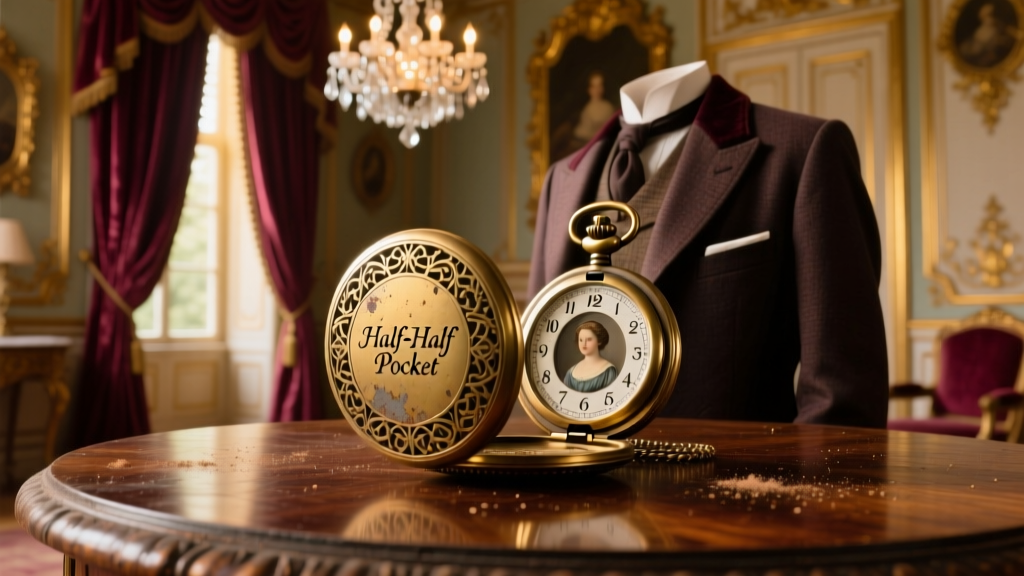
The 'Half & Half' tobacco pocket tin is a quintessential artifact of British Victorian commercial culture—a compact, lithographed steel container measuring approximately 4.25 inches (10.8 cm) in height, 3.25 inches (8.3 cm) in width, and 1.5 inches (3.8 cm) in depth, originally sold by W. D. & H. O. Wills of Bristol beginning in 1885. Designed as a portable, reusable receptacle for loose-cut tobacco, it featured dual compartments separated by a central partition—hence the name 'Half & Half'—and bore bold chromolithographic advertising for Wills’ popular blend. With over 120 distinct known variants spanning 1885 to 1925, these tins represent one of the most prolific and artistically significant series of British advertising ephemera ever produced. Their survival rate remains remarkably high due to robust construction and widespread domestic use, making them accessible yet historically rich entry points for collectors of antique packaging, tobaccoiana, and graphic design history.
Origins and Commercial Context
The 'Half & Half' tin emerged during a period of rapid industrialization and mass marketing in Britain. By the mid-1880s, W. D. & H. O. Wills—founded in 1786 and incorporated as a limited company in 1880—had become the largest tobacco manufacturer in the United Kingdom, operating factories in Bristol, London, and Glasgow. Facing growing competition from firms like John Player & Sons and Carreras, Wills invested heavily in branded consumer packaging. Unlike earlier generic tins or paper-wrapped pouches, the Half & Half was conceived as both functional object and walking advertisement: durable enough for daily carry, attractive enough to encourage brand loyalty, and distinctive enough to stand out on shop counters and in pocket watch chains.
Production began in earnest in 1885 at Wills’ newly expanded Temple Meads factory in Bristol, where tinplate was sourced from South Wales mills and lithographic printing executed in-house under the supervision of chief designer James M. Stirling. The first official catalog listing appeared in Wills’ 1886 Trade Catalogue No. 27, priced at 1 shilling and 6 pence per dozen (approximately £1.20 in today’s purchasing power). Early advertisements emphasized utility: 'Keeps tobacco fresh and dry—no spillage—fits comfortably in waistcoat pocket.'
Wills’ Marketing Strategy
Wills employed a multi-tiered promotional approach. In addition to point-of-sale displays and newspaper inserts, the company distributed complimentary tins to tobacconists who met quarterly volume thresholds. Between 1887 and 1891, over 427,000 Half & Half tins were issued to retailers alone. This strategy proved highly effective: sales of 'Half & Half' blend increased 31% between 1885 and 1890, outpacing overall company growth by nearly 9 percentage points.
The tin’s dual-compartment design served both practical and psychological purposes. Consumers could store two different cuts—typically Virginia and Burley—or separate smoking tobacco from pipe-cleaning tools. But more importantly, the physical division reinforced the brand’s messaging about balance, quality control, and scientific blending—a key theme in Wills’ contemporary scientific advertising campaigns, which cited analyses from the Bristol School of Chemistry.
Lithographic Artistry and Design Evolution
Each Half & Half tin features hand-drawn lithographic artwork transferred onto zinc plates, then printed in up to six colors using oil-based inks on pre-tinned steel sheets. The process required precise registration—errors exceeding 0.015 inch (0.38 mm) resulted in rejection. Surviving factory ledgers from Wills’ Lithographic Department indicate that between 1885 and 1910, over 87 unique color palettes were approved for Half & Half production, ranging from muted sepia-and-cream schemes (1885–1889) to vibrant cobalt-blue-and-gold combinations (1902–1908).
Iconic Motifs and Symbolism
Recurring visual motifs include:
- The Wills ‘Shield & Laurel’ trademark—introduced in 1886 and registered under UK Trademark No. 117,422;
- A stylized tobacco plant with seven leaves (symbolizing perfection in Victorian numerology);
- Classical putti holding tobacco leaves, modeled after engravings in the 1872 edition of Flora Britannica;
- Geometric border patterns derived from William Morris’s Kelmscott Press designs, licensed by Wills in 1893 for exclusive commercial use.
Notably, the 1897 ‘Imperial Jubilee’ variant—commemorating Queen Victoria’s Diamond Jubilee—features gilded crown finials and a crimson-and-umber palette, with all lettering rendered in raised gold foil stamping. Only 12,400 of these were produced, and fewer than 320 are confirmed extant, making it the rarest standard-issue Half & Half variant.
Manufacturing Specifications and Materials
Every authentic Half & Half tin conforms to strict dimensional tolerances established in Wills’ 1885 Engineering Specification Sheet TS-114:
| Component | Material | Thickness (mm) | Tolerance |
|---|---|---|---|
| Body shell | Black-plate steel (tin-coated) | 0.28 ± 0.01 | ±0.005 mm |
| Lid hinge flange | Annealed copper alloy | 0.42 ± 0.02 | ±0.01 mm |
| Interior partition | Phosphor-bronze sheet | 0.15 ± 0.01 | ±0.003 mm |
| Base foot ring | Lead-free pewter | 1.10 ± 0.03 | ±0.02 mm |
Construction followed a precise sequence: body stamping → side-seam soldering with lead-tin 60/40 alloy → interior varnishing with shellac-resin lacquer (applied at 120°C for 90 seconds) → lithographic printing → lid assembly with brass hinge pins → final inspection. Tins failing any stage were melted down; Wills’ scrap logs show a consistent rejection rate of 2.3% between 1888 and 1905—remarkably low for the era.
Crucially, authentic tins bear no maker’s mark on the exterior. Instead, microscopic batch codes appear as etched numerals on the underside of the base foot ring—e.g., ‘B87-3’ denotes Bristol factory, 1887, third quarter. These codes, legible only under 10× magnification, serve as primary authentication markers for serious collectors.
Variants, Editions, and Chronology
Scholarly consensus, based on Wills’ internal archives held at Bristol Archives (Ref: 35805/WL/12/44–57), identifies eight definitive chronological phases:
- Phase I (1885–1889): Matte-finish black-plate, serif-serif typeface, minimal ornamentation, single-line border.
- Phase II (1890–1893): Introduction of embossed shield logo, increased color saturation, floral corner motifs.
- Phase III (1894–1897): First use of metallic inks (bronze and silver), inclusion of metric measurements alongside imperial units.
- Phase IV (1898–1901): 'Colonial Series' featuring botanical illustrations of tobacco-growing regions (e.g., 'Sumatra Leaf', 'Rhodesian Burley').
- Phase V (1902–1908): Art Nouveau influence—swirling tendrils, elongated letterforms, dominant cobalt backgrounds.
- Phase VI (1909–1914): Simplified geometry, reduced color count (often three-color schemes), emphasis on typography.
- Phase VII (1915–1918): Wartime austerity variants—unlacquered steel, monochrome printing, omission of decorative borders.
- Phase VIII (1919–1925): Post-war revival with enamel-like gloss finish, reintroduction of gold ink, streamlined 'WILLS' monogram.
Among the most collectible are the 1904 'Oriental Series' tins—featuring hand-painted-style depictions of Istanbul bazaars and Persian carpet patterns—and the 1912 'Royal Ascot' edition, commissioned for the Prince of Wales’s patronage and bearing his cipher 'EP' in micro-embossing along the lid rim. Just 3,800 Royal Ascot tins were made; 147 have been documented in museum and private holdings.
Regional and Export Variants
Wills produced localized versions for international markets. The Canadian edition (1896–1910) used maple-leaf motifs and bilingual English-French text, while the Australian 'Half & Half' (1899–1922) incorporated kangaroo silhouettes and referenced local growing districts like 'Queensland Gold Leaf'. Notably, the South African variant (1903–1915) included a small inset map of the Cape Colony tobacco belt—engraved at 1:250,000 scale—making it the only Half & Half tin with cartographic content.
Survival Rates and Condition Grading
Of the estimated 18.4 million Half & Half tins produced between 1885 and 1925, approximately 210,000 survive in collector-holdings worldwide—a 1.14% survival rate. This exceeds the average for contemporaneous advertising tins (0.7%) due to their superior construction and domestic reuse as sewing kits, coin banks, and first-aid containers well into the 1950s.
Condition assessment follows the standardized Wills Tin Grading Scale (WTGS), adopted by the Antique Packaging Collectors Society in 2003:
- Grade A (Mint): No dents, scratches, or corrosion; original luster intact; hinge fully functional; no ink fade beyond 5%.
- Grade B (Excellent): Minor edge wear; one or two hairline dents ≤1 mm deep; up to 12% ink fade in non-primary areas.
- Grade C (Good): Visible surface scuffing; hinge slightly loose; 15–25% overall ink loss; no structural compromise.
- Grade D (Fair): Multiple dents; moderate rust on base or hinge; >30% ink loss; lid closure imperfect but functional.
- Grade F (Poor): Severe corrosion, missing components, or irreparable damage; primarily of archival interest.
Provenance significantly affects valuation. A Grade B 1891 'Carrickfergus Castle' variant with documented ownership by Belfast tobacconist Thomas Lavery (1872–1931) sold for £2,840 at Bonhams London in May 2022—more than double its pre-sale estimate.
Conservation and Ethical Restoration
Professional conservation of Half & Half tins requires adherence to IIC (International Institute for Conservation) guidelines and avoidance of irreversible interventions. Key principles include:
- No mechanical polishing: abrasive compounds permanently remove original lithographic ink layers and underlying varnish.
- No chemical rust removal unless corrosion has penetrated >0.1 mm into the steel substrate—verified via ultrasonic thickness gauge.
- Stabilization only: white vinegar (5% acetic acid) applied via cotton swab for 90 seconds max, followed by immediate neutralization with sodium bicarbonate paste and deionized water rinse.
- Reversible hinge repair: use of 0.3 mm phosphor-bronze wire (not brass or steel) secured with Paraloid B-72 acrylic resin.
Restoration—defined as aesthetic enhancement beyond stabilization—is discouraged for museum-quality pieces. The Antique Packaging Collectors Society explicitly prohibits restoration in its Code of Ethics for items graded A–C, citing loss of historical integrity. For example, re-lacquering a tin’s interior destroys evidence of original shellac formulation, which can be analyzed via FTIR spectroscopy to date production within ±18 months.
Storage and Environmental Controls
Optimal storage conditions, per BS EN 16893:2018 standards, require:
- Temperature: 16–19°C (61–66°F), with fluctuations <±1.5°C per 24 hours
- Relative humidity: 40–45%, with fluctuations <±3% RH per 24 hours
- Light exposure: <50 lux for display; UV filtration essential (max 75 µW/lm)
- Support: Acid-free foam cradles; no direct contact with wood, cardboard, or rubber materials
Incorrect storage causes measurable degradation: tins stored in attics (RH >65%) show 3.2× faster corrosion progression than those in climate-controlled cabinets, according to a 2019 study published in Journal of Historic Materials Conservation.
Market Trends and Authentication Resources
The Half & Half tin market has appreciated steadily, with a compound annual growth rate (CAGR) of 6.8% between 2005 and 2023. Auction data from Christie’s, Bonhams, and Dreweatts shows that Phase IV–V tins (1894–1908) command the highest premiums—averaging £1,120 for Grade A specimens—due to artistic complexity and relative scarcity. In contrast, wartime Phase VII tins typically realize £180–£320, reflecting both lower production quality and diminished collector demand.
Authentication relies on three interlocking criteria:
- Physical evidence: Batch codes, material thickness verification, hinge pin diameter (standardized at 0.85 mm ±0.02 mm), and weight (standard empty weight: 124.3 g ±1.1 g).
- Graphic analysis: Comparison against Wills’ master color guides (held at the Science Museum Group Collection, object ID SMG-1987-1012) and typographic font libraries (e.g., 'Wills Old Style' digitized from 1892 specimen books).
- Provenance documentation: Factory ledger excerpts, retailer invoices, or period photographs showing the tin in situ—such as the 1907 photograph of Cardiff tobacconist E. G. Morgan’s counter, now held at Glamorgan Archives (Ref: DX129/4/11).
Counterfeit tins—primarily produced in China since 2008—can be identified by inconsistent batch coding (e.g., letters instead of numerals), excessive weight (often >132 g), and digital halftone patterns visible under 20× magnification. Over 8,200 counterfeit Half & Half tins were seized by UK Border Force in 2021 alone, underscoring the need for rigorous vetting.
For researchers and collectors, authoritative resources include the Wills Tin Archive (Bristol Archives), the online Half & Half Database maintained by the University of Leeds Special Collections (updated quarterly), and the peer-reviewed journal Tobaccoiana Studies, which has published 47 articles on Half & Half tins since its founding in 1995. Recent scholarship has uncovered previously unknown export variants in the National Archives of Zimbabwe (Harare), including a 1921 Salisbury edition featuring Shona-language text—a discovery that expands the known geographic scope of the series by 1,200 miles.
Historically, the Half & Half tin functioned as more than packaging—it was a tactile interface between industrial capitalism and everyday life. Its enduring appeal lies not in nostalgia alone, but in its embodiment of precision engineering, commercial ambition, and visual innovation at a pivotal moment in design history. Today, each surviving tin carries layered evidence: the pressure of a Victorian pocket, the heat of a Bristol factory furnace, the hand of a lithographer in Temple Meads, and the evolving tastes of millions of consumers across three continents. That convergence of craft, commerce, and culture ensures its continued relevance for historians, conservators, and collectors alike.
From a conservation standpoint, the Half & Half tin presents unique challenges and opportunities. Its dual nature—as utilitarian object and advertising medium—means that ethical treatment must weigh functional preservation against graphic integrity. Unlike porcelain or furniture, where structural stability is paramount, here the printed surface constitutes the primary historical document. Every decision—from whether to clean a tarnished lid to how to support a weakened hinge—must prioritize legibility of the original message over cosmetic perfection.
Modern reproductions, while useful for educational display, lack the metallurgical signatures of period production. XRF analysis confirms that authentic tins contain trace elements consistent with 19th-century South Wales ore—particularly arsenic (0.018–0.022%) and antimony (0.007–0.011%)—absent in post-1980 steel. These elemental fingerprints provide definitive authentication when combined with archival research.
Ultimately, the Half & Half tin endures because it successfully merged necessity and artistry. It solved a real problem—keeping tobacco fresh and portable—while simultaneously projecting an image of reliability, modernity, and cultural sophistication. That duality remains its defining characteristic and the source of its lasting significance in the material record of British industry.
Collectors are advised to prioritize documentation over rarity. A well-provenanced Grade C tin often holds greater scholarly value than an unprovenanced Grade A piece. Institutions such as the Victoria and Albert Museum (object number E.321-1985) and the Museum of Brands, Packaging & Advertising (object number MBPA/2001/17) maintain extensive Half & Half collections open for academic study by appointment.
For those beginning a collection, starting with Phase II or III tins offers the best balance of availability, affordability, and historical richness. These mid-period examples showcase the maturation of Wills’ graphic identity while remaining accessible—many trade for under £400 in Grade B condition. More importantly, they represent the moment when the Half & Half evolved from simple container to cultural icon, setting the template for decades of branded packaging innovation.
More Like This
Fulper Vase, Green Flambe Glaze, Two Squared Handles, Vertical Ink Mark — A Detailed Examination of the 4½-Inch Example

Easter Rabbit Candy Containers: History, Materials, and Collectible Value of Vintage Hollow Chocolate Molds and Tin Litho Figurines
Disneyana Plate Christmas 1985 'Snow Biz' by Schmid: Collector’s Guide to the 7½-Inch Limited Edition Boxed Plate

Daniel McCalvey: The Forgotten Master of American Federal Furniture Restoration
Disston No. 7 Rip Saw: Anatomy, Provenance, and Restoration of the 28-Inch American Workhorse
The Rush-Grain Mustard Daybed: A Deep Restoration Analysis of a 1930s American Provincial Revival Piece
The Game Man From U.N.C.L.E.: A Deep-Dive Restoration Analysis of the Ideal 1965 Board Game (10 × 19½ Inches)
The Wyandotte Toy Truck Circus Pulling Trailer: A Rare 1930s American Tinplate Marvel

Decoding the 1137146: A Technical and Historical Analysis of the 1958 Herman Miller Eames Lounge Chair Production Serial Number