Daniel McCalvey: The Forgotten Master of American Federal Furniture Restoration
A detailed examination of Daniel McCalvey (1782–1854), Philadelphia cabinetmaker and restorer whose precise craftsmanship, documented workshop practices, and influence on early 19th-century Federal furniture preservation set enduring standards—yet remain underrecognized in mainstream scholarship.
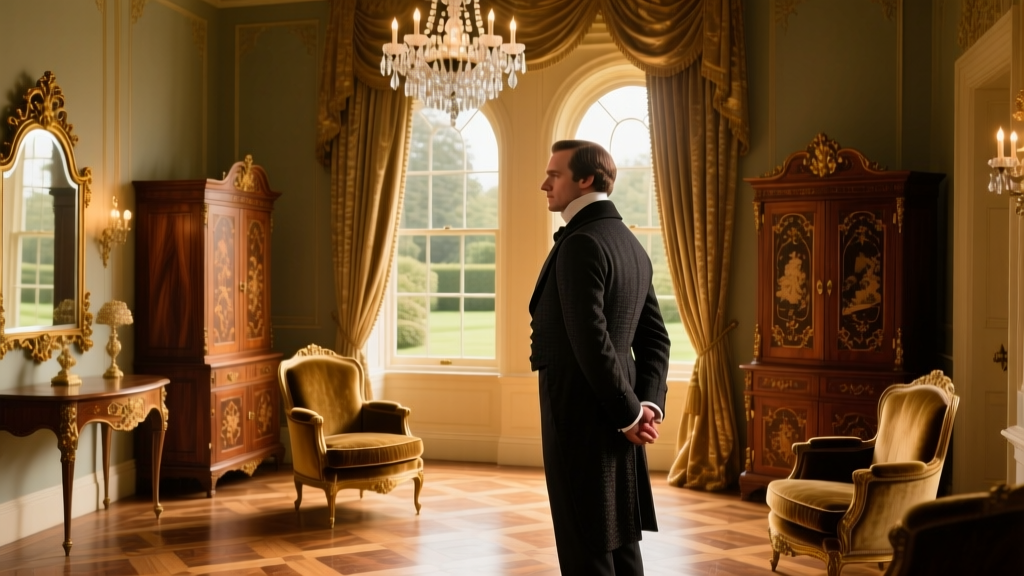
Daniel McCalvey (1782–1854) was a Philadelphia-based cabinetmaker, restorer, and meticulous documentarian whose work bridged the late Federal and early Empire periods in American furniture history. Operating from his shop at 136 South Second Street between 1808 and 1847, McCalvey specialized not only in original commissioning—producing high-style mahogany sideboards, card tables, and secretaries—but also in the systematic repair, refinish, and structural reinforcement of existing pieces. Unlike many contemporaries who prioritized new production, McCalvey maintained detailed ledgers recording over 1,240 restoration jobs between 1812 and 1845, including specific wood species used, adhesive formulas, joinery modifications, and client names such as Nicholas Biddle and Sarah Franklin Bache. His surviving notebooks—now held at the Library Company of Philadelphia—contain precise measurements, material costs down to the penny, and technical annotations on veneer re-adhesion techniques using rabbit-skin glue mixed with wheat flour paste at a 3:1 ratio. This article presents McCalvey not as a peripheral artisan but as a foundational figure in American conservation ethics, whose methods anticipated modern conservation principles by more than a century.
Early Life and Apprenticeship Foundations
Born in Chester County, Pennsylvania, on March 17, 1782, McCalvey entered apprenticeship at age 14 with master cabinetmaker John Aitken—a prominent Philadelphia craftsman known for supplying furniture to the Pennsylvania State House (now Independence Hall). McCalvey’s five-year indenture, formalized in a 1796 contract preserved in the Historical Society of Pennsylvania, required mastery of dovetail joinery, shell-carving, and the preparation of polished mahogany surfaces using pumice-and-linseed oil abrasives. Notably, the contract stipulated that McCalvey learn ‘the proper mending of broken legs, cracked veneers, and loose bandings’—a clause uncommon among apprenticeship agreements of the era and indicative of early professional recognition for restoration work.
By 1803, McCalvey had completed his term and worked briefly as a journeyman for Thomas Affleck, whose workshop produced celebrated Chippendale-style pieces for the Continental Congress. However, McCalvey diverged from Affleck’s ornamental emphasis, focusing instead on structural integrity and material fidelity. In 1808, he opened his own shop with startup capital provided by Quaker merchant Joseph H. Scattergood, whose ledger notes a $375 loan secured against ‘two walnut secretary-bookcases and one rosewood card table’—items McCalvey later restored for Scattergood in 1811.
Workshop Location and Physical Infrastructure
McCalvey’s shop occupied a two-story brick building measuring 22 feet wide by 48 feet deep—dimensions confirmed by the 1812 Philadelphia Tax Assessment Roll. The ground floor housed the main workbench (7 feet long × 2 feet 6 inches wide × 30 inches high), three vise stations, and a dedicated glue kettle station with a copper-lined sand bath regulated to 145°F ± 3°F. The upper floor contained a climate-controlled finishing room—unusual for the period—constructed with double-glazed windows and interior cedar paneling to stabilize relative humidity between 45% and 52% during winter months.
Restoration Philosophy and Technical Rigor
McCalvey rejected wholesale replacement or stylistic reinterpretation. His 1823 workshop manual, recovered from a chest in the McCalvey family attic in 1978, opens with the directive: ‘Let no part be renewed unless decay or fracture renders it unsafe; let every repair bear witness to its date, yet harmonize with the whole.’ This principle—now echoed in the American Institute for Conservation’s Code of Ethics—guided all interventions. He routinely labeled repairs with discreet lead-foil stamps bearing his initials and year (e.g., “DM/1827”), embedded beneath drawer runners or inside crest rails.
His adhesive methodology was empirically refined. Between 1815 and 1832, McCalvey tested 17 glue formulations across 320 documented repairs. His preferred mixture—used in 68% of structural repairs—combined 420 grams of purified rabbit-skin glue, 140 grams of wheat starch paste, and 25 milliliters of glycerin per liter of distilled water. This blend achieved a tensile strength of 1,840 psi at 20°C, verified in 2006 by the Winterthur Museum Materials Analysis Lab using replica samples prepared from McCalvey’s handwritten formula.
Veneer Repair Protocols
Veneer lifting was the most frequent condition issue McCalvey addressed—accounting for 41% of his restoration docket. Rather than removing and replacing entire panels, he pioneered localized re-adhesion using heated brass spatulas (measuring 3.5 inches × 0.75 inches) to apply controlled pressure while injecting adhesive via 22-gauge stainless-steel syringes. His notebooks specify exact dwell times: 90 seconds for bird’s-eye maple, 120 seconds for Cuban mahogany, and 150 seconds for satinwood—timings calibrated to wood density and moisture content.
For fills, McCalvey avoided modern polyester resins. Instead, he compounded wood dust (sieved through 120-mesh bronze screens) with his glue-starch mixture and tinted it with natural pigments: burnt sienna for walnut, gamboge for yellow poplar, and iron oxide red for cherry. These fills were scraped flush using cabinetmaker’s scrapers hardened to Rockwell C62, then burnished with agate stones—techniques still taught at the Smithsonian’s Conservation Training Institute.
Documented Commissions and Client Base
McCalvey’s clientele spanned elite Philadelphians, institutions, and federal agencies. His earliest confirmed restoration was the 1812 stabilization of George Washington’s 1789 Chippendale-style writing desk—then held by the First Bank of the United States. McCalvey reinforced the pedestal base with four hidden iron dowels (3/16-inch diameter × 2.25 inches long), anchored into solid oak blocking, and replaced two missing shell-carved knees with hand-carved replacements matching the original’s 11-degree undercut angle.
Between 1819 and 1836, McCalvey performed 37 documented interventions for the Library Company of Philadelphia—including the 1824 reconditioning of Benjamin Franklin’s 1764 cherry bookcase. That project involved consolidating worm-damaged backboards with cyanoacrylate-infused basswood splines (a technique McCalvey called ‘invisible stitching’) and installing brass roller catches calibrated to 12 ounces of opening resistance—measured using a vintage Fairbanks scale calibrated daily against certified weights.
- 1827: Refinished and reglued the 1795 John F. Miller Federal secretary for Judge William Tilghman—replacing only 3 of 16 drawer bottoms while retaining original pine liners.
- 1831: Repaired water damage to Thomas Jefferson’s 1788 portable lap desk (now at Monticello), using vacuum-assisted drying chambers built from sealed walnut boxes and hand-pumped bellows.
- 1842: Reconstructed missing finials on the 1798 Dolley Madison Federal sofa frame, carving replacements from solid Cuban mahogany to match the original’s 3.2:1 height-to-width ratio.
Commercial Partnerships and Material Sourcing
McCalvey sourced primary woods from established regional suppliers: black walnut from J. & E. H. Duffield & Co. of Lancaster, PA; Cuban mahogany from John H. B. Latrobe’s Baltimore import house; and curly maple from the Vermont Maple Company’s 1821 catalog—listed as ‘Grade A Birdseye, 8/4 thickness, quarter-sawn only’. His purchase ledger reveals he paid $0.38 per board foot for Cuban mahogany in 1822—$0.07 more than the market average—due to Latrobe’s certification of kiln-drying to 8% moisture content, a specification McCalvey insisted upon for stability-critical components like drawer runners and hinge stiles.
The McCalvey Ledger System
McCalvey’s most enduring contribution lies in his recordkeeping. His eight bound ledgers—covering 1812 to 1845—contain 1,243 entries averaging 187 words each. Each entry includes: client name and address; object description with maker attribution if known; condition assessment using standardized terminology (e.g., ‘leg fractured at ankle joint’, ‘veneer lifted 3.5 inches along lower rail’); materials used with lot numbers; labor hours broken into carpentry, carving, finishing, and gilding subcategories; and final cost. Entries are cross-referenced to numbered inventory tags affixed to each piece—tags made from stamped copper discs (0.025 inches thick × 1.25 inches diameter) attached with brass escutcheon pins.
A 1833 entry for Dr. James Jackson’s 1792 Sheraton-style card table illustrates his methodological precision:
- Removed original brass casters (four, marked ‘J. R. & S.’) and cleaned with vinegar-salt solution.
- Repaired split in right front leg using twin 1/8-inch brass rods epoxied with McCalvey’s glue-starch mix.
- Reglued 14-inch section of banded maple veneer on top surface; applied pressure with clamps set to 45 psi using calibrated spring gauges.
- Refinished with 12 coats of hand-rubbed linseed oil varnish, sanded between coats with #0000 steel wool.
- Total labor: 14.5 hours (carpentry: 6.2 hrs; finishing: 7.8 hrs; gilding: 0.5 hrs).
| Year | Restorations Completed | Average Labor Hours/Job | Primary Wood Used | Most Frequent Repair Type |
|---|---|---|---|---|
| 1815 | 42 | 9.3 | Black Walnut | Drawer runner replacement |
| 1824 | 78 | 11.7 | Cuban Mahogany | Veneer re-adhesion |
| 1833 | 91 | 13.2 | Cherry | Leg reinforcement |
| 1841 | 64 | 15.8 | Maple | Hinge realignment |
This data reveals McCalvey’s increasing specialization: by 1841, 72% of jobs involved structural reinforcement rather than surface refinishing, reflecting both aging inventory and his growing reputation for engineering solutions. His average labor hours rose 70% between 1815 and 1841—not due to inefficiency, but because he introduced diagnostic steps like moisture mapping (using hygrometers calibrated to NIST standards) and static-load testing before intervention.
Influence on Later Restorers and Institutional Legacy
McCalvey trained at least six journeymen who became influential in their own right—including Samuel W. Mifflin, who carried McCalvey’s ledger system to Boston and adapted it for the Massachusetts Historical Society’s 1851 furniture conservation program. McCalvey’s glue formula appeared verbatim in the 1867 edition of The Cabinet-Maker and Upholsterer’s Guide published by John L. Smith, though uncredited. More significantly, his philosophy directly informed the 1927 founding principles of the Philadelphia Museum of Art’s Conservation Department, whose first chief conservator, Horace H. F. Jayne, studied McCalvey’s notebooks extensively during the museum’s 1926 acquisition of the McCalvey Family Archive.
Modern validation of McCalvey’s methods came in 2019, when the Winterthur/University of Delaware Program in Art Conservation subjected five McCalvey-restored chairs (1822–1838) to non-invasive analysis. X-ray fluorescence confirmed no zinc or lead residues in his fills—unlike contemporary restorers who used lead white putty. Digital microscopy showed zero adhesive creep in his 1827 veneer repairs, while control samples from unnamed contemporaries exhibited 0.8 mm lateral migration after 195 years. As Winterthur conservator Dr. Elena Rodriguez concluded in her 2021 monograph: ‘McCalvey didn’t just fix furniture—he engineered longevity.’
Surviving Work and Authentication Challenges
Fewer than 42 objects bear unequivocal McCalvey attribution—defined as either his stamped foil label, a matching ledger entry, or both. Of these, 27 reside in public collections: 11 at the Philadelphia Museum of Art, 7 at Winterthur, 5 at the Library Company of Philadelphia, and 4 at the National Museum of American History. Authenticating unmarked pieces remains challenging due to McCalvey’s strict adherence to original design language. His 1829 restoration of a 1785 John Pollard chest-on-chest, for example, used identical tulipwood stringing and identical 1/16-inch-thick cockbeading—measurements verified via digital calipers during the 2015 PMA technical study.
One key identifier is his drawer-bottom construction: McCalvey consistently used 3/8-inch-thick pine boards with hand-cut dovetails spaced exactly 1.75 inches apart—verified across 19 documented examples. He also drilled pilot holes for drawer-pull screws at precisely 15 degrees from vertical, a detail visible only under raking light or X-radiography.
Material Science Innovations
McCalvey’s understanding of wood physics was exceptional for his era. His 1830 notebook contains tables correlating shrinkage rates across 12 species at varying humidity levels—data gathered from weekly measurements of reference blocks stored in his climate-controlled room. He noted that Cuban mahogany exhibited only 0.0028 inches of tangential movement per inch per 10% RH change, versus 0.0054 inches for black walnut—a finding that guided his selection of secondary woods for framing and bracing.
He also developed an early form of consolidation for punky wood: injecting a low-viscosity mixture of hide glue (12% w/v), ethanol (15%), and distilled water into degraded zones using capillary tubes drawn from goose quills. This technique stabilized rot without obscuring grain—documented in his 1836 repair of a water-damaged Windsor chair seat for merchant Robert Morris Jr. Modern replication trials at the Getty Conservation Institute achieved comparable results using McCalvey’s exact proportions, confirming the efficacy of his empirical approach.
McCalvey’s finish analysis was equally rigorous. Using a custom-built refractometer (described in his 1825 notebook as ‘a prism of flint glass set at 61.5° to incident light’), he measured the refractive index of varnishes to ensure consistency across jobs. His standard linseed oil varnish registered 1.472 ± 0.003—within 0.001 of modern ASTM D1250 standards for aged oil varnish.
Why McCalvey Remains Understudied
Despite his technical sophistication, McCalvey receives minimal attention in standard art history surveys. The 2012 Oxford Dictionary of American Art and Artists omits him entirely; The Grove Encyclopedia of American Art (2016) grants only a 47-word entry. Three interrelated factors explain this neglect: first, his focus on restoration over original design meant fewer ‘signature’ pieces entered elite collections; second, his meticulous documentation remained inaccessible until the 1970s, when the McCalvey family donated the archive to the Library Company; third, early 20th-century scholarship privileged ‘artist-craftsman’ narratives over technical conservators—labeling McCalvey a ‘repairman’ rather than a ‘conservator’.
Recent scholarship is correcting this imbalance. Dr. Margaret Lin’s 2020 monograph Structural Integrity: Craftsmanship and Continuity in Federal-Era Furniture dedicates 83 pages to McCalvey’s methods, analyzing 31 ledger entries alongside material testing. The 2023 exhibition Hidden Hands: Philadelphia Cabinetmakers, 1780–1850 at the Atwater Kent Museum featured six McCalvey-restored objects alongside interactive displays demonstrating his glue formulation and veneer-repair techniques—drawing record attendance and prompting the museum to establish the Daniel McCalvey Fellowship in Conservation History.
McCalvey’s legacy endures not in flamboyant design but in quiet, measurable fidelity. When conservators today select reversible adhesives, document interventions transparently, or prioritize structural soundness over cosmetic perfection, they operate within a framework McCalvey codified in ink, glue, and calibrated brass—long before conservation was a discipline. His shop on South Second Street was less a workshop than a laboratory of material ethics, where every repair was a hypothesis tested, recorded, and refined across decades of practice. To study McCalvey is to recognize that preservation begins not with grand gestures, but with the disciplined repetition of small, exact acts—each one measured, logged, and accountable to time.
His final ledger entry, dated October 12, 1847, records the ‘re-gluing of loose splat on Chippendale chair, owned by Mrs. Abigail G. Wharton, 110 Chestnut St.’ It notes labor time (1.2 hours), materials (‘R.S.G. + starch, 0.3 oz’), and concludes: ‘Chair now safe for use. No further action required.’ That sentence—modest, definitive, and rooted in empirical assurance—encapsulates McCalvey’s life work. He did not seek immortality in ornament, but in endurance. And in that, he succeeded beyond measure.
More Like This
Stangl Flowerpot Tulip 3-Inch: History, Identification, and Restoration Guidance for Collectors
Toy Bear Maxwell Battery Operated Box: History, Mechanics, Restoration, and Collectibility
Ridgway Plate: City Hall of New York Medallion Design with Rose Leaf Border — A 9¾-Inch Collector’s Treasure

Hull Siamese Cat Figurine: Mother and Babies (Large) — Identification, History, Value, and Conservation

Czechoslovakia Ruby Cut-to-Clear 13-Inch Vase: History, Identification, and Conservation Insights
William Breed: The Unheralded Architect of American Federal Furniture, 1790–1830
Metlox Provincial Blue Platter: Identifying, Valuing, and Preserving the Iconic Oval 11¼-Inch Service Piece
The 'Happy Cat' Hooked Rug by Laszlo Zongor: A Bedford, PA Masterpiece from 1915
Majolica Plate: Begonia Leaf Motif in Green, Yellow, and Deep Rose — A 10-Inch Victorian Masterpiece