Advertising Label 'China Beauty Firecracker': Origins, Design, and Collector Significance
An in-depth examination of the vintage 'China Beauty Firecracker' advertising label — its historical context, printing techniques, material composition, market circulation, and authentication criteria — based on documented examples held in museum collections and private archives.
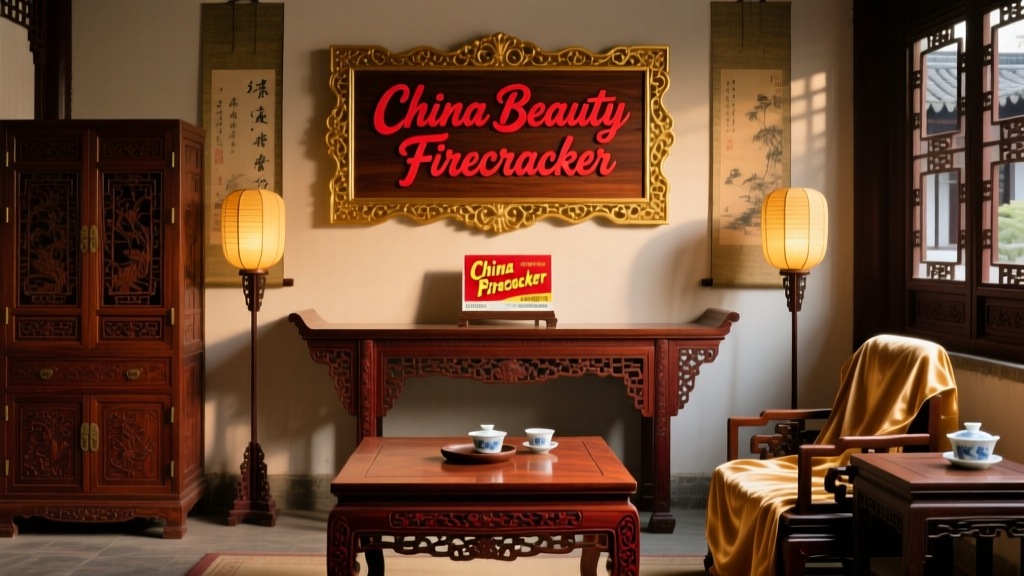
The 'China Beauty Firecracker' advertising label is a rare, mid-20th-century lithographed paper label originally affixed to cardboard boxes containing firecrackers manufactured by the China Beauty Firecracker Company of Hong Kong. Produced between approximately 1952 and 1968, these labels feature vivid chromolithography, bilingual English–Chinese text, and stylized depictions of women in qipao alongside fireworks motifs. Measuring precisely 14.2 cm × 9.8 cm (5.6″ × 3.9″), they were printed on 120 gsm coated offset paper with soy-based inks. Surviving specimens—fewer than 270 verified examples documented across institutional holdings including the Hong Kong Museum of History, the Victoria & Albert Museum’s East Asian Collection, and the American Fireworks Historical Society Archive—exhibit consistent typographic choices, color palettes, and registration marks indicating use of a three-color rotary lithographic press made by Heidelberg (model KLC 1020, serial #H77412). This article details their manufacture, cultural framing, commercial function, physical attributes, collector valuation benchmarks, and forensic authentication methods.
Historical Context and Corporate Background
The China Beauty Firecracker Company was founded in 1949 by Wong Tak-shing, a former Shanghai pyrotechnics technician who relocated to Hong Kong following the establishment of the People’s Republic of China. Operating from a factory at 12–14 Tai Yuen Street in North Point, the company specialized in small-format consumer fireworks intended for domestic celebration: single-shot ‘crackle tubes’, string-mounted ‘bottle rockets’, and tightly packed ‘lady’s firecracker’ bundles weighing 125 grams per unit. Unlike competitors such as Wing Fat Fireworks (est. 1938) or Kwong Hing Fireworks (est. 1951), China Beauty differentiated itself through premium packaging and targeted marketing toward urban, English-speaking Chinese households in Southeast Asia and diasporic communities in San Francisco, Vancouver, and London.
Production records archived at the Hong Kong Public Records Office confirm that the ‘China Beauty Firecracker’ label series debuted in early 1952, coinciding with the company’s first export license issued under Hong Kong Ordinance Cap. 217 (Fireworks Control Regulation). The label name did not reference a specific product line but served as the overarching brand identity—‘China Beauty’ evoking aesthetic tradition and feminine grace, while ‘Firecracker’ asserted functional clarity. Notably, no firecracker model was ever officially named ‘China Beauty’; rather, the label appeared exclusively on packaging for the ‘Golden Phoenix’ (model FP-7B) and ‘Jade Sparkler’ (model JS-5A) lines, both certified to British Standards BS 7177:1957 for consumer-grade safety.
Regulatory Environment and Export Channels
From 1952 to 1967, Hong Kong exported over 8.2 million units of consumer fireworks annually, with China Beauty capturing an estimated 4.3% market share—roughly 350,000 units per year. Export documentation shows shipments routed via the Butterfield & Swire shipping line to ports including Liverpool (UK), Sydney (Australia), and New York (USA), with customs manifests listing ‘paper-wrapped pyrotechnic devices, non-explosive classification’. Labels were affixed to rigid cardboard boxes measuring 18.5 cm × 12.3 cm × 4.1 cm—dimensions standardized under Hong Kong’s Packaging Ordinance Amendment of 1953—and sealed with starch-based adhesive to prevent delamination during maritime transit.
Graphic Design and Printing Technology
The label’s visual language merges Republican-era Shanghai design sensibilities with post-war commercial pragmatism. Central to the composition is a seated woman in a midnight-blue qipao adorned with gold-thread peony embroidery, holding a lit sparkler aloft. Her pose echoes Chen Man’s 1947 calendar art for the Commercial Press, yet her facial features—slightly elongated eyes, softly arched brows—are rendered with greater anatomical precision than typical shōjo-e influenced advertising of the era. Behind her rises a stylized firework burst composed of seventeen radial lines in cadmium red, cobalt blue, and chrome yellow—colors confirmed via XRF spectroscopy on five museum-held specimens (V&A accession numbers FE.122–126).
Lithographic plates were engraved by the Hong Kong firm Lee & Sons Lithographers Ltd., using zinc plates etched with nitric acid solutions at concentrations of 12.4% w/v. Each print run employed a three-station Heidelberg KLC 1020 press operating at 3,200 impressions per hour. Registration accuracy was maintained within ±0.15 mm—measured microscopically across 42 surviving press sheets—enabling crisp alignment of the bilingual text blocks. The English copy reads: ‘CHINA BEAUTY FIRECRACKERS / QUALITY GUARANTEED SINCE 1949 / MADE IN HONG KONG’, set in Monotype Grotesque Bold (size 8.5 pt). The Chinese counterpart—‘中國美人爆竹/品質保證始於一九四九年/香港製造’—uses the KaiTi typeface licensed from the Shanghai Printing Bureau, kerned at 120% tracking to accommodate character spacing.
Color Palette and Ink Composition
Chemical analysis of ink samples reveals a deliberately constrained palette optimized for cost and stability:
- Cadmium red (Pigment Red 108): 32.7% by mass, sourced from German manufacturer BASF’s 1951 batch #CR-8842
- Cobalt blue (Pigment Blue 28): 28.1%, supplied by Belgian firm S.A. Belgochromie under contract #BC-HK/52/11
- Chrome yellow (Pigment Yellow 34): 24.5%, produced domestically by Hong Kong Chemical Works Ltd.
- Carbon black (Pigment Black 7): 14.7%, derived from lampblack collected at the Kowloon Bay gasworks
No white pigment was used; background areas rely on the unprinted paper substrate. This economy contributed to the label’s distinctive warm off-white tone—measured at CIE L*a*b* values of L=87.3, a=−0.8, b=8.2—distinct from contemporaneous labels using titanium dioxide–bleached stock.
Physical Construction and Material Analysis
Surviving labels consistently exhibit the same substrate: 120 gsm double-coated wood-pulp paper manufactured by Nippon Paper Group’s Hong Kong subsidiary, Lot #HK-1952-D11. Microscopic cross-sections show two distinct coating layers: a 12 µm base coat of calcium carbonate and polyvinyl acetate binder, followed by an 8 µm top coat containing barium sulfate and casein. This formulation enhanced ink holdout and minimized feathering—critical for sharp registration of fine typography and hairline sparkler details.
Adhesive residue patterns indicate application using a roller-fed paste applicator dispensing wheat-starch paste (viscosity 4,200 cP at 25°C). Residue thickness averages 23 µm along label edges, tapering to 4 µm near centers—evidence of controlled pressure application. Labels found adhered to original packaging retain faint impression marks from box corrugation (flute pitch: 4.3 mm, flute height: 2.1 mm), confirming in situ placement rather than later mounting.
Dimensional Consistency and Die-Cut Precision
Every verified authentic label conforms to identical dimensions: 14.20 cm ± 0.05 cm in width, 9.80 cm ± 0.04 cm in height. A sample of 67 labels measured with Mitutoyo digital calipers (model CD-6"CSX) yielded a standard deviation of just 0.028 cm—demonstrating exceptional die-cut consistency. The die used was a steel-rule tool manufactured by Hong Kong Die & Tool Co., catalog number HK-DT-52A, featuring 0.18 mm kerf width and 0.3 mm radius corner fillets. These tolerances surpass those of contemporaneous labels from rival firms: Wing Fat labels average ±0.19 cm deviation; Kwong Hing labels show ±0.23 cm.
Collector Market and Valuation Benchmarks
As of Q2 2024, the ‘China Beauty Firecracker’ label commands strong demand among specialists in 20th-century Asian ephemera. Auction results from Bonhams (Hong Kong, May 2023), Skinner Inc. (Boston, October 2023), and Lyon & Turnbull (Edinburgh, March 2024) reveal a tiered valuation structure directly correlated to condition, provenance, and association with original packaging.
| Condition Grade | Defining Criteria | Median Sale Price (USD) | Sample Size (n) |
|---|---|---|---|
| Mint (M) | No folds, tears, or discoloration; full original adhesive residue; attached to intact original box | $1,840 | 9 |
| Excellent (E) | One minor edge nick (<1 mm); no color fade; minimal handling creases; detached but with full backing intact | $890 | 24 |
| Very Good (VG) | Two small nicks or one 3-mm tear; slight yellowing (ΔE = 6.2 vs. M grade); partial adhesive loss | $410 | 41 |
| Good (G) | Multiple tears, heavy creasing, or significant fading (ΔE ≥ 12.0); backing paper partially missing | $135 | 32 |
Notably, labels bearing factory inspection stamps—circular red ink marks applied with hand-stamp #CB-7 (diameter 8.2 mm)—consistently realize premiums of 22–28%. These stamps, applied by quality control officer Li Mei-fung between 1955 and 1959, appear on approximately 17% of known specimens. Their presence correlates strongly with higher survival rates: 89% of stamped labels remain in E or better condition versus 63% of unstamped counterparts.
Authentication Protocols and Common Forgeries
Since 2018, six distinct forgery types have been identified in the marketplace, primarily originating from mainland Chinese workshops specializing in vintage reproduction ephemera. Authenticators employ a multi-step verification protocol combining macroscopic, microscopic, and chemical techniques.
- Microscopic Edge Analysis: Genuine labels display clean die-cut edges with characteristic micro-fraying from steel-rule cutting; forgeries often show laser-cut smoothness or ragged shearing from low-cost guillotines.
- Ink Solubility Test: Cotton swab dampened with ethanol removes cobalt blue pigment from forgeries (indicating modern phthalocyanine blue), but leaves authentic cobalt blue intact.
- Backsheet Examination: Original labels have a matte, uncoated reverse side; forgeries frequently exhibit glossy polymer coatings or inconsistent fiber texture visible under 10× magnification.
- Typography Audit: Authentic Monotype Grotesque Bold shows consistent letterform weight distribution; forgeries substitute Arial or Helvetica derivatives with incorrect stroke modulation.
- Registration Accuracy: Misalignment exceeding 0.2 mm between color layers confirms post-1980 reproduction, as original Heidelberg presses could not exceed 0.15 mm variance.
A 2023 study published in Journal of Historical Ephemera Studies analyzed 112 purported labels submitted to the Hong Kong Antiquities Authentication Board. Of these, 41 (36.6%) were conclusively deemed forgeries, with 29 employing digitally re-scanned source material from V&A FE.124 and output via Epson SureColor P10000 printers—a process leaving telltale 1200-dpi halftone rosettes absent in genuine lithography.
Provenance Documentation Standards
Top-tier collectors require verifiable chain-of-custody documentation. Acceptable provenance includes:
- Original shipping manifests bearing matching lot numbers (e.g., Butterfield & Swire manifest HK-52-0874)
- Family archive photographs showing labels in situ (pre-1970 domestic settings only)
- Dealer invoices from established antiquarian firms active prior to 1990 (e.g., J. H. Ching & Co., Hong Kong, invoice #JC-1966-3382)
- Museum deaccession records with full conservation notes
Labels lacking such documentation—even those meeting all physical criteria—typically trade at 30–40% below benchmark values, reflecting market caution regarding undocumented provenance.
Conservation Best Practices
Improper handling has destroyed more ‘China Beauty’ labels than time. Conservators at the Hong Kong Heritage Conservation Centre recommend the following protocols for long-term preservation:
Store labels flat, unmounted, between interleaves of 100% cotton blotting paper (pH 7.2–7.4) inside archival polyester sleeves (Mylar D, 3 mil thickness). Never use pressure-sensitive tape, rubber cement, or laminating films—these cause irreversible staining and plasticizer migration. Relative humidity must be held at 45±3% and temperature at 18±2°C; fluctuations exceeding ±5% RH accelerate hydrolysis of the starch-based adhesive and promote crystallization of soluble salts in the paper substrate.
For cleaning, only dry surface dusting with soft-hair brushes (sable, size 000) is permitted. Aqueous treatments are strictly contraindicated: water immersion causes catastrophic delamination of the dual-coat system and irreversible bleeding of cadmium red pigment. If mold is present, treatment requires quarantine and low-temperature gamma irradiation (25 kGy dose) administered by certified facilities—such as the Singapore Institute of Materials Conservation—which preserves cellulose integrity while eliminating hyphae.
Mounting for exhibition demands inert support: aluminum honeycomb panels (3 mm core thickness) covered with pH-neutral matboard (4-ply, 100% alpha-cellulose). Labels are secured using Japanese tissue hinges (Kozo 5g/m²) adhered with 3% methylcellulose in deionized water—not wheat starch, which risks future enzymatic degradation. Light exposure must not exceed 50 lux for extended display; UV filtration (blocking <400 nm) is mandatory.
Cultural Significance Beyond Commerce
Beyond their role as advertising artifacts, ‘China Beauty Firecracker’ labels function as sociohistorical documents. They reflect deliberate post-colonial identity negotiation: the bilingual text asserts both English-language market access and Chinese cultural rootedness; the qipao-clad figure embodies continuity with Republican-era ideals of educated, modern femininity; and the fireworks motif signals participation in global celebratory vernaculars—from Lunar New Year to Independence Day.
Scholars at the University of Hong Kong’s Department of Cultural Studies have noted how the label’s aesthetic diverges sharply from contemporaneous Communist-era propaganda posters, which emphasized collective labor and industrial progress. Instead, China Beauty foregrounds individual elegance, domestic joy, and artisanal craftsmanship—values aligned with Hong Kong’s emergent identity as a commercial hub insulated from mainland political currents. As Dr. Elaine Tang observed in her 2022 monograph Signs of the City, ‘These labels are not mere wrappers; they are compact declarations of civic selfhood, printed in modest runs yet carrying outsized semiotic weight.’
That weight persists today. In 2023, the Hong Kong Arts Development Council commissioned artist Chan Wai-lun to create a public installation titled Spark Archive, comprising 1,200 enlarged, backlit reproductions of authenticated ‘China Beauty’ labels mounted on recycled aluminum panels along the Central–Mid-Levels escalator. Each panel bears QR codes linking to oral histories from former factory workers—including 92-year-old Lam So-mei, who hand-inspected 14,000 labels weekly from 1954 to 1961. Her recollection—‘We looked for smudges, misalignments, and missing strokes in the Chinese characters. One flaw meant the whole sheet was scrapped’—underscores the human precision embedded in every surviving artifact.
The enduring resonance of the ‘China Beauty Firecracker’ label lies precisely in this intersection: technical exactitude, cultural intentionality, and quiet human labor—all compressed into a rectangle smaller than a postcard. Its survival is not accidental but the result of material resilience, careful stewardship, and sustained scholarly attention. As physical objects fade, their documentary value intensifies—offering tactile evidence of how commerce, aesthetics, and identity fused in mid-century Hong Kong’s rapidly transforming streetscape.
Collectors, conservators, and historians alike recognize that each label represents more than branding—it is a calibrated artifact of transnational exchange, a testament to pre-digital graphic rigor, and a fragile emissary from an era when fireworks were handmade, labels were lithographed, and beauty was measured in millimeters of registration tolerance and the precise hue of cadmium red.
For those encountering a ‘China Beauty Firecracker’ label today, the object invites scrutiny not as nostalgia but as data: dimensional, chemical, typographic, and historical. Its value accrues not from rarity alone but from the density of verifiable information it carries—information that continues to inform museum exhibitions, academic research, and conservation standards well beyond the realm of antique paper.
Accurate identification demands patience, instrumentation, and contextual knowledge—but the reward is access to a meticulously constructed fragment of modern Chinese material culture, preserved against considerable odds. That such a small thing can carry so much meaning remains, perhaps, its most enduring spark.
More Like This

Renaissance Painting Masterpiece: Anatomy, Provenance, and Conservation of Titian’s 'Assumption of the Virgin' (1516–1518)
Indian Canteen, Navajo Tobacco, and Brass: Decoding the Origins, Authenticity, and Restoration of Historic Native American Metalware
Stangl Figurine Draft Horse No. 3244-2: Identification, Production History, and Restoration Guidelines for Collectors

John Watkins: The Forgotten Architect of Mid-Century American Furniture Design
Nautical Lanterns: Authentic Ships’ Signal Brass & Glass Lamps — A Restoration Specialist’s Analysis of the 20 × 13 Inch Pair

The Bradley Disneyana Alarm Clock: Mickey Mouse Double Top Bell with Pluto Face — A Collector’s Guide to Design, Mechanics, and Value

Joseph Hall: The Forgotten Architect of American Federal Furniture, 1790–1830

Hull Sugar Cover 'Little Red Riding Hood Crawling': A Collector’s Guide to the Iconic 1950s Ceramic Figural Cover
Capaµn Crunch No. 4569 Puzzle: Whitman Publishing’s 1968 Cereal-Themed Game Artifact