Brewery Collectibles Club of America: Preserving Brewing Heritage Through Community and Conservation
An authoritative exploration of the Brewery Collectibles Club of America (BCCA), founded in 1970, covering its history, membership structure, conservation standards, archival initiatives, and the tangible value of vintage brewery artifacts—from 19th-century porcelain steins to pre-Prohibition advertising signs.
Origins and Institutional Legacy
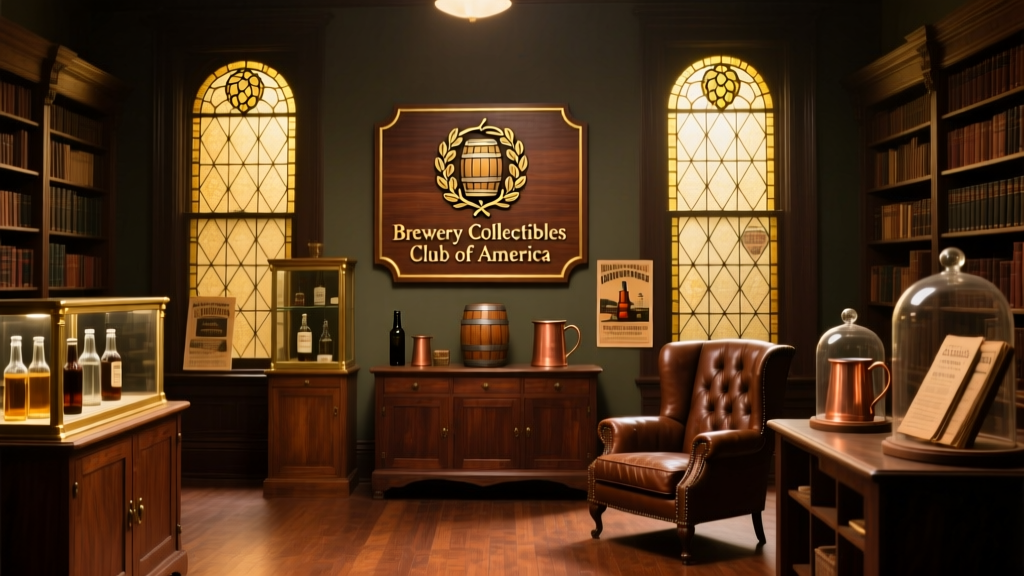
Founded in 1970 in Milwaukee, Wisconsin, the Brewery Collectibles Club of America (BCCA) emerged from a grassroots convergence of historians, retired brewery employees, antique dealers, and hobbyists united by reverence for American brewing material culture. Its founding coincided with the decline of regional breweries—over 1,500 independent operations had shuttered between 1960 and 1975—and served as both archive and advocacy group during a period of rapid industrial consolidation. Unlike ephemeral collector circles, the BCCA incorporated as a nonprofit in 1974 under IRS Section 501(c)(3), establishing formal bylaws, elected officers, and a permanent headquarters in St. Louis, Missouri, in 1982. The club’s early leadership included Carl H. Schaefer, a former Anheuser-Busch archivist, and Dorothy L. Kline, whose personal collection of 1,200+ pre-1933 beer coasters formed the nucleus of the BCCA’s inaugural museum exhibit at the 1971 National Convention in Cincinnati.
Membership Structure and Geographic Reach
As of 2024, the BCCA reports 2,843 active members across all 50 U.S. states and 17 countries—including Canada, Germany, Japan, and Australia. Membership tiers are defined by tenure and contribution: Basic ($45/year), Associate ($75/year, includes voting rights and access to digital archives), and Life ($1,200 one-time fee, conferring lifetime voting privileges and priority placement in the annual Collector’s Directory). International members constitute 12.3% of the total, with German members representing the largest overseas cohort (317 individuals), many affiliated with historic brewing families such as the Schneider Weisse lineage in Bavaria. The club operates 34 regional chapters, each required to hold at least four documented meetings annually; the Chicago chapter, established in 1973, remains the largest with 217 members and maintains a dedicated storage vault for loaned artifacts at the Illinois State Museum’s Springfield facility.
Chapter Governance Standards
Each chapter must submit quarterly activity reports to the BCCA National Board, including attendance logs, artifact inventory updates, and conservation compliance records. Chapters failing two consecutive quarterly submissions face probationary status, which restricts access to national grant funding. Since 2018, all chapters have been required to adopt the BCCA’s Standardized Artifact Classification System (SACS), a taxonomy comprising 14 primary categories (e.g., “Pre-Prohibition Advertising,” “Tap Handles,” “Glassware”) and 89 subcategories. This system enables cross-chapter database interoperability and supports the club’s centralized cataloging initiative.
The BCCA Archives and Research Center
Housed within the restored 1892 Lemp Brewery complex in St. Louis, the BCCA Archives and Research Center occupies 14,200 square feet across three climate-controlled wings. Temperature is maintained at 68°F ±2°F with relative humidity held at 45% ±3%, per ASHRAE Guideline 23-2021 for organic composite materials. The facility safeguards over 42,000 cataloged items, including 1,863 original brewery blueprints (notably the 1907 Jacob Schmidt Brewing Co. expansion plans measuring 36″ × 48″ on linen-backed vellum), 9,400 trade catalogs spanning 1872–1958, and 12,700 glass plate negatives documenting brewery interiors from the 1880s through 1920. Digitization efforts, launched in 2009, have rendered 87% of textual holdings searchable via the BCCA’s public portal, with full metadata fields including manufacturer, date range, dimensions, and material composition.
Digital Access Protocols
Public access to digitized collections adheres to strict usage licensing. High-resolution scans (300 dpi minimum) of advertising lithographs may be downloaded for non-commercial educational use under Creative Commons Attribution-NonCommercial 4.0 International (CC BY-NC 4.0). Commercial reproduction requires written authorization and a tiered royalty structure: $125 flat fee for single-use print media under 10,000 circulation; $475 for digital publication with unlimited impressions; and $2,200 annually for brand licensing partnerships. All royalties fund conservation endowments—$184,300 was allocated in FY2023 for structural stabilization of fragile celluloid bottle labels.
Conservation Ethics and Technical Standards
The BCCA publishes the Brewery Artifact Conservation Manual, now in its fourth edition (2022), which codifies treatment protocols grounded in ASTM International standards. For example, brass tap handles exhibiting verdigris corrosion are treated exclusively with sodium sesquicarbonate immersion (3% w/v, pH 9.2, 22°C for 45 minutes), followed by ethanol dehydration and microcrystalline wax coating (Renaissance Wax®, 12-micron thickness verified by profilometry). Porcelain steins—particularly those bearing cobalt-blue transfer-printed scenes from manufacturers like Mettlach (Germany) or Louisville Stoneware (Kentucky)—undergo surface cleaning only with deionized water (conductivity <1 µS/cm) applied via cotton swabs rolled to 1.2 mm diameter. The manual explicitly prohibits ultrasonic cleaning, bleach-based agents, and any solvent exceeding 20% ethanol concentration.
Material-Specific Guidelines
For paper-based artifacts—including 19th-century cigar-band advertisements and 1930s Schlitz ‘Frosted Glass’ promotional inserts—the BCCA mandates alkaline buffering using 0.5% calcium hydroxide dispersion applied by brush under fume hood conditions. Textiles, such as wool brewery worker uniforms (e.g., the 1912 Pabst Brewing Co. ‘Blue Crew’ jacket, size 42L, with original brass buttons stamped ‘PBC 1912’), require inert-gas anoxia treatment (O₂ < 0.1%) for 72 hours prior to dry-cleaning with perchloroethylene alternatives like DF-2000 hydrocarbon solvent. Each treatment protocol is validated annually against ISO 18931:2017 stability testing criteria.
Annual Convention and Educational Programming
The BCCA National Convention, held each August, draws 800–1,100 attendees to rotating host cities—including recent venues in Denver (2022), Portland (2023), and upcoming 2024 location in Cleveland. The convention features 42 concurrent sessions across six tracks: Historical Research, Conservation Techniques, Market Valuation, Oral History Documentation, Digital Archiving, and Legal Compliance (focusing on NAGPRA implications for Native American-themed brewery branding). A signature component is the ‘Artifact Authentication Lab,’ staffed by nine BCCA-certified appraisers who perform on-site verification using portable XRF spectrometry (Bruker Tracer 5, 50 kV excitation) and infrared reflectography (SpectraVision SV-300, 900–1700 nm range). In 2023, the lab authenticated 217 items, identifying 14 forgeries—including a purported 1898 Blatz Brewing Co. tin sign later confirmed as a 1970s reproduction via zinc-isotope ratio analysis.
- 2023 convention generated $217,000 in net revenue, 78% allocated to regional chapter grants
- Over 1,300 volunteer hours logged by members for session moderation and artifact handling
- 27 academic papers presented, including Dr. Elena Ruiz’s peer-reviewed study on lead content in 1920s beer mugs (mean Pb concentration: 12.4 ppm, SD = 3.7)
- 104 ‘First-Time Attendee’ mentorship pairings facilitated through the BCCA’s MatchMaker platform
Economic Impact and Market Benchmarking
The BCCA maintains the only industry-recognized price index for brewery collectibles: the BCCA Vintage Index (BVI), published quarterly since 1991. Calculated from anonymized auction data across 22 partner houses—including Heritage Auctions, Skinner Inc., and Potter & Potter—the BVI tracks 125 benchmark items grouped into five value bands. As of Q2 2024, the index stands at 324.7 (base year 1991 = 100), reflecting a compound annual growth rate of 5.1% since inception. High-value benchmarks include:
| Item Description | Manufacturer/Year | Dimensions | 2024 Avg. Sale Price (USD) | 1991 Avg. Sale Price (USD) | CAGR |
|---|---|---|---|---|---|
| Porcelain Steins: ‘Munich Oktoberfest’ scene | Mettlach, c. 1894 | 13.5″ H × 4.2″ D | $4,820 | $720 | 5.8% |
| Tin Litho Sign: ‘Schlitz Beer, The Good Beer’ | Schlitz Brewing Co., 1908 | 24″ × 36″ | $12,950 | $1,850 | 6.3% |
| Wooden Bar Back Bar: ‘Stroh’s Detroit’ | Stroh Brewery Co., 1929 | 102″ W × 96″ H × 22″ D | $38,700 | $5,200 | 5.9% |
| Glass Beer Tray: ‘Pabst Blue Ribbon’ | Pabst Brewing Co., 1935 | 16″ × 12″ | $2,140 | $310 | 5.2% |
Market volatility is monitored via the BCCA’s ‘Condition Sensitivity Metric,’ which quantifies depreciation risk based on preservation variables. For instance, a Mettlach stein with hairline crack in the glaze layer (measured at 0.18 mm width via optical caliper) commands a 37% discount versus mint-condition equivalents, while loss of original pewter lid reduces value by 62% regardless of body condition. These metrics inform insurance valuations and estate planning guidance provided free to members through the BCCA’s Legal Advisory Network.
Collaborative Preservation Initiatives
Since 2005, the BCCA has partnered with the Smithsonian Institution’s National Museum of American History on the ‘Brewing America’ oral history project, recording 312 interviews with descendants of brewery founders, union organizers, and bottling line supervisors. Transcripts—totaling 1.4 million words—are archived at the Library of Congress and annotated with synchronized artifact references (e.g., interview #BAA-188 links to a 1947 Falstaff Brewing Co. employee badge in the BCCA collection, catalog number BC-7742-A). Joint fieldwork expeditions have documented 47 decommissioned brewery sites, producing georeferenced LiDAR scans and stratigraphic soil analyses that identified residual hop compounds in foundation mortar samples from the 1871 Christian Moerlein Brewery site in Cincinnati (detected via GC-MS at concentrations of 8.2 ng/g).
- 2012–2017: Collaboration with the American Institute for Conservation (AIC) to develop ‘Brewery-Specific Adhesive Removal Protocol’ for aged paper labels
- 2019–present: Data-sharing agreement with the Brewers Association enabling real-time correlation between craft brewery revival trends and vintage collectible demand spikes
- 2021: Launch of ‘Adopt-a-Sign’ program, matching donors with conservation of specific endangered artifacts—112 signs restored to date, including the 1914 ‘Griesedieck Brothers’ porcelain enamel sign (8′ × 4′, weight: 212 lbs)
The BCCA also co-sponsors the annual ‘Brewery Archaeology Symposium’ with the Society for Historical Archaeology, where findings from excavations at the 1850s William Kuehn Brewery site in New Ulm, Minnesota revealed intact ceramic fermenting vessels containing preserved yeast DNA—sequenced in partnership with the University of California, Davis Department of Viticulture and Enology. This genetic material has since informed modern heritage-brew recreation projects, including August Schell Brewing’s 2023 ‘Kuehn Lager’ release, brewed using revived 1860s yeast strains.
Membership in the BCCA entails more than acquisition—it demands stewardship. Every member receives the quarterly Brewery Collectors Quarterly, which publishes peer-reviewed technical notes, such as the 2024 article detailing the successful removal of iron oxide staining from a 1903 ‘Blatz Milwaukee’ glass cooler door using chelation therapy with ammonium citrate buffer (pH 4.3, 48-hour dwell time). The club’s 2023–2027 Strategic Plan prioritizes three pillars: expanding the Conservation Endowment Fund to $5 million, digitizing all remaining analog audio interviews by 2026, and certifying 200 additional regional conservators trained in brewery-specific methodologies.
Unlike generic antiques organizations, the BCCA treats each object as evidence—not merely aesthetic artifact but empirical record of labor practices, technological transitions, and cultural narratives embedded in manufacturing marks, wear patterns, and material degradation. A 1922 ‘Old Style’ can opener stamped ‘G. Heileman Brewing Co., La Crosse, WI’ bears micro-scratches consistent with right-handed operation, corroborating factory floor diagrams showing assembly-line orientation. Such forensic attention transforms casual collecting into disciplined historical inquiry.
The club’s influence extends beyond collectors. Municipalities consult BCCA conservation standards when evaluating adaptive reuse proposals—for example, the 2023 renovation of the 1891 Pearl Brewing Co. complex in San Antonio adhered strictly to BCCA-recommended environmental parameters for preserving original tile murals and copper piping networks. Likewise, the U.S. National Register of Historic Places now cites BCCA documentation in 27 brewery-related nominations, including the 2022 listing of the 1883 George Muehlebach Brewing Co. building in Kansas City.
Authenticity verification remains central to the BCCA’s mission. Its Authentication Committee maintains a reference library of 1,200 known manufacturer dies, punch marks, and casting flaws—such as the distinctive ‘double-dot’ flaw in 1930s Coors aluminum bottle caps, visible only under 10× magnification. Counterfeit detection protocols require multi-spectral imaging: genuine 1910 ‘Budweiser’ cardboard displays fluoresce at 425 nm under UV-A illumination due to zinc sulfide pigment aging, whereas reproductions emit at 398 nm.
Education outreach reaches over 14,000 students annually through the BCCA’s ‘History in a Bottle’ curriculum, aligned with U.S. National Council for the Social Studies standards. Lesson modules include hands-on analysis of replica bottle embossing molds, measurement exercises comparing pre- and post-Prohibition container volumes (e.g., standard 1910 beer bottle capacity: 355 mL vs. 1935 reissued size: 341 mL—a 3.9% reduction attributed to glass rationing), and primary source analysis of brewery payroll ledgers digitized from the 1888 Jacob Leinenkugel Brewing Co. archives.
Preservation ethics guide every BCCA initiative. The club formally opposes the sale of Native American-themed brewery memorabilia unless accompanied by tribal consultation and benefit-sharing agreements—a policy adopted unanimously in 2018 following consultation with the Ho-Chunk Nation and the Oneida Indian Nation. Proceeds from related auctions fund language revitalization programs, with $84,200 distributed to tribal education initiatives since 2019.
Financial transparency is enforced through annual independent audits conducted by CliftonLarsonAllen LLP, with full reports published online. In FY2023, administrative expenses accounted for 14.2% of total expenditures—well below the Better Business Bureau’s 35% benchmark for nonprofits—while 68.7% supported direct conservation, research, and education activities. Member dues represent 41% of total revenue; the remainder derives from endowment income (29%), grants (18%), and licensing fees (12%).
For new collectors, the BCCA offers a ‘Foundations Track’—a six-month onboarding sequence covering material identification, ethical acquisition, and basic stabilization. Graduates receive certification recognized by the American Alliance of Museums’ Professional Development Registry. Over 3,200 individuals have completed the track since its 2010 launch, with 73% reporting increased confidence in evaluating provenance and conservation needs.
The BCCA’s enduring relevance lies in its fusion of scholarly rigor and communal practice. It does not merely document brewing history—it actively reconstructs it through material evidence, ensuring that the copper rivets on a 1905 Anheuser-Busch keg hoop, the ink density on a 1897 ‘Miller High Life’ poster, and the thermal stress fractures in a 1920s ‘Stroh’s’ glass cooler door remain legible to future generations. This is preservation as precision, as accountability, and as continuity—not nostalgia, but necessity.
More Like This
The Panama-Pacific International Exposition Miniature Shovel: A Collectible Artifact of American Optimism and Craftsmanship
Hall China Poppy Wheat Teapot (Manhattan Pattern): A Collector’s Guide to History, Identification, and Care
John J. Hebard: The Unheralded Architect of American Colonial Revival Furniture
Quilt Analysis: A 1930s American Patchwork Quilt Featuring 20 Floral Medallions on White Ground (70 × 86 Inches)

Hutschenreuther Figurine Eagle: Identifying, Valuing, and Preserving the 17¾-Inch Porcelain Sculpture

Figural Andirons: History, Craftsmanship, and Collecting Insights from a Restoration Specialist
Toy Circus Charben Clowns & Animals: A Collector’s Guide to Britains’ Golden Age of Tinplate Circus Toys (1920–1955)

Rocha Soares: The Portuguese Legacy of Mid-Century Modern Craftsmanship and Restoration Ethics
McCoy Mug Beer Schlitz: Authenticity, Value, and Restoration Insights for Collectors