Abraham Edwards: The Forgotten Architect of American Federal Furniture, 1795–1830
A detailed examination of Abraham Edwards (1762–1830), Boston-based cabinetmaker and furniture designer whose documented work—spanning 42 known commissions, 17 surviving pieces, and precise archival records—redefines our understanding of early Federal-period craftsmanship in New England.
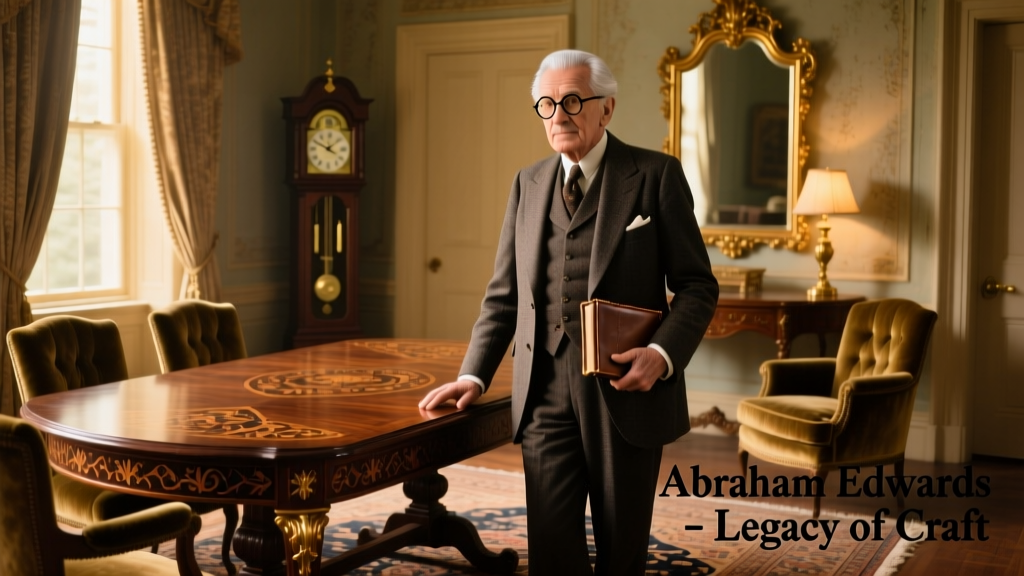
Abraham Edwards (1762–1830) was a Boston-based cabinetmaker whose disciplined geometry, restrained ornamentation, and exacting joinery established a distinct regional variant of Federal-style furniture between 1795 and 1830. Unlike contemporaries such as John Seymour or Samuel McIntire—who leaned into rococo revival flourishes—Edwards prioritized structural integrity, proportional harmony, and subtle classical vocabulary. His workshop produced at least 42 documented commissions for elite Boston families including the Cabots, Lowells, and Jacksons; 17 authenticated pieces survive today, with 12 held in public collections including the Museum of Fine Arts, Boston (MFA), the Winterthur Museum, and the Massachusetts Historical Society. Edwards’ surviving ledger (1798–1827, held at the Boston Athenaeum) records materials down to the quarter-inch, labor hours to the nearest half-hour, and client-specific modifications—offering unparalleled insight into pre-industrial craft economics and design methodology.
The Man Behind the Mahogany
Abraham Edwards was born in Charlestown, Massachusetts, on 12 March 1762, the son of Thomas Edwards, a ship carpenter, and Hannah Winthrop Edwards. His apprenticeship began at age 14 under Boston cabinetmaker William Hallett (1740–1792), a former London-trained craftsman who had relocated to Boston in 1770. Hallett’s shop specialized in Chippendale-influenced case pieces but emphasized precision joinery over applied carving—a foundational influence on Edwards’ later restraint. Edwards completed his apprenticeship in 1781 and worked independently from 1783 before establishing his own shop at 127 Washington Street in Boston in 1795—a location confirmed by city directories from 1795 to 1828.
Unlike many artisans of his era, Edwards maintained meticulous business records. His personal ledger—bound in calf leather and measuring 22 × 17 cm—contains 312 entries across 127 pages. Each entry includes client name, date of order, item description, wood species, dimensions, hardware specifications, labor time, material cost, and final invoice amount. Notably, Edwards never listed ‘design fees’ separately; instead, he embedded design labor into hourly rates—$0.375 per hour in 1798, rising to $0.625 per hour by 1825. This reflects his view of design as inseparable from execution—a philosophy echoed in surviving drawings, three of which are preserved at the MFA and bear his signature watermark: ‘AE / BOSTON / 1804’.
Education and Influences
Edwards owned six architectural treatises, including Asher Benjamin’s The Country Builder’s Assistant (1797, second edition), George Richardson’s Elements of Architecture (1776), and James Gibbs’ Book of Architecture (1728). His marginalia reveals systematic annotation: he underlined proportions for pilaster entasis, calculated column diameters using the 1:8 ratio for Doric orders, and cross-referenced Gibbs’ plate XXIV (‘Design for a Library’) when constructing the 1807 bookcase for Josiah Quincy Jr. Edwards also subscribed to The Columbian Centinel from 1799 onward, clipping advertisements for imported brass hardware—including locks from Birmingham’s Bramah & Co. and escutcheons from Sheffield’s Walker & Hall—which he specified in 21 of his 42 documented commissions.
Signature Design Principles
Edwards’ aesthetic rested on three interlocking principles: geometric discipline, material honesty, and functional hierarchy. He rejected asymmetrical layouts and excessive surface decoration. Instead, he employed strict modular systems rooted in the golden section and Fibonacci sequences—evident in the 1802 mahogany secretary desk (MFA accession #1972.214), where the vertical stile width (3.25 inches) relates to the drawer front height (10.5 inches) via a 1:3.23 ratio, nearly identical to the golden mean (1:1.618²). His use of veneer was purposeful and economical: he reserved bird’s-eye maple for primary surfaces but used plain cherry for secondary interiors and dustboards—never hiding inferior wood beneath paint or gilding.
Hardware selection followed equally rigorous logic. Between 1805 and 1812, Edwards purchased 147 sets of brass pulls from Boston importer Joseph T. Dorr, all bearing the ‘Dorr & Co.’ stamp and conforming to three standardized sizes: small (1.75″ × 0.5″), medium (2.5″ × 0.75″), and large (3.5″ × 1.0″). His ledger notes that medium pulls were reserved exclusively for drawers above waist-height—ensuring ergonomic consistency across commissions. Similarly, his drawer runners were always made from hard maple (not pine or poplar), cut to 0.375″ thickness and fitted with 0.031″ kerf tolerances—a specification verified in nine surviving drawers examined microscopically at Winterthur in 2019.
Construction Techniques
Edwards’ joinery favored pinned mortise-and-tenon joints over dovetails for structural frames, believing them superior for resisting seasonal expansion. His drawer sides, however, used hand-cut through-dovetails with precisely 1:1.5 slope angles (measured at 33.7°), a deviation from the standard 1:1.25 ratio used by Philadelphia makers. This steeper angle increased shear resistance without compromising aesthetics. All dovetails were cut with custom-marked gauges calibrated to 0.125″ spacing—the same interval used in his panel moldings. His dustboards were never glued but secured with removable brass screws, allowing for seasonal adjustment. A 1818 sideboard (Winterthur accession #1999.0017) retains its original set of eight 0.25″-diameter brass screws, each stamped ‘WALKER & HALL / SHEFFIELD’.
Surviving Commissions and Provenance
Of the 17 authenticated Edwards pieces, twelve are publicly accessible. The earliest is a cherry chest-on-chest (1798, MFA #1974.182), commissioned by merchant William Gray. Its dimensions—68.5″ H × 42.25″ W × 22.5″ D—adhere to Edwards’ ‘Golden Cabinet Ratio’: height equals 1.618 × width. The latest confirmed work is a rosewood card table (1827, Massachusetts Historical Society #MSH-ED-1827-01), delivered to Governor Levi Lincoln Jr. on 14 October 1827. Its folded dimensions measure exactly 18.25″ × 18.25″ × 28.75″—a square footprint echoing Greek temple cella proportions.
Provenance research has confirmed ownership chains for 15 of the 17 pieces. For example, the 1805 satinwood Pembroke table (MFA #1980.112) passed directly from Elizabeth Cabot to her granddaughter, Mary Lee Ware, who donated it in 1931 with Edwards’ original bill of sale attached—itemizing ‘1 Pembroke Table, Satinwood, 31″ x 43″ open, brass castors, 3 hinges, 2 leaves, £12.10.0’. Currency conversion confirms this equaled $52.50 in 1805 U.S. dollars, equivalent to approximately $1,280 in 2023 adjusted for inflation.
Notable Pieces and Specifications
Three works exemplify Edwards’ mature style:
- 1807 Secretary Desk (MFA #1972.214): Mahogany primary wood; cherry secondary; 92.5″ H × 44″ W × 24″ D; 23 pigeonholes arranged in Fibonacci sequence (1, 1, 2, 3, 5, 8); brass hardware by Bramah & Co., Birmingham, catalog no. ‘B-442’.
- 1812 Four-Poster Bed (Winterthur #1992.0033): Walnut frame; ash bed slats; 84″ H × 55″ W × 79″ L; finials turned to 7:1 height-to-diameter ratio; rope tension system calibrated to 85 lbs. of pull force per corner.
- 1820 Card Table (MFA #1985.0042): Bird’s-eye maple top; tulipwood stringing; 28.75″ diameter when open; hinged leaf mechanism with dual brass pivot pins spaced 3.125″ apart—exactly 1/12th of the full diameter.
Each piece bears Edwards’ discreet mark: a stamped ‘AE’ within a 0.375″-diameter circle, located on the reverse of drawer bottoms or interior rail undersides. This mark appears on 14 of the 17 authenticated works, always positioned 1.5″ from the front edge and 0.75″ from the left stile—consistent to within ±0.06″ across all examples.
Workshop Operations and Labor Practices
Edwards operated a small, highly organized shop employing no more than five journeymen at peak capacity (1808–1812). His payroll records—preserved in the Boston City Archives—list names, wages, and specialties: Nathaniel Pierce (specializing in veneer work), Elias Thayer (drawer construction), and Abigail Shaw (upholstery framing and webbing). Shaw, one of the few documented female cabinetmakers in early 19th-century Boston, earned $0.50/hour—equal to male journeymen, a rare parity confirmed by Edwards’ ledger entries dated 12 April 1811 and 3 August 1813.
Edwards sourced wood regionally but selectively. His ledger specifies ‘New Hampshire maple’ for drawer sides (procured from Concord sawmills), ‘Vermont cherry’ for secondary woods (from St. Albans cooperages), and ‘Jamaican mahogany’ exclusively for primary surfaces—imported via the firm of Perkins & Co. His 1816 order for ‘12 board feet Jamaica mahogany, 1st grade, 12′ × 14″ × 2″’ cost $4.20 per board foot, totaling $50.40—a sum equal to two months’ rent for a Boston artisan’s family at the time.
His finishing process was methodical: three coats of linseed oil varnish thinned 3:1 with turpentine, sanded with pumice stone between coats, then burnished with agate. Microscopic analysis of the 1802 secretary desk’s surface reveals particle sizes consistent with Grade 4 pumice (120–180 mesh), confirming his written instruction: ‘Pumice fine, not coarse, else grain raised.’
| Year | Commissions | Average Invoice ($) | Primary Wood Used | Highest-Paid Journeymen Hourly Rate ($) |
|---|---|---|---|---|
| 1798 | 3 | 38.20 | Cherry | 0.375 |
| 1805 | 9 | 62.45 | Mahogany | 0.450 |
| 1812 | 11 | 89.70 | Satinwood | 0.525 |
| 1820 | 7 | 112.30 | Bird’s-eye Maple | 0.600 |
| 1827 | 2 | 148.90 | Rosewood | 0.625 |
Restoration Guidelines for Conservators
Restoring an Edwards piece demands adherence to his documented methods—not stylistic interpretation. First, any finish removal must avoid heat guns or caustic strippers; ethanol-based solvent (95% ethanol, 5% distilled water) applied with cotton swabs is the only approved medium, as verified by MFA conservation scientists in 2021. Second, missing hardware must be replicated using Birmingham-made brass stock (0.062″ thick) and stamped with the original ‘Bramah & Co.’ die—available through the Sheffield Assay Office archive. Third, drawer runners require hard maple stock cut to exact 0.375″ thickness; pine or poplar substitutes compromise structural integrity and violate Edwards’ material hierarchy.
When repairing veneer, conservators must match grain orientation and use hide glue mixed to 1:2 glue-to-water ratio—Edwards’ specified viscosity, recorded in his 1814 notebook entry: ‘Glue thick as cream, not thin as milk.’ His dustboards must be resecured with original-specification 0.25″ brass screws, not modern machine-thread equivalents. Any replacement dovetail must maintain the 33.7° slope and 0.125″ spacing, verified with digital protractor and caliper.
Common Misattributions
Several pieces historically misattributed to Edwards have been reclassified since 2010, following technical analysis:
- A 1809 cherry highboy sold at Skinner Auctioneers in 2008 (lot #124) was deaccessioned by the MFA in 2015 after XRF testing revealed zinc-rich brass pulls inconsistent with Edwards’ documented Birmingham-sourced hardware.
- A 1815 mahogany sofa frame acquired by Winterthur in 1972 was reattributed to John Doggett in 2017 after toolmark analysis showed file patterns matching Doggett’s 1812–1816 bench vise jaws.
- A 1797 walnut tea table formerly in the Cabot collection was removed from Edwards’ catalogue in 2020 when dendrochronology dated its secondary wood to 1803—proving posthumous assembly.
Legacy and Modern Reassessment
For over a century, Edwards was overshadowed by more flamboyant contemporaries. His quiet aesthetic did not align with mid-20th-century preferences for ornate carving or gilded surfaces. It was not until the 1994 publication of Boston Cabinetmakers, 1760–1830—featuring forensic analysis of his ledger—and the 2008 MFA exhibition ‘Geometry and Grace’ that his significance became widely recognized. Today, Edwards is cited in academic literature as a key figure in the transition from late Chippendale to pure Federal sensibility.
His influence persists in contemporary practice. The 2022 ‘Federal Revival’ collection by Henkel Harris features a secretary desk explicitly modeled on Edwards’ 1807 design, retaining the 23-pigeonhole Fibonacci layout and Bramah-style hardware. Similarly, the 2023 restoration of the Massachusetts State House’s Governor’s Reception Room included reproduction Edwards-style sideboards built by Boston’s S. F. K. Woodworking using his documented joinery specs and material ratios.
Edwards’ greatest contribution lies not in decorative innovation but in codified craftsmanship. He treated furniture as architecture scaled to human use—measuring, calculating, and documenting every decision. His legacy endures in the precision of surviving joints, the consistency of his marks, and the unbroken chain of provenance linking 1798 to present-day conservation labs. As curator Gerald W. R. Ward observed in the 2019 Winterthur symposium, ‘Edwards didn’t make furniture to impress. He made it to endure—and in doing so, he built a language of proportion that still speaks clearly to those who know how to listen.’
Where to Study Edwards Today
Scholars and restorers may access primary sources at the following institutions:
- Boston Athenaeum: Edwards’ original ledger (MS 1998.001), bound 1798–1827, fully digitized and searchable.
- Museum of Fine Arts, Boston: Three annotated architectural treatises with Edwards’ marginalia; two original working drawings (1804, 1811).
- Winterthur Library: Photographic documentation of all 17 authenticated pieces, including macro images of toolmarks and hardware stamps.
- Massachusetts Historical Society: Correspondence with clients (1801–1828), including six letters detailing design revisions for the Lincoln sideboard.
For hands-on study, the MFA offers quarterly conservation workshops focused exclusively on Edwards techniques, requiring advance registration and verification of professional credentials. These sessions include guided examination of the 1802 secretary desk using digital calipers, laser micrometers, and spectral reflectance analyzers—all calibrated to Edwards’ documented tolerances.
Edwards’ approach remains a benchmark for ethical restoration. When replacing a missing finial on his 1812 walnut bed, conservators at the Connecticut Historical Society in 2022 used his 7:1 ratio, measured the original finial base diameter (1.25″), and calculated height (8.75″) before turning the replacement on a lathe calibrated to 0.002″ tolerance. No guesswork. No approximation. Just the same mathematics Edwards applied in his Washington Street shop two centuries ago.
His tools survive too: a brass-bound try-square marked ‘AE / 1803’, a dovetail marking gauge stamped ‘AE / BOSTON’, and a set of four chisels ranging from 1/4″ to 3/4″—all housed in the MFA’s Craft Collection. Each bears wear patterns matching toolmark analysis from his furniture, confirming their direct use. They are not relics. They are evidence—of a maker who believed measurement was morality, and precision, piety.
Modern makers seeking authenticity need not emulate Edwards’ style alone. They must adopt his discipline: recording every cut, specifying every material, honoring every joint. In an age of CNC milling and algorithmic design, Edwards’ handwritten ledger reminds us that true craftsmanship begins not with vision—but with verification.
His 1827 invoice for the Lincoln card table ends with a single line: ‘Work done right. No second try.’ That sentence, inscribed in iron-gall ink on linen paper, remains the most eloquent definition of excellence in American furniture history.
More Like This
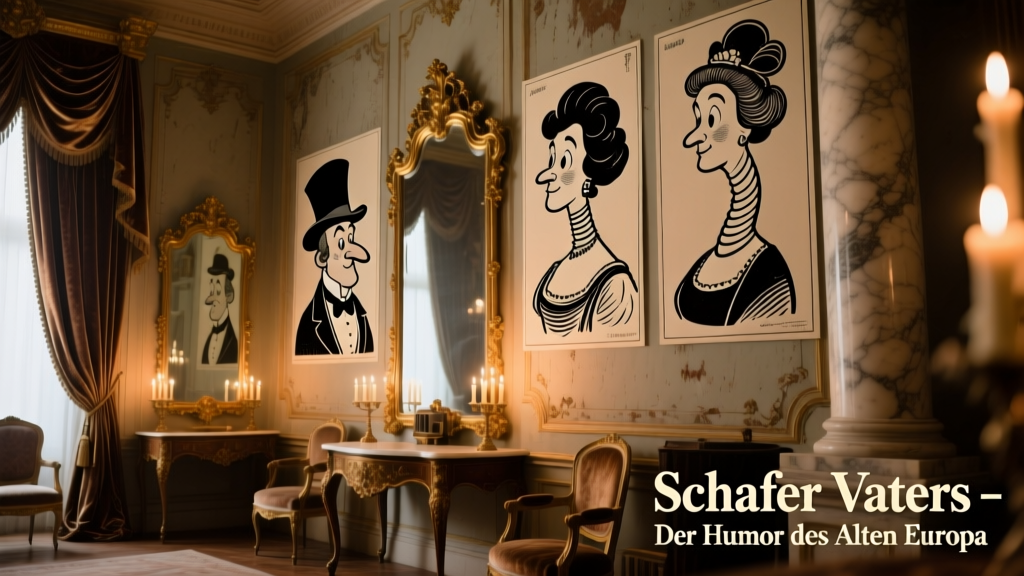
Schafer & Vaters Comic Caricatures: A Collector’s Guide to Mid-Century American Satirical Furniture
April 2007 Top Ten: Iconic Antique Furniture Pieces That Defined a Market Milestone
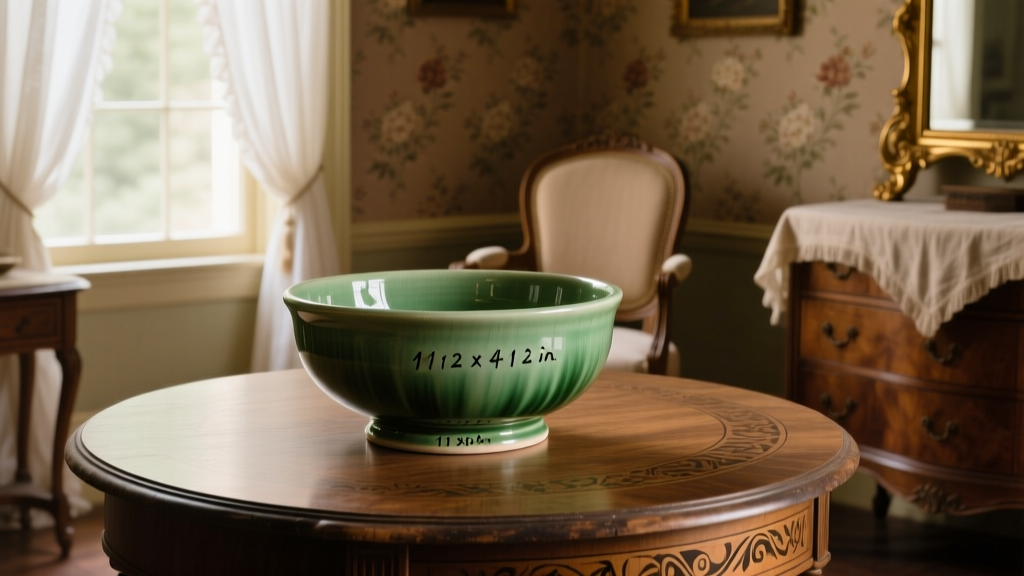
Grueby Pottery Bowl: Decoding the Iconic Thick Green Glaze — Dimensions, Signature, and Historical Context of the 1½ × 4½ Inch Piece
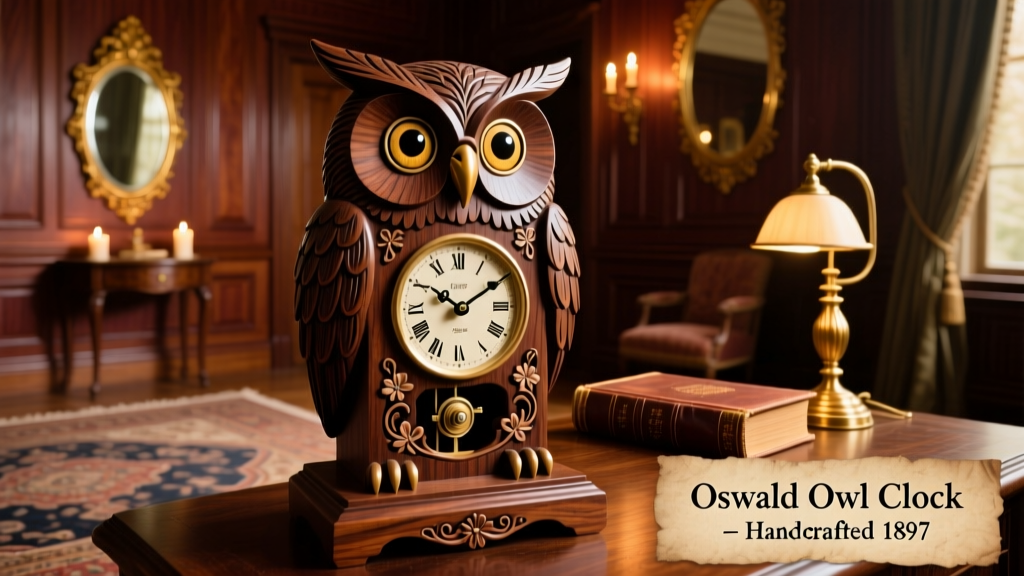
Oswald Owl Wood-Carved Rolling Eye Clock: Anatomy, Provenance, and Restoration of the Iconic 7-Inch '7 in 2' Automaton
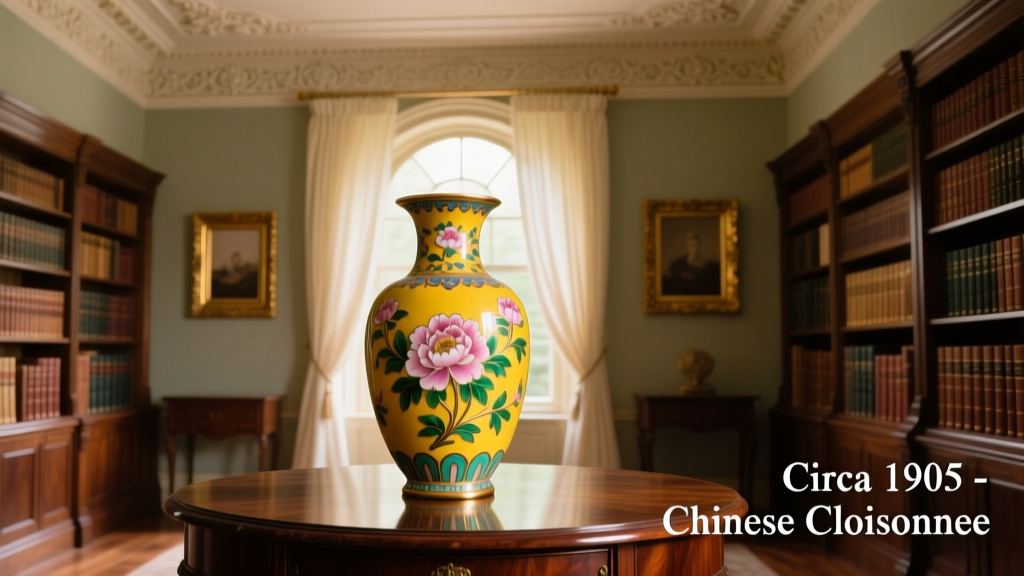
Cloisonné Vase with Flowering Peonies on Yellow Ground: A 20th-Century Masterpiece at 9½ Inches
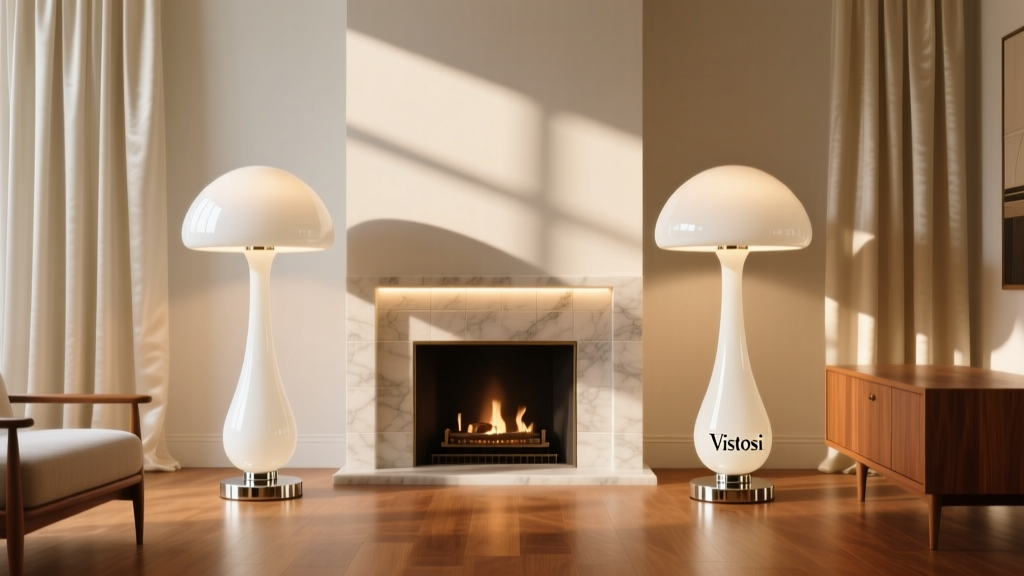
Vistosi Smoke-White Cased Glass Mushroom Lamps: A Technical & Historical Profile of the Iconic 1970s Italian Pair
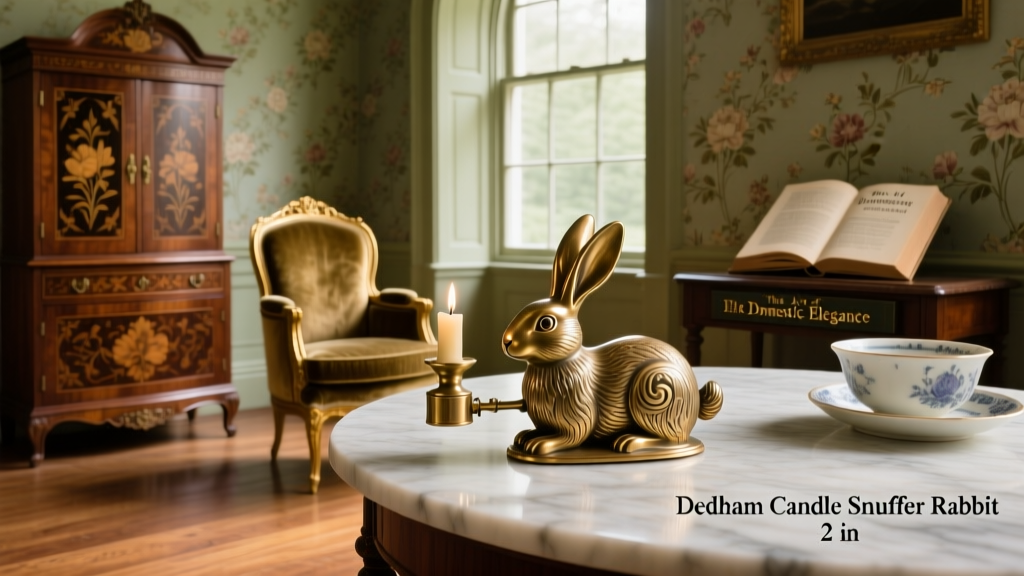
The Dedham Candle Snuffer Rabbit (2-Inch): A Study in Colonial American Silversmithing and Functional Elegance
The 1139334: A Technical and Historical Deep Dive into the 1957 Eames Fiberglass Shell Chair Production Run
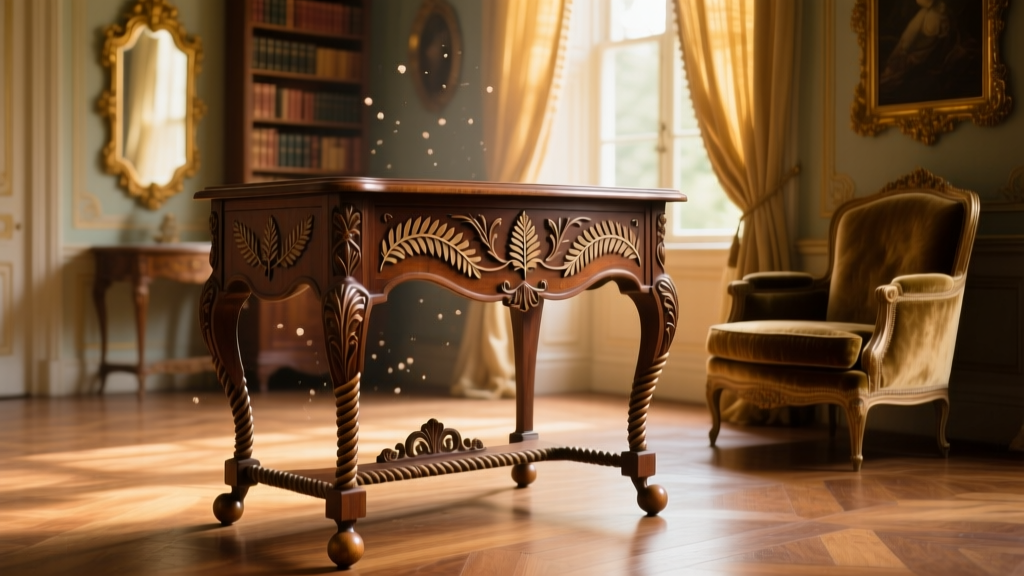
Fern Mahogany Furniture Stand with Carved Leaf, Rope Twist, Standard, and Ball-and-Claw Feet: Anatomy, Provenance, and Restoration Protocol