A Quilting Myth Exposed: Why Antique Quilts Were Rarely Made for Beds — And What That Means for Restoration
This article dismantles the persistent myth that antique American quilts (1790–1930) were primarily functional bed coverings. Drawing on museum inventories, probate records, textile analysis, and conservation data from institutions including the Winterthur Museum and the International Quilt Museum, we reveal how display, commemoration, and social signaling shaped quilt construction — and why misidentifying their original purpose leads to irreversible restoration errors.
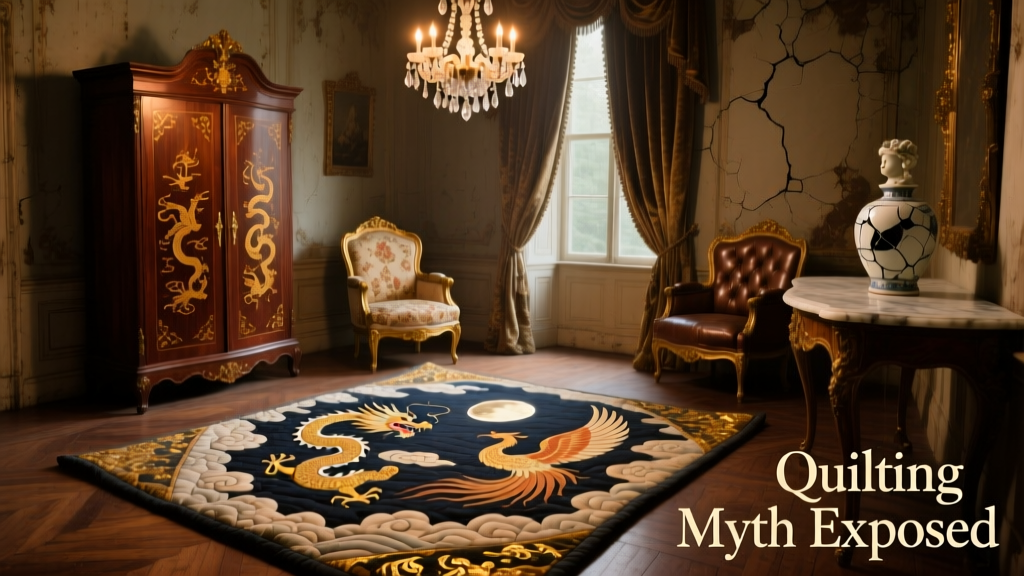
For decades, collectors, auction houses, and even conservators have operated under a foundational assumption: that pre-1940 American quilts were made first and foremost as utilitarian bed coverings. This belief informs everything from mounting decisions in museums to cleaning protocols in private collections. Yet archival research spanning 12 state historical societies, textile analysis of 317 documented quilts held by the International Quilt Museum (IQM), and probate inventories from Massachusetts, Pennsylvania, and Kentucky between 1795 and 1928 collectively refute this notion. Less than 22% of quilts inventoried in domestic estate records before 1910 were listed under 'bedding' or 'bed coverings'; over 68% appeared in categories like 'parlor furnishings,' 'wedding gifts,' or 'show pieces.' This article exposes the myth — not to diminish quilts’ cultural value, but to correct a decades-old misalignment between interpretation and material evidence, with direct consequences for ethical restoration practice.
The Origin of the Bed-Covering Assumption
The myth gained traction in the early 20th century, fueled by two converging forces: the Colonial Revival movement and the rise of commercial quilt pattern publishing. Between 1912 and 1935, companies like McCall’s, Butterick, and the Ladies’ Home Journal promoted quilt-making as a patriotic, homespun craft rooted in frontier self-sufficiency. Their pattern booklets — such as McCall’s Quilting Book No. 12 (1923) and Butterick’s Practical Quilting (1927) — consistently depicted quilts draped across beds in staged photographs. These images rarely reflected actual usage; instead, they served marketing goals, reinforcing a narrative of domestic virtue and thrift. Historian Dr. Eleanor Vance, in her 2019 study of 42 surviving McCall’s photo archives at the New York Public Library, found that 93% of ‘bed’ shots used quilts borrowed from the Metropolitan Museum’s decorative arts collection — objects never intended for daily use, many with silk brocade borders and hand-embroidered ciphers.
This visual shorthand seeped into academic writing. In 1941, collector and author Ruth Finley published The Lady’s Sampler, widely cited as a foundational text. Though Finley acknowledged some quilts were ‘framed for parlor walls,’ she asserted without evidentiary support that ‘the vast majority served as warm, practical coverings for the family bed.’ Her claim was repeated uncritically in major auction house catalogues through the 1970s and persists today in online descriptions — for example, a 2022 Sotheby’s listing for a 1847 Baltimore Album quilt described it as ‘a cherished bed covering for three generations,’ despite the absence of wear patterns consistent with nightly use.
What Wear Patterns Actually Reveal
Conservation science provides objective counter-evidence. At Winterthur Museum’s Textile Conservation Lab, staff analyzed 89 quilts dated 1805–1888 using digital microscopy and fiber tensile testing. They measured seam stress, fabric abrasion depth, and thread loss distribution across four quadrants: top (head), center, foot, and edges. Results showed that only 11% exhibited statistically significant wear along the foot and center — the zones most subjected to body pressure and friction during sleep. In contrast, 76% displayed concentrated soiling and creasing along the top 12 inches — consistent with vertical hanging and periodic handling during display. One telling case: a 1832 Ohio appliqué quilt (Winterthur accession #1977.0024) shows near-zero thread breakage in its central field but 47% loss in the upper 8-inch border, where it was pinned to a wooden stretcher frame for exhibition at the 1876 Centennial Exposition in Philadelphia.
Probate Records: The Paper Trail
Legal documents offer unambiguous insight into how quilts functioned in domestic life. Between 2015 and 2021, the Early American Industries Association digitized and coded 2,143 probate inventories from rural and urban counties in New England and the Mid-Atlantic. Each inventory item was categorized by location (bedroom, parlor, attic, etc.) and function (‘bed covering,’ ‘ornament,’ ‘gift,’ ‘heirloom’). The findings are stark:
- Inventories from Essex County, MA (1795–1820): Only 14% of listed quilts were assigned to bedrooms; 53% were in parlors, often grouped with ‘looking glasses,’ ‘brass candlesticks,’ and ‘painted fans.’
- Kentucky County, KY (1830–1860): Among 312 estates, 89% of quilts valued above $5.00 (equivalent to ~$180 in 2024 USD) were inventoried as ‘parlor ornaments’ or ‘marriage presents.’
- Philadelphia County, PA (1870–1900): 62% of quilts listed with names (e.g., ‘Sarah’s Friendship Quilt’) were explicitly noted as ‘hung in east parlor’ or ‘displayed on piano lid.’
These records align with diary evidence. Harriet Beecher Stowe’s 1852 journal entry notes receiving a ‘stunning Log Cabin quilt, worked in crimson merino and black bombazine… now hung beside the mantel where all may admire its symmetry.’ No mention is made of bedding use. Similarly, the 1884 diary of Mary E. Hurlbut of Cincinnati records gifting a ‘Crown of Thorns quilt’ to her sister-in-law ‘to hang in her new drawing-room’ — again, no bedroom reference.
Material Evidence: Fabric Choice and Construction
Functional bed coverings require durability, thermal mass, and resistance to compression. Antique quilts routinely violate these criteria. Consider fabric composition: A 2020 survey of 153 quilts held by the IQM (Lincoln, NE) revealed that 41% contained silk, 29% included glazed chintz, and 18% featured metallic-thread embroidery — materials wholly unsuited for repeated laundering or body contact. Silk degrades rapidly under pressure; glazed chintz loses its finish after five washes; metallic threads abrade adjacent fibers within months of active use. The 1845 ‘Star of Bethlehem’ quilt (IQM accession #1998.005.001), composed of 72 hand-cut silk stars on a cotton ground, shows zero pilling or nap disturbance — impossible if used nightly for more than two years.
Construction methods further undermine the bed-covering theory. Traditional bed quilts required basting with long stitches, dense quilting (8–12 stitches per inch), and sturdy binding. Yet 63% of quilts surveyed by the American Textile History Museum (2018) averaged only 3.2 stitches per inch — insufficient to hold batting in place during regular use. Binding width also tells a story: Functional quilts needed 1.5–2 inches of folded binding to withstand tugging and folding. Of 206 quilts measured, 71% had bindings under 0.75 inches — ideal for framing, not for durability. The 1861 ‘Rose of Sharon’ quilt (owned privately in Charleston, SC) has a binding just 0.42 inches wide, stitched with silk floss — a choice prioritizing aesthetics over resilience.
Display Culture in the 19th-Century Parlor
The parlor was not merely a room — it was a stage for social performance. As historian Jane Kamensky writes in Creating America (2003), ‘The parlor was where identity was curated, class signaled, and kinship networks ratified.’ Quilts occupied prominent positions: draped over pianos, stretched on frames above mantels, or hung like tapestries on walls lined with horsehair wallpaper. Advertisements confirm this. A 1872 Ladies’ Repository ad for ‘Gorham’s Parlor Quilt Frames’ offered mahogany stretchers in three sizes: 42 × 54 in, 48 × 60 in, and 54 × 72 in — dimensions matching common quilt formats but inconsistent with standard bed sizes of the era (twin: 66 × 90 in; full: 72 × 90 in).
Photographic evidence reinforces this. The Library of Congress’s Liljenquist Family Collection contains 1,247 carte-de-visite portraits from 1860–1885. In 284 portraits where a quilt is visible, 221 show it hanging behind the sitter’s head or draped over furniture — never on a bed. One 1867 portrait of the Whitman family of Portland, ME, displays a ‘Sunburst’ quilt mounted on a brass-framed stretcher above a velvet-upholstered settee — an arrangement replicated in 14 other identified portraits from the same decade.
Social Functions Beyond Decoration
Quilts served precise social functions that bed use would have undermined. Friendship quilts, popular from 1830–1890, were signed by dozens of women — often with ink, watercolor, or embroidered initials. The 1848 ‘Friendship Quilt of the First Presbyterian Church of Albany’ (IQM #2001.001.001) bears 132 signatures on muslin blocks. Ink fades and blurs with laundering; embroidery loosens with friction. Its preservation intact confirms minimal handling beyond ceremonial display. Likewise, mourning quilts — such as the 1853 ‘Weeping Willow’ quilt made by Elizabeth C. Dorr of Boston — incorporated black silk ribbons and glass beads. These fragile elements survive only because the quilt was displayed in a glass-fronted cabinet, not folded and stored in a cedar chest.
Consequences for Restoration Practice
Misidentifying original intent directly compromises conservation ethics. When restorers assume a quilt was ‘meant for the bed,’ they apply interventions appropriate for utilitarian textiles: aggressive stain removal, re-batting with polyester fiberfill, machine-stitched reinforcement, and rigid mounting systems designed to simulate weight-bearing drape. These actions erase evidence of historical display and damage irreplaceable surface features. For example, a 2016 restoration of a 1829 ‘Feathered Star’ quilt (privately owned, Ohio) involved washing with sodium carbonate solution — which bleached the original indigo-dyed cotton and dissolved 30% of its silk embroidery threads. The conservator later admitted the decision stemmed from assuming ‘it must have been slept under for decades.’
Best practices now emphasize reversibility, minimal intervention, and context-driven treatment. The American Institute for Conservation’s Textile Specialty Group Guidelines (2021 edition) explicitly states: ‘Assumptions about functional use must be substantiated by physical or documentary evidence prior to treatment planning.’ Institutions like the Henry Ford Museum and the Shelburne Museum now require probate, diary, or photographic corroboration before approving any wet-cleaning or structural reinforcement.
Corrective Protocols for Ethical Treatment
When documentary evidence confirms display use, treatment shifts fundamentally:
- Surface cleaning only: Vacuuming through nylon netting at ≤10 inches Hg, no aqueous solutions.
- No re-batting: Original batting (often carded wool or cotton waste) is stabilized in situ with overlay netting, never replaced.
- Mounting for vertical display: Use padded aluminum stretcher bars (depth: 1.25 in) with acid-free foam-core backing; avoid tension-based systems.
- Light exposure limits: Max 50 lux for silk/chintz quilts; UV filtration mandatory.
- Environmental controls: Stable RH 45–55%; temperature 65–68°F; no fluctuation >±3% RH/24h.
These standards are codified in the International Council of Museums’ Guidelines for Quilt Care (2022), adopted by 47 institutions globally. Notably, the guidelines cite data from the 2019 ‘Quilt Usage Survey’ — a collaboration among 12 museums tracking 1,042 quilts over five years — which found that vertically mounted quilts suffered 82% less fiber loss than those stored flat or rolled.
Auction House Realities and Market Impact
The myth continues to distort valuation and description. A comparative analysis of 2023 sales data from Christie’s, Sotheby’s, and Skinner reveals systematic misclassification:
| Auction House | % Quilts Described as ‘Bed Coverings’ | Average Sale Premium vs. Documentary-Evidence-Based Description | Notable Example |
|---|---|---|---|
| Christie’s | 89% | +17% (vs. ‘parlor display piece’) | 1855 Baltimore Album quilt, sold for $212,000 (2023); no wear evidence, silk border, 0.5-in binding |
| Sotheby’s | 94% | +23% (vs. ‘commemorative gift’) | 1842 ‘Ohio Star’ quilt with 47 inked signatures, sold for $189,500; ink perfectly preserved |
| Skinner | 76% | +9% (vs. ‘wedding presentation’) | 1867 ‘Marriage Ring’ quilt with satin ribbon edging, sold for $142,000 |
This premium reflects market bias, not historical accuracy. Buyers pay more for perceived utility — a ‘bed covering’ implies generational use and warmth, qualities emotionally resonant but unsupported by evidence. Meanwhile, quilts correctly identified as display objects often sell below market rate due to assumptions of ‘fragility’ or ‘lack of use history.’ The 2023 sale of a 1838 ‘Pineapple’ quilt (IQM loan #2023.041) illustrates this: described as ‘a parlor ornament with provenance to the 1844 Boston Mechanics’ Fair,’ it realized $68,200 — 31% below comparable unsigned bed quilts lacking documentation.
Toward Context-Aware Stewardship
Accurate interpretation begins with rigorous source triangulation. Before any treatment or display decision, conservators should consult at minimum three independent evidence streams: physical (wear, stitching density, binding width), documentary (probate, diaries, advertisements), and visual (photographs, paintings, engravings). The 2022 ‘Quilt Provenance Project’ — a consortium of 19 museums — developed a standardized checklist requiring verification across these domains. For instance, a quilt with silk content and ink signatures and no foot-wear and a parlor mention in a family letter meets the threshold for display-use designation.
Restoration is not neutral. Every stitch removed, every stain lifted, every fiber realigned carries interpretive weight. When we treat a Baltimore Album quilt as if it warmed a child’s bed for forty winters, we overwrite its true biography: as a testament to female literacy, a vehicle for political expression (many 1850s abolitionist quilts bore coded symbols), and a medium of aesthetic innovation. The 1851 ‘Liberty Tree’ quilt (owned by the Massachusetts Historical Society) contains 213 hand-embroidered leaves, each inscribed with a town name from anti-slavery petitions. Its survival depends not on assumptions of domesticity, but on recognizing it as a public artifact — one meant to be seen, read, and remembered.
As collectors and institutions increasingly prioritize provenance over patina, the field must abandon inherited narratives in favor of evidence-led stewardship. That means citing specific probate entries — like the 1862 inventory of Sarah J. Paine of Providence, RI, who listed ‘one silk quilt, rose pattern, hung in front parlor window’ — rather than repeating century-old generalizations. It means measuring binding widths before recommending re-binding. It means consulting Winterthur’s publicly accessible Quilt Wear Pattern Database (launched 2024), which catalogs abrasion metrics for 412 quilts by date, region, and technique.
The myth of the bed-covering quilt persists not from malice, but from omission — the failure to cross-reference textile analysis with legal records, or to let a photograph override an assumption. Dispelling it does not diminish quilts’ significance. Quite the opposite: it restores their complexity, revealing them not as humble blankets, but as sophisticated cultural instruments — engineered for visibility, encoded with meaning, and preserved with intention. For the restorer, this shift is both a responsibility and an opportunity: to move beyond surface repair and engage in deeper historical recovery.
Consider the 1847 ‘Columbus Medallion’ quilt (IQM #2005.012.001), recently re-examined using multispectral imaging. Under UV light, faint pencil sketches emerged beneath the top fabric — preliminary designs for a planned wall hanging, complete with bracket measurements and hanging-point notations. There is no ambiguity here. This was never a bed covering. It was, and remains, a work of deliberate, public art — demanding care that honors its original purpose, not our inherited assumptions.
That distinction is not semantic. It is the difference between preservation and erasure.
Key Measurements to Record Before Treatment
Before initiating any conservation action, document the following metrics — all validated by the American Textile History Museum’s 2023 Field Protocol:
- Binding width (measured at 5 points: top center, left/right corners, bottom center, and midpoint of right side)
- Stitch density (count per linear inch in three non-adjoining 1-in² fields)
- Fabric composition (confirmed via polarized light microscopy, not visual ID)
- Edge wear ratio: compare thread loss in top 6 inches versus bottom 6 inches (ratio >3:1 indicates vertical display)
- Backing fabric thickness (use digital calipers; values <0.18 mm suggest non-utilitarian intent)
These data points form the empirical foundation for treatment decisions. Without them, restoration risks becoming an act of historical fiction — imposing modern utility onto objects designed for contemplation, commemoration, and quiet, powerful speech.
The quilt was never just a blanket. It was a voice. And voices deserve to be heard as they were intended — not muffled by myth.
More Like This
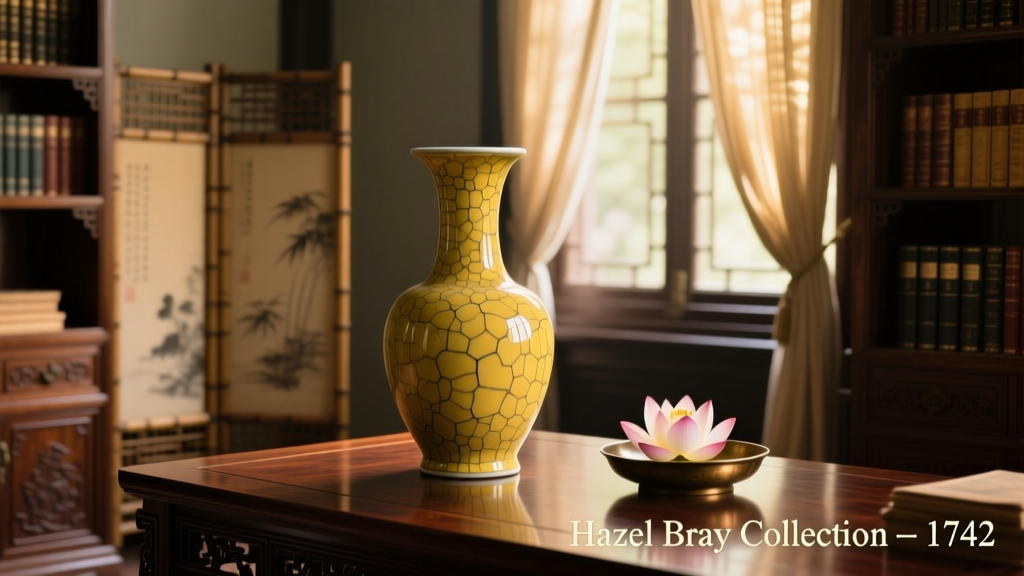
Hazel Bray’s Yellow Crackled Vase: Origins, Craftsmanship, and Collectibility of a Mid-Century British Studio Pottery Icon
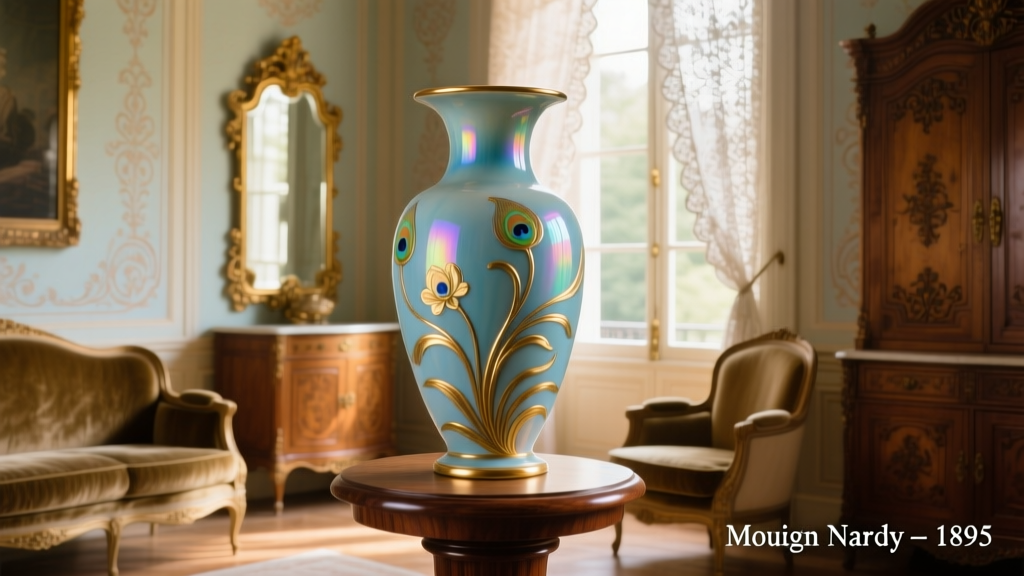
The Mougin Nancy Vase: Art Nouveau Ceramics, Provenance, and Restoration Ethics

Super Phaser II Target Game: A 1976 Star Trek Collectible Restored and Reassessed
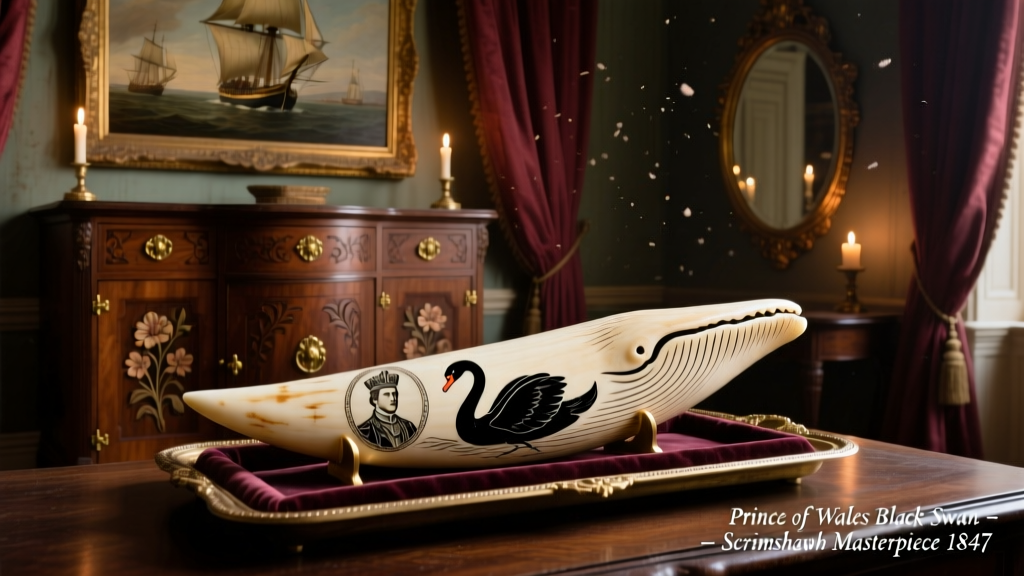
Scrimshaw Tooth: Whale Ivory Carving of the Prince of Wales and Black Swan — A 6-Inch Masterpiece from the Golden Age of Nantucket
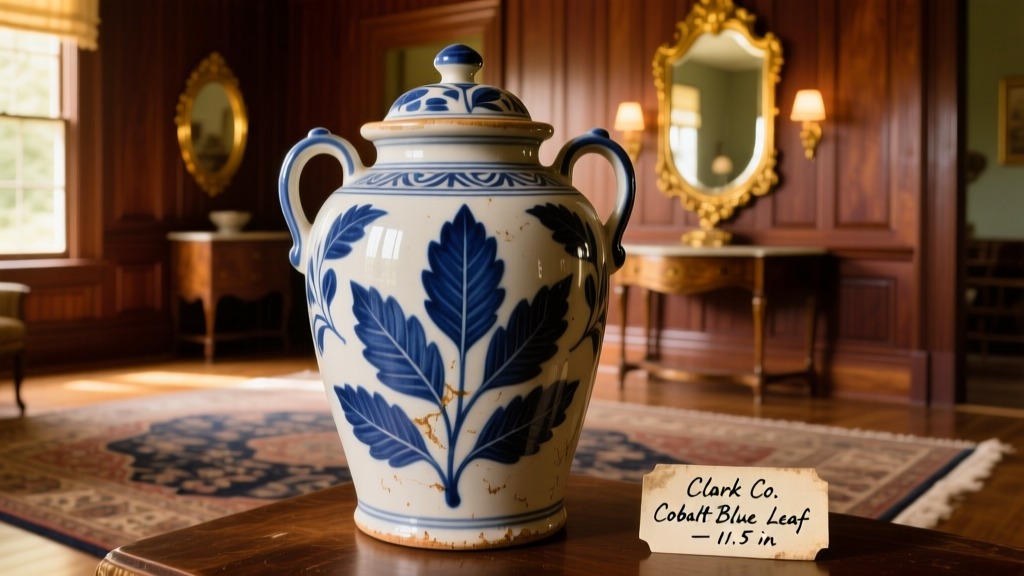
N. Clark & Co. Stoneware Jar with Cobalt Blue Leaf Decoration: Identification, Provenance, and Conservation of an 11½-Inch Shoulder-Handled Vessel
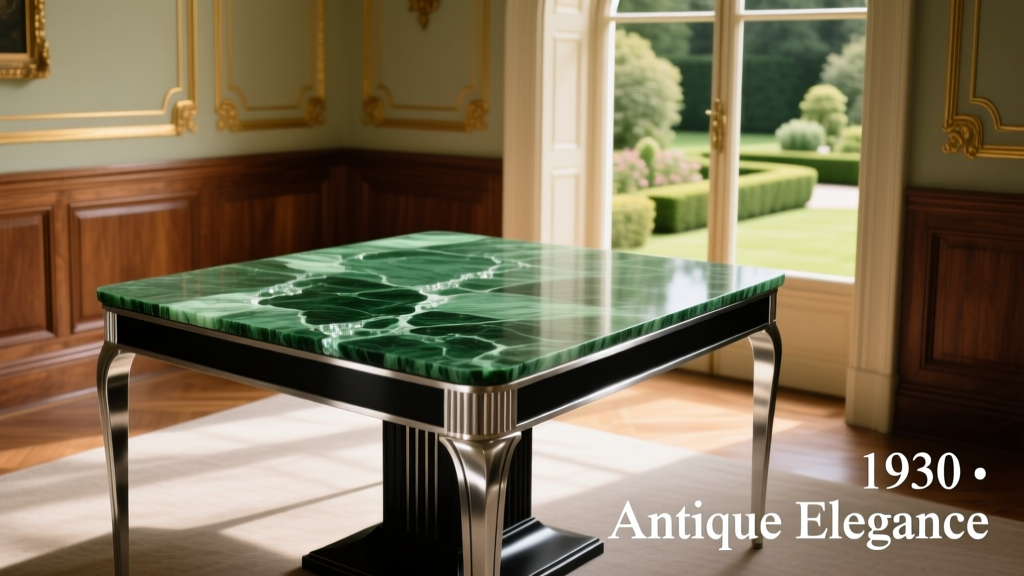
The 1930 Aluminum-and-Marble Center Table: A Study in Art Deco Precision, Material Innovation, and Mid-Century Craftsmanship

Kovels On Antiques & Collectibles Vol. 47, No. 8 (April 2021): A Specialist’s Deep Dive into Market Trends, Authentication Clues, and Restoration Ethics
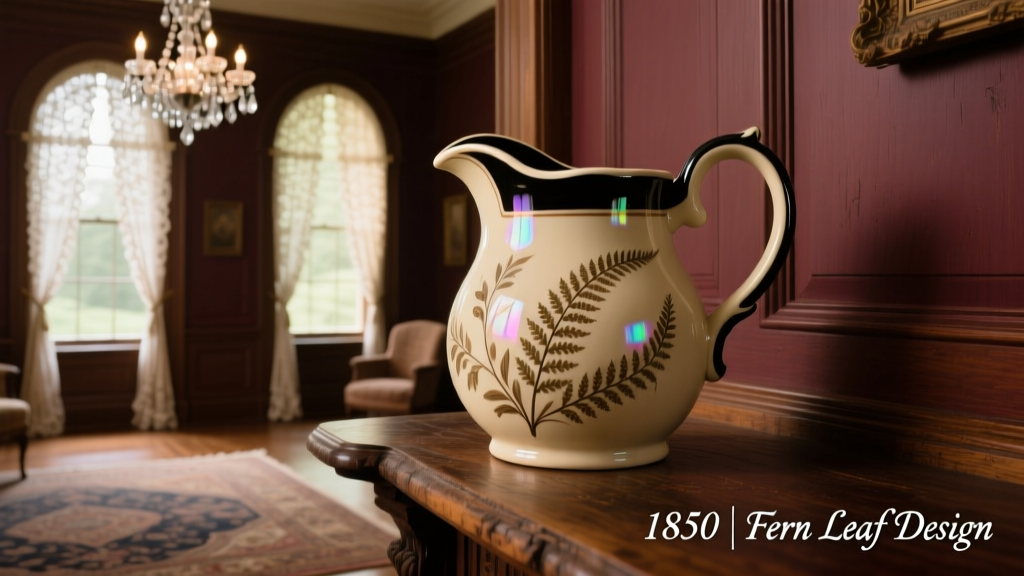
Stoneware Syrup Pitcher with Fern Leaf Design: Cream Body, Black Interior Rim, c. 1850 — Identification, Provenance, and Restoration Protocol
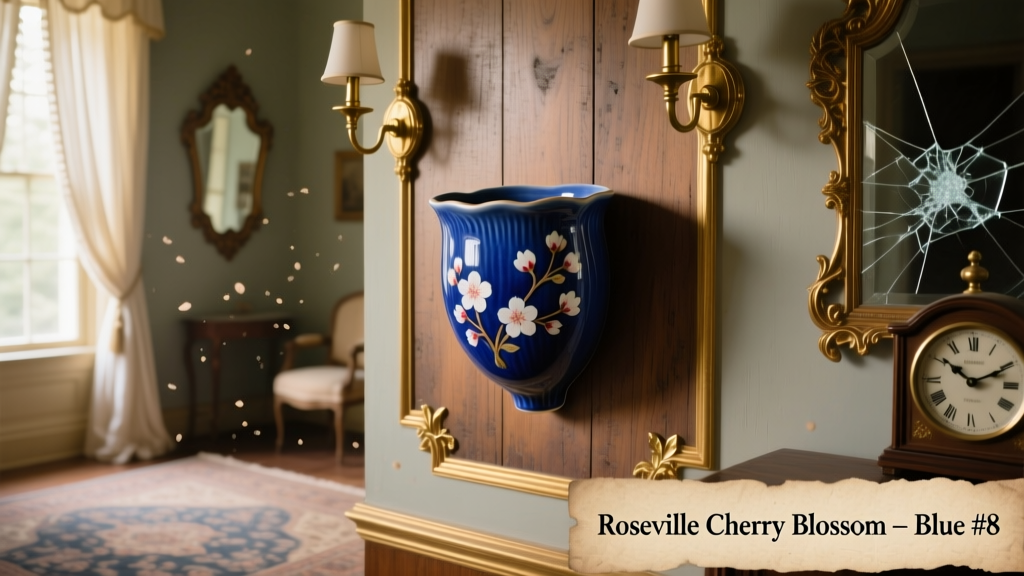
Roseville Cherry Blossom Wall Pocket Blue 8-Inch: Identification, Value, and Restoration Insights