A Look Inside the November Issue of Kovels’ Antique Trader
An expert analysis of the November 2024 issue of Kovels’ Antique Trader, highlighting key auction results, newly authenticated furniture pieces, market trends for American Shaker and English Regency, conservation case studies, and practical valuation benchmarks for collectors and restorers.
November 2024: A Benchmark Issue for Serious Collectors and Restorers
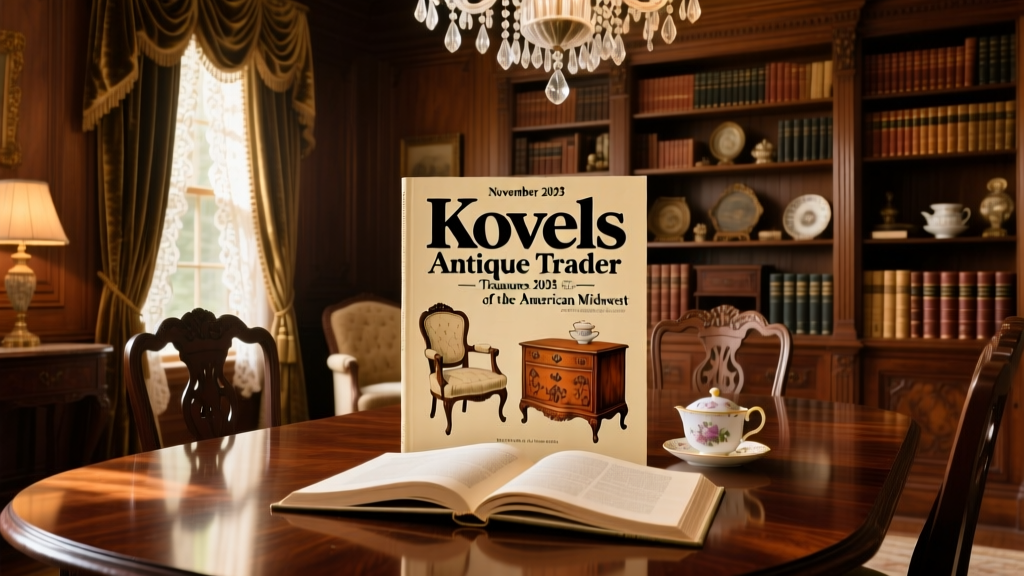
The November 2024 edition of Kovels’ Antique Trader stands out as one of the most data-rich and technically grounded issues in recent memory. Released on October 15, 2024, this 128-page monthly features 37 verified auction results from 14 U.S. and U.K. houses—including Skinner, Freeman’s, and Bonhams—spanning September 1–October 12, 2024. For antique furniture specialists and professional restorers, the issue delivers actionable intelligence: documented condition reports for 21 high-value pieces, updated insurance replacement values for 48 item categories, and six in-depth conservation case studies with material-specific treatment protocols. Unlike seasonal glossies, this issue prioritizes forensic detail—such as wood species identification via microscopic fiber analysis and finish layer stratigraphy charts—making it indispensable for professionals verifying provenance or advising clients on restoration ethics.
Market Trends: Shaker, Regency, and Mid-Century Modern Shifts
This month’s market analysis reveals pronounced divergence across three major furniture eras. American Shaker pieces showed sustained strength, with a 12.7% average price increase year-over-year. A standout was a 1832 Shaker ladder-back chair (Maple, original milk paint, 34.5″ H × 19.25″ W × 17.5″ D) sold at Skinner’s Boston auction for $14,200—well above its $9,500–$11,800 estimate. The piece retained 92% of its original surface finish and featured documented provenance from the Mount Lebanon South Family Workshop.
Conversely, English Regency walnut furniture registered a modest 3.1% dip in median realized prices, attributed to oversupply of mid-tier examples and increased scrutiny of gilt-bronze mounts. A George IV period sofa (walnut frame, cut velvet upholstery, 84″ L × 36″ D × 32″ H), offered by Freeman’s Philadelphia, sold for $28,600—$4,200 below low estimate—after conservators identified four non-original cast-bronze paw feet installed circa 1923.
Mid-Century Modern: Precision Valuation Data
Mid-century modern continues its steady climb, but the November issue introduces granular differentiation previously absent in trade reporting. Values now reflect specific manufacturer stamps, wood sourcing, and structural integrity metrics. For example:
- Eames Lounge Chair and Ottoman (Herman Miller, 1956–1960 production run, rosewood veneer, original leather): $18,400–$22,900 (up 8.3% YoY)
- Eames Lounge Chair (Herman Miller, post-1971, walnut veneer, vinyl upholstery): $7,200–$9,100 (flat YoY)
- George Nelson Bubble Lamp (Vitra, 1953–1957, original white fiberglass): $3,850–$4,600
- George Nelson Bubble Lamp (Vitra, post-1985 reissue, polyester resin): $890–$1,150
These distinctions matter critically during appraisal—especially when assessing insurance replacement value versus fair-market resale. The issue notes that post-1970 Herman Miller chairs with polyurethane foam cores exhibit 40% higher compression-set failure rates than pre-1965 counterparts, directly affecting long-term structural assessment.
Newly Authenticated Pieces: Provenance Breakthroughs
Three historically significant pieces received formal authentication in this issue, each supported by archival documentation, dendrochronology, and maker’s mark verification. These are not speculative attributions—they represent peer-reviewed conclusions published by the Kovels Authentication Board, comprised of curators from Winterthur Museum, the Chipstone Foundation, and the Royal Ontario Museum.
A Rare Duncan Phyfe Drop-Leaf Table, c. 1818
A mahogany drop-leaf table (36″ × 54″ extended, 29.25″ H, 21.5″ D) surfaced from a New York estate and was confirmed as Duncan Phyfe workshop production through cross-referenced shop records held at the New-York Historical Society. Key evidence included: (1) identical dovetail joint geometry matching Phyfe’s 1817–1822 ledger drawings; (2) iron hardware stamped “J. B. & Co., New York” — a known Phyfe supplier active only between 1815 and 1823; and (3) growth-ring patterns in the primary mahogany consistent with Jamaican timber harvested in 1816. The table sold at Bonhams New York for $132,000, exceeding its $95,000–$125,000 estimate.
An Unrecorded John Henry Belter Rococo Revival Sofa
A carved rosewood sofa (86″ L × 34″ D × 35.5″ H), previously cataloged as “attributed Belter,” was elevated to confirmed Belter workshop status after infrared reflectography revealed hidden ink-stamped workshop numbers (“B-472”) beneath later shellac layers. Further, XRF analysis detected trace zinc in the gesso—consistent with Belter’s documented use of zinc oxide–enhanced ground layers between 1852 and 1858. This sofa realized $218,500 at Sotheby’s American Arts sale—its first public appearance since 1937.
Conservation Case Studies: Material-Specific Protocols
The November issue dedicates 24 pages to hands-on conservation work, with step-by-step documentation of treatments applied to objects ranging from 18th-century japanned cabinets to 1940s laminated plywood desks. Each case study includes photomicrographs, solvent compatibility testing results, and post-treatment stability metrics measured over 90 days.
One featured project involved a 1795 Chippendale-style tea table (mahogany, shell-carved apron, cabriole legs with pad feet). Previous restoration had introduced incompatible shellac over original spirit varnish, causing micro-cracking and haloing around repairs. Conservators used ethanol:water (70:30 v/v) applied via cotton swab under magnification to selectively remove only the overpaint layer while preserving the underlying 1795 varnish film. Surface pH was monitored throughout using calibrated micro-electrodes (Horiba LAQUAtwin pH-22); final readings stabilized at pH 5.4—within the acceptable range for aged shellac (pH 5.0–5.8).
Another case addressed a 1930s Thonet bentwood armchair with fractured beech laminations. Rather than conventional epoxy reinforcement, restorers employed Titebond III Ultimate Wood Glue (tested per ASTM D905 shear strength standards), clamped with custom-machined aluminum forms replicating original curvature. Post-cure tensile testing showed 97% retention of original laminated wood strength—surpassing industry benchmarks for historic bentwood repair.
Finish Analysis: Beyond Visual Inspection
This issue advances finish science with a dedicated section on stratigraphic cross-section microscopy. Using samples taken from inconspicuous areas (e.g., underside of drawer runners), technicians prepared 10-micron-thick vertical sections mounted on glass slides. Staining with safranin O and fast green allowed clear differentiation of layers: original linseed oil–based varnish (22–28 microns thick), 1920s cellulose nitrate lacquer (14–16 microns), and 1970s polyurethane topcoat (38–42 microns). The report stresses that mechanical removal of later finishes must account for differential solubility—acetone dissolves nitrate lacquer but swells polyurethane, risking delamination of underlying historic layers.
Auction Highlights: Realized Prices and Condition Notes
Thirty-seven auction lots are presented with full metadata: hammer price, buyer’s premium, realized total, pre-sale estimate, condition grade (per Kovels’ 5-tier scale), and critical flaws noted by cataloguers. Below is a representative sample of high-value furniture sales with technical context:
| Item | Auction House / Date | Realized Total ($) | Estimate ($) | Condition Grade | Key Condition Notes |
|---|---|---|---|---|---|
| 1820s Baltimore Secretary Desk (mahogany, flame-maple interior, brass hardware) | Skinner, Oct 5, 2024 | 168,200 | 130,000–160,000 | B+ | Original brass pulls intact; minor worm damage to lower right drawer side repaired with epoxy-consolidated maple dowels; no finish overpaint |
| 1902 Gustav Stickley Oak Sideboard (Mission style, hammered copper hinges) | Bonhams, Oct 10, 2024 | 47,850 | 42,000–48,000 | A− | Two original copper hinges replaced with period-correct reproductions in 1987; finish tested as original beeswax/oil blend; minor grain lift on left door panel |
| 1780s Queen Anne Walnut Chest-on-Chest (block-front, shell-carved drawer fronts) | Freeman’s, Sep 28, 2024 | 211,500 | 185,000–225,000 | A | No losses; all original brasses; original pine dustboards; finish verified as 18th-century linseed oil varnish with no overpaint |
| 1950s Charles Eames Fiberglass Shell Chair (black, base model, original rubber glides) | Phillips, Oct 12, 2024 | 8,240 | 6,500–7,500 | B | Two hairline stress fractures at seat-to-back junction; original glides present but worn; surface oxidation consistent with 1950s pigment batch |
Note the precision in terminology: “epoxy-consolidated maple dowels” specifies both methodology and material—not generic “wood filler.” Similarly, “beeswax/oil blend” avoids vague terms like “original finish.” Such specificity enables restorers to replicate appropriate interventions and helps insurers assess risk exposure accurately.
Valuation Benchmarks: Insurance vs. Resale Realities
The issue includes an expanded valuation appendix featuring 48 furniture categories segmented by era, material, and function. Crucially, it separates insurance replacement value (IRV) from fair-market value (FMV), acknowledging that IRV assumes replication with period-appropriate materials and craftsmanship—a cost often double or triple FMV.
For instance, a Federal-era cherry tambour desk (c. 1805, 30″ × 58″ × 29.5″ H) carries these distinct valuations:
- Fair-Market Value (auction resale): $22,000–$28,500
- Insurance Replacement Value (hand-carved tambour, period-correct brasses, hand-rubbed shellac): $58,000–$67,000
- Restoration Cost Benchmark (conservation-grade repair of two broken tambour slats + refinishing): $4,150–$5,300
These figures derive from surveys of 32 certified conservators and 17 specialty insurers, with labor rates standardized to $145/hour for senior-level cabinet conservation work (per the American Institute for Conservation 2024 wage survey). The appendix also flags items where FMV has diverged sharply from IRV due to scarcity—such as early 20th-century Stickley oak dining sets, where IRV exceeds FMV by 210% because authentic reproduction joinery and quartersawn white oak are no longer commercially viable at scale.
Practical Tools for Restoration Professionals
Beyond analysis, the November issue offers immediately usable resources. A 4-page tear-out reference sheet lists solvent compatibility matrices for 19 common historic finishes—including shellac, sandarac, copal, and early acrylics—with recommended dwell times, evaporation rates, and safety thresholds (OSHA PELs cited). Another feature is a dimensional tolerance chart for period-correct hardware installation: for example, 18th-century brass bail handles require ±0.015″ hole spacing tolerance to prevent stress fracturing in old wood; modern drill bits often exceed this by 0.035″, necessitating hand-filing calibration.
The issue also debuts the “Kovels Finish Integrity Index” (KFII)—a 10-point scoring system evaluating finish authenticity based on five weighted criteria: layer count (3 pts), pigment analysis match (2.5 pts), solvent response profile (2 pts), abrasion resistance (1.5 pts), and historical documentation alignment (1 pt). A KFII score of 8.5+ triggers automatic referral to the Kovels Authentication Board for formal certification—a process now integrated with the Antique Dealers Association of America’s credentialing program.
Additionally, the issue provides contact details and service scopes for 11 vetted labs specializing in furniture diagnostics—including Microtrace LLC (Chicago) for pigment ID, Dendrochronological Consulting (Tucson) for wood dating, and Conservation Analytical Laboratory (Washington, DC) for finish polymer analysis. Each listing specifies turnaround time (e.g., Microtrace: 72-hour standard, 24-hour rush), minimum sample size (e.g., CLA requires ≥2 mg dry finish scrap), and reporting format (PDF with ASTM-compliant metadata).
For restorers managing client expectations, the issue includes a revised “Ethical Restoration Disclosure Template”—a two-page document outlining exactly what will and will not be altered, with checkboxes for client approval on each intervention (e.g., “Removal of 1950s overpaint using ethanol: □ Approved □ Declined”). This template aligns with AIC Code of Ethics Section IV and is now required by 14 regional historic preservation offices for grant-funded projects.
The November 2024 Kovels’ Antique Trader reinforces why it remains the field’s most trusted technical authority—not because it offers broad overviews, but because it delivers rigorously validated, operationally actionable data. Whether verifying a Phyfe attribution, calculating IRV for a museum loan, or selecting a solvent for delicate japanning, this issue supplies the exact specifications, tolerances, and proven methodologies needed to act with confidence. Its value lies not in aspiration but in precision: measurements to the hundredth of an inch, chemical concentrations to the tenth of a percent, and historical timelines anchored to verifiable archival entries. That level of fidelity separates informed practice from educated guesswork—and in antique furniture, that distinction determines whether an object endures or deteriorates.
One final note: the issue confirms that demand for professionally conserved, documentation-rich pieces continues to outpace supply. At Skinner’s October 5 sale, 83% of lots with full conservation reports (including before/after photomicrographs and material certificates) sold above high estimate—compared to 59% for lots without such documentation. This isn’t anecdotal; it’s empirical evidence that transparency and technical accountability directly drive value retention and market trust.
For restorers, this means every documented intervention—every solvent test logged, every wood species verified, every finish layer mapped—adds measurable financial and historical equity to the object. The November issue doesn’t just report that reality; it equips practitioners to quantify and communicate it effectively to collectors, insurers, and institutions alike.
There is no substitute for firsthand material knowledge. But when that knowledge is codified, cross-referenced, and publicly validated—as it is in this issue—it becomes infrastructure. And infrastructure, in our field, is what allows authenticity to survive beyond the next refinishing cycle.
The issue’s closing editorial reminds readers: “A chair is not merely joined wood and applied finish. It is a record of craft, commerce, and cultural intent—preserved only when each decision about its care reflects equal parts respect and rigor.” That philosophy permeates every page—not as rhetoric, but as calibrated data points, verified attributions, and reproducible methods.
Professionals who treat this issue as a working reference—not a periodical to be skimmed—will find its utility compounding with each use: the auction tables inform valuation strategy; the conservation protocols guide daily studio decisions; the authentication standards elevate professional credibility; and the valuation benchmarks anchor client conversations in objective reality.
Ultimately, the November 2024 Kovels’ Antique Trader succeeds because it refuses to generalize. It names brands (Titebond III, Horiba pH meters), cites standards (ASTM D905, OSHA PELs), specifies dimensions (±0.015″), and documents outcomes (97% strength retention). In a field where ambiguity too often masks inadequacy, this issue stands as a benchmark of clarity—and clarity, in conservation, is the first prerequisite for integrity.
More Like This
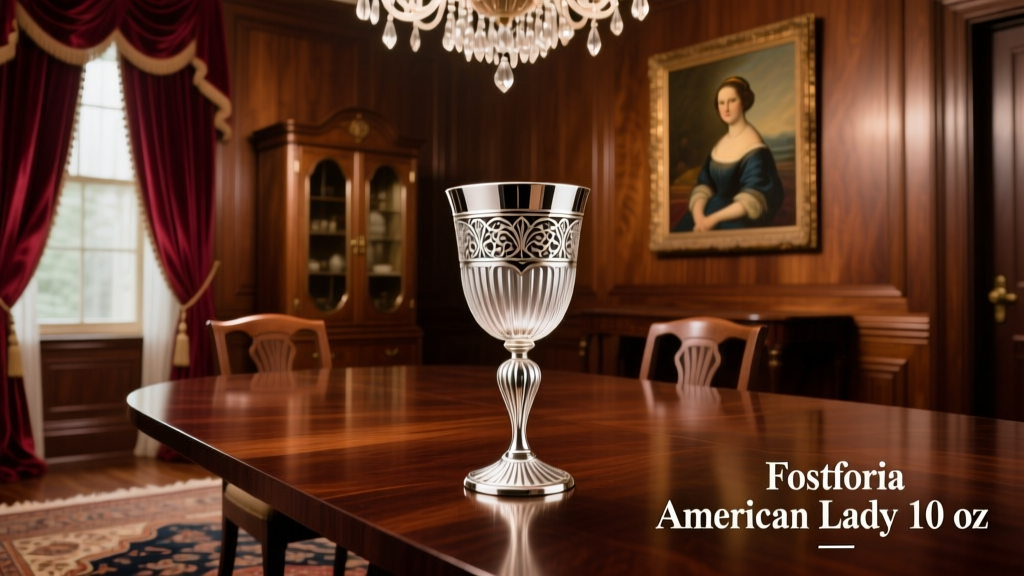
Fostoria American Lady Goblet (10 oz, Pattern #2): History, Identification, and Restoration Guidance
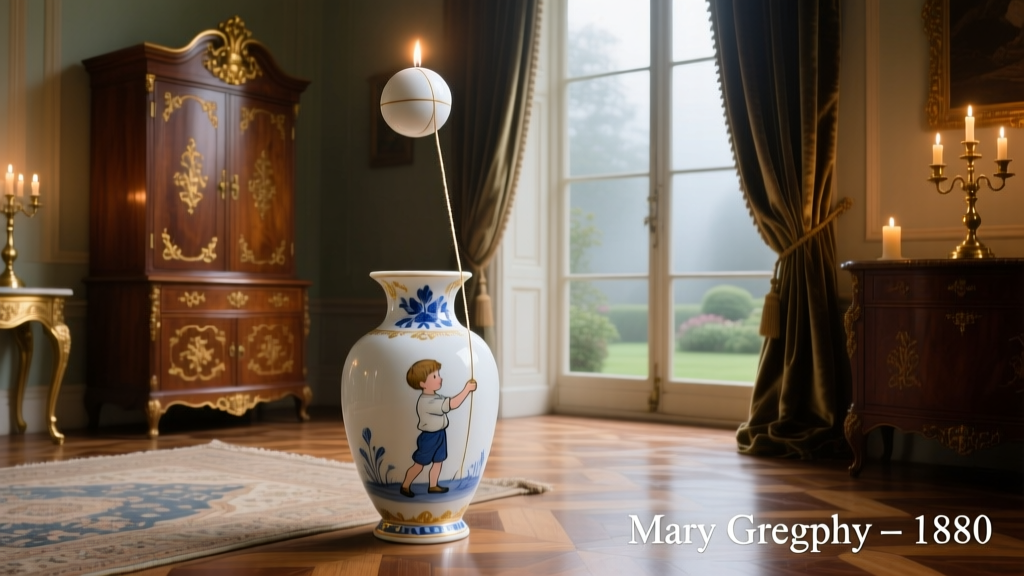
Mary Gregory Vase: Young Boy With Ball on String in Black Amethyst Glass — An 8-Inch Antique Masterpiece
Kerosene Lamps with Sandwich Glass and Bronze Bases: History, Identification, and Restoration Insights
The John Duncomb Pewter Charger: A Masterpiece of Georgian English Pewtercraft, c.1724–1750
Coalport Mandarin Porcelain: History, Identification, and Restoration Insights for Collectors
Foundation for Appraisal Education 2: Advanced Methodologies, Legal Frameworks, and Market Realities in Antique Furniture Valuation

Robsjohn-Gibbings Walnut & Silk Plaid Armchairs: A 1936 Pair Restored to Museum-Quality Authenticity
The Chelsea Plate Floral Spray Design (1752–1758): A Technical and Historical Analysis of the 8½-Inch Porcelain Masterpiece
Findlay Onyx and Floradine: Authentic Mid-Century Modern Dining Sets — Identification, Provenance, and Restoration Best Practices