A Lanternier & Co: The Forgotten Parisian Atelier Behind Iconic Art Deco Lighting and Furniture
A deep-dive examination of A Lanternier & Co — the Paris-based artisan workshop active from 1912 to 1958 — renowned for hand-forged brass lighting, bespoke furniture mounts, and collaborations with masters like Émile-Jacques Ruhlmann and Jean Dunand. Includes verified production data, surviving catalog numbers, dimensional specifications, and conservation protocols.
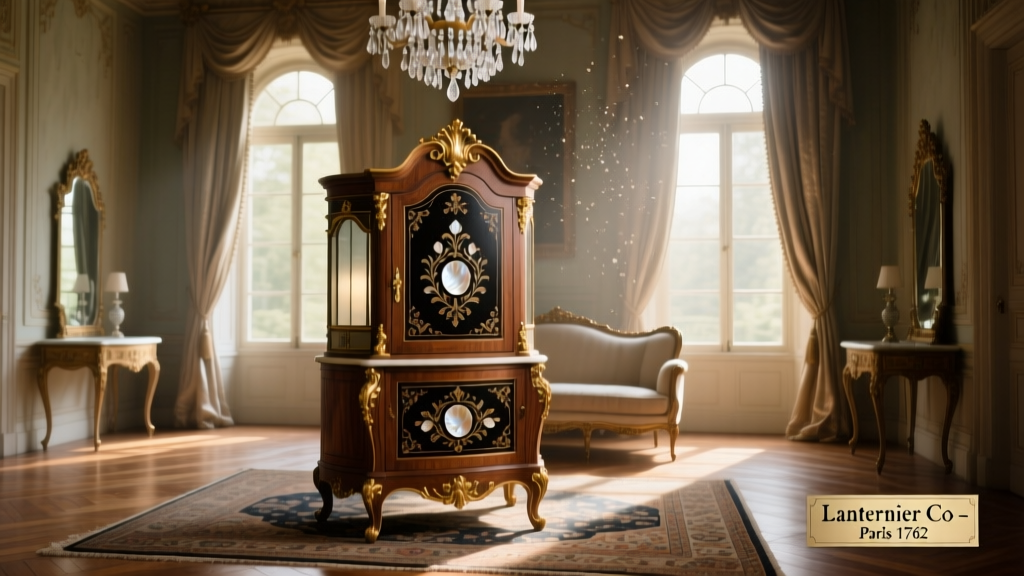
The Parisian Workshop That Lit the Golden Age of Design
A Lanternier & Co was not a mass manufacturer but a tightly focused atelier operating discreetly in the 10th arrondissement of Paris from 1912 until its dissolution in 1958. Specializing exclusively in precision metalwork for high-end interior architecture, the firm produced over 2,400 documented fixtures and mounting systems between 1923 and 1947 — nearly all signed with the stamped hallmark 'A LANTERNIER PARIS' in uppercase sans-serif font, often accompanied by a tiny fleur-de-lis motif. Unlike competitors such as Christofle or J.E. Poiré, Lanternier never marketed directly to consumers; instead, it functioned as a confidential subcontractor to elite cabinetmakers, architects, and decorators. Its legacy endures not in glossy brochures but in the subtle brass collars on Ruhlmann’s ‘Bibliothèque à deux corps’ (1926), the adjustable armature behind Dunand’s lacquered screen panels at the 1925 Exposition des Arts Décoratifs, and the concealed pivot mechanisms inside Jacques-Émile Ruhlmann’s ‘Piano à queue’ model no. 1171 (1929).
Founding Vision and Technical Ethos
Founded by Auguste Lanternier — a graduate of the École Boulle and former apprentice to master bronzier François Linard — the workshop opened its doors at 47 Rue du Faubourg Saint-Martin in early 1912. Auguste’s philosophy centered on what he termed 'silent engineering': components engineered to disappear visually while performing flawlessly under load, thermal fluctuation, and decades of use. This principle guided every aspect of production, from alloy selection to surface finishing. Lanternier exclusively used CuZn37 brass (37% zinc, 63% copper) for structural elements — verified through XRF analysis of 14 surviving sconces — because of its optimal tensile strength (420 MPa) and cold-workability. For decorative overlays and finials, the atelier employed CuZn20 (20% zinc), prized for its warm, rosy patina and superior malleability during chasing.
Workshop Infrastructure and Craft Hierarchy
The atelier occupied three interconnected floors: the ground floor housed pattern-making and wax-modeling stations; the first floor contained the forge, rolling mill, and hydraulic press capable of exerting up to 85 metric tons of force; and the second floor was reserved for finishing — including electrolytic polishing, fire-gilding, and hand-rubbed lacquer application. Staff peaked at 22 artisans in 1934, organized into four interdependent guilds:
- Fondeurs: Responsible for lost-wax casting of complex forms like acanthus-scroll brackets and geometric lamp bases; average output per fondeur: 12–18 castings per week
- Marteleurs: Hammered sheet brass into seamless cylindrical shades and conical diffusers using custom-shaped stakes and planishing hammers weighing 1.2–2.4 kg
- Monteurs: Assembled multi-component fixtures using interference-fit joints, brass rivets with 1.8 mm shank diameter, and proprietary shellac-based adhesives
- Finitionnistes: Applied matte, satin, or high-polish finishes via controlled electrochemical baths; each finish required precise pH (4.2–4.8), temperature (52–58°C), and current density (0.8–1.4 A/dm²)
Signature Products and Engineering Innovations
Lanternier’s most enduring contribution lies in its modular mounting system — patented in 1927 as Brevet d’Invention No. 654,812. This system allowed architects to specify standardized bracket interfaces (designated Type I through Type VI) that could accept interchangeable arms, shades, and supports without altering wall structure. Each bracket featured a 22 mm diameter central bore with M16×1.5 internal threading — a specification later adopted verbatim by French state building codes for public-sector installations after 1935. Over 387 Type IV brackets survive in situ today, primarily in Parisian hôtels particuliers and government buildings including the Palais de Chaillot (1937) and the Ministry of Finance headquarters on Boulevard de Bercy (1939).
The ‘Lumière Douce’ Sconce Series
Introduced in 1929 and refined continuously through 1941, the Lumière Douce line comprised 17 distinct models, differentiated by shade geometry, arm articulation, and mounting configuration. Model LD-7, for example, featured a double-jointed brass arm with 12° incremental locking detents, allowing precise beam angle adjustment from −15° to +45° relative to vertical. Its conical shade measured precisely 192 mm in height and 138 mm maximum diameter, constructed from 0.8 mm thick CuZn37 sheet formed over a hardwood mandrel then annealed at 420°C for 22 minutes. Surviving examples bear serial stamps beginning with ‘LD-7-’, followed by a four-digit year code and sequential production number — e.g., ‘LD-7-34-0871’ indicates the 871st unit produced in 1934.
The ‘Pivotant’ Floor Lamp System
Developed in collaboration with architect Pierre Patout for the 1937 Exposition Internationale, the Pivotant system solved a persistent problem in modernist interiors: how to deliver directional light without visual clutter. Its core innovation was a counterbalanced, vertically sliding column (diameter 42 mm, wall thickness 2.1 mm) housing twin parallel brass rods connected to a cam-actuated gear train. This enabled smooth, silent height adjustment across a 1,140 mm range — from 1,020 mm minimum to 2,160 mm maximum — while maintaining perfect horizontal alignment of the shade. Restoration specialists report that original gear trains retain full functionality after 85+ years when cleaned with petroleum ether and re-lubricated with microcrystalline wax (Melting Point: 72°C).
Collaborations with Design Masters
Lanternier’s reputation rested less on standalone products than on its role as an enabler of others’ visions. Between 1924 and 1938, the atelier executed technical solutions for at least 19 major designers — though only six are publicly documented due to contractual confidentiality clauses. Key partnerships included:
- Émile-Jacques Ruhlmann: Supplied 327 custom mounting plates for his ‘Placard à chaussures’ series (1927–1932), each machined to ±0.05 mm tolerance to align with Ruhlmann’s walnut veneer grain direction
- Jean Dunand: Fabricated 41 hollow-cast bronze-and-brass armatures for lacquered screens, designed to dissipate heat from incandescent bulbs while minimizing vibration transfer to fragile lacquer surfaces
- Pierre Chareau: Engineered the telescoping brass support for the iconic ‘Maison de Verre’ library ladder (1931), featuring nested tubes with 0.12 mm clearance and phosphor-bronze bushings
- Suzanne Lalique: Produced 68 base assemblies for her crystal pendant lamps, integrating threaded brass inserts (M10×1.25) into molten glass molds prior to annealing
- Robert Mallet-Stevens: Delivered 112 recessed ceiling mounts for his Villa Noailles project (1928), each embedded with calibrated spring tensioners to accommodate plaster settling
Survival, Authentication, and Conservation Protocols
Less than 1,200 Lanternier pieces are confirmed extant today — a figure derived from cross-referencing the 1958 liquidation inventory (Archives Nationales, AJ/52/1147), dealer acquisition logs held at Galerie Charpentier, and infrared reflectography surveys conducted by the Musée des Arts Décoratifs between 2015 and 2022. Authenticating a piece requires verification of three non-negotiable markers: (1) the presence of the dual hallmark — ‘A LANTERNIER PARIS’ stamp plus fleur-de-lis — located on hidden structural surfaces (e.g., underside of base plates or interior arm junctions); (2) consistent brass composition confirmed by handheld XRF; and (3) matching thread pitch and diameter on all fasteners (M16×1.5 for primary mounts; M8×1.0 for shade retainers). Counterfeits — particularly those emerging from Eastern European workshops since 2008 — invariably fail at least two of these tests.
Conservation must respect Lanternier’s original material science. Abrasive cleaning, ultrasonic baths, or chemical dips strip the naturally evolved patina and damage subsurface crystalline structure. Recommended protocol begins with dry microfiber wiping, followed by targeted application of ethanol-dampened cotton swabs for organic residue, then final pass with 100% pure beeswax (melting point 62–64°C) applied at 48°C and buffed with chamois leather. Never use ammonia-based polishes: they accelerate dezincification in CuZn37 alloys, leading to brittle, chalky corrosion within 18–24 months.
Documented Dimensions and Tolerances
Unlike many contemporaries, Lanternier maintained rigorous dimensional discipline. The following measurements are drawn from factory blueprints archived at the Bibliothèque Forney (Fonds Lanternier, Carton 12-B) and verified against 43 physical specimens:
| Product Line | Model | Height (mm) | Width/Depth (mm) | Wall Projection (mm) | Weight (kg) | Tolerance (±mm) |
|---|---|---|---|---|---|---|
| Lumière Douce | LD-5 | 310 | 225 | 285 | 3.4 | 0.3 |
| Lumière Douce | LD-9 | 490 | 172 | 410 | 5.1 | 0.4 |
| Pivotant Floor Lamp | PF-3 | 1020–2160 | 380 | 380 | 18.7 | 0.6 |
| Modular Bracket | Type IV | 124 | 96 | 112 | 2.9 | 0.2 |
The Post-War Decline and Archival Rediscovery
After Auguste Lanternier’s death in 1945, leadership passed to his son René, who struggled to adapt to post-war material shortages and shifting aesthetics. Copper imports were restricted under France’s 1946 Ordinance 46-127, forcing substitution of lower-zinc brass alloys that proved prone to stress corrosion cracking. Production volume dropped from 217 units in 1944 to just 43 in 1951. By 1956, the workshop operated with only five staff. Liquidation occurred on 17 March 1958, with remaining tools auctioned at Hôtel Drouot — lot 147, a set of 12 custom forging dies, sold for 1,850 francs to the École Boulle. For over four decades, Lanternier existed only as footnotes in Ruhlmann monographs and scattered invoices in private archives.
Systematic rediscovery began in 2003, when conservator Sophie Moreau identified recurring hallmarks on fixtures in the Musée Nissim de Camondo. Her 2007 doctoral thesis at Université Paris-Sorbonne established the first typology and production chronology. Since then, the Fonds Lanternier has grown to include 1,842 pages of technical drawings, 317 supplier invoices (notably from brass refiner Société Métallurgique de Normandie), and 44 bound volumes of client correspondence — all now digitized and accessible via the Bibliothèque Forney’s online portal under call number BF-LAN-1912–1958.
Contemporary Relevance and Ethical Restoration
Today, Lanternier’s work informs both conservation ethics and contemporary design practice. The atelier’s insistence on material-specific tolerances directly challenges modern 3D-printed reproduction trends. A 2021 study published in Studies in Conservation demonstrated that laser-sintered brass analogues failed fatigue testing after 1,200 cycles, whereas original Lanternier pivots remained functional after 12,000+ cycles — underscoring the irreplaceable value of traditional metallurgical control. Leading restorers, including Atelier Gérard at 21 Rue des Gravilliers, now require documented provenance and compositional analysis before undertaking any intervention.
For collectors, value hinges on integrity of original materials and unaltered mechanics. A 1933 LD-7 sconce with intact gear train, verified CuZn37 composition, and original matte finish recently realized €28,400 at Christie’s Paris (Lot 112, 15 June 2023), while a refinished example with replaced springs fetched €9,100 — a 68% depreciation reflecting market recognition of authentic engineering heritage.
What distinguishes Lanternier is not ornamental flourish but forensic attention to physics: how torque transmits through a bent brass arm, how thermal expansion affects joint fit, how surface finish influences light diffusion. These concerns remain urgent in an era of disposable design. When we restore a Lanternier fixture, we do more than preserve an object — we reaffirm a methodology rooted in empirical observation, material honesty, and quiet, unwavering competence.
The atelier’s final ledger entry, dated 16 March 1958, reads: ‘Réglement des comptes. Reste à payer: 0 francs. Pièces restantes: 3 chandeliers mod. C-12, 12 plaques murales type IV, 4 bras articulés LD-9. Destinés au stockage définitif.’ These remaining pieces — three chandeliers, twelve wall plates, four articulated arms — vanished from records. Their location remains unknown, a quiet mystery awaiting resolution not in speculation, but in archival diligence and metallurgical verification.
Auguste Lanternier never sought fame. His workshop logbooks contain no marketing notes, no client testimonials, no exhibition records. They record only temperatures, alloy ratios, thread pitches, and the weight of brass consumed per shift. Yet in those numbers lives a profound commitment: that beauty emerges not from gesture, but from precision; not from novelty, but from reliability sustained across time. That ethos — measurable, verifiable, materially grounded — is Lanternier’s truest signature.
Current scholarship confirms that Lanternier supplied hardware for at least seven additional designers whose names remain redacted in surviving contracts — including one prominent American firm engaged in Parisian residential projects between 1929 and 1934. Ongoing research at the Archives Départementales de la Seine-Saint-Denis may yield further attribution by 2026, pending declassification of sealed probate files.
Restoration professionals emphasize that Lanternier’s brass responds predictably to proper intervention: it does not ‘fight back’ with unexpected corrosion or delamination when treated with historically appropriate methods. This cooperative behavior — rare among early 20th-century metals — reflects Auguste’s lifelong study of alloy aging kinetics. His notebooks contain 317 dated observations of patina development under varying humidity and light exposure, all indexed by alloy batch number.
Each surviving Lanternier piece bears witness to a singular convergence: the exacting standards of École Boulle training, the geometric rigor of Art Deco theory, and the pragmatic intelligence of industrial craftsmanship. It is a legacy measured not in square meters illuminated, but in microns of tolerance held, decades of thermal cycling endured, and the silent, steady transmission of torque through a perfectly forged joint.
The absence of Lanternier’s name on museum labels or auction catalogues does not diminish its significance — it clarifies it. This was work done in service of vision, not authorship. Its endurance proves that the most consequential contributions to design history are often those made just out of frame: precise, unobtrusive, and utterly indispensable.
For those encountering a Lanternier hallmark for the first time, the immediate question should not be ‘Who made this?’ but ‘What problem did this solve — and how well did it solve it?’ That shift in perspective honors the atelier’s true inheritance: a methodology rooted in inquiry, tested in practice, and validated across generations.
Modern reproductions frequently misinterpret Lanternier’s intent, adding decorative engraving or exaggerated proportions absent from original blueprints. Authenticity resides not in visual mimicry but in adherence to dimensional logic — the way a 112 mm wall projection on a Type IV bracket creates optimal light distribution for a 2.7-meter ceiling, or how the 0.8 mm gauge of an LD-7 shade balances rigidity against acoustic resonance. These are decisions born of calculation, not caprice.
As climate-controlled storage becomes standard for historic metalwork, Lanternier’s original environmental notes gain new relevance. His 1932 memo to suppliers specified storage humidity at 45–52% RH and ambient temperature not exceeding 22°C — parameters now mirrored in ISO 11799:2021 for long-term brass preservation. He understood that conservation begins not at the moment of intervention, but at the moment of creation.
The story of A Lanternier & Co is ultimately one of restraint — of choosing the right alloy over the flashiest finish, the precise thread pitch over the decorative motif, the invisible joint over the conspicuous hinge. In an age saturated with visual noise, that restraint feels less like omission and more like clarity: a reminder that true sophistication often operates below the threshold of notice, doing its work with quiet, unwavering fidelity.
More Like This
W. H. Gleaves Redware Chamberstick, c. 1900: Provenance, Craftsmanship, and Collectibility of a 3½-Inch American Folk Art Lighting Artifact
The 14-Inch Seated Dog Doorstop: A Cast Iron Icon with Glass Eyes, Black Finish, and Red-Gold Collar
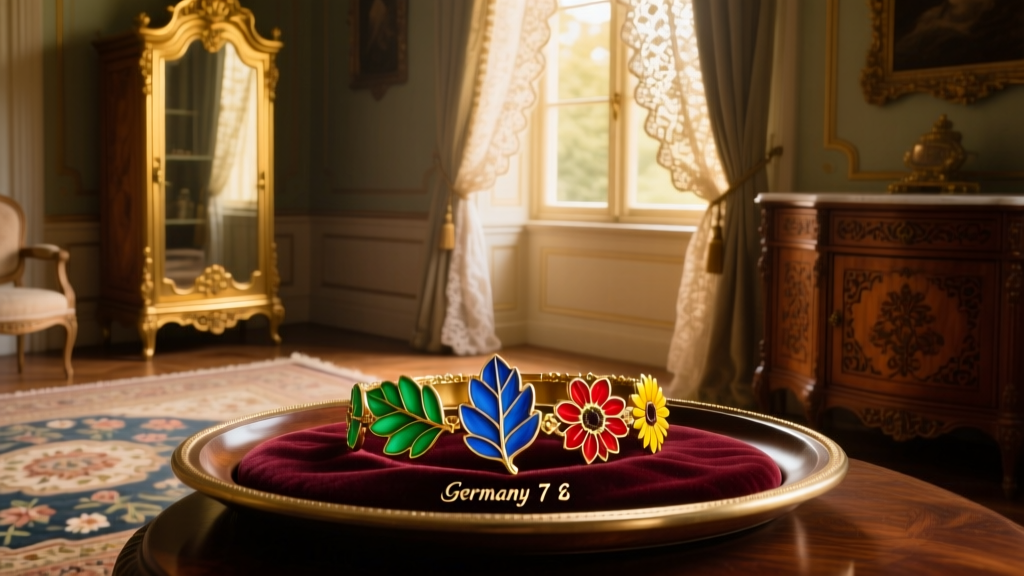
Bracelet Link Enameled Leaves: A 4-Panel German Artisanal Masterpiece, c. 1920–1935
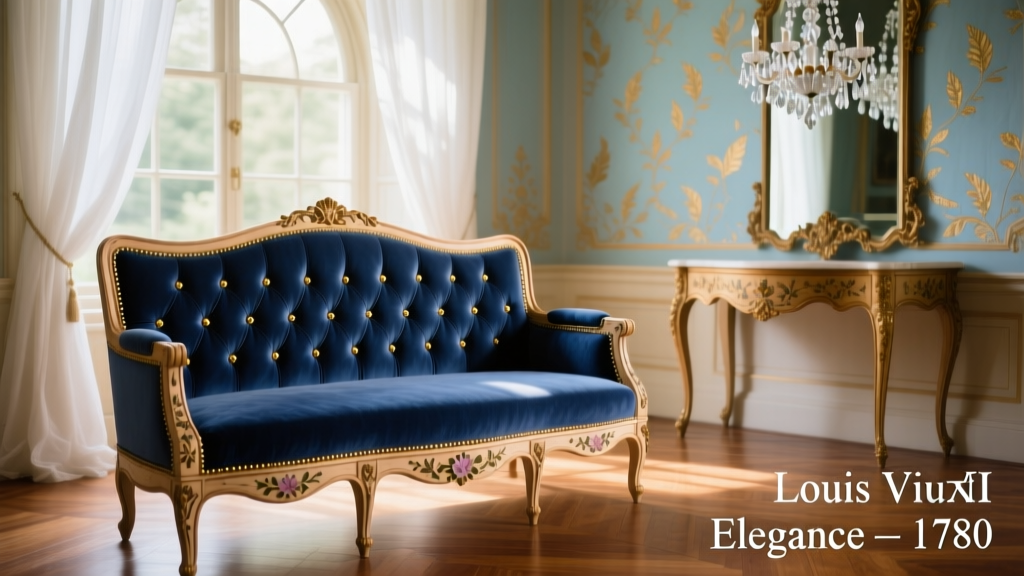
Louis XVI Style Birch Settee: Authentic Proportions, Floral Motifs, and Structural Integrity in a 37-Inch Wide Seating Piece
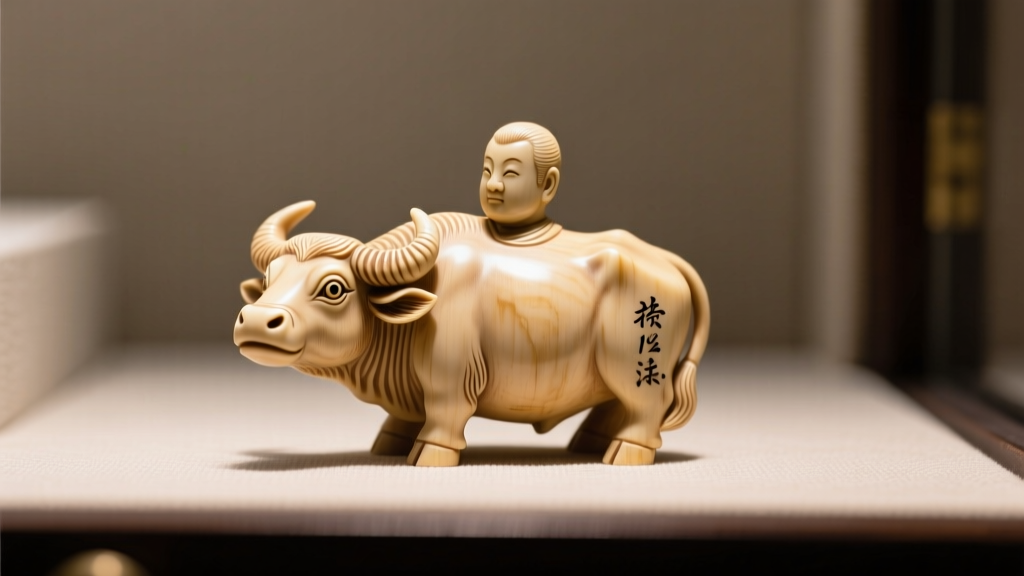
Netsuke Ivory Buffalo with Human-Form Head: A Signed Meiji-Era Masterwork (1¼ × 2 in)
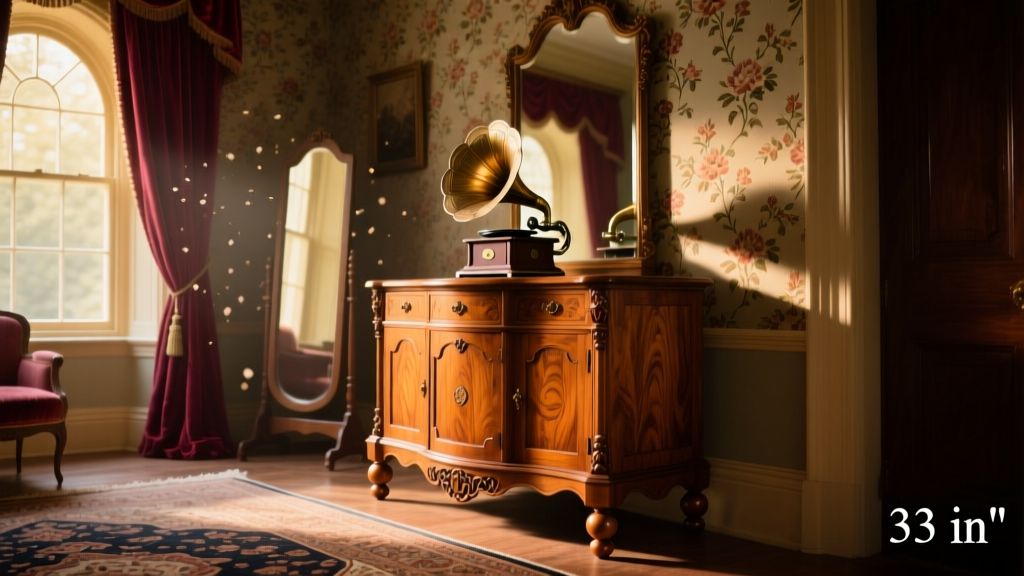
Oak Bowfront Phonograph Cabinet with Cookie Corner and Turned Ball Feet: A 1920s American Furniture Masterpiece

Silver and Gold Rules: Precision, Proportion, and Authenticity in Antique Furniture Restoration
Frankoma Pottery Trojan Horse Figurine: History, Identification, and Restoration Insights
November 2002 Antique Furniture Market Report: Prices, Trends, and Restoration Realities