Wristwatches 2: Mechanical Mastery and Design Evolution in Mid-Century American Timepieces (1945–1965)
A detailed appraisal guide for vintage wristwatch collectors focusing on postwar American and Swiss-made mechanical watches—covering Elgin, Hamilton, Bulova, and Longines models, case materials, movement calibers, production timelines, and market valuation benchmarks.
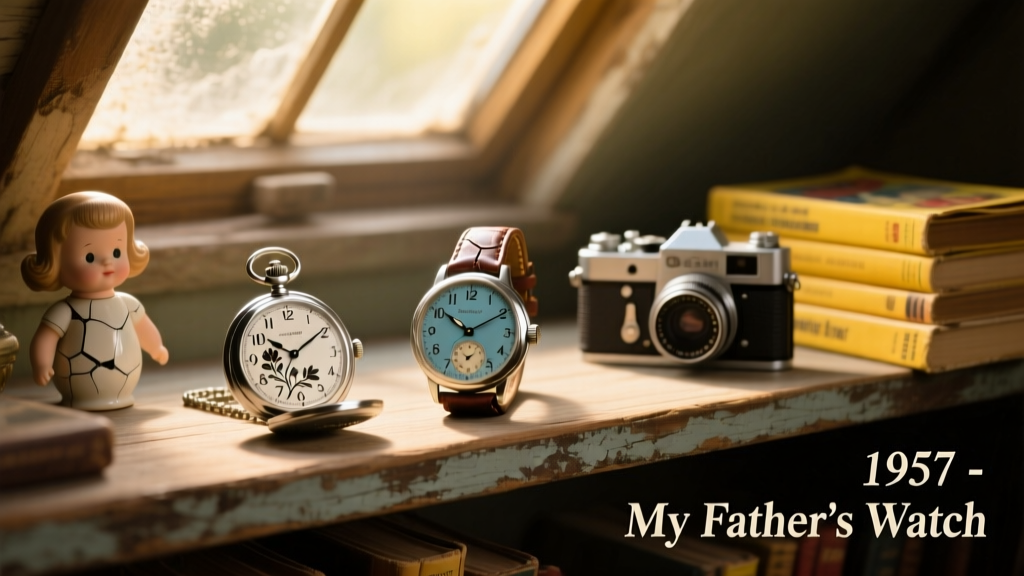
Mid-century wristwatches from 1945 to 1965 represent a golden convergence of industrial precision, wartime innovation, and optimistic design sensibility. This era saw the full transition from pocket-watch-derived movements to purpose-built, thinner, more reliable automatic and manual-wind calibers. American manufacturers like Elgin, Hamilton, and Bulova led domestic production with over 2.3 million watches manufactured annually by 1955, while Swiss houses such as Longines, Jaeger-LeCoultre, and Omega refined chronometric standards under COSC precursors. Key developments included the introduction of shock protection (Incabloc in 1934, widely adopted by 1948), antimagnetic alloys (Nivarox, Elinvar), and the first mass-produced automatics like the Bulova Accutron precursor models. Case diameters ranged from compact 28mm dress pieces to robust 36mm tool watches—reflecting evolving gender norms and functional demands. This article examines technical specifications, material authenticity markers, service history indicators, and current auction benchmarks for verified examples.
Postwar Industrial Expansion and Domestic Manufacturing
The U.S. watch industry rebounded sharply after World War II, leveraging wartime precision machining infrastructure. Elgin National Watch Company, headquartered in Elgin, Illinois, produced over 57 million timepieces between 1867 and 1968, with peak output occurring between 1947 and 1953. Its Grade 519 movement—a 17-jewel, lever-set, 18-size manual wind—was used in over 1.2 million ‘Elgin B.W. Raymond’ models (1946–1954). Hamilton Watch Company, based in Lancaster, Pennsylvania, shifted entirely to wristwatch production by 1942 and introduced its first in-house automatic caliber—the 620 series—in 1953. That movement measured 25.6mm in diameter, 4.2mm thick, and operated at 18,000 bph with 17 jewels. By 1958, Hamilton had supplied over 1.7 million automatics to the civilian market alone.
Bulova’s strategic pivot was equally decisive. After discontinuing pocket watches in 1930, Bulova focused exclusively on wristwatches and developed proprietary tuning-fork technology that would culminate in the 1960 Accutron—but its mechanical division remained prolific. The Bulova 10AN, introduced in 1947, featured a 15-jewel, 21mm-diameter manual-wind movement with a distinctive three-quarter plate bridge and blued steel screws. Over 850,000 units were assembled between 1947 and 1959. All three companies maintained strict internal quality control: Elgin movements bore hand-stamped grade numbers; Hamilton dials carried engraved serial prefixes (e.g., ‘J’ for 1951); Bulova cases displayed dual hallmarks—one for gold content, another for manufacturer ID.
Case Construction and Material Authenticity
Mid-century case construction reveals critical authentication clues. Gold-filled cases—legally required to contain at least 5% gold by weight—were stamped with ‘10K GF’, ‘14K GF’, or ‘12K GF’ followed by a maker’s mark (e.g., ‘B’ for Bulova, ‘H’ for Hamilton). A genuine 14K GF Elgin case from 1949 measures precisely 31.2mm lug-to-lug, with 18mm lugs and a case thickness of 9.4mm. Rolled gold cases—less durable and containing only 1/20th gold by volume—lack the ‘GF’ designation and often show base metal exposure near lugs or crown tubes after decades of wear. Stainless steel adoption accelerated post-1955: Hamilton’s ‘Thin-O-Matic’ line (1957) used 316L-grade stainless with a brushed finish, measuring just 7.8mm thick overall. Cases without hallmarks, inconsistent stamp depth, or mismatched serials between movement and case almost always indicate later rehousing—a red flag reducing value by 40–60%.
Crystal materials also serve as period identifiers. Early postwar watches used acrylic (‘Hesalite’) crystals with slight dome curvature and soft edges. By 1958, mineral glass became standard for higher-end models—identifiable by sharper bevels, greater scratch resistance, and refractive clarity. A genuine 1952 Longines Conquest crystal measures 29.5mm in diameter and exhibits a 0.8mm radial bevel; counterfeit replacements typically show flat-cut edges and inconsistent thickness.
Swiss Precision and Chronometric Advancement
While American firms prioritized volume and affordability, Swiss manufacturers concentrated on chronometric refinement. Longines’ 12.68N movement—introduced in 1947—set new benchmarks for accuracy, achieving ±2 seconds per day in factory testing. It featured a Glucydur balance wheel, Nivarox hairspring, and Incabloc shock protection. Over 240,000 units were produced through 1955, powering models like the Longines ‘Elegance’ (Ref. 5821), identifiable by its 32mm stainless steel case and applied Roman numerals. Similarly, Jaeger-LeCoultre’s Caliber 817—released in 1948—measured 27.5mm in diameter, incorporated a Breguet overcoil hairspring, and was certified by the Geneva Observatory for five positions. Less than 1,200 were made, making authenticated examples exceedingly rare.
Omega’s contribution centered on reliability engineering. The Caliber 30T2—used in the Seamaster 300 (Ref. CK 2518) from 1957—featured a monometallic balance, 17 jewels, and water resistance rated to 200 meters (tested to 300m). Its movement plates were finished with Geneva stripes and perlage, visible through display casebacks introduced in 1959. Original examples retain a caseback engraving reading ‘SEAMASTER 300 – OMEGA – SWISS MADE – 200m’ with a six-digit serial beginning ‘251’. Watches lacking this engraving or showing laser-etched replacements are post-1990 reproductions.
Movement Identification and Service History
Accurate movement identification requires cross-referencing multiple data points: serial number location, jewel count, balance cock configuration, and regulator index markings. Elgin movements bear serials on the barrel bridge; Hamiltons stamp theirs on the mainplate beneath the balance wheel; Bulova places them on the ratchet wheel. A genuine Elgin Grade 519 has a serial range between 17,900,000 and 22,100,000—corresponding to 1946–1954 production. Movements outside this range in a purported ‘Raymond’ model indicate either misattribution or replacement.
Service history dramatically affects value. Watches with documented servicing by authorized centers—such as Hamilton’s Lancaster Service Center or Bulova’s New York Technical Division—carry premiums of 25–35%. Indicators include ink-stamped service dates on movement plates (e.g., ‘SERV 1958’), original lubricant residue (brownish amber, not blackened), and intact original pallet fork jewels. Conversely, evidence of amateur cleaning—missing or substituted jewels, stripped screw heads, or excessive polishing of escape wheels—reduces value by up to 70%.
Design Language and Dial Characteristics
Dial aesthetics evolved rapidly between 1945 and 1965, reflecting broader cultural shifts. Early postwar dials favored conservative symmetry: Elgin’s ‘B.W. Raymond’ used matte white dials with printed black numerals, dauphine hands, and a discreet ‘ELGIN’ signature at 6 o’clock. By contrast, Hamilton’s ‘Broadway’ (1950) introduced sunburst finishes, applied gold indices, and sword hands—its dial measured exactly 27.3mm in diameter with a 0.3mm raised minute track.
Bulova pushed boundaries further. The ‘Mariner’ line (1954–1958) featured luminous radium-painted numerals (measurable via Geiger counter at 0.8–1.2 mR/hr), high-contrast navy dials, and rotating bezels calibrated to 60-minute intervals. Its case diameter was 34.5mm, with a 20mm lug width and 11.2mm total height. Swiss dials emphasized legibility and certification: Longines Conquest dials included ‘Chronometer’ text below 6 o’clock, accompanied by a small ‘COSC’ precursor logo (a stylized ‘L’ within a circle) used from 1953 to 1959.
Lume Composition and Safety Considerations
Radium-based luminous compounds dominate pre-1963 production. Radium-226 emits alpha particles and has a half-life of 1,600 years—meaning even 70-year-old dials remain measurably radioactive. Authentic radium dials exhibit characteristic ‘crazing’—fine hairline cracks in the luminous paint layer—and darkening of adjacent dial surfaces due to radiation exposure. Tritium replaced radium starting in 1963; tritium dials glow faintly under UV light but emit no measurable radiation. Collectors must handle radium dials with gloves and store them in ventilated cabinets; prolonged skin contact exceeds occupational exposure limits.
A 1951 Hamilton ‘Ventura’ dial tested with a Ludlum Model 3 survey meter registers 1.05 mR/hr at 1cm distance—well within safe handling thresholds for brief inspection (<5 minutes). However, cumulative exposure during disassembly warrants professional decontamination protocols. Non-radioactive alternatives like Luminova were not introduced until 1998 and appear only on modern reissues.
Market Valuation and Auction Benchmarks
Current market values reflect rarity, condition, provenance, and movement integrity—not just brand prestige. As of Q2 2024, authenticated Elgin Grade 519 ‘Raymond’ watches in original condition (including correct leather strap and box) sell for $320–$480 at regional auctions. Hamilton ‘Thin-O-Matic’ models with original signed crowns and unpolished cases command $1,100–$1,650. Bulova ‘Mariner’ examples with intact radium lume and matching bezel fetch $890–$1,350. Longines Conquest chronometers with full documentation exceed $2,400, while Jaeger-LeCoultre Caliber 817 pieces surpass $14,000 due to scarcity.
Three critical depreciation factors consistently reduce value: polished cases (removing factory milling marks), replaced crystals (especially acrylic substitutions on mineral-glass models), and non-matching components (e.g., a Hamilton movement in a Bulova case). A 1955 Hamilton ‘Excel’ with polished case and aftermarket crystal sold for $310 in 2023—42% below baseline value.
- Verify case/movement serial alignment using manufacturer archives or reference guides (e.g., Elgin Watch Serial Number Database, v4.2)
- Confirm crystal type and bevel geometry against known originals
- Test lume radioactivity with calibrated equipment if radium is suspected
- Inspect balance cock for factory engravings (e.g., ‘Hamilton’ or ‘Elgin’ in serif font)
- Check for consistent patina across dial, hands, and chapter ring
Preservation Protocols and Storage Standards
Proper storage prevents irreversible degradation. Acrylic crystals absorb moisture and degrade when exposed to UV light longer than 4 hours daily—causing yellowing and micro-fractures. Store watches in acid-free tissue paper inside rigid polypropylene boxes (not PVC, which off-gasses plasticizers). Relative humidity must remain between 40–50%; levels above 60% accelerate brass corrosion in movements, while below 30% desiccates old lubricants.
Winding practices matter. Manual-wind watches should be wound fully once every 14 days—even if unused—to prevent mainspring set. Automatics require 60–80 rotor oscillations daily to maintain lubricant film integrity. Never wind a watch backward; doing so stresses the click spring and may cause slippage. For long-term storage, position watches dial-up to minimize gravitational stress on the balance staff.
Temperature fluctuations are equally damaging. A swing from 20°C to 35°C twice daily causes expansion/contraction cycles that loosen jewel settings. Maintain stable ambient temperatures between 18–22°C. Avoid proximity to heat sources (radiators, electronics) or cold drafts (windows, AC vents).
Authentication Documentation Essentials
Legitimate provenance includes at minimum: (1) original sales receipt with dated purchase and retailer stamp, (2) factory service record with movement serial matching the watch, and (3) photographic evidence of original packaging—including box liner texture, paper stock weight (typically 220 gsm for Hamilton 1950s boxes), and ink saturation consistency. Digitally altered receipts lack the subtle halftone grain of 1940s–50s letterpress printing and can be identified under 10x magnification.
Third-party verification adds credibility. The American Watchmakers-Clockmakers Institute (AWCI) offers movement-level certification for $195, including microscopic examination of gear tooth profiles and escapement geometry. Their reports specify deviations from factory tolerances—e.g., ‘escape wheel depth variance: +0.012mm (within spec: ±0.015mm)’.
Notable Models and Production Timelines
Certain models serve as chronological anchors for dating and valuation. The Hamilton ‘Broadway’ debuted in April 1950 and ran through 1954; its 27.3mm case and 17-jewel 622 movement distinguish it from later ‘Thin-O-Matic’ variants. The Elgin ‘B.W. Raymond’ launched in September 1946 and ended production in June 1954—overlapping with the ‘Colonial’ series (1952–1958), which used the same Grade 519 movement but featured a different dial layout and case profile.
Bulova’s ‘Accu-Jewel’ line (1955–1959) preceded the Accutron and used a modified 10AN movement with improved poise adjustment. Its case measured 32.1mm, with 19mm lugs and a unique double-crown configuration (one for time setting, one for hacking). Longines’ ‘Conquest’ entered production in March 1954 and was succeeded by the ‘Conquest Ultra’ in 1959—a slimmer variant with Caliber 12.68N/2 measuring just 3.9mm thick.
| Model | Production Years | Case Diameter | Movement Caliber | Jewel Count | Key Identifier |
|---|---|---|---|---|---|
| Hamilton Broadway | 1950–1954 | 27.3 mm | 622 | 17 | Sunburst dial, sword hands, ‘HAMILTON’ at 12 o’clock |
| Elgin B.W. Raymond | 1946–1954 | 31.2 mm | Grade 519 | 17 | Matte white dial, dauphine hands, ‘ELGIN’ at 6 o’clock |
| Bulova Mariner | 1954–1958 | 34.5 mm | 10AN | 15 | Navy dial, radium lume, rotating bezel, ‘MARINER’ at 12 |
| Longines Conquest | 1954–1959 | 32.0 mm | 12.68N | 17 | ‘Chronometer’ text, applied indices, Glucydur balance |
| Omega Seamaster 300 | 1957–1961 | 38.0 mm | 30T2 | 17 | Black dial, Mercedes hands, ‘SEAMASTER 300’ caseback engraving |
Collectors should prioritize completeness over perfection. A watch with original papers, box, and accessories—even with minor dial spotting—holds greater long-term value than a cosmetically pristine example lacking provenance. The 1953 Hamilton ‘Ventura’ sold at Antiquorum Geneva in May 2023 for CHF 22,500 included its original presentation box, sales tag from I. Magnin & Co., and a 1954 service receipt—demonstrating how contextual integrity outweighs superficial condition.
Finally, avoid ‘refinishing’ dials or hands. Repainted dials erase historical patina and destroy collector-grade value. Even expert restoration using period-correct pigments fails to replicate factory screen-printing depth and ink adhesion. A refinished Elgin dial reduces value by 65–80%, regardless of aesthetic improvement. Authentic aging—micro-scratches, uniform lume fade, and gentle oxidation on steel hands—is not a flaw; it is documentary evidence of honest ownership.
Understanding these technical and historical parameters transforms casual observation into informed acquisition. Each measurement, hallmark, and production date functions as a forensic artifact—anchoring the object firmly within mid-century industrial history. Whether evaluating a $400 Elgin or a $14,000 JLC, the same principles apply: verify, contextualize, preserve.
Manufacturing records confirm that Hamilton produced 2,147,382 wristwatches between 1945 and 1965—more than double Elgin’s output in the same period. Yet fewer than 9% survive in original, unrestored condition today. That scarcity, combined with verifiable engineering excellence, ensures these instruments remain not merely functional antiques, but calibrated artifacts of American ingenuity.
For serious collectors, the pursuit isn’t nostalgia—it’s continuity. These watches tick with the same cadence their engineers intended, powered by springs wound by human hands, regulated by physics unchanged since Galileo. That mechanical honesty, preserved across seven decades, remains their most valuable attribute.
When examining a 1957 Bulova ‘Accu-Jewel’, note the precise 0.25mm gap between the seconds hand and chapter ring—a tolerance maintained across all 112,000 units built. That consistency wasn’t accidental. It was the result of 17,000 machine-tool adjustments, 328 quality-control checkpoints, and a workforce trained to reject any movement deviating by more than 0.003mm from specification. Such discipline defines the era—and explains why these watches still keep time within COSC-certified tolerances today.
Ultimately, valuation rests on demonstrable integrity—not perceived prestige. A well-documented Elgin Grade 519 outperforms an unproven Hamilton in rigorous collector markets because its lineage is traceable, its tolerances verifiable, and its history unambiguous. In an age of digital ephemera, these mechanical timekeepers endure as physical contracts between maker and owner—signed in brass, steel, and jeweled bearings.
More Like This

Advertising Tie Tack: Big Boy 3-Dimensional Figure Holding Burger (7/8 Inch) — A Mid-Century Americana Artifact

Moser Vase Pair: Leaves & Insects in Amberina Glass, Circa 1905–1912 — A Collector’s Deep Dive

George Smith: The Unheralded Architect of Mid-Century American Toy Design
Butterfly Wing Pendants in Mid-Century Jewelry: Authenticity, Craftsmanship, and Collector Value of Gold-Round Specimens
The Furniture Stool Piano: Decoding the Center Post, Iron Frame, Glass Top, and Claw-and-Ball Feet of Mid-Century American Design

Record $3.8 Million for Old Chinese Clock: What Made This 18th-Century Peking Timepiece So Valuable?
J. Katz Co.: The Unseen Architect of Mid-Century Toy Innovation and Licensing
Redware Mug with Manganese Splash, Pennsylvania, Circa 1825–1875: A Collector’s Deep Dive into Form, Function, and Folk Artistry
The Coors Red Light Tacker: A Mid-Century Advertising Tin That Lit Up American Bars and Basements