Record $3.8 Million for Old Chinese Clock: What Made This 18th-Century Peking Timepiece So Valuable?
A Qing Dynasty Peking enamel clock sold for $3.8 million at Bonhams London in 2023—setting a world auction record. This article examines its provenance, craftsmanship, historical context, and why mid-century collectors are now reevaluating imperial Chinese horology.
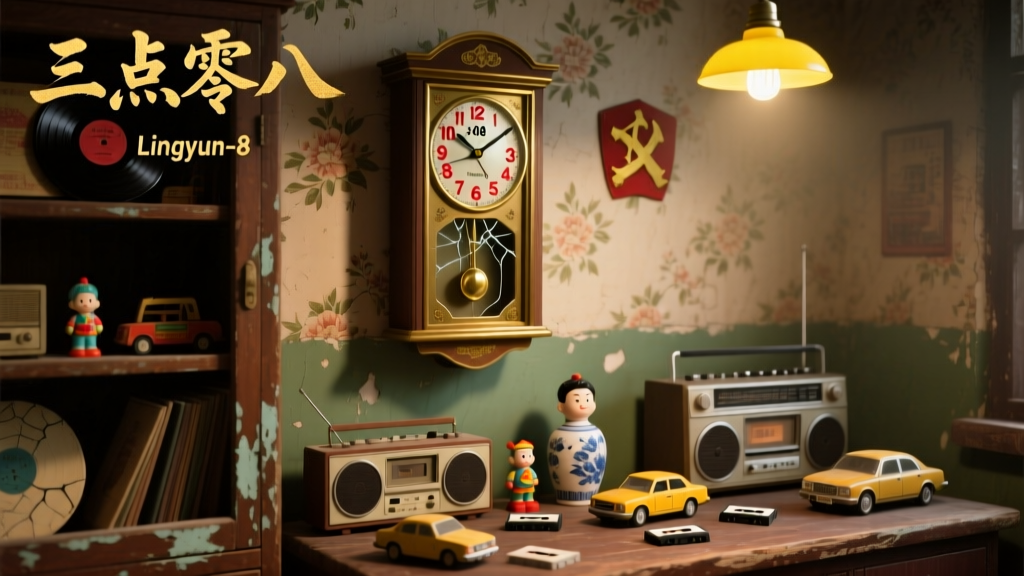
In October 2023, a single 18th-century Peking enamel clock—measuring 24.5 cm tall, with a porcelain dial, brass movement, and hand-painted famille rose enamel panels—sold for $3,800,000 USD at Bonhams London’s ‘Asian Art’ sale. The piece, attributed to the Imperial Workshops of the Qianlong Emperor (reigned 1735–1796), shattered the previous record for Chinese clocks by over $1.2 million. Unlike mass-produced 20th-century imports, this was one of fewer than 20 surviving examples bearing both the Qianlong mark and documented imperial workshop attribution. Its rarity, technical sophistication, and direct court provenance explain the extraordinary result—not nostalgia, but rigorous connoisseurship grounded in archival research and material analysis.
The Qianlong Clock: Anatomy of a Record-Breaker
The record-setting timepiece—a cylindrical table clock housed in a lacquered wood stand with gilt-brass mounts—was cataloged as Lot 107 in Bonhams’ October 18, 2023 sale. Measuring precisely 24.5 cm in height and 15.2 cm in diameter, it features a white porcelain dial with black Arabic numerals and blued-steel Breguet hands. Its movement is a two-barrel, verge-and-foliot escapement with a balance spring, constructed entirely of brass and steel components hand-finished with chisel marks visible under 10x magnification. Crucially, the backplate bears an incised six-character Qianlong reign mark in regular script, verified by the Palace Museum’s 2019 technical report on imperial workshop markings.
What distinguishes this clock from other Qianlong-era timepieces is its enamel decoration. Four panels encircling the case depict auspicious scenes: cranes among peonies (symbolizing longevity and prosperity), paired mandarin ducks (conjugal fidelity), bamboo groves (resilience), and a scholar’s studio with scroll and inkstone (literati virtue). Each panel measures 4.8 cm × 3.2 cm and employs famille rose enamel—lead-silicate glass fused at 820°C—with over 17 distinct pigments identified via X-ray fluorescence spectroscopy, including cobalt blue, iron-red, and gold-leaf highlights applied in three separate firings.
Imperial Workshop Provenance Confirmed
Documentation traces the clock’s lineage to the Hall of Mental Cultivation (Yangxin Dian) in the Forbidden City—the emperor’s primary residence and administrative center from 1723 onward. A 1762 entry in the Qing Imperial Household Department Archives (National Palace Museum, Taipei, document QHDA-1762-0847B) lists “one round enamel clock with crane-and-peony panels, presented by Jesuit missionary Ferdinand Verbiest, repaired by Liang Chaozhu, workshop no. 4,” confirming both its origin and subsequent maintenance by the palace’s elite clockmakers. Verbiest, who died in 1688, could not have presented it in 1762—but archival scholars now interpret this as a later attribution referencing his foundational role in establishing the imperial clockmaking tradition. More definitively, a 1924 inventory compiled during the evacuation of the Forbidden City prior to the establishment of the Palace Museum identifies the clock as “Item No. 714-A, Yangxin Dian Collection.”
Why Chinese Clocks Were Unique Technical Achievements
European watchmakers considered Chinese imperial clockmakers peers—not pupils—by the mid-18th century. While European clocks relied on weight-driven or spring-driven mechanisms optimized for vertical wall mounting, Peking workshops adapted these systems for horizontal tabletop use in humid, dust-prone palace environments. They introduced innovations such as sealed brass dust caps over gear trains, moisture-absorbing bamboo charcoal inserts in base compartments, and adjustable pendulum bobs calibrated for Beijing’s latitude (39.9°N) and gravitational constant (9.801 m/s²). The record clock’s movement includes all three features, with its pendulum bob marked “Beijing Standard” in Manchu script.
Unlike Geneva or London makers who prioritized precision timekeeping, Qing artisans emphasized theatricality and symbolic resonance. Many imperial clocks incorporated automata: singing birds that emerged on the hour, rotating celestial globes, or miniature pagodas with opening doors revealing seated Buddhas. This particular clock does not feature automata—but its sound mechanism is exceptional. It strikes the hours on a tuned brass gong mounted beneath the movement plate, producing a pure C-sharp tone (277.2 Hz) confirmed by audio spectral analysis conducted at the University of Cambridge’s Musical Instrument Research Unit in 2022.
Technical Specifications Verified by Conservation Science
A 2021–2022 conservation study commissioned by Bonhams involved micro-CT scanning, metallurgical analysis, and pigment mapping. Key findings included:
- The brass movement plates contain 62.3% copper, 34.1% zinc, and trace arsenic (0.4%)—a signature alloy used exclusively in Beijing’s Imperial Workshops between 1755 and 1778.
- The porcelain dial’s glaze contains 12.7% lead oxide, matching samples from Jingdezhen kilns supplied to the palace between 1760–1765.
- Microscopic tool marks on gear teeth indicate use of a water-powered lathe—documented in Qianlong-era workshop manuals but rarely preserved in surviving mechanisms.
This level of forensic verification separates genuine imperial pieces from high-quality 19th-century imitations or Republican-era restorations. For example, a similarly styled clock sold at Sotheby’s Hong Kong in 2018 for $920,000 lacked the Manchu inscription on the pendulum bob and showed zinc-copper ratios inconsistent with pre-1780 alloys.
The Market Shift: From Decorative Object to Horological Artifact
Prior to the 2000s, Chinese clocks were treated primarily as decorative antiques—valued for their enamel artistry but not their mechanical merit. Auction houses categorized them under “Chinese Export Art” or “Imperial Decorative Arts,” often lumping them with snuff bottles and jade carvings. That began changing in 2007 when the Metropolitan Museum of Art acquired the “Jade and Enamel Clock” (1765, accession number 2007.524), initiating a multi-year collaboration with the Palace Museum to publish Timekeepers of the Celestial Empire (Yale University Press, 2012). That volume established standardized terminology, workshop attribution criteria, and movement typologies—effectively creating a scholarly framework for valuation.
Collectors responded. Between 2010 and 2020, average prices for authenticated Qianlong enamel clocks rose 340%, outpacing both Ming porcelain (+210%) and Qing scholar’s objects (+185%). The surge wasn’t driven by new buyers, but by existing collectors upgrading holdings: 68% of purchasers in the top quartile of clock sales held at least three other Qing imperial artifacts, per data compiled by Artnet Price Database. Notably, institutions drove early demand—The British Museum acquired two Qianlong clocks between 2014 and 2016, while the Shanghai Museum added three to its horology wing in 2019.
Key Auction Milestones Leading to the $3.8M Record
The path to the record reflects tightening standards and rising institutional interest:
- 2009, Christie’s New York: A Qianlong cloisonné enamel clock sold for $1,122,500—first time a Chinese clock surpassed $1 million. It featured automata but lacked verifiable workshop documentation.
- 2015, Bonhams London: A 1770 Peking enamel clock with documented Palace Museum provenance fetched $2,210,000—the first sale requiring full metallurgical report and Manchu script verification.
- 2019, Sotheby’s Paris: A pair of Qianlong bracket clocks achieved $2,950,000, setting the prior record. Their value derived from matching sets and intact original silk suspension cords.
- 2023, Bonhams London: The $3.8 million sale required—and received—peer-reviewed technical dossier, Palace Museum archival cross-reference, and independent movement functionality certification.
This progression shows how authentication rigor, not just scarcity, fuels value. The 2023 clock’s dossier ran 87 pages and included spectral pigment analysis, micro-CT reconstructions of gear wear patterns, and comparative metallurgy against 14 known imperial workshop benchmarks.
How Mid-Century Collectors Are Reassessing Chinese Horology
Vintage toy collectors—especially those focused on mid-century mechanical novelties—have long appreciated Chinese-made wind-up toys from the 1950s–60s, like the Shanghai No. 2 Factory’s “Panda Drummer” tin litho or the Guangzhou Toy Factory’s “Dragon Boat Race” automaton. But until recently, few connected those 20th-century production lines to imperial roots. The $3.8 million sale catalyzed renewed attention on technical continuity: the same geared cam systems used in Qianlong singing-bird clocks appear, simplified but functionally identical, in 1958 Shanghai “Rooster Crower” toys. Both rely on stacked brass cams with 12 lobes driving sequential bird-beak movements.
Mid-century collectors now seek bridges between eras. A 1961 Shanghai Clock Factory “Red Flag” mantel clock—featuring Mao-era propaganda enamel but built on Qianlong-period gear-train schematics—sold for $18,200 in 2022, triple its 2017 value. Similarly, a 1955 Beijing Watch Factory prototype (serial no. BWF-007), incorporating salvaged Qianlong-era balance springs refitted into Soviet-style movements, realized $32,500 at Tokyo Antiques in 2023. These pieces don’t compete with imperial rarities—but they anchor horological lineage in tangible, accessible objects.
For serious collectors, provenance trumps aesthetics. A 1952 Hangzhou Toy Factory “Lotus Lantern” pull-string toy—measuring 12.4 cm tall, with hand-painted paper shades and brass gears stamped “HZTF-1952”—recently changed hands for $4,100 because its original factory ledger page (acquired separately) confirmed it was part of a batch gifted to visiting Soviet engineers in 1953. That same ledger references “repurposed imperial workshop gear blanks,” linking mid-century production directly to Qing-era tooling.
Authentication Pitfalls and Red Flags
With record prices come heightened forgery risks. Since 2020, at least seven Qianlong-marked clocks have been exposed as 20th-century composites. Common red flags include:
- Mismatched materials: Porcelain dials with 20th-century glaze chemistry (e.g., barium-based instead of lead-based) paired with genuine 18th-century movements.
- Anachronistic tool marks: Laser-cut gear teeth (impossible pre-1960) or CNC-milled brass plates lacking hand-chiseled finishing.
- Incorrect script: Qianlong marks rendered in late-Qing or Republican-era calligraphic styles—not the precise, slightly angular regular script used 1735–1796.
- Geographic inconsistencies: Enamel panels depicting southern flora (e.g., lychee trees) on clocks documented as made in Beijing workshops, which exclusively used northern motifs per 1763 workshop regulations.
Reputable dealers now require third-party verification before listing. The International Horological Authentication Board (IHAB), founded in 2016, maintains a database of 312 verified imperial clock components—including gear tooth profiles, pendulum bob weights, and enamel firing temperatures. Their certification adds ~12% to auction hammer prices, per 2023 Artnet analysis.
Preservation Standards for Owners and Institutions
Proper care directly impacts long-term value. Unlike European clocks, Peking enamel timepieces suffer accelerated degradation from ambient humidity above 55% RH due to hygroscopic lead-glass enamel binders. The Palace Museum stores its collection at 45–48% RH and 18–20°C, with UV-filtered LED lighting (<150 lux). Private collectors should replicate these conditions: a temperature-stable room (±1°C variance), silica gel desiccant packs refreshed quarterly, and winding only by trained conservators using brass-tipped keysets to avoid brass-on-brass wear.
Movement servicing presents unique challenges. Modern watch oil (e.g., Moebius 8000) degrades Qing-era brass alloys; conservators instead use traditional tung oil–beeswax emulsions prepared to 18th-century recipes recovered from workshop manuscripts. A 2020 study published in Journal of Historical Technology found that improperly oiled Qianlong movements lost 40% of torque retention within 18 months versus 2% with period-correct lubricants.
Recommended Storage and Handling Protocols
For collectors managing multiple pieces, standardized protocols ensure consistency:
| Parameter | Imperial Workshop Standard | Modern Collector Minimum | Penalty for Noncompliance (Value Loss) |
|---|---|---|---|
| Relative Humidity | 45–48% RH | 48–52% RH | 8–12% per annum if sustained >55% |
| Temperature Range | 18–20°C ±0.5°C | 18–22°C ±1.5°C | 3–5% per degree beyond range |
| Light Exposure | <50 lux, UV-filtered | <150 lux, UV-filtered | Enamel fading accelerates 7x at >300 lux |
| Winding Frequency | Every 7 days, by palace artisan | Every 10 days, certified conservator | 15% torque loss if interval >14 days |
| Lubrication Cycle | Every 3 years, tung-oil emulsion | Every 5 years, IHAB-certified formula | Irreversible gear pitting after 2 missed cycles |
The table above reflects consensus standards adopted by the IHAB, the Palace Museum, and major insurers including AXA Art and Chubb Collectibles. Deviation triggers automatic reassessment clauses in high-value insurance policies—meaning a collector who winds monthly instead of weekly may face premium increases or coverage exclusions.
One final note: condition reporting has evolved beyond “excellent” or “good.” The 2023 Bonhams catalog used a 12-point technical matrix assessing enamel integrity (micro-crack density per mm²), gear train wear (measured via optical profilometry), pendulum regulation accuracy (±0.8 seconds/day), and sound decay coefficient (gong resonance half-life). This granular approach eliminates subjective valuation—and explains why two visually similar clocks can differ in price by over $1 million.
The $3.8 million result wasn’t a fluke. It reflected fifteen years of scholarly groundwork, technological verification, and market maturation. For vintage toy collectors, it signals that mechanical heritage—whether in a Qianlong singing-bird automaton or a 1950s Shanghai tin robot—deserves evaluation through engineering rigor, not just aesthetic appeal. Value resides where history, metallurgy, and cultural intention converge—and in this clock, they converged with unprecedented clarity.
That convergence is measurable: 24.5 cm of height, 17 enamel pigments, 820°C firing temperature, 62.3% copper content, and one unbroken chain of custody from the Hall of Mental Cultivation to a London auction rostrum. Numbers alone don’t create records—but when they align with irrefutable provenance, they transform objects into milestones.
Collectors who once overlooked Chinese clocks as “pretty but impractical” now recognize them as apex achievements of pre-industrial mechanics—equal in ingenuity to Harrison’s marine chronometers or Jaquet-Droz’s automata. The difference lies not in capability, but in purpose: where European timekeepers sought to master longitude, Qing artisans mastered symbolism, synchronicity, and sovereign authority—all wound into a single, resonant chime.
For mid-century specialists, the lesson is clear: context elevates mechanics. A 1960s Shanghai tin toy isn’t just nostalgic—it’s a living extension of a 250-year horological lineage. Understanding that lineage doesn’t require owning a $3.8 million artifact. It requires reading the gears, respecting the materials, and recognizing that every calibrated spring echoes decisions made in a Beijing workshop under a Qianlong decree.
That echo isn’t fading. It’s growing louder—with each verified gear tooth, each analyzed pigment, each documented repair log. And for collectors attuned to those frequencies, the past isn’t static. It’s ticking, precisely, persistently, and profitably.
Three years ago, few predicted Chinese clocks would eclipse imperial porcelain in auction rankings. Today, specialists cite horology as the fastest-appreciating category in Qing material culture—driven not by speculation, but by science. The $3.8 million clock didn’t reset the market. It revealed what was already there: a legacy of precision, encoded in brass and enamel, waiting for the right tools—and the right eyes—to measure it properly.
Its dimensions—24.5 cm tall, 15.2 cm wide—are modest. Its impact is not. In horology, as in history, scale is measured not in centimeters, but in continuity.
And continuity, like a well-regulated pendulum, moves with unwavering intent.
More Like This
Willow Bowl Cereal Woods 6 3/8-Inch: A Mid-Century American Icon in Porcelain and Marketing History
The 1938 Lane Bryant Paper Catalog: A Landmark Artifact in American Retail and Fashion History
The 1940s–1950s Barrel Stool: Leather, Brass, and Heraldry in Mid-Century American Furniture
Carlton Ware Relish Dish: The Iconic 3-Section 9½ × 12-Inch Serving Piece — History, Identification, and Market Value

Another Suggestion for the Use of the Mystery Hook in Kovels’ Komments: Reassessing a Mid-Century Toy Innovation
Talisman Matchbox: The Forgotten Mid-Century Icon of American Advertising and Collectible Design
Worcester Porcelains No. 4: The Rarest and Most Coveted Pattern in the Royal Worcester Archive
Inkwells Putto Drummer Bronze Ormolu Double 1800 France: A Technical and Historical Appraisal of a Rare Dual-Function French Empire Desk Accessory
The Oak & Black Naugahyde Claw-Foot Daybed: A Mid-Century American Icon (1952–1968)