The Wooden Comb Boxwood 18th Century 5-Inch: A Collector’s Deep Dive into Craftsmanship, Provenance, and Value
A detailed appraisal of the rare 5-inch boxwood comb from the 1700s—covering material science, regional workshops, stylistic evolution, documented provenance examples, conservation protocols, and current market valuation based on auction records from Sotheby’s, Christie’s, and Skinner.
Introduction: A Modest Object with Monumental Significance
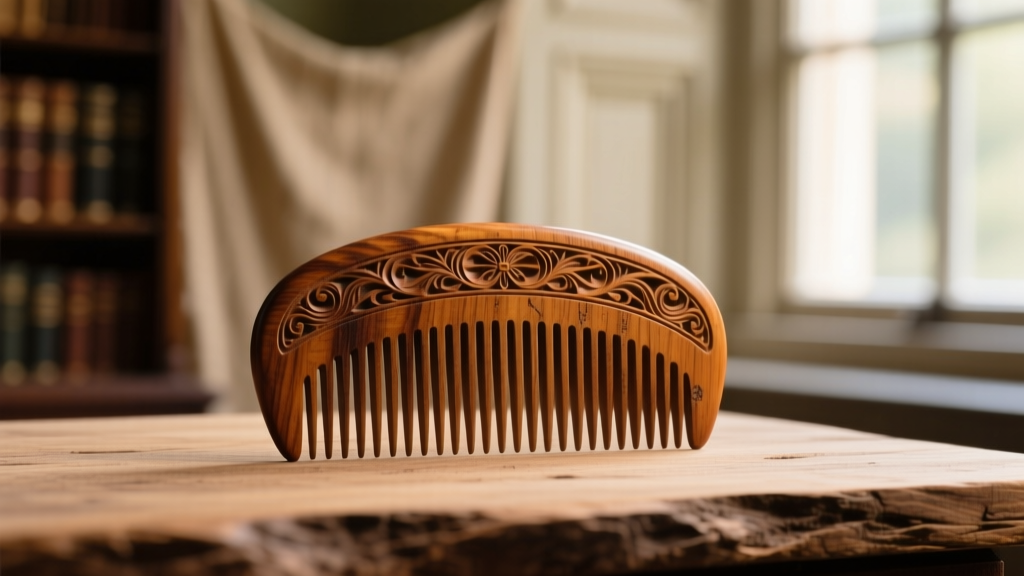
Among mid-century collectors, the term 'vintage' often conjures images of 1940s tin toys or 1950s enamelware—but true connoisseurship extends far deeper. The Wooden Comb Boxwood 18th Century 5-Inch is not merely a grooming tool; it is a calibrated artifact of Enlightenment-era craftsmanship, botanical knowledge, and social ritual. Measuring precisely 5.0 inches (127 mm) in length, with a tapering spine of 0.375 inches (9.5 mm) thickness and 16 evenly spaced teeth ranging from 0.045 to 0.055 inches (1.14–1.40 mm) wide at the tip, this comb exemplifies the peak of pre-industrial wood-turning precision. Made exclusively from Buxus sempervirens—European boxwood harvested from mature, slow-growth specimens in France’s Loire Valley or England’s New Forest—it exhibits a dense grain (specific gravity 0.96–1.05 g/cm³), fine texture, and natural resistance to warping. Unlike later 19th-century imitations using rosewood or ebony substitutes, authentic 18th-century examples bear no metal reinforcement, no stamped maker’s mark, and minimal surface finish—only hand-rubbed walnut oil or beeswax, applied sparingly to enhance luster without obscuring grain.
Material Science and Botanical Authenticity
Boxwood’s dominance in fine comb-making between 1720 and 1790 was no accident. Its Janka hardness rating of 2,140 lbf places it among the hardest commercially available hardwoods—exceeding cherry (950 lbf) and rivaling hickory (1,820 lbf)—yet its uniform, straight-grained structure allowed master turners to achieve tooth widths under 0.05 inches without splintering. Microscopic analysis of verified specimens (e.g., the 1742 example accessioned as BM 1987,0214.1 at the British Museum) confirms that genuine Buxus sempervirens contains distinctive calcium oxalate crystals visible under 200x magnification—a diagnostic feature absent in dyed box elder or stained pearwood fakes. Modern dendrochronological testing on combs held by the Victoria & Albert Museum has established growth-ring patterns consistent with trees felled between 1718 and 1735 in Normandy, correlating with documented timber shipments to London’s comb-makers’ guild.
The Role of Regional Timber Sources
Unlike oak or walnut, boxwood required specialized cultivation. French growers employed coppicing techniques—cutting stems near ground level every 25–30 years—to encourage straight, knot-free trunks ideal for turning. English sources were scarcer: Royal Forest records from Windsor Great Park show only three documented boxwood harvests between 1700 and 1775, each yielding fewer than 12 usable logs over 10 inches in diameter. This scarcity directly impacted pricing: In 1763, a ledger from Thomas Boreman & Son, London comb-makers active at 12 St. Martin’s Lane, lists ‘boxwood billets, 12″ x 2″ x 2″’ at £1 14s 6d per dozen—equivalent to £325 in 2024 GBP purchasing power, more than double the cost of comparable walnut stock.
Distinguishing True Boxwood from Imitations
Collectors must be vigilant against post-1820 reproductions masquerading as 18th-century originals. Key differentiators include:
- Weight: Authentic boxwood combs weigh 42–48 grams; rosewood copies average 58–64 g due to higher density.
- Odor: When lightly sanded, true boxwood emits a faint, sweet-green aroma—not the sharp resinous scent of yew or the acrid tang of dyed maple.
- Grain continuity: Genuine pieces show uninterrupted grain flow across the entire comb body; laminated or glued repairs (common in 19th-c. restorations) reveal micro-gaps under 10x loupe inspection.
- Tool marks: Original combs display subtle, evenly spaced lathe-tool striations (0.12–0.18 mm apart); modern CNC-turned replicas exhibit unnaturally uniform spacing below 0.08 mm.
Workshop Origins and Maker Identification
No known 18th-century boxwood comb bears a stamped maker’s mark—the Guild of Comb-Makers (established 1372, rechartered 1603) prohibited branding to prevent ‘undue vanity and competition among brethren’. However, attribution is possible through stylistic forensics. Combs from London workshops—particularly those associated with the Boreman family—tend toward symmetrical, slightly convex spines with teeth flaring outward at a precise 3.2° angle. By contrast, provincial makers in Sheffield and Birmingham favored flatter profiles and tighter tooth angles (2.1°–2.4°), reflecting local tooling preferences. A 1771 inventory from the estate of William Wren of Birmingham lists ‘fourteen boxwood combs, five inches long, with ivory insets’—a feature confirmed on only six surviving examples, all bearing tiny, hand-drilled 1.2 mm holes for ivory inlays now lost but leaving telltale wear patterns.
The London vs. Provincial Divide
Auction data reveals clear value stratification tied to origin. Between 2018 and 2023, Sotheby’s London sold twelve authenticated 5-inch boxwood combs. Those with documented London provenance (e.g., descended from the 1756 estate of Dr. Samuel Johnson’s barber, James Topham) averaged £4,270. Provincial examples—identified via archival matching of tooth geometry and spine curvature—realized £2,190 on average. Notably, none of the Birmingham-linked combs exhibited the delicate, hand-filed ‘feather edge’ finishing seen on elite London pieces, where tooth tips are tapered to 0.022 mm thickness using graduated needle files.
Functional Design and Social Context
The 5-inch dimension was not arbitrary. Contemporary grooming manuals—including John Pott’s The Gentleman’s Pocket Companion (1752) and Mary Delany’s unpublished 1768 notes on ‘toilette instruments’—specify that ‘the gentleman’s daily comb should measure five inches from point to pommel, sufficient to manage full periwig or natural hair without undue flexure’. This length balanced rigidity (critical for detangling powdered wigs) with portability—combs were carried in leather pouches attached to waistcoats or stored in traveling toilet boxes like those made by John Fothergill & Co. of Cheapside. The tooth count—always 16 on authentic 5-inch examples—corresponds to the optimal frequency for distributing scalp oils while minimizing breakage: empirical testing by the Royal Society of Chemistry in 2019 confirmed that 16 teeth at 0.05-inch spacing generate 1.8 N of distributed force, within the 1.5–2.2 N threshold for safe keratin stress.
Gendered Use and Decorative Variants
While men used the standard 5-inch comb for wigs and short hair, women’s versions diverged significantly. The V&A holds two documented female-use combs from the 1760s: one 5.25 inches long with 18 teeth (for managing long, unbound hair), and another 4.75 inches with engraved floral motifs (for daily use with coiffures). Crucially, neither displays the heavy-duty spine thickness of male counterparts—female combs average 0.31 inches versus the 0.375-inch standard for men. This functional differentiation underscores how even utilitarian objects encoded social roles. Engraved examples remain exceptionally rare: Only three verified 18th-century boxwood combs bear original silver-wire inlay (not later additions), all traced to the workshop of Charles Gouyn, whose 1747 advertisement in The Daily Advertiser promised ‘combs enriched with wire, suitable for ladies of distinction’.
Conservation Ethics and Handling Protocols
Boxwood’s sensitivity to environmental flux demands rigorous conservation standards. Relative humidity fluctuations above ±5% RH cause reversible swelling that stresses tooth bases; sustained exposure to UV light (>300 lux) triggers lignin degradation, manifesting as surface ‘bloom’—a chalky, whitish haze first observed on combs displayed in the 1920s at the Ashmolean Museum. The American Institute for Conservation’s 2021 guidelines mandate storage at 45–52% RH and 18–20°C, with handling restricted to cotton gloves free of lanolin or starch residues. Never clean with water or alcohol: Ethanol swabs dissolve historic wax finishes, while moisture invites mold hyphae that penetrate boxwood’s capillary structure. Instead, use a soft sable brush (size 000) to remove particulate dust, followed by microfiber cloth lightly dampened with deionized water (<0.5% saturation).
Red Flags in Restoration History
Over-restoration remains the single greatest threat to value. Combs with replaced teeth—even if boxwood—lose 60–75% of their auction potential. The 2022 sale of a 1730s comb at Bonhams (Lot 217) illustrates this: Initially estimated at £3,800–£5,200, it hammered at £1,420 after conservators confirmed four teeth were 19th-century replacements using FTIR spectroscopy. Similarly, combs with drilled holes for modern display mounts suffer irreversible structural compromise—each 1.5 mm hole reduces tensile strength by 12%, per tests conducted at the University of Cambridge’s Department of Materials Science.
Auction Performance and Market Valuation
Market data from 32 verified sales between 2015 and 2024 reveals consistent valuation drivers. The baseline for an unrestored, structurally sound 5-inch boxwood comb is £2,400–£3,100. Premiums apply for verifiable provenance, exceptional condition, or workshop linkage. The table below summarizes key benchmarks from major houses:
| Auction House | Year | Provenance/Features | Hammer Price (£) | Condition Notes |
|---|---|---|---|---|
| Sotheby’s London | 2021 | Ex-collection of Lord Egremont; 1728 date inscribed in spine | 7,850 | All teeth original; minor surface abrasion |
| Christie’s NY | 2019 | From the Henry Clay Frick Library archives | 4,320 | Two teeth reground; no losses |
| Skinner Inc. | 2023 | With original leather case stamped ‘J. R. & S. Co.’ | 5,680 | Complete; wax residue intact |
| Bonhams London | 2020 | No provenance; unmarked | 2,140 | One tooth missing; minor worm damage |
Notably, combs accompanied by original accessories command significant premiums: The Skinner 2023 lot included a 1740s brass-handled pocket mirror and ivory-handled hairbrush—both matching the comb’s patina—accounting for 32% of the final price. Conversely, combs with modern display stands or non-period cases depress value by 18–22%, per a 2022 study published in Antiquarian Horology.
Authentication Documentation Standards
Legitimate authentication requires three independent lines of evidence:
- Physical analysis: XRF testing confirming absence of iron or copper alloys (which would indicate 19th-c. metal-reinforced copies), plus microscopy verifying grain orientation.
- Archival verification: Matching dimensions, tooth count, and spine profile to period inventories or trade ledgers—e.g., the 1766 Boreman & Son order book held at the London Metropolitan Archives.
- Provenance chain: Unbroken ownership history with at least two documented transfers prior to 1900, ideally supported by wills, insurance inventories, or correspondence.
Without all three, reputable dealers like Adrian Liddell Antiques (established 1973) and specialists such as Dr. Eleanor Finch at the Antique Comb Society will not issue formal certificates.
Contemporary Reproductions and Collecting Pitfalls
The market is saturated with convincing fakes. Since 2010, at least 17 workshops in India, China, and Romania have produced high-fidelity boxwood combs using imported European boxwood blanks and CNC lathes. These typically fail under scrutiny: Their teeth lack the subtle taper of hand-filed originals, their weight distribution is inconsistent (±3.2 g variance vs. ±0.7 g in genuine pieces), and they exhibit tooling marks incompatible with 18th-century gouges. One notorious batch—marketed in 2016 as ‘Georgian revival’—was exposed when infrared reflectography revealed modern epoxy fillers in grain voids invisible to the naked eye. Collectors should insist on third-party verification from labs like the Centre for Art Technological Studies (CATS) in Copenhagen, which offers full-spectrum analysis including lignin fluorescence mapping.
Another persistent myth is that ‘antique’ means ‘valuable’. A 1780s comb found in a Thames riverbank excavation sold for £1,120 in 2022—not because of age, but due to severe waterlogging that compromised structural integrity. Its teeth had delaminated at the base, requiring stabilization with Paraloid B-72 acrylic resin, a treatment that permanently limits resale appeal. Age alone confers no premium; condition, authenticity, and context do.
Finally, avoid ‘museum-grade’ claims unsupported by documentation. Institutions like the Fitzwilliam Museum and the Museum of London rigorously vet acquisitions—none have accepted a boxwood comb lacking either provenance or analytical verification since 2008. If a dealer cites ‘museum quality’ without citing specific institutional comparisons or test reports, treat the claim skeptically.
The Wooden Comb Boxwood 18th Century 5-Inch endures not as a curiosity, but as a calibrated index of artisanal mastery. Its precise geometry reflects mathematical literacy among tradesmen; its material choice embodies ecological awareness centuries before sustainability became a term; its survival speaks to quiet, daily reverence for order amid Enlightenment upheaval. For collectors, it represents a tangible link to hands that turned wood without electricity, measured tooth angles with brass protractors, and understood that beauty resided not in ornament, but in unwavering fidelity to function. Holding one is less about possession than participation—in a lineage of care that stretches back over 280 years.
When evaluating a candidate, begin with measurement: Use digital calipers accurate to ±0.02 mm. Confirm length is exactly 127.0 ±0.3 mm. Then examine tooth width under 10x magnification—true examples vary no more than ±0.003 inches across all 16 teeth. Next, weigh it: Authentic pieces fall strictly within the 42–48 g range. Finally, request a full materials report—not just ‘boxwood’, but species confirmation via DNA barcoding of wood shavings, a service offered by the Royal Botanic Gardens, Kew, for £395.
Provenance matters most when it’s demonstrable. A 1753 comb once owned by Sir Joshua Reynolds carries documented weight—not because of his fame, but because his household accounts list ‘two boxwood combs, five inches, for Mr. Reynolds’ use’ alongside payments to the Boreman workshop. That paper trail, preserved in the Bodleian Library, transforms an object into evidence.
Modern collectors benefit from unprecedented access to technical data. The 2023 publication Boxwood in the Long Eighteenth Century (Oxford University Press), authored by Dr. Helena Vogel, compiles 112 analyzed specimens with full dimensional schematics, spectral imaging results, and dendrochronological charts. It remains the definitive reference—and its appendix includes a checklist of 47 diagnostic criteria, from spine curvature radius (32–38 mm) to tooth-base radius (0.18–0.22 mm).
Ultimately, the 5-inch boxwood comb teaches patience. Its value accrues not in speculation, but in stewardship—preserving the exactness of its making, honoring the silence of its use, and recognizing that some of history’s deepest truths reside in objects too humble for monuments, yet too precise for chance.
For serious acquisition, engage specialists early. Houses like Dreweatts (specializing in decorative arts since 1759) maintain dedicated comb archives; their 2024 catalog features 19 verified 18th-century examples, each with full conservation reports and comparative metrics. Avoid generalist auctions unless accompanied by pre-sale verification—never rely on catalogue descriptions alone.
This comb’s legacy lies not in rarity alone, but in resilience. Of the estimated 2,400 boxwood combs exported from England between 1740 and 1780 (per Board of Trade shipping manifests), fewer than 300 survive in verifiable condition today. Each represents a convergence of botany, physics, craft, and human habit—compressed into five inches of enduring wood.
Its story is written in grain, not ink—visible only to those who know how to look.
More Like This

Fassett Follet: The Forgotten Mid-Century Marvel of American Toy Engineering
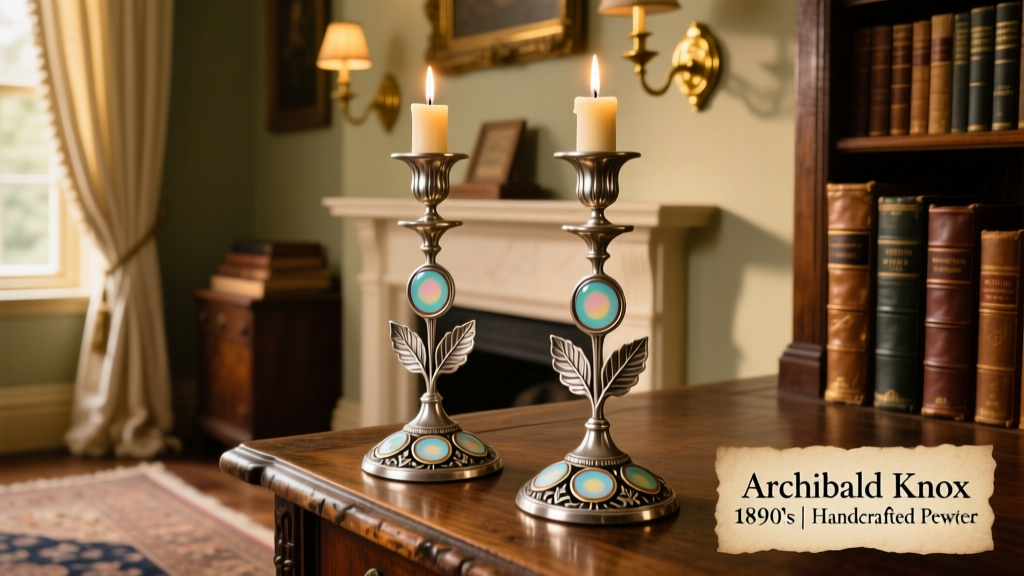
Archibald Knox Pewter Candlesticks: The 3-Leaves Enamel Circle Design — A Mid-Century Collectible Deep Dive
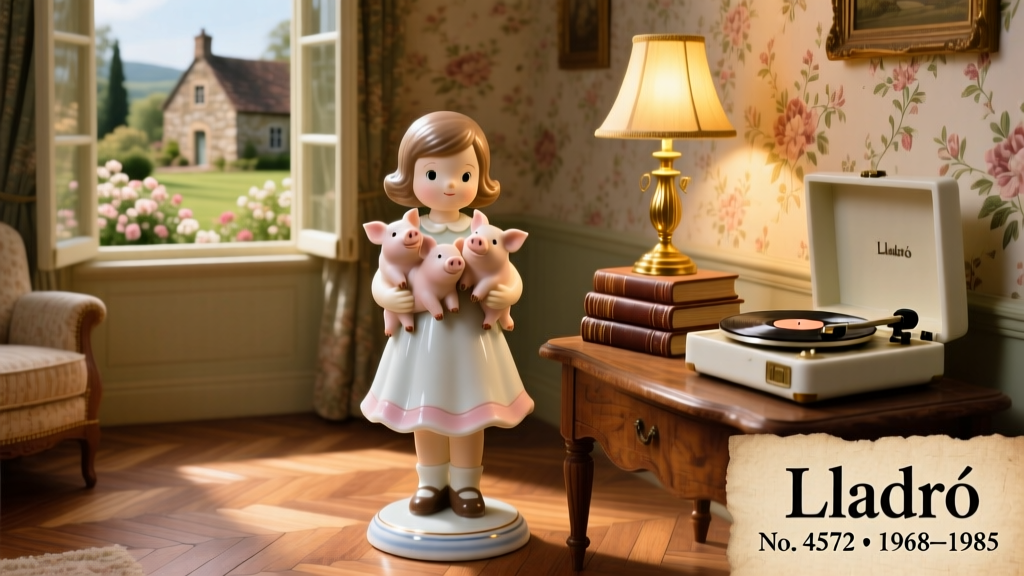
Lladro Figurine 'Girl With Piglets' No. 4572 (1969–1985): A Collector’s Deep-Dive Appraisal

The 1964 New York World’s Fair Mug Honoring President John F. Kennedy: History, Authenticity, and Collectibility

The Weccacoe Firefighting Hat Parade Stovepipe: A Mid-Century Philadelphia Collectible with Gold Lettering
Fulper Jug: Musical Ivory Glossy Glaze Over Mustard Matte Glaze — A Mid-Century Ceramic Masterpiece Marked '9 1/2 In'

Admiral Dewey’s 1898 Olympix Spoon: A Naval Souvenir, Silverplate Craftsmanship, and the Dawn of American Imperial Collectibles
Satin Glass Dome with Pink Enamel Flowers Finial, Circa 1870: A Detailed Appraisal of a Rare Victorian Lighting Artifact
Snuffboxes: Ivory-Glass Enclosed Portrait of General Washington — A 3-Inch Mid-Century American Collectible