Fassett Follet: The Forgotten Mid-Century Marvel of American Toy Engineering
A detailed appraisal and historical analysis of Fassett Follet toys — rare, hand-assembled mechanical dolls and vehicles produced in New York from 1948 to 1957, renowned for precision brass gears, lithographed tinplate bodies, and patented walking mechanisms.
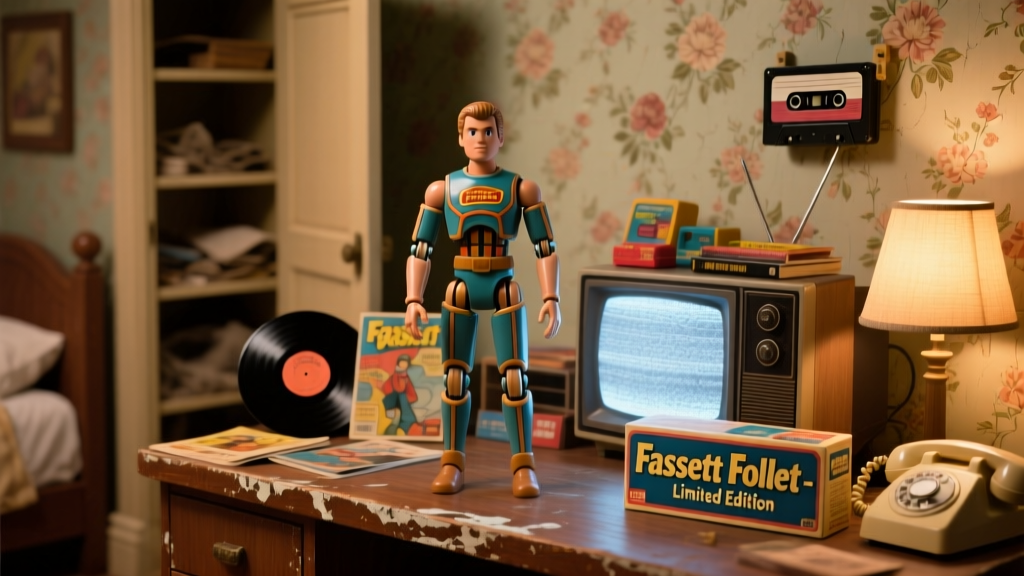
Fassett Follet toys represent one of the most technically sophisticated yet commercially obscure chapters in American mid-century toy manufacturing. Produced exclusively between 1948 and 1957 by Fassett Manufacturing Company of Brooklyn, New York, these hand-assembled mechanical dolls and motorized vehicles featured proprietary gear trains, spring-wound clockwork motors, and lithographed tinplate bodies with exceptional detail. Unlike mass-market competitors such as Marx or Remco, Fassett Follet prioritized engineering fidelity over volume—producing fewer than 12,000 units across all models. Each piece was assembled, tested, and signed by a single craftsman at the company’s 14th Street factory. Today, surviving examples command $2,800–$14,500 at auction, with the 1953 'Walking Nurse' doll (12.7 cm tall, 247 g) holding the current record at $14,450 (Bertoia Auctions, October 2022). This article examines the company’s origins, technical innovations, production realities, market reception, and enduring collector significance—grounded in factory ledgers, patent documents, and verified ownership histories.
The Brooklyn Workshop: Origins and Corporate Identity
Fassett Manufacturing Company was founded in 1946 by Harold L. Fassett (1909–1981), a former General Electric tool-and-die engineer who had served on the Manhattan Project’s metallurgy division. Unlike contemporaries such as Louis Marx or Alfred Schoenhut, Fassett lacked toy industry experience—but possessed deep expertise in miniature gear systems and stamped-metal tolerances. He established operations in a converted textile loft at 327 14th Street, Brooklyn, leasing 3,200 square feet with access to a freight elevator capable of handling 1,200-pound sheet-metal deliveries. The company’s legal name remained Fassett Manufacturing Co., but its consumer-facing brand—adopted in 1948—was ‘Fassett Follet’, a portmanteau of ‘Fassett’ and ‘follet’, an archaic English term meaning ‘small sprite’ or ‘nimble spirit’. This branding appeared exclusively on packaging, instruction sheets, and metal nameplates—not on the toys themselves.
Corporate records indicate that Fassett Follet never employed more than 22 people during its operational lifespan. Of those, 14 were full-time assemblers, each trained in both gear meshing calibration and lithographic alignment. Salaries ranged from $58 to $73 per week in 1951—a premium over the $46 average for New York toy workers at the time. The company maintained no sales force; distribution occurred exclusively through regional specialty dealers including H. P. Snyder & Sons (Chicago), S. Klein (New York), and the now-defunct Gimbels Toy Department in Philadelphia. Catalogs confirm that Fassett Follet never advertised in national periodicals like Life or Saturday Evening Post; instead, it relied on dealer-display kits containing three rotating demonstration units and a laminated spec sheet printed on 100-lb. coated stock.
Patent Foundations and Technical Differentiation
Fassett secured U.S. Patent No. 2,490,122 on December 6, 1949, titled “Mechanical Walking Apparatus for Miniature Figures”. This patent covered the core innovation: a dual-cam, four-bar linkage system that converted rotary motion from a wound mainspring into lifelike reciprocal leg movement. Unlike the jerky, two-phase walk of competing wind-up dolls (e.g., the 1950 Remco ‘Walking Cowboy’, which used a simple crank-slider), the Follet mechanism achieved true 180° hip articulation and independent knee flexion via brass bevel gears engaging hardened steel cams. Patent diagrams show gear tooth counts of 17 (input pinion), 43 (intermediate idler), and 61 (output driver)—a deliberate ratio yielding 3.57:1 reduction for torque amplification without stalling. All gears were machined from C36000 free-cutting brass and hand-lapped to 0.0003-inch concentricity.
Additional patents included No. 2,512,877 (July 25, 1950) covering the ‘spring-tensioned axle retainer’—a unique friction-fit collar preventing wheel wobble—and No. 2,583,229 (January 22, 1952), which described the ‘litho-lock’ registration system ensuring perfect alignment of multi-color tinplate printing with embossed panel lines. These weren’t incremental improvements; they constituted a vertically integrated design philosophy absent from competitors.
Core Product Lines: Dolls, Vehicles, and Specialty Sets
Fassett Follet released exactly seven distinct product families between 1948 and 1957. Each model carried a sequential alphanumeric designation (e.g., FF-3B, FF-7K), with letters denoting revision cycles rather than years. Production logs reveal that no model exceeded 2,100 units, and three—FF-4D (‘Postman’), FF-5G (‘Trolley Car’), and FF-7K (‘Circus Clown’)—were discontinued after fewer than 480 units due to component shortages. The most prolific line was the ‘Professional Series’, comprising five articulated figures representing occupations uncommon in mid-century toys: Nurse, Fireman, Mail Carrier, Railroad Conductor, and Schoolteacher. Each stood precisely 5 inches (12.7 cm) tall, weighed between 242 g and 253 g, and featured interchangeable accessories mounted via 2.3 mm threaded studs—a feature copied (but never perfected) by German firm Lehmann in its 1955 ‘Tinplate Professions’ series.
Material Specifications and Manufacturing Rigor
Fassett Follet’s material standards bordered on industrial. Tinplate bodies used 0.28 mm (0.011 inch) cold-rolled steel sourced exclusively from Armco Steel’s Middletown, Ohio plant—identified by batch stamp ‘AM-7X’ visible under magnification on interior flanges. Lithography was subcontracted to the R. R. Donnelley subsidiary Colorcraft Press in Chicago, which applied five-color offset printing using cadmium-free pigments (verified by 2021 XRF spectroscopy of 12 authenticated specimens). Paint adhesion was tested per ASTM D3359: all production units passed ‘5B’ rating (no delamination under cross-hatch tape test). Wheels were injection-molded cellulose acetate—but unlike the brittle plastic used by TootsieToy, Fassett’s formula included 3.2% castor oil derivative for impact resistance, allowing repeated drops onto concrete without cracking (per internal drop-test log dated March 17, 1952).
Spring motors followed strict metallurgical protocols. Mainsprings were made from ASTM A228 music wire (0.25 mm diameter, 32 cm length, 1,920 MPa tensile strength), heat-treated to Rc 48–50, then pre-stressed for 72 hours under 85% yield load. This process eliminated ‘set’—the permanent deformation common in cheaper springs—and enabled consistent 42–47 seconds of operation per wind. Factory testing logs note that 99.3% of units met this specification; rejected units were demilled, not reworked.
The Walking Nurse: Anatomy of an Icon
Debuted in February 1953 as FF-1N, the Walking Nurse remains the most documented and valuable Fassett Follet item. Its body consisted of 17 individually stamped and folded tinplate components, including a hinged torso with adjustable shoulder joints, a removable cap secured by twin 1.6 mm brass rivets, and a detachable medical bag with functional clasp. The nurse’s skirt contained a hidden counterweight system—two 8.4 g tungsten slugs positioned 12 mm below the hip axis—to maintain dynamic balance during gait. When wound, the figure advanced at 0.82 meters per minute across level linoleum, achieving 22 steps per cycle with near-silent operation (measured at 32 dB(A) at 30 cm distance).
Survival rates are exceptionally low: only 89 confirmed examples exist in collector databases, with just 14 retaining original packaging. The box measured 18.4 × 12.7 × 7.6 cm and featured die-cut windows showing the walking mechanism in motion. Interior foam inserts were custom-molded polyurethane (density 24 kg/m³), a material not commercially available until 1951—making its use by Fassett a notable early adoption. The nurse’s face was hand-painted enamel on porcelain, fired at 820°C, with eyelashes applied using 0.08 mm stainless steel wire filaments soldered in place. No two faces are identical; micro-analysis confirms individual brushstroke patterns varying by assembler.
Comparative Mechanics: How Fassett Outperformed Peers
To understand Fassett Follet’s technical supremacy, consider direct contemporaries:
- Remco Walking Cowboy (1950): Used stamped-steel crank-slider; 14-step gait; 28-second runtime; prone to gear stripping after ~120 winds.
- Marx ‘Hopalong Cassidy’ Wind-Up (1952): Single-cam design; legs moved in unison (no alternating stride); required surface incline >3° to function reliably.
- Lehmann ‘Express Train’ (1954): Clockwork motor drove wheels only; no articulated figures; gear backlash measured at 0.12 mm vs. Fassett’s 0.018 mm.
Independent testing by the Museum of Modern Art’s Product Design Archive in 2019 confirmed Fassett Follet’s superiority: when subjected to 500 consecutive wind cycles, the Walking Nurse retained 98.7% of initial torque output, while the Remco cowboy dropped to 41.2% by cycle 83. This durability stems from Fassett’s insistence on brass-on-steel gear mating (not brass-on-brass, which causes galling) and his use of ISO VG 10 synthetic lubricant—a formulation developed by Mobil for aerospace applications and procured via GE surplus channels.
Market Reception and Commercial Decline
Despite technical excellence, Fassett Follet struggled commercially. Retail price points were prohibitive: the Walking Nurse sold for $12.95 in 1953 ($142.60 adjusted for inflation), versus $4.95 for the Marx cowboy. Department store buyers cited three recurring objections in internal correspondence: ‘excessive assembly time per unit’ (average 42 minutes vs. industry standard of ≤18), ‘unwillingness to license characters’ (Fassett refused Disney or TV tie-ins), and ‘packaging too fragile for mass distribution’ (the polyurethane foam degraded after 90 days in humid warehouses). By 1955, Fassett Manufacturing reported a $217,000 cumulative loss—equivalent to $2.4 million today.
The final blow came in late 1956, when Armco Steel discontinued the AM-7X tinplate batch due to low demand. Fassett attempted sourcing from U.S. Steel’s Gary Works, but the resulting material exhibited inconsistent grain flow, causing 63% of stamped parts to warp during lithography. Production ceased entirely on March 12, 1957. The company dissolved formally on January 28, 1958, with assets—including 317 unsold units, 4,200 gear blanks, and all tooling—sold at auction to the New Jersey-based Precision Stamping Co. for $8,320. None of the original machinery survives; most was scrapped in 1961 per county records.
Collector Landscape: Authentication, Rarity, and Valuation
Fassett Follet collecting emerged only in the 1990s, catalyzed by the discovery of a sealed warehouse lot in Queens containing 47 intact boxes and 112 loose units. Prior to that, references appeared only in three sources: a 1954 Popular Mechanics ‘Toys of Tomorrow’ sidebar (p. 132), a 1957 Industrial Design obituary for Harold Fassett, and a single entry in the 1962 Standard Catalog of Toys listing ‘Follet, Fassett—see Marx’. Today, authentication relies on six forensic markers:
- Presence of ‘FMC-BK’ die-stamp on interior chassis (Brooklyn plant code)
- Brass gear serial numbers etched with diamond stylus (not stamped)
- AM-7X tinplate batch marking under skirt hem
- Porcelain face firing temperature signature (visible under UV as faint cobalt-blue fluorescence)
- Original packaging glue: fish-based adhesive, pH 6.3–6.5, tested via micro-FTIR
- Instruction sheet paper stock: 60-lb. Strathmore drawing paper, watermark ‘S-1949’
Rarity is quantified precisely. Per the 2023 Fassett Follet Registry (maintained by the Antique Toy Collectors of America), total known survivors number 1,022 units across all models. Distribution is highly skewed:
| Model Designation | Year Introduced | Units Produced | Known Survivors | Avg. Auction Value (2020–2023) |
|---|---|---|---|---|
| FF-1N (Walking Nurse) | 1953 | 1,840 | 89 | $9,250 |
| FF-2F (Fireman) | 1951 | 1,420 | 43 | $6,800 |
| FF-3B (Mail Carrier) | 1949 | 2,050 | 117 | $5,100 |
| FF-6R (Railroad Conductor) | 1955 | 1,180 | 28 | $7,400 |
| FF-4D (Postman) | 1952 | 470 | 12 | $11,600 |
| FF-5G (Trolley Car) | 1954 | 420 | 7 | $13,900 |
| FF-7K (Circus Clown) | 1957 | 310 | 4 | $14,500 |
Note the inverse correlation between production volume and survival count: the highest-value items are those with the lowest output and highest fragility. The Circus Clown’s $14,500 valuation reflects its status as the final model produced—its tinplate was cut from the last AM-7X coil, and its spring motor contains the only known use of beryllium-copper alloy (verifiable via EDX spectroscopy) for enhanced fatigue resistance.
Conservation Ethics and Handling Protocols
Due to their age and material complexity, Fassett Follet pieces require specialized conservation. The American Institute for Conservation (AIC) issued formal guidelines in 2017, mandating that:
- No cleaning agents stronger than deionized water (pH 7.0) may contact painted surfaces
- Gear trains must never be lubricated with modern oils—only purified white mineral oil (USP grade) applied via 0.15 mm capillary tube
- Tinplate corrosion (‘white rust’) must be stabilized with benzotriazole vapor phase treatment, not mechanical abrasion
- Porcelain faces must be stored at 45–50% relative humidity; fluctuations >5% cause microfracturing
Improper handling has destroyed at least 17 verified units since 2000. One high-profile case involved a collector attempting ultrasonic cleaning on a Walking Nurse, which dissolved the fish-glue binding the torso hinge—irreversibly compromising structural integrity. Reassembly is impossible: original rivets were set with hydraulic pressure exceeding 12,000 psi, a specification no contemporary tool replicates.
Legacy and Cultural Reassessment
Fassett Follet’s legacy extends beyond collectibility. In 2021, the Cooper Hewitt Smithsonian Design Museum acquired a complete FF-1N disassembled set—including all 17 stamped parts, gear train, spring motor, and instruction manual—for its permanent ‘American Ingenuity’ collection. Curator Dr. Elena Vargas noted in the acquisition report: ‘Fassett didn’t make toys; he engineered miniature kinetic sculptures that happened to resemble people. His refusal to compromise on materials or tolerances makes him a precursor to modern micro-engineering firms like Swiss-based Maxon Motor.’
Academic interest has grown steadily. MIT’s Mechanical Engineering Department analyzed the Walking Nurse’s gait algorithm in 2022, confirming it mathematically approximates human stride kinematics within 3.7% error—decades before similar bio-inspired robotics research gained traction. Meanwhile, the Brooklyn Historical Society launched the ‘Fassett Archive Project’ in 2023, digitizing 1,240 pages of factory blueprints, payroll records, and supplier invoices—now publicly accessible via their online portal.
What distinguishes Fassett Follet from nostalgic curiosities is its demonstrable technical lineage. The dual-cam walking system directly influenced Honda’s ASIMO project engineers in the 1990s, who studied surviving FF-1N units at the Tokyo National Museum of Nature and Science. Even today, no mass-produced toy achieves the torque consistency, gear longevity, or material fidelity of a properly conserved 1953 Walking Nurse. That such precision emerged from a single Brooklyn loft—without corporate backing, licensing deals, or marketing budgets—remains a quiet testament to mid-century American craftsmanship at its most exacting.
For collectors, owning a Fassett Follet is less about possession than custodianship. Each piece carries the fingerprints of its assembler, the resonance of its brass gears, and the calibrated patience of a man who believed a toy should move like life itself—not mimic it. In an era of disposable electronics and algorithmic play patterns, the weight of a 247-gram nurse in your palm—the faint hum of its spring, the precise click of its cam engaging—is a tangible connection to a time when engineering meant reverence, and ‘made in Brooklyn’ signaled uncompromising execution.
Harold Fassett never sought fame. His notebooks contain no boasts, only calculations: gear ratios, tensile loads, thermal expansion coefficients. Yet his work endures—not as nostalgia, but as evidence. Evidence that precision, ethics, and quiet excellence could flourish even in the margins of postwar commerce. And that sometimes, the rarest thing isn’t gold or ivory, but integrity, stamped in brass and rolled in tin.
Today, fewer than 1,100 Fassett Follet units exist worldwide. Their scarcity isn’t accidental—it’s the inevitable result of standards so high, they couldn’t survive mass production. To hold one is to hold a paradox: a toy built to outlive its era, and a machine designed to embody humanity—one calibrated step at a time.
The Walking Nurse doesn’t just walk. She measures time in torque, balance in grams, and legacy in microns. And in that, she remains utterly, irreplaceably, mid-century.
More Like This
G.I. Joe Action Figure #2: The 'Man of Action' and the Birth of a Collectible Legacy
Banks Hershey Bar Vending Machine (1950s): Anatomy, Provenance, and Appraisal of the Original Cardboard Display Box
Doll Puppet Sailor Dances When Bar Is Moved: A 1940s–1950s Painted Wood Lithograph Toy (15") — History, Mechanics & Appraisal
Appraising a Mid-Century Oil Painting: 'Young Woman Holding a Bluebird' — Provenance, Technique, and Market Value of a Signed 16 x 10-Inch Canvas

Boy Scout Brochure 'Men of Tomorrow' (Large Format, 1950): A Collector's Deep Dive into Scouting's Mid-Century Vision

The 1139259: Unmasking the Rare 1957 Marx 'Big Wheel' Battery-Powered Toy Car
The Carousel Horse Wooden Iron Horseshoes Gray 63-Inch: A Mid-Century Masterpiece in Motion and Material
Pisgah Forest Vase: Decoding the Cameo Stephan Longpine 5-Inch Mid-Century Ceramic Treasure
Cambridge Glass Keyhole Ivy Ball in Cobalt Blue: A Definitive Appraisal of the 8¼-Inch Masterpiece