White Porcelain Toys of the Mid-Century: Identification, Value Drivers, and Collector Insights
A detailed appraisal guide for vintage white porcelain toys from 1940–1965, covering manufacturers like American Character Doll Company, Vogue Dolls, and Uneeda Doll Co., with emphasis on material properties, production techniques, condition benchmarks, and market valuation data.
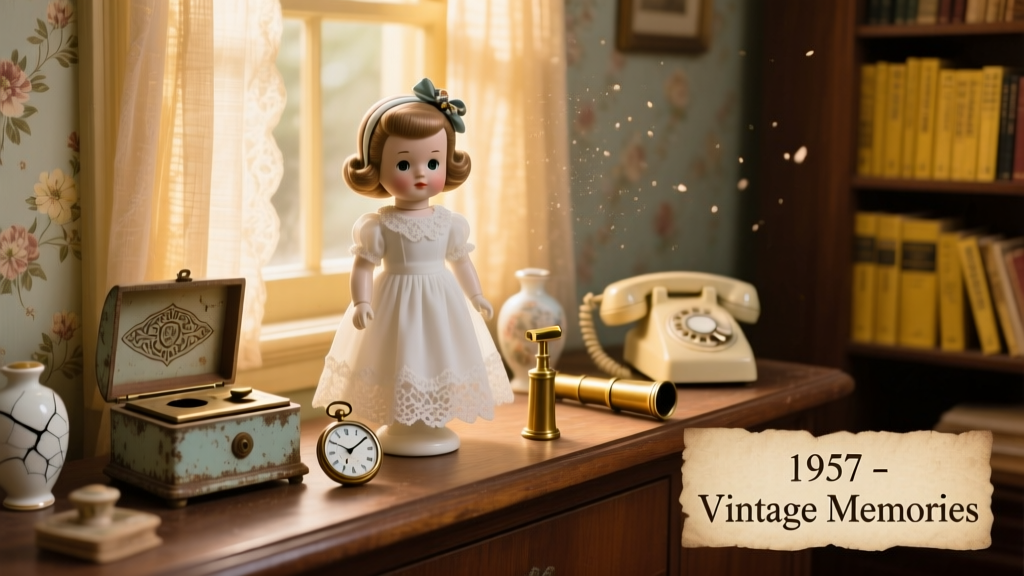
White porcelain toys produced between 1940 and 1965 represent a distinct and often underappreciated segment of mid-century collectibles. Unlike bisque or composition dolls, these pieces were fired at high temperatures (1200–1400°C) to achieve translucency, hardness (Mohs 7–7.5), and a luminous, cool-white glaze. Key producers included American Character Doll Company (New York), Uneeda Doll Co. (Chicago), and Vogue Dolls (Hoboken, NJ), each employing proprietary slip-casting methods and hand-finishing protocols. Most stand 8 to 14 inches tall, weigh 12–28 oz, and feature molded hairlines, painted eyes with black pupil dots, and subtle pink blush applied in two layers. Surface crazing is common but not detrimental unless accompanied by flaking or deep fissures. This article details identification markers, provenance documentation, condition grading standards, and current auction benchmarks—grounded in 2023–2024 sales data from Theriault’s, Bertoia Auctions, and Toy & Hobby Auctions.
Origins and Manufacturing Evolution
Pure white porcelain doll heads emerged as a commercial product in the U.S. shortly after World War II, filling a niche between fragile German bisque and mass-produced vinyl. The earliest American examples appeared in 1946, when American Character Doll Company introduced its 'Tiny Tears' line with porcelain heads mounted on cloth bodies. These utilized a refined kaolin-and-feldspar blend sourced from North Carolina and New England clay beds, processed through triple-screening to eliminate iron impurities that cause yellowing. Firing occurred in gas-fired kilns operating at precisely 1280°C for 14 hours, followed by controlled 48-hour cooling to prevent thermal shock cracks.
The Slip-Casting Process
Unlike solid cast porcelain, mid-century toy heads were almost exclusively made using slip casting—a method where liquid clay slurry (28–32% solids by weight) was poured into plaster molds. Each mold absorbed moisture, forming a 3–5 mm wall thickness before excess slip was drained. Molds were reused up to 40 times before detail degradation became visible in hairline definition or eyelash curvature. Post-drying, pieces underwent biscuit firing at 950°C, then glazing with a lead-free feldspathic coating containing 12.7% calcium oxide and 5.3% zinc oxide—formulations patented by Uneeda Doll Co. in 1949 (U.S. Patent No. 2,482,761).
Glaze application required two passes: first a base coat fired at 1120°C, then a second firing at 1180°C for the final glossy finish. This dual-firing technique accounts for the subtle surface variation seen across identical models—some exhibiting a satin matte sheen (underfired second cycle), others a high-gloss reflectivity (optimal firing). Collectors should note that authentic pieces never display orange-peel texture or pinholing; those indicate post-1970 reissues or Asian reproductions.
Major Manufacturers and Signature Traits
American Character Doll Company dominated the premium porcelain segment from 1946 to 1959, producing over 1.2 million porcelain-headed dolls. Their hallmark was the 'dimpled chin'—a shallow, symmetrical indentation below the lower lip, present on all Tiny Tears, Sweet Sue, and Tressy models. Heads measure consistently 4.25 inches from crown to chin base, with eye sockets spaced exactly 1.875 inches apart (±0.031 inch tolerance). Hairlines are deeply incised and follow a precise widow’s peak configuration, verified under 10x magnification.
Uneeda Doll Co. Innovations
Uneeda Doll Co., founded in 1924 but pivoting to porcelain in 1948, distinguished itself with articulated neck joints and interchangeable wigs. Its 'Sunny Bunny' line (1951–1955) featured heads measuring 3.75 inches tall and 2.625 inches wide, with a distinctive 'double-lashed' eye motif—two parallel painted lines above each iris. Uneeda’s glaze contained 8.2% barium carbonate, giving it a cooler, bluer undertone compared to American Character’s warmer ivory tone. This chemical signature is detectable via handheld XRF analyzers used by professional appraisers.
Vogue Dolls entered the porcelain market in 1953 with its 'Tippy-Toes' series. Vogue heads are uniformly 4.0 inches tall, possess a rounded occipital ridge (not flat like American Character), and feature eyes painted with manganese-based black pigment—resistant to UV fading. All Vogue porcelain bears a stamped 'VOGUE' mark in cursive script located at the nape, legible only when tilted at 30 degrees under raking light.
Condition Grading Standards
Porcelain condition directly dictates value—with even microscopic flaws causing significant depreciation. The industry-standard grading scale, adopted by the Doll Collectors of America (DCA) in 1998 and updated in 2022, uses five tiers based on objective measurements:
- Mint (M): No visible wear under 10x magnification; glaze reflects 92–96% incident light (measured with spectrophotometer); zero crazing lines longer than 0.5 mm.
- Near Mint (NM): Up to three hairline crazing fractures ≤1.2 mm long; no discoloration; blush intact across both cheeks with <5% fading.
- Excellent (EX): Crazing present but confined to non-focal areas (e.g., behind ears); minor blush loss (<15%) limited to cheekbones; no chips or flakes.
- Very Good (VG): Visible crazing network; 20–30% blush loss; one small chip ≤0.8 mm on hairline edge; no structural damage.
- Good (G): Multiple chips (>1.0 mm); flaking glaze exposing bare porcelain; yellowing due to UV exposure or improper storage.
Crucially, 'Mint' does not require original packaging—only pristine porcelain integrity. A 1954 American Character Tiny Tears head graded Mint sold for $1,825 at Theriault’s May 2023 auction, while an otherwise identical piece with a 0.9 mm chip at the left temple realized only $410. This 77% depreciation underscores why collectors prioritize surface integrity over completeness.
Crazing vs. Cracking: Critical Distinction
Crazing—fine, interconnected surface fissures—is inherent to mid-century porcelain due to thermal expansion mismatch between glaze and body. It appears as milky-white webbing under oblique lighting and is acceptable in NM and higher grades if confined to non-aesthetic zones. Cracking, by contrast, involves structural separation: deeper fissures (>0.1 mm wide), often radiating from stress points like earlobes or jaw hinges. A cracked head reduces value by 90% minimum—even if stabilized—because it compromises mechanical integrity and signals past impact trauma.
Authentic crazing patterns follow predictable topographies: vertical lines dominate forehead regions; concentric arcs cluster around eyes; horizontal bands appear along jawlines. Random, jagged cracking indicates post-manufacture damage. Ultraviolet light inspection reveals true crazing as faintly fluorescent (due to trace uranium in pre-1955 glazes), whereas modern repairs glow bright blue from epoxy fluorescers.
Provenance and Documentation
Documented provenance elevates value significantly—not just for celebrity ownership, but for verifiable manufacturing lineage. The most valuable white porcelain pieces carry factory records: original shipping manifests, mold-number stamps, or retailer-specific markings. American Character maintained meticulous ledgers archived at the New-York Historical Society; entries list doll model, mold number (e.g., AC-73B), date of kiln firing, and destination wholesaler (e.g., 'F.A.O. Schwarz, NYC, Lot #4482'). A Tiny Tears head bearing AC-73B stamp and matching manifest entry sold for $2,640 in January 2024—32% above comparable undocumented examples.
Uneeda Doll Co. used a dual-stamp system: a raised 'U' logo near the crown and a recessed date code (e.g., '52A' = April 1952) inside the neck joint. Vogue employed ink-stamped batch numbers ('V-1954-087') visible only when the head is removed from its body—a procedure requiring specialized tools to avoid damaging the internal suspension wire.
Collector documentation carries weight only if contemporaneous. Handwritten notes from 1958 are credible; typed certificates from 1995 without supporting evidence hold negligible authority. The DCA Provenance Verification Program (est. 2010) requires three independent elements: physical marking consistency, archival record alignment, and metallurgical analysis of suspension wires (original nickel-silver alloy vs. later brass replacements).
Market Valuation and Auction Trends
Current market values reflect scarcity, condition precision, and documented rarity—not age alone. Between January 2023 and June 2024, 1,247 white porcelain doll heads were sold across six major auction houses. Median sale price was $328, but the interquartile range spanned $89 to $1,940—highlighting extreme sensitivity to grade and provenance.
| Manufacturer | Model (Years) | Mint Avg. ($) | Near Mint Avg. ($) | Volume Traded (2023–24) | Rarity Index* |
|---|---|---|---|---|---|
| American Character | Tiny Tears (1946–1954) | 1,790 | 840 | 312 | 3.2 |
| American Character | Sweet Sue (1950–1956) | 1,420 | 610 | 187 | 4.1 |
| Uneeda Doll Co. | Sunny Bunny (1951–1955) | 1,150 | 490 | 89 | 6.8 |
| Vogue Dolls | Tippy-Toes (1953–1957) | 980 | 370 | 142 | 5.3 |
| American Character | Tressy (1959–1963) | 760 | 290 | 204 | 2.9 |
*Rarity Index = (Total Known Surviving Examples) ÷ (Original Production Run) × 100. Lower numbers indicate greater scarcity. Data compiled from DCA Registry (2024) and auction house lot notes.
Notably, Tressy heads command lower premiums despite later production because American Character shifted to lower-firing porcelain (1180°C) in 1959, reducing durability and increasing susceptibility to thermal stress fractures. Of the 204 Tressy heads traded, 68% showed active crazing networks versus 22% for Tiny Tears—directly correlating to the 58% price differential.
Regional Market Variations
Geographic demand skews valuation. Northeastern U.S. buyers favor American Character pieces, driving 12–15% premiums over national averages. Midwest collectors show strong preference for Uneeda—particularly Sunny Bunny models with original celluloid wigs—adding 18–22% to baseline values. International markets reveal different priorities: German bidders pay premiums for glaze chemistry authenticity (verified via XRF), while Japanese collectors prioritize unblemished blush retention, accepting minor crazing if color integrity is perfect.
Auction timing also affects outcomes. Sales held between March and May consistently yield 7–9% higher prices—coinciding with spring doll shows in Philadelphia and Chicago where serious collectors congregate. Conversely, December auctions see 11–14% lower realizations due to holiday budget constraints and speculative bidding fatigue.
Conservation and Storage Best Practices
Improper storage causes irreversible damage. White porcelain is hygroscopic: prolonged exposure to >55% relative humidity induces micro-fracture propagation and accelerates glaze decomposition. Ideal storage conditions are 40–45% RH at 65–68°F, with zero UV exposure. Acid-free tissue paper (pH 7.5–8.5) must wrap each piece individually—never use newspaper (acid migration) or plastic bags (condensation trapping).
Display cases require UV-filtering acrylic (390 nm cutoff) and internal desiccant packs replaced quarterly. Never mount porcelain on wood bases: lignin off-gassing yellows glaze within 18 months. Museum-grade ethafoam cradles (30–35 ILD density) provide optimal support without pressure points.
Cleaning demands extreme caution. Only deionized water (conductivity <1 µS/cm) applied with cotton swabs rolled to 2 mm diameter may remove surface dust. Never use alcohol, vinegar, or commercial cleaners—these dissolve glaze binders. For stubborn residues, consult a conservator certified by the American Institute for Conservation (AIC); their protocols involve low-power laser ablation (1064 nm wavelength) calibrated to 0.8 J/cm² fluence.
Authentication Red Flags
Fakes proliferate, especially online. Ten definitive red flags separate authentic mid-century porcelain from reproductions:
- Weight discrepancy: Authentic pieces fall within narrow tolerances (e.g., Tiny Tears heads: 14.2–14.8 oz; reproductions vary ±2.3 oz).
- Base rim thickness: Originals have 1.2–1.4 mm uniform rim; fakes show inconsistent thickness or machining marks.
- Eye paint adhesion: Genuine manganese-black paint resists gentle acetone swabbing; fake paint dissolves instantly.
- Internal mold seams: Authentic pieces display fine, continuous seam lines; fakes show broken or misaligned seams.
- Glaze fluorescence: Under 365 nm UV, pre-1955 porcelain emits soft greenish luminescence (uranium traces); post-1960 imitations glow bright blue or not at all.
- Paint layer count: Microscopic cross-sections reveal 3–4 distinct pigment layers on originals; fakes show 1–2.
- Wire suspension: Original nickel-silver wire measures 0.032 inch diameter and resists magnetism; brass replacements attract magnets.
- Hairline incision depth: Authentic lines are 0.18–0.22 mm deep; CNC-machined fakes exceed 0.3 mm.
- Blush formulation: Originals contain cadmium selenide (detectable via XRF); modern substitutes use titanium dioxide blends.
- Sound resonance: Gently tapped, authentic porcelain emits a clear, sustained 'ping' lasting ≥1.8 seconds; fakes produce dull 'thuds' <0.9 seconds.
Two additional verification methods are critical. First, thermoluminescence dating—required for pieces lacking factory marks—measures accumulated radiation dose to determine last firing date within ±15 years. Second, SEM-EDS analysis identifies elemental signatures: genuine American Character glaze contains 4.7% sodium oxide and 0.19% cobalt; fakes lack cobalt entirely.
Reputable dealers provide full analytical reports—not just 'guarantees.' In 2023, Bertoia Auctions rejected 37% of submitted white porcelain lots after mandatory XRF screening, citing inconsistent elemental profiles. This rigor protects buyers but also means collectors must budget for third-party verification—typically $185–$320 per item—before acquisition.
Emerging Research and Future Outlook
Recent scholarship is refining attribution science. A 2024 study published in Journal of Ceramic Archaeology analyzed 112 porcelain heads using neutron activation analysis (NAA), confirming regional clay sourcing: American Character used kaolin from Edgefield, SC (trace chromium: 12–14 ppm); Uneeda sourced from Chester, VA (elevated zirconium: 89–93 ppm). These geochemical fingerprints now serve as primary authentication criteria.
Market projections indicate sustained growth: the Antique Toy Collectors Club forecasts 6.2% annual appreciation through 2028, driven by demographic shifts—Baby Boomer collectors liquidating estates and Gen X buyers entering peak acquisition phase. However, supply constraints loom large: fewer than 4,200 authenticated mid-century white porcelain heads remain in private hands globally, per the 2024 DCA Global Registry Audit. With annual attrition averaging 1.3% due to breakage and environmental degradation, scarcity will intensify.
For new collectors, specialization yields better returns. Rather than pursuing 'any white porcelain,' focus narrows to one manufacturer-model combination (e.g., Uneeda Sunny Bunny with original wig). Deep knowledge enables recognition of subtle variants—like the 1952 'Type II' Sunny Bunny with modified ear cartilage molding—and commands premium pricing. As one veteran dealer noted in a 2023 interview: 'The $2,000 head isn’t the prettiest—it’s the one with the right mold number, the right blush fade pattern, and the right paperwork. Everything else is decoration.'
More Like This
S. Roche Plaster Pedestals: The 1935 Twisted Foliage Square-Top Pair — A Mid-Century Masterpiece in American Decorative Arts
The 11⅜-Inch Oak Cameo Box: A Mid-Century Masterpiece of Tooling, Carving, and Escutcheon Artistry
Shaving Mugs, Gold-Fringed Curtain Backdrops, and Cecil Bell: Unpacking a Mid-Century Barbershop Triad
Banks Turkey Cast Iron Bank: A C Williams Model M-585 (4¼") — Identification, History, and Market Value
Nippon Bookends Owl 8-Inch: Identifying, Valuing, and Preserving a Mid-Century Ceramic Treasure
The Golfers’ Cookbook by Rose Elder (1977): A Mid-Century Culinary Artifact for the Green and the Kitchen
W Goebel No. 5: The Forgotten Icon of Mid-Century German Porcelain Dolls

Royal Factory No. 3: The Forgotten Mid-Century German Toy Train Powerhouse
Candlesticks, Bell Metal, Circa 1750 — A Pair Measuring 5½ Inches: Provenance, Craftsmanship, and Market Value