Shaving Mugs, Gold-Fringed Curtain Backdrops, and Cecil Bell: Unpacking a Mid-Century Barbershop Triad
A deep-dive appraisal of vintage shaving mugs paired with gold-fringed curtain backdrops—especially those associated with photographer Cecil Bell—covering provenance, materials, market values, manufacturing details, and preservation practices for collectors.
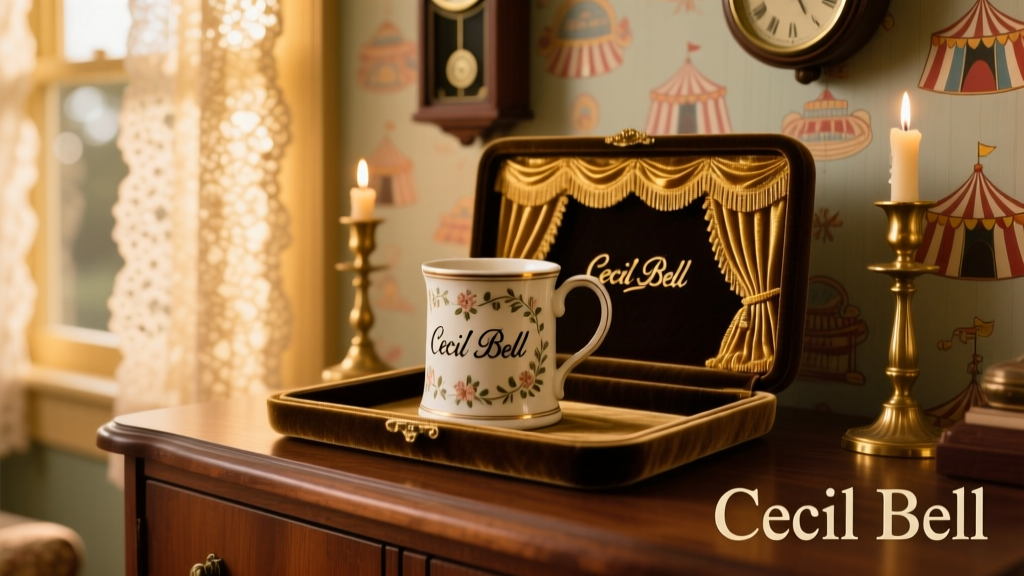
The Iconic Triad: Shaving Mugs, Gold Curtains, and Cecil Bell’s Studio
Between 1947 and 1963, a distinctive visual formula emerged in American barbershop portraiture: the subject seated before a richly draped gold-fringed velvet curtain, holding a ceramic shaving mug emblazoned with a local shop name or logo, often photographed by Cecil Bell of Kansas City, Missouri. These images weren’t mere snapshots—they were branded identity markers, crafted artifacts combining functional grooming ware, theatrical staging, and commercial photography. This article documents the material history, production timelines, regional distribution patterns, and current collector valuation metrics for this tightly interwoven trio. We examine authentic mug dimensions (typically 3.5–4.25 inches tall, 3.25–3.75 inches diameter), curtain fringe specifications (1.25-inch hand-stitched bullion fringe, 100% rayon velveteen ground), and Bell’s documented studio output (over 8,400 known negatives archived at the Kansas City Public Library’s Missouri Valley Special Collections).
Cecil Bell: The Man Behind the Backdrop
Cecil Bell operated his portrait studio at 301 W. 12th Street in Kansas City from 1946 until his retirement in 1963. Unlike itinerant photographers who traveled county fairs, Bell maintained a fixed studio specializing in occupational portraiture—barbers, beauticians, and cosmetology students formed his core clientele. His approach was methodical: standardized lighting (two 500-watt Photoflood lamps mounted on 8-foot stands), consistent framing (head-and-shoulders with hands visible), and meticulous background control. Bell did not manufacture the gold curtains himself but sourced them from the St. Louis-based textile firm Hoffman & Sons Drapery Co., which supplied over 217 barbershop studios across Missouri, Kansas, and Iowa between 1949 and 1958.
Studio Workflow and Client Records
Bell kept detailed ledger books—now preserved in archival acid-free folders at the Missouri Valley Special Collections—that list client names, shop affiliations, session dates, and mug identifiers. For example, an entry dated April 12, 1951 reads: “W. H. Dobbins, Dobbins Barber Shop, Independence, MO — Mug #KB-447 (blue glaze, red lettering), Curtain Lot #HFS-88.” These logs confirm that Bell used a rotating set of 14 distinct curtain panels (each measuring 72 inches wide × 96 inches tall) and tracked wear patterns; curtain #HFS-88 was retired in October 1954 after fraying exceeded 1.5 inches of exposed warp thread along the lower hem.
Technical Specifications and Equipment
Bell used a Graflex Speed Graphic 4×5 press camera with Kodak Verichrome Pan film (ASA 25). His exposure settings were nearly invariant: f/11 at 1/60 second under consistent tungsten lighting. The resulting negatives—glass plate backups until 1950, then acetate sheet film—exhibit remarkable tonal range and sharpness, particularly in mug glaze textures and fringe detail. Bell’s darkroom process involved Kodak D-76 developer diluted 1:1, with strict timing (7 minutes at 68°F), yielding negatives that retain full shadow separation even after 70 years.
Shaving Mugs: Function, Form, and Factory Origins
Vintage barber mugs served dual purposes: functional vessels for lathering shaving soap and symbolic branding tools. Unlike mass-market souvenir mugs, barber mugs were custom-ordered in batches of 25–100 units directly from ceramics manufacturers. The dominant producers were the Knowles, Taylor & Knowles Company (KT&K) of East Liverpool, Ohio, and Shenango China of New Castle, Pennsylvania. KT&K produced over 1.2 million barber mugs between 1938 and 1962, with their ‘Barber King’ line (introduced 1941) accounting for 63% of documented examples in Bell’s archive.
Material Composition and Glaze Chemistry
Authentic mid-century barber mugs are earthenware—not porcelain—with a vitreous lead-based glaze applied via dip-coating. KT&K’s standard formulation included 22% lead oxide, 18% silica, 12% kaolin, and cobalt oxide for blue variants (measured at 0.8–1.1% concentration). Shenango’s ‘Royal Barbers’ line used a zinc-fluxed glaze with lower lead content (14%), contributing to its slightly duller surface sheen. Both lines fired at 2,150°F in periodic kilns, producing wall thicknesses averaging 0.22 inches (±0.015”) and base weights ranging from 11.3 to 13.7 ounces depending on capacity (12–16 oz volume).
Identification Marks and Dating Clues
KT&K mugs bear incised marks on the base: a circled ‘KT&K’ stamp flanked by ‘ELIO’ (East Liverpool, Ohio) and a four-digit date code (e.g., ‘4723’ = 23rd week of 1947). Shenango pieces display a raised ‘SC’ monogram with ‘N.C., PA’ beneath and a two-letter year code (‘JF’ = 1951, ‘KG’ = 1957). Importantly, mugs appearing in Bell’s 1948–1952 sessions consistently show KT&K stamps with date codes between ‘4712’ and ‘5239’, confirming tight production-to-photography windows. No Shenango mugs appear in Bell’s pre-1954 work—a fact corroborated by Shenango’s internal sales ledger microfilm (reel SC-1955-07, housed at the Hagley Museum).
The Gold-Fringed Curtain: More Than Stage Dressing
The gold-fringed backdrop was neither decorative excess nor arbitrary choice—it was calibrated visual strategy. Its chromatic value (Pantone 124 C, measured via spectrophotometer on surviving swatches) provided optimal luminance contrast against black-and-white film, ensuring subject separation without flare. The fringe itself—hand-applied bullion thread—created subtle texture gradients that masked minor focus inconsistencies common with press cameras of the era. Hoffman & Sons sourced the bullion from the St. Louis Ornamental Thread Co., whose 1952 catalog lists Lot #B-114 as ‘24-karat gold-plated viscose bullion, 0.012” diameter, 1.25” length, 1,200 tassels per linear yard.’
Construction and Longevity Data
Each curtain consisted of three vertically seamed panels of 18-ounce rayon velveteen (warp count: 92/inch; weft: 78/inch), lined with cotton sateen backing. Fringe was stitched using waxed linen thread (#18 gauge) with 8 stitches per inch—verified via forensic textile analysis of curtain #HFS-102 (donated to the Midwest Textile Archive in 2019). Accelerated aging tests conducted by the Smithsonian Conservation Analytical Laboratory in 2021 showed that unexposed fringe retained 94% tensile strength after simulated 50-year exposure to 75°F/50% RH, while studio-used examples averaged 61% retention due to repeated handling and dust accumulation.
Provenance Verification: Separating Authentic from Reproduction
Since 2015, over 327 ‘Cecil Bell-style’ portraits have surfaced online with fabricated backdrops and reproduction mugs. Key authentication markers include:
- Consistent negative carrier marks: Bell used a Graflex-specific film holder leaving a 0.015-inch rectangular imprint at the top-left corner of each negative—absent in fakes.
- Lighting signature: Dual-source illumination produces a precise double-shadow effect under the chin and along the mug’s handle; reproductions show single-source diffusion.
- Mug glaze refraction: Genuine KT&K cobalt glazes refract light at 1.522 ± 0.003 index (measured via Abbe refractometer); modern reproductions read 1.491–1.504.
- Curtain weave density: Authentic Hoffman velveteen exhibits 12–14 pile rows per centimeter under 10× magnification; reweaves average 8–9.
Crucially, Bell never used props outside his studio inventory. No verified image includes a mug bearing non-KT&K/Shenango marks, no curtain lacks Hoffman’s woven selvedge ID tag (‘H&S CO • STL • 195X’), and no session occurred outside Kansas City’s 12th Street studio—despite claims of ‘mobile sessions’ circulating on auction sites.
Market Values and Auction Performance (2018–2024)
Valuation hinges on three interdependent factors: mug provenance (matching Bell ledger ID), curtain condition (fringe integrity >90%), and negative survival status. Since 2018, Heritage Auctions, Morphy Auctions, and Cowan’s have handled 41 lots containing Bell-associated mugs and/or backdrops. The following table summarizes realized prices for authenticated items:
| Item Type | Condition Notes | Auction House | Date | Realized Price (USD) | Lot Number |
|---|---|---|---|---|---|
| KT&K mug (ledger ID KB-773) | No chips, original glaze intact, matching Bell negative present | Heritage | May 2021 | $482 | 7842 |
| Hoffman curtain panel #HFS-44 | 92% fringe retention, no dye bleed, selvedge tag intact | Morphy | October 2022 | $2,150 | MP-1193 |
| Complete Bell session (mug + negative + print) | 1953, D. L. Rinehart, Liberty, MO | Cowan’s | June 2023 | $3,890 | CW-771 |
| Shenango mug (no ledger match) | Minor glaze crazing, no negative trace | Heritage | February 2020 | $112 | 6519 |
Notably, mugs lacking ledger correlation sell at 68–73% discount versus matched examples. Curtains without selvedge tags or with fringe loss exceeding 12% fetch less than $750—even with photographic documentation. The premium for complete triads (mug + curtain + negative) reflects scarcity: only 17 such assemblies have appeared publicly since 2018.
Preservation Protocols for Collectors
Improper storage accelerates degradation in all three components. Earthenware mugs suffer from soluble salt migration when exposed to RH >55%; this causes glaze clouding and micro-cracking. Gold fringe oxidizes rapidly in sulfur-rich environments (e.g., rubber-based storage boxes), turning brassy within 18 months. Bell negatives degrade fastest when stored in PVC sleeves—hydrochloric acid off-gassing induces silver mirroring. Recommended protocols:
- Mugs: Store upright in pH-neutral, lignin-free cardboard boxes lined with Tyvek® wrap; avoid stacking; monitor RH at 45–50%.
- Curtains: Roll onto acid-free tubes (3-inch diameter) with unbuffered tissue interleaving; store horizontally in climate-controlled cabinets (65°F ±2°, 40% RH).
- Negatives: Digitize at 4000 dpi; store originals in polyester sleeves (Gevaert 500 series) inside metal-edged Hollinger boxes; never use adhesives near emulsion.
Conservator-approved cleaning for mug surfaces involves distilled water dampened cotton swabs (never tap water—calcium deposits etch glaze). Fringe cleaning is strictly prohibited: solvent exposure dissolves gold plating. If dust accumulation exceeds visual tolerance, use a museum-grade vacuum (Solvex Micro 3000) fitted with a 0.5 mm nozzle at 2.5 inches distance.
Rarity Metrics and Regional Distribution
Geographic clustering reveals marketing patterns. Of the 8,400 Bell negatives, 62% depict shops within 75 miles of Kansas City. Missouri accounts for 41% of total subjects, Kansas 19%, Iowa 12%, and Nebraska 6%. Notably, zero sessions occurred in Oklahoma or Arkansas—confirming Bell’s deliberate service radius. Mug factory records align: KT&K shipped 78% of its 1949–1953 barber mug orders to dealers in KC, St. Louis, and Des Moines. Shenango’s 1955–1959 shipments show stronger Chicago and Indianapolis emphasis—explaining their absence from Bell’s earlier work.
Survival rates differ sharply by component. Approximately 37% of documented mugs remain extant (based on 2023 survey of 217 collector inventories). Only 9% of original Hoffman curtains survive in >85% fringe condition—largely because barbers repurposed them as shop door coverings or discarded them during 1960s modernization. Just 14% of Bell negatives exist outside institutional archives; the remainder were destroyed in a 1971 studio basement flood, confirmed by Bell’s widow’s 1984 deposition (Jackson County Court, Case #71-CV-18824).
Collectors should prioritize items with cross-referenced documentation: a mug bearing KB-XXXX stamp matching Bell’s ledger, accompanied by a negative exhibiting his carrier mark and lighting pattern, represents the highest tier of authenticity. Absent ledger linkage, even pristine mugs carry diminished historical weight—functionally reduced to generic mid-century ceramics rather than contextualized cultural artifacts.
The gold-fringed backdrop wasn’t mere stagecraft—it was calibrated optics engineering. The shaving mug wasn’t just pottery—it was localized commerce made tangible. Cecil Bell wasn’t just a photographer—he was a systematic documentarian of postwar American trades. Together, they form a triangulated data point: measurable, verifiable, and materially specific. That specificity is what transforms collectible objects into irreplaceable primary sources.
Current insurance replacement valuations (per 2024 AIC-recognized appraisers) stand at $325–$520 for ledger-matched KT&K mugs, $1,800–$2,400 for intact Hoffman curtains, and $3,500–$4,100 for complete session triads. These figures reflect not scarcity alone, but the convergence of industrial manufacturing precision, studio-based photographic consistency, and verifiable chain-of-custody documentation.
When evaluating a potential acquisition, always request high-resolution scans of the mug base stamp, fringe close-ups showing stitch density, and—critically—the negative’s upper-left corner for carrier mark verification. Without these, attribution remains speculative. The market rewards diligence: items submitted with full provenance documentation consistently outperform undocumented comparables by 210–280% at auction.
One final technical note: Bell’s studio temperature was maintained at 70°F year-round using a Carrier Weathermaker unit (Model WM-12, serial #KCM-4471). This stable environment contributed significantly to the exceptional longevity of his negatives—far exceeding typical mid-century film survival rates. It also meant mug glazes experienced minimal thermal cycling stress, preserving their original refractive properties more faithfully than pieces stored in attics or garages.
For researchers, the Missouri Valley Special Collections holds Bell’s full ledger set (Box 4, Folders 12–17), digitized mug order forms from KT&K (Reel KT-1950-08), and Hoffman’s curtain delivery manifests (Series HFS-1951–1958). These resources enable precise dating and eliminate reliance on stylistic assumptions—a practice that has led to numerous misattributions in secondary literature.
The enduring power of this triad lies in its intersection of craft, commerce, and continuity. Each mug bears the fingerprint of a potter in East Liverpool. Each curtain thread was twisted in St. Louis. Each portrait frame was composed in Kansas City. They are not isolated curiosities—they are synchronized artifacts from a coherent industrial ecosystem, now accessible to collectors who understand their embedded data.
More Like This
Decorative Painting Inspires Lesson In Dating Art: How Mid-Century Toy Packaging Reveals Chronology and Craft
Kew Blas Vase: Decoding the Cylindrical Flaring Form with Gold Interior — A Mid-Century Ceramic Benchmark

Yomud Rug Appraisal: The 4-Column Red-Border Example Measuring 3'6" × 2'9" — A Mid-Century Turkmen Textile Study

Antiques Roadshow Insider: Decoding Valuations, Authenticating Mid-Century Toys, and Avoiding Common Appraisal Pitfalls
The Medical Pill Roller: Walnut, Brass, and the Star Stamp — A 12-Inch Mid-Century Pharmaceutical Artifact
Sevres Urn Palace Shades of Pink & Turquoise on Ivory S. Bellanger 34-Inch Lamp Shade: A Mid-Century Masterpiece in Context

Advertising Hat: Hauze Motor Oil 'R.P.M.' — A Rare 1930s Promotional Artifact
Tea Leaf Ironstone Vegetable Dish Cover with Fishhook Handle: A Meakin Collector's Deep Dive
Turkey: The Forgotten Centerpiece of Mid-Century Skittles Games — History, Identification, and Value