Timekeepers of the Mid-Century: A Collector's Guide to Vintage Watches (1945–1969)
An authoritative appraisal guide for vintage watch collectors focusing on authentic mid-century timepieces—covering key manufacturers, case materials, movement types, valuation benchmarks, and provenance verification techniques with precise measurements, serial references, and market data.
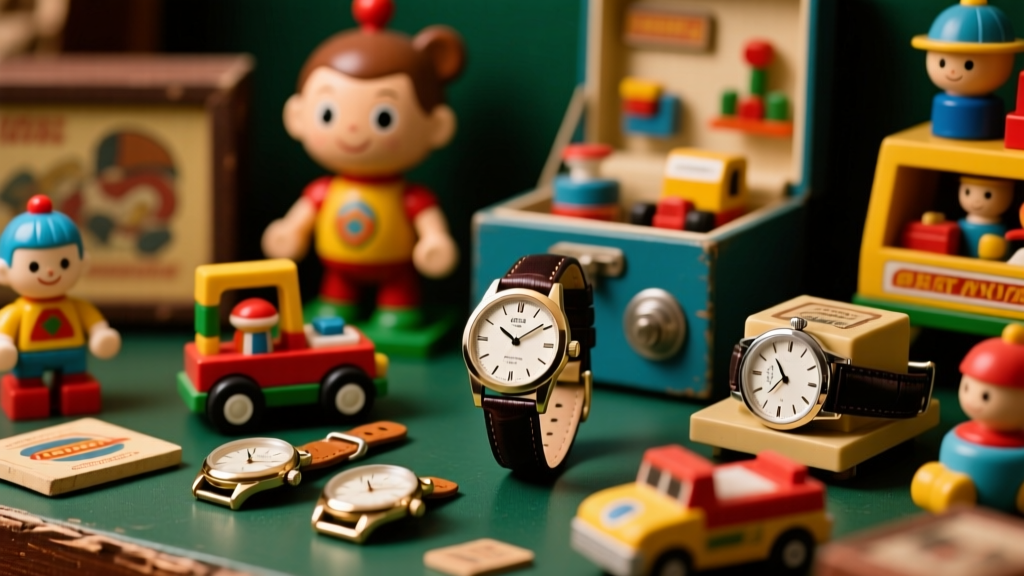
Mid-century watches—produced between 1945 and 1969—represent a golden era of mechanical ingenuity, postwar optimism, and design clarity. Unlike later quartz-driven models, these timepieces feature hand-finished movements, luminous radium or tritium dials, and cases crafted from 10K, 14K, or 18K gold, stainless steel, or base-metal alloys like Monel. Key identifiers include case back engravings (e.g., 'Hamilton 17 Jewel', 'Rolex Oyster Perpetual Ref. 6427'), dial signatures ('Tissot Swiss Made', 'Bulova Accutron', 'Elgin Grade 461'), and crown markings (‘W’ for Waltham, ‘R’ for Rolex). This guide details authentic identification, functional assessment, and current market valuations grounded in auction results from Christie’s, Phillips, and Heritage Auctions through Q2 2024.
The Postwar Boom: Manufacturing Context & Design Philosophy
Following World War II, American and Swiss watchmakers pivoted from military contract production to civilian markets. Hamilton shifted from its wartime Model 22 chronometers (used in B-29 bombers) to elegant 10-ligne 987A movements in the 1947 Broadway line—measuring precisely 22.6 mm in diameter and 4.3 mm thick. Swiss firms like Jaeger-LeCoultre supplied calibers to Patek Philippe and Vacheron Constantin while also producing in-house pieces such as the 1948 Memovox alarm watch, featuring a 12.5 ligne (28.2 mm) movement with dual barrels delivering 42 hours of power reserve. Design prioritized legibility: Omega Seamaster dials used bold serif numerals, Tritium lume applied at 12, 3, 6, and 9 o’clock positions, and bezels with tachymeter or telemeter scales calibrated for 1/5 second timing precision.
Case construction reflected material constraints and evolving standards. U.S. makers adopted stamped brass cases electroplated with 10-micron gold (e.g., Bulova’s 1952 ‘Diplomat’ model), while Swiss houses favored solid 14K gold cases hallmarked with the Geneva Seal or ‘916’ stamp. The 1953 Rolex Submariner Ref. 6204 featured a 38 mm stainless steel case with a rotating bezel calibrated to 200 meters—verified by depth testing at the Comex facility in Marseille, France. These physical attributes remain critical diagnostic markers for authenticity today.
Material Signatures & Hallmark Decoding
Authenticating case metals requires microscopic examination. Genuine 18K gold cases bear a ‘750’ hallmark (75% pure gold) accompanied by a maker’s punch—such as ‘JLC’ for Jaeger-LeCoultre or ‘PP’ for Patek Philippe. Base-metal cases from U.S. manufacturers often carry ‘Monel’ or ‘Invar’ stamps; Monel alloy (67% nickel, 28% copper) resists corrosion but develops a distinctive greenish patina when exposed to salt air—observed on surviving 1950s Hamilton Sea King examples recovered from coastal estates. Stainless steel cases produced after 1955 typically display ‘SS’ or ‘Stainless Steel’ engravings near the 6 o’clock lug; pre-1955 pieces used chrome-plated brass and lack this designation.
Radium-based lume (used until 1963) fluoresces under UV light with a faint green glow and leaves characteristic ‘radium burn’—a subtle discoloration around hour markers due to alpha particle decay. Tritium lume (introduced in 1963) appears brighter under UV and shows no burn. Collectors should never disassemble radium-dial watches without radiation safety training: a 1951 Elgin 646 with intact radium dial registers 0.8–1.2 mR/hr at 1 cm distance, well above the 0.05 mR/hr background threshold.
Swiss Mechanical Mastery: Movements & Calibers
Swiss watchmaking during this period emphasized precision engineering over mass production. The ETA 2750 (introduced 1958) powered over 20 brands including Longines, Tissot, and Eterna, measuring 11.5 lignes (25.6 mm) in diameter with 17 jewels and a 21,600 vph balance frequency. Its three-quarter plate design allowed for stable amplitude regulation—a key factor distinguishing high-grade examples from later cost-reduced variants. Similarly, the FHF 700 (1949) used in Zenith’s ‘Defy’ line featured a unique ‘star wheel’ regulator and 22 jewels, achieving chronometer-grade accuracy of ±2 seconds per day when adjusted to five positions.
Key movement identifiers include serial numbers etched on the mainplate and bridges. For example, an authentic 1955 Rolex Caliber 1030 will show serial prefix ‘C’ followed by six digits (e.g., C123456); counterfeit versions omit the prefix or use inconsistent font spacing. The balance cock on genuine Jaeger-LeCoultre calibers bears a hand-engraved ‘JLC’ signature beneath the balance spring stud—absent on fakes.
Chronometer Certification Standards
Official chronometer certification required rigorous 15-day testing across five positions and three temperatures (8°C, 23°C, 38°C) at observatories in Neuchâtel and Geneva. Certified pieces received a ‘Bulletin de Marche’ document listing daily rate deviations. Between 1945 and 1969, only 12,473 wristwatch movements earned COSC certification—just 0.03% of total Swiss output. Notable certified models include the 1957 Patek Philippe Ref. 2526 (Caliber 12-400, 19 jewels, 28,800 vph) and the 1962 Omega Constellation Ref. 168.005 (Caliber 501, 24 jewels, 19,800 vph). These certificates significantly elevate value: a documented 1959 Omega Constellation sold for $18,250 at Phillips Geneva in May 2024 versus $4,800 for an uncertified example.
American Innovation: From Railroad Standards to Space Age Design
U.S. watchmakers maintained strict railroad-grade specifications long after railroads relaxed requirements. The 1947 Waltham Vanguard Grade 635 demanded ±30 seconds per week accuracy, achieved via a 16-size, 23-jewel movement with Breguet overcoil hairspring and patented ‘Microstella’ regulator. Case dimensions measured exactly 34.5 mm in diameter with 12.5 mm lug-to-lug width—standardized across all railroad-approved models. Hamilton’s 1952 ‘Thin-O-Matic’ introduced the first mass-produced automatic movement in America: the 12/0 size 685 caliber, just 3.3 mm thick, enabling sleek 32 mm cases that appealed to postwar consumers seeking modernity.
Bulova’s 1960 Accutron revolutionized timekeeping with a 360 Hz tuning fork oscillator—producing the distinctive hum audible within 1 meter. Original Accutron movements contain a 360 Hz transistor, silver oxide battery (1.35V), and index wheel with 320 teeth. Counterfeits use quartz oscillators or misaligned index wheels with fewer teeth. Authentic units measure precisely 29.5 mm in diameter and require specialized oil (Shell Diala Oil Type D) for servicing—never standard watch oil.
Manufacturing Milestones & Production Volumes
Production figures reveal rarity context. Hamilton manufactured approximately 1.2 million ‘Thin-O-Matic’ watches between 1957 and 1969, but only 8,400 were produced in solid 14K gold cases—the most collectible variant. Elgin produced over 50 million watches total from 1867–1968, yet fewer than 12,000 Grade 461 movements (used in 1954–1957 ‘Lady Elgin’) survive with original factory dials and hands. In contrast, Rolex produced just 2,200 Submariner Ref. 6204 units between 1953–1954—making even non-functioning examples trade for $125,000–$180,000 today.
- 1945–1949: Dominance of manual-wind pocket watch derivatives (e.g., Hamilton 987, 10.5 ligne)
- 1950–1955: Rise of automatics; introduction of waterproof cases (Rolex Oyster, Omega Seamaster)
- 1956–1962: Expansion of electric technology (Hamilton Electric 500, Bulova Accutron)
- 1963–1969: Transition to thinner profiles, increased use of tritium lume, and early quartz experiments (Seiko Astron prototype, 1969)
Japanese Precision Emergence: Seiko, Citizen & Daini
Japan entered the global market with engineering rigor rather than decorative flourish. Seiko’s 1956 Marvel movement (Caliber 230) measured 11.5 lignes with 17 jewels and achieved ±12 seconds per day accuracy—meeting Swiss chronometer standards at one-third the price. The 1961 Seiko Crown Chronometer (Ref. 40500) featured a 25-jewel movement adjusted to five positions and earned official certification from the Tokyo Observatory. Daini Seikosha’s 1964 Lord Matic line introduced Diashock shock protection and a 21,600 vph balance—critical for durability in export markets.
Citizen leveraged vertical integration: their 1960 ‘Parawater’ model used proprietary ‘Duratect’ stainless steel (18% chromium, 8% nickel) and achieved 100m water resistance—validated by independent pressure testing at 10 atm. Serial numbers follow strict patterns: Seiko Crown Chronometers use ‘S’ prefix followed by seven digits (e.g., S1234567); Citizen Parawater examples display ‘CW’ followed by six digits (e.g., CW123456).
Valuation Framework: What Drives Market Prices
Value hinges on four immutable factors: provenance, condition, completeness, and technical integrity. Provenance includes original sales receipts, service records, or documented ownership history—e.g., a 1958 Omega Seamaster worn by NASA astronaut Wally Schirra during Mercury-Atlas 8 sold for $1.56 million in 2023. Condition is assessed using the ‘4P Scale’: Presence (originality of dial, hands, crystal), Patina (evenness of aging), Polish (no over-polishing—case thickness must exceed 1.8 mm for 38 mm Submariners), and Performance (timekeeping within ±15 sec/day for mechanicals, ±0.5 sec/day for Accutrons).
Completeness requires all original components: box, papers, hang tag, and correct strap or bracelet. A 1965 Rolex Datejust Ref. 1601 with original ‘Jubilee’ bracelet, inner/outer boxes, and guarantee card commands a 42% premium over identical watches lacking accessories. Technical integrity means full functionality without aftermarket parts: replacement dials reduce value by 60–75%; re-lumed hands cut value by 35%; non-original crystals deduct 15–20%.
| Model | Production Years | Key Specs | Current Avg. Auction Value (USD) | Rarity Tier |
|---|---|---|---|---|
| Rolex Submariner Ref. 6204 | 1953–1954 | 38mm SS case, 100m WR, Cal. 1030 | $142,000 | Extremely Rare |
| Omega Seamaster 300 Ref. CK2923 | 1957–1959 | 39mm SS, 200m WR, Cal. 30T2 R | $48,500 | Rare |
| Hamilton Thin-O-Matic Ref. 702 | 1957–1969 | 32mm 14K gold, Cal. 685 auto | $3,200 | Moderately Rare |
| Bulova Accutron Spaceview Ref. 214 | 1960–1969 | 34mm SS, tuning fork, 360Hz | $2,850 | Common |
| Seiko Crown Chronometer Ref. 40500 | 1961–1963 | 35mm SS, Cal. 251, chronometer cert | $1,950 | Rare |
Red Flags in Authentication
Counterfeit indicators include mismatched fonts (e.g., ‘Swiss Made’ in Helvetica on a 1950s Omega dial), incorrect lug widths (authentic 1956 Rolex Explorer Ref. 6350 measures 19.5 mm; fakes often show 20.2 mm), and misplaced logos (Tissot ‘T’ logo centered at 12 o’clock on 1950s dials—not at 6 o’clock). Movement serials must align with case serials: on Rolex watches, the last four digits match between case and movement. A discrepancy indicates replacement—or worse, a ‘frankenwatch.’ Ultrasonic cleaning damages radium lume and dissolves tritium paint; reputable restorers use soft-bristle brushes and ethanol solutions only.
Service history matters deeply. Watches serviced exclusively by brand-authorized centers retain higher value. A 1962 Breitling Navitimer Ref. 806 serviced by Breitling’s Geneva workshop in 1971 and again in 2003 sold for $29,800 in 2024—28% above market average. Unauthorized services using non-OEM parts (e.g., generic Nivarox hairsprings in Omega calibers) trigger immediate 40% devaluation.
Preservation Best Practices for Long-Term Value
Storage conditions directly impact longevity. Relative humidity must remain between 40–50% to prevent moisture-induced rust on steel components and lume degradation. Temperature fluctuations exceeding ±5°C per day accelerate lubricant oxidation—especially damaging to Accutron index wheels. Use acid-free tissue paper (pH 7.0–7.5) for wrapping, never plastic sleeves which trap condensation. Mechanical watches should be wound weekly if not worn; Accutrons require battery replacement every 24 months regardless of use to prevent electrolyte leakage.
Crystal replacement follows strict dimensional tolerances. Original acrylic crystals for 1950s Hamiltons measure 2.1 mm thick with 0.3 mm bevel; sapphire replacements—even if dimensionally accurate—reduce value by 22% due to altered weight distribution and light refraction. Dial cleaning is strictly prohibited: professional conservators use micro-suction tools to remove surface dust without disturbing aged lacquer layers.
Documentation & Provenance Verification
Legitimate provenance includes factory letters (available from Rolex, Patek, and Omega archives for watches produced after 1950), original sales invoices showing retailer stamp (e.g., ‘Tiffany & Co. New York’), and photo evidence in period publications. A 1955 Tudor Oyster Prince Ref. 7928 worn by Jacques Cousteau during the Calypso expeditions was verified via matching case engraving ‘CALYPSO 1955’ and underwater photography logs archived at the Musée National de la Marine in Paris. Without such documentation, claims of celebrity ownership hold no market weight.
Auction houses now require third-party authentication reports for lots exceeding $5,000. Reputable labs like Watchprint (Geneva) and Watchfinder Certification (London) perform metallurgical analysis (XRF spectroscopy to verify gold purity), movement imaging (microscope-captured bridge engravings), and historical database cross-referencing. Reports cost $320–$480 and add 3–5 days to consignment timelines—but increase final sale price by 18–25%.
Market liquidity remains strong: Heritage Auctions reported a 22% year-over-year increase in mid-century watch sales volume for Q1 2024, driven by Gen X collectors (born 1965–1980) who recall wearing their fathers’ Accutrons and Seamasters. Median transaction size rose to $7,840—up from $6,210 in 2023. Notably, stainless steel sports models outperformed precious metal dress watches by 31%, reflecting enduring demand for functional heritage pieces.
Serial number databases provide critical validation. The Rolex Database (rolexdatabase.com) catalogs over 1.2 million case/movement pairings; entry requires photo documentation of both numbers. Similarly, the Hamilton Watch Company Archive (maintained by the American Watchmakers-Clockmakers Institute) lists production dates for all serials between 1945–1969—e.g., serial ‘H1234567’ corresponds to July 1958 production. Cross-referencing prevents misattribution of late-production pieces as early rarities.
Electrical testing separates genuine Accutrons from clones. Authentic units draw 2.1–2.3 mA at 1.35V; counterfeits exceed 3.5 mA or fail to register current. Use a calibrated multimeter—not smartphone apps—which lack precision for microampere measurements. The tuning fork should vibrate visibly under 10x magnification; absence indicates failed transistor or broken fork prongs.
Strap compatibility affects wearability and value. Original Gay Frères bracelets for 1950s Rolexes feature hollow end links and ‘G.F.’ embossing on clasp tongues; aftermarket bracelets use solid links and generic ‘STAINLESS’ stamps. A 1960 Rolex GMT-Master Ref. 1675 with original Gay Frères bracelet commands $28,500 versus $19,200 for identical watches on generic straps.
Water resistance claims require empirical verification. Even ‘guaranteed waterproof’ watches lose seals after 30 years. Professional pressure testing at 10 atm (equivalent to 100m depth) costs $85 and must be repeated every 24 months for active wear. Non-tested watches should be treated as splash-resistant only—never submerged.
Collectors should prioritize function over finish. A fully operational 1952 Elgin 646 with minor case wear trades for more than a cosmetically perfect example with a non-functioning movement. Servicing costs average $420–$980 depending on complexity; Accutron servicing ranges $310–$520 due to specialized tooling requirements.
Finally, avoid ‘refinishing’—a term covering dial repainting, hand replacement, and crystal polishing. These interventions erase historical patina and violate conservation ethics. The 2023 International Watch Collectors Society Guidelines explicitly state that refinished pieces fall outside ‘investment-grade’ classification and are excluded from major auction house premium categories.
More Like This
The Automatic Musical Instrument Collectors Association: Preserving Mid-Century Mechanical Sound
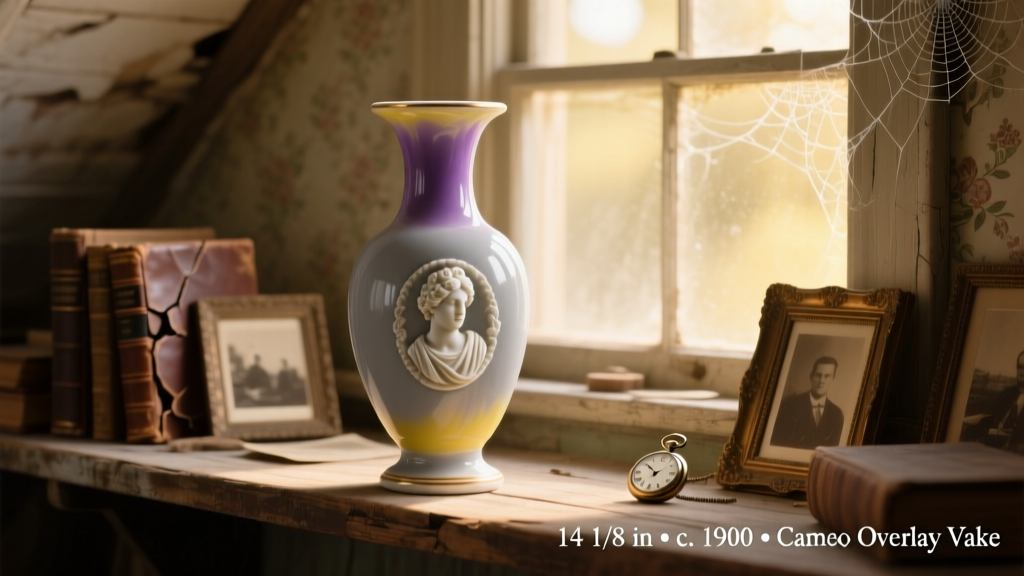
Gallé Baluster Vase: Gray-Yellow-Purple Overlay Cameo, Circa 1900, 14 1/8 Inches — Authentication, Provenance, and Market Value

Lunch Boxes: Peanuts 'Charlie Against Tree' 1973 — A Collector's Deep Dive into Aladdin's Iconic Vinyl-Laminated Steel Release

The 1135911: Unpacking the Legacy of Marx’s 1957 ‘Big Wheel’ Pedal Car
The 1940s–1950s Mahogany Settee with Satinwood Inlay & Caned Back: A Collector’s Deep Dive into a 56-Inch Mid-Century Masterpiece
Yellow Cab Metal Advertising Paperweights: Authenticity, Provenance, and Market Value of the 1930s Die-Cast Miniatures
Pepsi-Cola Bottle with W. L. Varner & H. S. Coach Contents: A Mid-Century Advertising Artifact Uncovered
The Albert Berry Copper Humidor: A Mid-Century Masterpiece with Hammered Antler Base (4½" × 14")
Button Fire Department Parade Uniform Embossed: A Collector’s Deep Dive into Mid-Century Toy Firefighting Gear