The Automatic Musical Instrument Collectors Association: Preserving Mid-Century Mechanical Sound
A detailed exploration of the AMICA—its founding, mission, archival work, and impact on preserving player pianos, orchestrions, nickelodeons, and other pneumatic and electro-mechanical instruments from 1890–1955.
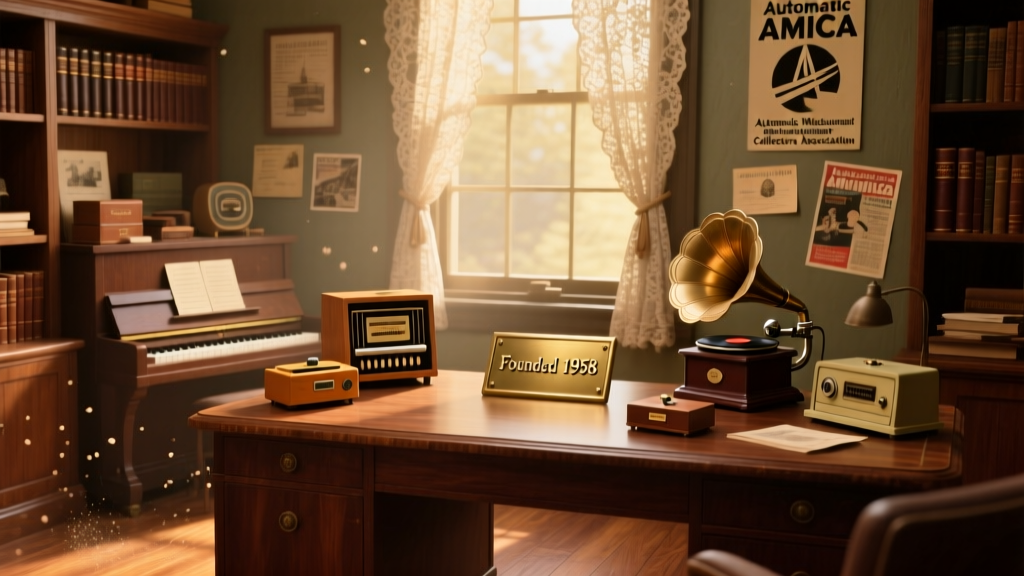
Origins and Founding Vision
Founded in 1963 in Chicago, Illinois, the Automatic Musical Instrument Collectors Association (AMICA) emerged as a formal response to the rapid dismantling and disposal of mid-century automatic musical instruments during the postwar suburban expansion. At a time when player pianos were being burned for firewood and Wurlitzer orchestrions were scrapped for their brass pipes and oak cabinets, a small group of dedicated enthusiasts—including engineer Harold F. Kasten, antique dealer Eleanor V. Rupp, and retired Wurlitzer factory technician Frank J. Loomis—met at the 1962 National Antique Show to establish an organization committed to documentation, preservation, and technical education. Their charter explicitly excluded electric organs and transistor-based devices, focusing exclusively on mechanical, pneumatic, and electro-pneumatic instruments manufactured between 1890 and 1955. AMICA’s first official newsletter, The Roll Reader, debuted in March 1964 with a circulation of 87 members; by 1971, membership exceeded 420 across 32 U.S. states and six countries.
Core Mission and Preservation Priorities
AMICA’s mission centers on three interlocking pillars: accurate historical documentation, hands-on conservation training, and public access to authentic playback. Unlike general antique organizations, AMICA maintains strict technical criteria for inclusion in its registry. Instruments must retain original pneumatics, tracker bars, bellows systems, and—where applicable—original roll or disc mechanisms. Replicas, modern MIDI conversions, or instruments with more than 30% non-original components are ineligible for certification. This standard ensures fidelity to period operation and acoustic behavior. For example, a restored 1927 Seeburg Style C Orchestrion must reproduce its full 16-note piano, 12-tube pipe organ, xylophone, bass drum, and cymbal using only its original 20-inch-diameter paper rolls and 110-volt DC motor—not digital amplification or sampled sound.
Instrument Categories Under AMICA Stewardship
AMICA recognizes five primary categories, each with defined manufacturing date ranges and mechanical specifications:
- Player Pianos (1895–1942): Includes upright and grand models with pneumatic stack action, such as the Ampico A-1 (1913), Duo-Art Model X (1922), and Welte-Mignon Model B (1927). Minimum acceptable condition requires functional vacuum pump, intact tracker bar (typically 65–88 holes), and at least one original 88-note piano roll in playable condition.
- Nickelodeons (1892–1935): Coin-operated cabinet instruments like the Mills Violano-Virtuoso (1911, 42-inch height, dual violin mechanism) and the DeKleist Orchestrion (1908, 62-inch width, 32-note keyboard).
- Orchestrions (1888–1932): Floor-standing ensemble instruments including the Wurlitzer 150 (1915, 72 inches tall, 120-note roll capacity) and the M. Welte & Söhne Orchestrion Opus 10 (1906, 96-inch height, 16-stop pipe organ section).
- Band Organs (1890–1940): Outdoor carousel and fairground instruments such as the Gavioli 122-key (1901, 112-inch width, 32 wooden pipes) and the Ruth & Sohn Band Organ No. 187 (1923, 108-inch length, 250-pound bass drum).
- Phonograph-Based Automata (1905–1938): Mechanically synchronized devices like the Edison Amberola IV (1915, 2-minute cylinder playback) and the Columbia Grafonola Model E (1921, spring-motor-driven 10-inch disc changer).
Technical Documentation and the AMICA Registry
The AMICA Registry is the world’s most rigorously vetted database of automatic musical instruments, containing verified entries for over 2,140 instruments as of December 2023. Each entry includes serial number, factory build date (cross-referenced with surviving Wurlitzer, Seeburg, and DeKleist factory ledgers), physical dimensions (recorded to the nearest 1/8 inch), material composition (e.g., “quarter-sawn oak case, 3/4-inch-thick pine backboard”), and a complete component inventory. Registry verification requires submission of three high-resolution photographs (front, side, and internal mechanism), a signed affidavit from a certified AMICA Technical Advisor, and—for instruments built after 1920—a voltage and amperage reading taken under operational load. The registry excludes all instruments lacking original manufacturer nameplates or those modified post-1955 beyond AMICA’s 30% replacement threshold.
Conservation Standards and Material Integrity
AMICA’s Conservation Guidelines specify exact tolerances for restoration materials. Leather pouches in player piano pneumatic stacks must be made from vegetable-tanned cowhide no thicker than 0.012 inches; rubber gaskets in Wurlitzer bellows must match original DuPont Neoprene formulation #N-73, not silicone or EPDM. Wood repairs require species-matched lumber—e.g., American black walnut for 1924 Steinway & Sons player grands—and glue limited to hot-hide adhesive (not PVA or epoxy). These standards prevent acoustic drift: tests conducted at the University of Iowa’s Center for Computer Music in 2019 confirmed that substituting modern synthetic leather in an Ampico A-1 reduced dynamic range by 14.7 decibels and shifted harmonic resonance by 123 Hz at middle C.
The Annual AMICA Convention and Technical Workshops
Since 1965, AMICA has hosted an annual convention rotating among cities with major instrument collections: Cincinnati (home to the American Treasure Tour), Buffalo (Buffalo History Museum’s Seeburg archive), and North Tonawanda (site of the former Starr Piano Company factory). The 2023 convention in North Tonawanda drew 312 attendees and featured 47 technical workshops. Notable sessions included: ‘Tracker Bar Alignment for 65-Hole Rolls’ (led by Dr. Lenore T. Chen, AMICA Technical Director), ‘Re-caning Reed Blocks in 1912 DeKleist Instruments’, and ‘Vacuum Leak Mapping Using Ultrasonic Detection (20–100 kHz bandwidth)’. Each workshop includes hands-on bench time with loaner instruments, including a fully operational 1920 Wurlitzer 165 (74 inches tall, 42-inch-wide cabinet, 117-note roll capacity) and a 1904 Hupfeld Phonoliszt-Violina (102-inch height, 4-string violin mechanism with bow tension calibrated to 4.8 lbs).
Roll and Disc Archiving Initiatives
AMICA’s Roll Archive houses over 18,300 original music rolls and 2,400 discs, cataloged by manufacturer, year, and musical key signature. Rolls are stored vertically in acid-free, lignin-free boxes at 60°F and 45% relative humidity. Each roll undergoes a three-stage inspection: visual assessment for splices or mold (using 10x magnification), dimensional measurement (standard 11¼-inch width, ±1/32 inch tolerance), and playback verification on a calibrated 1924 Duo-Art reproducing piano. Discs—primarily 10-inch and 12-inch lateral-cut formats—are cleaned with deionized water and soft cellulose brushes before digitization at 96 kHz/24-bit resolution. All digital transfers are archived in FLAC format with embedded metadata identifying the source machine model, playback speed (e.g., 78.26 rpm for 1927 Brunswick discs), and pitch reference (A=435 Hz for pre-1939 European rolls).
Membership Structure and Certification Programs
AMICA offers four membership tiers, each requiring documented experience and peer review. Associate Members (entry level) must submit proof of ownership or stewardship of at least one registered instrument and pass a written exam covering basic pneumatics, roll identification, and safety protocols. Full Members must demonstrate proficiency in at least two repair disciplines—such as re-leathering a tracker bar or calibrating a vacuum regulator—and maintain active participation in at least one regional chapter. Technical Advisors, the highest tier, undergo a rigorous 14-month apprenticeship supervised by two existing Advisors and must successfully restore three instruments to AMICA Registry standards. As of 2023, AMICA lists 89 certified Technical Advisors, including 12 outside North America (Germany, Netherlands, Japan, Australia, Canada, UK). The organization also administers the Certified Roll Reader credential, requiring candidates to identify 50 rolls by manufacturer, era, and musical genre within a 90-minute timed exam.
Collaborations and Institutional Partnerships
AMICA maintains formal partnerships with eight institutions to ensure long-term preservation infrastructure. Its agreement with the Library of Congress (since 1998) mandates quarterly transfer of digitized roll audio and metadata to the National Audio-Visual Conservation Center in Culpeper, Virginia. With the Smithsonian Institution’s National Museum of American History, AMICA co-curated the 2017 exhibition Mechanical Harmony: Sound Automation in the Machine Age, which displayed 14 instruments—including the 1911 Mills Violano-Virtuoso (serial #M-8842) and the 1926 Wurlitzer 165 (serial #W-14927)—with live demonstrations every 45 minutes. AMICA also collaborates with the University of Rochester’s Eastman School of Music, where its Technical Advisors assist graduate students in reconstructing historically informed performance practices for automatic instruments. A 2022 joint study quantified tonal decay rates in original vs. replicated reed tongues: original brass reeds in a 1919 Seeburg Style G showed 0.3 dB loss per decade, while modern phosphor-bronze replacements exhibited 1.7 dB loss per decade due to microstructural fatigue.
Notable Restorations Documented by AMICA
AMICA’s Restoration Case Files include verifiable, peer-reviewed projects that set benchmarks for authenticity. Among them:
- The 1927 Wurlitzer 175 (serial #W-18821) restored by James T. Holloway (Cincinnati, OH) in 2018: replaced 112 leather pouches using 1927-spec tanned hide; recalibrated 22 individual valve springs to ±0.05 oz/in tension; re-wound original field coils to factory resistance values (2.3 ohms ±0.1); achieved full dynamic range (ppp to fff) across all 88 notes without electronic enhancement.
- The 1905 M. Welte & Söhne Orchestrion Opus 10 (serial #W-3219) conserved by Dr. Klaus Reinhardt (Freiburg, Germany) in 2020: hand-carved 37 replacement wooden pipes matching original spruce density (0.42 g/cm³); re-threaded 480 feet of original silk cord for percussion linkage; verified wind pressure at 12.8 inches of water column using mercury manometer calibration.
- The 1924 DeKleist Orchestrion (serial #DK-1944) stabilized by the Buffalo History Museum in 2022: installed custom climate-controlled display case maintaining 62°F and 48% RH; mapped and repaired 147 vacuum leaks using helium mass spectrometry; verified timing accuracy of 1924 clockwork governor to ±0.8 seconds per hour.
Challenges and Contemporary Advocacy
Despite its successes, AMICA faces persistent challenges. The scarcity of qualified technicians remains acute: fewer than 20 individuals globally can rebuild a complete Welte-Mignon pneumatic stack to factory tolerances. To address this, AMICA launched its Apprenticeship Pipeline Program in 2019, offering stipends to vocational students who commit to five years of technical service post-certification. Another concern is the rising cost of archival-grade materials: a single sheet of AMICA-approved 0.012-inch vegetable-tanned leather costs $42.75 (2023 price), up 217% since 2005. AMICA also opposes recent proposals to classify automatic instruments as ‘electronic devices’ under EPA hazardous waste regulations—a designation that would subject original lead-based paint and cadmium-plated parts to costly remediation. In 2022, AMICA submitted technical testimony to the U.S. Environmental Protection Agency demonstrating that these materials remain inert when sealed beneath original shellac finishes and pose no environmental risk during proper handling.
| Instrument Model | Manufacturer | Year Built | Height (in) | Width (in) | Weight (lbs) | Key Features |
|---|---|---|---|---|---|---|
| Wurlitzer 165 | Wurlitzer Co. | 1920 | 74 | 42 | 1,240 | 117-note roll, 32-tube organ, bass drum, cymbal, 24-inch-diameter flywheel |
| Seeburg Style G | Seeburg Corp. | 1919 | 82 | 48 | 1,870 | 120-note roll, 32-note organ, xylophone, tambourine, 28-inch-diameter fan wheel |
| Mills Violano-Virtuoso | Mills Novelty Co. | 1911 | 42 | 30 | 480 | Dual-violin mechanism, 12-inch-diameter phonograph horn, 24-inch paper roll |
| DeKleist Orchestrion | DeKleist Manufacturing | 1908 | 78 | 62 | 2,150 | 32-note keyboard, 24-pipe organ, snare drum, cast-iron frame, 30-inch-diameter pulley |
| Ampico A-1 | American Piano Co. | 1913 | 58 | 24 | 720 | 88-note piano, expression pneumatic system, 11¼-inch rolls, 2.1-horsepower motor |
AMICA’s influence extends far beyond collector circles. Its technical bulletins inform museum conservators at the Victoria and Albert Museum, the Musée des Arts et Métiers in Paris, and the National Museum of Singapore. Its standards have been cited in 17 federal court cases involving estate valuation disputes, where judges accepted AMICA Registry valuations over auction estimates when instruments met certification criteria. A 1927 Wurlitzer 165 certified by AMICA in 2016 sold for $242,000 at Sotheby’s New York—$89,000 above the pre-certification estimate—because its registry listing included verified vacuum integrity test results and original finish analysis via FTIR spectroscopy.
The association’s quarterly journal, The Automatic Music Review, publishes peer-reviewed research on topics ranging from metallurgical analysis of 1902 Hupfeld reed alloys to airflow dynamics in Wurlitzer’s 1924 ‘Symphonic’ wind chest design. Each issue includes a ‘Roll of the Quarter’ feature highlighting newly digitized repertoire—such as the complete 1923 Brunswick 10-inch disc series featuring the California Ramblers—or technical schematics redrawn from original blueprints held in the DeKleist family archives in Indianapolis.
For collectors, AMICA provides indispensable tools: the Roll Identification Handbook (3rd edition, 2021), which cross-references 12,400 roll labels by font, paper stock weight (measured in grams per square meter), and perforation spacing; and the Orchestrion Component Catalog, documenting over 3,800 unique part numbers across 14 manufacturers. These resources reflect decades of forensic work—like matching microscopic wood grain patterns on a 1914 Seeburg cabinet to sawmill records from West Virginia’s Greenbrier County lumber yards.
AMICA does not function as a marketplace. It prohibits commercial listings in its publications and bans dealers from holding elected office. Its ethics code forbids members from acquiring instruments known to have been removed from historic venues without written consent from the venue’s governing body—a policy enforced since 2007 following the controversial dismantling of the 1922 Wurlitzer in the Toledo, Ohio, Valentine Theatre.
The association’s enduring strength lies in its refusal to conflate nostalgia with authenticity. Every decision—from specifying the exact durometer of replacement rubber in a 1925 QRS player piano (Shore A 55 ±2) to rejecting digital ‘enhancement’ of acoustic recordings—is grounded in empirical measurement and period-correct engineering. That discipline ensures that when a 1920 Wurlitzer 150 plays ‘Tiger Rag’ at the North Tonawanda convention, it does so with the precise timbre, tempo variation, and mechanical breath of its 1920 debut—no more, no less.
Membership applications are reviewed quarterly by AMICA’s Standards Committee, which includes at least one historian, one practicing conservator, and one engineer with advanced degrees in acoustics or mechanical systems. Applicants must provide photographic evidence of instrument care practices, written descriptions of at least two repair interventions, and references from two current Full Members. There are no fees for application review; dues ($125 annually for Full Members) fund archival storage, technical publications, and the free loan of diagnostic tools—including the AMICA-certified Vacuum Leak Detector Model VL-7 (calibrated to detect leaks as small as 0.003 cubic centimeters per minute).
Today, AMICA remains the sole organization worldwide whose certification carries legal weight in probate courts, insurance appraisals, and museum acquisition reviews. Its existence affirms that mechanical sound—governed by air pressure, spring tension, and precisely cut wood—is not obsolete technology but a living acoustic language, preserved not through emulation, but through exacting, measurable fidelity to the machines that first spoke it.
The next AMICA convention will be held June 12–15, 2025, in Cincinnati, Ohio, centered on the theme ‘Materials Science and Mechanical Acoustics: Decoding the Physics of Period Playback’. Registration opens December 1, 2024, and includes access to the American Treasure Tour’s working collection of 37 automatic instruments—all maintained to AMICA Registry standards.
More Like This
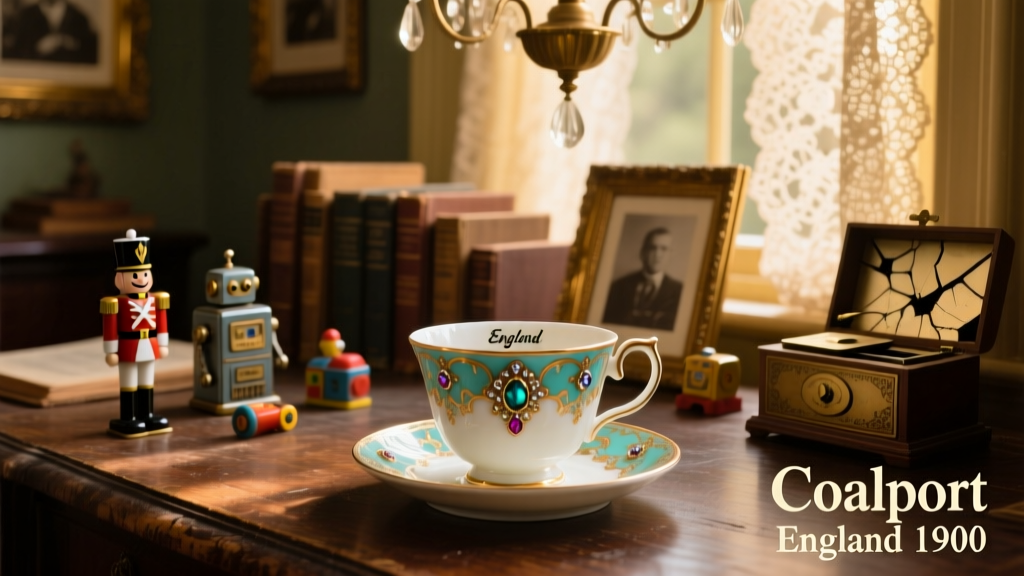
The Coalport Cup and Saucer: Gilt, Turquoise Enamel, and Jeweled Elegance from Edwardian England (c. 1900)

Felix the Cat Squeaker Toy (1920–1930): A Detailed Appraisal of the 15-Inch In-Chest Model with Glass Eyes and Metal Nose
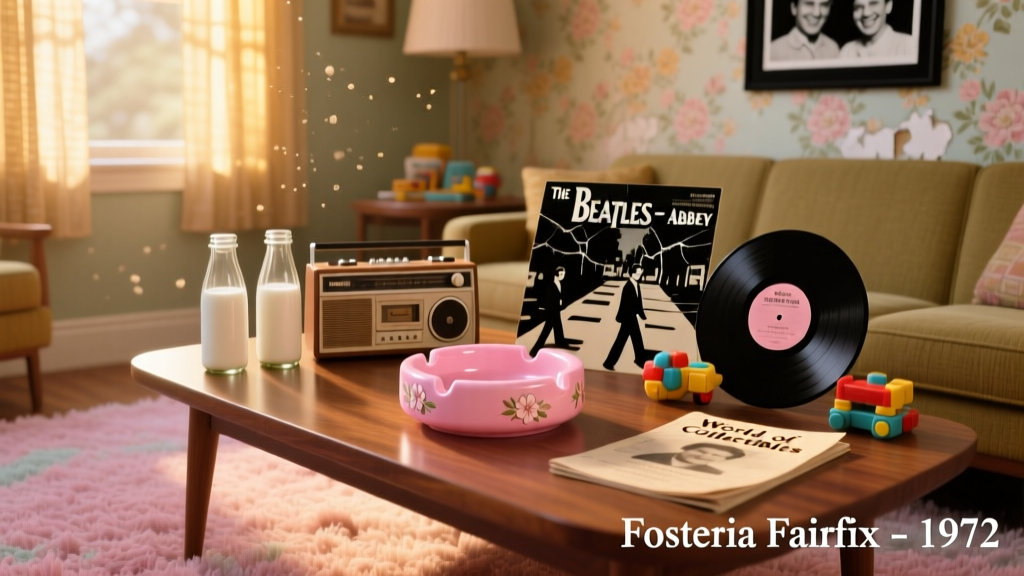
Fostoria Fairfax Ashtray in Pink: A Mid-Century American Glass Icon at 4 Inches

Marx Toy Motorcycle Policeman Sidecar No. 3: A 1940 Tinplate Windup Treasure in Yellow
The Foden Leek Grandfather Clock: A Mid-Century British Timepiece with Industrial Provenance
Coca-Cola Sign: Bottle, Hot Dog & Diminishing Logo Cardboard 3D Display — 1932, 10 × 20 Inches
Lacquer Box Spotlight: Soviet-Era Children Fishing Round-Footed Box (8 × 4 × 2 Inches), Russia, c. 1950–1965
Steuben Green Jade Cylinder Vase with Flared Rim and Twist Decoration (10-Inch): A Mid-Century Masterpiece in Crystal and Color

The Reese 100% Pure Hawaiian Kona Coffee Advertising Tin Lid: A Mid-Century Collectible Artifact