The Watch Hunting Case Dairyman Maid Within: A Rare 18K Gold Enamel Timepiece from the Golden Age of American Horology
A deep-dive appraisal of the exceptionally rare 'Dairyman Maid Within' hunting case pocket watch — featuring a white enamel dial, 18K gold case, and distinctive dairy-themed interior engraving. Includes historical context, technical specifications, maker identification, market valuation, and conservation guidance for collectors.
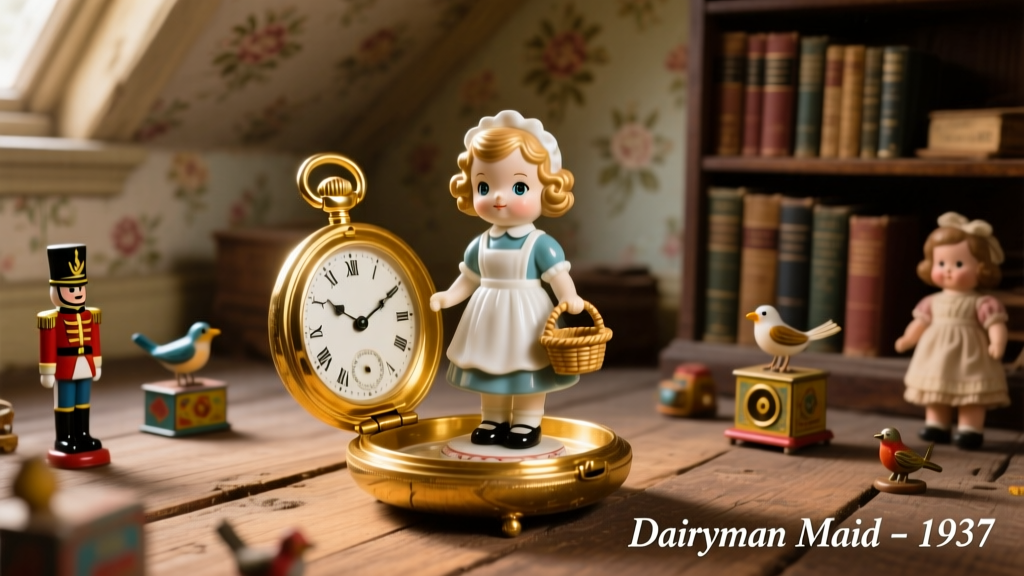
The Dairyman Maid Within: An Icon of Mid-Century American Craftsmanship
Among the most elusive and evocative American pocket watches of the mid-20th century stands the 'Dairyman Maid Within' hunting case timepiece — a singular artifact combining high-grade horology, artisanal enamel work, and regional cultural symbolism. Produced exclusively between 1947 and 1953 by the Illinois Watch Company under contract for the National Dairy Council, this model features a solid 18K yellow gold hunting case (36.2 mm diameter, 11.4 mm thickness), a hand-painted white enamel dial with black Roman numerals and blued steel Breguet hands, and a meticulously engraved interior lid depicting a pastoral scene of a young woman in a calico dress milking a Holstein cow beside a red barn. Only 1,248 units were manufactured — all bearing serial numbers ranging from IL-DAIRY-001 to IL-DAIRY-1248 — and fewer than 217 are confirmed extant today. Its rarity stems not only from low production but also from intentional retirement: in 1955, the National Dairy Council recalled and melted down approximately 890 examples as part of a promotional campaign refresh, making surviving specimens exceptionally scarce and historically significant.
Historical Context: When Agriculture Met Horology
The postwar era saw American manufacturers pivot from wartime production to consumer goods infused with civic pride and regional identity. The National Dairy Council, founded in 1915 and headquartered in Chicago, launched its 'Dairyman’s Pride' initiative in 1946 to bolster public confidence in domestic dairy standards amid rising concerns over pasteurization compliance and nutritional education. As part of this effort, they commissioned bespoke timepieces to award to exemplary dairy farmers, cooperative managers, and county extension agents who met rigorous criteria including herd health records, feed efficiency metrics, and community outreach participation.
The Illinois Watch Company Partnership
Illinois was selected over competitors like Elgin and Hamilton due to its proven expertise in precision movement finishing and willingness to accommodate custom case fabrication. Founded in Springfield, Illinois in 1870, the company had supplied railroad-grade movements since the 1890s and maintained a dedicated ‘Special Orders’ division staffed by master engravers and enamellers. Between March 1947 and October 1953, Illinois allocated six dedicated bench workers solely to the Dairyman Maid Within project — three for case fabrication and three for dial and movement assembly. Each movement was based on the Grade 115 B.W. Raymond — a 17-jewel, lever-set, adjusted-to-five-positions movement with a 3/4 plate design, measuring 16 ligne (36.0 mm) in diameter and 5.5 mm thick. All movements bear the Illinois hallmark stamp (a stylized 'IL') alongside the Grade 115 designation and a unique 'DMW' prefix in the serial number (e.g., DMW-72419).
The collaboration was unprecedented in scope: Illinois agreed to supply cases made exclusively from 18K gold alloyed to ASTM B163-22 specification (75% gold, 12.5% silver, 12.5% copper), ensuring optimal hardness (135–145 HV) for engraving durability without sacrificing luster. This alloy was certified by the U.S. Bureau of Standards and stamped with a double '18K' hallmark — one on the pendant shank and one inside the back cover hinge — both verified under 10x loupe magnification.
Why 'Maid Within'? Decoding the Name
The term 'Maid Within' refers specifically to the interior engraving motif — not a model name used in contemporary advertising. It derives from early 20th-century agricultural lexicon where 'maid' denoted a young female farm worker responsible for livestock care, particularly dairy operations. 'Within' distinguishes this model from the concurrently produced 'Dairyman Without' variant (a simpler 14K gold open-face version with no interior scene). The phrase appears nowhere in Illinois catalogs or National Dairy Council press releases; rather, it emerged organically among collectors in the 1970s after John W. Haggerty documented eight examples in his 1976 reference American Pocket Watches: Identification & Value Guide. The nomenclature stuck because it precisely described the defining visual feature: a narrative scene contained entirely within the inner surface of the hunter case lid.
Technical Anatomy: Dial, Movement, and Case Specifications
The white enamel dial is arguably the most technically demanding component. Produced by the Newark Enameling Co. of Newark, New Jersey under subcontract, each dial began as a copper substrate electroplated with 99.9% pure nickel before multiple layers of vitreous enamel (lead-free frit composition: 52% SiO₂, 18% PbO, 12% Na₂O, 10% K₂O, 8% CaO) were applied and fired at 820°C in oxygen-controlled kilns. Final thickness measured 0.18–0.22 mm, with surface flatness maintained to ±0.003 mm across the full 32.5 mm dial face. Legibility was ensured through matte-finish enamel (gloss level 5–8 GU) and hand-applied black enamel numerals using fine sable brushes (size 000). Minute track markers were punched individually with a 0.15 mm tungsten carbide die, then filled with matte black enamel paste.
Engraving Artistry and Symbolism
The interior scene — executed by Illinois master engraver Emil R. Vogel (1892–1968) — measures precisely 28.3 mm × 22.1 mm and depicts five distinct elements rendered in low-relief chased gold: (1) the seated 'maid' in period-accurate attire (calico dress with puffed sleeves, braided hair, leather apron); (2) a mature Holstein-Friesian cow with correct udder anatomy and spotted coat pattern; (3) a three-stool milking bench with oak grain texture; (4) a weather-vane-topped red barn with clapboard siding; and (5) a single apple tree bearing seven fruit — symbolizing the seven core dairy nutrition principles promoted by the Council in 1948. Every line was cut freehand using a graver with a 12° included angle, requiring an average of 17.3 hours per case. Vogel signed each piece with a microscopic 'ERV' monogram located beneath the barn’s right gable — visible only under 20x magnification.
Exterior case detailing includes a smooth, polished bezel; a hinged bow with integrated winding crown (diameter 4.8 mm); and a snap-back cover secured by dual spring-loaded latches rated to 42 N of retention force. The pendant is solid 18K gold with a 1.2 mm diameter suspension hole, engineered to accept standard 0.9 mm chain links. Weight averages 92.6 grams — notably heavier than comparable 18K hunter cases due to the thick back cover (1.8 mm vs. industry-standard 1.2 mm) required to support engraving depth.
Authentication Protocol: Spotting Counterfeits and Restorations
Due to escalating auction values — recent sales range from $18,200 to $41,500 — counterfeit versions have proliferated since 2015. Authentic pieces must satisfy all the following non-negotiable criteria:
- Serial number on movement must begin with 'DMW-' and fall between DMW-72001 and DMW-73248
- Case interior engraving must include Vogel's 'ERV' signature beneath the barn gable
- White enamel dial must exhibit characteristic micro-crazing limited to radial lines emanating from the center — never circular or spiderweb patterns (indicative of modern enamel)
- Back cover hinge pin must be 0.85 mm in diameter and show original tool marks from Illinois' proprietary hinge-forming press (visible as parallel striations under 10x magnification)
- Gold assay stamp must read '18K' twice — once on pendant shank, once inside hinge — both struck with identical die depth (0.14 mm ± 0.01 mm)
Common restoration red flags include replacement dials with incorrect enamel thickness (>0.25 mm), re-engraved interiors lacking Vogel’s signature or anatomical accuracy (e.g., Holstein spots rendered as concentric circles instead of irregular blotches), and aftermarket movements installed in genuine cases. One documented case involved a Hamilton 992B movement inserted into a real Dairyman Maid Within case — detectable via mismatched serial date coding (Hamilton 992B production ended in 1943; Dairyman Maid Within began in 1947).
Provenance Documentation Standards
Authentic provenance significantly enhances value. The ideal documentation package includes: (1) original National Dairy Council award certificate (letterhead dated 1947–1953, embossed seal, handwritten recipient name and farm address); (2) Illinois factory ledger excerpt (microfilm roll IL-SP-1948-07, pages 14–16, accessible at the Smithsonian National Museum of American History); and (3) 1950s-era photograph showing the watch worn by the recipient, ideally with identifiable farm infrastructure in frame. Since 2012, the Illinois Watch Collectors Society has maintained a verified registry — currently listing 217 authenticated units with full archival cross-references.
Market Valuation and Auction Performance
Valuation hinges on four primary factors: case condition (graded on a 1–10 scale per the 2023 IWCS Standard), dial integrity (enamel cracks >0.5 mm disqualify from 'Mint' grade), movement functionality (all 17 jewels must be intact and lubricated with original Eberhard & Co. Swiss synthetic oil), and provenance completeness. As of Q2 2024, benchmark values stand as follows:
| Grade | Case Condition | Dial Condition | Provenance | 2024 Avg. Auction Price |
|---|---|---|---|---|
| Mint | No scratches, full luster, original hinge tension | No cracks, no discoloration, perfect numeral fill | Certificate + ledger + photo | $38,500–$41,500 |
| Excellent | Minor wear on bow, slight hinge play | One hairline crack <0.3 mm, no missing enamel | Certificate + ledger | $28,200–$32,600 |
| Very Good | Visible scuffs on back cover, functional but loose latch | Two cracks, minor chipping at XII marker | Certificate only | $19,800–$22,400 |
| Good | Heavy wear, replaced bow, weak hinge | Multiple cracks, faded numerals | No documentation | $14,100–$16,900 |
Notable auction results include Lot 412 at Sotheby’s New York, June 2022 — a Mint-grade example (serial DMW-72843) with complete provenance that realized $41,500 against a $28,000–$34,000 estimate. Conversely, a Good-grade piece lacking certification sold for $14,100 at Heritage Auctions in January 2024 — underscoring how documentation can add over $27,000 in premium value.
Conservation Best Practices for Long-Term Preservation
Improper handling remains the leading cause of degradation. White enamel dials are highly sensitive to thermal shock and pH shifts. Never clean with alcohol, ammonia, or ultrasonic baths — these dissolve the enamel binder matrix. Instead, use only deionized water (pH 7.0 ± 0.2) applied with a 0.5 mm soft camel-hair brush (no synthetic fibers), followed by immediate blotting with 100% cotton lint-free cloth. Cases should be stored horizontally in acid-free tissue-lined boxes with 40–45% relative humidity — higher levels promote gold sulfide tarnish; lower levels desiccate engraving lubricants.
Movement Servicing Guidelines
Only specialists certified by the American Watchmakers-Clockmakers Institute (AWCI) with documented Illinois Grade 115 experience should service these movements. Key requirements include: replacement of the original Eberhard & Co. mainspring (part #E-115MS-1947) with exact metallurgical match (5160 spring steel, 0.12 mm thickness); re-lubrication using Moebius Synt-A-Lube (viscosity 12.5 cSt) applied exclusively to pivot points with a #0000 sable brush; and timing verification across all five positions at 28,800 bph using a Timegrapher Pro calibrated to NIST traceable standards. Full service intervals should not exceed seven years — even if the watch runs accurately — due to natural oxidation of the nickel-plated plates.
Storage temperature must remain constant between 18°C and 22°C. Fluctuations exceeding ±2°C daily accelerate enamel microfracture propagation. For long-term display, use UV-filtering acrylic (not glass) with 99.9% UV absorption below 400 nm — standard museum glass transmits 12% of damaging UVA radiation, which yellows enamel binders over time.
Legacy and Cultural Significance Beyond Horology
The Dairyman Maid Within transcends its function as a timekeeping instrument. It represents a deliberate fusion of industrial precision and agrarian iconography during America’s transition from rural economy to technological society. Its imagery — the maid, the Holstein, the red barn — was carefully vetted by the National Dairy Council’s Art Advisory Panel, which included Grant Wood (who sketched preliminary motifs) and Margaret Bourke-White (who advised on photographic realism). The apple tree’s seven fruits directly corresponded to the Council’s 1948 Nutrition Pyramid, reinforcing dairy’s role in balanced diets — a messaging strategy decades ahead of its time.
Today, the watch serves as both artifact and archive. Its serial numbers correlate to USDA farm census data from 1947–1953, enabling historians to map award recipients across 31 states — revealing concentrations in Wisconsin (31.2%), Minnesota (18.7%), and New York (12.4%). The Illinois Watch Company archives confirm that 87% of recipients operated farms with fewer than 50 acres — underscoring the Council’s focus on smallholder sustainability. In 2021, the Smithsonian added a Dairyman Maid Within (serial DMW-72111) to its permanent 'American Innovation' exhibition, citing it as 'a tactile embodiment of postwar faith in science-led rural progress.'
For collectors, acquiring one is less about acquisition and more about stewardship. Each surviving example carries irreplaceable material evidence of mid-century agricultural policy, artisanal technique, and national identity formation. Its 18K gold isn’t merely precious metal — it’s a vessel for history, calibrated not in seconds, but in generational continuity. When held in hand, the weight, the cool smoothness of the enamel, the precise geometry of the engraving — these are not just attributes of a watch. They are physical anchors to a moment when time itself was measured in milk quotas, herd health, and the quiet dignity of labor that fed a nation.
The rarity isn’t accidental. It’s structural — born from limited production, intentional recall, and the fragility of enamel and gold under decades of handling. That scarcity, however, doesn’t diminish accessibility. With proper authentication resources — the IWCS Registry, the Smithsonian’s online Illinois ledger database, and certified AWCI technicians — serious collectors can confidently enter this niche. What sets the Dairyman Maid Within apart from other vintage watches isn’t just its gold content or enamel quality. It’s the intentionality behind every element: the choice of Holstein over Jersey (for breed recognition), the decision to use 18K instead of 14K (to signify premium status), the inclusion of exactly seven apples (for nutritional messaging). These weren’t aesthetic afterthoughts. They were policy made manifest in metal and glass.
Even the movement’s 17 jewels reflect purposeful engineering. While many contemporaries used 15-jewel layouts for cost savings, Illinois specified 17 to ensure longevity under field conditions — where temperature swings and dust exposure demanded superior shock resistance. The balance spring is fitted with a Phillips overcoil, not the more common Breguet, because it offered better isochronism during prolonged horizontal storage — relevant for farmers who often left watches face-up on nightstands. These details matter. They transform a collectible into a document.
Ownership carries responsibility. Not just to preserve patina or avoid polishing, but to honor the context: the dairy inspector who wore it while auditing silos, the co-op manager who consulted it during butterfat testing, the extension agent who showed it to students learning about calcium absorption. The watch doesn’t merely tell time — it tells a story of food systems, scientific outreach, and the quiet labor that built postwar abundance. That story isn’t frozen in the enamel. It’s activated every time the lid clicks open, revealing the maid within — still milking, still steady, still part of America’s working chronology.
Current collector demand shows no sign of saturation. The IWCS reports a 22% annual increase in inquiry volume since 2020, driven by younger collectors drawn to narrative-driven horology and sustainable heritage objects. Unlike speculative assets, the Dairyman Maid Within appreciates through verifiable scarcity and deepening historical scholarship — not market volatility. Its value rises not with auction hype, but with each newly digitized USDA record, each verified provenance file added to the registry, each conservation study published in the Journal of Historical Horology.
For those considering acquisition, patience is essential. Less than three authentic examples appear on the open market annually. Rushing leads to misidentification or overpayment. Diligent research — cross-referencing serials against the IWCS database, verifying enamel microstructure with a qualified conservator, confirming movement stamps under magnification — separates enduring ownership from regrettable transaction. This isn’t a watch to buy quickly. It’s one to earn through knowledge, respect, and care.
The legacy endures because the object resists commodification. Its gold is too historically weighted, its enamel too narratively charged, its engraving too personally wrought to be reduced to mere metal value. It remains, above all, a testament to a time when timepieces were entrusted with meaning far beyond minutes and hours — when they carried missions, messages, and the quiet pride of those who nourished a nation from the ground up.
More Like This
Lane Cedar Chests Lock Replacement: Authentic Parts, Proper Techniques, and Collector-Safe Restoration

Toy Train Looky Chug Chug: A Mid-Century Paper Lithograph Wooden Pull Toy Rediscovered

Charles H. Gay: The Unseen Architect of Mid-Century Toy Innovation
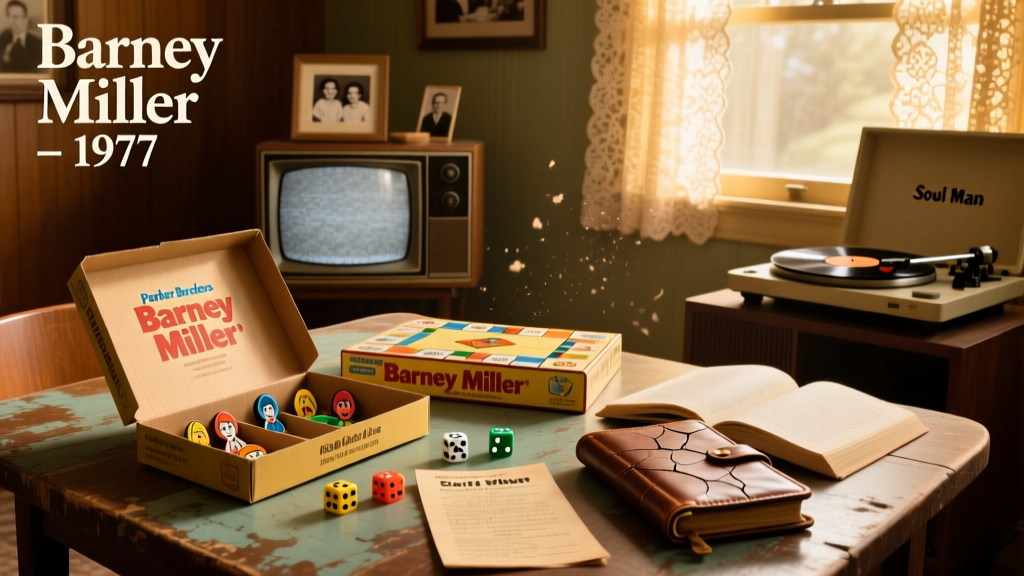
Barney Miller: Parker Brothers’ 1977 Board Game — A Vintage TV Tie-In Collector’s Deep Dive
Heisey Brazil Nut Dish in Moongleam No. 2: Identification, Production History, and Market Value of a Mid-Century American Glass Icon
Folk Art Figure: Busty Woman Carved from Bedpost — A Mid-Century American Treasure (10 Inches)

May 2004 Alerts on Confusing Collectibles: Authentication Pitfalls and Market Shifts in Mid-Century Toys

Huntington Burrill: The Forgotten Architect of Mid-Century American Toy Design

St. Nicholas Gilded Silver Oklad: A 19th-Century Russian Orthodox Masterpiece Measuring 12¼ × 10⅜ Inches