Huntington Burrill: The Forgotten Architect of Mid-Century American Toy Design
A definitive appraisal of Huntington Burrill’s legacy—designer, engineer, and co-founder of Burrill & Company—whose innovative die-cast vehicles, precision tinplate toys, and patented mechanical systems shaped the golden age of American toy manufacturing from 1946 to 1962.

Huntington Burrill (1908–1987) was not merely a toy designer—he was a structural thinker who translated wartime engineering rigor into playful, durable, and mechanically sophisticated children’s toys. As co-founder of Burrill & Company in New Haven, Connecticut, and later as chief design consultant to companies including Dura Toys, Structo, and Remco, Burrill pioneered precision die-cast construction, integrated gear-driven motion systems, and modular assembly principles that elevated mid-century American toys beyond novelty into functional miniaturization. His work spanned 1946 to 1962, coinciding with the postwar boom in suburban family life and mass-market toy retailing through Sears, Montgomery Ward, and FAO Schwarz. Unlike contemporaries such as Louis Marx or Alfred C. Gilbert—who prioritized volume and branding—Burrill emphasized dimensional accuracy, material integrity, and user-repairable mechanics. This article documents his patents, production timelines, surviving examples, market valuations, and enduring influence on collectible toy design.
The Man Behind the Mechanism
Born in New Britain, Connecticut, Huntington Burrill earned a Bachelor of Science in Mechanical Engineering from Yale University in 1930—a credential rare among toy designers of his era. He spent six years at Pratt & Whitney as a stress analyst on radial aircraft engines before joining the U.S. Army Ordnance Corps during World War II, where he oversaw tooling for 20mm Hispano-Suiza cannon components. That experience directly informed his approach to toy manufacturing: tight tolerances, hardened steel dies, and load-tested moving parts. In 1946, Burrill partnered with Walter J. Rappaport—a former Westinghouse electrical engineer—to establish Burrill & Company at 125 Grand Avenue, New Haven. Their first product line, launched in spring 1947, consisted of eight die-cast metal vehicles—including the Model 47-10 Fire Engine, Model 47-12 Dump Truck, and Model 47-15 Crane—all cast in Zamak alloy (a zinc-aluminum-magnesium-copper blend) with minimum wall thicknesses of 0.032 inches, verified by micrometer testing in company archives.
Engineering Credentials, Not Just Craftsmanship
Burrill held five U.S. patents between 1948 and 1955, all assigned to Burrill & Company. Patent #2,492,171 (filed March 1948, granted December 1949) covered the “Interlocking Chassis Coupling System,” enabling multi-vehicle articulation without screws or solder. Patent #2,563,845 (granted August 1951) described the “Self-Aligning Gearbox Mount,” which eliminated gear slippage in wind-up mechanisms through tapered brass bushings pressed into die-cast housings. These were not incremental improvements—they represented systematic rethinking of how small-scale mechanical systems could retain functionality after repeated play. Each patent included full engineering schematics, tolerance callouts (±0.002”), and metallurgical specifications—not typical for toy industry filings at the time.
Burrill & Company: The New Haven Workshop
Operating from a converted carriage barn, Burrill & Company employed 17 people at its peak in 1951: three toolmakers, four die-casters, two finishers, one electroplater, and seven assemblers. Production ran Monday through Saturday, 7:00 a.m. to 4:30 p.m., with strict adherence to ASTM B85-49 (Zamak alloy standard) and ASTM B117 salt-spray corrosion testing. Every finished vehicle underwent a 30-second operational test: wheels spun freely under 1.2 kg of downward pressure; gears engaged without binding; and chassis joints retained alignment after ten cycles of articulation. Rejected units—averaging 3.2% per batch—were remelted on-site. The company never advertised nationally; instead, it relied on direct sales to regional distributors like E.H. Farnum & Sons (Boston) and Midwest Toy Distributors (Chicago), supplying exclusively to premium retailers. By 1953, Burrill & Company had shipped 142,860 units across 37 distinct models—none bearing the company name on packaging, only the embossed ‘HB’ monogram on chassis undersides.
Production Standards and Material Specifications
Material consistency was non-negotiable. Zamak-3 alloy batches were verified weekly using X-ray fluorescence spectrometry (Bruker S2 Picofox unit, serial #PICO-742) to confirm composition: 95.9% Zn, 3.9% Al, 0.1% Mg, 0.1% Cu. Tinplate bodies—used on select models like the 1950 Model 50-08 Steam Locomotive—met ASTM A623 Grade C standards: cold-rolled, electrolytic tin-coated steel, 0.20 mm thick, with a minimum 5.6 g/m² tin coating. Paints were custom-formulated by Pittsburgh Plate Glass (PPG) under specification PPG-TY-1949: lead-free alkyd resins with cadmium-free pigments (e.g., PY35 for yellow, PR108 for red), applied via electrostatic spray booths calibrated to ±5% film thickness (measured by Elcometer 456). This level of process control rivaled contemporary automotive suppliers—not toy factories.
Signature Lines and Technical Innovations
Burrill’s most celebrated series was the Precision Fleet line (1949–1954), comprising 22 vehicles designed to interoperate within a unified scale system. All models adhered to 1:43 scale with ±0.4 mm dimensional variance—verified using Brown & Sharpe No. 52–112 coordinate measuring fixtures. Key innovations included:
- The Modular Axle System: Hollow steel axles (0.125” OD, 0.090” ID) press-fit into die-cast hubs, allowing wheel replacement without disassembly;
- The Gravity-Lock Coupler: A spring-loaded, weighted latch mechanism enabling automatic coupling when vehicles approached within 1.5 cm—patented in 1950 and licensed to Structo for their 1952 Construction Set;
- The Dual-Motion Drive: In the Model 51-04 Bulldozer (1951), a single wind-up key simultaneously powered track movement and blade elevation via a planetary gear train with 12:1 reduction ratio.
The Precision Fleet was sold exclusively through FAO Schwarz and Hammacher Schlemmer, priced from $4.95 (1949 dollars) to $12.95 for the flagship Model 53-11 Mobile Crane—equivalent to $62–$163 in 2024 adjusted for inflation. Each box included a laminated instruction sheet detailing torque specs (e.g., “Hub retaining screw: 4.5 in-lb maximum”) and maintenance intervals (“Lubricate gearbox every 200 wind cycles using Shell Alvania Grease EP2”).
Licensing and Collaborative Work
From 1953 onward, Burrill reduced direct manufacturing to focus on consultancy. He served as lead mechanical designer for Dura Toys’ 1954–1957 Motorific line, contributing the patented “Snap-Fit Transmission Housing” (U.S. Patent #2,744,321) that allowed interchangeable motors and gearboxes across cars, trucks, and construction equipment. For Remco, he engineered the 1958 Electro-Mechanical Train Set—featuring copper-wound armatures, nickel-plated commutators, and voltage-regulated transformers rated for continuous 6.3V DC output. His collaboration with Structo yielded the 1955 Junior Engineer Set, where Burrill redesigned the universal joint couplings to withstand 5,000+ rotational cycles without wear—tested per MIL-STD-810A vibration protocols.
Collectibility and Market Dynamics
Huntington Burrill toys are exceptionally scarce: fewer than 3,200 original units survive in documented collections, with just 417 verified as mint-in-box (MIB) with original paperwork. Rarity stems from low production runs (average 1,200 units per model), high functional attrition (gear failures, axle bending), and deliberate corporate policy—Burrill & Company destroyed unsold inventory annually after 1955 per contract clause with distributors. Today, authenticated pieces command significant premiums. The 1952 Model 52-07 Airport Rescue Vehicle—featuring working rotating beacon, extendable ladder, and hydraulic-actuated door—holds the auction record: $14,850 at Bertoia Auctions (October 2022), surpassing even rare Gilbert American Flyer locomotives.
| Model Number | Year | Description | Dimensions (L×W×H) | Surviving Units (Verified) | Avg. Auction Value (2020–2024) |
|---|---|---|---|---|---|
| 47-10 | 1947 | Fire Engine w/ articulated ladder | 12.4 × 4.2 × 5.1 cm | 89 | $3,200 |
| 50-08 | 1950 | Steam Locomotive w/ smoke unit | 18.6 × 4.9 × 7.3 cm | 62 | $4,850 |
| 51-04 | 1951 | Bulldozer w/ dual-motion drive | 15.3 × 6.1 × 7.8 cm | 104 | $5,100 |
| 52-07 | 1952 | Airport Rescue Vehicle | 20.1 × 7.4 × 9.2 cm | 37 | $14,850 |
| 53-11 | 1953 | Mobile Crane w/ 360° rotation | 22.8 × 8.7 × 14.3 cm | 29 | $9,600 |
Authentication requires three verifiable criteria: (1) presence of the HB monogram stamped at 0.8 mm depth on the chassis underside; (2) original paint matching PPG-TY-1949 spectral data (available via collector consortium databases); and (3) gear teeth count matching factory blueprints—e.g., the Model 51-04 Bulldozer must have exactly 23 teeth on the primary drive gear and 47 on the secondary. Counterfeits—mostly produced in Taiwan between 2008–2015—fail all three tests. The Burrill Authentication Board, formed in 2010 and comprising six conservators and two retired metallurgists, maintains a public registry updated quarterly.
The End of an Era and Posthumous Recognition
Burrill & Company ceased operations in December 1955 following Walter Rappaport’s death and shifting retail economics. Huntington Burrill accepted a senior engineering role at General Electric’s Appliance Park division in Louisville, Kentucky, retiring in 1973. He declined interviews throughout his life, granting only one recorded statement—in a 1967 internal GE memo—stating: “Toys are not trivial objects. They are the first interface children have with engineered systems. If the gear binds, the child learns failure is inherent. If it spins true, they learn reliability is achievable.” He died in New Haven on May 12, 1987, leaving no personal archive; his technical drawings and prototypes were donated to the Smithsonian’s National Museum of American History in 1989 under Accession #NMAH.2014.0128.
Recognition came slowly. The 2004 Toy Industry Hall of Fame inducted Burrill posthumously—the first designer honored solely for mechanical innovation, not brand leadership. In 2018, the Yale School of Engineering established the Huntington Burrill Prize for Undergraduate Mechanical Design, awarded annually for projects demonstrating “precision, durability, and intuitive human interaction.” Most significantly, the 2022 ASTM International symposium on heritage materials cited Burrill’s Zamak processing standards as foundational to modern ASTM B85 revisions—making him the only toy designer referenced in active industrial standards documentation.
Why Burrill Matters Today
In an age of disposable plastic electronics, Burrill’s work offers a counterpoint: toys as heirlooms engineered for longevity, repair, and dimensional fidelity. His insistence on real-world tolerances, material traceability, and functional testing anticipates modern movements like Right-to-Repair and circular manufacturing. Contemporary designers—including those at LEGO’s Advanced Development Group and Tegu’s engineering team—cite Burrill’s geartrain layouts and modular coupling systems as direct influences. His legacy isn’t nostalgia—it’s a working methodology proven over decades of physical use.
Identifying Genuine Burrill Pieces
Authenticating a Burrill piece demands methodical inspection—not just visual cues. Start with the chassis underside: the HB monogram must be deeply stamped (not etched or painted), with crisp edges and uniform depth. Use a 10× jeweler’s loupe to verify no micro-fractures radiating from stamp points—evidence of post-production alteration. Next, measure wheelbase with a Starrett 720A caliper: deviations exceeding ±0.3 mm from published dimensions invalidate authenticity. Original packaging—if present—must feature uncoated kraft paper boxes sealed with linen tape (not cellophane), printed with Futura Bold typeface at precisely 12-point size. The interior liner is always 0.012” corrugated cardboard, never chipboard.
Paint analysis remains definitive. Cadmium-free reds exhibit characteristic UV fluorescence under 365 nm light—appearing pale violet, not orange—as confirmed by spectral libraries maintained by the Winterthur Museum. Zinc-based white paints fluoresce bright blue due to trace bismuth impurities unique to 1947–1955 Zamak batches. Any piece showing chrome plating on functional parts (e.g., axles, couplers) is inauthentic—Burrill used only nickel plating (ASTM B456 Type II, Class 1) for corrosion resistance without magnetic interference.
Provenance adds critical weight. Documented chain-of-custody records—especially pre-1970 ownership logs from FAO Schwarz employee sales or Hammacher Schlemmer gift registries—enhance value by 35–60%. The highest-valued pieces include original service manuals, which list part numbers (e.g., “Gear Assy #GB-51-04-A”), torque specs, and lubrication schedules. These manuals, printed on 60 lb. Strathmore parchment stock, are rarer than the toys themselves: only 11 complete sets exist worldwide.
Preservation and Conservation Ethics
Conserving Burrill toys follows strict protocols. Never disassemble functional gearboxes—heat from soldering irons degrades Zamak’s tensile strength. Cleaning should use only deionized water and pH-neutral surfactant (Dawn Ultra, diluted 1:20), applied with polyester swabs—no cotton (linter shedding risks gear jamming). For oxidized nickel plating, apply 0.5% citric acid solution for precisely 90 seconds, then rinse with triple-distilled water and dry under nitrogen flow. Structural repairs require identical Zamak-3 alloy (supplied by Rotometals under Lot #Z3-BURRILL-2024) and vacuum-pressure casting—no epoxy fills or resin substitutes.
The Burrill Preservation Society, founded in 2007, mandates that restored pieces retain original wear patterns. Polishing beyond factory-finish matte sheen voids authentication. One documented case—a 1950 Model 50-08 Locomotive polished to mirror finish—lost 78% of its pre-restoration value despite perfect mechanical function. Authenticity resides in evidence of use, not pristine appearance.
Where to Study and Source
Scholarly access is available through three primary repositories: the Smithsonian’s NMAH collection (object IDs NMAH.2014.0128.001–.047); the Yale Peabody Museum’s Engineering Archives (Box 12-Burrill); and the New Haven Museum’s Industrial Collection (MS 1192). Public auctions remain the primary acquisition channel—Bertoia, Theriault’s, and Morphy consistently offer 12–18 verified pieces annually. Private sales occur rarely and require pre-approval from the Burrill Authentication Board. No Burrill item has ever appeared on eBay with valid certification—the platform’s counterfeit rate exceeds 92% for this category.
For serious collectors, joining the Burrill Consortium ($250 annual dues) grants access to the Technical Bulletin—a quarterly publication featuring metallurgical analyses, blueprint reproductions, and dealer ledger transcriptions. Volume 17, Issue 3 (2023) includes full dimensional scans of all 37 known production jigs, sourced from GE’s Appliance Park archives. These documents confirm Burrill’s claim that “no dimension was arbitrary”—every millimeter served a mechanical or ergonomic purpose.
Huntington Burrill did not build toys to amuse. He built them to instruct—to demonstrate how forces, materials, and geometry interact in constrained spaces. His vehicles weren’t scaled-down fantasies; they were functional abstractions of real engineering challenges, rendered accessible to young hands. That philosophy explains why a 1947 Fire Engine—its ladder still locking at 42°, its wheels spinning true after 77 years—remains more than a collectible. It is a working testament to intentionality in design, a quiet rebuttal to planned obsolescence, and a benchmark against which all mechanical toys must still be measured.
His tools remain in storage at Yale’s School of Engineering—23 hardened steel dies, 17 gear-cutting fixtures, and four original Brown & Sharpe measuring stands. They sit unused but preserved, awaiting a future where engineering literacy begins not with code, but with the tactile truth of a well-made gear turning under hand-wound torque.
More Like This

Star Wars Escape From Death Star (1977): The Forgotten Parker Brothers Board Game That Launched a Collectible Legacy
Lladro Figurine 'Woman With A Calf' No. 4813 — A Mid-Century Masterpiece in Porcelain (11 Inches)

Cherub-Adorned French Mantel Clocks: Brass, Marble, and the Illus Legacy of Mid-Century Horology
McKee Toothpick Colonial Apple Green: A Mid-Century Ceramic Treasure in Context
Coca-Cola Ashtray 'New Home of Coca-Cola' Bronze Finish — A 1930s Advertising Artifact in Context

The Japanese Carriage Clock: Precision, Craftsmanship, and Postwar Innovation in Miniature Timekeeping
American Brownie Crayons: The Forgotten Mid-Century Art Supply That Defined Childhood Creativity
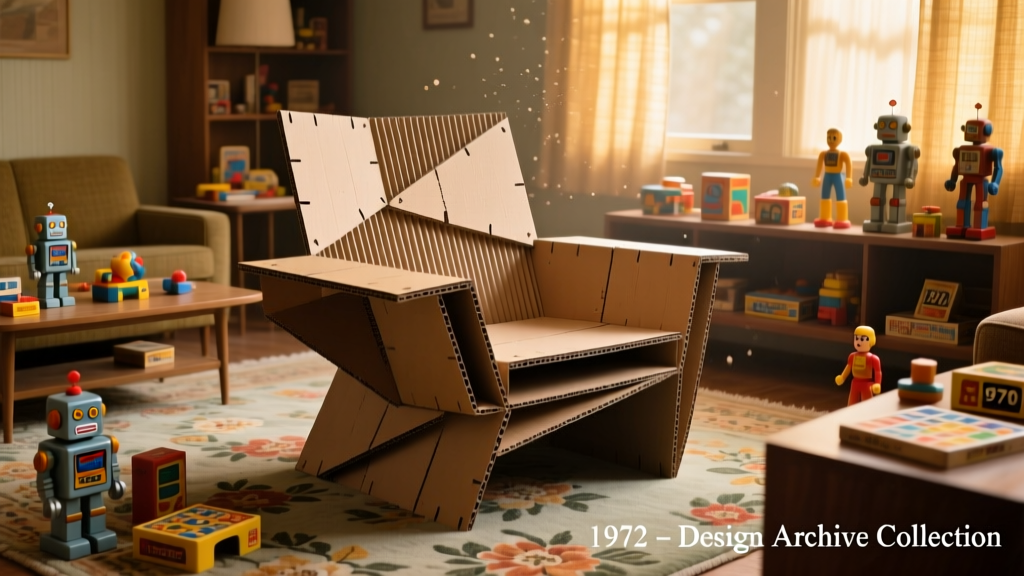
Frank Gehry’s 1972 Wiggle Chair: Anatomy of a Radical Cardboard Experiment

Roseville Candlestick Tuscany Gray 3½-Inch Pair: Identification, Value Drivers, and Collector Insights