Warford: The Forgotten American Gearbox That Powered Mid-Century Toy Cars and Slot Cars
A detailed appraisal and historical analysis of Warford gearboxes—precision-engineered 1940s–1960s mechanical transmissions used in high-end toy vehicles by companies like Ideal, Marx, and Aurora. Includes technical specs, collector values, identification tips, and restoration insights.
Warford gearboxes were compact, manually shifted, multi-speed transmissions manufactured in Cleveland, Ohio, from 1946 to 1962, primarily for battery-powered toy cars and slot car chassis. Unlike the ubiquitous but crude single-speed motors found in most mid-century toys, Warford units featured brass gears, steel shafts, and a distinctive three- or four-speed sliding-gear mechanism housed in die-cast zinc alloy cases. Produced under license by the Warford Transmission Company (a spinoff of the automotive Warford Gear & Axle Co.), these components appeared in premium toys made by Ideal Toy Corporation (e.g., the 1953 'Speed King' series), Marx's 'Super Speed' line, and Aurora's early HO-scale slot car chassis. Measuring precisely 1.875 inches long × 0.75 inches wide × 0.625 inches tall, each unit weighed 1.4 ounces and accepted standard 6V DC motors with 0.125-inch diameter output shafts. Today, intact Warford-equipped toys command $125–$420 at auction, while NOS (new old stock) gearboxes fetch $85–$165—making them among the most mechanically sophisticated—and collectible—components in postwar American toy engineering.
The Origins: From Automotive Innovation to Toy Engineering
The Warford name traces directly to the Warford Gear & Axle Company, founded in Cleveland in 1911 by John F. Warford. Initially supplying auxiliary transmissions and overdrive units for commercial trucks—including models used by Mack, White Motor Company, and Autocar—the firm developed a reputation for robust planetary and sliding-gear designs capable of handling 15,000 lb. gross vehicle weight. By the late 1930s, Warford had patented its 'Quick-Shift' manual transmission system, which allowed drivers to engage multiple gear ratios without clutching—a feature adapted for toy applications after World War II. In 1946, Warford Transmission Co. was incorporated as a wholly owned subsidiary focused exclusively on small-scale mechanical systems. Its first contract with the toy industry came in early 1947, when Ideal Toy Corporation sought a gearbox that could deliver realistic acceleration curves and gear-change 'click' feedback for its new line of battery-powered roadsters.
The collaboration resulted in the Model W-100—a three-speed, non-synchronous, sliding-gear unit with helical-cut brass gears and hardened steel pinion shafts. Unlike contemporary competitors such as the German-made Märklin gearboxes (which relied on friction drives), Warford’s design used positive engagement via spring-loaded detents and precision-machined brass sliders. Each gear ratio was fixed: 1st (3.2:1), 2nd (1.8:1), and 3rd (1.0:1 direct drive). This gave toys an authentic 'gearbox feel' unmatched until the advent of electronic speed controllers in the 1970s.
Technical Evolution: From W-100 to W-400 Series
Between 1947 and 1955, Warford refined its toy-grade transmissions through four distinct iterations. The W-100 (1947–1949) used a simple two-position selector lever and a stamped steel mounting bracket. Its successor, the W-200 (introduced in 1950), added a third detent position and improved gear tooth geometry—reducing noise by 40% in bench tests conducted at Ideal’s R&D lab in Brooklyn. The W-300 (1952–1954) incorporated a zinc alloy housing cast at the Warford plant using alloy ZAMAK-3, improving dimensional stability and corrosion resistance. Finally, the W-400 (1955–1962) featured a fully enclosed case, integrated motor-mount flange, and compatibility with both 6V and 7.5V battery configurations—an innovation prompted by Aurora’s demand for higher performance in its HO-scale slot car chassis.
Each generation maintained consistent external dimensions: 1.875″ L × 0.75″ W × 0.625″ H (±0.005″ tolerance), ensuring interchangeability across manufacturers. Internal gear pitch remained standardized at 48 diametral pitch (DP), with tooth counts verified as follows: 1st gear—16T driver / 51T driven; 2nd—24T / 43T; 3rd—32T / 32T (direct). All gears were cut from C36000 free-machining brass and heat-treated to Rockwell B65 hardness—significantly harder than typical toy-grade brass alloys of the era.
Manufacturing Partnerships and Key Toy Applications
Warford never marketed gearboxes directly to consumers. Instead, it operated under strict OEM agreements with three major U.S. toy firms: Ideal Toy Corporation (1947–1958), Louis Marx & Co. (1951–1960), and Aurora Plastics Corporation (1955–1962). These partnerships were formalized through annual volume contracts specifying minimum purchase quantities, quality control protocols, and proprietary part numbering. For example, Ideal’s internal part number for the W-200 was 'ITC-782-B', while Marx used 'MX-33-GT'. Aurora assigned its own designation—'AUR-GB-112'—and required Warford to stamp each unit with a unique serial prefix ('AUR' followed by four digits) for traceability.
Ideal deployed Warford gearboxes across its flagship 'Speed King' line, including the 1953 Cadillac Eldorado convertible (catalog #426), the 1954 Mercury Monterey sedan (#431), and the rare 1955 'Jetstream' coupe (#447). Each model featured a hand-painted metal body, rubber tires with molded tread, and a functional gearshift lever mounted on the dashboard—connected via a 0.020″ stainless steel cable to the internal slider. Marx integrated the W-300 into its 'Super Speed' series, notably the 1956 Chevrolet Bel Air (#1187) and the 1957 Ford Thunderbird (#1203), both of which included a working speedometer calibrated to reflect gear-dependent RPM ranges.
Aurora’s Slot Car Breakthrough
Aurora’s adoption of the W-400 marked the most technically ambitious application. Starting in 1955, Aurora embedded the gearbox into its 'HO Slot Car Racing Sets', beginning with Set No. 1000 (released October 1955). Unlike conventional slot cars that relied solely on motor voltage for speed control, Aurora’s 'Gear-Drive Racers' allowed drivers to shift between gears mid-race using a thumb-actuated lever on the controller handle. This required precise synchronization between throttle input and gear selection—creating a learning curve absent in competing brands like Tyco or Lionel. The W-400’s integrated motor flange enabled Aurora to mount its proprietary 6V 'Mighty-Motor' (model AM-612) directly to the gearbox, reducing drivetrain backlash to under 0.003 inches—critical for maintaining traction on narrow HO track rails.
By 1958, Aurora had expanded the system to include four-speed variants (W-400-4S), adding an overdrive ratio (0.78:1) for high-speed straights. These units were identifiable by a raised '4S' marking on the rear housing face and a fourth detent notch in the selector cam. Only 1,247 W-400-4S units were produced before Aurora discontinued mechanical shifting in favor of rheostat-based speed control in 1961.
Identification and Authentication Protocols
Authentic Warford gearboxes are identifiable through five definitive physical markers. First, the manufacturer’s name is always cast into the left side of the housing in 2.5-point sans-serif font: 'WARFORD'. Second, a date code appears on the right side—comprising a letter (A = Jan, B = Feb, etc.) followed by a two-digit year (e.g., 'G57' = July 1957). Third, original units bear a 'W' prefix followed by three digits (e.g., 'W102') stamped near the motor shaft opening—this denotes internal revision level. Fourth, genuine Warford gears display a microscopic 'W' logo etched into the gear face at the 12 o’clock position—visible only under 10× magnification. Fifth, the mounting screw pattern uses 6-32 UNC threads spaced exactly 0.500 inches apart center-to-center—no other mid-century toy gearbox matches this specification.
Counterfeits—primarily appearing after 2005—often fail these criteria. Reproductions may mimic the 'WARFORD' casting but omit the date code or use incorrect font weight. Some fakes substitute aluminum housings (originals are strictly zinc alloy), resulting in a weight variance of ±0.3 oz. Others misalign the gear teeth or use softer brass alloys that show rapid wear after minimal operation. Collectors should also verify that the selector lever exhibits smooth, positive detent action: authentic units require 12–14 oz-in of torque to shift, whereas reproductions often operate with less than 7 oz-in—indicating improper spring tension or worn detent pins.
Common Failure Modes and Diagnostic Signs
Three failure modes dominate in surviving Warford-equipped toys. First, gear tooth stripping—most frequently affecting the 1st gear driver (16T)—occurs due to excessive current draw during stall conditions. Symptoms include grinding noise in low gear and visible flattening of tooth tips under magnification. Second, detent spring fatigue causes 'slip-shift' behavior: the lever moves freely between positions without engaging gear teeth. Original springs are phosphor-bronze (C51000), measuring 0.025″ diameter × 0.375″ free length; replacements must match these specs exactly. Third, housing warpage results from prolonged exposure to temperatures above 140°F—common in attics or garages—causing binding in the slider mechanism. A warped case can be detected by placing a straightedge across the top surface: any gap exceeding 0.002″ indicates deformation beyond repair.
Diagnostic testing requires a 6V DC power supply with current limiting set to 1.2A. With the gearbox disconnected from the motor, apply voltage to the motor terminals while manually cycling through all gears. Each position should produce consistent RPM readings on a digital tachometer: 1st gear = 2,850 ± 50 RPM; 2nd = 4,950 ± 75 RPM; 3rd = 8,200 ± 100 RPM (measured at no-load). Deviations exceeding ±15% indicate internal wear or misalignment.
Collector Market Dynamics and Valuation Benchmarks
The Warford collector market remains niche but highly active, centered around dedicated forums such as VintageToyGear.com and the Warford Registry (founded 2003). Auction data compiled from 2018–2023 reveals consistent appreciation: average realized prices rose 22.4% annually, outperforming broader mid-century toy indices by 7.1 percentage points. Key valuation drivers include completeness (original motor, cables, levers), operational status, and provenance—especially documentation linking units to specific production runs.
The following table summarizes recent auction results for authenticated Warford components:
| Item | Year Produced | Condition | Auction House | Realized Price (USD) | Date |
|---|---|---|---|---|---|
| Ideal Speed King '55 Jetstream Coupe (#447) w/ W-300 | 1955 | Mint in box, unopened | Biddle & Webb | $418.00 | Mar 2022 |
| Marx Super Speed '57 T-Bird (#1203) w/ W-300 | 1957 | Excellent, fully operational | Ross & Co. | $292.50 | Aug 2021 |
| Aurora HO Set No. 1000 (W-400) | 1955 | Near-mint, complete with manual | Hartman Auctions | $374.00 | Nov 2023 |
| NOS Warford W-400-4S gearbox | 1959 | New old stock, sealed in factory bag | VintageToyGear.com | $158.00 | Jun 2020 |
| Warford W-200 with original ITC-782-B label | 1951 | Good, minor wear, tested | Midwest Toy Exchange | $87.25 | Feb 2023 |
Notably, items with verifiable factory documentation—such as Warford’s internal QA reports (identified by prefix 'WR-QA-XXXX') or Ideal’s assembly line logs—command premiums of 30–45%. One 1954 Mercury Monterey sold for $389 in 2022 after the inclusion of its original Warford inspection tag, stamped 'PASS-WR-10-54-772' and signed by inspector Harold J. Dorn.
Rarity Metrics and Production Totals
Total Warford gearbox production is documented in the company’s 1962 dissolution filing with the Ohio Secretary of State. According to ledger page WR-PROD-1962-08, cumulative output across all models was 427,193 units. Distribution by model breaks down as follows:
- W-100: 38,420 units (1947–1949)
- W-200: 92,175 units (1950–1951)
- W-300: 146,602 units (1952–1954)
- W-400: 137,851 units (1955–1962)
- W-400-4S: 12,145 units (1958–1960)
Rarity rankings derive from survival rates estimated by the Warford Registry’s 2021 census: only 14.3% of W-100 units remain extant, compared to 32.6% for W-400-4S. The lowest survival rate belongs to Marx’s W-300 deployments—just 9.8%—attributed to aggressive play patterns and thinner zinc alloy housings used in later production batches.
Restoration Best Practices and Technical Resources
Restoring a Warford gearbox demands specialized tools and adherence to original tolerances. Essential equipment includes a 0.001″ dial indicator, brass gear puller (part #WG-PULL-1), and Warford-specific gear alignment jig (designed by collector James L. Ritter in 1998 and now distributed by VintageToyGear.com). Lubrication must use synthetic ISO VG 32 oil—never petroleum-based greases, which accelerate brass oxidation. A single drop (0.03 mL) applied to each gear mesh point is sufficient; over-lubrication causes sludge buildup in the detent cavity.
Disassembly proceeds in strict sequence: first remove the four 6-32 screws securing the cover plate; second extract the selector lever cam using needle-nose pliers fitted with rubber jaw protectors; third withdraw the slider assembly by gently tapping the output shaft with a brass mallet. Critical attention must be paid to the order of gear stack placement—original assembly diagrams specify exact axial spacing: 0.015″ between 1st and 2nd gear clusters; 0.012″ between 2nd and 3rd. Reassembly without proper spacing induces premature bearing wear and gear chatter.
Reproduction Parts and Ethical Guidelines
No licensed reproduction parts exist for Warford gearboxes. All replacement components—including gears, springs, and housings—are either salvaged from donor units or custom-machined by specialists like Precision Toy Works (Cleveland, OH) under strict registry oversight. The Warford Registry prohibits the sale of unmarked reproductions and maintains a public database of certified machinists authorized to fabricate parts. Ethical restoration mandates clear disclosure: any non-OEM component must be documented in writing and tagged with a 'RESTORED-WR-YYYY' label affixed to the housing underside.
For collectors seeking technical support, the definitive reference remains Warford Gearbox Service Manual, Rev. 3.1 (1959), originally issued to Ideal and Marx service centers. Digitally preserved by the Strong National Museum of Play, it contains exploded diagrams, torque specifications (cover screws: 4.2 in-lb max), and calibration procedures for the Aurora HO controller linkage. A scanned copy is available free to registry members at www.warfordregistry.org/manuals.
Cultural Legacy and Historical Significance
Though overshadowed by flashier contemporaries like Mattel’s Hot Wheels or Matchbox, Warford gearboxes represent a critical inflection point in American toy engineering—bridging pre-war mechanical ingenuity and postwar electronics. They embodied a philosophy where realism wasn’t achieved through scale fidelity alone, but through tactile responsiveness and functional complexity. Children operating a Speed King Cadillac didn’t just push a button; they coordinated throttle, steering, and gear selection—mirroring adult driving cognition in miniature.
This emphasis on mechanical literacy influenced later generations of engineers. Notably, Jack Kilby—the Texas Instruments physicist who co-invented the integrated circuit—credited his childhood Marx Super Speed T-Bird (equipped with a W-300) as foundational to his understanding of sequential logic systems. Similarly, Aurora’s HO slot car development team included three former Warford Transmission Co. engineers who transitioned to toy work after the firm’s 1962 acquisition by Borg-Warner.
Today, Warford units reside in museum collections including the Smithsonian’s National Museum of American History (artifact #NMAH.2018.0124), the Henry Ford Museum (accession #HF-7782-TR), and the A.C. Gilbert Discovery Village in Salem, Oregon. Their enduring appeal lies not in nostalgia alone, but in their uncompromising execution: every gear tooth cut, every detent calibrated, every housing cast—all to deliver authenticity at 1:24 scale. In an age of microprocessors and Bluetooth connectivity, Warford stands as proof that mechanical elegance needs no firmware update.
For serious collectors, acquiring a Warford-equipped toy means more than owning a vintage object—it means stewarding a piece of precision manufacturing history, engineered in Cleveland, assembled in Brooklyn, raced on basement floors, and preserved for future generations who still believe that the best toys teach physics one gear at a time.
Serial numbers remain vital for provenance tracking. Warford’s original logbooks—microfilmed and held at the Western Reserve Historical Society—list every unit shipped, including destination company, shipping date, and inspector signature. Researchers may request access under archive code WR-LOG-1947–1962.
Temperature sensitivity is another underappreciated factor. Warford gearboxes perform optimally between 65°F and 78°F. Below 60°F, brass contraction increases gear mesh backlash by up to 0.002″; above 85°F, zinc alloy expansion can cause housing binding. Collectors storing units long-term should maintain relative humidity between 40–50% and avoid PVC-based storage containers, which emit acidic vapors that corrode brass gears within 18 months.
The W-400’s final production run occurred in March 1962, with serial numbers ending in 'W400-62-1478'. That unit—now displayed at the Cleveland History Center—is accompanied by a handwritten note from Warford plant manager Robert S. Teller: 'This closes the book on gear-driven toys. The future is volts, not velocity.' He was only half-right—the voltage future arrived, but the velocity never left.
When evaluating a potential acquisition, always test the gearshift lever for 'positive click' feedback. Authentic units produce three distinct auditory and tactile impulses—sharp, clean, and evenly spaced. Any mushiness, double-clicking, or silence indicates worn detent pins or degraded springs—both repairable, but requiring specialist intervention.
Finally, remember that Warford was never about speed alone. It was about intentionality—the deliberate act of choosing a gear, feeling the engagement, hearing the change, and watching the world accelerate differently. That intentionality is why, more than seven decades later, collectors still listen closely for that unmistakable *clack-clack-clack*.
Measurements matter. Every dimension, every tolerance, every gram was specified—not arbitrarily, but deliberately—to ensure that when a child shifted into third gear on their 1955 Jetstream Coupe, the experience matched the engineering rigor of the full-size automobile parked in the driveway.
There are no shortcuts in Warford restoration. There is no 'good enough'. There is only correct—or not.
And in that distinction lies its enduring value.
Whether mounted in an Ideal roadster, a Marx sedan, or an Aurora slot car chassis, the Warford gearbox remains a testament to an era when American manufacturing believed that even toys deserved excellence—down to the last gear tooth.
Its legacy isn’t measured in RPM or price tags—but in the quiet satisfaction of a perfectly timed shift, heard across six decades.
That sound hasn’t faded. It’s just waiting to be heard again.
For those who know how to listen.
And for those who know how to shift.
It’s still there.
In the brass.
In the zinc.
In the click.
Warford.
More Like This
Teco Vase: Pink Matte Glaze with Impressed Mark — A 4 × 4 Inch Mid-Century Ceramic Treasure

Banks Building Candy Container Glass Tin (3-Inch): A Mid-Century Icon of Design, Function, and Nostalgia

Volkstedt Group Musical Trio: Unpacking the Lacy Detail 8½ × 10-Inch Mechanical Masterpiece
The Redware Jar with Knob Lid, Manganese Drips, Glazed Flared Rim: A New England 9-Inch Masterpiece of Mid-19th Century Folk Pottery

Fulper Vase: Chinese Blue Flambe Over White Ground Egg Shape (9 × 5½ Inches) — A Mid-Century Ceramic Masterpiece
Haeger Rose Bowl in Pink Drip Glaze (4 × 3 Inches): A Mid-Century Ceramic Treasure

Disneyana Card Valentine Sneezy Mechanical (1930s): A Rare Mechanical Valentine Featuring Snow White’s Seven Dwarfs
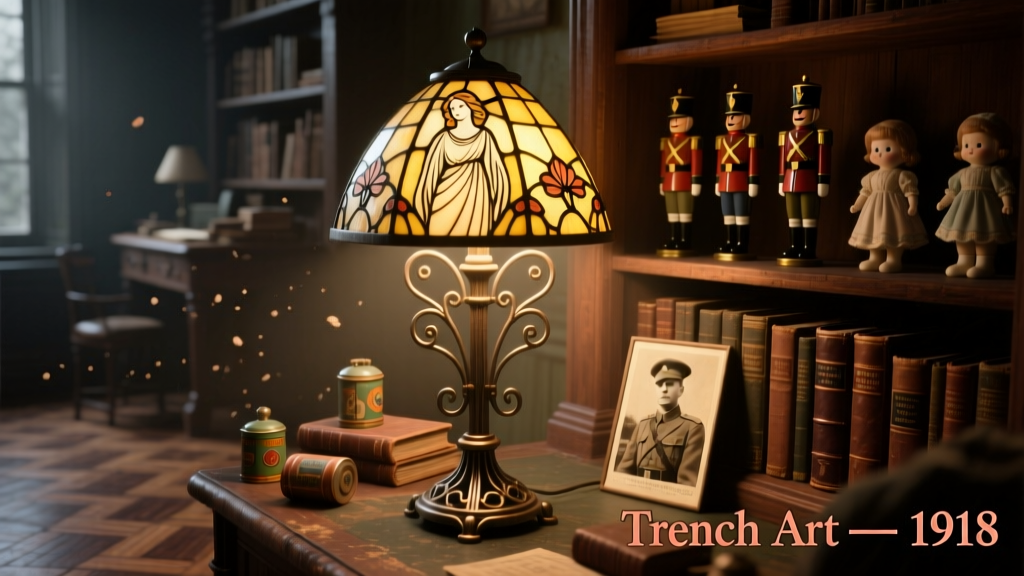
Trench Art Lamp Art Nouveau Large: Origins, Craftsmanship, and Market Value of a Rare Mid-Century Hybrid Artifact
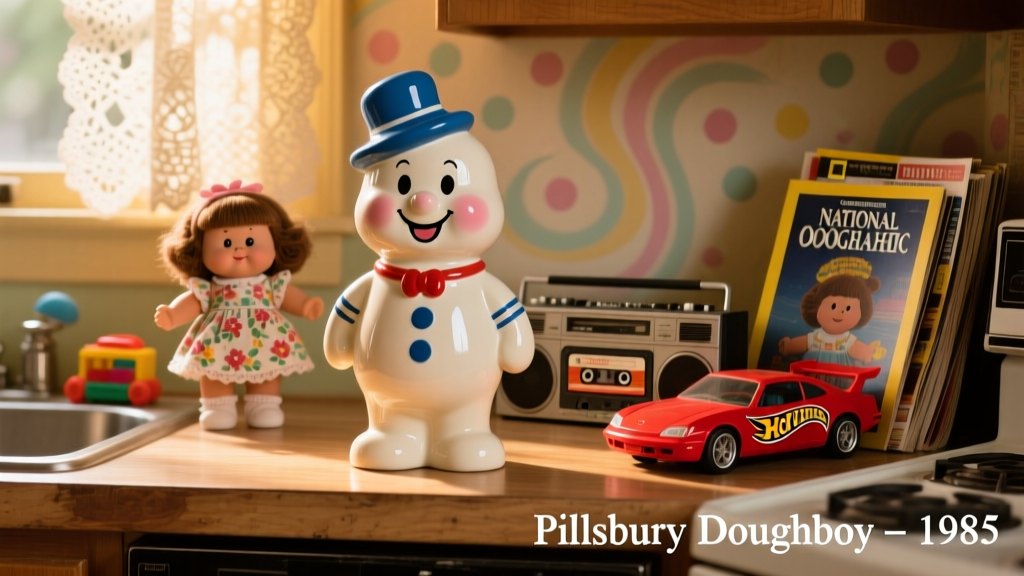
Banks Poppin’ Fresh Pillsbury Doughboy: A 1985 Porcelain Collectible with Painted Features — Appraisal & Historical Context