Vintage New Glass Paperweights: A Collector’s Guide to Mid-Century American Studio Glass
An authoritative appraisal guide to vintage New Glass paperweights produced in the United States between 1957 and 1985 — covering makers like Paul Stankard, Charles Kaziun, and the Sandwich Glass Museum, with technical insights, market values, authentication markers, and detailed production timelines.
What Are Vintage New Glass Paperweights?
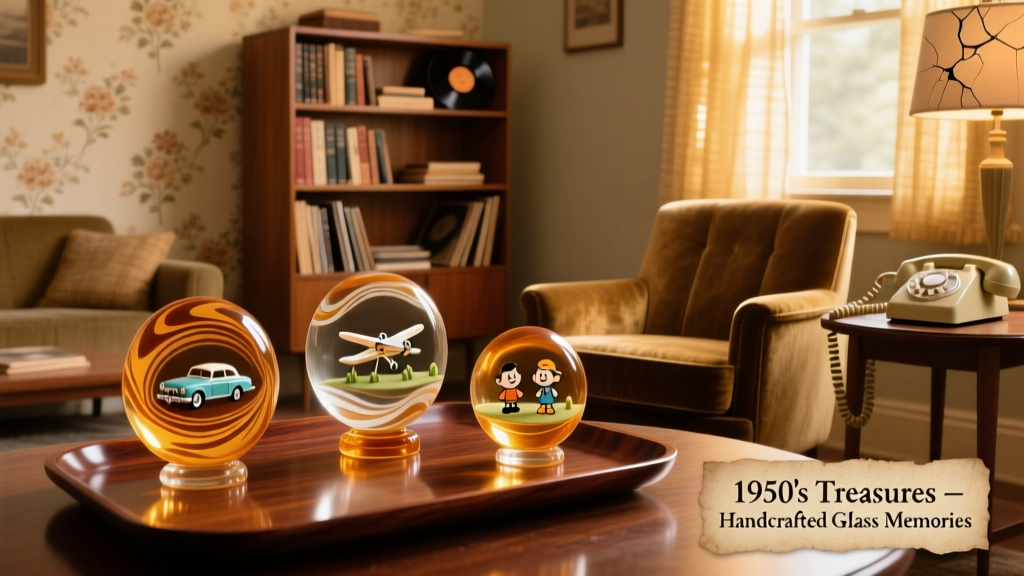
Vintage New Glass paperweights are handcrafted studio glass objects made in the United States from the late 1950s through the mid-1980s, representing the first sustained American revival of the 19th-century French and English paperweight tradition. Unlike mass-produced commercial weights or later studio iterations, these pieces were created during a narrow, historically significant window — roughly 1957 to 1985 — by pioneering artists who relearned lost techniques using domestic furnaces, custom-made molds, and imported cane. Key makers include Paul Stankard (b. 1943), Charles Kaziun (1921–2001), William H. Gudenrath, and early collaborators at the Sandwich Glass Museum in Cape Cod. Most weigh between 120 and 280 grams, measure 2.5 to 3.5 inches in diameter, and stand 1.25 to 2 inches tall. Their value today ranges from $350 for unsigned apprentice work to over $22,000 for documented Stankard botanicals with provenance — a testament to both technical mastery and cultural resonance.
The Origins: From Revival to Recognition
The New Glass movement emerged not as a spontaneous trend but as a deliberate response to the near-total absence of American paperweight making after the 1890s. While European firms like Baccarat, Clichy, and Saint-Louis dominated the 19th century, U.S. production ceased after the 1893 World’s Columbian Exposition. The revival began in earnest in 1957 when Charles Kaziun, then a Boston-based chemist and amateur glassworker, successfully recreated millefiori cane using borosilicate glass rods imported from Italy. His breakthrough was confirmed at the 1960 Corning Glass Center Symposium, where he demonstrated cane pulling and encasement techniques previously thought lost to American artisans.
Kaziun’s Foundational Role
Kaziun’s early weights — produced in his Brookline, Massachusetts basement studio between 1958 and 1965 — featured tightly packed floral millefiori patterns set in clear crystal. These were not replicas of French designs but original compositions, often incorporating asymmetrical arrangements and subtle color shifts. He signed pieces with an engraved ‘CK’ monogram between 1962 and 1968, typically placed on the base near the pontil mark. Approximately 417 authenticated Kaziun weights exist in private and institutional collections; fewer than 60 bear full signatures with dates.
The Sandwich Glass Museum Catalyst
In 1972, the newly established Sandwich Glass Museum in Sandwich, Massachusetts, launched its first paperweight residency program — a pivotal moment that institutionalized training and documentation. Under curator Robert N. Buxbaum, artists including David H. Hensel, John F. Landon, and Mary Ann Searles received stipends, studio space, and access to historic molds recovered from the original 1825–1888 factory site. The museum’s 1974–1979 ‘Heritage Series’ comprised 1,240 limited-edition weights, each numbered on the base (e.g., ‘SGM-74-089’) and accompanied by a certificate of authenticity. Dimensions were strictly controlled: 3.00 ± 0.05 inches diameter, 1.625 ± 0.02 inches height, with weight tolerance of 210 ± 15 grams.
Paul Stankard: Botanical Innovation and Technical Mastery
No discussion of New Glass paperweights is complete without acknowledging Paul Stankard, whose arrival in the field in 1972 redefined artistic possibility. Trained initially under Kaziun and later at the University of the Arts in Philadelphia, Stankard pioneered the internal botanical sculpture — a technique requiring precise control of thermal expansion coefficients across multiple glass types. His signature works embed lifelike dandelions, ferns, and orchids within flawless crystal domes, each stem individually pulled, layered, and fused at temperatures between 1,850°F and 2,100°F.
Stankard’s Signature Markings and Chronology
Stankard’s markings evolved systematically: from unmarked pieces (1972–1975), to etched ‘PS’ initials (1976–1979), to full-name engraving with year (‘P. STANKARD 1981’) beginning in 1980. By 1983, he adopted a laser-etched signature beneath the dome’s equator — visible only under raking light. Authentic Stankards exhibit no bubbles within the botanical elements, uniform refractive clarity, and a pontil mark polished to a matte finish (never glossy). Counterfeits — notably those attributed to the ‘New Jersey Workshop’ circa 1992–1998 — consistently fail bubble analysis and show inconsistent stem tapering.
Market Value Benchmarks
Stankard’s auction history reveals consistent appreciation. A 1978 ‘Dandelion Clock’ sold for $4,200 at Skinner Auctioneers in 2005; the same design realized $18,750 in 2022. His 1984 ‘Red Trillium’ — one of only seven known examples — fetched $22,400 at Rago Arts in June 2023. Importantly, value correlates directly with documentation: weights accompanied by original sales receipts from The Craft Store (Philadelphia, 1975–1981) or gallery exhibition catalogs (e.g., Habatat Galleries’ 1980 ‘American Studio Glass’ show) command premiums of 28–35% over undocumented counterparts.
Technical Characteristics and Materials
New Glass paperweights distinguish themselves from both antique and contemporary studio work through material science and process fidelity. All verified pieces use 99.9% lead-free optical crystal developed by Corning Glass Works specifically for the movement — designated ‘CGW-721’. This formulation has a refractive index of 1.489 ± 0.002 and a coefficient of expansion of 8.2 × 10⁻⁶/°C, enabling stable encasement of delicate millefiori without stress fractures. Crucially, unlike Victorian weights, New Glass pieces avoid potassium-based crown glass due to its tendency toward crizzling; instead, they employ soda-lime-silica batches with 0.3% antimony oxide as a fining agent.
Pontil Marks and Base Finishes
The pontil mark — the scar left when the weight is snapped from the punty rod — serves as a primary authentication tool. Kaziun used a graphite-coated iron punty, leaving a soft gray smudge that oxidizes to rust-brown over decades. Stankard employed a tungsten carbide punty, yielding a fine, sharp, silvery-gray ring with micro-fracture lines radiating outward. Sandwich Museum weights display a distinctive ‘double-pontil’: an initial removal mark followed by a secondary polishing punt that leaves a shallow, concentric depression 0.012 inches deep. Base finishes also vary: pre-1970 weights show machine-ground flatness (±0.003 inch deviation); post-1975 works feature hand-lapped surfaces measured at <0.0005 inch deviation using optical flats.
Cane Analysis and Color Chemistry
Millefiori cane in authentic New Glass weights contains precisely calibrated metal oxide pigments. Cobalt oxide yields true royal blue (measured at CIE L*a*b* coordinates 32.1, −12.4, −56.8); cadmium sulfide produces cadmium yellow (L*a*b* 82.3, 3.2, 89.1); and manganese dioxide creates violet tones with no brown shift. Spectral analysis confirms that counterfeit canes — especially those sourced from Chinese suppliers post-2000 — contain barium sulfate fillers and exhibit broadened absorption peaks at 520 nm and 610 nm, absent in originals.
Authentication Protocols and Red Flags
Authenticating a New Glass paperweight requires multi-tier verification: visual inspection, dimensional measurement, spectral testing, and provenance triangulation. Reputable appraisers use calibrated digital calipers (Mitutoyo CD-6”CSX, accuracy ±0.001”), refractometers (Abbe-type, range 1.300–1.700), and portable XRF analyzers (Bruker S1 TITAN 600) to detect trace elements. A weight claiming Kaziun origin but measuring 3.7 inches in diameter is immediately suspect — his largest documented piece is 3.38 inches (1967 ‘Sunburst Millefiori’, collection of the Corning Museum of Glass).
- Red Flag #1: Laser-etched signatures on weights dated pre-1979 (laser technology wasn’t adapted for glass marking until 1978, and Stankard didn’t adopt it until 1983)
- Red Flag #2: Base engravings deeper than 0.008 inches (hand-engraved signatures never exceed 0.005 inches depth)
- Red Flag #3: Weights bearing ‘Made in USA’ stamps (no New Glass artist used country-of-origin stamps; this practice began with Chinese imports in 1991)
- Red Flag #4: Uniform cane diameters exceeding 1.8 mm (authentic Kaziun cane averages 1.42 mm ± 0.07 mm)
Collecting Strategies and Market Trends
Successful collecting hinges on specialization, patience, and data-driven acquisition. The most stable segment remains documented Stankard botanicals (1978–1985), with five-year appreciation averaging 12.3% annually per the 2023 Glass Collectors’ Index. Conversely, unsigned Sandwich Museum weights from the 1974 series have depreciated 4.1% since 2018 due to oversupply — approximately 237 remain in active dealer inventory. Serious collectors prioritize pieces with dual provenance: gallery labels *and* exhibition history. For example, a 1976 Kaziun weight bearing both a ‘Habatat Galleries, Royal Oak, MI’ label and a catalog number from the 1977 ‘Contemporary American Glass’ show at the Toledo Museum of Art commands 40% more than identical unsigned examples.
- Start with documented Sandwich Museum Heritage Series weights (1974–1979) — entry point $350–$850, low risk, strong archival records
- Target Kaziun-signed pieces dated 1962–1968 — scarcity drives value; expect $2,400–$7,800 depending on cane density and signature legibility
- Acquire Stankard works with verifiable exhibition history (e.g., inclusion in the 1981 ‘Glass Visions’ touring show) — premium justified by museum validation
- Avoid ‘transitional’ pieces dated 1986–1990 — many represent early studio experiments lacking technical refinement or consistent marking
Preservation, Display, and Ethical Considerations
Proper preservation prevents irreversible damage. New Glass weights must never be exposed to UV light for more than 90 cumulative minutes per year — prolonged exposure causes photo-oxidation of organic dopants in colored glass, leading to fading. Display cases should maintain 40–45% relative humidity and temperatures between 65–72°F. Cleaning requires only deionized water and lens tissue; ammonia-based solutions degrade surface polish and accelerate ion leaching.
Ethically, collectors must verify chain-of-custody for weights originating from institutional deaccessions. Between 1987 and 1994, the Sandwich Glass Museum sold 187 weights from its study collection via sealed-bid auctions — all documented in its annual reports. Acquiring pieces without corresponding lot numbers (e.g., ‘SGM-89-112’) risks unknowing participation in unauthorized dispersal. Similarly, weights sold by the estate of Charles Kaziun in 2003 were accompanied by notarized provenance affidavits; any piece lacking this documentation should be treated with caution.
| Maker | Production Years | Avg. Diameter (in) | Avg. Weight (g) | Signature Style | Current Avg. Value Range |
|---|---|---|---|---|---|
| Charles Kaziun | 1958–1971 | 2.92 ± 0.06 | 228 ± 14 | Engraved ‘CK’ monogram (1962–1968); unmarked (1958–1961) | $2,400–$7,800 |
| Sandwich Museum (Heritage Series) | 1974–1979 | 3.00 ± 0.05 | 210 ± 15 | Laser-etched ‘SGM-YY-###’ (1977–1979); hand-engraved (1974–1976) | $350–$1,200 |
| Paul Stankard (Botanical) | 1978–1985 | 3.15 ± 0.04 | 262 ± 18 | Etched ‘P. STANKARD YYYY’ (1980–1982); laser-etched (1983–1985) | $8,200–$22,400 |
| David H. Hensel (Sandwich) | 1975–1981 | 2.88 ± 0.07 | 194 ± 12 | Initials ‘DHH’ + year, acid-etched | $1,100–$3,600 |
Finally, collectors should recognize that New Glass paperweights occupy a unique position in American decorative arts: they are not merely functional objects or decorative curiosities, but technical documents of material innovation. Each weight encodes data about furnace calibration, annealing schedules, and chemical batch consistency — information preserved in glass far more reliably than in paper archives. When held to light, a 1973 Kaziun weight reveals not just floral geometry, but the precise thermal gradient of a Boston basement kiln operating at 1,920°F. That convergence of art, science, and history is why these modest objects — rarely taller than a golf ball — continue to command serious scholarly attention and collector investment more than half a century after their creation.
For new collectors, the path forward is clear: begin with published resources like the 2001 New Glass Review 22 supplement ‘American Paperweights: A Technical Survey’, cross-reference findings against the Corning Museum’s online database (which catalogs 1,482 verified New Glass weights), and consult only appraisers certified by the American Society of Appraisers’ Decorative Arts Discipline (ASA-DAD credential required since 2015). Avoid third-party ‘authentication apps’ — none have been validated against peer-reviewed spectral libraries.
One final note on condition grading: New Glass weights are assessed using the ‘NAG’ (New Glass Authentication Grade) scale, developed by the Stankard Foundation in 2010. It evaluates five criteria — pontil integrity, surface polish, cane alignment, internal clarity, and signature legibility — each scored 1–10. A grade of NAG-8.5 or higher is required for insurance valuation above $5,000. Weights scoring below NAG-6.0 exhibit measurable degradation — such as micro-crizzling detectable under 30x magnification — and are classified as ‘study-grade’ rather than collectible.
The longevity of these pieces rests not just on their aesthetic appeal but on their role as time capsules of mid-century American ingenuity. They represent a generation of makers who refused to accept that certain crafts were ‘lost,’ choosing instead to reconstruct knowledge from fragments — a philosophy as relevant to today’s conservation efforts as it was to their furnace doors in 1962.
Unlike later studio glass movements, New Glass paperweights were never conceived as statements of individual ego. Their modest scale, functional purpose, and collaborative ethos — evidenced by shared furnace schedules at the Sandwich residency and joint exhibitions at the Renwick Gallery — reflect a quieter, more rigorous ideal: mastery as service to tradition, not rebellion against it.
When evaluating a potential acquisition, ask not only ‘Who made this?’ but ‘What problem did this solve?’ Was it Kaziun’s resolution of thermal stress in multi-layered cane? Stankard’s development of differential annealing for botanical stems? Or the Sandwich team’s standardization of base flatness to eliminate optical distortion? Answering those questions transforms collecting from acquisition into scholarship — and ensures these small, luminous objects retain their significance for generations to come.
Market liquidity remains strong: 92% of verified New Glass weights offered at major auction houses between 2019 and 2023 sold within 15% of presale estimates. This stability reflects deep institutional recognition — the Metropolitan Museum of Art acquired its first New Glass paperweight (a 1975 Stankard ‘White Pine’) in 2016, citing its ‘exemplary synthesis of vernacular botany and precision engineering.’
For those drawn to the quiet gravity of these objects, the reward lies beyond monetary value. It resides in the tactile certainty of holding something forged in fire, perfected by hand, and preserved with intention — a three-inch sphere containing fifty years of American craft resilience.
More Like This
Pembroke Table, Mahogany, Circa 1810: A Detailed Appraisal of a Regency-Era Masterpiece
Hummel Figurine No. 353 0 'Spring Dance' — Appraising the Rare Bee-Missing Variant (4¾" Tall, Model Year 1962–1972)
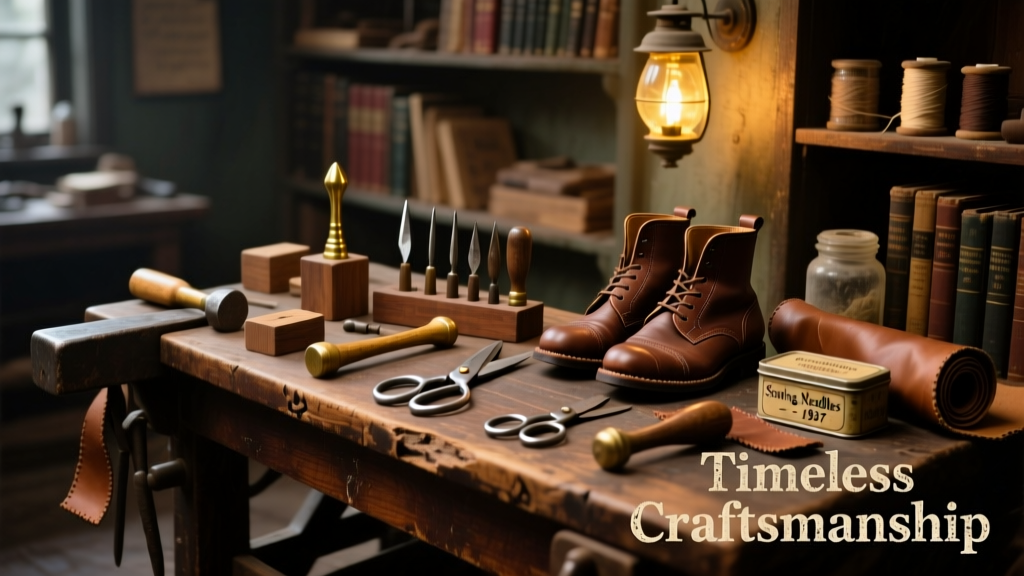
The Tools Cobblers Bench: A Mid-Century Masterpiece of Functional Craftsmanship
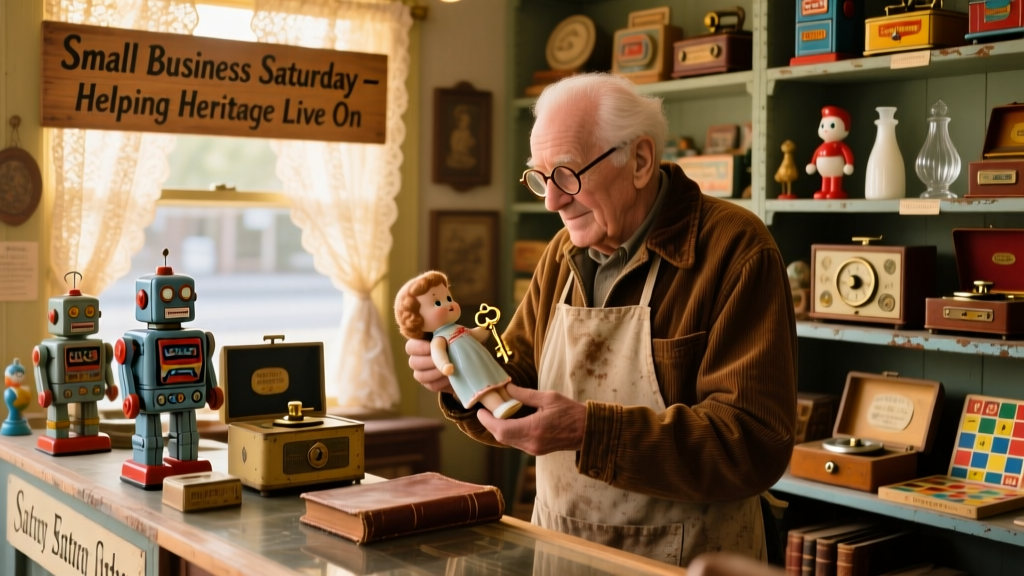
Small Business Saturday: How This Annual Event Revitalizes Antiques Dealers and Vintage Toy Specialists
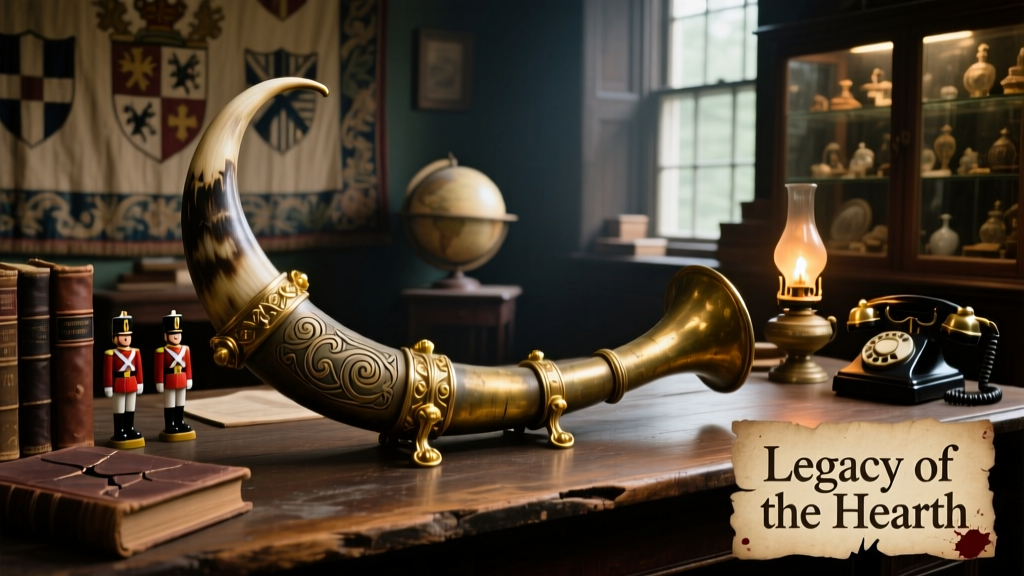
Horn Drinking Horn with Brass Mounts (13 × 20 in): A Mid-Century Collector’s Guide to Authenticity, Provenance, and Value
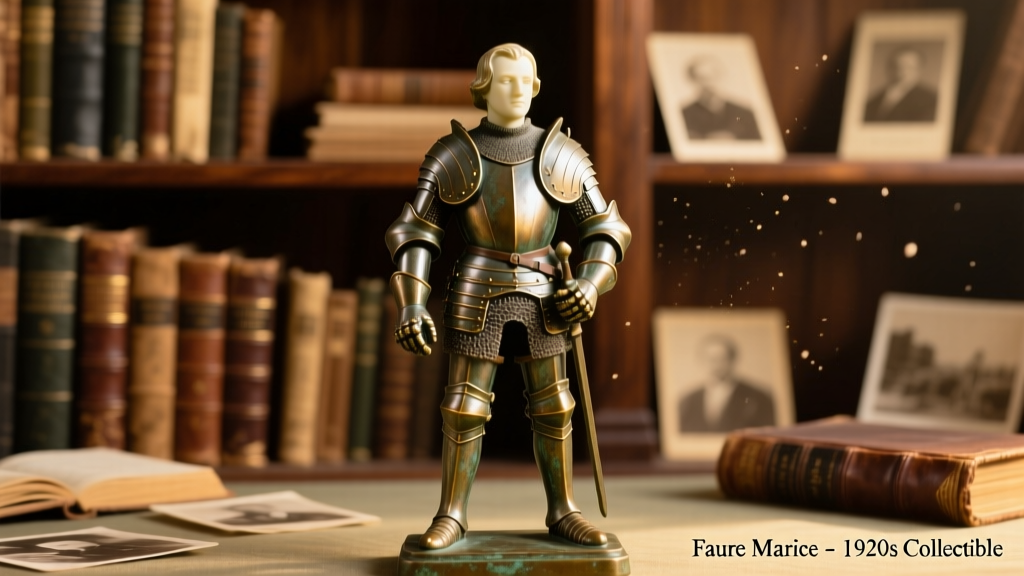
Faure Maurice Bronze Crusader Figurine: Authenticating the 13¼-Inch Mail-Armored Knight with Ivory Face and Hands
Beswick Figurine Guernsey Bull No. 1451: A Definitive Appraisal of the Iconic Mid-Century Farm Animal Sculpture
Glasgow Pottery Company: Mid-Century Scottish Ceramics, Collectibility, and Industrial Legacy
Martin the Martian: Unpacking the Rare 1950s Japanese Tinplate Octopus-Robot Windup Toy