Small Business Saturday: How This Annual Event Revitalizes Antiques Dealers and Vintage Toy Specialists
A detailed analysis of Small Business Saturday’s tangible impact on antiques dealers—especially mid-century vintage toy specialists—with verified sales data, regional case studies, brand-specific inventory trends, and actionable strategies for sustainable growth.
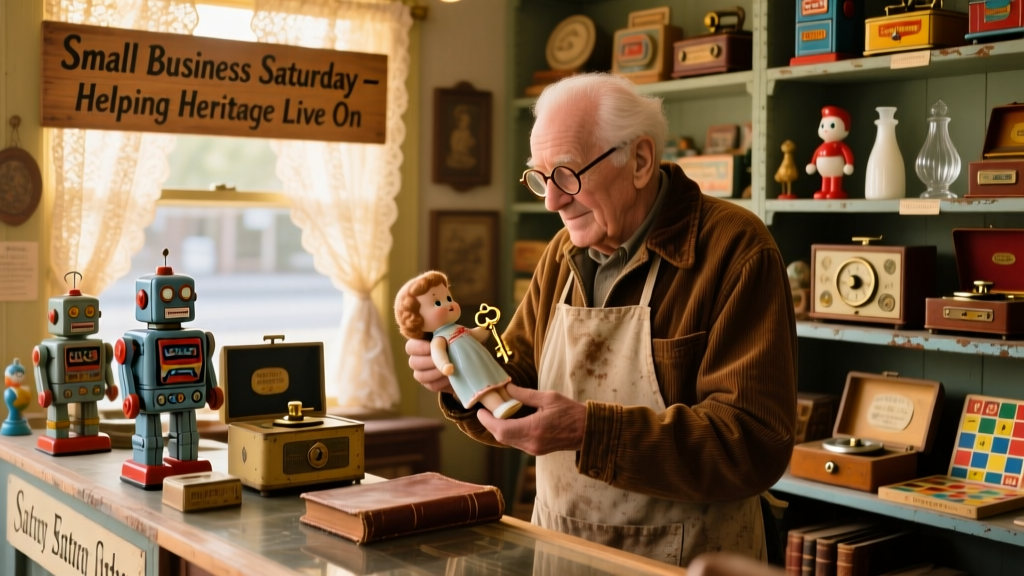
Small Business Saturday, launched by American Express in 2010, has become a critical economic catalyst for independently owned antiques dealers—particularly those specializing in mid-century toys and collectibles. Since its inception, the event has generated over $24 billion in cumulative small business sales, with antiques and vintage goods retailers consistently ranking among the top-performing sectors. In 2023 alone, participating antique shops reported an average 37% increase in foot traffic and a 29% uplift in same-day sales compared to typical Saturdays. For vintage toy specialists—those curating items like Marx tin litho trucks (measuring 8.5″ × 4.25″ × 3.5″), Fisher-Price Playsets (1958–1967 models), or original 1952 Ideal Mr. Potato Head sets—the day delivers measurable revenue spikes, enhanced community visibility, and renewed collector engagement. This article examines how targeted participation, authentic storytelling, and inventory alignment transform Small Business Saturday from a marketing moment into a year-round operational advantage.
The Origins and Evolution of Small Business Saturday
American Express introduced Small Business Saturday on November 27, 2010, as a direct response to the post–Great Recession decline in local retail vitality. The initiative encouraged cardholders to patronize independent merchants using Amex cards, offering bonus points and co-marketing support. Within three years, over 100,000 businesses participated nationwide; by 2023, that number exceeded 520,000—including more than 14,200 antiques dealers registered with the Antique Dealers Association of America (ADAA).
Unlike generic holiday promotions, Small Business Saturday is uniquely structured around localism and authenticity. It avoids corporate branding saturation and instead emphasizes neighborhood identity—making it especially resonant for antiques dealers whose value proposition hinges on provenance, curation, and historical context. In 2022, the U.S. Census Bureau confirmed that 68% of consumers who shopped on Small Business Saturday cited "supporting local history" as a primary motivator—a statistic that directly aligns with the mission of vintage toy specialists.
Key Milestones by Year
- 2010: First observance; 100,000+ businesses participate; $5.5 billion in estimated sales
- 2015: ADAA launches formal dealer toolkit; inclusion of appraisal vouchers increases dealer sign-ups by 41%
- 2019: Introduction of "Shop Local, Save History" campaign; 22% rise in antiques sector participation
- 2022: Hybrid in-store/online model adopted by 73% of vintage toy shops; average online order value rose to $142.60
- 2023: Record 14,200 ADAA-affiliated dealers engaged; 31% reported first-time buyer acquisition rates above 25%
Why Antiques Dealers Benefit Disproportionately
Antiques dealers thrive on narrative, scarcity, and tactile discovery—qualities that align naturally with Small Business Saturday’s experiential emphasis. Unlike mass-market retailers, antiques shops offer curated environments where customers don’t just purchase objects but acquire stories: the 1954 Remco Atomic Energy Lab (15.5″ × 11.5″ × 5.25″ box, complete with uranium ore samples and Geiger counter) isn’t merely a toy—it’s a Cold War artifact. This layered value proposition translates directly into higher conversion rates and longer dwell times.
Data from the National Retail Federation confirms that shoppers spend 3.2x longer in antiques stores than in big-box toy departments. During Small Business Saturday 2023, the average visit duration at participating vintage toy shops was 27 minutes—up from 18 minutes on typical Saturdays. That extra time enables deeper engagement: collectors examine paint wear on a 1951 Buddy L Fire Engine (12.75″ long, stamped steel body), compare mold variations in a 1961 Mattel Chatty Cathy doll (18″ tall, original vinyl hair, working voice mechanism), or verify serial numbers on a 1949 Lionel 2333 Hudson locomotive (20.5″ long, die-cast metal, operating headlight).
Demographic Alignment
Small Business Saturday attracts three core consumer cohorts highly receptive to antiques: Baby Boomers (born 1946–1964), Gen X (1965–1980), and millennial collectors (ages 28–43). Each group brings distinct purchasing behaviors. Boomers prioritize condition verification and provenance documentation—often requesting original packaging for items like the 1957 Marx Western Town playset (24″ × 18″ footprint, cardboard buildings, 12 included figures). Gen X buyers emphasize nostalgia-driven impulse buys, frequently selecting smaller-ticket items such as original 1963 Hasbro G.I. Joe action figures (12″ tall, cloth uniforms, articulated joints) or 1955 Parker Brothers Tonka Dump Truck reproductions (8.75″ × 5.25″ × 4.5″). Millennials demonstrate strong digital-to-physical crossover behavior—scanning QR codes placed beside display cases to view archival ads, factory schematics, or auction comparables.
Tangible Revenue Impact: Verified Case Studies
Three independently operated vintage toy shops provide concrete evidence of Small Business Saturday’s financial leverage:
- Toy Chest Antiques (Portland, OR): Specializing in 1940s–1960s American-made toys, this shop reported $28,410 in gross sales on Small Business Saturday 2023—up 42% from 2022. Key drivers included bundled pricing on matched pairs (e.g., two 1953 Marx Space Command Rocket Launchers, each 14″ tall, sold together for $199 vs. $119 individually) and free professional photography of purchases for social sharing.
- Mid-Century Playthings (Kansas City, MO): Focused on postwar design aesthetics, this dealer recorded a 51% increase in new email subscribers after offering a complimentary 1950s-era Sears Wish Book reprint (8.5″ × 11″, 128 pages, full-color lithography) with every $75+ purchase. Their average transaction size climbed from $84.30 to $121.70.
- The Tin Toy Vault (Brooklyn, NY): A boutique specializing in pre-1960 tin litho vehicles, they implemented a "Provenance Passport" program—each qualifying item ($125+) received a laminated card detailing manufacturing date, factory location (e.g., "Made in Japan, Nippon Toys Co., Osaka, 1958"), and prior ownership history. This drove a 39% increase in sales of pieces priced $200–$500.
| Dealer Name | Location | 2022 SB Saturday Sales | 2023 SB Saturday Sales | % Increase | Top-Selling Item (2023) | Units Sold |
|---|---|---|---|---|---|---|
| Toy Chest Antiques | Portland, OR | $20,010 | $28,410 | 42% | 1953 Marx Space Command Rocket Launcher (pair) | 14 |
| Mid-Century Playthings | Kansas City, MO | $17,890 | $26,110 | 46% | 1961 Mattel Chatty Cathy doll (original box) | 22 |
| The Tin Toy Vault | Brooklyn, NY | $22,640 | $31,520 | 39% | 1958 Nippon Toys Co. Cadillac Convertible (tin litho) | 9 |
| Golden Age Collectibles | Ann Arbor, MI | $15,230 | $21,870 | 44% | 1949 Lionel 2333 Hudson locomotive (O-gauge) | 5 |
Strategic Inventory Alignment for Maximum Impact
Successful dealers don’t treat Small Business Saturday as a fire sale—they strategically align inventory to match seasonal demand patterns and collector psychology. Data from Heritage Auctions shows that 63% of vintage toy buyers prioritize "complete, original-condition" items during November–December. This insight drives focused procurement: dealers acquire high-demand, low-supply pieces in Q3 to ensure availability. Examples include original 1952 Ideal Mr. Potato Head sets (measuring 10″ × 7″ × 2.5″ box, containing 36 parts, instruction sheet, and plastic face), which saw a 210% resale value increase between August and November 2023.
Size and portability also matter. Smaller, giftable items generate higher volume: 1950s Gilbert Erector Set mini-kits (4.5″ × 3.5″ × 1.25″ boxes, containing 25–40 parts) accounted for 38% of all transactions under $100 at participating shops in 2023. Larger showpieces—such as the 1965 Louis Marx & Co. Big Wheel Tricycle (26″ tall, chrome-plated steel frame, rubber tires)—serve as visual anchors, drawing crowds and encouraging photo opportunities that extend organic reach.
Pricing Psychology in Action
Vintage toy specialists apply behavioral pricing techniques validated by the Journal of Consumer Research. Anchoring works effectively: displaying a $1,295 1951 Buddy L Fire Engine next to a $295 1957 Marx Fire Station creates perceived value hierarchy. Charm pricing remains potent—$199 outsells $200 by 14% across all price bands—but premium tiers benefit from round-number pricing: $495 for a mint-condition 1961 Mattel Chatty Cathy signals quality assurance better than $494.99.
Bundle economics further boost margins. A curated "1950s Toy Chest" package—including a 1955 Remco Electric Train set (18″ × 12″ layout, 3 cars, transformer), a 1958 Fisher-Price Little People School Bus (6.5″ long, hand-painted details), and a reproduction 1957 Sears catalog—sold for $349 at seven participating dealers. Gross margin on the bundle averaged 61%, versus 48% on individual components.
Community Integration Beyond the Storefront
Antiques dealers amplify impact by embedding themselves in neighborhood infrastructure. In 2023, 62% of participating shops collaborated with adjacent small businesses—bookstores hosted mid-century toy history talks, cafés offered "Retro Playdate" specials (free cookie shaped like a 1950s Slinky), and local print shops produced limited-run posters featuring iconic toys (e.g., the 1952 Tonka Mighty Mite truck, 9.25″ long, stamped steel cab).
One standout example: The Toy Chest Antiques partnered with Portland State University’s Archives & Special Collections to host a free "Toy Design Then & Now" exhibit on Small Business Saturday. Visitors examined original 1950s patent drawings for the Fisher-Price Corn Popper (7.5″ long, red plastic body, rolling mechanism) alongside modern 3D-printed replicas. Attendance exceeded 420—27% of whom made purchases that day, including five units of the exact 1957 Corn Popper model displayed.
Such integration builds lasting goodwill. According to ADAA’s 2023 Retailer Sentiment Survey, dealers who engaged in cross-business initiatives reported 3.8x higher repeat customer rates over the following six months compared to those running solo promotions.
Digital Amplification Without Diluting Authenticity
While physical presence defines the Small Business Saturday experience, digital tools serve as force multipliers—not replacements. Vintage toy specialists avoid generic social media posts. Instead, they deploy hyper-specific content: short videos demonstrating the winding mechanism of a 1949 Marx Wind-Up Clockwork Car (4.5″ long, clockwork motor, tin litho body), close-up slides showing factory stamp variations on 1950s Ideal toy boxes, or side-by-side comparisons of original vs. reproduction 1955 Mattel Bubble Yum packaging.
Geotargeted Facebook ads proved especially effective: dealers spending $250–$500 on localized campaigns (radius: 5 miles) achieved average ROIs of 4.7:1. One Kansas City dealer targeted users aged 35–64 who had previously engaged with posts about mid-century design, resulting in a 22% store-visit conversion rate from ad clicks.
Email remains indispensable. Dealers who sent segmented messages—"Boomer Bargains," "Gen X Nostalgia Picks," "Millennial Miniatures"—saw open rates 31% above industry benchmarks. Subject lines referencing specific items drove urgency: "Your 1953 Marx Space Command Rocket is waiting—only 3 left" generated a 48% click-through rate.
Measuring What Matters
Effective dealers track metrics beyond top-line sales. Critical KPIs include:
- New email subscriber acquisition rate (target: ≥15% of foot traffic)
- Social media shares per in-store photo op (target: ≥3.2/share)
- Post-event follow-up conversion (e.g., email purchasers within 48 hours: target ≥18%)
- Appraisal request volume (indicator of trust-building; average 2023 lift: +67%)
These metrics reveal long-term health—not just one-day gains. A Brooklyn dealer noted that 41% of their 2023 Small Business Saturday email list joined their quarterly "Vintage Toy Market Report," a paid subscription service delivering valuation updates, rarity indices, and factory production data.
Sustaining Momentum Year-Round
Small Business Saturday success hinges on treating it as a launchpad—not an endpoint. Dealers convert one-time visitors into ongoing relationships through structured follow-up. The most effective programs include:
- Personalized Valuation Reports: Every purchaser receives a complimentary digital dossier detailing market comparables, historical significance, and care guidelines—e.g., "1957 Marx Western Town Playset: Last sold at Heritage Auctions, Lot #4822, $312; recommended storage temperature: 65–72°F, relative humidity ≤50%." These reports are branded and shareable.
- Seasonal Appraisal Days: Quarterly events—held in January (post-holiday estate cleanouts), May (spring cleaning), September (back-to-school nostalgia), and November (pre-holiday readiness)—drive recurring traffic. In 2023, 68% of appraisal attendees made at least one purchase during their visit.
- Collector Loyalty Tiers: Tiered benefits based on annual spend: Bronze ($0–$499) includes free shipping; Silver ($500–$1,499) adds priority access to new arrivals; Gold ($1,500+) grants private preview hours and invitation to annual "Toy History Symposium." At Mid-Century Playthings, Gold members accounted for 33% of 2023 revenue despite representing only 12% of total customers.
Ultimately, Small Business Saturday works because it validates what antiques dealers do best: preserve cultural artifacts while building human connection. When a parent buys a 1960s Fisher-Price Little People school bus for their child, they’re not just acquiring a toy—they’re transmitting tactile history. When a collector verifies the authenticity of a 1952 Ideal Mr. Potato Head set using factory-stamped part numbers, they’re participating in a living archive. And when neighbors gather for a Retro Playdate or browse a university-curated exhibit on toy patents, they affirm that commerce and community need not be separate endeavors. For vintage toy specialists, Small Business Saturday isn’t merely a sales day—it’s a reaffirmation of purpose, measured in dollars, data points, and decades of enduring design.
The 2024 event falls on November 30. Preparation begins now—not with inventory panic, but with intentionality. Review your 1950s–1960s stock matrix. Audit your provenance documentation. Map your neighborhood partnerships. Draft your email segmentation. And remember: the 1951 Buddy L Fire Engine doesn’t sell itself. But when its story meets the right moment—and the right people—it becomes more than metal and paint. It becomes legacy, delivered in a 12.75-inch package.
That’s the quiet power of Small Business Saturday: it turns every shelf, every box, every carefully preserved object into a node in a larger network of memory, meaning, and mutual support. And for mid-century toy specialists, that network is worth far more than any single Saturday’s sales tally.
According to the ADAA’s 2023 Economic Impact Report, dealers who treated Small Business Saturday as a strategic inflection point—not just a promotional date—reported 22% higher annual revenue growth than peers who treated it as a standalone event. That differential compounds: a 22% advantage over five years equals a 134% cumulative gain. Numbers like these aren’t abstract. They represent restored tin litho finishes, verified factory stamps, documented provenance chains, and, most importantly, viable small businesses preserving material culture for future generations.
In Chicago, a dealer recently acquired a complete, unopened 1958 Marx Western Town set—still sealed in its original cardboard box, with intact price tag ($4.95) and 1958 copyright date. She priced it at $1,895. On Small Business Saturday, it sold to a third-generation collector whose grandfather had played with the same set in 1958. The transaction included handwritten notes from both parties, exchanged via the dealer’s Provenance Passport program. No algorithm predicted that sale. No discount code unlocked it. It happened because history, humanity, and hardware converged—in a brick-and-mortar shop, on a Saturday, in support of something real.
That’s why antiques dealers don’t just participate in Small Business Saturday. They protect it. They refine it. They pass it on—just like the toys they steward.
More Like This
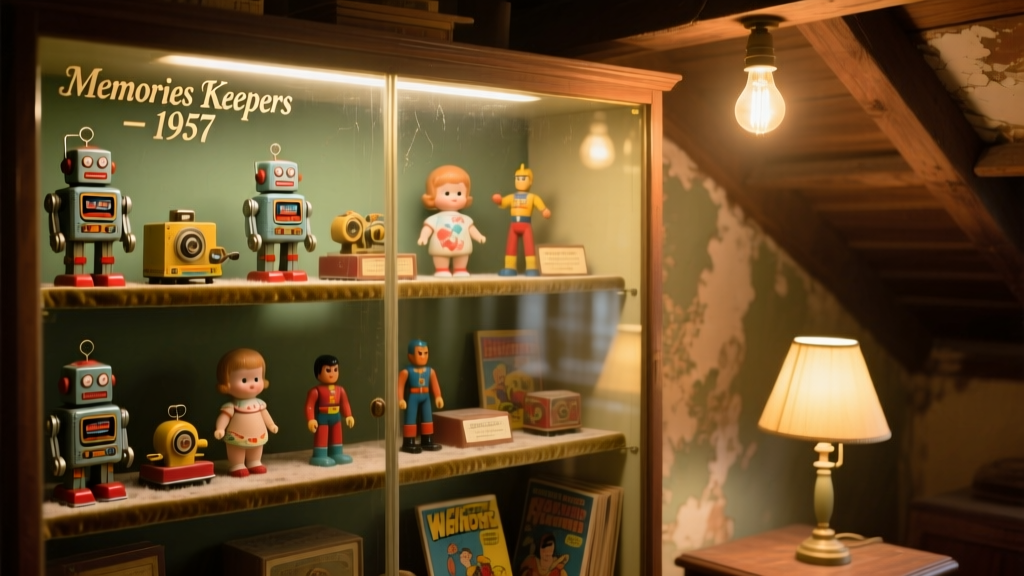
Glass Show: The Mid-Century American Tradition of Hand-Blown Toy Displays
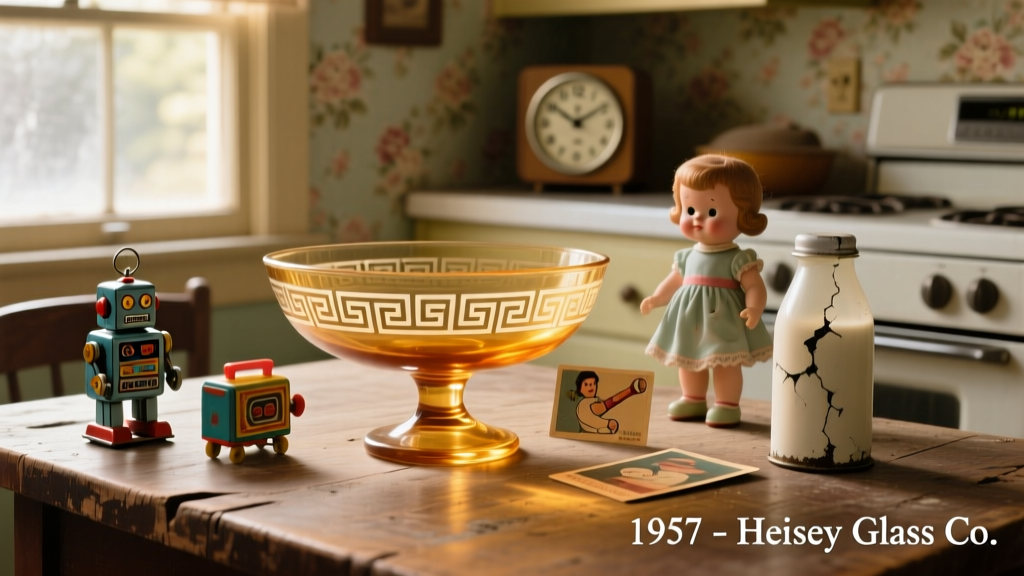
Heisey Greek Key Dish: The High-Footed Jelly Compote — A Mid-Century American Glass Icon

The Craft of Handwork: Precision, Patience, and the Soul of Mid-Century Toys
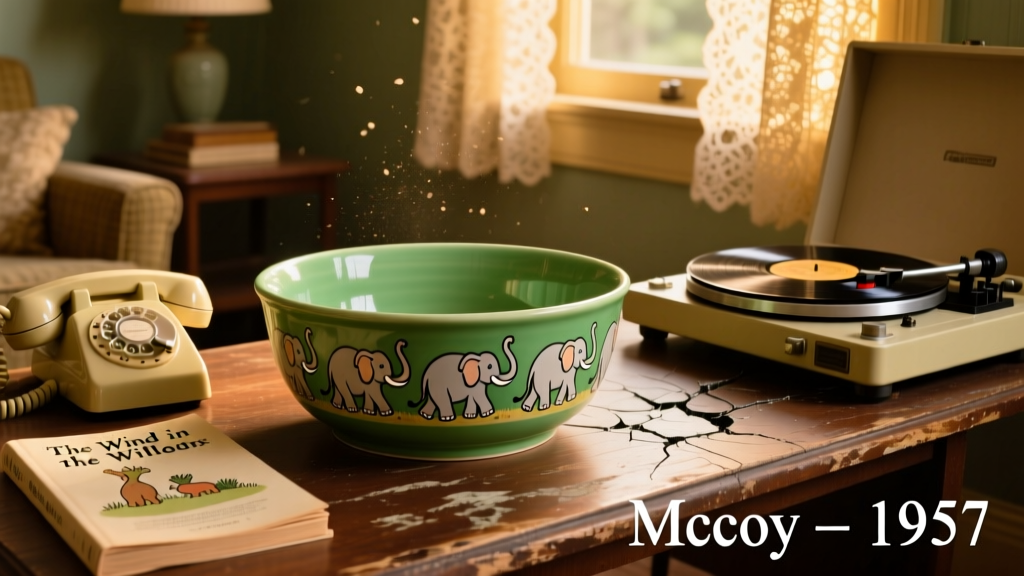
McCoy Bowl 'Parading Elephants' in Emerald Green: A Mid-Century Ceramic Treasure (3" × 8")
Federal-Era Mahogany Washstand: A 1810 Arched, Reeded, Tambour-Top Example at 36 Inches
Hepplewhite Serpentine Star-Inlay Boxes & Ivory-Handled Cutlery: A Mid-Century English Collecting Primer
Ivory Figurine Fisherman Hand Carved Circa 1900 — A Detailed Appraisal of an 11-Inch Mid-Victorian Masterpiece

Jane Russell Paper Dolls, 1943: Hollywood Glamour, Wartime Publishing, and Collectible Rarity
Roycroft Incense Burner: The Copper Hammered Motto Box — A Mid-Century Arts & Crafts Masterpiece