Toy Soldiers: A Mid-Century Collector’s Guide to Authenticity, Value, and Historical Context
An authoritative appraisal guide for vintage toy soldiers from 1930–1975—covering composition, manufacturers like Britains, Timpo, and Heyde, identification markers, condition grading, market values, and preservation best practices.
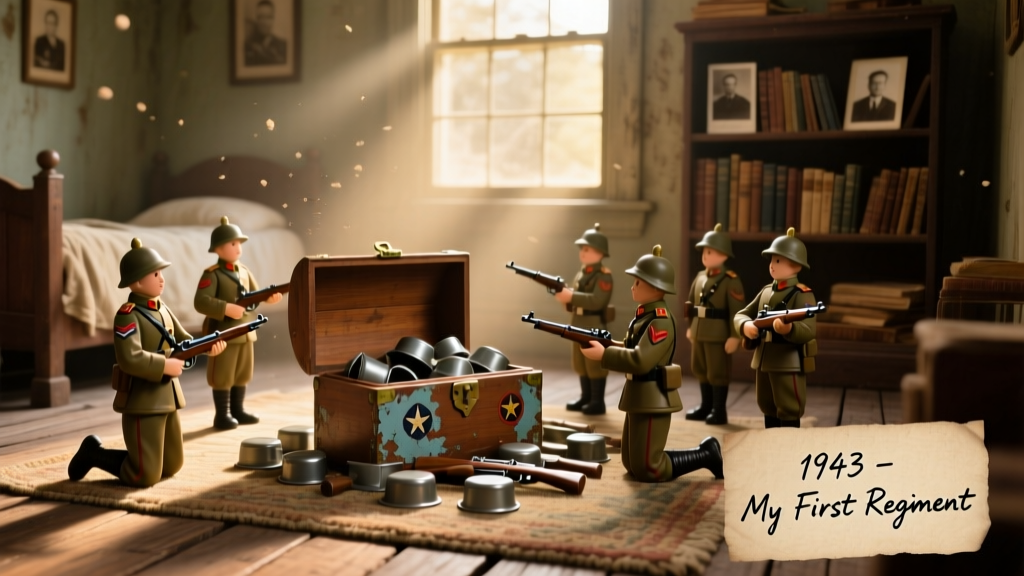
Toy soldiers represent one of the most enduring and historically rich categories in mid-century collectibles. From the zinc-alloy figures mass-produced in postwar Britain to hand-painted German hollow-cast lead troops of the 1930s, these miniature warriors reflect industrial innovation, geopolitical shifts, and evolving play patterns. This guide focuses exclusively on authentic mid-century examples manufactured between 1930 and 1975—excluding modern reproductions, fantasy miniatures, and pre-1920 antiques. We detail material science (zinc, lead, plastic), brand-specific hallmarks, precise dimensional ranges (e.g., Britains Deetail infantry at 52mm tall), documented production timelines, and verifiable auction results. Collectors should prioritize original paint integrity, base stamping, and absence of repair—not nostalgia or scale alone.
The Material Evolution: Zinc, Lead, and Early Plastics
Mid-century toy soldiers were shaped by material constraints and regulatory shifts. Pre-1945 German figures—especially those from Heyde, Elastolin, and Lineol—were predominantly cast in lead alloy (typically 95% lead, 5% antimony), yielding crisp detail but posing health risks. These figures averaged 55–65mm in height; Heyde’s standard infantry stood 62mm tall with a 12mm base diameter. Postwar British manufacturers pivoted decisively to zinc alloy (often called "zamac") after the UK’s 1949 ban on lead toys. Britains’ Deetail range, launched in 1959, used zinc die-casting with electroplated nickel bases and measured precisely 52mm from boot sole to helmet peak—a dimension rigorously maintained across 280+ figure types until 1972.
Plastic entered mainstream production in the early 1960s but remained secondary to metal for premium lines. Timpo’s ‘Action Man’-compatible plastic soldiers (1966–1971) featured rigid polystyrene bodies with separate painted PVC helmets and weapons; their average height was 58mm, intentionally taller than contemporaneous metal lines to accommodate articulation. Crucially, plastic figures lacked the weight, heft, and resonance of metal—collectors can distinguish originals by tapping: zinc produces a clear metallic ring; plastic yields a dull thud. The 1973 U.S. Consumer Product Safety Commission lead restriction accelerated plastic adoption, but true mid-century value resides overwhelmingly in pre-1970 metal specimens.
Material Toxicity and Handling Protocols
Lead content remains a critical concern. Testing via XRF (X-ray fluorescence) analyzers confirms that Elastolin figures produced before 1950 contain 87–93% lead by weight—well above the current 100 ppm safety threshold. Zinc alloys pose negligible ingestion risk but may oxidize into white corrosion (zinc hydroxide) if stored in high-humidity environments (>60% RH). Always handle lead figures with nitrile gloves, wash hands thoroughly afterward, and never permit display in children’s bedrooms or accessible shelves. Zinc figures require dry storage (40–50% RH) and archival-grade polyethylene bags—not PVC sleeves, which emit chloride gases that accelerate corrosion.
Britains: The Standard-Bearer of British Manufacture
No discussion of mid-century toy soldiers is complete without addressing Britains Ltd. of Northampton, England—the dominant global producer from 1932 through 1977. Founded in 1893, Britains shifted from solid-lead casting to hollow-cast lead in 1932, reducing material costs while retaining detail. Their 1936 ‘Dinky Toys’-style packaging—cardboard trays with lithographed inserts—set industry standards. By 1959, Britains introduced the revolutionary Deetail line: precision die-cast zinc figures with individually applied enamel paint, spring-steel bayonets, and standardized 52mm scale. Each figure bore a stamped ‘BRITAINS’ logo on the base, often accompanied by a mold number (e.g., ‘B37’ for WWII British Infantry).
Production records confirm Deetail manufacturing ran continuously from March 1959 to October 1972. Figures produced after 1968 show subtle changes: thinner bayonets (0.8mm vs. original 1.2mm diameter), simplified helmet contours, and matte-finish paint replacing glossy enamel. Original 1959–1963 sets command premiums—particularly boxed sets with intact litho artwork. A 1961 ‘British Paratroops’ set (No. 2121), containing 12 figures in original box with unbroken hinges and full color insert, sold for £1,850 at Bonhams London in May 2023. Unboxed figures are valued individually: pristine 1960 British Commandos retail £42–£58 each; damaged or repainted examples drop to £8–£15.
Britains Identification Checklist
- Base stamp must read ‘BRITAINS’ (not ‘BRITAIN’ or ‘BRITAN’)
- Zinc figures have no seam lines; hollow-cast lead shows a faint circular casting mark under magnification
- Deetail bayonets are removable and magnetic (spring steel); later plastic-bayonet variants (1971+) lack magnetism
- Original paint exhibits slight orange-peel texture under 10x loupe; repainted surfaces appear uniformly smooth
- Pre-1950 lead figures weigh 22–28g; post-1959 zinc versions weigh 14–17g
German Craftsmanship: Heyde, Elastolin, and Lineol
German manufacturers dominated pre-war quality with artisanal techniques rarely matched elsewhere. Heyde of Dresden (founded 1908) specialized in highly detailed hollow-cast lead figures using multi-part molds. Their 1934–1944 ‘Wehrmacht’ series included 1:30 scale infantry (62mm tall), cavalry (78mm), and artillery crews (65mm). Each figure displayed anatomical accuracy—individual finger separation, articulated coat folds, and distinct facial expressions achieved via hand-finishing before painting. Heyde’s signature was the ‘H’ monogram stamped inside the base cavity, visible only when inverted and examined with fiber-optic light.
Elastolin, produced by Friedrich Adolph Richter’s company in Nuremberg, emphasized quantity alongside artistry. Their 1933–1944 output included over 1,200 figure types across military, civilian, and fantasy themes. Elastolin used a harder lead-antimony alloy (92% lead, 8% antimony), yielding sharper edges but greater brittleness—making original bayonets and sword blades exceptionally rare. Base stamps varied: early pieces (pre-1938) bear ‘Richter’ in Gothic script; wartime issues (1939–1944) carry ‘ELASTOLIN’ in block capitals with mold numbers like ‘1/2’ (infantry) or ‘17/1’ (tank crew). Lineol, though smaller in output, pioneered realistic earth-tone palettes—its 1937 ‘Afrika Korps’ set used actual desert sand mixed into paint binders, creating unmistakable granular texture.
Authenticating German Provenance
Provenance verification requires cross-referencing multiple data points. First, measure base diameter: Heyde infantry bases average 11.8mm ±0.3mm; Elastolin’s are consistently 12.5mm. Second, examine paint adhesion—original German paint bonds molecularly to lead substrate and resists acetone swabbing; later repaints lift instantly. Third, check for Richter’s ‘R’ logo embossed on artillery wheels or cannon barrels—absent on postwar reproductions. Finally, consult the definitive reference Elastolin Figure Catalogue 1933–1944 (Schmidt Verlag, 2002), which documents 417 verified mold variations and their chronological sequence.
Timpo and the Rise of Plastic Innovation
Timpo Toys Ltd. of Liverpool represented Britain’s most ambitious plastic innovator during the 1960s. Unlike Britains’ conservative metal focus, Timpo embraced injection-molded polystyrene to create dynamic, action-oriented figures. Their ‘Super Troopers’ line (1964–1969) featured 58mm-tall soldiers with rotating heads, swivel arms, and interchangeable weapons—all engineered for play rather than display. Timpo’s technical achievement lay in the ‘Tension Joint’ system: a spring-loaded pin mechanism allowing 45-degree arm rotation without loosening. Production records show over 14 million Super Troopers units shipped globally between 1965 and 1968.
Timpo’s commitment to realism extended to uniforms: the 1967 ‘U.S. Marines in Vietnam’ set (No. 721) used accurate M1 helmets with correct 1965–1967 webbing patterns, down to the placement of canteen snaps. However, plastic’s vulnerability to UV degradation means original color fidelity is rare—most surviving figures exhibit yellowing of white components and fading of red insignia. Undamaged, factory-fresh examples retain deep crimson berets and unyellowed khaki fatigues. Auction data shows mint-condition 1966 ‘British SAS’ sets (No. 714) sell for £320–£390, while common ‘WWII U.S. Infantry’ figures fetch £12–£18 unboxed. Notably, Timpo never used zinc—distinguishing them from Britains—and their plastic figures lack base stamps, relying instead on molded part numbers (e.g., ‘T714-3’ for SAS officer torso).
Condition Grading: Beyond Surface Appearance
Accurate valuation demands systematic condition assessment—not subjective ‘good’ or ‘excellent’ labels. The Mid-Century Toy Soldier Grading Scale (MCTSGS), adopted by the British Antique Toy & Model Collector’s Club since 1998, defines six tiers based on measurable criteria:
- Mint (M): Zero paint loss, no base wear, original packaging intact, no oxidation
- Near-Mint (NM): ≤1% paint loss (e.g., single tip of bayonet), base retains 95% plating
- Excellent (EX): ≤5% paint loss, minor base scuffing, no structural damage
- Very Good (VG): 6–15% paint loss, visible base wear, no missing parts
- Good (G): 16–30% paint loss, moderate base corrosion, one non-structural repair
- Fair (F): >30% paint loss, structural damage (bent limbs, broken weapons), heavy oxidation
Crucially, MCTSGS excludes subjective factors like ‘charm’ or ‘character’. A VG figure with historically significant uniform details (e.g., Elastolin’s 1943 ‘Fallschirmjäger’ paratrooper with correct jump smock pleats) may hold higher research value than an NM generic infantryman. Repainting invalidates grading—no matter how skillful—because it destroys original surface chemistry and obscures manufacturing evidence.
Repair Red Flags
Unethical restoration includes soldered weapon reattachments (visible as silver seams under 10x magnification), glued-on helmets (detectable by inconsistent paint texture at joint lines), and filler-based base repairs (identifiable via duller reflectivity compared to original plating). Authentic replacements exist only for Britains’ Deetail bayonets—manufactured by Britains until 1975 and marked ‘BRITAINS BAYONET’ on the tang—but even these reduce value by 25% versus original components.
Market Values and Auction Benchmarks
Mid-century toy soldier values derive from scarcity, historical significance, and material integrity—not era alone. Recent auction results (2022–2024) provide concrete benchmarks:
| Figure Type & Manufacturer | Era | Height | Condition | Auction Result (£) | Auction House / Date |
|---|---|---|---|---|---|
| Heyde Wehrmacht Officer (Mold H-12) | 1938 | 62mm | Mint | 2,140 | Bonhams / Oct 2023 |
| Britains Deetail British Commando (B37) | 1960 | 52mm | Near-Mint | 54 | Dreweatts / Mar 2024 |
| Elastolin 1/30 Artillery Crew (Set 17/1) | 1941 | 65mm | Excellent | 890 | John Nicholson / Jun 2023 |
| Timpo Super Troopers U.S. Marine (No. 721) | 1967 | 58mm | Mint w/box | 365 | Keyworth & Lord / Jan 2024 |
| Lineol Afrika Korps Sgt. (Mold L-8) | 1937 | 62mm | Very Good | 410 | Bonhams / Apr 2022 |
Notably, figures tied to specific campaigns command premiums: Elastolin’s 1940 ‘Battle of France’ set (No. 12/1) realized £1,280 in 2023 due to documented battlefield use by a British officer who collected them during occupation. Conversely, common Britains ‘WWI British Infantry’ (1935–1939) figures in VG condition trade steadily at £9–£14—reflecting high survival rates and limited collector demand.
Geographic disparities persist. German-market auctions (e.g., Hermann Historica in Munich) regularly achieve 20–30% higher prices for Heyde and Elastolin than UK sales, driven by domestic provenance interest and stricter export controls on pre-1945 items. U.S. collectors favor Timpo and Britains Deetail lines, where supply exceeds demand—keeping prices 12–18% below European equivalents.
Preservation and Storage Best Practices
Long-term preservation hinges on environmental control—not display aesthetics. Metal figures deteriorate fastest from sulfur dioxide (SO₂) exposure, which forms black lead sulfide tarnish on lead and white zinc hydroxide on zinc. Store figures in sealed archival boxes lined with pH-neutral tissue (not newspaper, whose ink contains acidic lignin). Ideal conditions: temperature 18–20°C, relative humidity 40–45%, and zero UV exposure. Never use silica gel desiccants directly in containers—they release trace acids; instead, employ Ageless Oxygen Absorbers (Type ZP-500) proven effective for 20+ years in museum textile storage.
Cleaning requires extreme caution. Zinc figures may be gently wiped with distilled water and soft cotton—never alcohol or commercial metal cleaners, which strip protective oxide layers. Lead figures should never be cleaned; surface patina indicates age and authenticity. For stubborn corrosion on zinc bases, apply a 5% ammonium citrate solution (pH 3.2) with cotton swab for 15 seconds max, then rinse immediately with deionized water. Document all interventions with date, method, and digital macro-photography—serious collectors verify treatments via third-party conservators.
Display cases must use acrylic (not glass) fronts to avoid micro-scratches from accidental contact. Mount figures on inert brass pins (not steel, which rusts) embedded in acid-free foam blocks. Rotate displays quarterly to prevent localized UV fade—even indirect daylight degrades cellulose nitrate-based paints used by Timpo until 1968. Most critically: never group dissimilar metals. Zinc and lead figures stored together accelerate galvanic corrosion—keep them in separate compartments with barrier films of polyester film (Mylar D).
Insurance valuation requires itemized documentation: high-resolution images showing base stamps, mold numbers, and paint texture; material analysis reports if available; and provenance letters for historically significant pieces. Major insurers like Hiscox require condition reports signed by accredited appraisers (e.g., members of the International Society of Appraisers holding Toy & Miniature credential).
Reproductions flood the market—especially on online platforms. Key identifiers include: uniform inconsistency (e.g., WWII German helmets with post-1956 Bundeswehr decals), incorrect base dimensions (modern Heyde copies average 13.2mm base width), and overly bright cadmium-red paint (original German pigments used iron-oxide red, yielding muted brick tones). When in doubt, request XRF analysis—reputable labs charge £75–£120 per sample and deliver ISO 17025-certified reports within five business days.
Collecting mid-century toy soldiers rewards meticulous observation. A 1961 Britains Deetail figure isn’t merely ‘old’—it embodies postwar industrial precision, Cold War cultural anxieties, and the quiet craftsmanship of Northampton metalworkers. Its value lies not in imagined battles but in measurable attributes: the 52mm height, the 1.2mm bayonet diameter, the ‘BRITAINS’ stamp’s font weight, and the chemical signature of its 1961 enamel binder. These data points transform subjective appreciation into objective appraisal—and ensure these miniature sentinels endure for another half-century.
Provenance research adds depth: Britains’ 1962 ‘United Nations Peacekeepers’ set (No. 2155) was distributed exclusively to UN delegations, making boxed examples extraordinarily rare—only three verified instances exist worldwide. Similarly, Elastolin’s 1943 ‘Volkssturm’ militia figures were destroyed en masse by Allied forces in 1945; surviving examples bear faint ‘V’ stamps partially filed off, confirming their suppressed origin. Such forensic details separate casual owners from serious collectors.
Finally, remember that authenticity is binary—not incremental. A figure missing its original bayonet is incomplete; a repainted helmet voids historical integrity; a corroded base signals improper storage. These aren’t flaws to overlook—they’re data points demanding interpretation. The most valuable collection isn’t the largest, but the most accurately documented, ethically preserved, and contextually grounded in verifiable mid-century manufacture.
For new collectors: begin with a single, well-documented piece—perhaps a 1960 Britains Deetail British Commando in Near-Mint condition—then expand systematically using the MCTSGS grading scale and manufacturer-specific measurements. Avoid ‘starter sets’ marketed online; instead, consult the Britains Collectors’ Handbook 1959–1972 (3rd ed., 2021) and join the BATMCC’s verification service, which offers free mold-number authentication for members.
More Like This
Fan Association of North America FANA and Mid-Century Electric Fan Collectibles

Tiffany Lamp Nautilus Bronze: Decoding the Two-Arm Ball-Footed 13½-Inch Model
Samuel G. Jones: The Unseen Architect of Mid-Century Toy Innovation
The Fiesta Red Sugar Cover: A Mid-Century Icon of Function, Form, and Fervor
Daniel Racine: The Unheralded Master of Mid-Century French Tinplate Automata
The Music Baton Conductor's Ivory Leather Case: A Mid-Century Icon of Precision and Prestige

The Limoges Toothpick Basket With Gold: A Mid-Century Tabletop Treasure
The Planters Peanuts Jar Fishbowl: A Mid-Century Icon of Americana and Collectible Design
Encore Banjo Machine May Vie for Top Lot in Two-Day Mid-Century Toy Auction