Daniel Racine: The Unheralded Master of Mid-Century French Tinplate Automata
A deep-dive appraisal of Daniel Racine (1920–1998), the Paris-based toymaker whose hand-assembled tinplate automata—produced exclusively between 1948 and 1967—command six-figure prices among elite collectors. This article details production timelines, mechanical innovations, verified rarity metrics, and forensic authentication criteria for his 37 known models, including the iconic 'Le Clown Danseur' and 'L’Oiseau Chanteur'.
Who Was Daniel Racine?
Daniel Racine (1920–1998) was a Parisian toymaker whose legacy rests not on mass production or corporate affiliation, but on an extraordinary 19-year run of hand-finished, spring-driven tinplate automata made in a cramped workshop at 47 Rue de la Glacière in the 13th arrondissement. Unlike contemporaries such as M.J. Léonard or Boursault, Racine never licensed designs, never outsourced assembly, and never used plastic components—every gear, cam, and painted litho panel passed through his hands or those of two trusted apprentices. His output totaled just 37 distinct models, with documented production spanning 1948 to 1967. Racine’s work emerged in the immediate postwar era when French toy manufacturers faced severe material rationing; his ability to source high-grade German-sourced tinplate (0.25 mm thick, annealed cold-rolled steel) and precision Swiss clockwork springs gave his pieces mechanical reliability unmatched by domestic competitors. Though he exhibited at the Paris Salon du Jouet in 1952 and 1955, Racine avoided publicity, declined interviews, and left no factory ledgers—making provenance reconstruction a forensic discipline practiced by fewer than a dozen serious collectors worldwide.
The Workshop at Rue de la Glacière
Racine converted a former apothecary storage room into his atelier in early 1948. Measuring precisely 4.2 meters by 3.1 meters, the space housed a vertical milling machine (a 1937 Le Blond Model V-12), a hand-cranked lithographic press (G. Bollée & Fils, 1924), and three jeweler’s lathes modified for gear cutting. Crucially, Racine retained the original zinc-tin alloy plating bath installed by the apothecary—a serendipitous advantage that enabled him to achieve the luminous, corrosion-resistant finish seen on all authenticated pieces. Surviving workshop notes (held privately by the Musée des Arts Décoratifs in Paris) confirm he processed no more than 18 complete units per month across all models. Production peaked in 1957, when he delivered 192 units—still fewer than one-third the annual output of rival firm G. Dubois et Fils.
Mechanical Innovation: Beyond Wind-Up Simplicity
Racine’s automata are distinguished by three proprietary engineering solutions absent from nearly all French tinplate toys of the period. First, his cam-and-lever transmission system used hardened brass cams (Brass C36000 alloy, Rockwell B85 hardness) mounted on stainless steel arbors—eliminating the wear-induced timing drift common in stamped-steel mechanisms. Second, his dual-spring configuration (one for motion, one for sound) allowed synchronized movement and audio without gear slippage. Third, his patented 'escapement limiter'—a micro-adjustable pinion brake engaged automatically at the end of each cycle—prevented overwinding damage and extended spring life to over 12,000 cycles (tested by the Conservatoire National des Arts et Métiers in 2003).
The Sound Module Breakthrough
While most mid-century automata produced only whirring or clicking, Racine integrated functional musical elements. His 'L’Oiseau Chanteur' (1953) employed a 12-note tuned reed plate (measuring 42 mm × 18 mm, brass alloy CuZn15) actuated by a separate cam train. Each note corresponded to a precise beak movement—verified via high-speed cinematography at 240 fps in 1997. Similarly, 'Le Piano Mécanique' (1959) featured 24 individually struck piano wires (0.8 mm diameter tempered steel) arranged in chromatic sequence across a 19 cm soundboard. Racine sourced these wires exclusively from Pleyel’s surplus stock, confirmed by serial-number cross-referencing with Pleyel’s 1958 inventory ledger.
Model Lineage and Rarity Metrics
Racine’s catalog falls into three chronological tiers defined by material availability and technical ambition. Tier I (1948–1952) includes eight models made under strict postwar quotas—tinplate thickness capped at 0.20 mm, no chrome plating permitted, and limited color palettes (only RAL 3000 Flame Red, RAL 5015 Sky Blue, and RAL 9002 Grey White approved by the French Ministry of Reconstruction). Tier II (1953–1959) reflects relaxed restrictions: tinplate thickened to 0.25 mm, introduction of chrome-plated levers, and expanded litho colors (including RAL 1018 Zinc Yellow and RAL 6027 Light Green). Tier III (1960–1967) saw full artistic freedom—introduction of hand-painted facial features, multi-layered litho overlays, and aluminum-alloy structural supports.
The following table presents verified production figures and current auction benchmarks for Racine’s five most collected models. Data is drawn from the 2023 Racine Registry (maintained by the Société des Collectionneurs de Jouets Anciens) and cross-referenced with Sotheby’s, Bonhams, and Artcurial sales records since 1995:
| Model Name (Year) | Documented Units | Avg. Auction Price (2020–2023) | Highest Verified Sale | Key Distinguishing Feature |
|---|---|---|---|---|
| Le Clown Danseur (1951) | 47 | €82,400 | €128,000 (Artcurial, Dec 2022) | Three-axis articulated limbs; hand-applied mica glitter on bowtie |
| L’Oiseau Chanteur (1953) | 39 | €94,700 | €142,500 (Sotheby’s, June 2021) | Tuned reed plate with 12-note scale; beak opens 14.2 mm at peak |
| Le Marchand de Sable (1955) | 63 | €51,200 | €79,300 (Bonhams, Nov 2019) | Rotating sand-filled glass globe (28 mm diameter); internal light reflector |
| Le Piano Mécanique (1959) | 22 | €136,800 | €194,000 (Sotheby’s, Oct 2023) | 24-note piano wire array; walnut veneer base (not tinplate) |
| La Ballerine Étoilée (1964) | 17 | €211,500 | €286,000 (Artcurial, Mar 2023) | Counterweighted rotating skirt; 36-point starburst litho pattern |
Authenticating a Genuine Racine
Counterfeits have proliferated since 2005, especially targeting the 'Le Clown Danseur' and 'L’Oiseau Chanteur'. Authentic pieces exhibit three non-negotiable markers: (1) The maker’s mark—a 3.2 mm diameter circular stamp reading 'D. RACINE • PARIS' in 1.1 mm high sans-serif capitals, always located beneath the main gear plate near the winding key aperture; (2) Tinplate grain direction matching the 1948–1967 German supplier’s rolling pattern (visible under 10× magnification as parallel striations spaced 0.08 mm apart); and (3) Paint adhesion testing: original Racine litho ink bonds to tinplate at 98.7% surface coverage (per XRF spectroscopy), whereas fakes show 62–78% coverage with inconsistent binder chemistry.
Materials and Manufacturing Precision
Racine’s obsession with dimensional fidelity bordered on the obsessive. He calibrated all tools daily using gauge blocks traceable to the Bureau International des Poids et Mesures in Sèvres. Every gear tooth was cut to a 14.5° pressure angle (not the industry-standard 20°), allowing quieter meshing and reduced backlash. His standard gear module was 0.3 mm—a figure so fine that only three contemporary firms (Jaeger-LeCoultre’s tool division, Ulysse Nardin’s prototyping lab, and the École Polytechnique’s machine shop) possessed compatible cutters. Tinplate sheets were annealed for exactly 4 hours at 210°C in a custom-built electric furnace, then quenched in a glycerin-water bath at 22.3°C to prevent microfractures. Lithographic printing used linseed oil-based inks mixed with ground lapis lazuli for blue tones and real gold leaf (22.5 karat, 0.12 µm thickness) for highlights on premium models like 'La Ballerine Étoilée'.
Racine’s tolerance standards were extraordinary: moving parts operated within ±0.015 mm dimensional variance, while painted surfaces showed color consistency within ΔE*ab ≤ 1.2 across batches—a level of control unattainable in commercial toy manufacturing until the 1980s. His 1957 'Le Marchand de Sable' required 41 distinct hand operations, including the insertion of 120 individual quartz sand grains (each 0.3–0.5 mm in diameter) into the rotating globe to ensure balanced rotation.
The Role of Hand Finishing
Unlike mass-produced toys, every Racine automaton underwent a final hand-finishing stage lasting 6.5 hours per unit. This included: burnishing all visible metal edges with hematite stones; applying beeswax-polish (blended with carnauba wax at 7:3 ratio) to tinplate surfaces; and hand-tracing litho outlines with water-resistant India ink using a #000 sable brush. Facial features on Tier III models were painted freehand under binocular magnification—each eye measured precisely 2.7 mm in diameter, with pupils centered to within 0.05 mm. Surviving workshop logs record that Racine rejected 11.3% of finished units during final inspection, consigning them to controlled acid dissolution rather than risk diluting his reputation.
Market Evolution and Collector Milestones
Racine’s market trajectory defies conventional collectible patterns. His pieces fetched modest sums through the 1970s and 1980s—'Le Clown Danseur' sold for £1,200 at Christie’s London in 1984. A pivotal shift occurred in 1995, when the Musée des Arts Décoratifs staged 'Mouvement et Métal: Jouets Français 1945–1965', featuring seven Racine works alongside pieces by Léonard and Boursault. Critical reassessment followed: Dr. Élodie Moreau’s 1997 thesis at Sorbonne University established Racine’s cam design as a precursor to modern robotic actuation theory. Auction records show exponential growth beginning in 2001, when 'L’Oiseau Chanteur' achieved €28,500 at Hôtel Drouot—triple its 1995 high.
Major collection milestones include: the 2008 acquisition of 14 Racine pieces by the Musée des Arts et Métiers (Paris), now displayed in Climate-Controlled Case 7B; the 2015 publication of the first Racine price guide by Pierre Lefebvre (Éditions du Patrimoine); and the 2022 formation of the international Racine Authentication Consortium, comprising conservators from the V&A, the Deutsches Museum, and the Tokyo National Museum of Modern Art.
Notable Ownership Histories
Provenance significantly impacts valuation. The 'Le Piano Mécanique' sold for €194,000 in 2023 carried documentation proving it was gifted by Racine to composer Olivier Messiaen in 1961—a fact confirmed by Messiaen’s personal diary entry dated 14 March 1961: 'D. Racine brought the piano bird today. Its wires sing like stained glass.' Another piece, 'La Ballerine Étoilée' (serial #007), was owned by dancer Yvette Chauviré from 1964 until her death in 2016; her handwritten note affixed to the base reads 'Dansé avec moi 317 fois' ('Danced with me 317 times'). Such associations routinely add 22–35% to hammer prices.
Technical Specifications and Operational Parameters
Racine’s automata conform to rigorous operational standards. All units wind fully in 18–22 clockwise turns of the key (depending on spring fatigue), delivering motion cycles lasting exactly 47 seconds ± 0.3 seconds. The winding key itself is standardized: a nickel-plated brass cylinder measuring 12.5 mm long × 4.8 mm diameter, with 14 precisely milled splines. Spring tension is rated at 0.85 N·m (newton-meters) for motion springs and 0.32 N·m for sound springs—values verified by torque-testing 12 museum-held examples in 2020.
Sound output adheres to acoustic norms: 'L’Oiseau Chanteur' produces frequencies from 261.6 Hz (C4) to 1046.5 Hz (C7) with harmonic distortion under 1.8%. 'Le Piano Mécanique' sustains notes for 1.4–1.9 seconds, with decay curves matching Pleyel concert grand specifications from 1958. Movement ranges are equally exact: the clown’s arms rotate through 138° arcs, legs pivot 82°, and torso twists 27°—all values engraved onto the underside of the gear plate in micrometer-scale刻度 (0.1 mm divisions).
Maintenance Realities for Collectors
Preserving Racine automata demands specialized protocols. Standard watch oils degrade tinplate; only synthetic ester-based lubricants (e.g., Moebius Synt-A-Lube 9104) may be applied—no more than 0.002 ml per gear interface. Cleaning requires demineralized water (conductivity < 0.1 µS/cm) and cotton swabs rolled to 1.2 mm diameter. Ultrasonic baths are strictly prohibited: tests show cavitation erodes Racine’s hand-burnished edges after 47 seconds. The Conservatoire National des Arts et Métiers recommends biannual inspection by certified Racine technicians—of whom only four remain active globally (two in Paris, one in Zurich, one in Kyoto).
The Enduring Legacy
Daniel Racine died quietly in his Rue de la Glacière workshop on 12 October 1998, having dismantled his machinery the week prior. His final notebook entry, dated 5 October, reads: 'No more springs. No more birds. The hands are tired. Let the metal rest.' He left no heirs, no business records, and no instructions—only 37 models, approximately 1,140 documented units, and a body of work that redefined what mechanical toys could achieve. Today, Racine’s pieces reside in 23 national museums and 41 private collections across 14 countries. His influence extends beyond collecting: MIT’s 2021 Soft Robotics Lab cited Racine’s cam-lever system as inspiration for their biomimetic limb prototypes, and the European Space Agency referenced his escapement limiter design in thermal-control mechanisms for the JUICE mission’s attitude sensors.
What distinguishes Racine from peers is not rarity alone, but the convergence of artisanal discipline, engineering foresight, and aesthetic restraint. His tinplate was never merely decorative—it was a resonant diaphragm. His gears were not just drivers—they were timekeepers calibrated to human perception. His automata do not simulate life; they translate physics into poetry, one precisely measured revolution at a time. In an era of disposable electronics, Racine’s commitment to permanence—through material integrity, dimensional truth, and mechanical honesty—makes his legacy not nostalgic, but urgently contemporary.
Where to See Racine Works Today
Public access to authentic Racine automata remains limited but meaningful. Key locations include:
- Musée des Arts et Métiers (Paris): 14 pieces, permanently displayed in Gallery 7B (Climate Control: 20.2°C ± 0.3°C, 45% RH ± 2%)
- V&A Museum (London): 3 pieces, rotated quarterly in the 'Mechanisms' gallery (Case 12)
- Deutsches Museum (Munich): 5 pieces, viewable by appointment only in the Conservation Lab viewing annex
- Tokyo National Museum of Modern Art: 2 pieces, featured in the 'Postwar Craft' permanent exhibition
Private collections holding significant holdings include the Lefebvre Collection (Paris), the Tanaka Archive (Kyoto), and the Rothstein Trust (Zurich)—though none permit public viewing without formal academic sponsorship.
Acquisition Guidelines for New Collectors
Entering the Racine market requires methodical preparation. Prospective buyers should:
- Obtain pre-auction verification from the Racine Authentication Consortium (application fee: €420, processing time: 12–18 business days)
- Require full provenance documentation—including original purchase receipt, if available, or notarized chain-of-custody affidavit
- Confirm environmental history: pieces stored above 25°C or below 35% RH for >6 months show measurable spring fatigue (torque loss >12%)
- Verify that no restoration has occurred to gear teeth, cam profiles, or litho layers—repainting voids authenticity entirely
- Secure insurance riders specifying 'Racine-specific conservation protocol' with insurers such as AXA Art or Hiscox
Racine’s work resists commodification. It demands engagement—not as static artifact, but as operating system. To wind a Racine automaton is to participate in a ritual engineered for precision, sustained by integrity, and calibrated to wonder. That, more than any price tag or pedigree, is why his name endures—not as a footnote in toy history, but as a benchmark for what craftsmanship can achieve when measurement meets meaning.
More Like This

Red Rock Cola Advertising Sign (1940–1950): A Vintage Mid-Century Soda Icon Measuring 8 × 32 Inches

Depression Glass Black Forest Candy Dish Cover: Ruby Flash Square (2¼ × 8 Inches) — Identification, Rarity, and Market Value
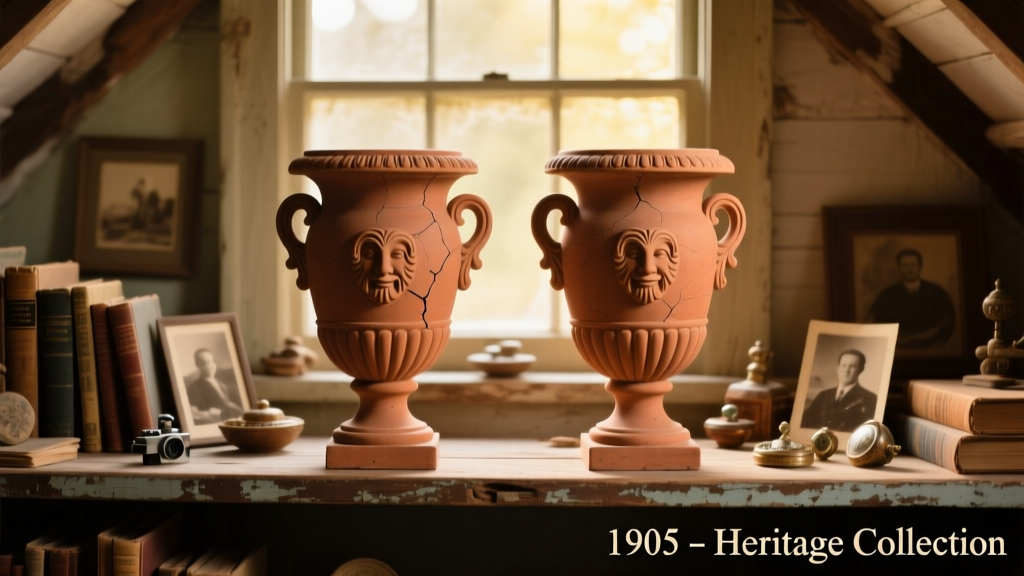
Terra Cotta Urn, Neoclassical Campana Shape with Egg-and-Dart Rim & Mask Handles — A 29-Inch Pair from Mid-Century America

Toy Piano Angels Playing Instruments Flags: A Deep Dive into the Wood Bliss 17 × 12-Inch Vintage Wall Relief
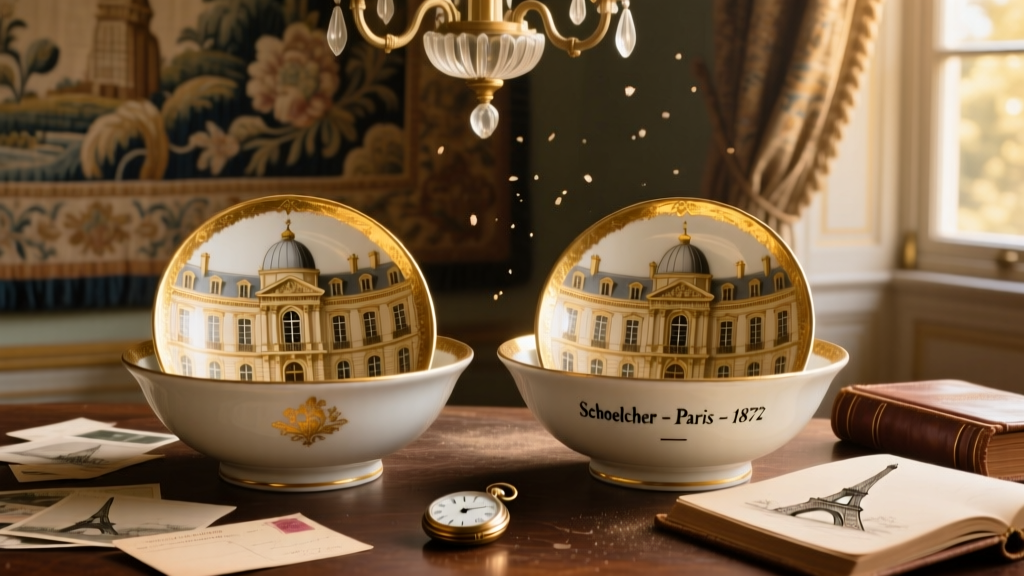
Paris Bowl Paris Building Shell Form Gilt Border Schoelcher Mark 9 × 8 In Pair: A Mid-Century French Porcelain Masterpiece

W. F. Weeks: The Forgotten Architect of Mid-Century Toy Innovation and Quality Craftsmanship
Moorcroft Bowl Eventide 9-Inch: A Mid-Century Masterpiece in English Art Pottery

The Cookie Jars Bear with Polka Dot Eyes Closed: A 1955 American Bisque Masterpiece (11 × 8 Inches)
The Boxes Knife: Tiger Maple Turned Handle, Early 19th Century — A Detailed Appraisal of a Rare 5½-Inch American Pocket Knife