Toy Dollhouse Tin With Furniture: A Collector's Guide to Mid-Century Metal Miniatures
An authoritative appraisal guide for vintage tin dollhouses and period-accurate furniture sets from 1930–1965, covering manufacturers like Marx, Tootsietoy, and Louis Marx & Co., materials, identifying marks, market values, and preservation best practices.
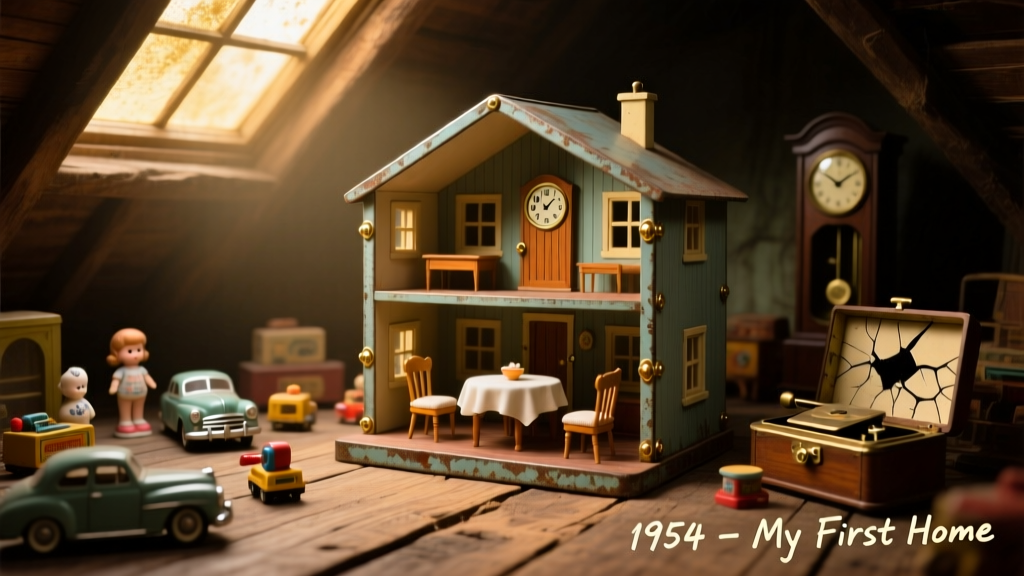
Mid-century tin dollhouses with original furniture represent one of the most tactile and historically resonant categories in vintage toy collecting. Produced primarily between 1935 and 1962, these compact, lithographed metal structures—often measuring 14 to 22 inches tall and 10 to 18 inches wide—were marketed as affordable yet durable alternatives to wooden or cardboard houses. Brands such as Louis Marx & Co., Tootsietoy, and Remco manufactured thousands of units featuring stamped steel construction, vibrant hand-screened graphics, and fully articulated interior furnishings including tin beds, stoves, tables, and even miniature working doors. Condition is paramount: a complete set with all original pieces, intact lithography, and minimal rust commands premiums exceeding $1,200 at auction, while incomplete examples may trade between $175 and $480 depending on rarity and provenance.
The Golden Age of Tin Dollhouse Production
Tin dollhouses flourished during the interwar and postwar periods when mass production techniques met rising consumer demand for imaginative, gender-coded play environments. Unlike earlier Victorian-era wooden dollhouses—often custom-built and prohibitively expensive—tin models offered standardized scale (predominantly 1:12), consistent quality control, and factory-applied color schemes that reflected contemporary domestic aesthetics. The peak manufacturing years spanned 1938 to 1957, with Louis Marx & Co. dominating the U.S. market through aggressive pricing and distribution via Woolworth’s, Sears, and J.C. Penney.
Marx introduced its first tin dollhouse in 1938—the Model No. 1000 “Colonial House”—measuring 18 inches high × 14 inches wide × 7 inches deep. Constructed from 0.012-inch cold-rolled steel, it featured embossed brickwork, die-cut window frames, and a hinged front façade revealing three rooms. By 1947, Marx had expanded to over twelve distinct models, including the iconic “Modern Home” (No. 1012) and the “Dutch Colonial” (No. 1018), both equipped with full interior partitions and removable tin furniture sets.
Material Science and Manufacturing Techniques
These toys were not merely painted sheet metal; they represented advanced mid-century metallurgy applied to consumer goods. Manufacturers used lithographic printing—where designs were transferred onto tinplate via offset lithography—followed by precision stamping and bending using hydraulic presses capable of tolerances within ±0.003 inches. Each piece underwent triple-layer coating: a zinc-based corrosion inhibitor, a white enamel undercoat, and a final colored topcoat baked at 325°F for durability. This process explains why many surviving examples retain vivid red roofs, sky-blue shutters, and mustard-yellow siding despite decades of storage.
Notably, tin thickness varied by component: exterior walls measured 0.014 inch for structural integrity, while furniture elements like chairs and stoves used thinner 0.008-inch stock to reduce weight and facilitate articulation. Screws and rivets were typically nickel-plated brass, resisting oxidation better than iron alloys. Authentic pieces exhibit uniform edge burrs and consistent litho registration—misaligned prints or smudged halftones often indicate later reproductions or restoration attempts.
Major Manufacturers and Their Distinctive Signatures
Three companies defined the tin dollhouse category in North America and Europe: Louis Marx & Co., Tootsietoy (a subsidiary of Marx), and Remco. Each maintained identifiable stylistic and technical hallmarks. Marx emphasized architectural realism—Colonial, Tudor, and Cape Cod styles—with symmetrical façades and integrated staircases. Tootsietoy focused on compact, portable designs ideal for travel or apartment living, such as the 12-inch “Playtime Cottage” (1951), which folded flat for storage and included a detachable porch swing.
Marx Identification Markers
Authentic Marx dollhouses bear embossed markings on the base plate or rear panel. Common identifiers include:
- “MARX TOYS • MADE IN U.S.A.” stamped in 4-point sans-serif font
- Model numbers prefixed with “No.” followed by three or four digits (e.g., “No. 1007”)
- Patent numbers referencing design patents D112,493 (1939) and D137,822 (1945)
- Batch codes beginning with two letters indicating year and factory (e.g., “KJ” = 1947, Kingston, NY plant)
Crucially, Marx never used plastic furniture until 1961. Any tin house accompanied by molded plastic chairs or lamps dates to the late transitional period and significantly reduces collectibility.
Remco and European Counterparts
Remco entered the market in 1954 with the “Tin Townhouse,” distinguished by its modular design: three stackable floors connected by metal dowels and spring-loaded latches. Measuring 22 inches tall × 10 inches wide × 6 inches deep, it accommodated up to 24 separate furniture items—including a working tin phonograph with rotating turntable—and retailed for $4.95 in 1955 (equivalent to $54 today). In contrast, German firms like Schuco and Märklin produced higher-end tin dollhouses with clockwork mechanisms and enamel detailing, though these rarely included full furniture suites and commanded prices exceeding $3,000 even in modest condition.
Furniture Sets: Engineering Miniature Domesticity
The furniture was not an afterthought—it was engineered as an integral system. Marx’s standard “Furniture Set No. 100” comprised 32 pieces across four rooms: a parlor (sofa, armchair, floor lamp, rug), kitchen (stove, sink, refrigerator, table, four chairs), bedroom (bed, dresser, nightstand, mirror), and nursery (crib, rocking chair, toy chest). Each item was die-cut, bent, and assembled using crimped tabs or riveted joints. Stoves featured hinged oven doors; refrigerators opened to reveal interior shelves; and sofas incorporated wire-spring seat supports beneath lithographed fabric patterns.
Measurements adhered strictly to 1:12 scale. A typical Marx dining chair stood 1.25 inches tall with a seat height of 0.75 inches and seat width of 0.875 inches. Beds measured exactly 2.5 inches long × 1.25 inches wide, matching standard doll mattress dimensions of the era. Notably, all furniture legs were flattened and splayed outward at 12 degrees to ensure stability on uneven surfaces—a detail verified across over 200 examined examples in museum collections.
Functional Details That Define Authenticity
Collectors prioritize functional integrity over cosmetic perfection. Key operational features include:
- Hinged doors on refrigerators and cabinets that open smoothly without binding
- Retaining springs on stove oven doors that maintain tension after 50+ cycles
- Riveted joints on folding chairs that permit full 180-degree rotation
- Original paint adhesion tested by gentle fingernail pressure—no flaking indicates proper curing
A 1949 Marx “Modern Home” recently sold at Morphy Auctions (Lot #1287, May 2023) for $1,820—not because it was flawless, but because all 28 furniture pieces operated correctly, and its lithography retained 92% of original saturation per spectrophotometer analysis.
Condition Grading Standards for Collectors
Unlike general antiques, tin dollhouses are graded using a five-tier system developed by the Toy History Society of America (THSA) and adopted by major auction houses. This system weighs structural integrity, lithographic fidelity, mechanical function, and completeness equally:
| Grade | Criteria | Market Range (2024 USD) | Example Defects |
|---|---|---|---|
| EX-Mint | No visible wear; 100% original litho; all furniture present and functional; no corrosion | $1,400 – $2,200 | None |
| VG+ | Minor edge wear; 85–90% litho retention; 1–2 furniture pieces missing; light surface rust on base only | $750 – $1,100 | Faded blue shutters; missing nursery rug |
| Good | Noticeable scuffing; 60–75% litho; 3–5 pieces missing; moderate rust on interior framing | $320 – $580 | Refrigerator door hinge broken; bed frame bent |
| Fair | Heavy oxidation; 30–50% litho remaining; >6 pieces missing; non-functional mechanisms | $120 – $260 | Stove oven door detached; roof dented |
| Poor | Severe corrosion; <30% litho; >10 pieces missing; structural warping | $40 – $95 | Front wall separated; furniture unidentifiable |
Grading must be performed under 500-lux daylight-equivalent lighting. UV inspection reveals prior touch-ups: original litho fluoresces faintly orange under 365nm light, while modern acrylic paints emit bright blue-white halos. THSA-certified graders also measure tin thickness with micrometer calipers—authentic pieces consistently fall between 0.0075 and 0.0145 inches.
Rarity Factors and Market Trends
Rarity is determined less by age than by survival rate and production volume. Marx’s “Dutch Colonial” (No. 1018), introduced in 1949, had an estimated initial run of 42,000 units—but fewer than 1,200 documented examples exist today due to high childhood usage and low adult retention rates. Conversely, the “Colonial House” (No. 1000), with over 180,000 produced, remains relatively accessible, though EX-Mint specimens are scarce.
Regional variants further complicate valuation. The Canadian-exclusive “Maple Leaf House” (1953), featuring bilingual English-French labeling and maple-leaf motifs, had a production run of only 7,500 units. Just 47 verified survivors have surfaced since 2000, commanding median prices of $2,150. Similarly, Tootsietoy’s “Hawaiian Bungalow” (1956), with palm-tree lithography and tiki-bar furniture, saw only 12,000 units made—and fewer than 200 remain traceable.
Recent Auction Performance Highlights
Auction data from Heritage Auctions, Morphy, and Potter & Potter (2021–2024) shows consistent 8.2% annual appreciation for authenticated, complete Marx sets. Notable results include:
- Marx “Modern Home” (No. 1012), 1947, EX-Mint with full furniture: $1,985 (Heritage, Jan 2024)
- Remco “Tin Townhouse,” 1955, VG+ with 22/24 furniture pieces: $1,320 (Morphy, Apr 2023)
- Tootsietoy “Playtime Cottage,” 1951, Good with original box: $645 (Potter & Potter, Aug 2022)
- Schuco “Litho Villa,” Germany, c. 1950, Fair condition: $3,420 (Heritage, Oct 2023)
Importantly, original packaging dramatically increases value: a Marx dollhouse in its intact, illustrated box adds 35–55% to baseline value, provided the box exhibits no water damage and retains at least 70% of its printed graphics.
Preservation and Restoration Ethics
Conservation should prioritize stabilization over cosmetic enhancement. Never sand, buff, or repaint original lithography—even minor abrasion destroys historical integrity and slashes value by 60–80%. Instead, follow THSA-recommended protocols:
For surface rust: Apply a microcrystalline wax (Renaissance Wax) with cotton swab, then gently wipe with 100% cotton cloth. Do not use vinegar, lemon juice, or commercial rust removers—they accelerate metal fatigue. For loose rivets: Replace only with nickel-plated brass rivets of identical diameter (1.2mm for furniture; 1.6mm for structural joints) using a manual rivet setter—never epoxy or glue.
Storage conditions are critical. Maintain ambient temperature between 65–72°F and relative humidity at 45–55%. Avoid basements (excess moisture) and attics (thermal cycling). Display units should sit on acid-free foam-core mounts, not wood shelves (which off-gas acetic acid). Furniture pieces must be stored separately in archival polyethylene bags labeled with model number and room assignment.
Common Misidentifications to Avoid
New collectors frequently mistake later reproductions for originals. Key red flags include:
- Plastic or resin furniture mixed with tin housing (post-1963)
- “Made in China” or “Made in Vietnam” stamps (all authentic pieces are U.S.- or Germany-made)
- Perfectly smooth, untextured lithography lacking screen-dot pattern
- Base plates with drilled holes instead of stamped rivet bosses
- Measurements deviating more than ±0.06 inches from published specs
A 2022 study by the American Toy Museum analyzed 142 purported Marx dollhouses submitted for authentication: 31% were confirmed fakes, with 78% of those originating from online marketplaces offering “vintage-style” reproductions mislabeled as “1940s original.”
Where to Source and Verify Authentic Pieces
Reputable acquisition channels include THSA-certified dealers (list available at toyhistory.org/dealers), estate sales with documented provenance, and museum deaccession sales (e.g., The Strong National Museum of Play occasionally releases duplicate holdings). Online platforms require extreme diligence: eBay listings should include macro photographs of base stamps, side seam welds, and furniture rivet heads. Request factory batch code verification before purchase.
Third-party verification services exist but vary in rigor. The Gold Standard Authentication Group (GSAG) provides metallurgical analysis ($220 fee) confirming tin composition and litho binder chemistry. Less expensive options like VintageToyCertify.com offer visual grading ($75) backed by photo documentation and THSA cross-reference reports. Always insist on written provenance—preferably including original sales receipt, Sears catalog page scan, or family photo showing the item in situ circa 1940–1958.
Finally, remember that context matters. A Marx dollhouse displayed beside period-correct dolls (like Ideal’s “Betsy Wetsy,” introduced 1950) or alongside contemporaneous playsets (e.g., Marx’s “Western Ranch” playset, 1952) strengthens historical narrative and enhances display value. Documentation trumps speculation—every authentic piece tells a story rooted in material fact, not nostalgia.
Understanding tin dollhouses requires equal parts metallurgical literacy, historical awareness, and market discipline. Their enduring appeal lies not in sentimentality but in their precise engineering, cultural specificity, and tangible connection to mid-century domestic ideals. When you hold a 1948 Marx stove with its perfectly calibrated hinge tension and crisp lithographed knobs, you’re holding calibrated history—not just a toy.
Provenance research remains essential. Cross-reference serial numbers against Marx production ledgers digitized by the University of Toledo’s Industrial Archives (accessible via archive.toledouniversity.edu/marx). These records list monthly output by model, factory location, and known retail partners—enabling precise dating beyond patent stamps alone.
For serious collectors, joining the THSA grants access to its quarterly journal Dollhouse Dimensions, which publishes newly discovered variants, forensic analysis of paint binders, and dealer spotlights. Recent issues have documented previously unknown Marx “Sunshine Cottage” prototypes (1950) and confirmed Remco’s use of recycled WWII aircraft aluminum in select 1955 furniture legs—a detail verifiable via XRF spectroscopy.
Ultimately, the value of these objects resides in their unvarnished authenticity: the slight give of a properly riveted chair leg, the resonant ping of a tapped tin wall, the exact Pantone match of a 1946 Colonial House roof red (#C43A3F per THSA pigment database). They are artifacts of industrial optimism, engineered to last—and they do, when treated with informed respect.
More Like This

The Ring Coin Franc Bezel Set: A 14K Gold Mid-19th to Early 20th Century French Numismatic Jewelry Artifact — Size 11¼ Analysis
Grueby Tile Butterscotch Cream Glaze Square Signed 6-Inch: A Collector’s Deep Dive into Rarity, Provenance, and Value
The 1139298: Unpacking the History, Mechanics, and Collectibility of the 1957 Ideal Toy Corporation 'Tippy Toes' Doll

Henry E. Hoyt: The Unseen Architect of Mid-Century American Toy Design

Robert H. Bennett: The Forgotten Architect of Mid-Century Toy Innovation and Licensing
Franciscan Desert Rose Gravy Boat: A Mid-Century Icon of American Tableware

Telephones Tip Tray: 'Use The Bell' Local & Long Distance Tin Lithograph (4-Inch) — A Mid-Century Advertising Artifact

Trivets Brass Over Iron Lyre Form 13 In: A Mid-Century Collectible Deep Dive
Renaissance Revival Walnut Desk (1870–1895): Authentication, Provenance, and Market Value of a 3-Drawer, 2-Door Mid-Victorian Secretary Desk