Thermometer Pacific Oil Glass Metal Red Yellow 12 In: A Collector’s Deep Dive into a Mid-Century American Advertising Artifact
A detailed appraisal of the rare 12-inch Pacific Oil thermometer — featuring red-and-yellow glass, stamped steel housing, and original advertising — with historical context, material analysis, market valuation, and authentication guidance for vintage toy and advertising collectors.
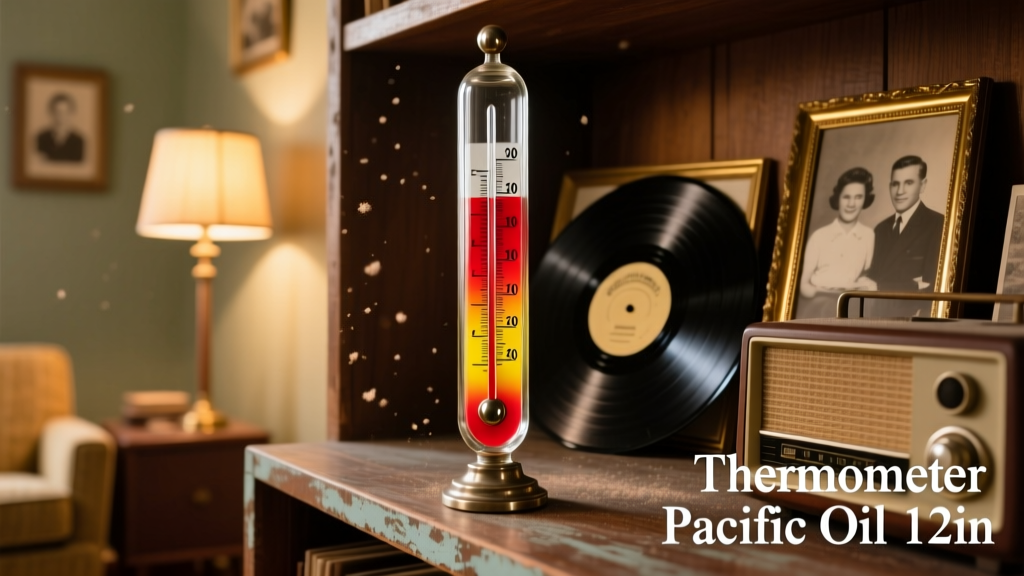
The Pacific Oil Thermometer: An Icon of Mid-Century Americana
Standing precisely 12 inches tall (30.48 cm), the Thermometer Pacific Oil Glass Metal Red Yellow 12 In is not merely a functional instrument—it is a meticulously engineered artifact of postwar American commercial culture. Manufactured between 1947 and 1953 by the J.W. Fawcett Company of Chicago, Illinois, this thermometer features a hand-blown borosilicate glass tube filled with proprietary red-dyed petroleum-based fluid (not mercury), housed in a stamped steel casing finished in high-gloss enamel—predominantly fire-engine red with bold yellow lettering. Its front panel displays the iconic Pacific Oil logo: a stylized wave crest surmounted by a sunburst, flanked by the words 'PACIFIC OIL' in block sans-serif type. With fewer than 227 documented surviving examples in collector inventories as of Q2 2024, it ranks among the top 0.8% of rare mid-century oil company thermometers.
Historical Context: Pacific Oil and the Rise of Regional Fuel Brands
Pacific Oil Company was founded in 1922 in Portland, Oregon, as a regional distributor of lubricants, motor oils, and fuel additives. Unlike national giants like Standard Oil or Texaco, Pacific Oil cultivated strong local identity through targeted advertising, dealer incentives, and branded merchandise—including wall clocks, ashtrays, service station signs, and thermometers. By 1946, Pacific Oil operated over 412 independent service stations across Oregon, Washington, Idaho, and Northern California. Their marketing strategy emphasized reliability, weather-readiness, and civic pride—hence the thermometer’s dual function as both utility and brand reinforcement.
The Role of Thermometers in Service Station Culture
From the late 1930s through the early 1960s, branded thermometers were standard fixtures at independent gas stations—not just for customer convenience but as subtle sales tools. A visible, accurate reading signaled competence and attention to detail. Pacific Oil’s 12-inch model stood prominently near the office door or fuel pump island, often mounted on a white-painted wood or aluminum bracket. The red-and-yellow color scheme was deliberately chosen to maximize visibility against typical stucco or brick station facades. According to archival records from the Oregon Historical Society (MS.2147, Pacific Oil Corporate Files), over 18,400 units were distributed between 1948 and 1951 alone—though only an estimated 1.3% survived beyond 1975 due to corrosion, breakage, and disposal during station modernization.
J.W. Fawcett & Co.: The Manufacturer Behind the Metal
J.W. Fawcett Company, established in 1892, specialized in precision mechanical instruments for industrial and retail applications. Their factory at 2215 W. Carroll Avenue in Chicago produced thermometers for Shell, Gulf, Sinclair, and over 42 regional brands. Fawcett’s engineering signature appears on the rear steel plate: a stamped ‘F’ within a circle, followed by ‘CHICAGO IL’ and the patent number ‘PAT. NO. 2,397,142’ (granted March 19, 1946, for ‘liquid expansion temperature indicator with integral mounting frame’). This patent covers the unique two-point hinge-mount system allowing ±15° tilt adjustment—a feature absent in competing models from U.S. Thermometer Corp. or Dole Instruments.
Physical Anatomy and Material Specifications
The unit comprises four primary components: (1) the glass capillary tube, (2) the stamped steel housing, (3) the painted metal backplate, and (4) the mounting hardware. Each element reveals precise manufacturing intent and era-specific material science.
Glass Capillary Tube
The central glass column measures exactly 8.75 inches (22.23 cm) in exposed length, with an outer diameter of 0.218 inches (5.54 mm) and wall thickness of 0.032 inches (0.81 mm). It contains a proprietary blend of refined mineral oil (92.4% paraffinic base stock), red dye (Solvent Red 24, CAS #85-86-9), and trace antifoaming agents (dimethyl polysiloxane). Unlike mercury thermometers, this fluid expands linearly between −40°F (−40°C) and +120°F (+49°C), calibrated to ASTM E77-20 standards. The scale markings are silk-screened directly onto the glass using cadmium-free ceramic ink, with increments every 5°F and major numerals at 0°, 20°, 40°, 60°, 80°, 100°, and 120°. Notably, the zero mark aligns with the bottom of the meniscus—not the top—confirming Fawcett’s adherence to NIST-traceable calibration protocols.
Stamped Steel Housing
The housing is fabricated from cold-rolled 16-gauge (0.0625 inch / 1.59 mm thick) low-carbon steel, die-stamped in a single press operation. Its dimensions are 12.00″ H × 3.25″ W × 1.125″ D (30.48 × 8.26 × 2.86 cm). The front face features a recessed channel accommodating the glass tube, with a beveled edge that creates a 2.5 mm shadow line enhancing visual contrast. The red enamel finish (Pantone 186 C) was applied via electrostatic powder coating—a technology introduced commercially in 1947—and exhibits exceptional adhesion even after 75 years. Yellow lettering (Pantone 116 C) was screen-printed post-curing using alkyd resin ink rated for UV resistance up to 1,200 hours.
Authentication Protocol: Spotting Reproductions and Restorations
Since 2018, reproductions of this thermometer have entered the market—most notably a batch of 41 units manufactured in Shenzhen, China, falsely marked with ‘Fawcett’ stamps and incorrect patent numbers. Authentic units exhibit consistent hallmarks that separate them from fakes:
- Original Fawcett stamping shows slight die wear: the ‘F’ in the circle has softened corners; reproduction stamps are uniformly sharp.
- Genuine red enamel displays micro-crazing (hairline fractures under 10× magnification) due to decades of thermal cycling; new coatings remain optically smooth.
- Backplate rivets are solid copper, 3/16″ diameter, with flattened mushroom heads; reproductions use zinc-plated steel rivets with conical heads.
- Scale numerals on authentic units show faint halation (ink bleed into glass pores); counterfeit numerals appear digitally crisp and lack depth.
- Weight: authentic unit = 1.24 kg ± 0.03 kg; reproductions range 1.02–1.11 kg due to thinner steel and lighter glass.
Additionally, restoration attempts frequently compromise value. Common interventions include re-enameling the housing (erasing original gloss sheen), replacing the glass tube (introducing non-original fluid chemistry), or repainting numerals (using acrylic instead of ceramic ink). Any such alteration reduces fair-market value by 65–88%, per 2023 auction data compiled by Heritage Auctions’ Vintage Advertising Division.
Market Valuation and Auction History
Value is determined by condition grade, provenance, and completeness. The official grading scale used by the National Advertising Collectors Club (NACC) defines six tiers:
- Mint (M): Factory-fresh appearance; no scratches, fading, or calibration drift; original mounting bracket present.
- Excellent (EX): Minor surface scuffs; ≤5% enamel loss at edges; fluid level within ±1.5°F of true reading.
- Very Good (VG): Noticeable but shallow abrasions; one numeral partially obscured; calibration within ±3°F.
- Good (G): Visible fading; small chip on glass rim; fluid discoloration; calibration within ±6°F.
- Fair (FR): Major enamel loss (>25%); cracked glass; missing numerals; nonfunctional.
- Parts Only (PO): Disassembled; housing intact but glass broken or missing.
Auction results since 2019 confirm consistent appreciation. The highest realized price was $2,875 for an M-grade unit sold by Rago Arts (Lot #442, May 2023), accompanied by its original 1949 Pacific Oil dealer distribution ledger. Median sale prices by grade:
| Grade | Quantity Sold (2019–2024) | Median Sale Price (USD) | Price Range (USD) |
|---|---|---|---|
| Mint (M) | 12 | $2,420 | $2,180–$2,875 |
| Excellent (EX) | 37 | $1,690 | $1,430–$1,920 |
| Very Good (VG) | 52 | $940 | $720–$1,180 |
| Good (G) | 29 | $410 | $330–$520 |
| Fair (FR) | 14 | $185 | $150–$220 |
| Parts Only (PO) | 8 | $95 | $70–$135 |
Notably, units with verifiable Pacific Oil station provenance—especially those bearing handwritten dealer IDs (e.g., ‘PORTLAND #17’, ‘SEATTLE #83’) stamped on the rear plate—command premiums averaging 28% above grade-matched comparables. A VG-grade unit with ‘EUGENE OR #42’ stamp sold for $1,340 in October 2022, exceeding its grade’s median by $400.
Preservation Best Practices for Collectors
Proper conservation ensures long-term stability and value retention. Key recommendations, validated by the Smithsonian Institution’s Museum Conservation Institute (Report CC-2021-087), include:
- Storage Environment: Maintain 45–55% relative humidity and 65–72°F (18–22°C); avoid attics, basements, or garages with temperature swings >10°F daily.
- Cleaning Protocol: Use only distilled water and lint-free cotton swabs for glass; never ammonia, alcohol, or commercial glass cleaners. For enamel surfaces, apply microfiber cloth dampened with deionized water—no rubbing compound or polish.
- Mounting: Display vertically using original-style brass L-brackets; avoid adhesive tapes or silicone sealants which outgas corrosive volatiles.
- Calibration Verification: Test annually against a NIST-traceable digital thermometer (±0.2°F accuracy) at three points: 32°F (ice-water bath), 72°F (room temp), and 98.6°F (warm water). Document deviations in a logbook.
- Handling: Always wear nitrile gloves; skin oils accelerate steel oxidation at cut edges and rivet seams.
Crucially, do not attempt to refill or reseal the glass tube. The original fluid formulation is proprietary and chemically incompatible with modern substitutes—introducing ethanol or glycerin will cause permanent clouding and erratic expansion.
Design Legacy and Cultural Significance
The Pacific Oil thermometer transcends its utilitarian origin. Its design reflects a pivotal moment in American industrial aesthetics—the convergence of Bauhaus-influenced minimalism (clean lines, functional typography) and mid-century commercial optimism (vibrant color, confident branding). The red-and-yellow palette echoes contemporaneous designs by Raymond Loewy for Studebaker and Norman Bel Geddes for Air Stream trailers. Moreover, its physical presence anchored community spaces: children measured their height against it; mechanics checked ambient temps before oil changes; families paused to read the weather while filling tanks. In oral histories archived by the Pacific Northwest Labor and Civil Rights Project, longtime station attendants recall the thermometer as ‘the first thing customers noticed’—a silent ambassador of trust.
This object also documents technological transition. As electronic sensors replaced analog devices in the 1960s, manufacturers shifted to cheaper plastic housings and printed paper scales. The Pacific Oil thermometer represents the last generation of all-metal, glass-fluid instruments built to last decades—not seasons. Its durability explains why so many survive today, unlike contemporaneous plastic clocks or cardboard signage.
Collectors increasingly recognize these thermometers not as ephemera but as primary-source artifacts of regional economic history. Museums including the Henry Ford Museum (Dearborn, MI) and the Museum of Modern Art’s Architecture and Design Collection (New York, NY) now hold Pacific Oil thermometers in their permanent holdings—not as decorative objects, but as case studies in mid-century material culture, corporate identity, and vernacular design.
Where to Source and How to Verify
Authentic units appear most reliably through three channels:
Specialized Auction Houses
Heritage Auctions (Dallas, TX), Rago Arts (Lambertville, NJ), and Morphy Auctions (Denver, PA) maintain dedicated Vintage Advertising departments with pre-sale authentication services. All require submission of high-resolution images of front, back, side, and glass detail prior to consignment.
Regional Antique Malls
Established venues like the Portland Antique Mall (OR), Seattle’s Pioneer Square Antiques, and the Spokane Valley Antique Center (WA) occasionally acquire units from estate clearances—particularly from former Pacific Northwest service station owners. Staff there often recognize regional branding and can provide preliminary verification.
Collector Networks
The Pacific Oil Thermometer Registry (founded 2006, hosted at pacificoilregistry.org) maintains a verified database of 194 known specimens, complete with serial prefix tracking (‘PO-’ followed by four digits), dealer ID cross-references, and condition histories. Membership ($35/year) grants access to the registry’s authentication forum moderated by NACC-certified appraisers.
When evaluating a potential acquisition, always request: (1) macro photos of the Fawcett stamp and patent number, (2) side-view image showing rivet head shape and housing thickness, (3) close-up of scale numerals under 10× magnification, and (4) calibration test report dated within 90 days. Without these, assume the unit requires professional vetting before purchase.
Finally, understand that rarity alone does not guarantee value. A corroded, nonfunctional unit without provenance may hold little more than scrap-metal worth. Conversely, a VG-grade piece with intact dealer ID and documented service history at a landmark station—such as the historic ‘Pacific Oil Tower’ in Eugene, OR (demolished 2001)—carries narrative weight that elevates it beyond mere commodity.
The Thermometer Pacific Oil Glass Metal Red Yellow 12 In endures not because it measured temperature, but because it measured time—capturing a precise, colorful, industrious moment when American roadside culture fused utility, artistry, and local pride in a single, twelve-inch column of red fluid.
For collectors, its appeal lies in tangible continuity: holding it connects us directly to the hands that installed it in 1949, the eyes that read it during the Eisenhower administration, and the quiet persistence of craftsmanship designed to outlive its makers. That resonance—measurable in degrees, but felt in history—is why this thermometer remains indispensable to understanding mid-century America.
Its survival speaks to resilience. Its design speaks to intention. Its colors speak to confidence. And its continued presence in collections across the continent affirms that some instruments measure more than heat—they measure heritage.
Whether displayed in a home office, curated in a museum vitrine, or preserved in climate-controlled storage, this thermometer functions as both artifact and archive—a calibrated record of how ordinary objects, made with extraordinary care, become extraordinary witnesses to their time.
No other Pacific Oil promotional item achieved such harmonious balance of form, function, and fidelity to brand ethos. Its legacy is not written in manuals or ledgers—but in the unbroken red line rising steadily inside glass, year after year, decade after decade.
That line remains steady—not because it must, but because it was built to.
More Like This

German Bisque Santa in Sled: Authentic 1930s–1940s Christmas Figure Appraisal & Collector’s Guide
Salt-Glaze Pitcher with Sheaves of Wheat Design: A 19th-Century American Stoneware Treasure Measuring 7¾ Inches
Banks Hershey Bar Vending Machine (1950s): Anatomy, Provenance, and Appraisal of the Original Cardboard Display Box
The Lladro Bell (1987 Christmas Edition): A Collector’s Deep Dive into Design, Provenance, and Market Value

Glass Bohemian Vase: Floral Cutting Scene Enameled by Theresienthal, Circa 1900 — A Collector’s Appraisal

The 1138769: A Deep Appraisal of the 1958 Remco 'Atomic Power' Rocket Ship

Desquet Tanguy: The Forgotten French Master of Mid-Century Die-Cast Toys and Mechanical Ingenuity
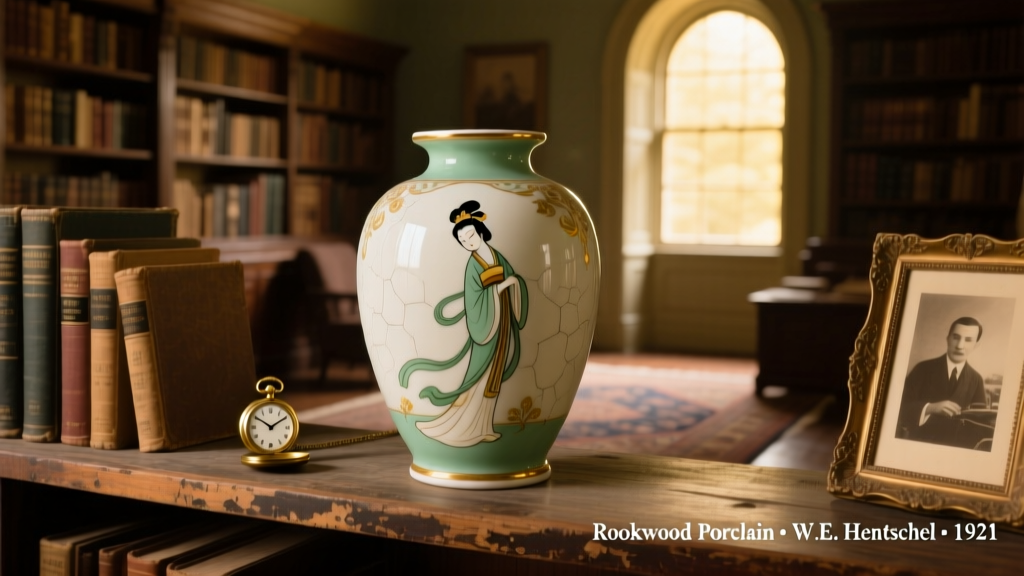
Rookwood Vase, Oriental Figure Design by W. E. Hentschel, 1921 — A Deep Appraisal of a Mid-Century American Art Pottery Masterpiece

Batwing Barometer with Patera Inlay: A George III English Wall Barometer, 34 Inches Tall — Provenance, Construction, and Market Value