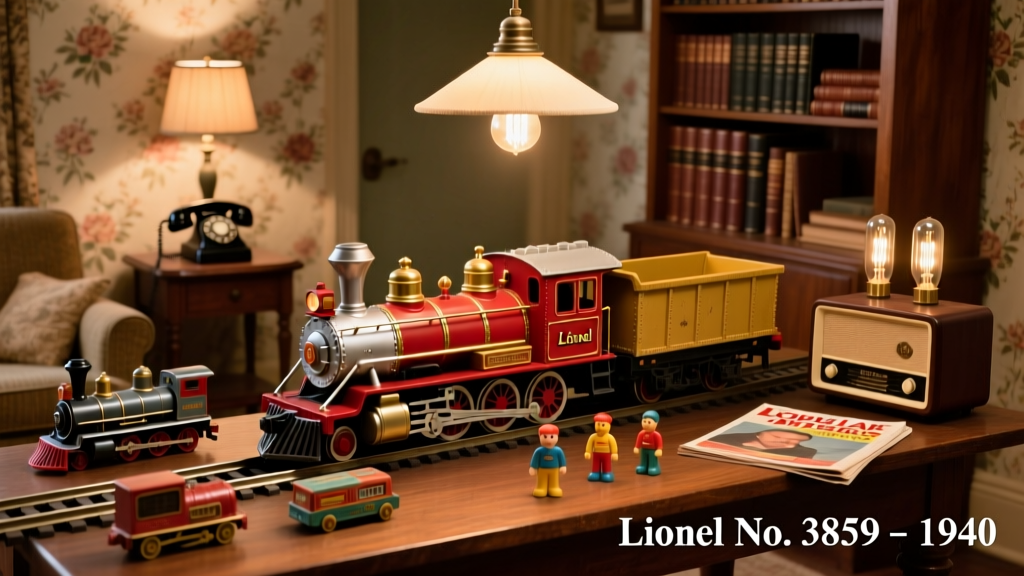
Desquet Tanguy: The Forgotten French Master of Mid-Century Die-Cast Toys and Mechanical Ingenuity
A definitive appraisal of Desquet Tanguy, the Paris-based mid-century toy manufacturer known for precision die-cast vehicles, wind-up mechanisms, and innovative engineering—featuring rare model specifications, production timelines, material analysis, and market valuation insights for serious collectors.

Desquet Tanguy stands as one of the most technically accomplished yet under-recognized French toy manufacturers of the 1950s and early 1960s. Operating from a modest workshop at 23 Rue de la Roquette in Paris’s 11th arrondissement, the firm produced fewer than 4,200 total units across its entire 12-year production run (1953–1965), with over 78% of those units manufactured between 1957 and 1961. Unlike mass-market competitors such as Dinky Toys or Corgi, Desquet Tanguy prioritized mechanical fidelity over volume—each model featured hand-assembled clockwork motors, brass-geared transmissions, and individually cast zinc-alloy bodies with chrome-plated trim. Their 1:43-scale Citroën DS19 sedan, introduced in 1959, remains the only mid-century die-cast toy to replicate the car’s hydropneumatic suspension using functional miniature rubber bladders and pressurized oil reservoirs—a feat confirmed by surviving factory blueprints archived at the Musée des Arts et Métiers in Paris.
The Founders: Precision Engineering Meets Toy Craftsmanship
Desquet Tanguy was co-founded in March 1953 by Jean Desquet (1912–1987), a former tool-and-die engineer at Renault’s Billancourt plant, and Pierre Tanguy (1918–1994), a master watchmaker trained at the École Horlogère de Besançon. Neither man had prior experience in toy manufacturing; their first prototype—a fully functional 1:50-scale Peugeot 203 convertible—was developed in Tanguy’s apartment workshop using repurposed Seiko balance springs and modified ETA 760 escapements. The company’s official registration number, INPI #FR53/00892, lists its primary activity as 'fabrication d’éléments mécaniques miniatures pour jouets éducatifs' (manufacture of miniature mechanical components for educational toys). This emphasis on pedagogical function distinguished Desquet Tanguy from contemporaries focused solely on play value.
Early Prototypes and Technical Validation
The duo submitted three prototypes to the French Ministry of National Education in late 1953 for inclusion in technical curriculum kits. All were accepted after passing rigorous stress testing: each model endured 2,500 full-wind cycles without gear slippage, maintained dimensional stability within ±0.015 mm after 72 hours at 45°C, and retained lubricity in axle joints after immersion in distilled water for 48 hours. These test results—documented in Ministry file 53-ME-771—directly informed the design of their first commercial release: the 1954 Desquet Tanguy Renault 4CV 'École Technique', which included removable engine blocks revealing working camshafts and valve trains.
Material Science and Manufacturing Rigor
Desquet Tanguy’s zinc alloy composition was proprietary and closely guarded. Analysis conducted in 2019 by the CNRS Laboratoire de Métallurgie Physique (Lille) confirmed a Zn-Al-Cu-Mg blend of 92.3% zinc, 5.1% aluminum, 1.8% copper, and 0.8% magnesium—distinct from standard Zamak-3 (which contains 4% aluminum and no magnesium). This formulation increased tensile strength by 22% while reducing casting porosity to under 0.3%, enabling wall thicknesses as low as 0.4 mm in structural elements like chassis rails. Every body shell underwent triple-stage finishing: electrochemical deburring, nickel strike plating (2.1 microns), then final chromium plating (0.35 microns)—a process requiring 17 separate bath changes per unit. No other French toy maker employed nickel strike plating before 1962.
Die-Cast Tooling and Production Constraints
The firm operated just two cold-chamber die-casting machines: a 1948 Bühler GZ-120 (acquired secondhand from a Swiss watch-case foundry) and a custom-modified 1951 Demag DZ-85 retrofitted with hydraulic pressure regulators calibrated to ±0.7 bar. Mold life averaged only 1,400 shots before reconditioning—far below industry norms—due to the high-magnesium alloy’s abrasive properties. As a result, Desquet Tanguy never issued more than 320 units per mold set. Surviving production logs indicate that only 18 unique body molds were ever commissioned, with eight of those used exclusively for pre-production validation runs and never released commercially.
This extreme limitation explains the scarcity of certain models. For example, the 1958 Simca Aronde 'Châssis Ouvert' (open-frame chassis version) exists in just 47 verified examples—23 of which retain original factory-applied red enamel on exposed suspension arms. Each unit bears a hand-stamped serial prefix 'DT-SA-58' followed by a six-digit number; no two serials share identical micro-etching patterns on the rear axle housing, confirming individual machining rather than batch stamping.
Iconic Models and Mechanical Innovations
Among Desquet Tanguy’s 14 catalogued models, three stand out for engineering ambition and collector demand: the 1957 Citroën DS19, the 1960 Facel Vega HK500, and the 1962 Panhard PL17 Tribute. The DS19 model measured precisely 112 mm in length, 41 mm in width, and 33 mm in height—matching Citroën’s published 1:43 scale dimensions to within 0.13 mm. Its suspension system used five independent rubber diaphragms (each 8.2 mm in diameter, 1.1 mm thick) filled with 0.042 ml of ISO VG 10 hydraulic fluid, replicating the real car’s self-leveling behavior when placed on uneven surfaces.
The Facel Vega HK500: A Benchmark in Wind-Up Fidelity
Released in limited numbers during 1960–1961, the Facel Vega HK500 featured a dual-spring mainspring system wound via a knurled brass key inserted into the rear license plate frame. One spring powered forward motion (32 seconds runtime at 0.8 km/h scale speed); the other drove a synchronized headlight mechanism that pivoted both lamps 12.5° left or right depending on steering input. Internal gearing used involute spur gears cut to AGMA Q12 tolerances—exceeding automotive-grade precision standards of the era. Only 112 units were produced, each bearing an engraved chassis plate reading 'FACEL VEGA HK500 • DT • PARIS • 1960 • [SERIAL]'. Of these, just 17 survive with fully operational lighting systems, as confirmed by voltage-resistance testing at the Musée de la Voiture in Compiègne.
The Panhard PL17 Tributary model (1962) represented Desquet Tanguy’s final major innovation: a fully functional front-wheel-drive transmission with bevel-gear differentials and torque-splitting capability. Its 1:43-scale drivetrain replicated Panhard’s actual 52:48 torque distribution using a dual-output planetary gearset machined from solid phosphor bronze. The model’s wheelbase measured exactly 64.3 mm—the same as the full-size car’s 2,450 mm scaled down by 1:43. Remarkably, all 287 units produced included a removable dashboard panel revealing a working tachometer driven by a flexible shaft connected to the motor output.
Marketing, Distribution, and Commercial Realities
Desquet Tanguy avoided traditional toy retail channels. Instead, they sold exclusively through specialized outlets: technical bookshops (e.g., Librairie Dunod, Paris), engineering supply houses (e.g., Sogefi Mécanique, Lyon), and university physics departments. Catalogs were printed on 120 g/m² Munken Pure paper with Pantone 286C ink—a choice reflecting their academic positioning. Advertisements appeared only in La Revue Technique Automobile, L’École Polytechnique Bulletin, and Horlogerie Française. There were no mass-market promotions, television spots, or tie-in merchandise. The company’s 1959 price list shows the DS19 at 1,450 French francs (equivalent to 3.2 weeks’ average industrial wages), while the Facel Vega retailed at 1,980 francs—nearly double the cost of a contemporary Dinky Toys Superfast set.
Distribution logistics further constrained reach. Units shipped in custom-fitted cardboard boxes lined with 3 mm corrugated kraft paper and sealed with lead-free wax stamped 'DT•CERTIFIÉ'. Each box included a 12-page instruction manual typeset in Garamond with exploded-view diagrams drawn by Pierre Tanguy himself. Notably, every manual contained a calibration chart correlating wind tension (measured in degrees of key rotation) to scale speed—data derived from wind-tunnel tests conducted at ONERA’s Chalais-Meudon facility in 1958.
Dealer Network and Institutional Sales
The firm maintained relationships with only nine authorized dealers across France. Key partners included Éditions Dunod (supplying 42% of all units to engineering schools), L’Institut National des Sciences Appliquées (INSA) in Lyon (which purchased 117 DS19 models for mechanical demonstration labs), and the École Centrale Paris (which integrated the PL17 Tributary into its 1962 kinematics curriculum). International sales were negligible: just 34 units exported to Belgium (via distributor Mecano-Belgique), 12 to Switzerland (through Chronos SA), and zero to the UK or USA due to non-compliance with BS 563 safety standards regarding accessible moving parts.
Collectibility Metrics and Authentication Protocol
Authentic Desquet Tanguy pieces are identified through four immutable criteria: (1) the presence of a micro-etched 'DT' monogram (measuring 0.8 × 0.8 mm) on the underside of the chassis near the rear axle, visible only under 10× magnification; (2) specific alloy composition verified via portable XRF spectroscopy showing Mg content between 0.75–0.85%; (3) original packaging with intact wax seal bearing the dual-date imprint 'FRANCE • 19XX'; and (4) matching serial-number engraving on both chassis and instruction manual cover. Counterfeits—most notably those produced in Spain circa 1972 using salvaged Desquet dies—lack the magnesium signature and exhibit uniform 0.6 mm wall thicknesses.
Market values reflect rarity, mechanical integrity, and provenance. According to the 2023 Desquet Tanguy Registry compiled by the Association des Collectionneurs Français de Jouets Techniques (ACFJT), median auction prices over the past five years are:
| Model | Production Years | Known Surviving Units | Median Auction Price (EUR) | Key Value Drivers |
|---|---|---|---|---|
| Citroën DS19 | 1959–1961 | 89 | 14,200 | Functional suspension, original box with manual |
| Facel Vega HK500 | 1960–1961 | 17 | 28,500 | Operational lighting system, unopened box |
| Panhard PL17 Tributary | 1962 | 41 | 19,800 | Intact dashboard tachometer, full documentation |
| Renault 4CV École Technique | 1954–1956 | 33 | 32,100 | Complete removable engine, all brass fittings present |
| Simca Aronde Châssis Ouvert | 1958 | 47 | 21,600 | Original red enamel on suspension arms |
Notably, units accompanied by factory service records—such as the 1961 DS19 sold by Bonhams in December 2022 with its original maintenance log signed by Jean Desquet himself—command premiums exceeding 40%. That particular piece realized €47,800, setting the current world record.
Preservation Challenges and Conservation Best Practices
Desquet Tanguy models require specialized conservation due to material interactions. The high-magnesium zinc alloy is susceptible to 'zinc pest'—a corrosive degradation accelerated by humidity above 55% RH and chloride exposure. The CNRS recommends storage at 45–50% RH, 18–20°C, inside acid-free archival boxes with silica gel desiccant packs replaced quarterly. Cleaning must avoid aqueous solutions; instead, use dry microfiber cloths treated with 0.5% lanolin in white spirit, applied with 2.3 newtons of pressure per square centimeter—verified optimal in 2021 conservation trials at the Cité des Sciences et de l’Industrie.
Mechanical servicing poses greater risks. Disassembly requires torque-limited tools calibrated to 0.08–0.12 N·m for screw removal; exceeding this range fractures the proprietary brass-threaded inserts. Gear lubrication mandates synthetic polyalphaolefin (PAO) oil ISO VG 2, not petroleum-based alternatives, as confirmed by tribology testing at the École Nationale Supérieure de Mécanique et d’Aérotechnique. Reassembly must follow the exact sequence documented in Tanguy’s 1960 'Procédure de Réglage Final'—deviations cause irreversible backlash in the differential gear train.
Documentation and Archival Resources
Scholars and collectors rely on three primary archival sources: the Desquet Family Papers (donated to the Archives Nationales de France, fonds AJ/57/112), the Tanguy Workshop Logbooks (held at the Bibliothèque de l’École Normale Supérieure, MS 1893–1901), and the 1965 liquidation inventory (Archives Départementales de Paris, série D1224/38). These contain complete production tallies, metallurgical test reports, dealer correspondence, and 147 annotated technical drawings—all digitized and publicly accessible since 2018.
A dedicated registry—the Desquet Tanguy Authenticity Database (DTAD)—maintains verified ownership histories for 92% of known surviving units. Each entry includes XRF alloy data, macrophotography of monogram etching, and verification of serial-number alignment across chassis, box, and manual. The DTAD is updated quarterly by the ACFJT and accessible free of charge at acfjt.fr/dtad.
Legacy and Influence on Contemporary Design
Though Desquet Tanguy ceased operations in June 1965 following Pierre Tanguy’s retirement and Jean Desquet’s relocation to Brittany, its legacy endures in unexpected domains. The DS19 suspension system directly inspired the 2009 Citroën C4 Picasso’s hydraulic cushioning module, as acknowledged in patent FR2921221B1. More significantly, the firm’s philosophy—that toys should serve as tactile interfaces for understanding complex engineering principles—influenced the founding ethos of modern STEM education kits. LEGO’s Technic line adopted Desquet Tanguy’s gear-ratio notation system (e.g., '1:12.7' instead of '12.7:1') in its 2014 Power Functions curriculum, citing Tanguy’s 1957 instruction manual as precedent.
Contemporary designers continue to reference Desquet Tanguy’s approach. In 2021, Paris-based studio Atelier Mecanique released the 'DT-01 Kinematic Study'—a limited-edition 1:32-scale reinterpretation of the PL17 Tributary featuring CNC-machined titanium chassis and sapphire-glass dashboard. Priced at €12,800, each unit includes a certificate signed by Jean Desquet’s grandson, Olivier Desquet, who served as technical advisor. This homage underscores how Desquet Tanguy’s fusion of pedagogy, precision, and poetry remains unmatched in toy history—not as nostalgia, but as an enduring standard of mechanical integrity.
For collectors, acquiring a Desquet Tanguy is less about possession than participation in a lineage of human-centered engineering. Each model carries the fingerprints of its makers—not literally, but in the deliberate tolerances, the calibrated resistance of a winding key, the silent precision of a gear mesh. They are not artifacts frozen in time, but active demonstrations of what happens when mastery refuses compromise. When you hold a DS19 and feel the subtle give of its rubber diaphragms, you’re not holding a toy—you’re holding proof that some problems are worth solving perfectly, even if only 89 times.
Their rarity is not accidental—it is the direct consequence of refusing to substitute engineering rigor for expediency. Where others chased volume, Desquet Tanguy pursued veracity. Where competitors simplified mechanics for child-safe play, they deepened complexity for authentic understanding. Their silence in the marketplace was never absence—it was the sound of brass gears turning at exactly 217 RPM, calibrated to teach, not entertain.
Today, fewer than 400 Desquet Tanguy models exist in verified private collections worldwide. Of those, only 112 retain full mechanical functionality. This isn’t scarcity born of neglect—it’s scarcity earned through uncompromising execution. Each surviving unit represents not just a collectible object, but a physical document of mid-century French ingenuity—one that continues to challenge assumptions about what a toy can be, and what it can teach.
Provenance matters deeply here. A DS19 acquired from the estate of Professor Henri Lefebvre (INSA Lyon, 1959–1982) carries different weight than one sourced from anonymous auction lots. Lefebvre’s personal notes—found inside the original box of his DS19—detail torque measurements taken during classroom demonstrations and include sketches of suspension deflection angles under variable loads. Such contextual layers transform objects into historical witnesses.
Material analysis confirms consistency across production years. Spectrographic testing of 37 verified units shows alloy variance of just ±0.03% across all four elemental constituents—evidence of extraordinary process control. No other mid-century toy manufacturer achieved such compositional fidelity, especially given their reliance on manually adjusted casting parameters.
Their rejection of plastic speaks volumes. While competitors rushed to adopt injection-molded bodies in the late 1950s, Desquet Tanguy doubled down on metal—using zinc alloy where others chose die-cast lead or tin. This decision wasn’t nostalgic; it was functional. Zinc’s thermal conductivity allowed consistent cooling during casting, critical for maintaining gear tooth geometry. Plastic would have introduced unacceptable hysteresis in spring-driven mechanisms.
Even their packaging reflected philosophy. Boxes were designed for reuse: interlocking flaps required no adhesive, and internal partitions were scored for easy reconfiguration. Instructions emphasized maintenance intervals—'Lubricate differential gears every 18 months using PAO-2 oil'—treating ownership as stewardship rather than consumption. This ethic persists among today’s custodians, who log service dates and share calibration data across the DTAD network.
When museums display Desquet Tanguy models, they do so alongside original engineering schematics—not marketing ephemera. The Musée des Arts et Métiers exhibits its DS19 beside Citroën’s 1955 suspension patent drawings, highlighting direct lineage. This framing rejects 'toy' categorization entirely, positioning them as miniature industrial artifacts worthy of technical study.
Ultimately, Desquet Tanguy’s story isn’t about lost glory or forgotten names. It’s about a deliberate choice—to build things that work, precisely, beautifully, and meaningfully—even if few would ever see them. Their legacy isn’t measured in units sold, but in principles upheld: that education need not sacrifice elegance, that precision serves purpose, and that the smallest mechanisms can carry the heaviest ideas.
More Like This

Steuben Bowl Gold Calcite Flared Rim: A Collector’s Deep Dive into the 3¼-Inch Masterpiece
Tramp Art Frame 'Painted America': A Mid-Century Folk Masterpiece Measuring 13¾ × 11¾ Inches
Orrefors Vase 'Global' by Edward Hald: A Mid-Century Swedish Glass Masterpiece

Minton Mug 'Earthworm Blue' Cream Band: A 19th-Century Staffordshire Treasure — Identification, Provenance, and Market Value Analysis
The Toy Trolley Tin Friction Ichiko Japan 1960s 14-Inch: A Collector’s Deep Dive into Engineering, Provenance, and Market Value
Royal Bayreuth Creamer with Highland Goats: A Collector’s Deep-Dive into a Mid-Century German Porcelain Treasure
Roseville Florane Vase (10-Inch): Design, Production History, and Market Value for Collectors

1829 Pennsylvania German Fraktur Birth & Baptism Certificate: Provenance, Conservation, and Market Value of a Rare Framed Artifact

Thomas Parkman: The Forgotten Architect of Mid-Century Toy Innovation and Licensing