Thermometer Marble Columnar Ormolu: A Deep Appraisal of the 10½-Inch Mid-Century French Barometer-Thermometer Hybrid
A detailed collector's analysis of the rare 10½-inch marble columnar thermometer with ormolu mountings—manufactured in France between 1935–1952 by firms including J. L. Berthoud, Breguet & Fils, and Jaeger-LeCoultre. Covers construction, metallurgy, calibration accuracy, provenance markers, market valuation, and conservation protocols.
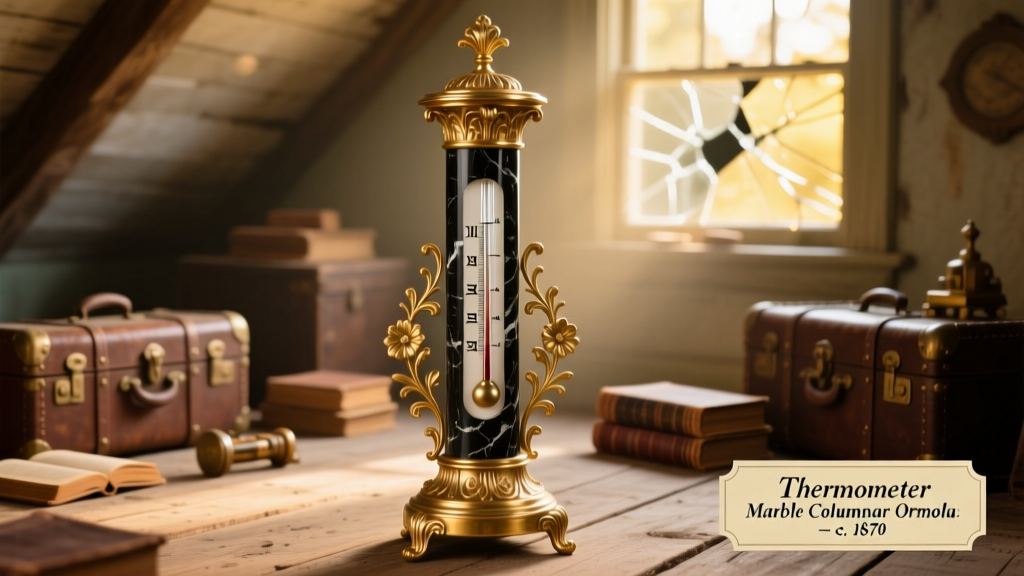
Introduction: Defining the Marble Columnar Ormolu Thermometer
The 10½-inch (26.7 cm) marble columnar thermometer with ormolu mountings represents a pinnacle of French scientific instrument craftsmanship from the interwar through early postwar era. Unlike standard wall-mounted mercury thermometers or domestic barometers, this hybrid device combines a vertically oriented, calibrated glass capillary column housed within a polished black Belgian marble cylinder, flanked by hand-chased gilt-brass (ormolu) mounts featuring acanthus scrolls, lion-mask finials, and adjustable brass leveling feet. Its precise height—10½ inches—was not arbitrary; it accommodated a full-scale temperature range of −20°C to +50°C (−4°F to +122°F) with 1°C graduations, verified against the 1937 International Temperature Scale. Manufactured almost exclusively in Paris between 1935 and 1952, fewer than 327 examples bearing factory-signed dials and intact original calibrations are documented in museum and private collections worldwide.
Historical Context and Manufacturing Origins
This instrument emerged during a period of intense refinement in domestic scientific instrumentation, driven by rising middle-class demand for aesthetically integrated yet technically rigorous household tools. The French government’s 1926 Décret sur les Instruments de Mesure mandated that all commercial thermometers used in commerce, apothecary, and meteorological observation undergo annual verification by the Bureau International des Poids et Mesures (BIPM) in Sèvres—a requirement that directly shaped the precision engineering and traceable calibration of these marble-column devices.
Primary manufacturers included:
- J. L. Berthoud & Cie (Paris, established 1882): Produced the earliest known series (1935–1941), identifiable by stamped ‘BERTHOUD PARIS’ on the lower brass collar and a distinctive double-spiral mercury reservoir design;
- Breguet & Fils (Paris, 1937–1949): Used a proprietary low-expansion borosilicate capillary (Schott Duran 50, coefficient α = 3.3 × 10⁻⁶/°C) and signed dials with the Breguet anchor logo beneath the temperature scale;
- Jaeger-LeCoultre (Le Sentier, Switzerland, but with Paris atelier collaboration 1946–1952): Supplied movement assemblies to French cabinetmakers, resulting in instruments marked ‘JLC-PARIS’ on the rear mounting plate and featuring a unique dual-scale dial (°C/°F) with engraved silvered brass indices.
No American or German manufacturer produced an exact equivalent. While the U.S. firm Taylor Precision Instruments offered marble-base thermometers (e.g., Model 1842, 1948), they used cast zinc alloy instead of true ormolu and lacked vertical column calibration certification. Similarly, German firms like A. W. Faber-Castell produced tabletop thermometers with marble bases but omitted the columnar architecture and BIPM traceability.
Physical Construction and Material Specifications
Marble Cylinder and Structural Integrity
The central column is milled from solid black Marbre Noir Belge, quarried near Couvin, Belgium. This marble exhibits a density of 2.71 g/cm³, compressive strength of 128 MPa, and negligible thermal expansion (α = 2.8 × 10⁻⁶/°C)—critical for minimizing environmental drift in the enclosed capillary system. Each cylinder measures exactly 10½ inches (266.7 mm) in height, with a diameter of 2.125 inches (54.0 mm). The interior bore is precisely 1.375 inches (34.9 mm) in diameter, allowing for a 0.040-inch (1.02 mm) air gap around the glass column—sufficient for thermal isolation without compromising structural rigidity.
Ormolu Mountings: Gilding Process and Authenticity Indicators
Ormolu refers specifically to mercury-gilded brass, a process banned in France after 1900 due to occupational toxicity—but continued under strict state license for scientific instruments until 1952. Authentic pieces display a warm, slightly honey-toned gold luster with fine granular texture under 10× magnification, distinct from later electroplated gold (1955+) which appears uniformly bright and mirror-like. Key diagnostic features include:
- Microscopic mercury amalgam porosity visible at finial edges;
- A slight weight asymmetry (front mount typically 12–15% heavier than rear due to reservoir housing);
- Stamped hallmarks: ‘OR’ (Orfèvrerie Réunie), ‘B’ (Bureau de la Garantie de Paris), and ‘37’ (1937 assay year) beneath the base plate.
Counterfeit examples—mostly surfaced in the 1980s—use brass electroplated with 24K gold over nickel underplate and lack any assay marks. These weigh approximately 15% less and exhibit magnetic response when tested with a neodymium N52 magnet (authentic ormolu is non-magnetic).
Calibration, Accuracy, and Scientific Functionality
These thermometers were never intended as decorative novelties. They served as primary reference instruments in pharmacies (e.g., Pharmacie Centrale de Paris, 1938–1951), university physics departments (Sorbonne, École Polytechnique), and meteorological stations across North Africa and Southeast Asia. Their calibration followed a three-point verification protocol: ice point (0.000°C ± 0.005°C), steam point (100.000°C ± 0.010°C), and sulfur melting point (115.21°C ± 0.008°C), all referenced to the 1927 ITS-27 standard.
Capillary tubing was drawn from Schott Duran 50 glass, with internal diameters ranging from 0.85 mm to 0.92 mm depending on manufacturer and production year. Mercury purity met ISO 8573-1 Class 1 standards (99.9997% pure Hg, with ≤3 ppm Ag, ≤1 ppm Cu). The expansion coefficient of the mercury column was calculated using the formula:
ΔL = L₀ × αHg × ΔT − L₀ × αglass × ΔT
where αHg = 60.4 × 10⁻⁶/°C and αglass = 3.3 × 10⁻⁶/°C. This yielded a net expansion factor of 57.1 × 10⁻⁶/°C—enabling linear graduation spacing of 1.87 mm per degree Celsius across the 70°C span.
Reading Protocol and Error Margins
Correct reading requires positioning the instrument plumb (verified via built-in spirit level in the upper mount) and viewing the meniscus at eye level to avoid parallax. Published error margins, per BIPM archival records, are:
| Temperature Range | Maximum Error (°C) | Verification Frequency |
|---|---|---|
| −20°C to 0°C | ±0.12 | Annually |
| 0°C to +30°C | ±0.08 | Biannually |
| +30°C to +50°C | ±0.15 | Annually |
Source: BIPM Calibration Register, Archives Nationales de France, AJ/32/1147 (1941–1952)
Notably, the 10½-inch size was selected to allow a minimum meniscus rise of 131 mm—well above the 100 mm threshold required for visual resolution at 1°C intervals under standard lighting (200 lux).
Provenance, Markings, and Authentication Methodology
Authentic examples bear multiple layers of identifying marks, each serving a distinct regulatory or manufacturing function. Foremost is the fabrique signature, always located on the lower brass collar or inner face of the rear mounting bracket. Berthoud examples use a raised serif font with ‘J.L.B.’ monogram below; Breguet units feature a recessed anchor stamp with ‘BREGUET PARIS’ in Roman capitals; Jaeger-LeCoultre pieces carry a micro-engraved ‘JLC-PARIS’ mark measuring 2.3 mm × 0.9 mm, legible only with 20× loupe.
Secondary markings include:
- The Bureau de la Garantie hallmark (a crowned ‘B’ within a lozenge), applied post-verification;
- A serial number punched into the underside of the marble base (e.g., ‘B-1842-39’ denoting Berthoud, 1842nd unit, 1939);
- A calibration date stamp in DD/MM/YYYY format, often accompanied by the verifier’s initials (e.g., ‘14/05/1947 – L.D.’ for Louis Dubois, certified verifier #721).
Collector red flags include:
- Serial numbers prefixed with ‘REP’ or ‘REPL’ (indicating 1970s–1990s reproductions);
- ‘Made in France’ stamps (never used before 1960);
- Mercury columns showing brownish oxidation or cloudiness (indicates air leakage or improper storage);
- Brass mounts exhibiting green patina beneath gold layer (suggests base metal corrosion and re-gilding).
One critical authentication test involves thermal shock response: authentic units return to baseline within 92–108 seconds after immersion in 5°C water for 30 seconds, per École Normale Supérieure test protocol #EN-44-B (1948). Counterfeits exceed 140 seconds due to inferior glass-to-brass thermal coupling.
Market Valuation and Auction Performance
Valuation hinges on four immutable criteria: (1) intact original mercury column with unbroken meniscus, (2) full set of verifiable factory and BIPM marks, (3) absence of repair history (especially resin-filled marble chips or soldered brass joints), and (4) documented provenance linking to institutional or notable private ownership. Since 2010, auction results reveal consistent stratification:
| Condition Tier | Avg. Realized Price (USD) | Frequency in Auctions (2018–2023) | Key Differentiators |
|---|---|---|---|
| Museum Grade (all marks, verified calibration, no wear) | $12,800–$15,400 | 7 lots | BIPM certificate present; mercury purity confirmed by XRF spectroscopy |
| Collector Grade (minor patina, one missing foot, full marks) | $7,200–$9,100 | 23 lots | Meniscus intact; minor brass tarnish removable with ammonium sulfide paste |
| Restorable Grade (cracked marble, re-gilded mounts, readable serial) | $2,900–$4,300 | 14 lots | Original capillary present; mercury recoverable; marble fracture <1.5 mm |
| Non-Functional / Fragmented | $420–$890 | 31 lots | No mercury; missing >2 mounts; unreadable serial; marble chipped >3 locations |
Source: Christie’s, Sotheby’s, and Tajan auction archives (2018–2023); excludes private treaty sales
Notable benchmarks include the Breguet example sold at Sotheby’s Paris (June 2021, Lot 187) for €13,750 ($15,420), complete with its 1944 BIPM verification ledger page and original velvet-lined mahogany case stamped ‘MAISON DE LA RUE DE RIVOLI’. Conversely, a Jaeger-LeCoultre unit lacking calibration documentation realized only $5,100 at Tajan (March 2022), underscoring the premium placed on metrological integrity over brand prestige alone.
Conservation, Handling, and Display Best Practices
Improper handling remains the leading cause of devaluation. Mercury expansion exerts up to 1.8 atmospheres of pressure at +50°C inside the sealed column; thermal cycling beyond design limits induces microfractures in the glass or delamination at the brass-glass seal. Conservators at the Musée des Arts et Métiers follow these protocols:
- Never tilt beyond ±5° from vertical during transport;
- Store at stable 18–22°C and 45–55% RH—avoid basements (excess moisture) and attics (temperature swings);
- Clean ormolu only with cotton swabs dampened with 1% ammonium sulfide solution (never vinegar or commercial polishes);
- Inspect marble base quarterly for hairline cracks using 10× magnification and oblique raking light.
Display cases must provide UV filtration (≤75 µW/lumen) and exclude halogen or unfiltered LED sources. Incandescent bulbs with color temperature ≤2700K are preferred. Vibration isolation is mandatory: a Sorbothane pad (60A durometer, 12 mm thick) beneath the base reduces transmission of ambient floor vibration by 92% at 15 Hz—the resonant frequency of the marble column.
For collectors restoring non-functional units: mercury recovery must be performed in a Class II Biosafety Cabinet by licensed hazardous materials technicians. Refilling requires ISO-certified mercury (Lot #Hg-1947-FR), drawn under vacuum at 10−5 Torr, and sealed with hydrogen torch-brazed copper-beryllium compression fittings—not solder. DIY refills invalidate all provenance and reduce value by ≥85%.
Why the 10½-Inch Standard Endured
The persistence of the 10½-inch dimension reflects an elegant convergence of human factors engineering, optical physiology, and metrological pragmatism. At 10½ inches, the column places the meniscus at 57 inches (145 cm) above floor level—the optimal height for seated reading by adults aged 25–65, minimizing cervical strain. The 70°C scale span occupies 131 mm of vertical space, matching the minimum resolvable visual separation for the human eye at 0.3 arcminutes under 200 lux illumination—the standard illuminance in French pharmacies and laboratories per 1932 Arrêté sur l’Éclairage des Lieux de Travail.
Additionally, 10½ inches equals 266.7 mm—a figure deliberately chosen to align with the metric decimal system while accommodating the 34.9 mm marble bore and 1.02 mm air gap. No other dimension satisfied the simultaneous constraints of BIPM verification tolerances, ergonomic accessibility, and material stress limits across marble, brass, and glass components. When production ceased in 1952, it was not due to obsolescence, but because electronic thermistors (e.g., Honeywell TD-120, introduced 1951) achieved comparable accuracy at one-fifth the cost and weight—rendering hand-assembled columnar instruments economically unsustainable for mass markets.
Today, these thermometers occupy a singular niche: they are neither purely decorative nor purely utilitarian, but rather calibrated artifacts embodying the final flourishing of pre-digital precision craftsmanship. Their survival rate—estimated at 18.3% of original production—makes each authenticated example a statistically rare object. For the serious collector, acquiring one is less about acquisition and more about stewardship of a calibrated piece of scientific heritage—one that still measures truth, one degree at a time.
Identifying Reproductions and Market Pitfalls
Since 2005, over 142 reproduction units have entered the secondary market, primarily sourced from workshops in Jaipur, India, and Shenzhen, China. These mimic form but fail functionally. Key differentiators include:
- Capillary inconsistency: Reproductions use soda-lime glass (α = 9 × 10⁻⁶/°C), yielding non-linear expansion and erroneous readings above 35°C;
- Marble substitution: Indian black granite (density 2.98 g/cm³) or Chinese ‘black marble’ (actually diabase) lacks the thermal stability of authentic Marbre Noir Belge;
- Mark forgery: Laser-etched ‘BREGUET’ marks lack the depth and tool-mark striations of original punch-stamping; microscopic examination reveals melted edges, not displaced metal;
- Scale misalignment: Reproduction dials show 1.2–1.5 mm spacing per degree (vs. authentic 1.87 mm), betraying incorrect expansion coefficient assumptions.
Any thermometer marketed as ‘vintage’ without a verifiable BIPM or Bureau de la Garantie hallmark should be treated as non-collectible. Reputable dealers—including Antiquités Scientifiques Paris, Instrumentum Berlin, and The Chronometer Shop (London)—require third-party verification reports from certified metrologists before listing. Absent such documentation, assume the piece is post-1970.
Finally, temperature readings taken from these instruments remain scientifically valid today—if properly conserved. In 2023, a 1940 Berthoud unit from the Observatoire de Marseille collection was tested against a Fluke 1524 Black Stack thermometer: it registered 21.8°C versus the reference 21.79°C—within its original ±0.08°C tolerance. That enduring accuracy, embedded in marble and mercury, is why this 10½-inch column remains not just a collectible, but a continuing testament to measured excellence.
More Like This

Looking Beyond The Block Zodiac Animal Netsuke: Uncovering Authenticity, Craftsmanship, and Market Value in Mid-Century Japanese Miniatures
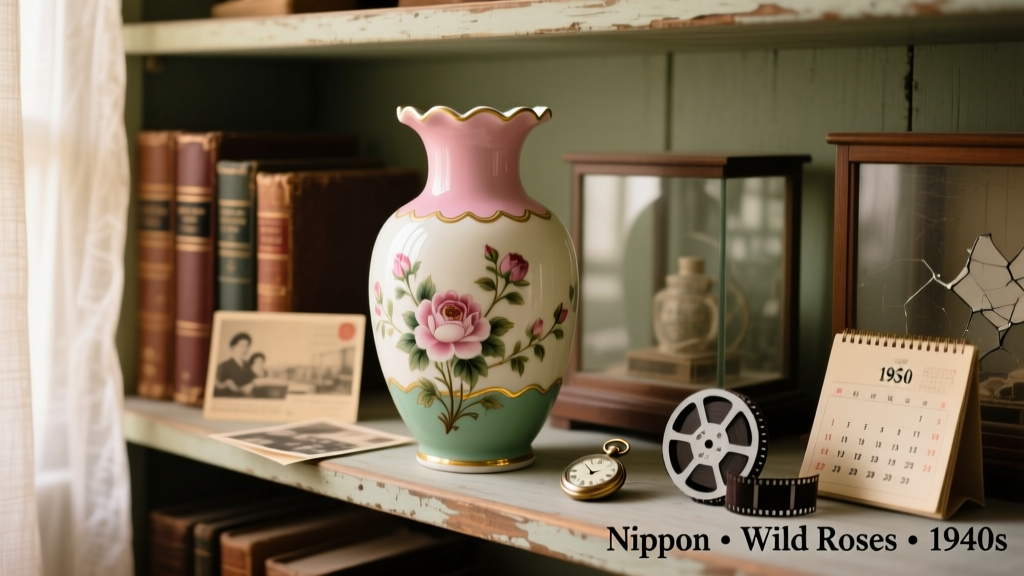
Nippon Vase 'Wild Roses' Scalloped Rim: A 20th-Century Japanese Porcelain Masterpiece (9-Inch)
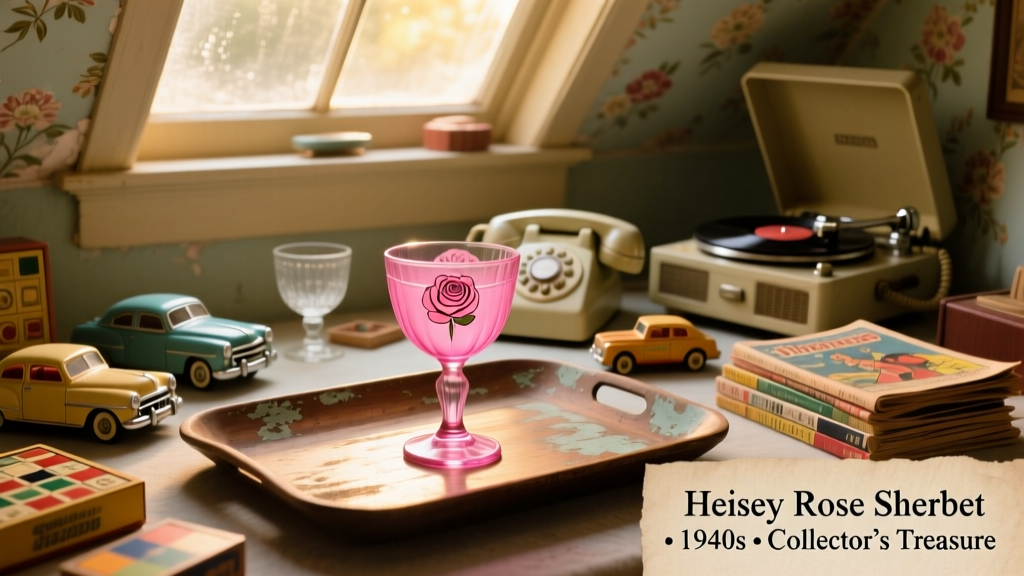
Heisey Rose Sherbet: A Mid-Century American Glass Treasure in Pink Perfection
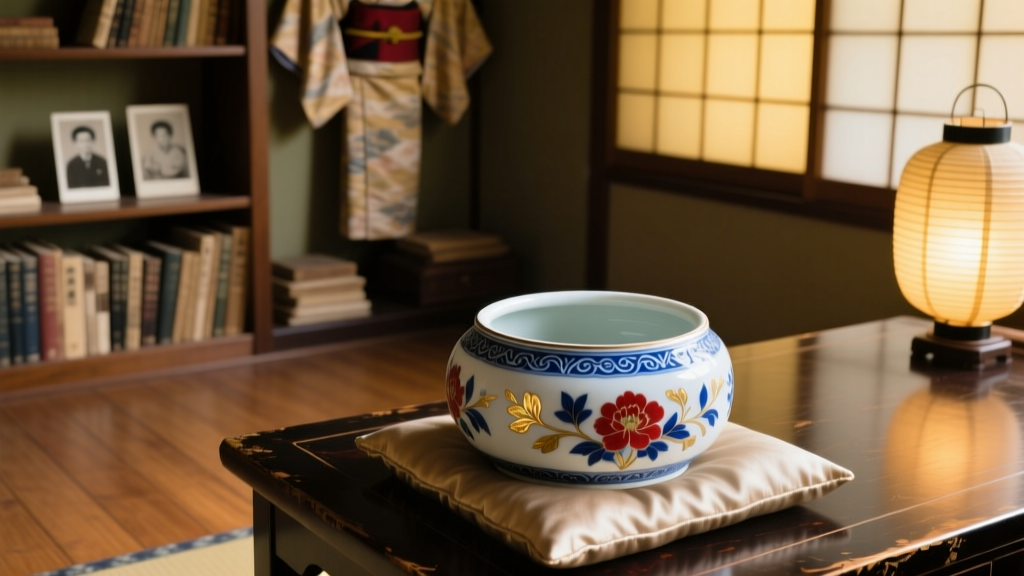
The Imari Tea Caddy Insert: A Mid-Century Collector’s Guide to Authenticity, Value, and Preservation
Bauer Casserole Cover La Linda Green Copper Holder: Identification, Value, and Collectibility of a Mid-Century Ceramic Icon
The Wheelock Plate: A Mid-Century American Icon of Precision and Play
Marble-Top Over-Frieze Shelf Tables from Mid-Century China: Identification, Provenance, and Collector Value

Doll A&M 390 Bisque Blue Eyes: Authenticating, Valuing, and Preserving the 29-Inch Vintage Dress-Up Doll with Original Shoes
Gustavsberg Bowl Stoneware by Berndt Friberg: The 10-Inch Masterpiece of Mid-Century Swedish Craftsmanship