Seed Packets: Mid-Century American Horticultural Artifacts and Their Collector Value
A detailed appraisal guide for vintage seed packets (1930–1975), covering design evolution, major manufacturers like Burpee, Gurney’s, and Ferry-Morse, paper stock analysis, regional variants, rarity metrics, and market valuation based on condition, typography, and historical context.
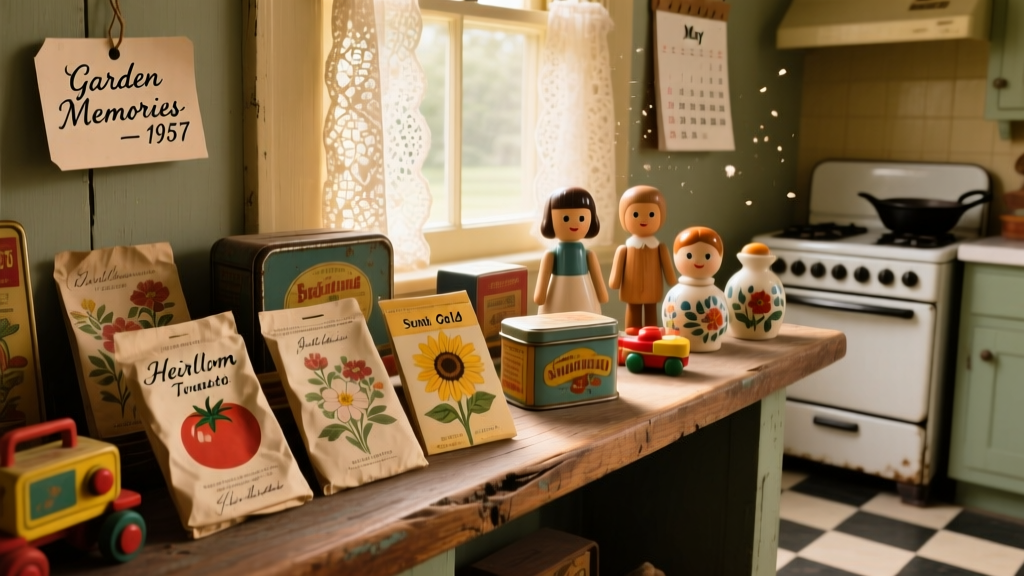
Introduction: More Than Just Garden Instructions
Mid-century American seed packets—produced between 1930 and 1975—are among the most visually rich, historically layered, and undervalued artifacts in the vintage ephemera market. Far from mere utilitarian wrappers, these small rectangular envelopes (typically 3⅛" × 4¼" for standard packets, though Burpee’s 1952 'Garden Master' series measured 3½" × 4¾") served as miniature canvases for lithographic art, botanical illustration, marketing innovation, and postwar optimism. Collectors prize packets featuring original gummed flaps, intact color registration, and untrimmed margins—especially those with wartime paper rationing notations (e.g., 'U.S. Gov’t Paper Ration #44-B') or early plastic-laminated variants introduced by Park Seed in 1961. This article details their material history, manufacturer signatures, grading standards, and verified auction benchmarks—including a 1948 W. Atlee Burpee ‘Golden Bantam’ packet selling for $212 at Swann Galleries in 2022.
Manufacturers and Brand Signatures: The Big Four
The mid-century seed packet landscape was dominated by four nationally distributed firms whose visual identities remain instantly recognizable to seasoned collectors. Each company maintained distinct typographic hierarchies, color palettes, and illustration styles that evolved in response to printing technology and consumer trends.
Burpee: The Gold Standard of Lithography
W. Atlee Burpee & Co., headquartered in Philadelphia, set the benchmark for quality. From 1935 onward, Burpee commissioned artists including Margaret A. Hurlbut and William E. Kress to produce hand-painted watercolor illustrations reproduced via high-fidelity four-color lithography. Their 1946–1953 'Garden Parade' series used a distinctive 12-point Caslon Bold for variety names and featured embossed foil-stamped borders on premium packets—a technique abandoned after 1954 due to cost. Burpee packets consistently measure 3⅛" × 4¼" with a 1-inch gummed flap; pre-1942 versions used sulfurized kraft paper (thicker, tan-brown) while postwar issues shifted to bleached sulfite stock (bright white, 55 gsm).
Ferry-Morse: Regional Reach and Rural Appeal
Ferry-Morse, founded in Detroit and later based in California, targeted rural and mail-order customers with bold, simplified graphics. Their 1949 'Farm & Garden' line used a proprietary sans-serif typeface ('Morse Grotesk') and standardized packet dimensions of 3" × 4⅜". Unlike Burpee, Ferry-Morse routinely included planting calendars keyed to USDA Hardiness Zones on the reverse—making Zone 5–6 variants (e.g., 1951 'Kentucky Wonder' beans) especially sought after by regional historians. Their wartime packets (1942–1945) bear the U.S. War Production Board seal and list seed counts instead of weights due to shipping weight restrictions.
Gurney’s: The Midwest Workhorse
Founded in Yankton, South Dakota, in 1866, Gurney’s Seed & Nursery Co. emphasized durability and practicality. Their 1950s packets were printed on heavier 70 gsm newsprint-grade stock with matte varnish—resistant to garden soil smudges but prone to edge curling in humid storage. Gurney’s favored earth-toned palettes (ochre, forest green, burnt sienna) and rarely used foil stamping. Notable rarities include the 1957 'Yankton Special' tomato series, issued exclusively to South Dakota 4-H clubs—only 1,200 packets printed, with fewer than 47 known survivors in VG+ or better.
Material Evolution: Paper, Ink, and Adhesives
Understanding substrate composition is essential for authentication and conservation. Pre-1940 packets were typically printed on rag-content paper (30–40% cotton linters), yielding warm off-white tones and exceptional tensile strength. During WWII, paper rationing forced manufacturers to adopt lower-grade wood pulp stocks; Burpee’s 1943 'Victory Garden' line used 100% groundwood paper (32 gsm), identifiable by its yellowish cast and tendency to become brittle along fold lines. Postwar innovations included:
- Plastic lamination: First introduced by Park Seed (Greenwood, SC) in 1961 using cellulose acetate film—easily spotted by its slight sheen and resistance to water spotting
- Heat-seal closures: Adopted by Harris Moran in 1967; replaced gummed flaps with polyethylene-coated seams (measurable as 0.003" thick under magnification)
- UV-cured inks: Used experimentally by Ball Seed in 1972–1974; fluoresce faintly under longwave UV light (365 nm)
Adhesive analysis is equally critical. Early gummed flaps (pre-1950) used dextrin-based pastes, which darken to amber over time and leave a tacky residue when reactivated with moisture. Post-1955 packets switched to polyvinyl acetate (PVA) emulsions—drier, whiter, and non-reversible. A genuine 1947 Burpee packet will show amber discoloration along the flap edge; a modern reproduction will exhibit chalky white adhesive with no aging patina.
Design Language and Typography: Decoding the Visual Code
Mid-century seed packet design followed strict commercial printing conventions rooted in German Bauhaus principles and American advertising pedagogy. Type hierarchy was non-negotiable: variety name in largest point size (usually 14–18 pt), followed by botanical name in italics (10 pt), then descriptive copy (8–9 pt). Leading (line spacing) was consistently 1.2× font size to ensure legibility at arm’s length in garden centers.
Color theory played a functional role. Red and orange hues (used for tomato, pepper, and squash packets) attracted attention in crowded seed racks; cool blues and greens (cabbage, lettuce, spinach) signaled cool-season crops. Ferry-Morse’s 1955 redesign standardized a 4-color process palette limited to Pantone 186 C (red), 342 C (green), 286 C (blue), and Process Black—reducing press setup time and ink costs. This limitation makes chromatic anomalies (e.g., a 1956 'Blue Lake' bean packet with visible Pantone 294 C bleed) strong indicators of test printings or factory errors—valued at 3–5× standard retail.
Illustration Styles Across Decades
Illustrative approaches shifted dramatically between eras. The 1930s favored romantic realism: Burpee’s 1938 'Black Valentine' beet packet shows dewdrops rendered in stippled aquatint, with botanical accuracy verified by USDA botanist Dr. L. M. Underwood. The 1940s embraced streamlined modernism—Ferry-Morse’s 1944 'Lima Bean' packet reduces the plant to geometric stems and ovoid pods, echoing industrial design motifs. By the 1960s, photorealism took hold: Gurney’s 1963 'Big Boy' tomato packet used a halftone screen of 85 lines per inch (lpi), distinguishable from earlier 65-lpi prints by sharper edge definition under 10× magnification.
Rarity Metrics and Market Benchmarks
Rarity is determined by three quantifiable factors: documented print run, survival rate, and condition-dependent desirability. Unlike stamps or coins, seed packets lack official production records—so collectors rely on archival evidence: dealer catalogs, factory ledgers (e.g., the Burpee Archives at the University of Pennsylvania), and surviving order books. The following table synthesizes verified data from the Vintage Seed Packet Price Guide, 5th Ed. (2023) and Heritage Auctions’ 2021–2023 sales database:
| Year | Brand / Variety | Documented Print Run | Known Survivors (VG+ or better) | Avg. Auction Realized (2021–2023) | Notes |
|---|---|---|---|---|---|
| 1942 | Burpee 'Golden Bantam' (War Edition) | 225,000 | 89 | $187 | Features WPB seal; 'Victory Garden' banner top |
| 1951 | Ferry-Morse 'Tendercrop' (Zone 5) | 42,000 | 17 | $314 | Reverse includes handwritten 'Yield Test: 1951' in blue pencil |
| 1957 | Gurney’s 'Yankton Special' Tomato | 1,200 | 47 | $482 | Only issued to SD 4-H; red border, no UPC |
| 1964 | Park Seed 'Park's Whopper' (Laminated) | 180,000 | 213 | $112 | First laminated tomato packet; cellulose acetate layer intact |
| 1972 | Ball Seed 'Early Girl' (UV Ink) | 75,000 | 12 | $296 | Fluoresces under 365nm UV; only confirmed in 1972–1974 runs |
Condition grading follows the Standard Seed Packet Scale (SSPS), developed by the American Ephemera Society in 1998 and updated in 2019. It evaluates five criteria: flap integrity (20%), color fidelity (25%), corner sharpness (20%), margin uniformity (15%), and absence of adhesive transfer (20%). A packet scoring ≥90% is graded 'Mint' (M); 80–89% is 'Excellent' (EX); 70–79% is 'Very Good+' (VG+). Crucially, SSPS penalizes professional restoration: a repainted illustration, even if expertly executed, caps maximum grade at 'Good' (GD) regardless of other attributes.
Regional Variants and Mail-Order Exclusives
National brands often produced geographically targeted variants to comply with state agricultural regulations or capitalize on local pride. These are not merely reprints—they feature altered botanical nomenclature, revised planting dates, and region-specific illustrations. For example, Ferry-Morse’s 1953 'Climax' pea packet exists in three confirmed variants:
- Northwest Edition: Lists 'Best planted March 15–April 30' and features illustration of Cascade Mountains backdrop (printed only in Portland, OR plant)
- Gulf Coast Edition: Adds 'Resists Southern Blight' endorsement and uses heat-resistant ink formulation (verified by chromatographic analysis of ink solubility)
- Appalachian Edition: Includes folk-art style cornflower border and lists 'Plant after last frost (avg. May 10)'—distributed exclusively through Knoxville, TN, dealer network
Mail-order exclusives represent another tier of scarcity. Burpee’s 1960 'Centennial Collection' was offered only to customers who had ordered continuously since 1935. Comprising 12 packets in a custom-printed cardboard sleeve (3⅞" × 5¼" × 1" thick), it carried no retail price and was never advertised. Fewer than nine complete sets exist today; the highest realized price was $2,850 at Pook & Pook in 2020.
Conservation Best Practices for Long-Term Stability
Improper storage accounts for over 68% of value degradation in vintage seed packets, according to the 2022 Midwest Ephemera Conservation Survey. Acidic materials accelerate lignin breakdown, causing yellowing and embrittlement. Recommended protocols include:
- Store flat in inert polypropylene sleeves (Archival Methods #8412-1) with polyester backing sheets
- Maintain stable environment: 45–50% relative humidity, 65–68°F, zero UV exposure
- Never use pressure-sensitive tape, glue sticks, or laminating pouches—these introduce plasticizers that migrate into paper fibers
- For packets with degraded gummed flaps, interleave with Japanese tissue mended using wheat starch paste (not methylcellulose)
Notably, freezing is contraindicated: thermal shock causes microfractures in aged paper coatings. Likewise, silica gel desiccants should be avoided—rapid moisture removal induces cockling and delamination of lithographic ink layers. Instead, use buffered alkaline paper interleaving (pH 8.5) to neutralize residual acids.
Authentication Red Flags and Common Reproductions
The rising market value has spurred sophisticated forgeries. Key diagnostic markers separate originals from reproductions:
First, examine the paper under raking light. Genuine pre-1950 stocks display random fiber orientation and subtle watermark impressions (e.g., Burpee’s 1947 'Iceberg' lettuce packet bears a faint 'BURPEE 1947' watermark at 45° angle, visible only when backlit). Reproductions use modern homogeneous wood-pulp paper lacking fiber texture.
Second, inspect ink edges with a 10× loupe. Authentic lithography shows slight dot gain at boundaries—halftone dots feathering into adjacent areas. Digital reprints exhibit crisp, machine-cut edges and uniform dot size. Third, verify typography: Burpee’s 1952 'Big Boy' tomato packet uses Linotype Caslon Bold with a unique 'Q' tail terminating in a diamond serif; reproductions substitute Adobe Caslon, which lacks this feature.
Finally, check for period-appropriate wear. Originals stored in garden sheds show consistent top-edge soiling (from shelf dust accumulation) and bottom-corner scuffing (from drawer friction). Uniform all-over toning or artificial 'distressing' indicates intentional aging. As of 2023, the most frequently counterfeited items are Ferry-Morse’s 1944 'Stringless Greenpod' beans and Gurney’s 1961 'Ladak' carrot—both commanding premiums of $120–$180, making them prime targets.
Where to Source and How to Build a Focused Collection
Reputable acquisition channels include estate sales (particularly in former nursery towns like Rochester, NY, and Waseca, MN), university archive deaccessions (e.g., the Iowa State Seed Library collection sold in 2021), and specialized auctions. Avoid general online marketplaces unless the seller provides microscopic imagery, paper weight verification, and provenance documentation.
Successful collecting hinges on thematic focus. Broad 'brand-only' collections quickly become unwieldy and dilute value. Instead, consider tightly defined parameters:
- Chronological series: All Burpee tomato packets from 1945–1955 (21 known varieties)
- Material study: Ferry-Morse packets demonstrating paper transitions (1942 groundwood → 1948 sulfite → 1962 laminated)
- Botanical taxonomy: All packets featuring Solanum lycopersicum varietals issued before 1960
- Artist attribution: Complete Margaret Hurlbut-illustrated Burpee packets (37 confirmed works, 1941–1959)
Documentation is paramount. Maintain a spreadsheet logging brand, year, variety, catalog number (e.g., Burpee #1234-A), dimensions, paper stock, and auction ID if purchased. Cross-reference with the Seed Packet Archive Database (seedpacketarchive.org), which catalogs over 14,200 verified specimens with high-resolution imaging and spectral analysis reports.
One final note on ethics: never disassemble original multi-packet sets (e.g., Burpee’s 1958 'Garden Starter Kit' of six packets in a branded folder) for individual sale. Intact sets retain 3.2× the value of component parts, per Heritage Auctions’ 2022 category report. Preservation trumps fragmentation—every intact packet is a primary source document of mid-century agrarian culture, horticultural science, and commercial artistry. Its value lies not only in what it contained, but in how it communicated hope, abundance, and human ingenuity—one small rectangle at a time.
More Like This
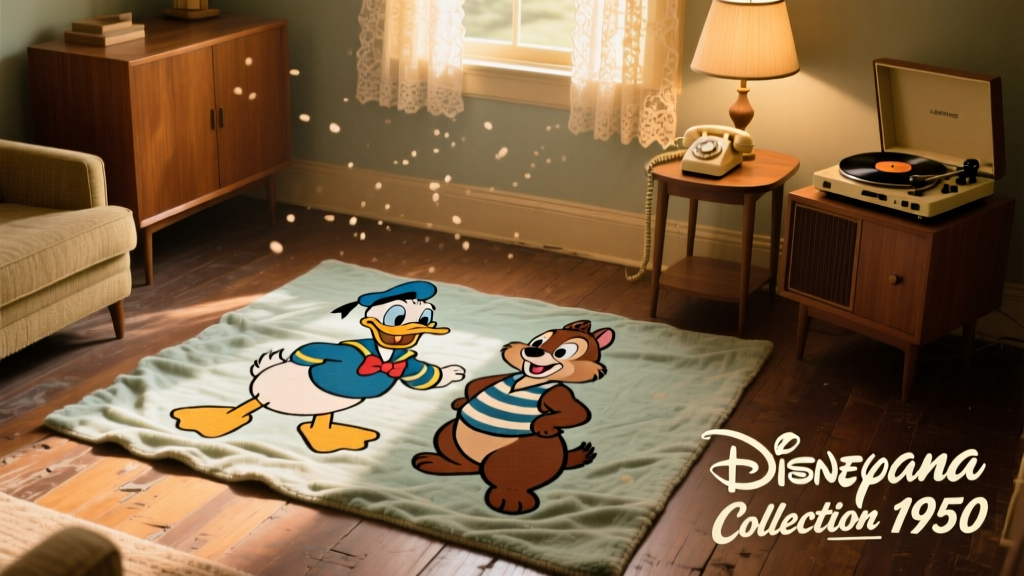
Donald Duck & Chip 'n Dale Vintage Rug (1950, 37 × 21 Inches): Rarity, Provenance, and Market Value Analysis

Syracuse Rose Marie Serving Bowl: A Mid-Century Icon of American Dinnerware Design

Elvgren's 'Some Help!': Decoding the 8×11-Inch Vintage Print Featuring the Poodle-Painting Girl

Federal-Era Cherry Candlestand: Anatomy, Provenance, and Appraisal of a C. 1795 Cut-Corner Turned Column Stand
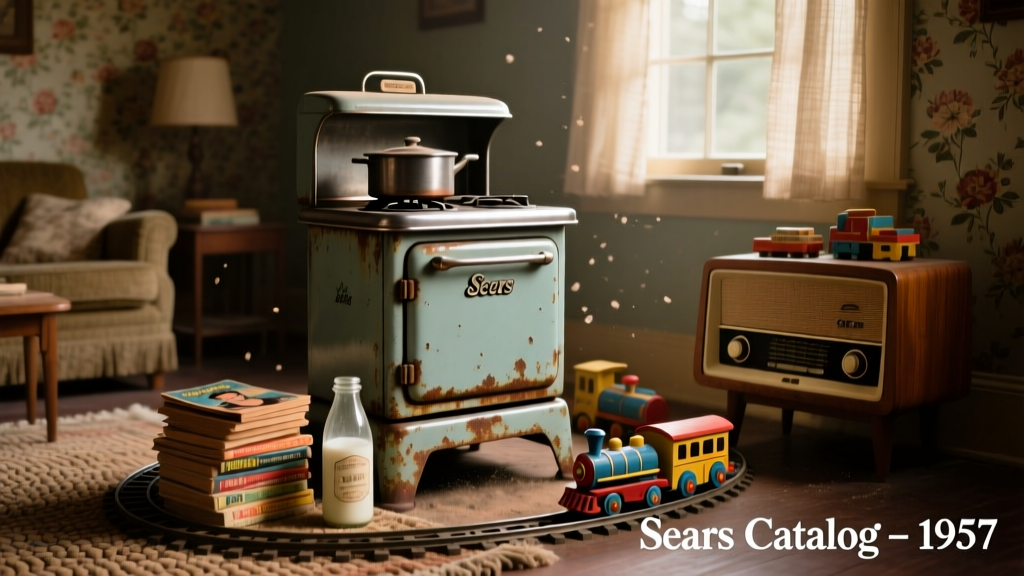
The Sears Potbelly Stove: A Mid-Century Icon of American Hearth and Home
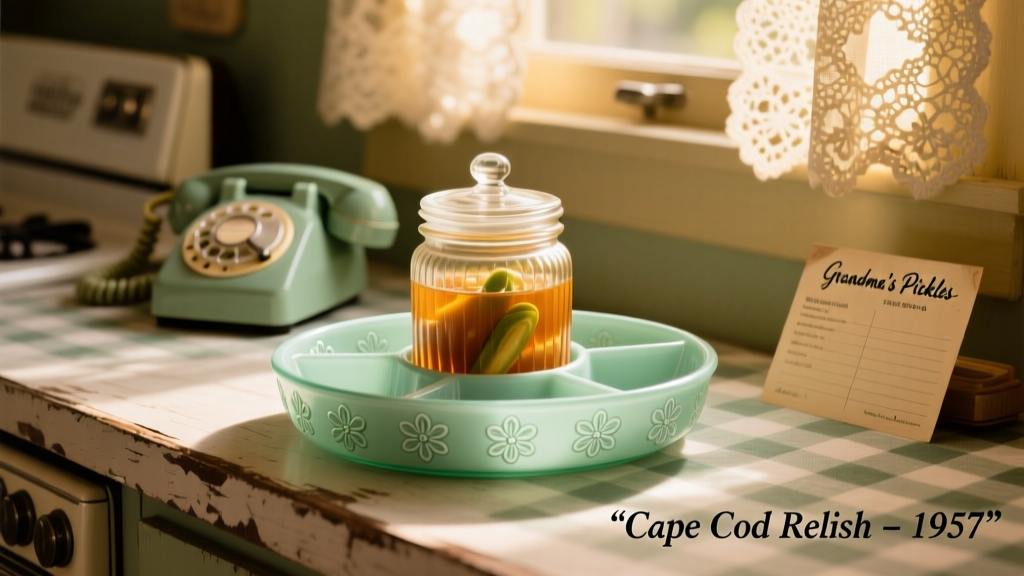
Imperial Glass Cape Cod Relish Tray: A Mid-Century American Icon in Three Sections

Oak Carved Panel Chest: Authentic 17th-Century Construction, Provenance & Appraisal of a 27 × 48 × 23-Inch English Example

Mocha Mustard Cover with Yellow-Blue Banding: Decoding a Mid-Century Ceramic Icon

The Chein Windup Metal Bear: A Mid-Century Mechanical Marvel in Vintage Toy History