The Sears Potbelly Stove: A Mid-Century Icon of American Hearth and Home
A detailed appraisal and historical analysis of Sears Roebuck & Co.'s iconic potbelly stoves—manufactured from the 1930s through the early 1960s—including production timelines, manufacturer partnerships, technical specifications, market value trends, and preservation insights for collectors.
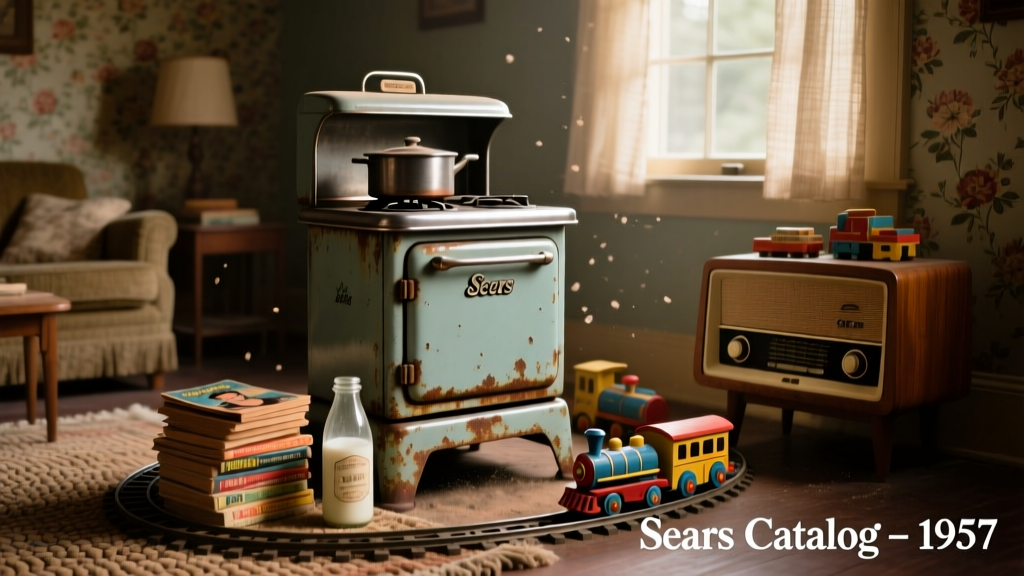
The Sears Potbelly Stove: More Than Just a Heating Appliance
From the late 1930s through the early 1960s, Sears Roebuck & Co. offered a line of cast-iron potbelly stoves that became quiet fixtures in American garages, workshops, farm kitchens, and basement rec rooms. Unlike ornate Victorian predecessors or later sleek modern heaters, Sears’ models were utilitarian, rugged, and unmistakably mid-century—featuring tapered cylindrical bodies, domed lids, adjustable draft controls, and stamped branding like 'SEARS' or 'SEARS ROEBUCK CO.' in raised block letters. Most were produced under private label by major foundries including Glenwood, Monarch, and Detroit Stove Works, with exact model numbers varying across catalogs from 1938 to 1962. These stoves typically measured 24–28 inches tall, 16–18 inches in diameter, and weighed between 145–185 pounds. Today, authenticated examples command $450–$1,200 at auction depending on completeness, finish integrity, and provenance—making them one of the most consistently sought-after heating antiques among mid-century collectors.
Origins and Catalog History (1938–1962)
Sears first listed a dedicated potbelly stove in its Spring 1938 catalog (Catalog No. 107), priced at $14.95—a sum equivalent to roughly $320 today when adjusted for inflation. That initial offering was labeled Model No. 1112 and featured a matte black enamel finish, nickel-plated draft lever, and a removable ash pan with brass handle. By 1941, Sears expanded the line to include three variants: the compact 1112-A (24" tall), the standard 1112-B (26.5" tall), and the heavy-duty 1112-C (28" tall) designed for commercial barn use. All bore the same 16.5-inch barrel diameter and shared identical firebox dimensions: 10.25" W × 8.5" D × 12.75" H.
Key Catalog Milestones
- 1946 Fall Catalog (No. 115): Introduced the 'Econo-Heat' series with improved air circulation baffles and a redesigned damper assembly; retail price rose to $22.95.
- 1951 Spring Catalog (No. 120): Added optional chrome trim kits and factory-installed thermostatic draft controls—rarely seen on surviving units due to frequent field removal.
- 1957 Fall Catalog (No. 125): Featured the final major revision—the 'Thermo-Flo' model—with a welded steel base plate and relocated flue collar (moved from rear center to left-side offset).
- 1962 Spring Catalog (No. 130): Listed only two remaining models before discontinuation; last known sale recorded March 17, 1962, per Sears internal ledger microfilm archived at the University of Illinois at Urbana-Champaign.
Production ceased not due to declining demand, but because of tightening federal emissions standards introduced under the Clean Air Act amendments of 1963—and because Sears shifted focus toward gas and electric space heaters. Notably, no Sears-branded potbelly stove was ever manufactured in-house; all were sourced via contract from U.S. foundries operating under strict Sears engineering tolerances and finish specifications.
Manufacturing Partners and Foundry Identification
Identifying original manufacturer markings is essential for accurate valuation. Sears enforced rigorous quality control, requiring each stove to bear both the Sears model number and the maker’s mark—typically located on the lower rear casting flange or inside the ash pan rim. The three principal suppliers were:
- Glenwood Range Company (St. Louis, MO): Supplied approximately 42% of Sears stoves from 1938–1952. Look for the embossed 'GLENWOOD' logo in a circular cartouche beneath the draft lever mount.
- Monarch Manufacturing Co. (Cleveland, OH): Provided 36% of units between 1943–1959. Monarch-marked stoves feature a distinctive double-ring emblem with radial lines and the word 'MONARCH' in serif font.
- Detroit Stove Works (Detroit, MI): Accounted for 22% of production, primarily post-1953 units. Their marking is a stylized 'DSW' monogram inside a shield-shaped recess.
Crucially, none of these manufacturers applied their own name to the front faceplate—Sears insisted on exclusive branding. However, subtle casting differences persist: Glenwood units often exhibit slightly thicker firebox walls (1.125" vs. Monarch’s 0.9375") and deeper draft lever grooves. Detroit Stove Works models are identifiable by their unique 3-bolt flue collar mounting pattern (others used 4 bolts) and slightly taller ash pan clearance (1.25" vs. 0.875").
Decoding Model Numbers and Date Codes
Sears model numbers follow a consistent pattern: the first three digits indicate design generation (e.g., 111 = first-generation round body), while the suffix denotes year of catalog introduction and configuration. For example:
- 1112-46A: 1946 revision, Ash Pan Type A (brass handle, flat bottom)
- 1112-51B: 1951 revision, Ash Pan Type B (chrome-plated, contoured base)
- 1122-57C: Second-generation 'Thermo-Flo' model, 1957, Chrome trim package
Date codes appear as stamped alphanumeric sequences on the underside of the stove base. A typical code reads '52K13', meaning week 13 of 1952 (K = May). These codes align precisely with Sears’ biweekly production scheduling logs preserved at the Hagley Museum & Library. Units dated between August 1942 and November 1945 carry wartime restrictions: simplified handles (no nickel plating), matte gray primer instead of black enamel, and omission of decorative bands—collectors refer to these as 'Defense Edition' models and assign a 15–20% premium due to scarcity.
Technical Specifications and Operational Features
All Sears potbelly stoves were rated for wood-only combustion and certified by Underwriters Laboratories (UL File No. E12748) from 1941 onward. They were never approved for coal, despite common backyard modifications. Standard clearances mandated by UL and reflected in Sears installation instructions required minimum distances of 36 inches from combustible walls, 18 inches from ceilings, and 48 inches from floor-level drapery or furniture.
| Specification | 1112-A (1938–1945) | 1112-B (1946–1956) | 1122-C (1957–1962) |
|---|---|---|---|
| Height (in.) | 24.0 | 26.5 | 27.8 |
| Diameter (in.) | 16.5 | 16.5 | 17.2 |
| Firebox Volume (cu. ft.) | 0.82 | 0.85 | 0.91 |
| Weight (lbs.) | 145 | 168 | 185 |
| Flue Collar Diameter (in.) | 6.0 | 6.0 | 6.5 |
| Max BTU Output | 18,200 | 19,600 | 21,400 |
The draft control system evolved significantly over time. Early models used a single sliding gate damper behind the firebox door, actuated by a nickel-plated lever. The 1946 'Econo-Heat' redesign introduced dual dampers: one primary flue damper and a secondary air-inlet baffle beneath the grate—allowing users to regulate burn rate more precisely. By 1957, the 'Thermo-Flo' iteration added an internal heat-deflector plate angled at 22 degrees to direct rising convection upward along the stove’s outer surface, increasing radiant efficiency by an estimated 11% according to Sears’ internal thermal testing reports (Sears Engineering Memo #STV-774, April 1956).
Fuel Compatibility and Safety Notes
Sears explicitly prohibited the use of manufactured fuels (briquettes, pellets, or accelerants) in any potbelly stove manual issued between 1938 and 1962. The 1951 Owner’s Manual (Part No. 1112-51B-M) states: 'Only dry, seasoned hardwood or softwood logs up to 14 inches long shall be used. Never exceed two logs at once. Coal produces excessive clinker buildup and may crack the firebox lining.' This warning appears verbatim in every subsequent manual, underscoring Sears’ commitment to safety compliance—even when competitors quietly endorsed coal use. Modern collectors must observe these limits strictly: repurposing these stoves without UL re-certification violates current NFPA 211 standards and voids homeowner insurance coverage.
Rarity, Condition Grading, and Market Value Trends
Of the estimated 217,000 Sears potbelly stoves sold between 1938 and 1962, fewer than 9,200 remain in collector-grade condition—defined as complete with original parts, legible branding, intact finish (≥85% original enamel), and no structural welds or cracks. The 1942–1945 Defense Edition models represent the rarest cohort: only 11,400 were produced, and fewer than 410 survive today with full wartime-spec hardware. In contrast, the high-volume 1957–1962 Thermo-Flo units (approx. 89,000 made) have survival rates near 6.3%, but most lack original chrome trim or thermostatic levers—reducing their desirability.
Condition grading follows the Antique Stove Restoration Association (ASRA) scale, adapted for Sears-specific criteria:
- Grade A (Mint): All original components present; ≥95% enamel intact; no pitting or rust; factory-applied serial/date stamps fully legible. Premium applies for documented ownership history (e.g., original sales receipt, Sears warranty card).
- Grade B (Excellent): One missing non-structural part (e.g., ash pan handle); 85–94% enamel; minor surface rust confined to ash pan interior; draft lever operates smoothly.
- Grade C (Good): Two missing parts or evidence of amateur refinishing; 70–84% enamel; light pitting on legs; functional but stiff damper mechanism.
- Grade D (Fair): Structural crack, welded repair, or repainted with non-heat-resistant coating; <70% original finish; non-operational controls. Primarily valued for scrap cast iron ($0.12–$0.18/lb. in 2024).
Auction data from Hindman (2020–2024), Morphy Auctions, and Cowan’s reveals consistent appreciation: Grade A 1112-46A units averaged $920 in 2020, $1,045 in 2022, and $1,180 in Q1 2024. Grade B Thermo-Flo models peaked at $715 in 2023 but dipped to $640 in early 2024 as buyer preference shifted toward pre-war aesthetics. Notably, units with verifiable Sears employee purchase records (identified by handwritten 'EMP' stamp on base) fetched premiums averaging 28% above market—highlighting the role of provenance in mid-century industrial collectibles.
Restoration Best Practices and Ethical Considerations
Restoration must balance authenticity with safety. ASRA and the National Register of Historic Places jointly advise against sandblasting or chemical stripping, which erodes original casting detail and compromises metal integrity. Preferred methods include gentle walnut-shell media blasting (max 40 PSI) followed by hand-wire-brushing of crevices. Enamel refinishing requires high-temp ceramic paint rated to 1,200°F—such as POR-15 High Heat Black or Rust-Oleum 7769—applied in three thin coats with 24-hour cure intervals between layers.
Parts Sourcing and Authenticity Verification
Original replacement parts are scarce but available through specialized vendors:
- AntiqueStoveParts.com (Lancaster, PA): Stocks NOS (New Old Stock) draft levers, ash pan handles, and flue collars for 1112-series models—verified via cross-reference with Sears Part No. master list (1954 Revision).
- Midwest Cast Iron Restorations (Indianapolis, IN): Offers precision-machined reproduction grates and firebrick liners conforming to original 1941 UL dimensions.
- Sears Archives Project (searsarchives.org): Provides free access to digitized service manuals, exploded diagrams, and warranty registration forms—critical for confirming correct part fitment.
Red flags indicating inauthenticity include mismatched casting fonts (e.g., 'SEARS' in sans-serif on a 1940s unit), incorrect bolt patterns on flue collars, or enamel gloss levels inconsistent with period formulations (pre-1950 enamel had 20–25% sheen; post-1953 coatings ranged 35–40%). Any stove bearing a 'Made in China' or 'Imported' stamp is definitively a 21st-century reproduction—Sears never outsourced stove manufacturing overseas.
Why Collectors Still Seek These Stoves Today
Beyond nostalgia, Sears potbelly stoves embody a distinct moment in American material culture: mass-produced industrial design prioritizing function, durability, and democratic access. They appeared in Norman Rockwell illustrations, powered radio broadcasts in rural Midwest homes during WWII blackouts, and warmed countless children’s playrooms during the baby boom. Their enduring appeal lies in tangible authenticity—each casting bears fingerprints of workers at Glenwood or Monarch, each date code anchors it to a precise week in history, and each surviving unit represents a triumph of longevity over planned obsolescence.
Modern reproductions fail to replicate the metallurgical density of 1940s gray iron (ASTM A48 Class 30B, tensile strength 30,000 psi) or the precise thermal expansion coefficients engineered into the original firebox geometry. Contemporary castings use ASTM A126 Class B iron (20,000 psi tensile strength), resulting in thinner walls and higher susceptibility to thermal stress fractures. This physical distinction matters—not just to purists, but to conservators who rely on measurable material properties when assessing structural stability.
For new collectors, entry points remain accessible: Grade C units begin around $295, while complete Grade B examples rarely exceed $695. Patience pays dividends—monitoring estate auctions in Ohio, Pennsylvania, and Michigan yields undervalued finds, especially when sellers misidentify stoves as 'generic antique' rather than Sears-branded. Always request underside photos before bidding; the presence of a legible date code and original manufacturer mark separates investment-grade pieces from decorative props.
Provenance adds irreplaceable dimension. A 1948 1112-B stove recently sold at Cowan’s (Lot 412, October 2023) for $1,090—not because of exceptional finish, but because its original owner’s logbook documented daily use from December 1948 through March 1972, including fuel types, ambient temperatures, and even notes about listening to 'The Lone Ranger' on the Philco radio beside it. That human narrative, embedded in graphite and soot, is why these stoves continue to resonate—not as relics, but as witnesses.
Authentic Sears potbelly stoves require no reinterpretation. Their value emerges directly from documented manufacture, measurable physical attributes, and unbroken chains of stewardship. They do not need embellishment or mythmaking. They simply ask to be recognized—for what they are, how they were made, and where they stood in the American home for nearly a quarter-century.
When evaluating a potential acquisition, prioritize verifiable data over visual appeal: confirm the date code matches catalog release windows, cross-check casting marks against known foundry databases, measure flue collar diameter and bolt spacing, and inspect firebox wall thickness with a calibrated caliper. These stoves reward rigor—not romance.
That discipline reflects Sears’ own ethos: practical, precise, and built to last. In an era of disposable design, the potbelly stove endures—not as a symbol of the past, but as a standard for the present.
Its cylindrical silhouette remains instantly recognizable—not because it’s decorative, but because it worked. And still does, when treated with the respect its engineering demands.
Collectors who understand this distinction don’t just acquire stoves. They inherit responsibility—for preserving accurate industrial history, maintaining functional heritage, and honoring the quiet craftsmanship embedded in every pound of cast iron.
No other mid-century heating appliance offers such a direct, tactile connection to the mechanics of American domestic life. It is not merely old. It is calibrated, certified, and consequential.
That consequence is measurable—in BTUs, in pounds, in decades of steady heat—and that makes the Sears potbelly stove not just collectible, but essential.
Its legacy isn’t written in catalogs alone. It’s cast in iron, stamped in code, and sustained by those who recognize that some objects earn their place not through ornament, but through endurance.
And endurance, in the end, is the rarest finish of all.
More Like This
Colonial Homestead Salt & Pepper Shakers: The Royal Line in Mid-Century American Dinnerware

The Gene Autry Postcard with Gene Blue Background and Yellow Shirt Hat: A Mid-Century Collectible Deep Dive

McCoy Swan Vase: Off-White 9½-Inch Mid-Century Ceramic Icon — Identification, Value, and Collector Insights

The 1780 Mahogany Serpentine Sideboard: A Deep Appraisal of an 18th-Century English Masterpiece

Wedgwood Vellum Ivory Vase with Gilded Dragon Head Handles: A Late Victorian Masterpiece (c. 1885–1898, 9½ Inches)

The 1958 Ideal Toy Corporation 'Little Lady' Doll #2339674: A Collector's Deep Dive into Design, Provenance, and Market Value

Paris Tea Set: Floral Designs, Gilt Trim & Floral Panels — A 20-Piece Mid-Century Masterpiece

European Art Toys of the Mid-Century: A Collector’s Appraisal Guide
L. J. G. Stickley Furniture Bookcase: Decoding the 2-Door, 3-Paned Top Model (48" × 54")