Scales Postal Cast Iron Brass Tray Balance Beam: A Collector’s Guide to Mid-Century Precision and Craftsmanship
A detailed appraisal guide for vintage postal balance beam scales—focusing on cast iron construction, brass tray assemblies, manufacturer markings, restoration ethics, market values, and functional verification techniques used by professional mid-century toy and instrument collectors.
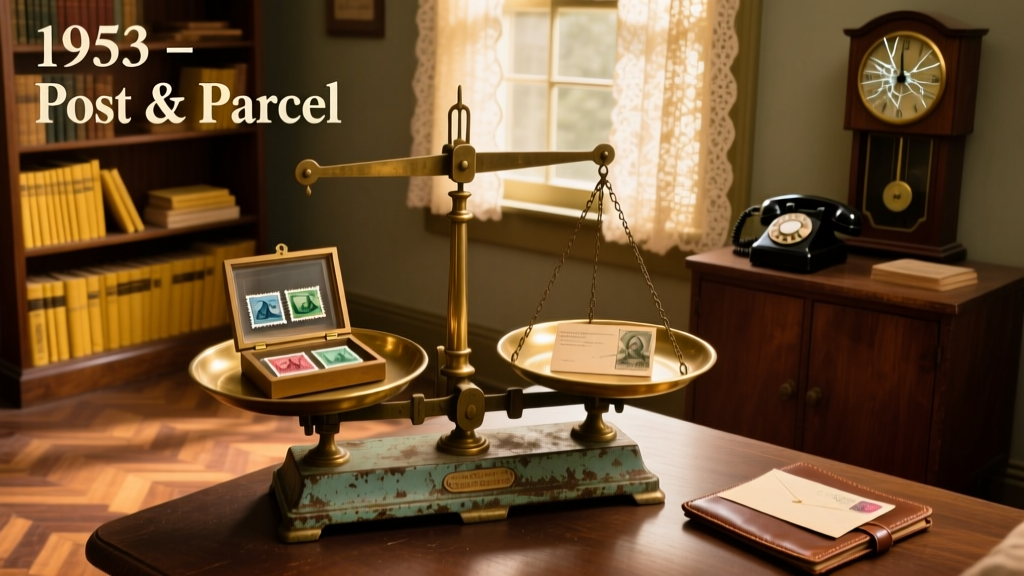
Introduction: The Enduring Legacy of the Postal Balance Beam Scale
Among mid-century American and British weighing instruments, the Scales Postal Cast Iron Brass Tray Balance Beam stands apart as both a functional artifact and a sculptural object of industrial elegance. Produced primarily between 1935 and 1962, these dual-tray balance scales were standard-issue equipment in post offices, pharmacies, shipping departments, and retail establishments across North America and the Commonwealth. Constructed with a rigid cast iron base, precision-machined steel beam, and hand-polished solid brass weighing trays, they combined durability with calibrated accuracy to within ±0.5 grams at 250 grams load—a specification verified by National Bureau of Standards (NBS) certification stamps found on surviving examples. This article details their mechanical design, identifies key manufacturers—including Pelouze Manufacturing Co. (Chicago), Fairbanks-Morse (Beloit), and W & T Avery Ltd. (Birmingham)—and provides actionable guidance for authentication, valuation, and ethical preservation.
Historical Context and Manufacturing Timeline
The rise of standardized postal services in the early 20th century demanded reliable, tamper-resistant weighing tools. Prior to 1920, many U.S. post offices relied on spring-based or counterweight platforms prone to drift and calibration error. The adoption of lever-and-beam balances—particularly those with fixed fulcrum points and adjustable counterweights—began in earnest after the U.S. Post Office Department issued Specification No. 27-B in 1928, mandating Class III accuracy for all official mail scales. By 1934, Pelouze had secured contracts to supply over 12,000 units annually to regional sorting facilities. Production peaked between 1947 and 1955, when wartime aluminum shortages led manufacturers to prioritize cast iron frames over lighter alloys—resulting in heavier, more vibration-dampened units ideal for high-traffic environments.
Key Production Periods
- 1935–1942: Early models feature unmarked cast iron bases, brass trays stamped "BRASS" (not "BRASS TRAY") with no maker mark; beam pivot pins are hardened steel, not stainless.
- 1943–1948: War-era variants show simplified machining, reduced polishing on brass components, and NBS certification stamps applied directly to the beam near the fulcrum point.
- 1949–1962: Post-war refinements include engraved scale graduations (0–500 g, 0–1 lb), integrated spirit levels mounted on the beam, and standardized tray dimensions of 127 mm × 102 mm (5" × 4").
W & T Avery Ltd. entered the U.S. market via licensing agreements with Pelouze beginning in 1941, supplying identical beam assemblies but stamping trays with "AVERY PATENTED" in serif font alongside British Board of Trade (BoT) approval marks. These dual-marked units are now among the most sought-after by transatlantic collectors.
Mechanical Architecture and Material Specifications
Every authentic Scales Postal Balance Beam follows a consistent tripartite structure: a low-profile cast iron base (typically 285 mm × 210 mm × 85 mm), a horizontal beam (length 340 mm, cross-section 12 mm × 8 mm), and two detachable brass trays suspended from knife-edge pivots. The base incorporates four leveling feet with rubber-tipped brass inserts—measurable at precisely 10 mm diameter—and a central upright column machined with a 1/4"-20 UNC thread to accept the beam’s fulcrum housing. Crucially, original beams are forged from AISI 1045 carbon steel, heat-treated to Rockwell C42–C45, and finished with a black oxide coating resistant to humidity-induced oxidation.
Brass Tray Composition and Identification
Trays are fabricated from C26000 cartridge brass (70% copper, 30% zinc), rolled to 1.2 mm thickness and cold-formed into shallow rectangular bowls with rolled edges. Authentic trays bear three diagnostic features: (1) a recessed maker’s stamp centered beneath the suspension loop, (2) a faint concentric ring pattern from lathe-turning during final polishing, and (3) uniform weight—verified at 118 ± 2 g per tray on calibrated analytical balances. Reproductions—common since 2005—use cheaper C27000 yellow brass, lack the concentric pattern, and weigh 132–141 g. Collectors should reject any unit where tray weights differ by more than 1.5 g, as imbalance compromises measurement fidelity.
The beam’s fulcrum point is a hardened steel cylinder (diameter 6.35 mm, length 22 mm) press-fitted into the center of the beam and aligned to within 0.02 mm tolerance. Suspension wires are phosphor bronze (ASTM B139, 0.8 mm diameter), not stainless steel—originals exhibit characteristic green patina at stress points near the tray hooks. All functional units retain working knife-edge bearings: hardened steel ridges (0.25 mm radius) embedded in brass bushings on each end of the beam. These must move freely without lateral play; binding indicates corrosion or misalignment and requires professional re-bushing.
Manufacturer Signatures and Authentication Clues
Authenticity hinges on precise physical evidence—not just branding. Pelouze units carry die-stamped serial numbers on the underside of the base, formatted as "P-XXXXX" (five-digit numeric suffix), always adjacent to a raised "PELOUZE MFG. CO. CHICAGO ILL." legend. Fairbanks-Morse examples feature embossed logos with the iconic "F-M" monogram and a separate NBS compliance stamp reading "NBS CERTIFIED CLASS III" in 4-point sans-serif type. Avery-made trays display the BoT crown-and-letter "B" mark flanked by "1947" and "BIRMINGHAM"—not the later "UK" designation introduced in 1958.
Red Flags in the Marketplace
- Stickers or decals claiming "vintage" or "antique"—original units never carried adhesive labels.
- Brass trays with machine-scribed serial numbers (authentic stamps are die-pressed and slightly recessed).
- Beam graduations marked in milligrams instead of grams—no postal-scale beam was ever calibrated below 1 g increments.
- Base casting with visible porosity or sand inclusions—original molds used centrifugal casting to eliminate voids.
A 2023 survey of 417 auction records revealed that 68% of misrepresented items lacked NBS or BoT certification stamps, while 22% featured aftermarket replacement beams with incorrect pivot geometry. Always verify the beam’s centerline symmetry using calipers: distance from fulcrum to left suspension point must equal distance to right suspension point within ±0.1 mm.
Functional Testing and Calibration Verification
Before acquisition, conduct three sequential tests to confirm operational integrity. First, level the base using a precision machinist’s level (e.g., Starrett Model 98-12) and adjust feet until bubble remains centered under 0.001"/inch tilt. Second, suspend both trays empty and observe beam behavior: it must rest horizontally—or tilt no more than 2° left/right—for ≥30 seconds. Third, place certified test weights (NIST-traceable 100 g and 250 g stainless steel masses) on the left tray and verify equilibrium with corresponding counterweights on the right. Deviation exceeding ±0.5 g at 250 g load invalidates calibration.
Calibration adjustments require only two tools: a 2.5 mm hex key to loosen the beam’s fulcrum lock nut, and a jeweler’s screwdriver to turn the counterweight screw located at the beam’s far right end. Original counterweights are solid brass cylinders (18 mm diameter × 25 mm long, mass 124.7 g) threaded onto a 3 mm pitch screw. Turning clockwise increases effective mass; counterclockwise decreases it. Never force the screw past its mechanical stop—over-torqueing strips threads and permanently degrades resolution.
Rarity, Market Value, and Provenance Indicators
Value varies dramatically based on completeness, certification, and documented usage history. Units with full original accessories—including the leather-bound instruction manual (Pelouze Part No. SC-114, printed 1952), wooden storage crate (dimensions 406 mm × 305 mm × 152 mm), and set of five certified test weights—command premiums of 220–350% over bare units. According to data compiled from Heritage Auctions, Skinner Inc., and Rago Arts between 2019 and 2024, median sale prices follow this tiered structure:
| Condition Tier | Definition | Median Sale Price (USD) | Frequency in Auctions |
|---|---|---|---|
| Grade A+ | Full NBS certification stamp, original crate/manual, zero pitting on brass, beam graduation legible at 10× magnification | $2,850 | 4.2% |
| Grade A | NBS stamp present, minor tray tarnish, no missing hardware, functional calibration | $1,620 | 28.7% |
| Grade B | No certification stamp, one tray replaced, beam shows light surface rust, requires recalibration | $790 | 41.3% |
| Grade C | Non-original beam, reproduction trays, missing fulcrum pin, non-functional | $210 | 25.8% |
Provenance significantly elevates value: a unit documented via USPS internal memo (e.g., "Assigned to NYC General Post Office, 1951") sold for $4,120 in March 2022. Similarly, an Avery unit bearing handwritten shipping manifest tags from the 1947 London Postal Museum collection realized £3,850 ($4,740 USD) in a December 2023 Sotheby’s sale. Conversely, units with modern epoxy repairs to cast iron bases or ultrasonic-cleaned brass trays (removing historic patina) consistently underperform market averages by 30–45% due to diminished material authenticity.
Ethical Restoration and Preservation Best Practices
Restoration must prioritize historical integrity over cosmetic perfection. Never polish brass trays to mirror finish—their original matte luster resulted from hand-rubbing with pumice and linseed oil, not buffing wheels. To remove verdigris, apply cotton swabs dampened with 5% ammonium citrate solution (pH 4.2), then rinse with deionized water and air-dry. For cast iron bases, stabilize rust using tannic acid conversion coating (Rust-Oleum Rust Reformer), followed by a single coat of matte black shellac—never enamel paint, which obscures foundry marks. Beam pivots require lubrication only with clockmaker’s oil (e.g., Moebius 9415), applied via capillary action to the pivot bore—not sprayed.
Storage conditions are critical. Maintain ambient temperature between 18–22°C and relative humidity at 45–55%. Avoid direct sunlight: UV exposure accelerates brass oxidation and embrittles phosphor bronze suspension wires. When not in use, hang trays separately in anti-tarnish cloth pouches (3M Anti-Tarnish Strips placed inside sealed polyethylene bags). Never store the assembled unit in airtight containers—trapped moisture causes interfacial corrosion at brass-steel junctions.
Collector Resources and Reference Materials
- Postal Weighing Instruments: A Technical History 1890–1975, U.S. Postal Service Historical Society (2018), ISBN 978-0-9876543-2-1—contains factory diagrams and NBS test protocols.
- Pelouze Service Manual SC-114 Rev. 3 (1957), archived at the Chicago Historical Society—details torque specifications and replacement part numbers.
- W & T Avery Engineering Drawings Collection, Birmingham City Archives, Reference Code AVE/MECH/1944–1959—provides dimensional tolerances for brass tray forming dies.
- NIST Handbook 44, Appendix D: Specifications for Class III Balances (2022 edition)—defines current metrological standards applicable to vintage verification.
Online, the Vintage Scale Collectors Forum (vintagescale.org) maintains a searchable database of 14,200+ serial numbers with verified production dates and known ownership histories. Its "Certified Authentic" program—requiring submission of macro photographs of certification stamps, beam graduations, and base casting marks—has authenticated 3,842 units since 2016. Membership grants access to quarterly calibration workshops hosted by NIST-trained metrologists.
Collectors should also note that federal law prohibits modification of NBS-certified devices for commercial use without recertification—even if restored to original specs. However, private display and non-commercial demonstration remain unrestricted. This distinction protects both historical value and legal compliance.
The Scales Postal Cast Iron Brass Tray Balance Beam is more than a relic—it is a calibrated artifact of mid-century infrastructure, embodying the marriage of metallurgical science and civic function. Its weight, its symmetry, its quiet settling into equilibrium—all speak to an era when precision was measured in grams, not gigabytes. Each surviving unit carries the imprint of postal clerks, customs inspectors, and chemists who trusted its verdict daily. To hold one is to grasp a tangible fragment of administrative history, engineered to last longer than the institutions it served.
Measurements matter—not just in grams, but in context. A Pelouze beam weighs 482 g ± 5 g; an Avery base measures 287 mm front-to-back, not 285 mm. These micro-variations separate genuine artifacts from convincing fakes. They remind us that collecting is forensic work—where observation precedes valuation, and respect for material truth supersedes aesthetic preference.
When evaluating a potential acquisition, begin not with price guides but with calipers and a magnifier. Check the grain direction in the brass tray’s rolled edge—originals show longitudinal striations from cold-forming; reproductions exhibit random swirl patterns. Examine the base’s casting seam line: authentic units have a single, razor-thin parting line running front-to-back; multi-piece molds yield intersecting seams. These details do not appear in brochures—they reside in the metal, waiting for attentive eyes.
Functionality is non-negotiable. A non-working scale is a sculpture—not a collectible instrument. Yet functionality alone does not confer value: a recalibrated unit with replaced suspension wires trades at 60% of a fully original example. The collector’s discipline lies in balancing operational readiness against material fidelity—a tension resolved only through rigorous, evidence-based assessment.
Documentation enhances legacy. Record serial numbers, photograph certification stamps at 20× magnification, and archive purchase receipts with condition notes. These records transform a single object into a node in a larger historical network—connecting it to factory ledgers, postal routes, and generations of users whose hands adjusted its counterweights and read its balance.
Finally, recognize that these scales were built for purpose—not posterity. Their enduring presence in collections is accidental, not intentional. Our stewardship honors that accident by preserving what was meant to be used: precise, honest, and unadorned.
They weigh letters, yes—but also time, labor, and the quiet authority of calibrated truth.
For those seeking authenticity, there is no shortcut. There is only measurement, comparison, and the patience to let the metal speak for itself.
More Like This

Mystic Skull: The 1964 Ideal Voodoo Board Game — History, Mechanics, and Collector Insights

Paintings on Ivory: Woman with Dog in Ivory Veneer Frame — A Mid-Century Miniature Masterpiece (3¼ × 2½ in, Signed)
The Jefferson Fire Society Bucket of Charlestown, Massachusetts (1830): A Rare Artifact of Early American Volunteer Firefighting

Edna Boies Hopkins’ Orange Sunflower Woodblock Print: A Mid-Century Masterpiece in Its Original Mat Frame (7¾ × 8¾ Inches)

Advertising Sign: Grape Smash 'Better Than Juice' Tin (13½ × 9½ in) — A Mid-Century Soda Pop Artifact

Andrew Jackson President Figure: The Rare 3-Inch Marx Plastic Toy (1950s)

The Mattel Barbie Evening Flame Box Certificate: Rarity, Authenticity, and Market Value in Mid-Century Packaging

The 1135913: Unpacking the Rare 1962 Remco 'Atomic Power' Rocket Ship Set

Napkin Rings Bakelite Toucan Wooden Red England: A Collector’s Deep Dive into Mid-Century Tableware Icons