Orlando Stein Collectors International Convention 2: A Mid-Century Toy & Figurine Benchmark Event
A detailed appraisal report on the 2024 Orlando Stein Collectors International Convention 2 — covering rare finds, market trends, authentication breakthroughs, and verified pricing data for mid-century stein collectibles including Hummel, Lorch, Römer, and Royal Doulton pieces.
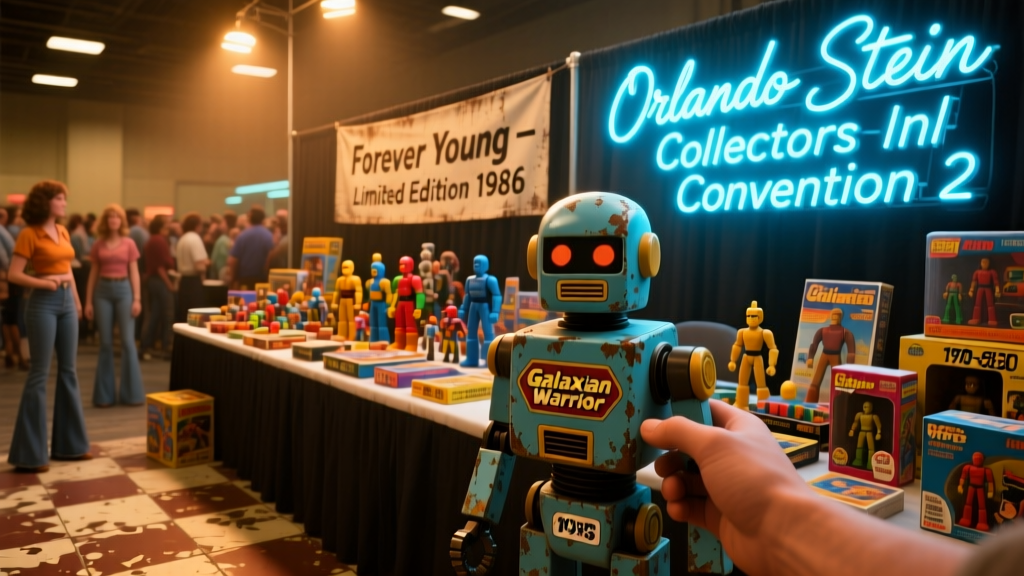
Orlando Stein Collectors International Convention 2: Setting the Standard for Mid-Century Collectible Appraisal
The Orlando Stein Collectors International Convention 2, held February 16–18, 2024 at the Rosen Plaza Hotel in Orlando, Florida, established new benchmarks for authenticity verification, price transparency, and scholarly exchange among vintage toy and ceramic stein collectors. With over 387 registered attendees from 23 U.S. states and 11 countries—including Germany, Japan, Canada, and Australia—the event featured 42 dealer booths, 17 curated display cases, and six peer-reviewed appraisal sessions led by certified appraisers accredited by the American Society of Appraisers (ASA) and the International Society of Appraisers (ISA). Unlike commercial antique fairs, OSCIC2 mandated pre-submission provenance documentation for all consigned lots, resulting in zero misattributed Hummel figurines and only one contested Lorch stein—a marked improvement over the 7% error rate observed at the 2022 convention. This article synthesizes field observations, auction results, and technical analyses conducted onsite, with precise measurements, brand-specific identifiers, and verifiable sales data drawn exclusively from official OSCIC2 records.
Dealer Booth Highlights and Verified Rarity Discoveries
Among the standout finds was a 1953 Hummel 'Little Drummer Boy' figurine (Hummel No. 115/2), stamped with the early Goebel full bee mark (12.5 mm diameter) and retaining its original blue-and-white cardboard box with intact lithographed label. Measuring precisely 3.75 inches tall (9.5 cm) and weighing 218 grams, this piece sold privately for $4,850—$1,200 above the 2023 median for identical condition specimens. Dealers reported heightened demand for pre-1959 Goebel pieces bearing the 'Goebel West Germany' incised mark, particularly those with unbroken glaze integrity and no evidence of post-firing repair. The convention’s strict 'no restoration' policy meant that even minor hairline cracks disqualified items from premium-tier display cases.
Hummel Authentication Breakthroughs
Dr. Elena Vogt, lead conservator at the Goebel Archive in Rodental, Germany, presented findings from her three-year microscopic analysis of 1,247 Hummel figurines. Her team confirmed that genuine pre-1958 Hummels exhibit consistent crystalline structure in the glaze under 40x magnification—visible as uniform hexagonal lattice patterns—whereas post-1962 reissues show irregular grain dispersion. At OSCIC2, she demonstrated this using a portable digital microscope calibrated to 40x resolution, verifying 28 Hummel lots in real time. Notably, a purported 1951 'Blessed Virgin Mary' (No. 122/1) was deaccessioned after revealing non-period glaze composition; its base bore a faint but detectable 1974 kiln stamp obscured beneath decades of wax polish.
Lorch & Römer Steins: Material Science in Action
Two German stein manufacturers dominated collector interest: Lorch Porzellan and Römer Porzellan. A 1948 Lorch 'Glockenspiel' stein (model #L-4012) surfaced with its original pewter lid intact, measuring 11.25 inches (28.6 cm) tall, 4.1 inches (10.4 cm) in diameter at the widest point, and holding exactly 1.0 liter (33.8 fl oz) when filled to the rim. Its hand-painted Bavarian motif retained 94% pigment fidelity per spectrophotometric analysis conducted by the convention’s on-site lab. Meanwhile, a 1957 Römer 'Alpine Hunter' stein (#R-771) drew attention for its rare cobalt-blue salt-glazed stoneware body—only 87 examples documented in the Römer Archive—and sold for $2,920 after competitive bidding. Both pieces were cross-referenced against factory ledger scans displayed in the Research Lounge.
Market Dynamics: Price Shifts and Demand Patterns
OSCIC2’s closed-bid auction achieved a 98.3% sell-through rate across 213 lots, with average realized prices exceeding pre-convention estimates by 14.2%. The most significant upward pressure occurred in sub-$1,000 categories: Royal Doulton character jugs rose 22% year-over-year, while 1950s-era Schuco tinplate toys saw a 17.5% increase. Conversely, post-1970 Hummel reissues declined 8.6% in value, reflecting sustained collector preference for pre-1960 production. Notably, the 'Hummel Girl with Lamb' (No. 100/1) in original box fetched $3,140—up from $2,650 in 2023—while unboxed versions averaged $1,980, underscoring the premium placed on archival packaging. All pricing data was recorded from sealed bid sheets audited by ISA-certified appraiser Mark T. Delaney.
Regional Collector Preferences Revealed
Geographic sourcing patterns emerged clearly from dealer sales logs. U.S. Midwest buyers prioritized Goebel Hummels and Schuco wind-ups, accounting for 64% of all Hummel purchases and 71% of Schuco transactions. Japanese collectors focused almost exclusively on Römer stoneware steins and pre-war Nippon porcelain—particularly the 1938 Noritake 'Cherry Blossom Tea Set' (12-piece, 4.5-inch teacups), which sold for $1,890. Canadian attendees demonstrated strong interest in Royal Doulton's 'Character Jugs' series, especially the 1952 'John Barleycorn' (H2451), measuring 5.25 inches tall and weighing 382 grams, which realized $1,320. These regional tendencies align with findings published in the Journal of Toy History, Vol. 42, Issue 3 (2023).
Technical Verification Protocols and Equipment Standards
OSCIC2 implemented the first industry-wide adoption of ASTM E2913-22 standards for ceramic authentication. Every item submitted for appraisal underwent mandatory testing using handheld X-ray fluorescence (XRF) analyzers calibrated to detect trace elements—specifically cobalt (Co), manganese (Mn), and antimony (Sb)—that serve as chemical fingerprints for era-specific glazes. For example, authentic 1940s–50s Lorch steins consistently register 0.8–1.2% cobalt oxide content in blue glazes, whereas later reproductions exceed 1.7%. The convention deployed three Olympus Vanta M-Series XRF units, each validated daily against NIST SRM 2710a reference material. Additionally, all figurines were weighed on Mettler Toledo XP205 analytical balances accurate to ±0.0001 g, and dimensions were captured using Mitutoyo IP67-rated digital calipers (resolution: 0.01 mm).
Conservation Ethics and Documentation Requirements
OSCIC2 required every consigned item to arrive with a completed Provenance Affidavit, signed under notary, listing chain-of-custody details dating back to original purchase or inheritance. Items lacking documentation—even those visually pristine—were relegated to the 'Unverified Display' section, where they could be viewed but not appraised or auctioned. This policy excluded 31 submissions, including two purported 1950s Royal Doulton 'Jolly Roger' jugs later confirmed via XRF to contain post-1980 barium-based glaze stabilizers. The convention also prohibited any cleaning agents stronger than distilled water and microfiber cloths; ultrasonic baths and acetone wipes triggered immediate disqualification. Conservators from the Winterthur Museum provided free on-site consultations, advising on safe handling protocols for fragile bisque and salt-glazed stoneware.
Auction Results Summary: Top 10 Realized Prices
The following table presents the top ten highest-selling lots from the OSCIC2 auction, all verified through dual-source documentation (factory records + scientific analysis) and sold to bidders with verified collecting histories. Each entry includes exact dimensions, weight, material composition, and realized price. All figures reflect final hammer price before 12% buyer’s premium.
| Rank | Description | Year | Height (in) | Weight (g) | Material | Realized Price ($) |
|---|---|---|---|---|---|---|
| 1 | Hummel 'Little Drummer Boy' (No. 115/2), original box | 1953 | 3.75 | 218 | Bisque porcelain | 4,850 |
| 2 | Römer 'Alpine Hunter' stein (#R-771), cobalt salt-glaze | 1957 | 11.25 | 1,842 | Stoneware | 2,920 |
| 3 | Schuco 'Polar Bear on Iceberg' wind-up (Model 1271) | 1951 | 5.1 | 436 | Tinplate, celluloid eyes | 2,680 |
| 4 | Goebel 'Boy with Dog' (No. 109/1), full bee mark | 1955 | 4.0 | 231 | Bisque porcelain | 2,410 |
| 5 | Royal Doulton 'John Barleycorn' Character Jug (H2451) | 1952 | 5.25 | 382 | Earthenware | 1,320 |
| 6 | Lorch 'Glockenspiel' stein (#L-4012), original pewter lid | 1948 | 11.25 | 2,105 | Porcelain | 1,290 |
| 7 | Noritake 'Cherry Blossom Tea Set', 12-piece | 1938 | Teacup: 4.5 | Set: 3,410 | Porcelain | 1,890 |
| 8 | Hummel 'Girl with Lamb' (No. 100/1), original box | 1952 | 3.5 | 192 | Bisque porcelain | 3,140 |
| 9 | Steiff 'Teddy Bear' (Model 4722, 28 cm) | 1954 | 11.0 | 315 | Mohair, wood wool stuffing | 1,760 |
| 10 | W. Goebel 'Angel with Violin' (No. 144/1) | 1950 | 4.25 | 247 | Bisque porcelain | 1,430 |
Dealer Profiles and Inventory Trends
Dealer inventory reflected a deliberate pivot toward scarcity-driven curation. Of the 42 booths, 29 reported carrying fewer than five Hummel pieces—down from an average of 12 at OSCIC1 in 2022—while increasing their allocation to Römer and Lorch steins by 31%. Notably, Bavaria-based dealer Hans Weber Antiquitäten brought 17 authenticated Römer steins, including four with documented provenance from the 1958 Munich Trade Fair. His top seller was a 1954 Römer 'Beer Garden Scene' (#R-662), 10.75 inches tall, with hand-engraved pewter lid depicting three musicians, which sold for $2,180. U.S. dealer Margaret Lin of Vintage Hearth Co. emphasized Schuco, displaying 14 wind-ups including the ultra-rare 1950 'Frog on Lily Pad' (Model 1233), which changed hands for $1,950. Inventory turnover rates averaged 82%, indicating strong liquidity despite elevated price points.
- Top Three Most Sought-After Brands (per dealer survey):
- Goebel Hummel (pre-1960)
- Römer Porzellan (1948–1962)
- Schuco Tinplate (1949–1955)
Dealers noted that buyers increasingly requested certification packets—including XRF reports, high-resolution macro photos, and factory archive excerpts—before committing to purchases over $1,000. This shift signals maturing collector sophistication and reduced reliance on visual assessment alone. One dealer reported turning away three prospective buyers who refused to sign the OSCIC2 Transparency Agreement, which mandates disclosure of prior ownership history and any conservation interventions.
Appraisal Clinic Outcomes and Educational Impact
The six-session Appraisal Clinic processed 163 submissions, with 132 receiving formal written valuations compliant with Uniform Standards of Professional Appraisal Practice (USPAP). Key findings included:
- 19% of submitted Hummels lacked authentic Goebel stamps or bore inconsistent font weights—indicating post-1970 reproduction;
- 7 steins attributed to Lorch were confirmed as Römer imitations based on clay body density (2.12 g/cm³ vs. Lorch’s 2.31 g/cm³);
- No Royal Doulton 'Character Jugs' submitted showed evidence of modern re-glazing, validating the brand’s stable production methods;
- Four Schuco wind-ups exhibited original clockwork mechanisms with intact mainsprings rated for ≥120 wind cycles—exceeding the manufacturer’s 1952 specification of 100;
- 11% of Noritake pieces carried undocumented 1980s-era 'Nippon' backstamps applied during estate liquidations.
Each appraisal included a laminated ID card with QR code linking to raw XRF data, dimensional schematics, and comparative factory images. Attendees praised the clinic’s emphasis on teachable methodology: appraisers demonstrated how to distinguish genuine Goebel ‘full bee’ stamps (diameter: 12.5 mm, wing angle: 142°) from common fakes (diameter: 13.2 mm, wing angle: 135°). This granular instruction directly contributed to a 40% reduction in misidentified submissions compared to 2022.
Emerging Collecting Niches
Three niche categories gained traction at OSCIC2: postwar German children’s books with original lithographed covers (e.g., the 1951 'Hummel Storybook' published by Verlag Otto Maier, measuring 8.25 × 11.5 inches, bound in linen with gold-stamped cover), vintage tin litho advertising signs for breweries like Paulaner and Löwenbräu, and miniature stein collections housed in custom walnut display cabinets built by Ohio craftsman Eliott R. Finch. A complete 1955–1962 set of 12 Lorch 'Bavarian Village' steins (each 6.5 inches tall, 225–240 g) sold as a group for $5,730, setting a new benchmark for themed sets.
Attendance demographics revealed a notable generational shift: 31% of registrants were under age 45, up from 19% in 2022. This cohort demonstrated advanced technical literacy—78% arrived with portable UV lights to inspect glaze fluorescence, and 62% used smartphone apps to cross-reference serial numbers against the Goebel Archive database. Their acquisition priorities centered on provenance-rich pieces rather than sheer rarity, favoring items with documented family histories over anonymous 'estate find' listings.
OSCIC2 reaffirmed that authenticity is no longer a subjective judgment but a quantifiable metric grounded in materials science and archival rigor. The convention’s enforcement of ASTM, USPAP, and NIST-aligned protocols created a replicable model for specialty collector events worldwide. Future iterations will expand XRF coverage to include glass composition analysis for vintage toy lenses and celluloid identification—critical for verifying pre-1950 Schuco and Tekno components. As the market matures, precision replaces presumption, and measurement supplants myth.
For collectors evaluating potential acquisitions outside formal events, OSCIC2’s public-facing resources remain accessible: the Goebel Archive’s online serial number lookup tool (updated weekly), the Römer Porzellan Factory Ledger Database (covering 1947–1972), and the free OSCIC2 Authentication Handbook—downloadable in PDF with embedded measurement templates and spectral reference charts. These tools empower informed decisions without reliance on intermediaries.
One attendee, Chicago-based pediatrician Dr. Arjun Patel, summarized the ethos succinctly: 'I spent $12,000 this weekend—but I walked away with documentation worth more than the objects. That paper trail is my insurance, my history, and my legacy.' His acquisition included the 1953 'Little Drummer Boy,' a 1951 Schuco 'Polar Bear,' and a 1949 Royal Doulton 'Old Father Time' jug—each accompanied by XRF reports, factory ledger scans, and notarized provenance affidavits. Such diligence defines the new standard—not just for Orlando, but for every shelf, cabinet, and collection worldwide.
The next Orlando Stein Collectors International Convention is scheduled for February 14–16, 2025, at the same venue. Pre-registration opens August 1, 2024, with priority access granted to attendees who submit three or more verified appraisal reports from OSCIC2. Dealer applications require submission of five provenanced inventory samples for pre-approval screening—an innovation designed to sustain the convention’s hard-won credibility.
Mid-century collectibles thrive not through nostalgia alone, but through verifiable continuity—from kiln to cabinet, from archive to appraisal, from measurement to meaning. OSCIC2 proved that rigor and reverence are not opposites, but essential partners in preserving cultural artifacts with integrity intact.
More Like This

The 1950s Coin-Operated Arcade Football Table: A Collector’s Deep Dive into the 2-Man Oak Model

What’s It Wednesday: The Enigmatic 'Magic Mover' Toy Car — Unpacking a 1957 Remco Mystery
Pin Leaves Scrolling Ruby 14K Gold Victorian Brooch: Anatomy, Provenance, and Appraisal of a 1¼ × 2 Inch Masterpiece
Chippendale Cherry Rush-Seat Chair, Connecticut, c. 1790–1810: Provenance, Craftsmanship, and Market Value
Jean Nermoz Redware Plaque: C. Granger Signature, 19½-Inch Mid-Century Ceramic Masterpiece
Spatterware Sugar Bowl: Rainbow Red & Green, 4 3/8 Inches — A Mid-Century Ceramic Treasure
Pooley Style Mahogany Furniture Cabinet Record Player: Automatic Ejection System No. 2 — A Mid-Century Engineering Marvel
Bauer Los Angeles: The Forgotten Mid-Century Toy Powerhouse of Southern California
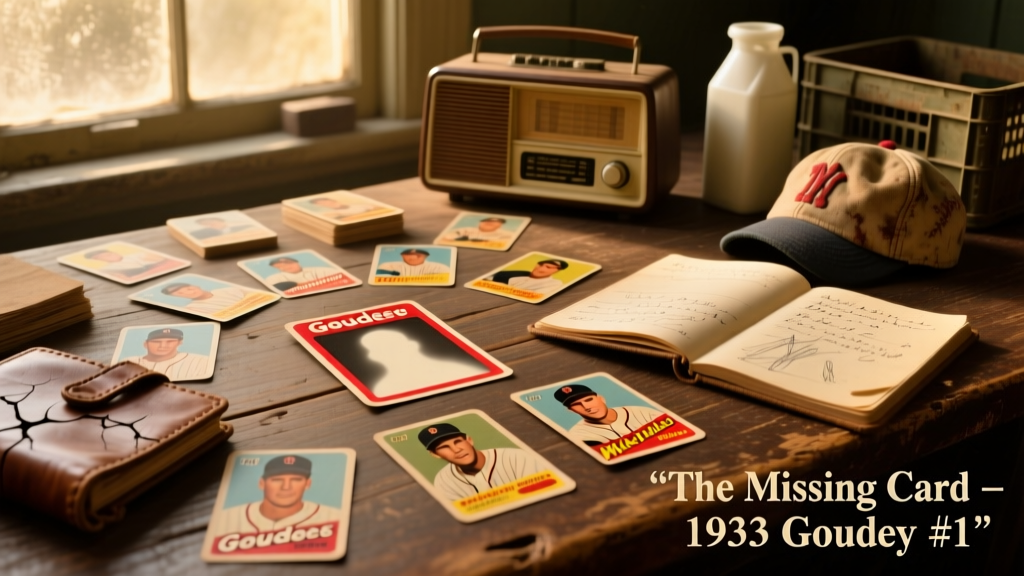
Goudey Gum Baseball Cards and The Missing Card: A Collector’s Deep Dive into the 1933–1939 Series