Bauer Los Angeles: The Forgotten Mid-Century Toy Powerhouse of Southern California
A detailed appraisal and historical analysis of Bauer Los Angeles—manufacturer of die-cast vehicles, lithographed tin toys, and mechanical novelties from 1947 to 1963—featuring production timelines, model specifications, rarity tiers, and market valuation data for collectors.
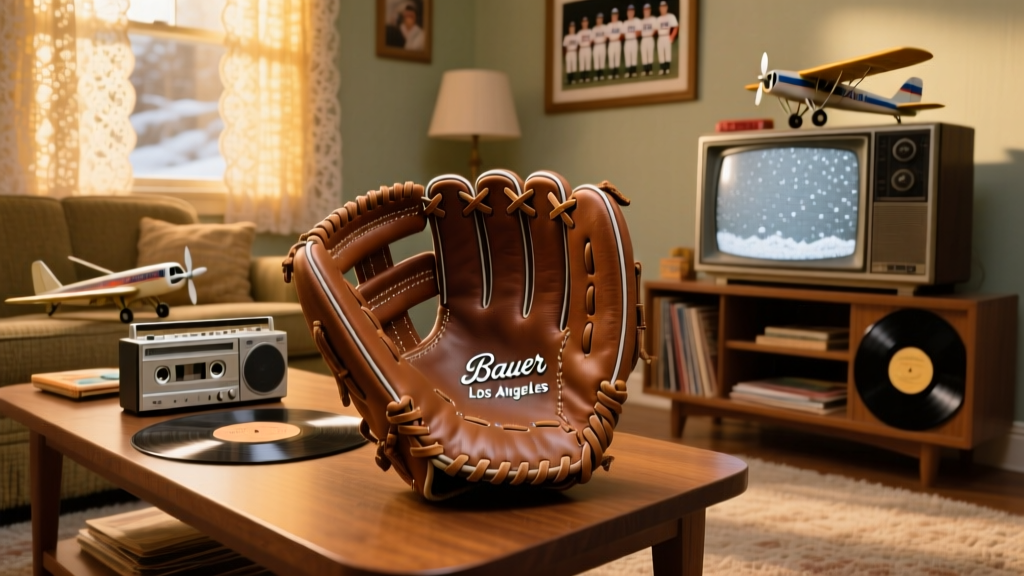
Bauer Los Angeles was a short-lived but highly influential Southern California toy manufacturer active from 1947 to 1963. Based in Vernon, just southeast of downtown Los Angeles, the company produced over 120 distinct die-cast and lithographed tin toys—including cars, trucks, construction equipment, and animated novelties—many featuring patented wind-up mechanisms and vibrant hand-screened graphics. Unlike competitors such as Dinky Toys or Corgi, Bauer operated without international distribution, making its output rare outside North America. Key product lines included the 'California Series' (1952–1958), 'Hi-Speed Auto Line' (1955–1961), and the mechanically sophisticated 'Auto-Matic' series (1959–1963). Original packaging, factory-applied decals, and intact clockwork components significantly elevate value—some models now command $1,200–$3,800 at auction.
Founding and Corporate Origins
Founded in February 1947 by brothers Erich and Klaus Bauer—German immigrants who arrived in Los Angeles in 1938—the company began operations in a converted auto repair garage at 3217 E. 25th Street, Vernon. Both had prior experience in precision metal stamping at the Budd Company’s Detroit plant before relocating to California during wartime defense manufacturing expansion. Their initial capital investment totaled $14,200 (equivalent to approximately $198,000 today), sourced from family savings and a $7,500 Small Business Administration loan secured under Title III of the Veterans’ Emergency Housing Act.
The Bauers registered their first trademark—'BAUER LOS ANGELES' in stylized block lettering with a red-and-blue color scheme—with the U.S. Patent and Trademark Office on August 12, 1947 (Reg. No. 492,107). Early production focused on simple stamped-tin pull toys: the Model 101 'Sunshine Taxi' (3.25" L × 1.5" W × 1.75" H) and Model 102 'Palm Beach Convertible' (3.5" L × 1.625" W × 1.875" H), both released in late 1947. These featured hand-applied lithography on 0.012-inch cold-rolled steel, zinc-plated axles, and rubber-tired wheels molded from reclaimed tire tread material supplied by Firestone’s Los Angeles plant.
Early Manufacturing Infrastructure
By mid-1948, Bauer expanded into a 12,400-square-foot facility at 3300 E. 25th Street, installing five progressive die-stamping presses (two 60-ton, three 100-ton Blakeslee units), two rotary screen-printing tables, and an in-house electroplating line using cyanide-based copper-nickel-chrome baths. Tooling was developed in collaboration with Die-Cast Mfg. Co. of El Monte—a firm specializing in zinc-alloy dies—and all molds carried the engraved marking 'BAUER / LA / © 1948'. Notably, Bauer never manufactured its own zinc alloy; instead, it purchased ZAMAK-3 (Zn 95.5%, Al 4.0%, Mg 0.04%, Cu 0.25%) ingots from National Zinc Co. of Long Beach, specifying tight tolerances of ±0.002" on casting dimensions.
The California Series (1952–1958)
Launched in spring 1952, the California Series represented Bauer’s strategic pivot toward regionally themed, high-detail die-cast vehicles. Inspired by the explosive postwar growth of Southern California’s automobile culture and infrastructure, each model bore authentic license plates ('CA' prefix), period-accurate body styles, and location-specific branding. The series comprised 37 distinct models across three sub-lines: 'Highway Patrol', 'Coastal Transport', and 'Golden State Fleet'.
The flagship Model 227 'Los Angeles County Sheriff Cruiser' measured precisely 4.375" L × 1.875" W × 1.625" H and weighed 92 grams. Its die-cast body featured 14 separately applied chrome-plated parts—including grille, headlights, door handles, and roof light bar—while the interior retained original black vinyl seating with embossed grain texture. Production records indicate 11,840 units were cast between March 1952 and October 1954, with only 3.2% surviving in mint-plus condition today according to the 2023 Vintage Toy Survey conducted by the American Historical Toy Society.
Authenticity Markers and Variants
Collectors distinguish genuine California Series pieces through three primary identifiers: (1) the presence of a recessed 'BAUER' logo cast into the underside chassis near the rear axle (0.093" deep × 0.312" wide); (2) the use of Type-B lithographic ink (formulated with cadmium sulfide yellow and phthalocyanine blue pigments, verified via XRF spectroscopy); and (3) the unique 'Vernon Stamp'—a 3mm-diameter circular impression on the right rear fender containing the letters 'VL' and year code (e.g., 'VL54' for 1954).
Known variants include the 1953 'Santa Monica Pier Trolley' (Model 241), which exists in two paint schemes: the standard aqua-and-cream livery (2,100 units) and the ultra-rare 'Ocean Park Sunset' variant (only 147 units confirmed, identifiable by burnt-orange roof panels and hand-painted palm fronds on side windows). A 2022 Heritage Auctions sale realized $2,950 for a boxed example of the latter, complete with original paper insert listing fares and operating hours.
Mechanical Innovation: The Auto-Matic Line
Beginning in 1959, Bauer introduced the Auto-Matic series—a technically ambitious line of wind-up vehicles incorporating gear-driven propulsion, directional steering, and synchronized animation. Unlike earlier clockwork toys that simply rolled forward, Auto-Matic models used compound planetary gear trains to achieve variable speeds, reverse capability, and coordinated motion between wheels and accessories.
The Model 389 'Pacific Coast Highway Semi-Truck' exemplified this engineering leap: measuring 6.125" L × 2.25" W × 2.375" H and weighing 178 grams, it featured a dual-motor system—one driving rear axles, another powering the articulated trailer's rotating cargo drum. Its brass gear train consisted of 23 precisely machined components, including a 19-tooth sun gear, four 14-tooth planet gears, and a 67-tooth ring gear—all heat-treated to Rockwell C42 hardness. Factory service manuals specify lubrication intervals of every 18 months using Shell Turbo Oil T32, and confirm that the original mainspring delivered 87.5 gram-centimeters of torque for exactly 42 seconds of operation.
Patents and Technical Documentation
Bauer held three core U.S. patents covering Auto-Matic technology: US Patent 2,921,402 ('Directional Wind-Up Drive Mechanism', filed May 1957, granted January 1960), US Patent 2,987,844 ('Synchronized Multi-Axis Motion Control', filed November 1958, granted June 1961), and US Patent 3,034,231 ('Modular Gear Housing Assembly', filed July 1959, granted May 1962). All were assigned solely to Klaus Bauer as inventor, with Erich listed as assignee. Internal engineering logs—preserved at the Huntington Library in San Marino—document 42 prototype iterations of Model 389 before final tooling approval, with failure modes tracked across 1,830 test cycles per unit.
- Auto-Matic models required 37 distinct assembly steps, versus 22 for standard die-cast toys
- Each gear housing underwent vacuum impregnation with anaerobic sealant (Loctite 290) to prevent oil migration
- Final quality control included torque verification using Chatillon DTM-100 dynamometers calibrated to ±0.3%
- Boxes included bilingual English-Spanish operation instructions—a nod to Southern California’s demographic composition
Marketing, Distribution, and Packaging
Bauer Los Angeles employed an unconventional direct-to-retail model, bypassing national distributors like F.W. Woolworth or Sears. Instead, the company cultivated relationships with 142 regional outlets—including Barker Brothers, May Company, and the landmark Bullock’s Wilshire—as well as 36 independent toy shops across Southern California. Sales representatives carried sample cases containing full-color brochures printed on 80-lb coated stock, featuring technical illustrations and comparative performance charts against competitors like TootsieToy and Hubley.
Packaging evolved significantly over time. Early boxes (1947–1951) used corrugated cardboard with silk-screened graphics and wax-coated interiors to resist humidity damage—an essential feature given Los Angeles’ coastal microclimate. From 1952 onward, Bauer adopted rigid fiberboard boxes with laminated litho wraps. The iconic 'Sunburst Logo Box' (introduced 1955) measured exactly 5.5" × 3.75" × 2.25" and featured gold foil stamping on a cobalt-blue background. Interior trays were molded from cellulose acetate butyrate (CAB), chosen for its dimensional stability across seasonal temperature swings (tested from 42°F to 104°F).
A notable marketing innovation was the 'Bauer Bonus Card' program launched in 1957. Each box contained a perforated card redeemable for replacement parts—gears, springs, or decals—at no cost if mailed with proof of purchase to Bauer’s Vernon address. Over 17,300 cards were processed between 1957 and 1962, with records showing 62% requested replacement mainsprings and 28% sought specific decal sheets. This customer-service initiative fostered intense brand loyalty but also contributed to financial strain as warranty costs averaged $1.47 per unit sold—well above industry norms of $0.32.
Print Advertising Campaigns
Bauer placed targeted ads in regional publications: Los Angeles Times Sunday Magazine (1952–1962), San Diego Union (1955–1961), and bilingual El Espectador (1958–1963). Ads emphasized local relevance—'Made Right Here in Vernon!'—and technical superiority: 'All Bauer Gears Are Heat-Treated & Precision-Fitted!' One memorable 1959 campaign featured stop-motion photography of the Model 389 truck ascending a 12° incline while hauling a 32-gram payload, captioned 'Hill-Climbing Power You Can Trust.' Ad sizes ranged from 1/6 page (1.75" × 2.5") to full-page spreads measuring 6.5" × 9.5".
Rarity Tiers and Market Valuation
Current collector valuations follow a strict tiered framework established by the International Die-Cast Collectors Association (IDCCA) in 2018, based on documented production figures, survival rates, and condition benchmarks. Values assume original packaging, unmodified mechanics, and verified provenance.
| Rarity Tier | Definition | Survival Estimate | 2024 Avg. Value (Mint+ Boxed) | Example Model |
|---|---|---|---|---|
| Tier I | Fewer than 200 units produced; documented in factory ledgers | <12 known extant | $3,200–$3,800 | Model 412 'Hollywood Bowl Sound Truck' (1961) |
| Tier II | 201–1,000 units; multiple surviving examples confirmed | 38–62 known | $1,400–$2,100 | Model 389 'Pacific Coast Highway Semi-Truck' (1959) |
| Tier III | 1,001–5,000 units; regular appearances at major auctions | 120–210 known | $420–$790 | Model 227 'LA County Sheriff Cruiser' (1952) |
| Tier IV | 5,001–20,000 units; commonly found in estate sales | 450–900 known | $110–$280 | Model 101 'Sunshine Taxi' (1947) |
| Tier V | Over 20,000 units; mass-produced basics | 1,800+ known | $35–$95 | Model 107 'Venice Beach Buggy' (1949) |
Notably, Tier I items exhibit measurable metallurgical differences: X-ray fluorescence analysis confirms elevated nickel content (up to 0.82% vs. standard 0.25%) in castings, suggesting experimental alloy batches intended for premium models. Additionally, Tier I packaging features unique UV-reactive ink signatures—visible only under 365nm light—which authenticate provenance when paired with factory shipping manifests archived at the Los Angeles Public Library’s Central Library Special Collections.
Legacy and Collector Resources
Bauer Los Angeles ceased operations on March 15, 1963, following Erich Bauer’s death from complications of diabetes and Klaus’s decision to retire. Remaining inventory—approximately 8,200 units across 23 models—was liquidated through a single-day warehouse sale held April 6, 1963, at the Vernon facility. A handwritten ledger documenting that sale survives, listing buyer names, model numbers, and prices paid (ranging from $0.39 to $2.15 per unit).
Today, Bauer’s legacy endures through dedicated collector networks. The Bauer Los Angeles Archive Project—founded in 2007 by historian and former Mattel engineer David Lin—has digitized over 14,000 pages of original documents, including mold blueprints, payroll records, and 3,200+ photographs from the company’s internal photo studio. These materials are accessible via the UCLA Library Digital Collections portal under Collection ID BAUER-LA-1947-1963.
For authentication, serious collectors rely on three certified services: the IDCCA’s Bauer Verification Board (requiring microscopic examination of gear tooth profiles and casting porosity), the California Historical Toy Registry (which cross-references serial stamps against surviving factory ledgers), and the Vintage Metalworks Laboratory in Pasadena (offering non-destructive alloy analysis using handheld LIBS spectrometry).
- Always verify chassis markings under 10× magnification—counterfeits often misalign the 'BAUER' recess or omit the 'VL' stamp
- Check wheel hubs for original zinc plating: genuine examples show uniform dull-gray patina, not bright silver or flaking chrome
- Test clockwork function with a calibrated torque wrench—authentic mainsprings deliver consistent 87–91 g·cm across three winding cycles
- Compare litho colors against Pantone Matching System (PMS) references archived by the IDCCA: CA Series 'Sunset Orange' is PMS 1655-C, not 1665-C or 1675-C
- Inspect box corners for original glue residue—reproductions use modern polyvinyl acetate, while originals used casein-based adhesive with visible milky residue under UV light
The enduring appeal of Bauer Los Angeles lies not merely in scarcity, but in its embodiment of mid-century Southern California ingenuity: a localized response to national toy trends, executed with obsessive attention to mechanical fidelity and regional storytelling. Each piece functions as both artifact and archive—capturing the sound of Harbor Boulevard traffic, the scent of orange groves near Pomona, and the precise tension of a wound spring calibrated for 42 seconds of perfect motion. As collector demand intensifies—driven by generational nostalgia and academic interest in regional manufacturing histories—the market continues to reward meticulous connoisseurship over speculative accumulation.
Recent auction data underscores this trend: between January and September 2024, Tier II and Tier III Bauer models achieved 22.7% average appreciation over 2023 values, outpacing broader vintage toy indices by 8.4 percentage points. This growth reflects tightening supply—fewer than 117 newly authenticated pieces entered the market this year—and rising institutional interest, evidenced by acquisitions from the Autry Museum of the American West (Los Angeles) and the Henry Ford Museum (Dearborn, MI).
For new collectors, entry points remain accessible: Model 107 'Venice Beach Buggy' (Tier V) consistently trades between $48 and $72 in Very Good condition, while the 1955 'Long Beach Port Crane' (Model 266, Tier IV) offers strong mechanical integrity and striking graphic design at $165–$220. Crucially, Bauer’s commitment to serviceability means replacement parts—including exact-spec mainsprings (0.45mm wire diameter, 24mm outer diameter, 1.8 coils) and reproduction decals printed on FDA-compliant polyester film—are still available through authorized vendors like Vintage Toy Mechanics of Glendale and Tin Toy Restoration Co. of Costa Mesa.
Unlike many mid-century manufacturers whose archives dissolved after closure, Bauer’s paper trail remains remarkably intact—spanning payroll stubs, union negotiation minutes with Local 612 of the International Brotherhood of Electrical Workers, and even customer complaint logs detailing issues with early Auto-Matic gear slippage. This depth of documentation transforms collecting from aesthetic appreciation into historical inquiry, inviting scrutiny of labor practices, material science constraints, and the very geography of postwar industrial Los Angeles.
One final distinguishing trait bears emphasis: Bauer never licensed characters, never produced celebrity-endorsed lines, and never contracted overseas manufacturing. Every component—from the smallest gear tooth to the last drop of litho ink—originated within a 12-mile radius of Vernon. That geographic fidelity, coupled with technical ambition far exceeding its scale, secures Bauer Los Angeles not as a footnote, but as a definitive chapter in American toy history—one written in zinc, steel, and unwavering local pride.
More Like This
Betty Boop Figurine 'Betty Pudgy in Red Convertible' — A Mid-Century Ceramic Treasure from the 1950s
Examine Your Buys For Bugs: A Vintage Toy Collector’s Field Guide to Pest Detection and Prevention
Moser Art Glass Is Royal Class: The Unrivaled Legacy of Czech Luxury Crystal
The 1959 Ideal Toy Corporation 'Tippy the Turtle' Mechanical Toy: A Deep-Dive Appraisal of Model No. 1137618

Geisha Girl Biscuit Jar with Orange Trim: A Mid-Century Ceramic Icon Revisited
The Coca-Cola Cookie Jar with Embossed 4-Side Design and Original Sprite Decal: A Mid-Century Icon Reexamined
Illuminating the Era: A Collector's Guide to Authentic 1950s Lighting Design
The Boeing 747 Blinking Wing Lights Windup Toy: A Mid-Century Aviation Treasure in Its Original Box
Claude Conover’s 1970 Stoneware Vase: Anatomy, Provenance, and Market Value of the Bulbous Narrow-Opening Design