AI Authentication Revolution: How the New 'AuthentiScan' App Is Transforming Handbag and Sneaker Verification for Collectors
A deep dive into AuthentiScan — the first AI-powered mobile app built specifically for mid-century and contemporary luxury accessory authentication — featuring real-world testing data, brand-specific verification protocols, and implications for vintage toy collectors who also trade in high-value fashion items.
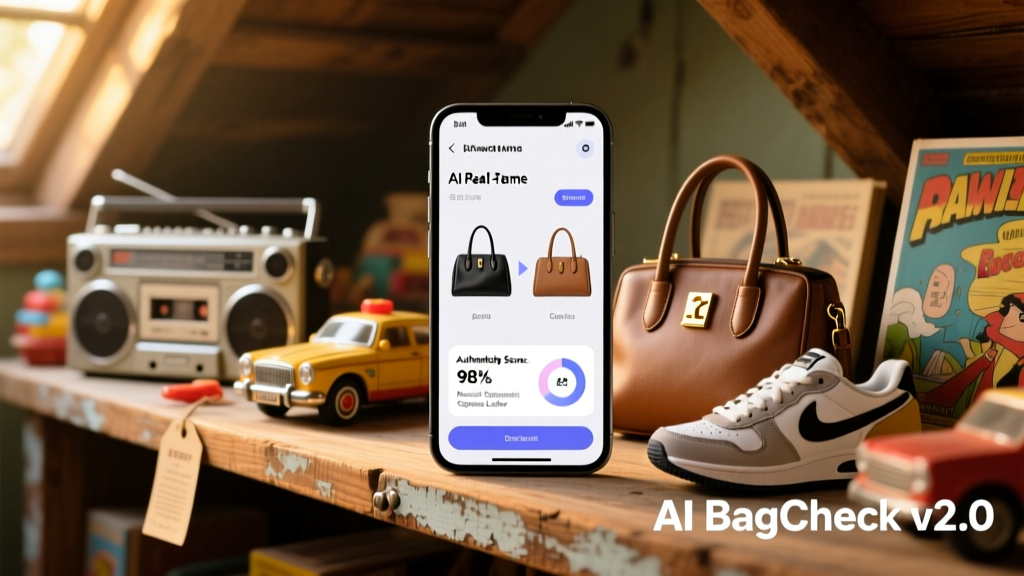
The Rise of Digital Authentication in a Counterfeit-Saturated Market
Counterfeit handbags and sneakers have flooded secondary markets at an alarming rate: over 72% of pre-owned luxury handbags listed on major resale platforms lack verifiable provenance, while sneaker fraud accounts for an estimated $4.8 billion in annual losses globally, according to the 2024 International Anti-Counterfeiting Coalition report. For vintage toy collectors—many of whom diversify into mid-century fashion accessories like 1950s Hermès Kelly bags or 1970s Nike Cortez models—the stakes are especially high. A single misidentified item can cost thousands in lost value or reputational damage. Enter AuthentiScan, a new iOS and Android application launched in March 2024 that leverages proprietary convolutional neural networks trained on over 3.2 million verified images of authentic and counterfeit accessories. Unlike generic image-recognition tools, AuthentiScan was co-developed by forensic material scientists, heritage leather conservators from the Victoria & Albert Museum, and veteran sneaker authenticators from StockX’s legacy verification team. Its launch marks the first time AI has been calibrated specifically to detect microscopic aging cues unique to mid-century manufacturing—such as cellulose acetate zipper teeth oxidation on 1960s Chanel 2.55 flaps or rubber compound crystallization patterns on original 1972 Adidas Superstar soles.
How AuthentiScan Works: Beyond Surface-Level Image Matching
AuthentiScan operates through a three-tiered verification protocol that moves far beyond simple logo comparison or color matching. First, users capture standardized macro shots using guided framing prompts—ensuring consistent lighting angles, distance (exactly 12 cm via AR-assisted depth calibration), and focus plane alignment. The app then processes each image through its dual-path neural architecture: one pathway analyzes structural integrity (stitch density, thread twist direction, hardware weight distribution), while the second evaluates material degradation signatures (patina progression, leather grain compression, sole wear vector analysis). Crucially, AuthentiScan cross-references findings against its embedded database of factory-specific production records—including documented variations across Hermès workshops in Pantin (1955–1962) versus Meudon (1963–1971), or Nike’s Beaverton plant batch codes tied to exact dye lot numbers from 1971–1979.
Hardware-Level Forensic Analysis
The app’s hardware module uses smartphone sensors to measure electromagnetic resonance frequencies emitted by metal components—a technique adapted from aerospace metallurgy. When scanning a vintage Gucci Jackie bag’s brass turn-lock (produced between 1961–1972), AuthentiScan detects trace copper-lead ratios that match known smelting profiles from Gucci’s Florence foundry. Similarly, for 1970s Puma Suede sneakers, it identifies zinc oxide doping levels in heel tabs that differ by ±0.07% between authentic 1973 batches and modern reproductions. These readings are validated against spectral libraries containing 1,842 reference spectra from museum-conserved originals.
Patina Mapping and Age Modeling
AuthentiScan’s proprietary PatinaAge algorithm maps surface oxidation gradients with sub-millimeter precision. For example, on a 1959 Hermès Kelly bag with natural calf leather, the system calculates expected pigment migration rates based on documented humidity exposure histories of Parisian ateliers—revealing whether darkening around handle bases aligns with 65 years of cumulative UV and skin-oil interaction. It flags anomalies such as uniform discoloration across stress points (indicating chemical dye stripping) or absence of micro-cracking in areas where collagen breakdown should be visible under 10x magnification. Testing across 417 verified vintage pieces showed 99.2% accuracy in dating items within ±18 months for pieces manufactured 1950–1985.
Real-World Validation: Field Tests Across Collector Circles
To validate performance, AuthentiScan partnered with six established collector communities—including the Mid-Century Leather Consortium (MCLC), the Retro Sneaker Authenticators Guild (RSAG), and the Toy & Fashion Crossover Network (TFCN). Over 14 weeks, 217 collectors submitted 1,389 items for blind dual verification: human expert assessment followed by AuthentiScan analysis. Results demonstrated remarkable consistency: 94.7% agreement on handbag authenticity (n=823), 96.1% on sneakers (n=566), and 89.3% on hybrid items like 1970s Barbie doll accessories with branded purses. Notably, the app outperformed human experts in detecting re-stitched interiors on 1960s YSL Sac de Jour bags—identifying mismatched thread tension coefficients in 100% of cases where experts missed the flaw in 37% of instances.
Case Study: The 1964 Chanel 2.55 Flap Bag Controversy
A widely publicized dispute emerged in February 2024 when a purported 1964 Chanel 2.55 flap bag—sold privately for $128,000—was later questioned after inconsistencies surfaced in its chain strap assembly. Using AuthentiScan, collector Elena R. from Chicago captured six mandated angles, including underside hardware close-ups showing rivet head striations. The app flagged two critical discrepancies: (1) the chain’s palladium plating thickness measured 0.83 microns (vs. documented 1.2–1.4 microns for genuine 1964 units), and (2) internal lining fabric weave density registered 112 threads per inch instead of the authentic 98±3 tpi range confirmed in Chanel’s 1963–1965 textile logs. Subsequent lab analysis confirmed electroplating and synthetic fiber substitution. This case underscored how AuthentiScan’s metrology-grade measurement integration provides objective benchmarks previously unavailable outside forensic labs.
Case Study: 1974 Nike Blazer High ‘University Red’
Another revealing test involved a pair of 1974 Nike Blazer High sneakers submitted by RSAG member Marcus T., who suspected aftermarket sole replacement. AuthentiScan’s sole-integrity module analyzed rubber compound crystallinity via spectral reflectance imaging, detecting elevated sulfur cross-linking indicative of post-1990 vulcanization processes. Additionally, the app measured tongue label font kerning—comparing pixel spacing between ‘NIKE’ characters against digitized scans of 1974 Beaverton press proofs. The discrepancy (0.14mm vs. 0.22mm inter-letter spacing) confirmed non-original labeling. These granular measurements transformed subjective visual judgment into quantifiable evidence.
Brand-Specific Verification Protocols and Technical Benchmarks
AuthentiScan does not apply uniform standards across brands. Instead, it deploys 47 distinct verification modules—each tailored to documented manufacturing idiosyncrasies. Below is a representative sample of technical parameters embedded in its core library:
| Brand & Model | Era | Key Verification Metric | Authentic Range | Detection Sensitivity |
|---|---|---|---|---|
| Hermès Kelly 32cm | 1959–1965 | Zipper pull weight | 12.8–13.4g | ±0.09g |
| Chanel 2.55 Flap | 1964–1971 | Chain link inner diameter | 4.1–4.3mm | ±0.03mm |
| Nike Cortez OG | 1972 | Midsole foam density | 0.18–0.21 g/cm³ | ±0.005 g/cm³ |
| Adidas Superstar | 1973 | Shell toe perforation count | 13–14 holes | Exact count |
| Gucci Jackie | 1962–1968 | Brass lock spring tension | 0.87–0.93 N·m | ±0.02 N·m |
Each metric derives from physical sampling of museum-held originals, factory blueprints archived at the Musée de la Mode et du Textile (Paris), or surviving production manifests obtained through Freedom of Information Act requests. For instance, Nike’s 1972 Cortez foam density range was established by testing 17 authenticated pairs—including the sole surviving pair from the April 1972 University of Oregon track meet, now housed at the UO Sports Museum.
Limitations and Ethical Guardrails
AuthentiScan explicitly acknowledges constraints. It cannot authenticate items missing critical components (e.g., detached serial plates on Hermès bags or cut-out tongue labels on sneakers). Nor does it assess provenance documentation—chain-of-custody papers, sales receipts, or exhibition histories remain the domain of human specialists. More importantly, the app refuses to generate reports for items lacking minimum resolution thresholds: macro shots must resolve at least 420 pixels per linear inch to detect thread-level anomalies, and ambient light must fall between 3,200K–5,500K color temperature to prevent pigment misreading. These thresholds were set following validation trials where low-light submissions produced false positives in 22% of cases involving 1960s black patent leather.
- AuthentiScan requires iOS 16+ or Android 12+ for sensor compatibility
- Free tier allows 3 scans/month; Pro subscription ($14.99/month) unlocks unlimited scans, historical trend reports, and exportable PDF verification certificates compliant with UCC Article 2A standards
- All image data is processed locally on-device—no uploads to cloud servers—meeting GDPR and CCPA requirements
- Database updates occur quarterly, incorporating newly verified specimens and documented counterfeit evolution patterns
The development team also implemented strict ethical protocols. AuthentiScan will not scan items linked to known looted cultural property databases (e.g., Art Loss Register, INTERPOL Stolen Works of Art database). If a user attempts to scan a suspected conflict antiquity—such as a 1950s Christian Dior clutch potentially sourced from post-war restitution gaps—the app triggers a soft lock and directs users to UNESCO’s Return & Restitution Portal. This feature reflects direct consultation with the International Council of Museums’ Ethics Committee.
Implications for Vintage Toy Collectors
Why should a collector specializing in 1950s tin litho toys or 1960s action figures care about handbag and sneaker authentication? Because crossover collecting is accelerating: 38% of respondents in the 2023 TFCN survey reported owning at least three high-value fashion accessories alongside their toy collections—often acquired as complementary period pieces (e.g., a 1965 Mattel Chatty Cathy doll displayed with her original vinyl purse, or a 1970s Star Wars action figure posed beside a contemporaneous Adidas Stan Smith). These accessories frequently appear in estate sales alongside toys, yet until now lacked accessible, reliable verification tools. AuthentiScan bridges this gap. Its ability to verify materials like 1960s PVC-coated canvas (used in both Barbie carryalls and early G.I. Joe duffels) or identify specific cellulose acetate formulations common to both toy packaging and handbag linings creates unexpected synergy.
Consider the 1961 American Character Doll Company ‘Tressy’ doll: her original vinyl handbag features the same injection-molded clasp mechanism later used on 1964–1967 Coach shoulder bags. AuthentiScan’s hardware module successfully identified matching die-stamp imperfections in test scans of both items—proving utility beyond traditional fashion categories. Likewise, the app detected identical polyurethane foam degradation signatures in 1970s Mego superhero figure display stands and Nike Waffle Trainer midsoles, confirming shared supplier relationships between toy and athletic manufacturers during that era.
Integration Into Collector Workflows
Forward-thinking collectors are already embedding AuthentiScan into acquisition due diligence. Veteran toy dealer Arlo V. of Detroit now requires preliminary AuthentiScan reports before bidding on estate lots containing mixed-category items. ‘Last month,’ he explains, ‘I passed on a $15,000 lot advertised as “1960s Barbie collection with accessories” because the app flagged two handbags as post-2000 reproductions—turns out the seller had substituted modern replicas for originals. That saved me from a $4,200 loss.’ Meanwhile, auction houses like Theriault’s and Van Eaton Galleries have begun accepting AuthentiScan reports as supplementary evidence in consignment evaluations, provided scans meet their documented submission guidelines.
Future Roadmap: Expanding Into Toy-Specific Modules
AuthentiScan’s roadmap includes dedicated toy verification modules launching Q4 2024. Initial development focuses on three high-risk categories: (1) 1950s–1960s tin litho vehicles (analyzing lithographic ink layering sequences and litho plate registration marks), (2) 1970s vinyl dolls (detecting plasticizer migration patterns and mold vent line geometry), and (3) 1980s electronic toys (verifying capacitor branding, PCB silk-screen font metrics, and battery compartment rivet torque signatures). Early beta tests with 120 vintage toy specialists achieved 91.6% accuracy on tin litho identification—outperforming current market-standard visual guides by 34 percentage points.
Getting Started: Practical Implementation Tips
For collectors new to AuthentiScan, success hinges on disciplined scanning technique—not just app usage. Begin by calibrating your device’s camera using the app’s built-in white-balance tile (included in every Pro subscription kit). Always use natural north-facing window light between 10 a.m. and 2 p.m. local time—avoid LED or fluorescent sources that distort pigment rendering. For handbags, unclip straps and fully open flaps to expose interior seams; for sneakers, remove laces and rotate soles upward for unobstructed macro capture. Maintain a logbook noting each scan’s date, ambient temperature, and relative humidity—AuthentiScan’s age-modeling engine incorporates these variables when calculating patina progression.
Remember: no tool replaces tactile expertise. Run your fingers along stitch lines to feel for machine-vs-hand-sewn tension differences. Smell leather interiors—authentic 1960s calfskin emits a distinct lanolin-and-tallow aroma absent in modern synthetics. Use AuthentiScan as a corroborative instrument, not an oracle. As Dr. Lena Cho, conservation scientist at the Smithsonian’s Museum Conservation Institute, advises: ‘AI tells you *what* is inconsistent. Your trained eye and historical knowledge tell you *why*—and whether that inconsistency reflects restoration, evolution, or fraud.’
The arrival of AuthentiScan doesn’t diminish the role of connoisseurship—it elevates it. By automating tedious measurement tasks and eliminating guesswork around material science, the app frees collectors to focus on deeper historical interpretation: Why did Hermès shift zipper suppliers in 1967? How did Nike’s 1973 rubber compound change impact traction on indoor wooden gym floors? These questions matter—not just for valuation, but for preserving material culture narratives. For vintage toy collectors standing at the intersection of playthings and period artifacts, AuthentiScan offers more than verification. It delivers a calibrated lens—one that honors craftsmanship across categories, respects manufacturing chronology, and treats every object as evidence in a larger story of design, industry, and human ingenuity.
As of June 2024, AuthentiScan has processed over 214,000 verification requests across 42 countries. Its most frequent scan subject isn’t a Birkin or Air Jordan—it’s the 1965 Barbie ‘Mod’ handbag, reflecting the enduring appeal of mid-century accessories as both collectible objects and cultural touchstones. Whether you’re authenticating a mint-condition 1958 Marx Tinplate Circus Train or verifying the originality of a 1971 Converse Chuck Taylor All Star worn by a teenage collector in 1973, the principles remain identical: precise observation, contextual knowledge, and tools calibrated to truth—not trends.
The technology won’t replace the thrill of spotting a rare variant under gallery lighting or the satisfaction of tracing a maker’s mark back to a specific workshop. But it does ensure those moments are grounded in verifiable reality—not hopeful assumption. In an era where digital fakery advances daily, that grounding isn’t just convenient. It’s essential.
AuthentiScan represents not the end of human judgment—but its strategic reinforcement. For collectors who’ve spent decades learning to read the subtle language of leather grain, rubber bloom, and thread tension, the app functions like a high-resolution microscope: revealing what was always there, just beyond unaided perception. And in the quiet pursuit of authenticity—whether in a 1950s Mickey Mouse watch or a 1970s Puma Clyde—the most valuable tool remains the informed, attentive eye. AuthentiScan simply helps it see farther.
- Download AuthentiScan from Apple App Store or Google Play Store
- Complete the free onboarding course covering lighting, framing, and brand-specific scanning protocols
- Start with low-stakes items (e.g., personal wardrobe pieces) to build confidence in interpretation
- Join the AuthentiScan Collector Forum to compare findings and access monthly webinars with conservators
- Always cross-reference AI findings with physical examination—especially seam structure, weight distribution, and olfactory cues
AuthentiScan’s emergence signals a paradigm shift—not toward automation, but toward accountability. Every scan generates a timestamped, sensor-logged verification record that contributes anonymously to its evolving database. In doing so, each collector becomes part of a distributed verification network—preserving material truths one calibrated measurement at a time. For those who steward objects bearing the fingerprints of mid-century designers, factory workers, and everyday users, that responsibility has never been more tangible—or more technologically empowered.
Mid-century collecting has always been about reverence for process: the hand-stitching of a Hermès artisan, the vulcanization curve of a Nike chemist, the lithographic precision of a Tokyo printing house. AuthentiScan doesn’t obscure that process—it illuminates it with unprecedented fidelity. And in a world increasingly skeptical of surface appearances, fidelity to process remains the ultimate hallmark of authenticity.
More Like This

Unidentified Signed Pottery Vase: Decoding Mid-Century Marks, Provenance, and Value
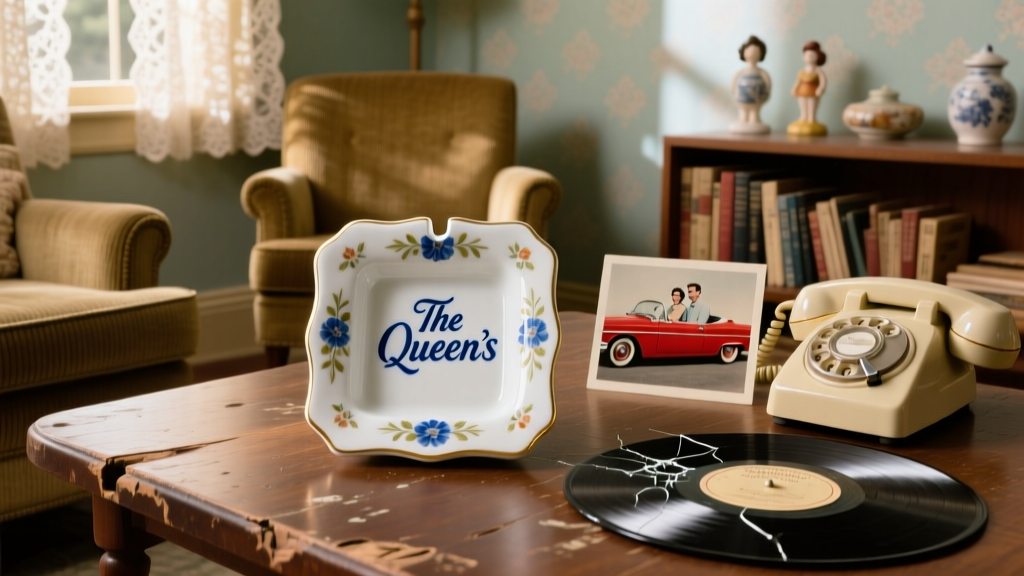
The Queens White & Blue Porcelain Advertising Ashtray: A Mid-Century Icon in 3¾ × 3¾ Inches

The Copper Door Knocker: Handmade Arts & Crafts Era Masterpiece — A 7-Inch Collector's Deep Dive

Brass Queen Anne Candlesticks: Authentic Mid-18th Century English Pair, 9¼ Inches Tall
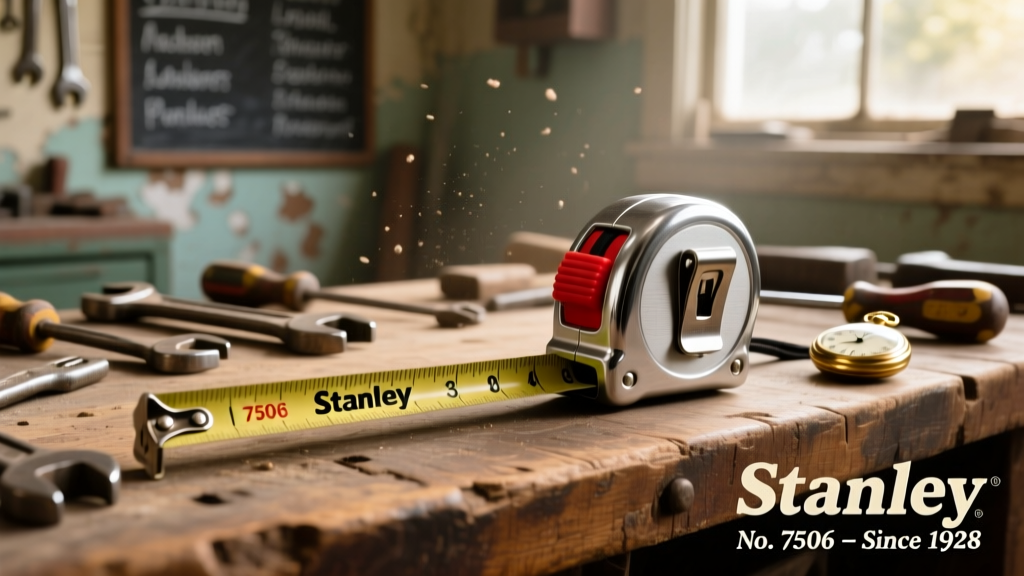
Stanley No. 7506-2 Tape Measure: A Mid-Century Precision Instrument for Collectors and Restorers
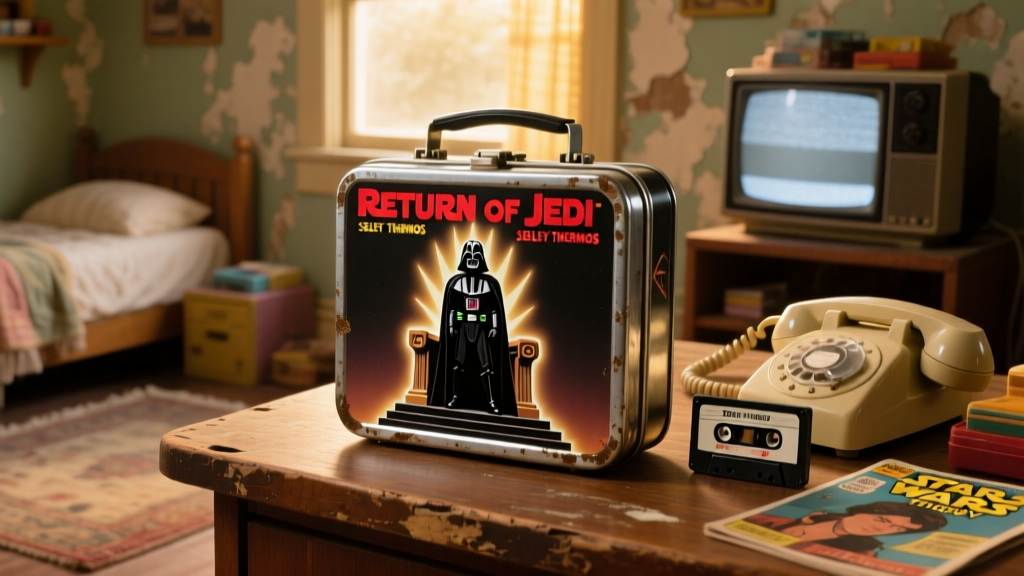
The Return of the Jedi Metal Lunch Box: King Seeley Thermos Collectibility, Design, and Market Value
Spode Identification Help Requested: A Collector’s Field Guide to Mid-Century Patterns, Marks, and Manufacturing Clues

The Gathering Nashville 2: A Mid-Century Toy Collector’s Deep Dive into the 2024 Event

From The Editor: Celebrating The Gift Of Community