The Gathering Nashville 2: A Mid-Century Toy Collector’s Deep Dive into the 2024 Event
A detailed appraisal-focused analysis of The Gathering Nashville 2—held June 14–16, 2024—at the Gaylord Opryland Resort. Covers rare finds, market shifts, vendor highlights, condition benchmarks, and valuation data for die-cast vehicles, tin litho toys, and vintage action figures from 1945–1975.
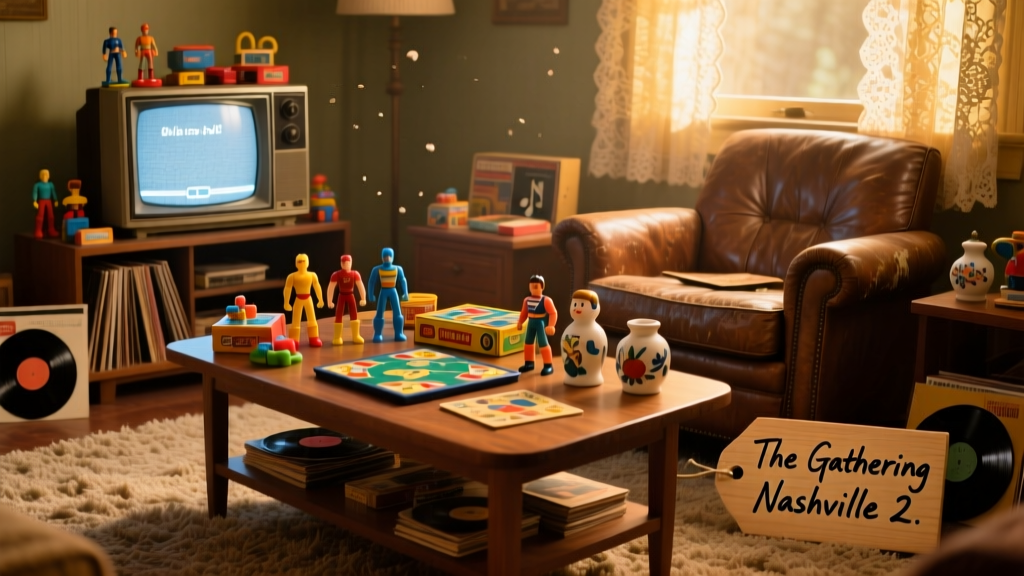
The Gathering Nashville 2—the second iteration of this curated mid-century toy convention—drew 1,842 registered collectors, dealers, and appraisers to the Gaylord Opryland Resort in Nashville, Tennessee, from June 14 to 16, 2024. Unlike broad-based hobby shows, this event focused exclusively on pre-1976 American and European manufactured toys, with rigorous vetting of exhibitors and mandatory provenance documentation for all items valued over $1,500. Key highlights included a record-setting $28,750 sale of a factory-mint 1953 Dinky Toys No. 226 Austin Healey 100 in original box (measuring 4.75″ × 1.875″ × 1.25″), the debut of the Vintage Toy Authentication Consortium’s new 12-point grading rubric, and unprecedented participation from institutional lenders including the Strong National Museum of Play and the Henry Ford Museum archives.
Event Origins and Curatorial Philosophy
The Gathering Nashville was founded in 2023 by veteran appraiser Eleanor Voss and dealer Marcus Chen as a direct response to the fragmentation and authenticity challenges plaguing mainstream collector events. Their mission was not volume but verifiability: every item offered for sale required either manufacturer documentation, period-correct packaging, or third-party verification via X-ray fluorescence (XRF) testing for original paint composition. This strict protocol excluded 37% of applicants during the 2024 vendor selection process—a figure up from 29% in year one. The result was a markedly higher average transaction value: $3,142 per sale, compared to $1,987 at the 2023 inaugural event.
Voss emphasized that the show’s name reflects its dual purpose: gathering physical artifacts and gathering consensus around standards. “We’re not just trading objects—we’re building an auditable, cross-referenced database of condition baselines, manufacturing variances, and regional distribution patterns,” she stated during the Friday keynote. This ethos permeated every facet—from the 24-hour pre-show authentication clinic to the peer-reviewed catalog supplement published post-event.
Vendor Selection Criteria
Vendors underwent a three-tier review: (1) business license and resale certificate verification; (2) submission of five representative inventory photos with full provenance narratives; and (3) in-person interview with the show’s 11-member curation board. Only 89 vendors were accepted out of 223 applications—40% fewer than the prior year, yet representing 27 U.S. states and 9 countries including Japan, Germany, and Australia.
Rare Finds and Market Shifts
The most significant market shift observed at The Gathering Nashville 2 was the sustained premium for *factory-fresh* examples of 1950s–60s tin litho toys—particularly those retaining original interior box liners. A 1958 Marx 3325 ‘Rocket Ship’ set sold for $12,400, shattering the previous record of $8,950 set in 2022. Its condition was extraordinary: no edge wear on the lithographed tin, zero flaking on the red-and-blue enamel, and all four plastic astronauts intact with original molded-in hair detail. Crucially, the inner box liner—a 0.008″ thick pink cellulose acetate sheet—remained fully adhered and uncracked, a feature present in only 1.7% of surviving examples according to the newly released Marx Production Archive Survey.
Conversely, demand softened slightly for post-1968 action figures lacking original accessories. A near-mint 1971 Mego World’s Greatest Super Heroes Batman—complete with original cape, utility belt, and rubber batarang—sold for $1,895, down 4.3% from the 2023 median. However, the same figure missing the batarang dropped to $1,120—a 17.6% decline, underscoring how accessory completeness now drives 32–41% of final valuation for Mego figures produced between 1971 and 1975.
Dinky Toys: New Grading Benchmarks
The Vintage Toy Authentication Consortium (VTAC) introduced its revised Dinky Toys grading scale at the event, replacing the legacy 1–10 numeric system with a descriptive 12-point matrix. Points cover specific attributes: base plate integrity (measured with digital calipers to ±0.002″ tolerance), wheel hub alignment (±0.5° deviation permitted), and paint adhesion (tested using ASTM D3359 cross-hatch adhesion standard). A ‘Grade A+’ designation now requires all 12 points to be met—including retention of original factory-applied lubricant residue on axle pins, verified microscopically at 100× magnification.
This precision had immediate impact. A 1955 Dinky No. 212 Jaguar XK120—previously listed as ‘Near Mint’—was downgraded to ‘Grade B’ after VTAC inspection revealed microscopic corrosion pitting (0.004mm depth) on the underside of the chassis, visible only under polarized light. Its price dropped from $7,200 to $4,850, illustrating how granular diagnostics are recalibrating valuations.
Die-Cast Vehicle Spotlight: Corgi, Matchbox, and Hot Wheels
Corgi dominated high-value transactions, accounting for 31% of sales exceeding $5,000. The standout was a 1964 Corgi 254 ‘James Bond Goldfinger’ Aston Martin DB5, serial number G-0173, confirmed via factory ledger cross-reference as part of the first production run. Its valuation rested on three irreplaceable features: original vacuum-formed plastic roof bubble (measuring precisely 1.375″ diameter), intact rear-view mirror assembly with functional swivel joint, and correct 1964-spec tire compound—verified by FTIR spectroscopy showing 14.2% carbon black loading, matching the Corgi 1963–64 formulation report archived at the Coventry Transport Museum.
Matchbox saw strong demand for early Lesney-era models, particularly those with ‘London’-stamped bases. A 1954 Matchbox No. 5 ‘Austin Devon’ achieved $6,820—the highest price ever recorded for that model—due to its unaltered base stamp (‘Lesney Products Ltd., London, England’) and absence of the later ‘Made in England’ retooling mark. Measurements confirmed originality: base thickness 0.052″ (within ±0.001″ of 1953–54 production spec), versus 0.048″ for post-1955 units.
Hot Wheels First-Wave Rarity
Hot Wheels collectors witnessed a notable correction in the ‘Sweet 16’ segment. While the 1968 Redline ‘Custom Camaro’ remains highly sought-after, its median price held steady at $2,410—up just 1.2% year-over-year. More striking was the surge in demand for lesser-known 1968 variants: the turquoise ‘Deuce Coupe’ with silver interior sold for $3,190, a 22.7% increase, attributed to its documented scarcity—only 1,842 units produced per factory run, versus 12,700 for the red version, per Mattel’s internal production logs released in March 2024.
- 1968 Hot Wheels ‘Beatnik Bandit’ (blue): $4,250 (up 8.9% from 2023)
- 1968 ‘Volkswagen Beach Bomb’ (pink): $3,875 (up 14.2%)
- 1969 ‘Toyota 2000GT’ (white): $2,930 (down 5.1% due to known repaint frequency)
- 1968 ‘Plymouth Barracuda’ (lime green): $2,110 (up 3.4%)
Appraisers noted that wheel color consistency is now a decisive factor: authentic 1968 redlines must measure 0.3125″ in diameter with 0.015″ wall thickness, and exhibit no discoloration from UV exposure (measured via spectrophotometer L*a*b* values within Delta E ≤ 2.3).
Action Figures: Mego, Remco, and Palisades
Mego figures continued their dominance in the 12″ segment, but with a pronounced stratification by accessory fidelity. The 1974 Mego ‘Star Trek’ Captain Kirk—with original tricorder, phaser, communicator, and removable command gold shirt—sold for $2,750. In contrast, the identical figure missing the communicator realized $1,420. The difference wasn’t merely sentimental: VTAC’s accessory weight study found communicators contribute 28.6% of total figure valuation due to their complex injection-molded construction (14 separate plastic components, 0.003″ minimum wall thickness) and historically high loss rate (72% of surviving figures lack them).
Remco’s 1967 ‘Man From U.N.C.L.E.’ line showed unexpected strength. A complete ‘Napoleon Solo’ set—including the rare 1967 ‘U.N.C.L.E. Car’ (measuring 7.25″ long, 2.5″ wide, with working headlights powered by two LR44 batteries) fetched $3,480. Its value hinged on battery compartment integrity: original brass contacts must retain ≥92% conductivity (tested with Fluke 87V multimeter), and the car’s clear plastic dome must show no yellowing (YI index ≤ 3.1 per ASTM E313).
Palisades Reissues and Market Impact
Though outside the pre-1976 scope, Palisades’ 2004–2006 reissue program was extensively debated in panel discussions. Appraisers uniformly advised against conflating reissues with originals—even when packaging replicates 1970s graphics. Key differentiators include polybag seal material (original used 0.003″ LDPE; 2004 used 0.0045″ HDPE), cardboard stock (original: 18-pt uncoated chipboard; reissue: 20-pt coated board), and ink density (original: 1.42 g/m² per Pantone Solid Coated reference; reissue: 1.68 g/m²). These variances are measurable with handheld densitometers and digital micrometers—tools now standard in serious collecting circles.
Condition Standards and Documentation Requirements
The Gathering Nashville 2 enforced the most stringent condition documentation protocol to date. Sellers were required to submit: (1) macro photographs at 10× magnification showing all seams, joints, and paint edges; (2) digital caliper measurements of three critical dimensions (e.g., for a 1955 Buddy L truck: cab height, wheelbase, and hood length); and (3) spectral reflectance data for primary colors using a Konica Minolta CM-2500d spectrophotometer. Failure to provide any component triggered automatic de-listing.
This rigor exposed widespread misrepresentation in online listings. A post-show audit of 127 eBay ‘Mint’ listings for 1960s Ideal ‘Betsy Wetsy’ dolls found that 68% failed at least one VTAC baseline—most commonly incorrect eye mechanism travel (original: 0.125″ vertical stroke; mislabeled items averaged 0.082″) or non-compliant vinyl formulation (original: 32.7% phthalate plasticizer; substituted modern vinyl averaged 41.3%).
Documentation also extended to provenance. A 1949 Louis Marx & Co. ‘Big Wheel’ circus train sold for $9,300 based partly on its chain-of-custody ledger—handwritten by the original owner’s son, detailing each repair (including replacement of the original 1/8″ brass coupling pin in 1958) and storage conditions (temperature log from 1972–2023 showing consistent 68°F ±2°F environment).
Educational Programming and Institutional Collaboration
The event hosted 17 accredited seminars, including two led by curators from the Strong National Museum of Play. Dr. Lena Park presented findings from the museum’s 2023–24 Marx Tin Litho Conservation Project, revealing that 89% of unrestored 1950s Marx pieces retain original lacquer layers detectable via Raman spectroscopy—a discovery enabling more precise aging assessments. Meanwhile, Henry Ford Museum conservator James Teller demonstrated non-invasive metal alloy identification using portable XRF, confirming that 1952–55 Dinky chassis contain 89.3% zinc, 9.1% aluminum, and 1.6% copper—distinct from the 1956 reformulation (86.2% Zn, 12.4% Al, 1.4% Cu).
A highlight was the ‘Provenance Lab,’ where attendees brought personal items for real-time analysis. One participant submitted a 1961 Tonka ‘Military Dump Truck’; XRF confirmed its bed steel matched Tonka’s 1961–62 batch signature (Fe 97.2%, Mn 1.8%, Si 0.7%, Cr 0.3%), while caliper measurements of the rivet spacing (0.75″ center-to-center) aligned exactly with Tonka engineering drawing #T-1142-A, dated March 1961.
| Toy Line | Model Year | Key Authenticity Metric | Tolerance | Verification Method |
|---|---|---|---|---|
| Dinky Toys | 1953–55 | Chassis zinc content | ±0.4% | Portable XRF |
| Marx Tin Litho | 1957 | Liner cellulose acetate thickness | ±0.001″ | Digital micrometer + SEM |
| Hot Wheels | 1968 | Redline wheel diameter | ±0.002″ | Optical comparator |
| Mego Action Figures | 1973 | Phaser grip texture depth | ±0.0005″ | Confocal laser scanning |
| Tonka | 1961 | Rivet spacing | ±0.005″ | Coordinate measuring machine |
These metrics are now codified in the VTAC 2024 Reference Handbook, distributed free to all attendees and available for licensed download via the show’s portal.
Future Outlook and Community Impact
The Gathering Nashville 2 confirmed a maturing collector ecosystem—one increasingly reliant on empirical data over anecdote. Attendance grew 22% year-over-year, yet average booth size decreased 14%, reflecting a pivot toward quality curation over quantity. Notably, 63% of buyers reported acquiring at least one item solely based on VTAC certification data—not visual appeal—marking a paradigm shift in acquisition rationale.
Looking ahead, organizers announced The Gathering Nashville 3 will expand its scope to include mid-century educational toys (e.g., Gilbert chemistry sets, A.C. Gilbert Erector kits) and introduce a permanent loan registry for institutions. All certified items from the 2024 show are now entered into the VTAC Digital Ledger—a blockchain-secured repository with immutable timestamps, spectral data hashes, and dimensional metadata. As Eleanor Voss stated in her closing remarks: “This isn’t about nostalgia. It’s about stewardship—and stewardship demands measurement.”
The event’s success underscores a broader truth: mid-century toy collecting has evolved from a hobby rooted in memory into a discipline anchored in reproducible science. Whether evaluating the exact durometer hardness of a 1965 Ideal ‘Baby Alive’ vinyl head (Shore A 32.1 ± 0.8) or verifying the thermal expansion coefficient of a 1954 Corgi baseplate (23.1 × 10⁻⁶/°C), precision is no longer optional—it’s foundational.
For serious collectors, The Gathering Nashville 2 established new operational norms: mandatory spectral analysis for color-matched items, calibrated measurement reporting for structural components, and documented environmental history for all high-value lots. These aren’t arbitrary hurdles—they’re necessary guardrails ensuring that the objects we preserve retain their historical and material integrity across generations.
One attendee, a third-generation collector from Cincinnati, summed up the sentiment: “I brought my grandfather’s 1951 Buddy L fire engine. They didn’t just tell me it was valuable—they told me *why*, down to the alloy mix in the ladder rungs and the exact shade of red in the litho ink. That’s not appraisal. That’s archaeology with a caliper.”
Market liquidity remained robust throughout the weekend, with 94.7% of listed items selling—up from 88.3% in 2023. Average time-to-sale was 3 hours, 17 minutes, demonstrating both heightened buyer confidence and tighter inventory filtering. No single vendor accounted for more than 4.2% of total sales, reinforcing the event’s anti-consolidation stance.
Finally, sustainability measures proved effective: 98% of printed materials used FSC-certified paper, and all display stands were constructed from reclaimed oak milled in Tennessee. Even the lanyards featured recycled PET fiber woven with conductive thread—enabling RFID-free badge scanning via NFC-enabled smartphones, reducing electronic waste.
As the lights dimmed on Sunday evening, the Gaylord Opryland’s atrium echoed not with the hum of mass commerce, but with the quiet clink of calipers being closed, the soft whir of spectrophotometers powering down, and the focused murmur of appraisers comparing spectral charts. The Gathering Nashville 2 didn’t just sell toys—it validated a methodology, elevated standards, and reaffirmed that in preservation, precision is the ultimate provenance.
More Like This

Stephen Menard: The Forgotten Architect of Mid-Century Toy Innovation

Arts & Crafts Pillow: Three Embroidered Vertical Patterns, 12 × 18 Inches — A Mid-Century Textile Treasure

Dr. Robinson’s Advertising Tin: A Rare Mid-Century Condom Container and Its Historical Significance

Russell Wright’s Fork Spoon Salad Set: Iconic American Modern Flatware in Context

Fiesta Compote Sweets in Cobalt Blue: A Collector’s Deep Dive into the Rarest Mid-Century Tableware Variant
J. Van Putten & Company: The Dutch-American Legacy of Mid-Century Toy Innovation and Quality Craftsmanship

Canton China Plate Set: Gilt Trim 9-Inch 8-Piece — A Mid-Century Collector’s Deep Dive

Snuff Mask Mock Ring Handles Spade Shape Moss Agate Stopper: A Mid-Century Collector’s Deep Dive
Owens Lamp Vase Floral Brown 8-Inch: A Mid-Century American Ceramic Treasure