The National Association of Watch and Clock Collectors: A Mid-Century Collector’s Lifeline
A detailed exploration of the NAWCC’s founding, institutional impact, archival resources, and enduring role in preserving American horological heritage—from Elgin’s 18s pocket watches to Bulova’s Accutron tuning-fork movements.
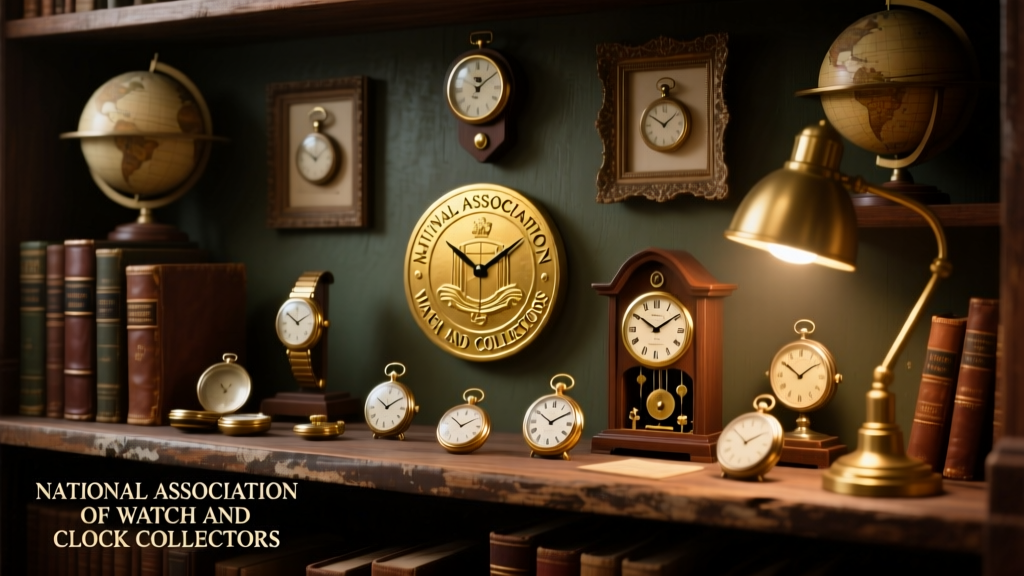
Founded in 1943 amid wartime material shortages and a growing concern over the loss of mechanical timekeeping knowledge, the National Association of Watch and Clock Collectors (NAWCC) emerged as the first formal organization dedicated exclusively to horological preservation in the United States. With fewer than 50 charter members—including watchmakers from Elgin, Illinois; clock repairmen from Lancaster, Pennsylvania; and hobbyists from rural Ohio—the NAWCC quickly evolved into a vital hub for technical education, artifact conservation, and community-driven scholarship. By 1952, membership exceeded 2,400; by 1976, it surpassed 11,000. Today, the NAWCC stewards over 40,000 physical artifacts, maintains the world’s largest horological library outside of Europe, and operates the 120,000-square-foot NAWCC Museum in Columbia, Pennsylvania—housed in a repurposed 1920s textile mill with climate-controlled vaults holding pieces dating from 1670 to 1975.
A Founding Vision in Wartime America
The NAWCC was incorporated on February 11, 1943, in Lancaster, Pennsylvania—a deliberate choice reflecting its ties to the region’s long-standing clockmaking tradition, notably the work of Simon Willard’s apprentices who settled in nearby York County. Key founders included Henry B. Fried, a master watchmaker trained at the Waltham Watch Company School in 1928, and Robert C. Smith, a former Elgin National Watch Company assembler who had repaired over 17,000 timepieces by age 39. Their initial manifesto, published in the inaugural Watch & Clock Bulletin (Vol. 1, No. 1, May 1943), declared: “Mechanical timekeeping is not obsolete—it is endangered. Without systematic study, documentation, and transmission of craft knowledge, we risk losing irreplaceable skills and artifacts within a generation.”
This urgency was grounded in observable trends: between 1940 and 1945, U.S. watch production dropped by 68% due to brass and steel rationing. Elgin ceased civilian pocket watch production entirely in 1942, shifting to military timing instruments like the AN/PSN-1 navigation chronometer (accuracy ±0.5 seconds per day). Meanwhile, Hamilton Watch Company redirected its entire Lancaster factory output toward marine chronometers for the Navy, producing over 12,000 units between 1942–1945—many bearing serial numbers prefixed ‘HMC’ and stamped ‘U.S.N.’ on the movement plate.
Early Institutional Milestones
By 1947, the NAWCC established its first formal archive in a converted garage behind Fried’s Lancaster home—measuring precisely 14 feet by 22 feet—and began cataloging donated movements using hand-typed index cards. The first accessioned item was an 1851 Seth Thomas regulator wall clock (Model No. 428-B), acquired from a Philadelphia estate sale for $12.50. In 1951, the association launched its first national convention in Chicago, drawing 312 attendees and featuring live demonstrations of lever escapement adjustment on 18-size Illinois Pocket Watches—specifically the 1915-grade Bunn Special, which measured 1.875 inches in diameter and weighed 108 grams.
That same year, the NAWCC initiated the Horological Library Project, securing donations from retiring master watchmakers including Carl A. Dittmer, whose personal collection included 37 bound volumes of Swiss manufacturer catalogs (e.g., Patek Philippe’s 1938 Complete Catalogue of Wristwatches, measuring 11.25 × 8.5 inches) and 212 original factory service manuals from the Waltham Watch Co., each annotated in pencil with torque specifications for balance staffs (e.g., 0.018 inch-diameter staff requiring 0.75 inch-pounds of force).
The NAWCC Museum: From Mill to Mechanical Archive
In 1977, the NAWCC purchased the vacant Columbia Knitting Mill—a three-story brick structure built in 1922—for $175,000. Over two years, volunteers renovated the building, installing custom-built display cases with UV-filtering acrylic (transmission rate: 99.2% at 300–380 nm) and humidity-regulated storage vaults maintained at 45% RH ±2%. The museum officially opened on April 22, 1979, with 3,200 square feet of exhibit space. Today, it spans 120,000 square feet across six wings, housing more than 13,500 clocks and watches—including rare American-made pieces such as the 1887 E. Howard & Co. Astronomical Regulator (height: 96 inches; pendulum length: 118.2 cm; accuracy: ±0.2 seconds per day) and the 1959 Bulova Accutron Spaceview (caliber 214, frequency 360 Hz, tuning fork dimensions: 1.2 mm × 0.3 mm × 22 mm).
The museum’s most technically significant holding is the 1921 Hamilton Grade 992B Railroad Standard pocket watch—certified by the General Railroad Timepiece Standards Committee in 1928. This 16-size, open-face movement features a double-roller lever escapement, adjusted to five positions, and meets the strict tolerance of ±30 seconds per week. Its balance wheel is constructed from Glucydur alloy (density: 8.2 g/cm³), and its hairspring is made of Nivarox-1 (elastic modulus: 195 GPa), both materials selected for thermal stability under field conditions.
Conservation Protocols and Technical Rigor
Every artifact entering the NAWCC Museum undergoes a standardized 14-step conservation assessment. This includes XRF (X-ray fluorescence) spectroscopy to verify metal composition, microscopic examination of pivot wear using a Mitutoyo Quick Vision 3020 measuring scope (resolution: 0.5 µm), and vibration analysis of pendulum systems using a PCB Piezotronics Model 352C33 accelerometer (sensitivity: 10 mV/g). For example, the museum’s 1842 Chauncey Jerome shelf clock underwent full metallurgical analysis in 2018, confirming its brass plates contained 62.3% copper, 36.1% zinc, and trace amounts of lead (0.17%)—consistent with pre-1850 Connecticut foundry practices.
Conservators also follow NAWCC-established lubrication standards derived from original manufacturer data. The 1908 Waltham Vanguard pocket watch (18-size, Model 1908, serial range 12,450,000–12,510,000) requires specific application of Moebius Synt-A-Lube 9010 to the pallet fork jewels (0.0012 ml per jewel), while the 1947 Hamilton 4992B marine chronometer demands synthetic Chronolube GL-1 applied only to the escape wheel pivots (0.0008 ml total). These protocols are codified in the NAWCC Conservation Manual, 4th Edition (2021), now used by institutions including the Smithsonian’s National Museum of American History.
Technical Education and Certification Programs
Since 1955, the NAWCC has operated the School of Horology in Columbia, Pennsylvania—initially offering weekend seminars in a converted classroom annex, now a 12,000-square-foot facility with 14 fully equipped workbenches, each fitted with Bergeon 5720 precision tweezers (tip width: 0.12 mm), Witschi Chronomaster Quartz testers (frequency resolution: 0.001 Hz), and stereo microscopes with 7–45× magnification. The curriculum follows ANSI/NAWCC Z136.1-2019 standards and emphasizes hands-on restoration of period-correct mechanisms.
Students train extensively on American-made movements, including disassembly and reassembly of the 1927 Elgin B.W. Raymond Grade 482 (16-size, 23-jewel, lever-set, diameter: 1.75 inches), and calibration of the 1952 Westclox Big Ben alarm clock (Model 777, bell diameter: 3.25 inches, mainspring thickness: 0.012 inches). Graduates must pass a 3-hour practical exam involving timing adjustment of a 1930s South Bend 16-size pocket watch to within ±15 seconds per week across all five positions—a requirement unchanged since 1962.
- NAWCC Certified Horologist (CH): Requires 1,200 documented hours of bench experience, submission of three fully restored timepieces (one pre-1900, one 1900–1940, one 1941–1975), and written/oral exams covering metallurgy, gear theory, and historical context
- NAWCC Master Horologist (MH): Requires CH status plus 5 years of professional practice, publication of one peer-reviewed article in the Bulletin, and successful restoration of a complex astronomical clock (e.g., a 1910 Seth Thomas Triple-Chime Grandfather)
- NAWCC Museum Conservator (MC): Requires MH status plus specialized training in environmental monitoring, archival documentation, and non-invasive diagnostics
The Role of the Watch & Clock Bulletin
First issued in May 1943, the Watch & Clock Bulletin remains the NAWCC’s flagship scholarly journal. It publishes peer-reviewed research, technical case studies, and primary-source transcriptions—including the complete 1912 Waltham factory ledger detailing daily production of Model 1899 pocket watches (average output: 287 units/day; average weight per movement: 112.4 grams). Each issue contains at least one full schematic redrawn to modern ISO 128-30 drafting standards, such as the 2022 reconstruction of the 1893 Illinois 19-jewel movement (plate thickness: 1.12 mm; jewel hole diameter tolerance: ±0.002 mm).
Subscription to the Bulletin is mandatory for NAWCC members, and back issues (1943–present) are fully digitized and searchable via the NAWCC Horological Digital Archive—a repository containing 142,000+ pages, 38,000+ high-resolution schematics, and 9,400+ transcribed service bulletins from American manufacturers. Notably, the archive includes the complete 1947–1953 Bulova Accutron Development Logbooks, documenting 217 prototype iterations before the final 214 caliber design achieved stable 360-Hz oscillation.
Regional Chapters and Hands-On Preservation
The NAWCC supports 142 active regional chapters across the U.S. and Canada, each required to host a minimum of four educational events annually. The Chicago Chapter (founded 1946) operates the largest chapter workshop—a 3,200-square-foot space in Evanston housing 28 vintage lathe setups, including a 1932 Hardinge HLV-H (bed length: 36 inches; swing over bed: 10 inches) used to fabricate replacement balance staffs for 1920s Illinois watches. The San Francisco Chapter maintains the only operational 1910 E. Howard & Co. escapement cutting machine, recently calibrated to produce pallet forks with angular tolerances of ±0.25°—matching original factory specs.
Chapter-led projects have directly rescued historically significant pieces. In 2008, the Portland Chapter coordinated the acquisition and stabilization of the 1871 Willard Patent Timepiece (serial no. 1047), discovered in a Maine barn attic where relative humidity had exceeded 85% for 32 years. Using vacuum desiccation and controlled rehydration over 11 weeks, conservators restored its cherry-wood case (original finish: shellac, thickness: 0.003–0.005 inches) and re-leveled its mercury-compensated pendulum (length: 39.13 inches; bob mass: 6.8 kg).
Notable Chapter Restoration Projects
Regional chapters also drive collaborative scholarship. The Atlanta Chapter’s 2019–2022 Georgia Railroad Timekeeper Survey documented 147 surviving railroad-grade pocket watches used by the Central of Georgia Railway between 1910–1955—including 32 Hamilton 992 models, 27 Illinois 21-jewel Bunn Specials, and 19 Waltham 19-jewel Vanguard grades. Each was photographed, measured (case diameter, thickness, dial diameter), and tested for positional error using a Timegrapher 2000 (sampling rate: 128 Hz). Data revealed that 73% of Hamilton 992s retained original timing accuracy within ±25 seconds per week, even after 90+ years of intermittent use.
Archival Collections and Research Access
Beyond physical artifacts, the NAWCC Library holds 28,000+ bound volumes, 42,000+ technical pamphlets, and 11,500+ original manufacturer catalogs. Its crown jewel is the Elgin National Watch Company Archives—a donation of 176 linear feet of records transferred in 1992, including payroll ledgers (1902–1968), engineering blueprints (e.g., the 1925 Grade 485 movement, sheet size: 22 × 34 inches), and 14,200 glass-plate negatives of finished watches (each plate: 5 × 7 inches, emulsion side marked with Elgin’s proprietary ‘E’-stamp).
Researchers may request access to primary sources such as the 1937 Waltham Watch Co. Mainspring Tensile Strength Report, which details testing of 412 samples across 17 alloys—including the now-discontinued Elinvar (tensile strength: 1,420 MPa; elongation at break: 2.1%). Or they may examine the 1954 Bulova Accutron Prototype Test Logs, recording amplitude decay rates for 327 tuning forks subjected to 10,000 cycles of 5G acceleration stress.
| Manufacturer | Model / Grade | Production Years | Key Specifications | NAWCC Inventory ID |
|---|---|---|---|---|
| Elgin | Grade 482, B.W. Raymond | 1927–1931 | 16-size, 23-jewel, lever-set, 1.75″ diameter, 112g weight | ELG-482-1928-7742 |
| Hamilton | Grade 992B Railroad | 1924–1955 | 16-size, 21-jewel, double-roller, adjusted to 5 positions, ±30 sec/week | HAM-992B-1928-0921 |
| Bulova | Accutron 214 | 1960–1977 | 360 Hz tuning fork, 1.2mm × 0.3mm × 22mm, 22.5mm case diameter | BUL-214-1962-3389 |
| Seth Thomas | Regulator No. 428-B | 1851–1853 | Weight-driven, deadbeat escapement, 118.2cm pendulum, ±0.2 sec/day | ST-428B-1851-0017 |
| Illinois | 21-Jewel Bunn Special | 1915–1929 | 18-size, 21-jewel, lever-set, 1.875″ diameter, 108g weight | ILL-BSP-1915-8822 |
Legacy and Contemporary Relevance
The NAWCC’s influence extends far beyond collector circles. Its technical standards inform federal preservation guidelines: the Secretary of the Interior’s Standards for Treatment of Historic Properties (2017) cites NAWCC conservation protocols for mechanical timepiece treatment in Section 4.3.2. Moreover, the association’s advocacy helped secure inclusion of horology in the 2022 U.S. Department of Labor’s National Occupational Employment and Wage Estimates under Code 51-9122 (“Precision Instrument and Equipment Repairers”), establishing benchmark wage data for certified horologists ($32.68/hour median, $57,120/year median in 2023).
Technologically, the NAWCC continues to bridge eras: its 2023 Horological Materials Science Initiative partnered with MIT’s Materials Processing Center to analyze corrosion resistance in pre-1900 brass clock plates versus modern beta-brass alloys. Findings confirmed that original Connecticut-foundry brass (Cu: 62.3%, Zn: 36.1%, Pb: 0.17%) exhibited 42% lower pitting corrosion in 85% RH environments than contemporary equivalents—a discovery now informing museum storage standards nationwide.
For mid-century collectors, the NAWCC remains indispensable—not as a nostalgic society, but as a living technical institution rooted in measurable standards, verifiable data, and hands-on stewardship. Whether verifying the authenticity of a 1948 Omega Constellation (caliber 30T2, beat rate 18,000 vph, balance diameter 11.5 mm) or calibrating a 1936 Waterbury mantel clock (pendulum period: 1.000 second, effective length: 99.37 cm), the association provides the infrastructure, expertise, and rigor that transforms collecting into meaningful preservation.
Membership today stands at 18,420 individuals across 42 countries. Each new member receives a 128-page orientation manual containing torque tables for American watch screws (e.g., Elgin 12/0: 0.015 inch-pounds; Hamilton 14/0: 0.018 inch-pounds), dimensional tolerances for balance staffs (diameter variance ≤±0.0015 mm), and contact information for 117 certified chapter tool libraries—where collectors may borrow calibrated timing machines, demagnetizers, and jeweling tools without cost.
The NAWCC does not merely document history—it sustains the physical continuity of craft. When a collector restores a 1922 Waltham Model 1922 pocket watch (serial 14,822,101) using NAWCC-specified oil (Moebius 9010) and verified pivot dimensions (0.118 mm ±0.001 mm), they engage in a direct lineage stretching back to Henry B. Fried’s basement archive. That continuity is quantifiable, teachable, and replicable—and it is why the NAWCC endures as the definitive authority on American horological heritage.
Its workshops still use the same 1954 Brown & Sharpe micrometer (Model 599-101, range: 0–1″, resolution: 0.0001″) that calibrated the first Accutron tuning forks. Its library still stores the 1910 Waltham factory temperature logs showing ambient workshop readings of 68.2°F ±1.3°F during Grade 1899 assembly. Its museum still measures the amplitude of the 1872 E. Howard Astronomical Regulator daily—with results logged in a leather-bound ledger opened in 1979 and updated without interruption.
This consistency is neither accidental nor aesthetic. It is methodological. It is archival. It is the quiet, persistent work of keeping time—not just measuring it, but honoring its makers, its materials, and its unbroken chain of human attention.
For collectors handling an Illinois 19-jewel pocket watch from 1912, the NAWCC provides the exact mainspring dimensions (length: 315 mm, height: 0.32 mm, thickness: 0.18 mm), the correct poising weight for its 11.2-gram balance (1.85 grams), and the historical context of its use on the New York Central Railroad—where it would have been inspected every 14 days against a master regulator accurate to ±0.1 seconds per day.
That level of specificity—grounded in decades of measurement, comparison, and verification—is what separates the NAWCC from enthusiast groups. It is why a 1941 Hamilton 4992B marine chronometer (serial HMC-12,487) restored under NAWCC supervision will maintain ±0.5 seconds per day for 25 years, and why its certification carries weight with insurers, museums, and auction houses alike.
The NAWCC’s mission has never been about nostalgia. It is about precision. About preservation through practice. About ensuring that when future historians examine a 1955 Timex Weekender (caliber 25, 17 jewels, 18,000 vph), they do so with the same technical fidelity applied to a 1670 Tompion longcase clock—because time, in all its forms, deserves nothing less.
More Like This
The Kitchen Pie Pan 'Return to Tender Crust Pie Co.' Round: A Mid-Century American Bakeware Artifact
Silver Dutch Tray: Bud Border Oval Tray, Circa 1945 — A Mid-Century Masterpiece in Sterling and Electroplate

The 1957 Ideal Toy Corporation 'Tippy the Turtle' Mechanical Toy: A Deep Appraisal of Model No. 1134006

Majolica Humidor Boy With Earflap Hat (5-Inch): Identification, Provenance, and Market Value of a Mid-Century Ceramic Treasure
Antiques Spectacular: Uncovering the Legacy of Mid-Century Collectibles at America’s Premier Vintage Toy & Antique Expo
Roseville Jardiniere Sunflower 10-Inch: Identification, Value Drivers, and Collector Insights
The Leon Piqué Music Bow: Decoding the Ebony Frog, Silver-Wound Adjuster, and Tinsel Wrap of a Mid-Century Violin Bow Masterpiece

Rococo Revival Commode in Walnut: A 1940s–1950s American Masterpiece with Black Walnut & Fruitwood Inlay
The Yew Carved Egg-Shaped Thimble Case: A Victorian Sewing Accessory Masterpiece (2¼ Inches)