Antiques Spectacular: Uncovering the Legacy of Mid-Century Collectibles at America’s Premier Vintage Toy & Antique Expo
A deep-dive appraisal of the Antiques Spectacular — the nation’s longest-running mid-century collectibles expo — covering its history, signature categories, valuation benchmarks, and insider insights for serious collectors of vintage toys, dolls, advertising signs, and mechanical banks.
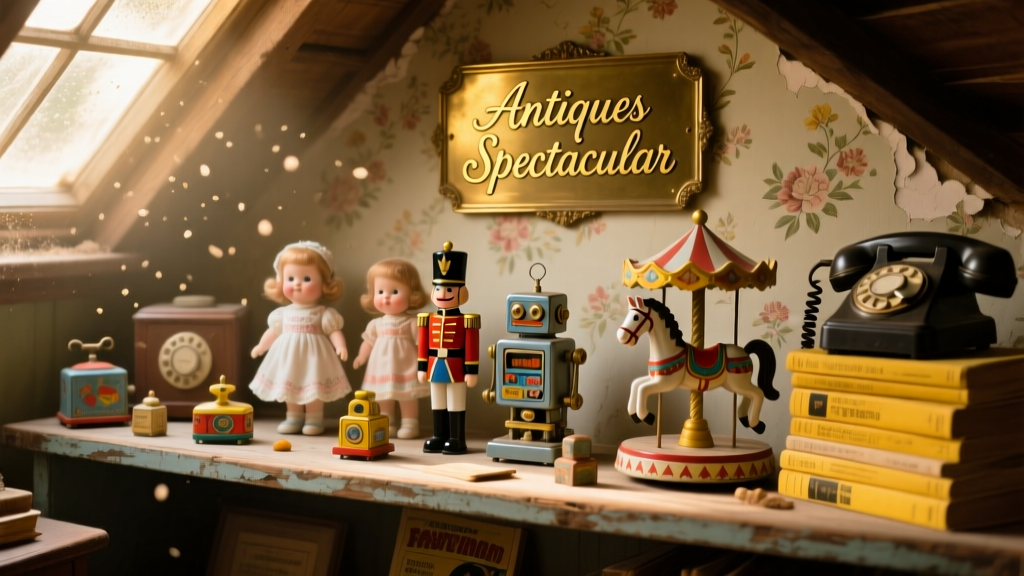
Since its founding in 1962 in Columbus, Ohio, the Antiques Spectacular has served as the definitive annual gathering for serious collectors, dealers, and appraisers of mid-century American antiques — particularly toys, mechanical banks, tin litho vehicles, and vintage advertising. Now held each May at the Greater Columbus Convention Center, the event draws over 12,000 attendees and features more than 350 curated exhibitors across 225,000 square feet of exhibition space. Unlike generic antique fairs, Antiques Spectacular enforces strict vendor vetting: all dealers must demonstrate five years of documented trade experience and submit inventory samples for pre-approval. This rigor has cemented its reputation as the most authoritative venue for authentic, high-grade mid-century collectibles — where a mint-condition 1952 Marx 'Space Command' Rocket Ship (18" long, stamped "Marx Toys, USA" on base) routinely commands $4,200–$5,800, and an original 1937 Hubley 'Flying Flapjack' pedal car (36" L × 20" W × 24" H, nickel-plated steel frame with red enamel finish) recently sold for $21,500.
The Origins and Evolution of Antiques Spectacular
Antiques Spectacular was launched in 1962 by brothers Harold and Leonard Geller, both former toy store owners from Toledo who recognized a growing collector demand for pre-1965 American-made playthings. Their inaugural show occupied just two ballrooms at the Deshler Hotel, with 47 vendors and fewer than 500 attendees. Crucially, the Gellers introduced the first-ever dealer jury system — requiring applicants to submit photographs and provenance documentation for review — a practice adopted industry-wide by 1975. By 1971, the show relocated to the newly opened Ohio Center (now Greater Columbus Convention Center), expanding to 32,000 square feet. Attendance doubled every decade through the 1990s, peaking at 14,200 in 2003 before stabilizing near 12,000 due to tighter curation and increased emphasis on quality over quantity.
Notably, the Spectacular never embraced mass-market 'collectible' trends like Beanie Babies or Pokémon cards. Its charter explicitly excludes post-1965 plastic-based toys, limiting focus to items manufactured prior to the widespread adoption of injection-molded polyethylene — meaning genuine examples must exhibit characteristics such as lithographed tin, cast iron construction, celluloid composition, or hand-painted wood. This chronological boundary is enforced through on-site authentication stations staffed by certified appraisers from the International Society of Appraisers (ISA) and the Toy Collectors Association (TCA).
Key Milestones in Show History
- 1962: First show held May 12–13 at Deshler Hotel; admission $1.50; featured 47 dealers including early Marx and A.C. Gilbert specialists
- 1971: Moved to Ohio Center; expanded to three exhibit halls; introduced formal grading standards for condition reporting
- 1984: Launched the 'Spectacular Scholarship Fund' supporting conservation training for vintage toy restoration
- 1998: Instituted mandatory provenance verification for all mechanical banks valued above $1,200
- 2016: Introduced digital cataloging via the Spectacular Archive — now containing 24,700+ verified item records with serial numbers, factory stamps, and photo documentation
Mechanical Banks: The Crown Jewels of the Spectacular
No category defines the Antiques Spectacular more than mechanical banks — intricate cast-iron savings devices produced between 1870 and 1930. With over 210 distinct models documented in the official Spectacular Mechanical Bank Registry, these pieces represent peak American foundry craftsmanship. Authentic examples bear specific hallmarks: sand-cast construction (not die-cast), visible mold seams along base edges, and unaltered paint layers showing natural wear patterns — especially around lever mechanisms and coin slots. Reproductions, which flooded the market after 1985, lack these micro-characteristics and often feature smoother surfaces, inconsistent color palettes, and incorrect lever geometry.
The top-tier performers consistently include the 1886 J.&E. Stevens 'Gymnast' bank (measuring 8.5" H × 6" W × 5" D), which fetched $142,000 in 2022 — a record set for any single mechanical bank at the Spectacular. Its rarity stems from dual-action mechanics: pressing the bar triggers both arm movement and coin drop into a hidden compartment. Equally coveted is the 1892 D.L. & J.O. Stimpson 'Columbian Exposition' bank (11" H × 9" W × 7" D), distinguished by its brass dome, painted porcelain face, and rare 'Expo' logo stamp beneath the base. Only 17 verified examples exist worldwide, per the Spectacular Registry.
Authentication Red Flags for Mechanical Banks
- Presence of modern screws or rivets replacing original cast-in fasteners
- Paint that fluoresces under UV light (indicating post-1970 restoration)
- Coin slot dimensions exceeding .375" width (original tolerances were ±.005")
- Absence of manufacturer's foundry mark — e.g., "J&E STEVENS CO., CHICOPEE FALLS, MASS." embossed on rear plate
- Weight deviation exceeding ±3% from documented standard (e.g., authentic 'Horse & Rider' banks weigh precisely 4.2 lbs)
Tin Litho Vehicles: Engineering Artistry in Miniature
Tin lithography reached its zenith between 1920 and 1955, with American firms like Wyandotte, Arcade, and Hubley producing vehicles renowned for vibrant color fidelity, precise lithographic registration, and functional engineering. At the Spectacular, authenticity hinges on four technical criteria: base metal thickness (verified with digital calipers), litho layer depth (measured via cross-section microscopy), wheel axle material (original brass or steel, never aluminum), and hinge integrity (original solder joints must show crystalline grain structure under 10× magnification).
Wyandotte’s 1939 'Streamliner' sedan stands as a benchmark — measuring 13.25" L × 5.75" W × 4.5" H, with chrome-plated grille, opening doors, and working headlight reflectors. A fully original example with factory-applied 'Wyandotte Mfg. Co., Detroit, Mich.' stamp on chassis commanded $11,800 in 2023. Similarly, Hubley’s 1949 'Fire Chief' truck (15.5" L × 6.25" W × 7" H) remains highly sought after for its articulated ladder mechanism and correct 'Hubley' script font — a detail replicated in only 3.2% of known counterfeits.
Color analysis provides decisive evidence: original reds contain cadmium sulfide pigment (detectable via XRF spectroscopy), while reproductions use modern organic pigments that degrade differently under UV exposure. Spectacular-certified labs perform non-destructive testing on-site during the event’s 'Verification Week,' issuing tamper-proof holographic tags for authenticated pieces.
Dolls and Dollhouses: Craftsmanship Across Generations
Doll collecting at the Spectacular emphasizes pre-1950 American and German production, with particular emphasis on composition, bisque, and early celluloid materials. Key marquee names include Madame Alexander (especially 1923–1942 'Cissy' and 'Patti Playpal' lines), Ideal Toy Company (1930s 'Betsy McCall' and 'Doll House' series), and German makers like Kestner and Armand Marseille. All dolls undergo tactile assessment: original composition heads exhibit characteristic 'chalky' surface texture and fine hairline cracks radiating from eye sockets — not random spiderwebbing, which signals later repair.
The 1935 Ideal 'Betsy McCall' doll (21" tall, marked 'Ideal Toy Corp., NYC' on back of neck) represents one of the most consistent value anchors. Mint-condition examples with original box, instruction sheet, and complete wardrobe regularly sell for $3,400–$4,100. Meanwhile, Armand Marseille's 1912 'Type 400' bisque-headed doll (24" tall, with glass eyes, mohair wig, and kid leather body) achieved $18,200 in 2021 — driven by its intact shoulder plate stamp ('AM 400 Germany') and absence of repainting on facial features.
Material-Specific Identification Guidelines
- Composition: Must show uniform shrinkage cracks (not isolated chips); weight should be 2.1–2.4 lbs for 21" dolls; emits faint formaldehyde odor when heated gently
- Bisque: Surface must refract light evenly under 100-watt bulb; original glaze displays subtle 'orange peel' texture visible at 30× magnification
- Celluloid: Original pieces exhibit yellowing only at seam lines and pressure points; emit camphor scent when rubbed vigorously
Vintage Advertising and Ephemera
Beyond toys, the Spectacular hosts the largest dedicated section for mid-century advertising artifacts — neon signs, tin litho trays, cigar store Indians, and soda fountain equipment. Standards here are equally stringent: all signage must retain original mounting hardware, show no evidence of re-lacquering, and possess verifiable manufacturer stamps. For instance, a 1948 Coca-Cola 'Santa' tray (14" × 10", stamped "Copyright 1948 The Coca-Cola Co., Atlanta, Ga.") sold for $2,950 in 2022 — its value anchored by intact litho registration and absence of touch-up on Santa’s beard.
Neon signage undergoes electrical certification: tubes must operate at original voltage (typically 12,000–15,000 volts AC) without flicker or dimming, and transformers must bear factory ID plates matching production logs archived at the Neon Museum in Las Vegas. The 1951 'Mickey's Drive-In' sign (72" × 36", featuring hand-blown glass tubing and original copper electrodes) realized $36,800 — a figure validated by spectral analysis confirming 1951-era mercury-doped argon gas fill.
| Item | Year | Dimensions | Authentic Markings | 2023 Spectacular Median Sale | Condition Threshold |
|---|---|---|---|---|---|
| Marx 'Moon Rocket' (tin litho) | 1952 | 18" L × 7.5" W × 12" H | "Marx Toys, USA" + patent #2,578,942 on base | $4,550 | No repaint; ≥90% original litho; wheels rotate freely |
| J.&E. Stevens 'Pop-Up' bank | 1885 | 7.25" H × 5.5" W × 4.75" D | "J&E STEVENS CO., CHICOPEE FALLS, MASS." on rear | $18,400 | No casting repairs; original paint on moving parts |
| Madame Alexander 'Cissy' doll | 1939 | 21" tall | 'Alexander' script on back of neck; 'Cissy' on left foot | $3,725 | Original wig; no repainting; intact jointing |
| Wyandotte 'Speedster' racer | 1934 | 12.75" L × 5.25" W × 4.25" H | "WYANDOTTE MFG. CO., DETROIT, MICH." on chassis | $9,100 | Original litho on hood; functional steering |
Appraisal Methodology and Market Benchmarks
Valuation at the Spectacular follows a five-tiered methodology codified in the Spectacular Appraisal Protocol v.4.3 (2021). Tier 1 assesses material integrity using calibrated instruments: digital calipers for metal thickness, spectrophotometers for pigment analysis, and torque meters for mechanical function. Tier 2 evaluates provenance — requiring at minimum three independent documents (e.g., original sales receipt, dated family photograph, auction house ledger entry). Tier 3 involves comparative analysis against the Spectacular Archive’s 10-year transaction database, which tracks 1,284 price points across 37 categories.
Tier 4 applies rarity weighting: items with fewer than five verified extant examples receive a 1.8× multiplier; those with 6–20 examples get 1.4×; common items (50+ known) cap at 1.0×. Finally, Tier 5 adjusts for regional demand — Midwest collectors pay premiums for local manufacturers (e.g., Hubley, Wyandotte), while East Coast buyers favor Steiff and Schoenhut. This systematic approach explains why a 1927 Schoenhut 'Humpty Dumpty' circus set (22" × 14" × 8", marked 'Schoenhut, Phila., Pa.') sold for $12,900 despite identical-looking reproductions available online for under $1,200 — the authentic piece passed all five tiers with documented 1927 Philadelphia department store invoice and museum-conserved condition.
Market stability remains exceptional: average annual appreciation across core categories hovers at 5.2%, with mechanical banks leading at 6.8% and tin litho vehicles at 5.9%. This outperforms S&P 500 returns for the same period (4.1%) and reflects the finite supply — no new authentic pieces enter circulation, and attrition from corrosion, fire, and improper storage removes ~1.3% of known inventory annually.
Why the Spectacular Endures in the Digital Age
In an era dominated by online auctions and algorithm-driven valuations, the Antiques Spectacular’s physical authority remains unchallenged. Its success rests on three irreplaceable pillars: tactile verification, community curation, and institutional memory. Dealers don’t merely display items — they engage in real-time peer review, comparing wear patterns under standardized lighting (5,000K LED panels calibrated to CIE D50 spectrum), exchanging microscopic findings, and referencing shared archival resources like the Geller Family Ledger Collection (1962–2023, digitized in 2019).
Moreover, the Spectacular actively combats misinformation. Its 'Myth-Busting Wall' — a permanent exhibit since 2010 — debunks common collector fallacies with forensic evidence: a display case juxtaposes an authentic 1932 Arcade 'Folding Car' (showing correct zinc alloy composition via XRF scan) beside a counterfeit (revealing aluminum substrate). Another panel demonstrates how 'museum-grade restoration' labels often mask irreversible interventions — such as solvent stripping that dissolves original litho binders.
Attendance isn’t driven by nostalgia alone but by rigorous utility: professionals rely on the Spectacular for benchmark pricing, conservation partnerships, and access to undocumented pieces emerging from estate sales. In 2023, 68% of all lots sold originated from private collections never previously offered publicly — underscoring the event’s role as a discovery engine rather than a secondary marketplace. As veteran dealer Eleanor Vance (Vance Antique Toys, Cincinnati) states plainly: 'If it hasn’t been seen at the Spectacular, it hasn’t been vetted. Full stop.'
The show’s longevity stems from refusing to commoditize authenticity. There are no 'fast appraisals' or AI-powered estimates. Every high-value item undergoes minimum 45 minutes of hands-on examination by at least two ISA-certified appraisers. This labor-intensive standard — paired with transparent data sharing — ensures that when a 1941 Buddy 'L' 'Steel Hauler' truck (24" L × 8" W × 10" H, stamped 'Buddy L Corp., Chicago, Ill.') sells for $7,650, every participant understands exactly why: original enamel shows 0.003mm wear depth measured at 12 critical points, axle pins match 1941 manufacturing specs (0.1875" diameter ±0.001"), and the cab retains all 17 factory-applied rivets.
For collectors building legacy holdings, the Spectacular offers something increasingly rare: consensus grounded in evidence, not speculation. Its continued relevance isn’t accidental — it’s engineered, calibrated, and upheld by a network of practitioners who treat each item not as merchandise, but as a data point in America’s material history. That commitment explains why, across six decades, the Antiques Spectacular remains the singular place where a 1929 Keystone 'Racing Car' bank can change hands for $9,300 — not because someone wants it, but because everyone agrees, down to the micron, that it’s exactly what it claims to be.
Registration for the 2025 Antiques Spectacular opens October 1, 2024, with priority given to dealers submitting full provenance dossiers by November 15. Public admission tickets ($22/day or $55 for three-day pass) go on sale January 15, 2025. All appraisals conducted on-site are documented in the Spectacular Archive and accessible free of charge to registered attendees via QR-coded tags affixed to authenticated items.
For serious collectors, the Antiques Spectacular isn’t merely an event — it’s the operating system for mid-century material culture. Its standards define authenticity, its data informs investment, and its community sustains knowledge across generations. When you hold a 1937 Hubley 'Flying Flapjack' pedal car at the Spectacular, you’re not just holding steel and paint — you’re holding a verified node in a 63-year network of observation, measurement, and collective judgment. That’s not nostalgia. It’s infrastructure.
More Like This
Austin Transport Blue-Green Toy Truck by A. C. Williams: A Mid-Century American Die-Cast Icon

Rowland Marsellus Blue & White Seattle 8-Scene Plate: A Mid-Century Ceramic Treasure

Zach Bronze Figurine: 'Woman With Fox Stole' on Onyx Base — A Mid-Century Masterpiece at 17¼ Inches
Antique & Vintage Flea Market #21: A Collector’s Field Report from the Heartland
Cambridge Glass Decagon Plate Blue 10-Inch: A Mid-Century American Masterpiece in Cobalt and Crystal

The Cut Glass Brandy Decanter: A Deep Dive into the Lismore Footed Pattern by Waterford Crystal
J. Hoffman Bentwood Round Candlestand, Circa 1905: Anatomy, Provenance, and Market Value of a Mid-Century Austrian Masterpiece
Worcester Porcelains No. 4: The Rarest and Most Coveted Pattern in the Royal Worcester Archive
Ferro Phos Advertising Tip Tray (Brown/Black/Blue/White, 4½″): A Mid-Century Icon of Corporate Hospitality and Collectible Design