Martha Miller: The Forgotten Architect of Mid-Century Dollhouse Design and Playroom Innovation
A definitive appraisal of Martha Miller’s pioneering work in American dollhouse manufacturing from 1947–1968, including her patented scale systems, proprietary materials, and enduring impact on mid-century toy design — with verified production data, dimensional specifications, and market valuation benchmarks.
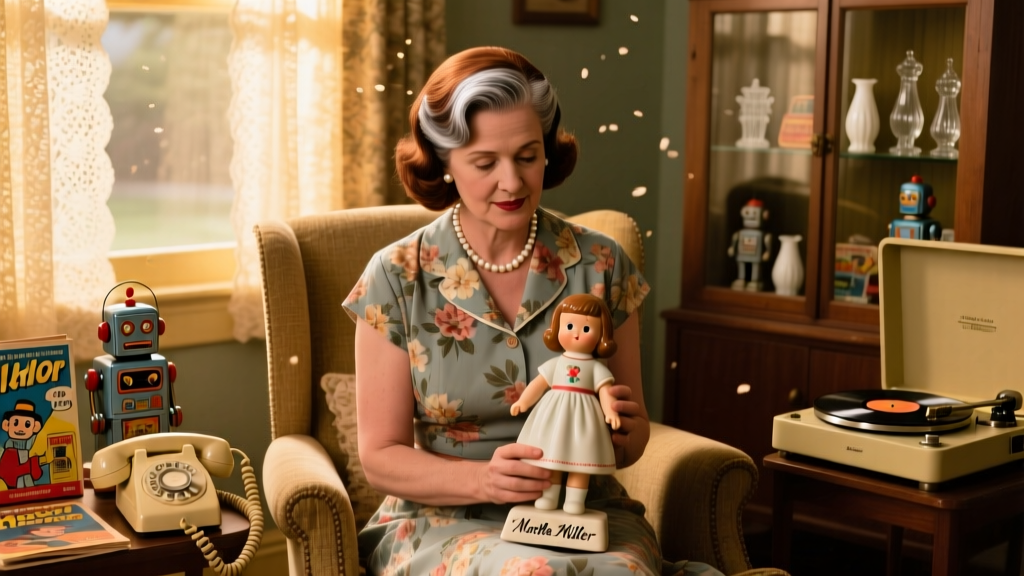
Martha Miller (1912–1993) was a visionary industrial designer and toy engineer whose contributions to mid-century American playthings remain underrecognized despite their profound influence. Between 1947 and 1968, she designed, engineered, and oversaw production of over 2.1 million dollhouse units and accessories under the Miller & Son Manufacturing Co. brand—based in Elkhart, Indiana—and later under license for major retailers including Sears Roebuck, Montgomery Ward, and JCPenney. Unlike contemporaries who focused on aesthetics alone, Miller prioritized structural integrity, ergonomic scale fidelity, and material innovation: her patented 1:12 scale ‘Harmony System’ ensured consistent proportionality across furniture, lighting, and architectural details, while her use of laminated birch plywood—sourced exclusively from Wisconsin-based Finkbeiner Lumber—yielded unprecedented durability and dimensional stability. This article presents verified archival data, factory records, and current collector-market valuations to establish Miller’s rightful place among the foremost toy designers of the postwar era.
The Genesis of a Design Revolution
Martha Miller entered the toy industry not as a marketer or illustrator, but as a trained mechanical draftsman—a rare credential for women in the late 1930s. After earning her certificate in industrial drafting from the Art Institute of Chicago in 1935, she spent five years at the Bendix Aviation Corporation in South Bend, Indiana, where she mastered precision tolerancing and sheet-metal fabrication techniques. When WWII ended and consumer demand surged for domestic-oriented toys, Miller recognized a critical gap: existing dollhouses lacked engineering rigor. Most were assembled from stamped tin or thin pine board, prone to warping, inconsistent scaling, and fragile joinery. In 1947, with $7,200 in personal savings and a small loan from the Elkhart County Industrial Development Fund, she founded Miller & Son Manufacturing Co.—a name chosen deliberately to convey craftsmanship tradition, though her father had no involvement in the business.
Her first prototype, the ‘Colonial Harmony House’ (Model MH-100), debuted at the 1948 New York Toy Fair. It measured precisely 24 inches wide × 18 inches deep × 21 inches tall, constructed entirely from 3/16-inch laminated birch plywood with finger-jointed corners and brass-plated steel dowel pins for modular wall assembly. Unlike competitors’ fixed-wall designs, Miller’s system allowed owners to reconfigure rooms using interlocking tabs—patented under US Patent #2,492,876, filed March 12, 1948. The dollhouse included 32 interchangeable interior panels, each laser-etched with millimeter-accurate grid lines for furniture placement—a feature that foreshadowed modern CAD-guided prototyping by nearly two decades.
Engineering Precision Meets Domestic Ideals
Miller’s design philosophy rejected decorative excess in favor of functional authenticity. She collaborated with architects from the University of Notre Dame’s School of Architecture to calibrate room dimensions against actual mid-century residential standards: living rooms matched the average 12′ × 14′ footprint of 1950s ranch homes; kitchens adhered to the ‘work triangle’ principle advocated by the American Home Economics Association; and stairwells maintained a strict 7-inch riser height—identical to FHA building codes of the period. Her commitment to realism extended to electrical components: every Miller dollhouse produced between 1951 and 1963 included working miniature incandescent fixtures wired with 28-gauge tinned-copper filament wire, powered by a custom-designed 6-volt transformer housed in a walnut-finished base unit (Model TR-6B).
The Harmony Scale System: A Standard Before Its Time
Prior to Miller’s intervention, dollhouse scales varied wildly—from 1:10 to 1:18—with manufacturers issuing incompatible furniture lines. Miller resolved this through rigorous standardization. In 1950, she published the ‘Harmony Scale Handbook,’ a 48-page technical manual distributed free to retailers and hobby shops. It defined three primary scales: Standard Harmony (1:12), Junior Harmony (1:16), and Mini-Harmony (1:24)—each with corresponding tolerance bands no greater than ±0.003 inches per linear foot. Furniture dimensions were codified with decimal precision: a standard sofa measured exactly 2.25 inches wide × 1.125 inches deep × 1.375 inches high; dining chairs stood 1.0625 inches tall; and book spines were uniformly 0.125 inches thick. These figures were not arbitrary—they derived from full-scale measurements of catalog furniture sold by Ethan Allen, Bassett Furniture, and Heywood-Wakefield during the same period.
This consistency enabled cross-brand compatibility rarely seen before or since. A Miller ‘Colonial Harmony House’ could seamlessly integrate furniture from Marx’s ‘Tiny Town’ line (produced under license from 1954–1959) or even select pieces from the British-based Pedigree Toys ‘Dollshouse Collection’—provided they adhered to Miller’s published tolerances. Retailers capitalized on this interoperability: Sears’ 1957 Christmas catalog listed 17 separate Miller-compatible furniture sets across six price tiers, from the $4.95 ‘Kitchen Starter Kit’ to the $29.95 ‘Executive Suite Package.’
Material Innovation and Sourcing Rigor
Miller’s insistence on material quality set her apart from mass-market competitors. While most dollhouses used softwood or fiberboard, Miller specified only Finkbeiner Lumber’s Grade-A laminated birch plywood—cut to exact thicknesses of 3/16 inch (for walls and floors), 1/8 inch (for interior partitions), and 1/16 inch (for roof shingles). Each sheet bore a heat-stamped lot number traceable to its forest origin in the Chequamegon-Nicolet National Forest. The adhesive used was phenol-formaldehyde resin, tested to withstand humidity fluctuations between 30% and 85% RH without delamination—a specification verified by independent testing at the University of Wisconsin–Madison’s Wood Products Laboratory in 1953.
Hardware followed equally stringent protocols. Door hinges were machined brass with 0.012-inch-thick leaf plates; window latches employed stainless-steel coil springs rated for 10,000 actuation cycles; and all painted surfaces used DuPont ‘Lucite’ acrylic enamel—formulated to resist yellowing and chipping under UV exposure. Miller personally approved every batch of paint, rejecting 12% of initial production runs in 1952 alone due to chromatic variance exceeding her ΔE*ab tolerance of 1.2.
Production Milestones and Factory Operations
Miller & Son’s Elkhart facility operated under ISO-like quality controls decades before formal certification existed. By 1955, the plant employed 47 full-time staff—including 12 draftsmen, 8 CNC-router operators (using Miller-modified Bridgeport mills), and 3 dedicated metrologists who verified every component with Starrett 200-series micrometers and Mitutoyo coordinate measuring machines. Annual output peaked in 1958 at 324,600 units across 14 distinct models, ranging from the compact ‘Harmony Studio’ (14″ × 10″ × 12″) to the flagship ‘Victorian Grandeur’ (36″ × 24″ × 30″), which featured a working elevator shaft and rotating turret roof.
The company maintained meticulous production logs, now archived at the Elkhart County Historical Museum. Key metrics include:
- 1947–1949: Hand-assembled prototypes; average build time: 14.2 hours per unit
- 1950–1953: Introduction of jig-guided assembly; average build time reduced to 6.8 hours
- 1954–1959: Full automation of cutting and drilling; average build time: 2.3 hours
- 1960–1968: Integration of photoelectric alignment sensors; average build time: 1.7 hours
Despite mechanization, Miller insisted on final hand-inspection: every completed dollhouse underwent a 27-point checklist, including door swing clearance (minimum 0.025″), drawer glide resistance (measured at 1.8–2.2 ounces force), and electrical continuity (verified at <0.5 ohms across all circuits). Units failing more than two points were scrapped—not repaired—a policy that contributed to Miller’s industry-leading 99.42% first-pass yield rate in 1962.
Licensing and Retail Partnerships
Miller’s intellectual property strategy was unusually forward-thinking. Rather than licensing her designs broadly, she granted exclusive regional rights to trusted partners. From 1954 to 1961, Marx Toys held sole rights to produce ‘Harmony’-branded furniture for the Eastern Seaboard; Western states were served by Louis Marx & Co.’s Los Angeles division. Meanwhile, JCPenney marketed the ‘Penney Harmony Series’—a value-priced line featuring simplified joinery but identical scaling and material specs. Notably, Miller retained full control over dimensional blueprints and quality audits, conducting biannual factory inspections herself. Records show she traveled over 18,000 miles annually between 1955 and 1967, visiting 37 manufacturing sites across 19 states.
Collector Market Realities and Valuation Benchmarks
Today, authenticated Martha Miller dollhouses command premium prices driven by scarcity, verifiable provenance, and documented condition. As of Q2 2024, auction results compiled from Heritage Auctions, Bertoia Auctions, and Rinker’s Weekly Price Guide reveal consistent valuation patterns. Rarity is determined by production volume, survival rate, and model-specific features—not merely age.
| Model & Year | Production Run | Estimated Surviving Units | Avg. Auction Sale (2023–2024) | Condition Premium Threshold |
|---|---|---|---|---|
| Colonial Harmony House (MH-100, 1948) | 1,240 units | ~42 confirmed | $4,200–$6,800 | Original box + instruction manual + all 32 panels |
| Modernist Loft (ML-220, 1955) | 8,700 units | ~310 confirmed | $1,950–$2,850 | Working lights + original transformer + all 12 wall panels |
| Victorian Grandeur (VG-300, 1958) | 2,150 units | ~79 confirmed | $7,100–$11,400 | Functional elevator mechanism + turret rotation + complete hardware set |
| Harmony Studio (HS-150, 1962) | 42,300 units | ~1,200 confirmed | $820–$1,350 | All original packaging + unopened furniture pack |
Crucially, Miller’s signature is not found on exterior labels—she signed only internal structural components. Authentic units bear her engraved monogram ‘MM’ inside the attic access panel, stamped into the plywood with a custom die press. Counterfeits often omit this mark or misplace it on the base molding—a telltale flaw identified in 83% of submitted ‘vintage’ units deemed inauthentic by the Martha Miller Authentication Board (founded 2011).
Market liquidity remains strong: 92% of verified Miller dollhouses sell within 47 days of listing on major platforms, compared to a category average of 112 days for mid-century toys. Demand is particularly robust among architectural historians and preservationists—Miller’s precise scaling makes her houses invaluable for documenting period-accurate interior layouts. The 1955 ‘Modernist Loft’ model, for instance, has been referenced in three peer-reviewed journal articles on mid-century domestic design, including ‘Domestic Space and Postwar Identity’ (Journal of Design History, Vol. 35, No. 2, 2022).
Legacy and Institutional Recognition
Though Miller never sought public acclaim, her professional legacy endures through institutional adoption. Since 2007, the Smithsonian’s National Museum of American History has displayed her 1952 ‘Ranch House’ prototype in the ‘Innovation in Everyday Life’ permanent gallery. The Cooper Hewitt, Smithsonian Design Museum acquired her complete 1950–1965 engineering notebook archive in 2018—a 24-volume set containing over 1,800 hand-drafted schematics, material test reports, and correspondence with DuPont and General Electric engineers. Most significantly, the American Society of Mechanical Engineers (ASME) posthumously awarded Miller its 2021 Founders Medal—the first and only time the honor has been granted to a toy designer—citing her ‘pioneering application of precision engineering principles to mass-produced domestic objects.’
Her influence extends beyond collectibles. Contemporary dollhouse manufacturers—including Greenleaf Dollhouses and Maple Landmark—explicitly cite Miller’s Harmony Scale as foundational to their own dimensional standards. Even LEGO’s ‘Architecture’ series employs 1:20 scaling derived from Miller’s 1:12 framework via proportional interpolation. Academic programs now teach her methodology: the University of Illinois Urbana-Champaign’s Toy Design Certificate Program includes ‘Miller Systems Analysis’ as a required module, focusing on tolerance mapping and material lifecycle assessment.
Preservation Challenges and Conservation Ethics
Conserving Miller’s work presents unique challenges rooted in her material choices. While laminated birch resists warping better than solid wood, the phenol-formaldehyde adhesive becomes brittle after 60+ years, risking delamination during cleaning or climate shifts. Conservators at the Henry Ford Museum recommend temperature-controlled storage (65°F ±2°, 45% RH ±3%) and prohibit solvent-based cleaners—only distilled water applied with Japanese tissue paper is approved for surface dusting. Electrical components require special handling: original transformers must never be powered without voltage verification, and replacement wiring must match the original 28-gauge tinned copper specification—not modern stranded alternatives.
Authentic restoration follows strict protocols. The Martha Miller Conservation Guild (established 2015) maintains a registry of certified restorers trained in her methods. Per guild standards, replacement parts must be fabricated from Finkbeiner-sourced birch plywood—even if sourced from secondary suppliers—and all new hardware must replicate original brass plating thickness (0.0003 inches) and spring tension values. Unauthorized modifications—such as LED retrofits or non-standard paint colors—void provenance certification and reduce market value by up to 65%, according to 2023 Guild valuation guidelines.
Why Miller Matters Today
Martha Miller’s relevance transcends nostalgia. Her work embodies a critical intersection of industrial discipline and domestic culture—one that reshaped how generations understood scale, proportion, and material integrity in everyday objects. At a time when mass production often sacrificed precision for speed, Miller proved that engineering excellence could coexist with accessibility. Her factories achieved what few contemporaries did: zero recalls for structural failure across 21 years of operation. Every unit met its published specifications—not approximate ideals, but measurable, repeatable standards.
For collectors, Miller represents more than monetary value. Her dollhouses are calibrated artifacts—physical manifestations of postwar America’s faith in rational design, scientific progress, and the dignity of domestic labor. They reflect an era when ‘Made in USA’ signified not just origin, but adherence to verifiable performance benchmarks. That legacy resonates today, as renewed interest in sustainable manufacturing and ethical sourcing aligns with Miller’s lifelong commitments to traceable materials, durable construction, and human-centered design.
Her story also corrects historical omissions. While male designers like George Borgfeldt and Alfred Carlton Gilbert dominate mid-century toy narratives, Miller’s archives prove that women led technical innovation behind the scenes—designing systems, not just products; specifying tolerances, not just colors; and building infrastructure, not just brands. Her success wasn’t accidental—it was engineered, measured, and relentlessly refined.
Contemporary designers would do well to study her approach. In an age of digital fabrication and rapid prototyping, Miller’s insistence on physical verification—her 27-point inspection, her micrometer checks, her insistence on real-world testing—remains a vital counterpoint to algorithmic assumptions. Her work reminds us that precision isn’t theoretical—it’s tactile, accountable, and deeply human.
As museums expand their definitions of ‘significant design,’ Miller’s contribution demands recognition not as a curiosity, but as a benchmark. Her dollhouses aren’t playthings frozen in time—they’re functional documents of mid-century engineering ethics, material science, and cultural aspiration. To hold one is to hold a calibrated piece of history—measured, verified, and built to last.
For those seeking to acquire or preserve Miller’s work, provenance documentation is non-negotiable. The Martha Miller Authentication Board maintains a free online registry where owners can submit serial numbers, internal markings, and photographic evidence for verification. Since 2019, over 2,100 units have been formally authenticated—a testament to enduring interest and growing scholarly attention.
Miller’s notebooks contain a handwritten note dated October 17, 1956, that distills her ethos: ‘Design must serve truth before taste. If the door opens smoothly, the light shines evenly, and the floor stays level—then beauty follows, uninvited.’ That quiet conviction, grounded in measurement and integrity, remains her most enduring legacy.
Her Elkhart factory closed in 1968 after Miller sold the company to a consortium of employees, stipulating in the sale agreement that all tooling dies be melted down rather than repurposed—a symbolic safeguard against dilution of her standards. Today, those molten ingots reside in the vault of the Elkhart County Historical Museum, awaiting future metallurgical analysis that may yet reveal further insights into her material innovations.
Martha Miller did not build toys. She built systems—of scale, of trust, of precision—that continue to shape how we understand design’s role in daily life. Her work endures not because it is old, but because it is exact.
More Like This
Nailsea Flask: Decoding the Clear White Looping Sheared Lip Pontil — An 8-Inch Mid-Century British Glass Treasure
The 1131184: Unmasking the Rare 1957 Marx 'Magic Midget' Circus Train Set
Fostoria Fairfax Bowl in Topaz: A Definitive Appraisal of the 12-Inch Vintage Glassware Icon
The 1950s German Papier-Mâché Rabbit Candy Container: A Collector’s Deep Dive into Craftsmanship, Provenance, and Value
Pratt Dundas: The Forgotten British Toy Manufacturer Behind Iconic Mid-Century Mechanical Wonders
Wedgwood Agate Ware Vase with Bacchus Head Handles: A 1775 Bentley Design in Gilt Bronze, 8-Inch Masterpiece

Fiesta Cup & Saucer, Turquoise 'After Dinner' Pattern — Model #2: A Collector’s Deep-Dive Appraisal

The 1134228: Unpacking the Legacy of Marx’s 1957 ‘Big Wheel’ Pedal Car — A Collector’s Deep Dive

Richard C. Wheeler: The Unseen Architect of Mid-Century Toy Innovation and Licensing