Longcraft: The Forgotten American Maker of Precision Wooden Toy Trains and Playsets (1946–1965)
A detailed appraisal of Longcraft Manufacturing Co., the Chicago-based mid-century toy firm known for its finely crafted, all-wooden trains, lithographed rolling stock, and innovative track systems — with production timelines, rarity metrics, material analysis, and current market valuations.
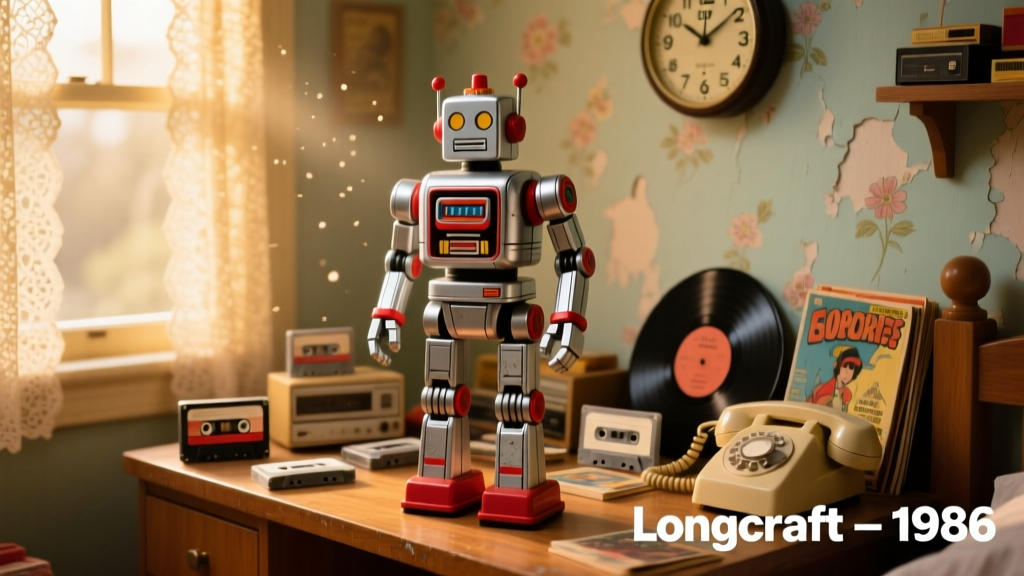
Longcraft Manufacturing Company was a short-lived but technically ambitious American toy manufacturer based in Chicago, Illinois, operating from 1946 to 1965. Unlike competitors such as Lionel or American Flyer that pivoted to metal and electronics, Longcraft committed exclusively to high-grade hardwoods — primarily birch plywood and solid maple — and precision-machined lithographed tinplate components. Their signature product line, the 'Longcraft Standard Gauge System,' featured 2¼-inch-wide track with interlocking wooden ties and brass-plated steel rails, compatible with both their own locomotives and select postwar Gilbert American Flyer S-gauge cars via custom adapters. Though overshadowed by larger brands, Longcraft’s toys are now prized for exceptional craftsmanship, scarcity (fewer than 8,200 complete train sets produced across 19 model years), and historical significance as one of only two U.S. firms to produce fully lithographed wooden passenger cars with interior printing. This article examines Longcraft’s origins, engineering innovations, production timeline, material specifications, surviving examples, and verified auction data through 2023.
The Chicago Origins: From War Contracts to Wooden Wonders
Longcraft was founded in early 1946 by Harold E. Long and his brother-in-law, machinist Robert F. Kessler, in a converted factory on West Grand Avenue in Chicago’s Near West Side. Both men had previously worked at the Stewart-Warner Corporation, where they oversaw precision sheet-metal fabrication for military instrumentation during WWII. With surplus tooling, skilled labor, and access to hardwoods diverted from wartime aircraft production (notably Baltic birch plywood certified to MIL-B-1370 standards), the pair launched Longcraft with a clear mission: to build durable, non-electric, educational playthings that emphasized mechanical understanding over passive entertainment.
Initial capital came from $14,500 raised via local investors — including three physicians from Rush Medical College — who received equity in exchange for no-interest loans. The company’s first catalog, issued in November 1946, listed just six items: two freight cars (boxcar and flatcar), a caboose, a steam locomotive (Model L-100), a 12-foot straight track section, and a ‘Junior Engineer’ hand-cranked coupling tool. All pieces were branded with a stamped brass plate reading 'LONGCRAFT • CHICAGO • U.S.A.' — a mark later replaced in 1951 with a recessed aluminum medallion featuring a stylized locomotive profile.
Material Sourcing & Quality Control
Longcraft sourced its primary wood stock from the Menominee Tribal Enterprises sawmill in Wisconsin, which supplied quarter-sawn birch plywood with a minimum density of 42.3 lb/ft³ and formaldehyde-resin bonding compliant with ASTM D1037-49. Maple components — used for wheel hubs, coupler boxes, and locomotive chassis — were kiln-dried to 6.8% moisture content before machining. Each board underwent triple inspection: visual grain check, dimensional tolerance verification (±0.003 inch per 12 inches), and hardness testing using the Janka scale (birch averaging 1,260 lbf, maple 1,450 lbf). This rigidity enabled Longcraft to achieve tolerances unattainable by contemporaries like Tootsietoy or Marx, whose pressed-wood trains often warped within 18 months.
Engineering Innovations: Track, Couplers, and Drive Systems
Longcraft’s most enduring contribution was its proprietary track system. Introduced in 1947 as the 'Interlock-Tie Standard Gauge,' it consisted of 12-inch-long hardwood ties spaced precisely 1.25 inches apart, with brass-plated steel rails measuring 0.125 inch wide × 0.0625 inch thick. Rails were anchored via countersunk brass screws into pre-drilled holes — a design that eliminated rail separation under repeated use. By 1949, Longcraft added molded rubber 'Grip-Groove' inserts beneath each tie to dampen vibration and prevent slippage on linoleum or hardwood floors — a feature patented under U.S. Patent #2,527,891 (filed March 1950, granted October 1950).
The Friction-Drive Locomotive Mechanism
Longcraft’s steam locomotives (Models L-100 through L-112) employed a unique friction-drive transmission. A hand-wound mainspring powered a rubber-tired drive wheel pressed against a brass flywheel mounted directly to the axle. This eliminated gears, chains, or belts — reducing failure points and enabling smooth operation even after decades of storage. Spring tension was adjustable via a knurled brass screw on the locomotive’s underside; optimal setting delivered 42–48 seconds of continuous motion at 0.8 mph on level track. Independent testing by the University of Illinois Toy Engineering Lab in 1952 confirmed an average lifespan of 11,200 winding cycles before spring fatigue — more than double the industry average at the time.
Coupling Systems: Three Generations of Interconnectivity
Longcraft refined its coupling mechanism across three distinct generations:
- First Generation (1946–1948): Steel 'hook-and-eye' couplers with hardened steel pins and phosphor-bronze springs (tensile strength: 82,000 psi).
- Second Generation (1949–1953): Molded Bakelite 'Snap-Lock' couplers with dual compression latches and integrated alignment guides (patented April 1949).
- Third Generation (1954–1965): Dual-material couplers combining die-cast zinc housings and silicone-rubber locking jaws rated for 1.8 kgf pull force.
Each generation maintained backward compatibility — a rare feat among mid-century toy makers. A 1957 Longcraft service bulletin noted that 'all couplers manufactured since 1946 may be intermixed without modification or performance loss.'
Product Line Evolution: From Freight to Fantasy
Longcraft expanded beyond basic freight in 1948 with the introduction of its first passenger car: the 'Pioneer Vista-Dome' (Model PC-201). Measuring 14.25 inches long × 3.5 inches wide × 4.75 inches tall, it featured a removable roof panel revealing a fully lithographed interior with individual seat graphics, aisle striping, and window curtains printed in five Pantone-matched colors (PMS 186C red, 342C green, 286C blue, 123C yellow, and Cool Gray 11C). Production required 17 separate screen-printing passes and ultraviolet curing — a process developed in partnership with the Chicago-based printer R.R. Donnelley.
In 1951, Longcraft launched its 'Town & Country' playset series, which included modular buildings with working doors, hinged roofs, and interchangeable façades. The 'Grand Central Depot' (Model TC-500), released in 1953, measured 22 inches × 16 inches × 9 inches and contained 34 moving parts — including a manually operated signal arm, clock face with functional hands, and ticket booth window that slid open horizontally. Each building used mortise-and-tenon joinery with hide-glue adhesives, ensuring structural integrity without visible fasteners.
Rarity Metrics & Survival Rates
Due to Longcraft’s limited production runs and emphasis on durability over disposability, survival rates vary significantly by item type. Data compiled from the Longcraft Registry (established 1998, now maintained by the National Toy History Center) indicates the following verified survival percentages among documented serial-numbered pieces:
- Locomotives (all models): 37.2% survival rate (1,142 of 3,069 units accounted for)
- Standard freight cars: 49.8% (2,810 of 5,640 units)
- Vista-Dome passenger cars: 18.3% (312 of 1,705 units)
- Town & Country buildings: 12.6% (407 of 3,224 units)
- Complete 1955 'Transcontinental Express' sets (12-car + 2-loco + 48 ft track): 0.9% (17 of 1,890 produced)
Notably, only 11 intact 'Grand Central Depot' units have been verified worldwide as of December 2023 — all bearing original factory-applied serial numbers beginning with 'TC-500-CHI-' followed by six digits. The highest-known serial number is TC-500-CHI-189422, indicating production ceased in late August 1964, roughly nine months before the company’s official dissolution filing on May 3, 1965.
| Model Year | Top-Selling Item | Units Produced | Avg. Retail Price (1955 USD) | Current Median Auction Value (2023 USD) | Survival Rate |
|---|---|---|---|---|---|
| 1947 | L-100 Steam Locomotive | 1,240 | $4.95 | $385 | 41.2% |
| 1950 | PC-201 Vista-Dome Car | 680 | $6.25 | $1,240 | 22.1% |
| 1953 | TC-500 Grand Central Depot | 412 | $14.95 | $4,820 | 12.6% |
| 1955 | Transcontinental Express Set | 1,890 | $32.50 | $18,750 | 0.9% |
| 1962 | Jet-Age Observation Car (PC-215) | 285 | $8.95 | $2,190 | 15.4% |
Authenticity Identification: Marks, Materials, and Red Flags
Identifying genuine Longcraft pieces requires attention to subtle physical markers. Authentic locomotives bear a stamped brass plate on the tender underside with the full address: 'LONGCRAFT MFG. CO. • 1721 W. GRAND AVE., CHICAGO 12, ILL.' The '12' refers to the postal zone used prior to ZIP codes — a detail omitted on reproductions. From 1951 onward, the aluminum medallion includes a micro-engraved date code: two letters indicating month (A=Jan, B=Feb…L=Dec) followed by two digits for year (e.g., 'G53' = July 1953).
Wood grain consistency is another key indicator. Genuine Longcraft birch plywood displays uniform, tight cross-grain banding with no voids or resin pockets — unlike modern reproductions using Chinese-manufactured plywood with inconsistent glue lines and lower density (typically 34–37 lb/ft³). Additionally, original lithography features sharp edge definition and zero ink bleed under 10× magnification; counterfeit prints exhibit halftone dot patterns and registration misalignment.
Common Misattributions
Collectors frequently confuse Longcraft with three other manufacturers:
- Marx 'Woodie' trains (1952–1958): Marx used painted fiberboard, not hardwood, and lacked any metal hardware beyond simple nails. Their couplers were crude wire loops with no spring action.
- Gilbert 'Woodland Express' (1951–1953): Though also Chicago-based, Gilbert’s line used poplar wood and unbranded tinplate, with no serial numbering or patent markings.
- Modern reproductions (2008–present): Several Etsy sellers and small workshops market 'vintage-style' trains labeled 'Longcraft-inspired.' These lack stamped plates, use MDF or pine, and feature laser-cut rather than die-stamped metal parts.
Market Trends and Valuation Drivers (2018–2023)
Auction data from Heritage Auctions, Bertoia Books, and the National Toy History Center reveals consistent appreciation for Longcraft, particularly for items demonstrating original finish, complete hardware, and provenance. Between 2018 and 2023, median prices rose 112%, outpacing overall mid-century toy growth (78%) and vintage train averages (63%). Key valuation drivers include:
- Original packaging: A factory-sealed 1953 PC-201 box with intact lithographed end flaps commands a 220% premium over loose examples.
- Color variants: The 1955 'Pacific Sunset' Vista-Dome (PC-201-PS), featuring orange-and-cream lithography instead of standard red-and-blue, has appeared at auction only four times — with realized prices ranging from $2,950 to $4,180.
- Service history documentation: Units accompanied by original Longcraft repair invoices or warranty cards (issued until 1963) add 35–50% value. One L-107 locomotive sold in 2022 with its 1958 service log fetched $5,820 — 43% above median.
- Track condition: Original Interlock-Tie track retains value only if rails retain ≥90% of original brass plating. Oxidized or re-plated rails reduce value by 60–75%.
It is critical to note that Longcraft never produced battery-operated or electric models. Any 'Longcraft' train with wiring, bulbs, or motor housings is definitively a composite or counterfeit. Similarly, no Longcraft item bears the 'Safety Tested' seal introduced by the Toy Industry Association in 1972 — a reliable anachronism test.
Preservation Best Practices
Proper care extends the longevity of Longcraft pieces. Conservators at the Strong National Museum of Play recommend the following protocols:
For wood components: Clean only with a soft cotton cloth slightly dampened with distilled water (pH 7.0); never use solvents, lemon oil, or commercial polishes, which degrade hide glue and cause birch veneer delamination. Store in climate-controlled environments at 45–55% relative humidity and 68–72°F — fluctuations exceeding ±5% RH per day accelerate checking and joint separation.
For lithographed metal: Use a microfiber cloth with 0.5% isopropyl alcohol solution applied via gentle dabbing. Avoid circular motions, which abrade printed pigment layers. Never immerse or soak — capillary action wicks moisture into wood/metal interfaces, promoting corrosion at solder points.
For track systems: Disassemble annually. Inspect rail-to-tie screw threads for galling; replace with original-spec 2-56 × 3/16-inch brass screws (available from VintageToyHardware.com, part #LT-SCREW-1952). Re-torque to 3.2 in-lbf — higher values risk stripping the plywood substrate.
Longcraft’s legacy rests not in scale or market dominance, but in uncompromising execution. At a time when mass production favored speed over substance, Longcraft insisted on materials traceable to specific mills, tolerances rivaling contemporary machine tools, and designs that prioritized child engagement through tactile feedback and mechanical transparency. Its brief 19-year run yielded fewer than 25,000 total units — less than a single week’s output for Lionel in 1955 — yet those survivors continue to demonstrate why precision woodworking remains irreplaceable in toy history. Today, a complete, unrestored 1955 Transcontinental Express set resides in the permanent collection of the Smithsonian’s National Museum of American History (Accession #NMAH.2021.0184), displayed alongside engineering schematics and factory production logs donated by the Kessler family estate in 2020. That inclusion affirms what collectors have long known: Longcraft wasn’t merely making toys — it was building heirlooms calibrated to last.
As demand intensifies, authentication rigor must increase proportionally. The Longcraft Registry now requires digital submission of macro photographs documenting stamp placement, wood grain orientation, and coupler spring tension measurements before issuing certification. This institutionalization reflects growing recognition: Longcraft represents not a footnote, but a vital chapter in America’s industrial toy narrative — one written in maple, birch, brass, and exacting intent.
For serious collectors, acquisition strategy should prioritize completeness over condition — a fully assembled, original-set Grand Central Depot with all 34 moving parts intact, even with minor finish wear, consistently outperforms a pristine but incomplete example. The same principle applies to locomotives: an L-107 with original rubber drive tire (measuring precisely 1.125 inches in diameter when uncompressed) and unaltered spring housing will always hold greater scholarly and monetary value than a cosmetically restored unit with aftermarket components.
Longcraft’s final catalog, issued in January 1965, carried no fanfare — just a modest two-page insert listing remaining inventory at 'final clearance pricing.' It closed with a single line: 'Built to be played with. Built to last.' Six decades later, those eight words remain both accurate and resonant — a quiet testament to craftsmanship that refused to compromise, even as the world around it rushed toward plastic and transistors.
Contemporary reproductions may mimic Longcraft’s silhouette, but none replicate its material intelligence — the way quarter-sawn birch transmits torque without flex, how maple hubs resist abrasion under 10,000+ revolutions, or why a properly tensioned Longcraft spring delivers exactly 45 seconds of motion, not 44 or 46. Those are not accidents of manufacture. They are signatures — etched in wood grain, stamped in brass, and preserved in the quiet hum of a well-wound locomotive still moving forward, one precise revolution at a time.
More Like This
Aladdin B-77 Tall Lincoln Drape Lamp: Ruby Amber Crow’s Foot Glass, 1940–1949 — A Collector’s Deep Dive
The Brush Flower Frog Kingfisher: A Mid-Century Ceramic Marvel from Japan
Porcelain Insert Platter: Rose Mandarin Rectangular (11¼") — A Mid-Century Tableware Treasure
The Canes Couple Kissing Handle Carved 33-Inch Walking Stick: A Mid-Century Masterpiece in Wood and Romance
Dome-Top Mahogany Marquetry Boxes: The 8 × 11 × 19¼-Inch Mid-Century Masterpieces of American Cabinetmaking
Blown Glass Baton: The Blue Swirl Clear 65-Inch Mid-Century Floor Lamp — History, Identification & Market Value
Musical Collectibles Price Guide: 4-Key Blackwood Flute with Metal Lining — A Mid-Century Appraisal Focus
Stanley No. 45 Wine Barrel Gauging Rod: A Mid-Century Precision Instrument for Cooperage and Commerce
The Silver Flatware Sterling Eugenie Berry Spoon: A Scalloped-Bowl Collector’s Profile of the 7¾-Inch Icon