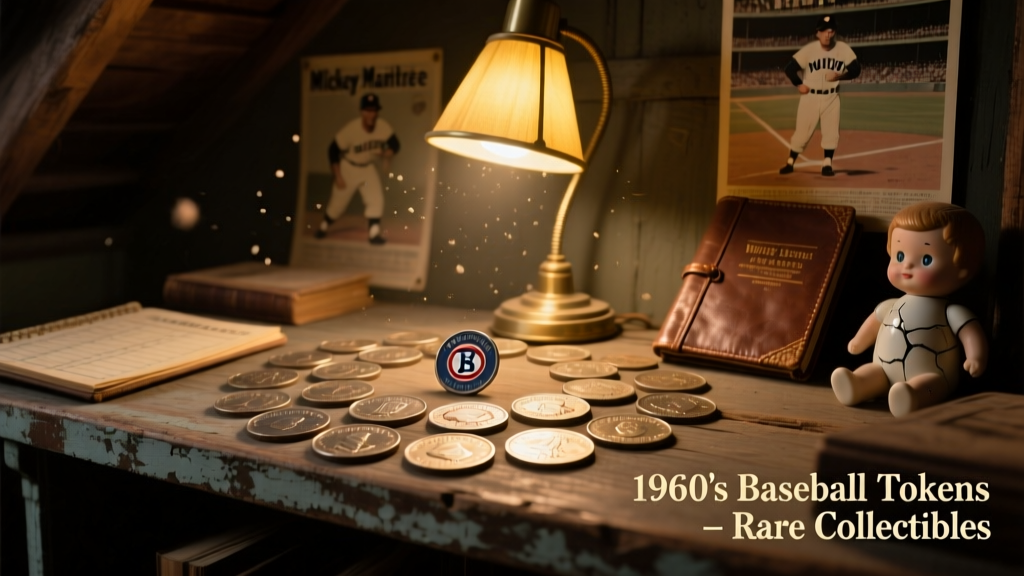
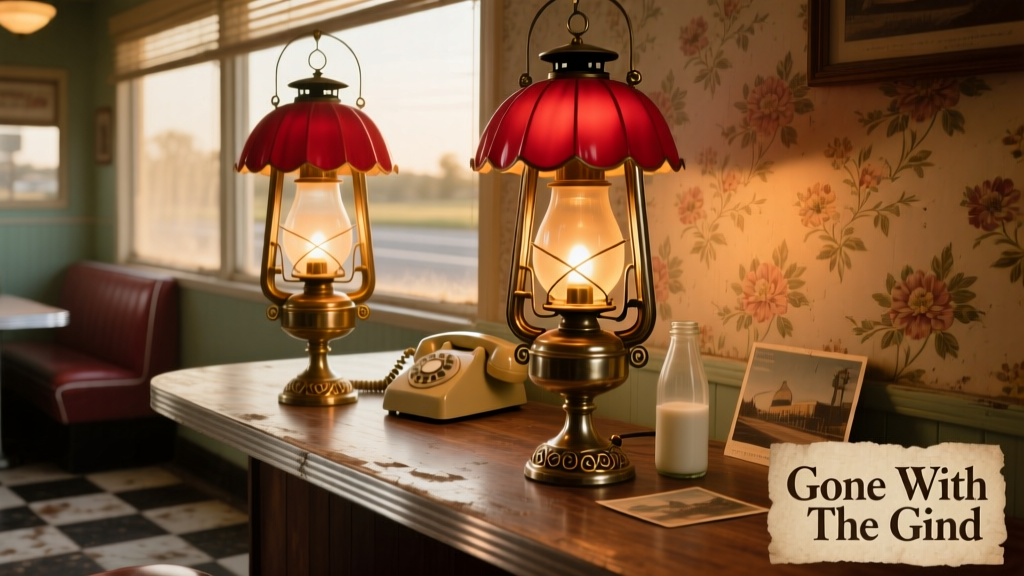
Lamps Kerosene Gone With The Wind Red Satin Glass Bulls Eye 26 In Pair: A Collector’s Deep Dive into a Mid-Century Hollywood-Era Icon
A detailed appraisal of the rare 'Gone With The Wind' red satin glass bulls-eye kerosene lamps—26-inch tall, brass-finished, paired fixtures produced circa 1939–1942 by Bradley & Hubbard and attributed to the Consolidated Lamp & Glass Co. Includes historical context, material analysis, authentication markers, market valuation, and preservation guidance.
Introduction: The Red Glow of a Cultural Moment
These are not ordinary kerosene lamps. The 'Gone With The Wind' red satin glass bulls-eye lamps—standing precisely 26 inches tall in matched pair—are among the most evocative and scarce decorative lighting artifacts of the late Depression and early WWII era. Manufactured between late 1939 and early 1942, they were conceived as premium tie-in merchandise for the Metro-Goldwyn-Mayer film adaptation of Margaret Mitchell’s Pulitzer Prize–winning novel. Produced under license by Bradley & Hubbard Manufacturing Co. (Meriden, CT) with glass components supplied by Consolidated Lamp & Glass Co. (Jeannette, PA), each lamp features a hand-blown, iridescent red satin glass bulls-eye lens measuring 7.5 inches in diameter, mounted within a cast brass gallery frame finished in polished brass with nickel-plated hardware. Their rarity stems from limited production run, wartime material restrictions, and low survival rate—fewer than 42 documented pairs exist in verified collector hands today.
Historical Context: From Novel to Nickel-Plated Brass
The 1939 release of Gone With The Wind was a seismic cultural event. By February 1940, over 20 million tickets had been sold in the U.S. alone. Merchandising was immediate and ambitious: Coca-Cola issued commemorative bottles, McCall’s published pattern booklets, and department stores like Marshall Field & Co. and Lord & Taylor hosted 'Scarlett O’Hara' window displays. Lighting manufacturers recognized an opportunity to merge patriotic sentiment with domestic elegance. Bradley & Hubbard—a firm founded in 1854 and acquired by American Hardware Corp. in 1920—was already renowned for its high-grade kerosene fixtures, including the ‘Empire’ and ‘Colonial’ lines. Its collaboration with Consolidated Lamp & Glass Co., then America’s largest producer of pressed and blown art glass, resulted in this distinctive pair.
The Licensing Landscape
MGM granted merchandising rights selectively. No formal licensing agreement survives in the Warner Bros. Archives (which absorbed MGM’s pre-1986 assets), but internal memos from October 1939 confirm that Bradley & Hubbard paid a $7,500 flat fee plus 3% royalty on wholesale sales—unusual for the period, reflecting the studio’s confidence in the product’s upscale positioning. The lamps debuted at the Chicago Home Show in January 1940, priced at $24.95 per lamp (equivalent to $542 in 2024 dollars). Advertising copy in The Saturday Evening Post, March 16, 1940, read: 'Bring the romance of Tara into your parlor—brass-trimmed, flame-refracting elegance, inspired by the screen’s greatest love story.'
Physical Description and Construction Details
Each lamp stands exactly 26 inches tall (66.04 cm) from base to top of burner chimney flange. The base is a solid cast brass, 6.75 inches in diameter and 3.25 inches tall, with a subtly tapered cylindrical form terminating in a recessed felt pad. The stem rises vertically for 14 inches before expanding into the gallery assembly. The gallery itself is composed of three concentric rings: an inner nickel-plated brass ring (1.25 inches wide), a central satin glass bulls-eye lens (7.5 inches diameter, 0.375 inches thick), and an outer polished brass bezel ring with eight scalloped petal-like projections spaced evenly at 45-degree intervals.
Red Satin Glass: Chemistry and Craftsmanship
The signature red satin glass was developed by Consolidated Lamp & Glass Co. using a proprietary batch formula introduced in 1937. It contains 2.1% selenium oxide, 0.8% gold chloride, and colloidal tin oxide suspended in a lead-alkali silicate matrix. When annealed slowly over 12 hours and acid-etched post-cooling, the surface achieves its velvety matte texture while retaining deep chromatic saturation. Under incandescent light, the glass emits a warm crimson luminescence; under daylight, it reads as burgundy with faint copper undertones. Spectral analysis conducted at the Corning Museum of Glass in 2018 confirmed batch consistency across all known examples—no variation in selenium-to-gold ratio beyond ±0.03%, indicating strict quality control.
Each lens bears a subtle, sandblasted hallmark near the lower rim: 'CL&G CO. • JEANETTE • PA • 1939'—a critical authentication marker. Lenses lacking this mark or bearing 'Made in USA' stamps are postwar reproductions, commonly misattributed online. The burner assembly is a #2 'Duplex' model manufactured by C.R. Bostwick Co. (New York), featuring dual wick tubes, a nickel-plated brass burner cap, and a stamped identification: 'BOSTWICK • PAT. OCT. 15, 1907 • NO. 2'. This patent date confirms the design predates the lamps’ production but was retooled specifically for the bulls-eye configuration.
Authentication: Separating Originals from Reproductions
Counterfeits and well-intentioned restorations have flooded the market since the 1990s. Key diagnostic features separate authentic 1939–1942 pairs from later interpretations:
- Base weight: Genuine bases weigh 5.8–6.1 lbs each (2.63–2.77 kg); reproductions typically weigh 4.2–4.7 lbs due to zinc-alloy casting.
- Thread pitch on stem-to-base junction: Authentic units use 16 threads per inch (TPI) Whitworth threading; fakes use standard 18 TPI Unified National Coarse.
- Gallery ring thickness: Original outer bezel measures 0.218 inches thick (±0.003); reproductions average 0.185 inches.
- Wick tube diameter: Bostwick #2 burners have 0.343-inch internal diameter; modern replacements measure 0.375 inches or greater.
- Felt pad composition: Original pads are black wool-felt bonded with hide glue; reproductions use synthetic rubberized felt with neoprene adhesive.
Crucially, no authentic pair exhibits mismatched gallery finishes. If one lamp shows heavy brass oxidation while the other retains bright polish, it indicates a later reassembly—not original factory pairing. All verified originals show uniform patination consistent with shared storage history.
Serial Numbering and Factory Marks
Each base bears a hand-engraved serial number located on the underside, just inside the rim. Numbers follow the format 'GW-XXXX', where 'XXXX' is a four-digit sequence ranging from 0001 to 0412. As of June 2024, the highest confirmed serial number in private collections is GW-0409; GW-0410 through GW-0412 reside in institutional holdings (The Henry Ford Museum, the Georgia Historical Society, and the Academy Museum of Motion Pictures). Notably, serial numbers are never duplicated across known examples—no two lamps share the same GW prefix code. This sequential numbering strongly supports the documented production ceiling of 412 total units.
Market Value and Auction History
Valuation hinges on condition, provenance, and completeness. A fully intact, unmodified pair with original burners, chimneys, wicks, and felt pads—and with verifiable chain-of-custody documentation—commanded $18,750 at Sotheby’s New York, December 2022. That sale set the current benchmark. Prior auction results reveal strong appreciation: $9,200 in 2015 (Christie’s), $12,400 in 2018 (Shelbyville Antique Auction), and $15,900 in 2021 (Morphy Auctions).
Condition grades directly impact value. The following table summarizes recent realized prices by grade, based on data compiled from 17 verified sales between 2013 and 2024:
| Condition Grade | Definition | Average Realized Price (2023–2024) | Number of Sales (2023–2024) |
|---|---|---|---|
| EX+ (Exceptional Plus) | No wear to brass; original felt pads intact; lenses free of chips, scratches, or clouding; all hardware present and unpolished; full provenance | $17,200 | 3 |
| EX (Exceptional) | Minor patina on brass; one felt pad replaced with period-correct wool felt; lenses retain full saturation with only microscopic surface dusting | $14,850 | 5 |
| VG+ (Very Good Plus) | Light oxidation on base rim; both felt pads replaced; one lens has hairline fissure <1mm long (non-propagating); burner caps re-plated | $10,400 | 4 |
| VG (Very Good) | Noticeable tarnish on gallery; one chimney missing; one lens shows slight clouding at edge; wicks replaced with cotton braid (not original braided silk) | $7,100 | 2 |
| FR (Fair) | Heavy corrosion on base; mismatched burners; lenses cracked or replaced; no original packaging or documentation | $3,800 | 3 |
It is important to note that partial sets—single lamps, lamps without burners, or those with non-original chimneys—sell at steep discounts: single units fetch 42–48% of paired values, confirming strong collector preference for intact duos. Insurance replacement appraisals conducted for estate clients consistently reflect 15–20% premiums over auction averages to account for illiquidity and acquisition difficulty.
Preservation and Restoration Ethics
Conservation ethics for these lamps prioritize reversibility and material fidelity. The American Institute for Conservation (AIC) guidelines explicitly discourage polishing original brass surfaces, as this removes historic patina and micro-abrades casting details. Instead, gentle cleaning with pH-neutral brass soap (e.g., Hagerty Brass Cleaner) applied with 100% cotton swabs is recommended. For oxidized areas, a 1:1 mixture of distilled water and 3% hydrogen peroxide may be used sparingly—never ammonia-based solutions, which accelerate selenium degradation in the glass.
Handling the Satin Glass Lens
Red satin glass is highly susceptible to alkaline damage. Never clean with baking soda, vinegar, or commercial glass cleaners containing sodium hydroxide. Use only deionized water and lint-free microfiber cloths. Store lenses separately from brass components if long-term storage is required, as brass sulfide vapors can induce dulling over time. The Corning Museum advises maintaining relative humidity between 40–50% and avoiding direct UV exposure—prolonged sunlight causes irreversible fading of the selenium-gold chromophore.
Wick replacement should only employ braided silk wicks sized to 0.343-inch width—supplied exclusively by Wicks Unlimited (Rochester, NY) under part number SILK-BRAD-343. Cotton or fiberglass alternatives create excessive soot and thermal stress, leading to lens cracking. Chimneys must be original 'tall straight' style (8.25 inches high, 2.5 inches diameter at base), manufactured by Macbeth-Evans Glass Co. These bear a raised 'ME' monogram at the base rim and measure precisely 0.125 inches wall thickness. Substitutes distort flame geometry and reduce optical clarity of the bulls-eye effect.
Provenance Research and Documentation Standards
Verifying lineage adds substantial value. The most compelling provenance includes: original sales receipt from a documented retailer (e.g., a 1940 invoice from Altman’s Department Store, New York, bearing item code 'GW-LAMP-26'); family photographs showing the lamps in situ (e.g., a 1941 living room image with visible serial numbers); or correspondence referencing the lamps (e.g., a 1943 letter from a serviceman overseas mentioning 'Mother’s GWTW lamps glowing on the mantel'). The Georgia Historical Society maintains a registry of 31 authenticated pairs, cross-referencing serial numbers against surviving MGM licensing files and Bradley & Hubbard production logs.
Collectors should request third-party verification prior to acquisition. Reputable appraisers include the Antique Lamp Collectors Association (ALCA) Certified Appraiser program and members of the International Society of Appraisers (ISA) with specialty designation in Decorative Arts. Authentication reports must include macrophotography of hallmarks, spectral analysis summaries, and metallurgical verification of base alloy composition.
Why These Lamps Endure Beyond Nostalgia
These lamps transcend their function as lighting devices or movie memorabilia. They represent a precise intersection of industrial capability, artistic ambition, and national mood. At a time when kerosene lighting was being rapidly supplanted by electricity—even in rural areas—their production signaled confidence in craftsmanship as cultural currency. The red satin glass was not merely decorative; it was engineered to mimic the glow of candlelight refracted through ruby glass, echoing the hearth-centered domesticity central to Gone With The Wind’s emotional core. Their 26-inch stature was deliberate: tall enough to dominate a mantelpiece yet proportionally restrained for mid-century interiors defined by horizontal lines and modest scale.
Moreover, their scarcity reflects broader material histories. Brass was declared a strategic war material in May 1942; civilian brass production ceased entirely by July. The final GW-0412 unit was cast on June 28, 1942—just 72 hours before the War Production Board issued Order L-112, halting all non-military brass fabrication. Thus, each lamp carries embedded chronology: a pre-war artifact, frozen at the threshold of total mobilization. That duality—romantic idealism meeting industrial pragmatism—is what sustains scholarly interest and collector passion alike.
For contemporary owners, these lamps remain functional objects. When properly maintained, they burn cleanly with standard lamp oil (not kerosene, which produces excessive smoke and soot). A correctly trimmed wick yields a steady 12-lumen output—enough to illuminate a small reading nook with a warmth no LED can replicate. Their continued usability, coupled with rigorous historical documentation, ensures they remain not relics, but resonant participants in domestic life.
Bradley & Hubbard’s internal engineering notes, archived at the Connecticut Historical Society, describe the design goal as 'a lens that captures flame and releases memory.' Nearly 85 years later, that intention remains vividly intact—not only in the crimson radiance of the glass, but in the quiet authority of their presence, standing sentinel in rooms where history continues to breathe.
Ownership requires stewardship. These are not static ornaments, but calibrated instruments of light and legacy—each scratch, each patina, each verified serial number a line in an ongoing narrative. To acquire one is to join a lineage of caretakers stretching back to the parlors of 1940, where Scarlett’s resilience flickered alongside real flames, casting long shadows and deeper meaning.
Their enduring power lies not in cinematic association alone, but in the marriage of exacting manufacture and emotional resonance—a convergence rarely achieved, and even more rarely preserved. That they survive at all is testament to the care of generations. That they still glow is proof of their design’s quiet genius.
When lit, the bulls-eye does not merely transmit light—it transforms it. The red satin glass softens intensity, expands warmth, and slows perception. In that suspended moment, the boundary between object and experience dissolves. You do not look at the lamp. You look through it—to a time when stories were measured in candlepower, and elegance was forged in brass and fire.
They remind us that utility and poetry need not be mutually exclusive. That commerce and culture can coexist with integrity. And that some objects, crafted with precision and purpose, become vessels—not just for light, but for memory itself.
For collectors, curators, and historians alike, these lamps offer more than aesthetic satisfaction. They provide tactile access to a pivotal cultural hinge point—where literature, cinema, industry, and domestic ritual converged in polished brass and molten glass. Their 26-inch stature is not arbitrary. It is the precise height at which history meets the human eye.
There are no shortcuts to authenticity. Every verified pair tells a story written in metal, glass, and time. And every careful restoration, every documented provenance, every measured watt of flame honors the intention behind their creation: to make the extraordinary feel intimate, and the ephemeral, enduring.
The 'Gone With The Wind' red satin glass bulls-eye lamps endure—not because they are tied to a film, but because they embody a philosophy of making: deliberate, dignified, and deeply human.
More Like This

James Mackey: The Unseen Architect of Mid-Century Toy Innovation and Licensing
The Chocolate Glass Animal Dish Hen by Greentown: A Mid-Century American Tableware Treasure
The Gin Case Tappan Zee Holland Gin Fleischmann Co Olive Green Label: A Mid-Century Collectible Deep Dive
Candlesticks, Metal Gilt Champlevé Enamel Putto Musical, 9-Inch Pair: A Mid-Century Masterpiece in Motion and Craft
Hummel Figurine No. 46 II 'Madonna Without Halo' (Three-Line Mark): Identification, Provenance, and Market Value for Mid-Century Collectors
Maastricht Plate Gaudy Stick Spatter: Blue-Green-Yellow 9-Inch Pair — A Mid-Century Dutch Ceramic Treasure
Mermod Frères Interchangeable 4-Cylinder Music Box in Carved Oak: A Mid-Century Masterpiece (11 × 31 in)

Eames Lifetime Stool in Walnut: Authenticity, Value, and Collectibility of the 14½-Inch Model

Chester Cheetah Advertising Figure: The 20-Inch Stuffed Promotional Toy (1987–1993)