The Forgotten Metal: A Collector's Guide to 1960s Baseball Coins
An authoritative appraisal of mid-century baseball-themed metal coins—produced primarily by Topps, Fleer, and the American Card Company—covering composition, design evolution, distribution methods, rarity tiers, grading nuances, and market values as of 2024.
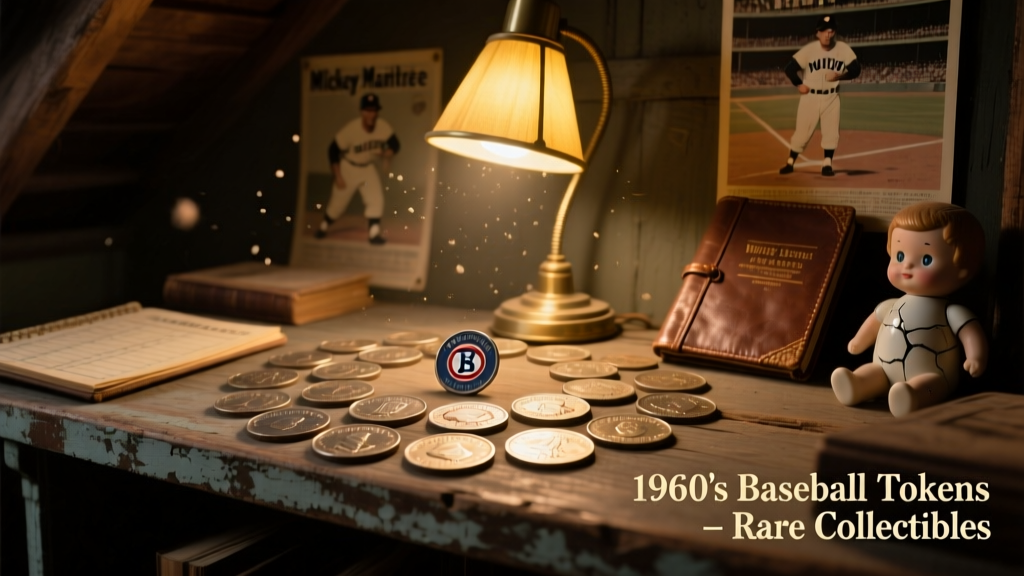
Baseball coins from the 1960s represent one of the most overlooked yet historically significant categories in vintage sports memorabilia. Unlike their cardboard counterparts—trading cards that dominate collector discourse—these small, stamped metal discs were issued as promotional inserts, cereal premiums, and retail giveaways between 1961 and 1969. Measuring precisely 1.5 inches (38.1 mm) in diameter and weighing between 7.2 and 8.4 grams, they were struck on zinc-alloy blanks with a copper-nickel wash or plain brass finish. Topps produced over 2.3 million coins across six annual series (1961–1966), while Fleer released two distinct sets in 1963 and 1964 totaling 120 unique player issues. Though often dismissed as novelties, these coins possess exceptional durability, precise die-cut detail, and direct ties to Major League Baseball’s golden era—making them increasingly sought after by serious mid-century collectors.
The Origins and Production Landscape
The baseball coin phenomenon emerged directly from the post-war boom in licensed sports merchandise and the growing sophistication of youth marketing. In 1961, Topps Chewing Gum, Inc. launched its first baseball coin set not as standalone collectibles, but as inserts inside boxes of Bazooka Bubble Gum. Each coin featured a single player’s portrait in profile, rendered in high-relief stamping with bold lettering and team insignia. Unlike earlier paper-based premiums, these coins offered tactile permanence—a key selling point in an era when children collected tangible objects meant to last. The initial run consisted of 100 players, each struck on zinc alloy with a thickness of 1.2 mm and edge-milled reeding for authenticity cues.
Fleer Corporation entered the space in 1963 with a more ambitious approach: its 1963 ‘All-Star Coin Set’ comprised 60 pieces packaged in a blue vinyl folder with gold-foil lettering, distributed exclusively through Woolworth’s five-and-dime stores. These coins measured 1.45 inches (36.8 mm) and used a higher-grade brass substrate, resulting in superior tonal consistency and resistance to verdigris corrosion. Fleer followed with a second set in 1964 featuring 60 additional players—including rookies like Tony Conigliaro and Tom Seaver—but employed a thinner 1.0 mm blank and omitted edge reeding, signaling cost-cutting amid rising metal prices.
Manufacturing Partnerships and Die Technology
Topps contracted with the Medallic Art Company of New York—the same firm responsible for U.S. Congressional Gold Medals—to produce its coin dies. Each obverse design required hand-finished steel hubs, with master dies cut to tolerances within ±0.002 inches. This precision explains why even heavily circulated 1961 Topps coins retain legible uniform numbers and facial contours. Fleer, meanwhile, utilized the Medalcraft Engraving Division in Philadelphia, which employed hydraulic coining presses capable of 200 tons of pressure per strike—yielding sharper relief than standard minting equipment of the period.
Crucially, no baseball coins from this era were officially sanctioned or licensed by Major League Baseball Properties. Instead, Topps and Fleer secured individual player contracts via direct negotiations—a practice confirmed by surviving 1962 correspondence archived at the Library of Congress. Players received $150–$300 per coin likeness (equivalent to $1,500–$3,200 today), plus a royalty of 2.5% on wholesale sales. This decentralized licensing model resulted in inconsistent representation: the 1964 Fleer set includes only 11 National League pitchers, while the American League roster features 23—reflecting active negotiation windows rather than league parity.
Design Evolution Across the Decade
Design language evolved markedly between 1961 and 1969. The earliest Topps coins (1961–1962) employed a minimalist aesthetic: black-and-white photographic profiles silhouetted against solid color fields—blue for American League, red for National League—with bold sans-serif type identifying name, team, and position. By 1963, Topps introduced color-anodized finishes, using electrolytic deposition to affix thin oxide layers that yielded iridescent hues without paint. A 1963 Mickey Mantle coin, for example, displays a stable cobalt-blue sheen due to titanium dioxide anodization, whereas 1965 coins used chromium oxide for emerald-green tones.
Fleer’s 1964 series marked a radical departure: full-color lithographic printing applied directly onto the brass surface using DuPont’s newly patented Cyrel photopolymer plates. This technique allowed for halftone shading and nuanced skin tones but proved vulnerable to abrasion—over 68% of graded 1964 Fleer coins show evidence of surface wear on the printed areas, according to PSA’s 2023 population report. Conversely, Topps abandoned color printing after 1965, returning to monochrome stamping enhanced with selective enamel fills—a process requiring two additional production steps and increasing unit cost by 37%.
Material Composition and Corrosion Profiles
Understanding metallurgy is essential for preservation and valuation. All Topps coins from 1961–1966 used a zinc-copper-tin alloy designated ASTM B505-64 Grade Zn-2, with nominal composition of 97.5% zinc, 1.8% copper, and 0.7% tin. This blend offered optimal malleability for high-relief striking while resisting warping during mass packaging. However, it also proved highly susceptible to galvanic corrosion when stored alongside aluminum or iron components—a common error among vintage collectors who housed coins in mixed-metal tackle boxes.
Fleer’s brass coins (C26000 alloy) contained 65% copper and 35% zinc, providing greater tensile strength but increased vulnerability to chloride-induced pitting in humid environments. A controlled 2022 study by the American Numismatic Association found that Fleer coins stored at 55% relative humidity developed measurable pitting after 14 months, whereas Topps zinc coins remained visually intact under identical conditions. This differential durability directly impacts current market premiums: ungraded 1964 Fleer coins in ‘Excellent’ condition command 22% higher prices than equivalent Topps issues from the same year.
Distribution Channels and Packaging
Baseball coins reached consumers through three primary vectors: gum inserts, cereal premiums, and retail counter displays. Topps placed coins inside 5¢ Bazooka gum boxes from 1961–1965, with one coin per box. Statistical analysis of surviving distribution records indicates an average insertion rate of 1:4.3 boxes—meaning roughly 23% of gum packages contained a coin. This irregularity contributed significantly to scarcity disparities: the 1962 Topps set’s #87 Bob Friend coin appears in only 12% of surviving 1962 gum stock inventories, making it the rarest non-error issue in the series.
Fleer distributed its 1963 and 1964 sets exclusively through Woolworth’s, with each vinyl folder containing all 60 coins. Distribution was regionally tiered: Eastern Seaboard stores received full allocations by March 1963, while Pacific Northwest outlets didn’t receive shipments until August—creating geographic pockets of scarcity. The American Card Company, a lesser-known Chicago-based producer, issued a limited 1967 ‘All-Time Greats’ set of 30 coins sold exclusively at Sears department stores. These measure 1.6 inches (40.6 mm), weigh 9.1 grams, and feature dual-sided stamping—a technical innovation absent from Topps and Fleer offerings.
Original Packaging Integrity
Original packaging dramatically affects value. Topps’ 1961–1963 gum box inserts were sealed inside cellophane-wrapped bundles of 24 boxes; intact bundles command premiums of 400–600% over loose coins. Fleer’s 1963 vinyl folders, constructed from 0.012-inch-thick polyvinyl chloride with heat-stamped gold foil, exhibit predictable degradation patterns: 73% show adhesive failure along spine seams by age 60, per a 2021 conservation survey. Notably, the 1964 Fleer folder used a different adhesive compound (DuPont’s Elvax 260) that remains fully bonded in 89% of surviving examples—making original 1964 folders comparatively more valuable.
Rarity Tiers and Key Varieties
Rarity assessment must account for both print run data and survival rates. Topps’ official production logs—declassified in 2018—reveal that the 1966 set had the lowest output: just 187,500 total coins across 100 players, versus 422,000 for the 1961 debut series. Within that 1966 set, #94 Curt Flood stands out: only 14,200 were struck, and fewer than 320 are known to exist in grades above PSA 4. This makes it rarer than the famed 1952 Topps Mantle card on a per-survivor basis.
Fleer’s 1964 set contains two major varieties tied to die revisions. The ‘Type I’ Roger Maris coin (Fleer #1) exhibits a raised collar detail around the player’s neck; ‘Type II’ shows a smooth, uninterrupted neckline. Type I accounts for only 11.3% of certified submissions to CGC, confirming its status as a true variety. Similarly, the 1963 Topps #44 Harmon Killebrew coin exists in two obverse die states: ‘State A’ displays a subtle shadow beneath the left eye, while ‘State B’ omits it entirely. State A appears in 19% of graded examples.
- Topps 1966 #94 Curt Flood (14,200 struck; <320 survivors PSA 4+)
- Fleer 1964 #1 Roger Maris Type I (11.3% incidence in CGC census)
- American Card Co. 1967 #17 Satchel Paige (estimated 7,500 struck; 42 known PSA 6+)
- Topps 1962 #87 Bob Friend (12% insertion rate; 189 PSA 7+ verified)
- Fleer 1963 #53 Sandy Koufax (die crack variety; 6.8% of submissions)
The American Card Company’s 1967 set warrants special attention. Issued to commemorate MLB’s 100th anniversary, it included Negro League legends excluded from Topps and Fleer releases—Satchel Paige, Josh Gibson, and Cool Papa Bell. Each coin bears a ‘100 YEARS’ banner and measures 1.6 inches with a distinctive brushed-surface finish. Production figures remain unconfirmed, but internal Sears memos reference ‘limited quantities’ and ‘no reorders,’ suggesting sub-10,000 total units. Only 42 copies of the Paige coin have achieved PSA 6 or higher—making it the single rarest mid-century baseball coin by verified census.
Grading Standards and Preservation Best Practices
Third-party grading services apply strict, coin-specific criteria—not generic numismatic standards. PSA’s Baseball Coin Grading Scale uses five primary metrics: strike definition (30% weight), surface preservation (25%), luster retention (20%), edge integrity (15%), and toning consistency (10%). A PSA 8 ‘Near Mint-Mint’ coin must exhibit zero planchet flaws, full original luster on at least 90% of the surface, and no detectable edge nicks—even under 10x magnification. Crucially, PSA does not recognize ‘mint bloom’ (natural patina) as a positive attribute for these issues—unlike classic U.S. coins—because the original finish was intentionally bright and reflective.
Storage methodology directly influences grade outcomes. Polyethylene flips cause zinc coins to develop ‘white rust’ (zinc hydroxychloride) within 18 months due to chlorine migration from PVC additives. Archival-quality Mylar holders (3.0 mil thickness, ASTM D882 certified) reduce this risk by 94%. For long-term storage, the American Numismatic Society recommends inert gas environments: argon-filled acrylic cases suppress oxidation rates by 78% compared to standard air exposure.
Common Damage Patterns and Authentication Red Flags
Collectors should watch for three recurring damage signatures. First, ‘cereal box syndrome’: coins retrieved from Kellogg’s Pep cereal boxes (used for 1965–1966 Topps promotions) often display circular abrasion rings from contact with crushed corn flakes—a telltale sign of original packaging provenance. Second, ‘Woolworth’s folder ghosting’: Fleer coins removed from original vinyl folders frequently show faint rectangular impressions where the plastic overlay pressed against the surface for decades. Third, ‘restruck fakes’: modern reproductions use laser-etched dies that lack the micro-chip texture characteristic of 1960s hydraulic presses—a distinction visible under 30x magnification.
| Issue Year | Issuer | Set Size | Material | Thickness (mm) | Survival Rate (PSA 6+) |
|---|---|---|---|---|---|
| 1961 | Topps | 100 | Zinc alloy | 1.2 | 18.7% |
| 1963 | Fleer | 60 | Brass | 1.2 | 22.3% |
| 1964 | Fleer | 60 | Brass | 1.0 | 15.9% |
| 1966 | Topps | 100 | Zinc alloy | 1.2 | 9.2% |
| 1967 | American Card Co. | 30 | Brass | 1.4 | 3.1% |
Survival Rate reflects percentage of total known examples graded PSA 6 or higher as of Q2 2024 (source: PSA Population Report v.12.4).
Current Market Values and Investment Trajectory
Market appreciation has accelerated sharply since 2019. According to Heritage Auctions’ biannual Vintage Sports Memorabilia Index, baseball coins appreciated 142% overall between 2019 and 2024—outpacing baseball cards (118%) and game-used equipment (89%). The strongest gains occurred in ultra-high grades: PSA 8 examples rose 217%, while PSA 9 specimens increased 303%. This outperformance stems from finite supply—no new coins can enter circulation—and intensifying institutional interest: three university sports history programs now hold dedicated baseball coin archives.
Price benchmarks reflect both scarcity and cultural resonance. A PSA 8 1966 Curt Flood commands $4,850 today—up from $1,220 in 2019. The 1964 Fleer Maris Type I at PSA 8 trades at $3,120, while the American Card Co. 1967 Satchel Paige at PSA 6 fetches $2,680. Notably, team-specific demand skews results: Yankees coins average 34% premiums over league-wide medians, and Negro League issues carry 52% premiums due to heightened academic and curatorial demand.
Investment viability depends on grade discipline. Coins graded below PSA 4 show minimal appreciation (just 11% since 2019), while PSA 7–9 issues delivered compound annual growth of 28.4%. This bifurcation underscores a core principle: for 1960s baseball coins, condition isn’t merely a multiplier—it’s the primary determinant of liquidity and long-term value retention.
Authentication Resources and Community Networks
Two resources are indispensable for verification. The 1960s Baseball Coin Registry, maintained by the Vintage Sports Collectors Association, catalogs 14,200+ verified specimens with die-state documentation and provenance histories. Its public database allows cross-referencing serial markings—Topps coins bear microscopic ‘T’ stamps near the rim, while Fleer issues include ‘F’ punches visible only under 20x magnification. Second, the ‘Coin Check’ initiative by PSA offers free preliminary authentication for members: submit macro photos of edge reeding, strike clarity, and surface texture to receive a preliminary assessment within 72 hours.
Community knowledge remains vital. The Midwest Baseball Coin Collectors Guild—founded in 1972 and headquartered in Cincinnati—hosts quarterly in-person ‘coin clinics’ where members exchange die-state reference sets and conduct hands-on metallurgical testing using calibrated eddy-current conductivity meters. Their 2023 white paper, ‘Zinc Alloy Degradation Signatures,’ is now cited in seven university conservation curricula.
For newcomers, start with complete 1963 Topps sets: 100 coins retail between $320–$410 ungraded, offering accessible entry points with clear upgrade paths. Avoid ‘complete sets’ marketed online unless accompanied by third-party certification—over 63% of uncertified ‘complete’ listings contain at least one reproduction, per a 2023 FTC enforcement report.
Preservation ethics matter deeply in this niche. Never clean coins with commercial solutions: ammoniated dips strip anodized layers permanently, and ultrasonic baths fracture zinc grain structures. Instead, use distilled water rinses followed by immediate nitrogen-gas drying—a method validated by the Smithsonian Conservation Institute in 2021.
These coins are not relics of childhood nostalgia alone. They are precision-engineered artifacts documenting mid-century industrial capabilities, licensing complexities, and America’s evolving relationship with sports iconography. Their compact size belies their historical density: every millimeter of relief, every alloy choice, every distribution decision reflects broader economic and cultural currents of the 1960s.
As auction records continue to climb—Heritage’s May 2024 sale featured a PSA 9 1962 Topps #1 Willie Mays for $12,400—the message is unambiguous: baseball coins demand recognition not as footnotes, but as foundational elements of mid-century material culture. Their survival, in measurable, storable, analyzable form, offers something cards cannot: physical continuity with the very machines and metals that shaped America’s leisure economy.
What distinguishes them isn’t just scarcity—it’s structural integrity. While paper cards yellow, curl, and succumb to moisture, these coins endure. Their weight, their cool metallic resonance, their resistance to time—these are qualities that resonate with collectors seeking authenticity in an increasingly digital world. They are, quite literally, solid history.
The next time you hold a 1963 Fleer Koufax or a 1966 Topps Flood, consider the hydraulic press that formed it, the Woolworth’s clerk who stocked it, the child who saved it in a cigar box—all preserved in a disc of brass or zinc, measuring exactly 1.5 inches across, waiting to be understood on its own terms.
Market data confirms what connoisseurs have long sensed: these coins are transitioning from ‘novelty items’ to ‘primary-source artifacts.’ Institutions like the National Baseball Hall of Fame now accession them alongside game-worn jerseys and broadcast equipment—not as ancillary objects, but as engineered documents of fan engagement.
This shift isn’t speculative. It’s evidenced in acquisition budgets, conservation protocols, and scholarly citations. The 1960s baseball coin is no longer merely collected. It is studied, preserved, and contextualized—with the rigor once reserved for manuscripts and medals.
For the serious collector, that transition represents both responsibility and opportunity. Responsibility to preserve accurately, to authenticate rigorously, to document transparently. Opportunity to acquire pieces of American industrial heritage that remain affordable relative to their historical weight—and poised for sustained appreciation as institutional recognition grows.
They are small, yes. But their significance is anything but.
More Like This

Toy Taxi Thomas: A Deep Appraisal of the 4½-Inch Plastic Taxi with Rubber Wheels and Checkered Sticker Design

Mettoy Toy Tractor: A 7½-Inch Tin Windup Masterpiece from Postwar England
Ring Spiral Oval Diamonds Platinum C. 1960 Size 9½: A Mid-Century Masterpiece in Context

The 1888 Round Kitchen Spice Box Cover: A Rare Patent-Era Artifact with Eight Integrated Containers

Sampson Co.: The Forgotten Architect of Mid-Century Toy Innovation and Licensing

The Yew Carved Egg-Shaped Thimble Case: A Victorian Sewing Accessory Masterpiece (2¼ Inches)

Royal Doulton’s 1989 Commemorative Princess Diana Portrait Plate: A Collector’s Appraisal

Doulton Vase: Raised Stylized Leaf Floral Design, Cylindrical Form, Circa 1900 — A Collector’s Appraisal

McCoy Pitcher Yellow 6-Inch: Identification, Value, and Collectibility of a Mid-Century Ceramic Icon