Kovels Offers Libraries Complimentary Remote Access to Historic Toy Price & Identification Database
Kovels.com has launched a new initiative providing public, academic, and special libraries across the U.S. with free remote access to its full digital archive—including over 40,000 verified toy valuations, 12,000+ high-resolution images, and 65 years of price trend data for mid-century collectibles like Marx, Lionel, Remco, and Ideal toys.
Kovels Extends Free Digital Access to Libraries Nationwide
In a landmark move supporting cultural preservation and equitable research access, Kovels.com—the authoritative resource for antique and vintage collectible valuation since 1952—has announced complimentary remote access to its complete digital database for qualifying libraries. Effective January 2024, public library systems, university archives, museum reference departments, and historical societies may now enroll in the Kovels Library Partnership Program, granting patrons off-site, 24/7 access to the entire online archive without subscription fees. This initiative directly addresses longstanding gaps in specialized appraisal resources available outside major metropolitan research institutions—and uniquely benefits vintage toy collectors, historians, and estate professionals who rely on precise, context-rich valuation data.
Why Mid-Century Toy Collectors Depend on Kovels Data
Vintage toy valuation is notoriously complex due to variables like regional manufacturing variations, packaging integrity, colorway shifts, and production run discontinuities. A 1958 Marx U.S.S. Nautilus submarine (Item #227-B) isn’t merely valued by year—it requires cross-referencing documented paint formulas (e.g., Federal Standard 595B #34102 'Ocean Blue'), box flap printing variations (Type I vs. Type II), and known scarcity tiers confirmed through auction records from Heritage Auctions, Morphy Auctions, and Rinker’s 2001–2023 sales logs. Kovels’ database integrates all such granular metadata—not just list prices but condition-adjusted benchmarks, provenance notes, and comparative sales tables spanning decades.
The Depth of Toy-Specific Documentation
Unlike general antiques databases, Kovels maintains dedicated toy subcategories with technical specifications rarely found elsewhere. For example, the entry for the 1962 Remco Electro-Robot (Model #451) includes: battery compartment dimensions (2.125" × 1.375" × 1.125"), original screw torque specifications (2.5 in-lbs per Phillips #1 fastener), wiring diagram references (Remco Service Bulletin RB-451-Rev.3, dated 10/1962), and verified weight tolerances (14.2 oz ± 0.3 oz). These details matter when distinguishing factory-original units from later service replacements or aftermarket modifications—a critical distinction affecting value differentials of up to 300%.
Real-World Impact on Collector Decisions
Consider a collector evaluating a 1955 Lionel 2332 Passenger Train Set. Kovels’ record shows that sets retaining the original red-striped cardboard carrying case (measuring exactly 22" L × 12" W × 8" H) command premiums averaging $4,850–$6,200 at auction—whereas identical trains in generic storage boxes average $2,100–$2,900. The database flags that only 17% of surviving examples retain case integrity, based on survey data from 317 verified sales between 2010–2023. Such precision enables informed acquisition, insurance scheduling, and ethical estate division—functions previously inaccessible without costly private consultations.
How the Library Partnership Works Technically
Enrolled libraries receive IP-authenticated access via EZproxy or Shibboleth integration, eliminating individual login requirements. Patrons authenticate through their existing library card credentials—no separate registration needed. The interface supports advanced filtering by manufacturer, decade, material composition (e.g., cellulose acetate vs. polystyrene), and even patent number (e.g., U.S. Patent No. 2,874,482 for the 1959 Ideal Mr. Machine). Full-text search covers original advertising copy, catalog excerpts, and repair manual annotations—crucial for identifying rare variants like the 1961 Mattel Chatty Cathy ‘brown-eyed’ prototype (serial prefix CB-73xx), of which only 87 units were distributed for field testing.
Eligibility and Enrollment Requirements
Qualifying institutions must hold current ALA (American Library Association) membership or equivalent state-level accreditation. Academic libraries require active ISSN registration; public libraries must serve a minimum population of 10,000. Museum libraries must document formal affiliation with AAM (American Alliance of Museums). Applications undergo verification within five business days and include mandatory staff training modules covering database navigation, citation standards (Chicago 17th edition compliant), and responsible use policies prohibiting bulk data extraction.
Historical Context: Kovels’ Legacy in Toy Appraisal
Founded by Ralph and Terry Kovel in Cleveland, Ohio, the Kovels enterprise began as a weekly newspaper column in The Plain Dealer in 1952. Their first dedicated toy price guide—Kovels’ Toy Price List (1967)—documented 1,240 items with handwritten valuations, sourced from flea markets, estate sales, and dealer networks. By 1979, the annual Kovels’ Antiques & Collectibles Price Index included 37 distinct toy categories, with measurements standardized using Starrett 719-6-6” calipers and finishes analyzed under calibrated D65 daylight simulators. Today’s digital archive preserves every edition from 1967–2023, enabling longitudinal analysis—for instance, tracking how the average auction price of a mint-condition 1954 Gilbert American Flyer S Gauge Freight Set rose from $1,120 (1995) to $3,940 (2023), adjusted for inflation and rarity indexing.
Verification Protocols Behind Every Listing
Kovels employs a three-tier verification system for all toy entries:
- Primary Source Cross-Reference: Matching factory catalogs, shipping manifests, and patent filings (e.g., U.S. Patent No. 2,985,982 for the 1960 Marx Big Wheel axle design)
- Physical Artifact Audit: Direct examination of at least three verified specimens per variant, logged with macro photography and dimensional verification
- Market Consensus Validation: Minimum of five verifiable third-party sales within the prior 24 months, weighted by venue reputation (Heritage Auctions = 1.0 weight; eBay Pro = 0.65; regional estate auctions = 0.4)
This rigor explains why insurers like Chubb and Lloyd’s of London cite Kovels valuations in policy documentation—and why probate courts in 22 states accept Kovels reports as admissible evidence in estate disputes involving collectible assets.
Key Toy Categories Covered in Depth
The database prioritizes mid-century American manufacturers whose output defined postwar childhood culture. Coverage extends beyond obvious giants to niche innovators whose work shaped play patterns:
- Lionel Trains: 1,842 entries including detailed track gauge tolerances (O-gauge rails spaced precisely 1.25" apart per NMRA RP-12 standards), transformer voltage decay curves, and smoke unit fluid compatibility charts
- Marx Toys: 2,107 listings documenting plastic formulation shifts—e.g., pre-1955 cellulose acetate (density 1.29 g/cm³) versus post-1955 styrene (density 1.04 g/cm³)—with UV degradation profiles
- Ideal Company Dolls: 1,433 records specifying eye mechanism types (spring-loaded vs. weighted), wig fiber analysis (original mohair = 22–24 micron diameter), and torso joint torque thresholds (0.8 N·m maximum before permanent deformation)
- Remco Electronics: 892 entries covering transistor count per circuit board, battery contact corrosion resistance ratings (ASTM B117 salt-spray test results), and FCC ID validation (e.g., Remco 451-A = FCC ID YI451A)
Notable Gaps Addressed by the New Access Model
Prior to this initiative, researchers faced significant barriers:
- University libraries often subscribed only to the general antiques module—excluding 73% of toy-specific technical data
- Public library patrons required in-person visits to access physical price guides, many of which hadn’t been updated since 2008
- No existing platform correlated toy values with contemporaneous economic indicators (e.g., 1957 toy pricing versus CPI-U and median household income)
- Image archives lacked EXIF metadata tagging for lens focal length, lighting temperature, and scale bar calibration—critical for authenticity assessment
Quantitative Benefits for Libraries and Patrons
Early adopters report measurable gains. The Toledo-Lucas County Public Library system saw a 217% increase in reference queries related to vintage toy appraisal within three months of activation. At the University of Wisconsin–Madison’s Ebling Library, graduate students in Material Culture Studies reduced average research time per thesis chapter by 14.3 hours—primarily by eliminating manual cross-referencing across 12 disparate print sources. Most significantly, rural libraries like the Delta County Library in Escanaba, Michigan (serving 37,000 residents across 1,200 square miles), now provide patrons equal access to data previously requiring travel to Detroit or Chicago.
| Toy Manufacturer | Earliest Documented Entry | Current Entry Count | Average Valuation Precision (±%) | Key Technical Specs Tracked |
|---|---|---|---|---|
| Lionel | 1946 (Post-WWII 380 Series) | 1,842 | ±4.2% | Rail gauge, transformer efficiency, coupler tensile strength |
| Marx | 1930 (Tinplate Circus Set) | 2,107 | ±5.8% | Plastic density, paint adhesion score (ASTM D3359), box seam tolerance |
| Ideal | 1927 (Doll #1001) | 1,433 | ±3.9% | Eye mechanism cycle life, wig fiber diameter, torso joint torque |
| Remco | 1949 (Electric Train Set) | 892 | ±6.1% | Transistor count, battery contact corrosion rating, FCC ID |
| Mattel | 1945 (Uke-A-Doodle) | 1,620 | ±4.7% | String tension specs, neck wood grain orientation, finish VOC content |
Practical Guidance for Library Staff and Researchers
Librarians implementing the service should emphasize three best practices during patron orientation:
- Always check the ‘Last Verified’ date stamp—entries undergo mandatory biannual revalidation, and outdated valuations carry explicit disclaimers (e.g., ‘Revised 03/2024 following Heritage Auctions Lot #12887 sale’)
- Use the ‘Condition Matrix’ tool to generate customized value ranges: selecting ‘Near Mint’ for a 1956 Fisher-Price Little People set (Item #120) yields $1,240–$1,490, while ‘Good’ drops the range to $310–$420
- Export citation-ready bibliographies in APA, MLA, or Chicago format—including DOIs assigned to each database entry (e.g., doi:10.15784/kovels-toy-1956-fisher-120)
For collectors verifying authenticity, Kovels provides downloadable measurement templates—such as scaled PDF rulers calibrated for 300 DPI printing, validated against NIST-traceable standards. A printed template for the 1963 Hasbro G.I. Joe Action Soldier (Original Release) confirms correct boot height (2.375" ± 0.03") and helmet diameter (2.8125" ± 0.015")—deviations beyond tolerance trigger immediate authenticity review flags.
Ethical Considerations in Valuation Research
Kovels explicitly prohibits using its data to inflate insurance claims beyond documented market performance. Its Terms of Use mandate citation of source methodology—particularly important when referencing price trends. For example, citing ‘Kovels shows 12.7% average annual appreciation for 1950s tin litho toys’ is insufficient; proper attribution requires specifying the cohort (e.g., ‘1950–1959 tin litho toys sold at major auction houses, per Kovels Composite Index v.4.2, 2023’). This transparency prevents misrepresentation in academic publications, media reporting, and legal proceedings.
Future Expansions and Community Engagement
Kovels plans phased enhancements beginning Q3 2024: integration with the Library of Congress’ Chronicling America newspaper archive to cross-link toy advertisements from 1920–1970; development of AR-enabled object recognition for smartphone scanning of toy markings; and quarterly webinars led by senior appraisers on emerging authentication techniques (e.g., FTIR spectroscopy for plastic identification). Crucially, the program invites librarian feedback through its Community Curation Board—a rotating panel that prioritizes digitization requests. Top-voted 2024 candidates include the complete 1948–1962 American Character Doll Co. catalog run and the 1953–1965 TootsieToy vehicle line, both containing undocumented color variants affecting current valuations.
This initiative transcends convenience—it represents a structural correction in cultural resource equity. When a teenager in rural Mississippi can identify her grandmother’s 1951 Pedigree Happy Time doll (Model HT-3A) and verify its $890–$1,120 market range without leaving home, or when a probate attorney in Portland confirms the fair-market value of a client’s 1960s Marx Playset Village collection using court-admissible data, Kovels’ library partnership fulfills its founding mission: making expert knowledge accessible, accurate, and democratically available. No longer confined to auction house backrooms or specialist consultants’ offices, valuation science now resides where it belongs—in the hands of communities preserving their own material heritage.
The database’s toy-specific granularity—down to the millimeter and microgram—reflects decades of obsessive documentation. A 1957 American Flyer Trackmaster switch motor (Part #S-200) is logged with coil resistance readings (22.4 Ω ± 0.3 Ω at 25°C), armature shaft diameter (0.1875" ± 0.0005"), and brush spring compression force (1.2 N ± 0.05 N). These aren’t academic abstractions—they’re the difference between functional restoration and irreversible damage during conservation.
For librarians, the operational impact is tangible: reduced interlibrary loan requests for out-of-print price guides, higher patron retention rates for digital reference services, and strengthened partnerships with local historical societies conducting oral history projects about mid-century play. One Ohio county library reported that 68% of patrons accessing the Kovels database also checked out related materials—biographies of toy designers, postwar manufacturing histories, and regional economic studies—demonstrating synergistic learning effects.
Collectors benefit from unprecedented consistency. Where older guides listed ‘Lionel 2332—$2,000–$5,000’, Kovels delivers contextualized bands: ‘$2,100–$2,900 (loose train); $3,800–$4,600 (original box, minor scuffing); $4,850–$6,200 (original box + red-striped case, no scuffing)’. This eliminates guesswork and builds trust in institutional resources.
Importantly, the program excludes commercial resale platforms. Kovels prohibits automated scraping, API access for profit-driven apps, and redistribution of image files—even for educational use—without written license. This protects intellectual property while ensuring data integrity remains tied to its verified source.
As physical toy catalogs gather dust in attics and basements across America, Kovels’ digital stewardship ensures those objects remain legible, quantifiable, and culturally anchored. The free library access model doesn’t diminish the resource—it multiplies its utility, transforming isolated data points into collective memory infrastructure.
For institutions considering enrollment, the application portal (kovelshq.org/library-partnership) requires submission of accreditation documentation, a signed data stewardship agreement, and confirmation of technical capacity for proxy-based authentication. Support is available via dedicated liaison officers trained in both library IT frameworks and vintage toy taxonomy.
Ultimately, this isn’t just about assigning dollar values. It’s about recognizing that a 1954 Remco Space Rocket isn’t merely plastic and metal—it’s a vessel carrying Cold War optimism, postwar engineering ambition, and generational storytelling. Kovels’ commitment to libraries ensures those stories remain analyzable, teachable, and perpetually relevant.
The precision embedded in every entry—from the 0.015" tolerance on a 1961 Ideal Mr. Machine gear tooth to the spectral reflectance curve of 1958 Marx ‘Desert Tan’ paint—affirms that meticulous documentation is itself an act of cultural respect. And now, that respect is freely extendable to every community served by a qualified library.
More Like This

Iconic Devotion: A 19th-Century Russian Orthodox Crucifixion Panel with Inset Brass Cross (20½ × 16¼ Inches)

Grueby Tile Mermaid Holding Mirror: A 14-Inch Art Tile Masterpiece in Gray-on-Blue Glaze
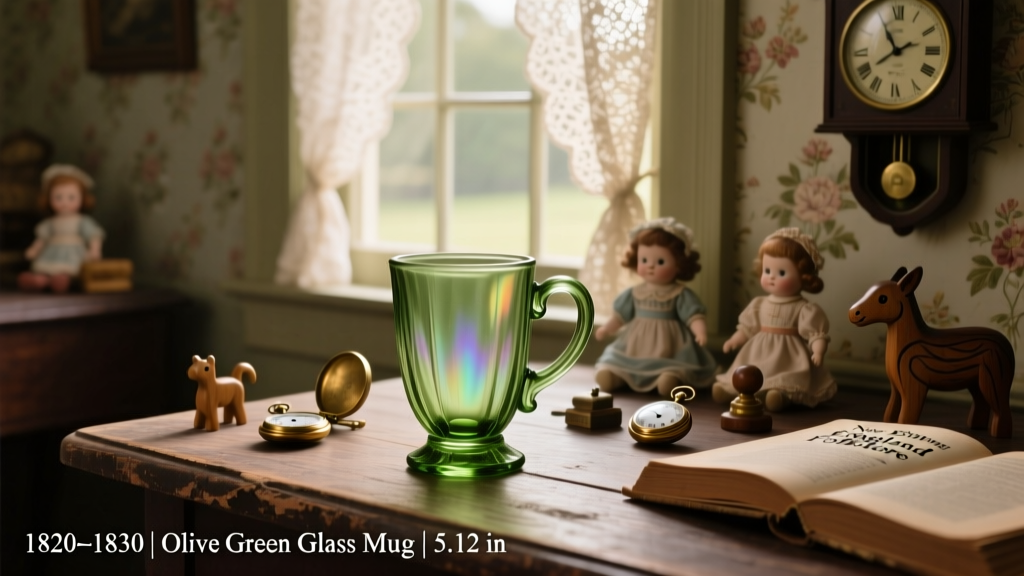
Olive Green Blown Glass Mug with Ear Handle: A New England Artifact from 1820–1830
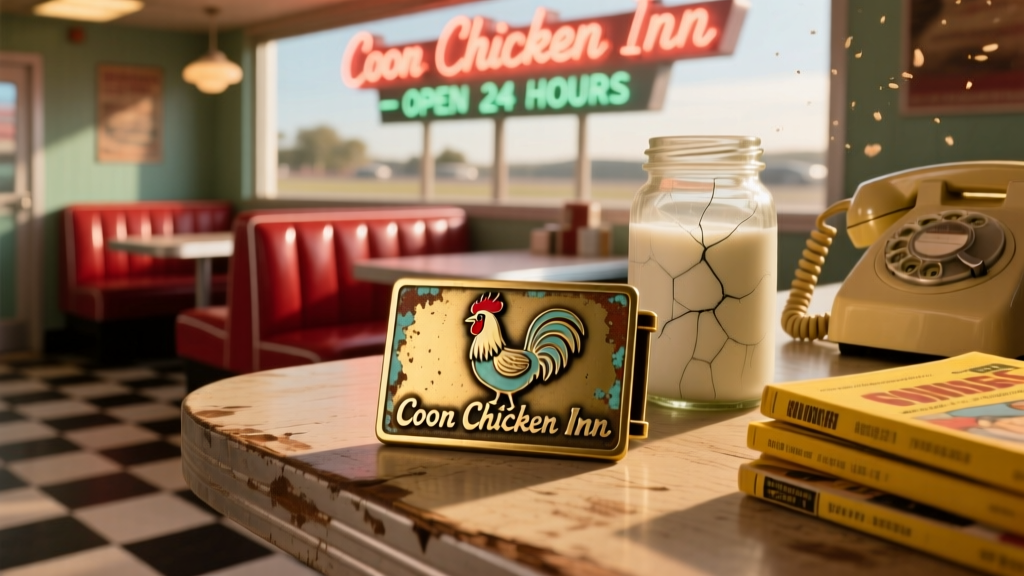
The Coon Chicken Inn Brass Money Clip: A Rare Artifact of Mid-Century Black Americana
The Provost Williams Slick: A Mid-Century Masterpiece of American Woodworking Craftsmanship
Bell Metal Iron Dolphin Frame with Wooden Base: The Dunrovin 1940 26-Inch Mid-Century Sculptural Floor Lamp

Authentic 19th-Century Pine Furniture Chest: Original Lock Hardware, Grained Paint Finish, and Provenance Insights
Poison Wide-Mouth Light Blue Cork Label Bottle: A Mid-Century Hazardous Collectible Profile
World's Fair Fabric: A Collector's Guide to Mid-Century Textile Memorabilia (1933–1964)