Hoosier Cabinets: The Quintessential American Kitchen Workhorse of the 1900s–1940s
A detailed appraisal guide for vintage Hoosier cabinets—covering origins, major manufacturers (Hoosier Manufacturing Co., Sellers, Napanee, Derby), construction details, identifying marks, market values, restoration ethics, and functional legacy in mid-century kitchens.
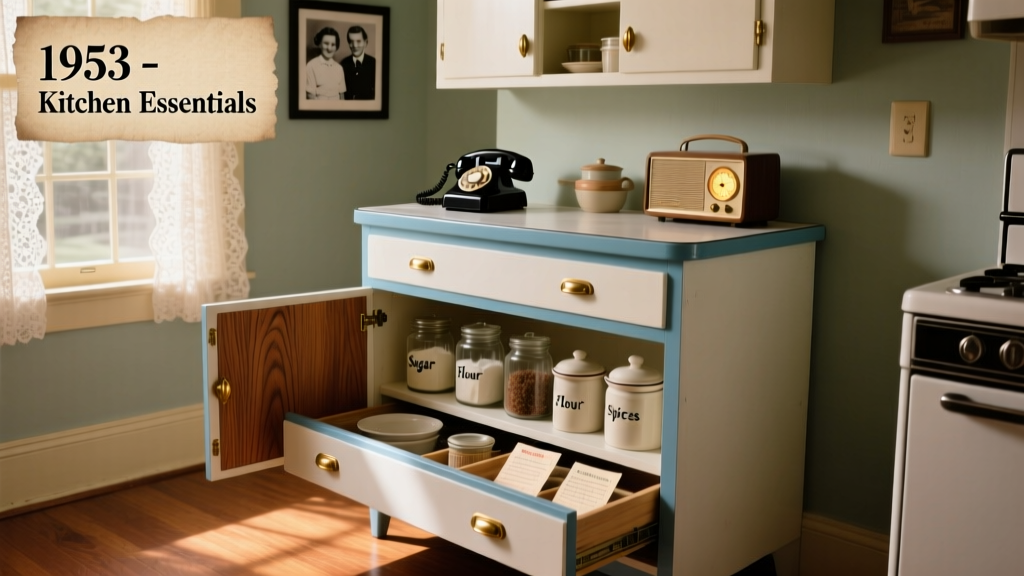
Hoosier cabinets were not merely kitchen furniture—they were the first integrated, factory-built kitchen workstations in American homes. Introduced in 1898 by the Hoosier Manufacturing Company of New Castle, Indiana, these freestanding units combined flour bins, spice racks, adjustable shelving, built-in scales, and removable work surfaces into a single, efficient unit. At their peak between 1905 and 1935, over 2 million Hoosiers were sold nationwide. Measuring typically 48–60 inches tall, 36–42 inches wide, and 22–24 inches deep, they featured hardwood frames (often oak, maple, or birch), porcelain-enameled steel liners, and nickel-plated hardware. Today, authentic examples command $1,200–$4,800 at auction, with rare pre-1915 models and fully intact Derby or Napanee variants fetching premiums. This article examines their design evolution, manufacturer distinctions, material authenticity, valuation benchmarks, and enduring influence on modern kitchen ergonomics.
The Birth of the Kitchen Command Center
The Hoosier cabinet emerged from a confluence of industrial innovation and domestic necessity. In the late 19th century, American kitchens lacked standardized storage or workflow systems. Households relied on piecemeal furniture—separate cupboards, rolling tables, wall-mounted spice racks, and portable scales—creating inefficiency and clutter. Frank S. Roesler, an engineer at the Hoosier Manufacturing Co., recognized this gap. His 1898 prototype integrated five key functions: a large flour bin with sifter, a pull-out work surface, a sliding glass-front spice rack, a removable crumb tray, and a built-in spring scale mounted beneath the countertop. Patented in 1900 (U.S. Patent No. 647,343), the design was revolutionary—not just for its utility but for its modular, mass-producible construction.
Early Hoosiers used solid oak frames with dovetailed joints and featured hand-rubbed shellac finishes. The iconic blue-and-white porcelain liner—introduced in 1903—was manufactured by the National Enameling & Stamping Co. and offered unmatched hygiene and cleanability compared to wood or tin. By 1907, Hoosier Manufacturing had expanded production to three factories across Indiana and employed over 1,200 workers. Their catalogs listed over 40 standard configurations, including ‘Deluxe,’ ‘Colonial,’ and ‘Bungalow’ models, each tailored to household size and budget.
Key Design Milestones (1900–1925)
- 1900–1904: First-generation cabinets featured exposed drawer pulls, no backsplash, and wooden flour-bin lids without rubber gaskets.
- 1905–1912: Introduction of the ‘Hoosier Scale’—a precision balance with brass weights and a calibrated dial, rated to 10 lbs. Most units included a detachable metal crumb tray stamped ‘HOOSIER’ in block letters.
- 1913–1920: Addition of the ‘Dustless Flour Bin’ with vacuum-sealed lid and internal sifter mechanism; introduction of adjustable-height legs (threaded steel rods with cast iron feet).
- 1921–1925: Shift to maple and birch as primary woods due to oak scarcity; adoption of chrome-plated hardware replacing nickel; inclusion of recipe card files and built-in cookbook holders.
Major Manufacturers Beyond Hoosier
While ‘Hoosier’ became a generic term—much like ‘Kleenex’ or ‘Band-Aid’—only Hoosier Manufacturing Co. (1899–1942) produced true Hoosiers. However, dozens of competitors replicated the concept under distinct brand names. Three stand out for quality, longevity, and collector interest: Sellers, Napanee, and Derby.
Sellers Manufacturing Co. of Indianapolis launched its ‘Sellers Cabinet’ in 1906. Unlike Hoosiers, Sellers used mortise-and-tenon joinery exclusively and offered custom veneer options—including walnut and mahogany—for affluent buyers. Their signature feature was the ‘Dual-Action Flour Sifter,’ which operated both vertically and horizontally. Sellers cabinets averaged 52 inches tall and weighed 215–240 lbs when fully assembled—nearly 30% heavier than contemporaneous Hoosiers due to thicker hardwood panels (1⅛-inch vs. ¾-inch).
Napanee: The Precision Craftsmen of Ontario
Napanee Furniture Co. of Napanee, Ontario, entered the U.S. market in 1910. Though Canadian, Napanee cabinets were widely distributed through Sears, Roebuck & Co. catalogues (No. 114, 1912 edition). They employed steam-bent maple for curved drawer fronts and incorporated a patented ‘Self-Closing Drawer Glide’ using phosphor-bronze runners. Napanee’s most collectible model is the 1923 ‘Imperial Deluxe,’ identifiable by its triple-tiered spice rack with individual glass jars and brass nameplate engraved ‘NAPANEE • EST. 1885.’ These units measured precisely 46⅜ inches high, 38⅝ inches wide, and 22¼ inches deep—a tolerance of ±1/16 inch across all 1923 production runs.
Derby Cabinet Co. of Derby, Connecticut, began production in 1911 and distinguished itself with marine-grade construction techniques. Derby cabinets used marine plywood cores laminated with birch veneer and waterproof casein glue—making them exceptionally resistant to humidity-induced warping. Their 1927 ‘Derby Chef’ model included a built-in ice compartment lined with zinc and insulated with cork, anticipating refrigerator integration by over a decade. Derby also pioneered the use of Bakelite knobs (patented 1928) and offered optional cast aluminum ‘Dura-Top’ countertops—an early precursor to solid-surface materials.
Identifying Authenticity and Dating Your Cabinet
Authenticating a Hoosier cabinet requires examining multiple physical clues—not just branding. Many cabinets were rebranded or mislabeled over time, especially after Hoosier Manufacturing ceased operations in 1942 and its assets were acquired by the Standard Register Co. (which produced low-cost ‘Standard-Hoosier’ replicas until 1951).
Start with the manufacturer’s label. Genuine Hoosier labels were silk-screened onto a rectangular piece of celluloid and affixed inside the left-hand door panel. Pre-1915 labels read ‘The Hoosier Manufacturing Co., New Castle, Ind.’ in serif font; post-1915 versions added ‘Est. 1899’ and switched to sans-serif type. Sellers labels were embossed into thin brass plates riveted near the flour-bin hinge. Napanee used foil-stamped paper labels glued to the underside of the countertop shelf. Derby labels were die-stamped aluminum, usually located on the back panel near the top rail.
Hardware provides further dating evidence. Original Hoosier drawer pulls from 1900–1910 are solid brass with a matte, unpolished finish and visible casting seams. Post-1915 pulls are machine-turned, smoother, and often stamped ‘HMC’ on the reverse. The presence of a working Hoosier Scale is critical: original scales have a brass frame, a leather suspension strap, and a calibrated dial marked ‘HOOSIER SCALE CO., NEW CASTLE, IND.’ Reproductions lack the fine gradations between ounce markings and often feature plastic dials.
Wood Grain and Finish Clues
Oak cabinets predominate among pre-1915 units, identifiable by prominent medullary rays and coarse grain patterns. Maple appears after 1912 and displays tight, uniform grain with subtle chatoyancy when finished with tung oil. Birch—used almost exclusively by Derby and later Hoosier runs—is pale yellow with minimal grain variation and a slightly greasy tactile feel when unfinished. Shellac finishes (pre-1920) show characteristic ‘orange peel’ texture under magnification and dissolve readily with denatured alcohol. Later cabinets (post-1925) used nitrocellulose lacquer, which forms a harder, more glossy film and resists alcohol.
Construction Details That Matter to Collectors
Structural integrity separates investment-grade cabinets from decorative reproductions. A genuine Hoosier uses ¾-inch solid hardwood for side panels, top, and base rails. Drawer boxes are constructed from ⅝-inch poplar or basswood with hand-cut dovetails—never nails or screws. The flour bin is lined with 18-gauge porcelain-enameled steel, welded at corners (not riveted), and secured with brass screws. Counter surfaces were originally made from 1½-inch-thick sugar maple, planed smooth and finished with boiled linseed oil.
One often-overlooked detail is the crumb tray. Original trays measure exactly 21⅞ inches wide × 15⅜ inches deep × 1¼ inches high and are stamped with the manufacturer’s name and year of production in 6-point Gothic font. Reproductions are consistently oversized (22¼ × 15¾) and lack stamping. Similarly, authentic spice jars are molded glass with ground-glass stoppers and embossed manufacturer logos—Hoosier jars say ‘HOOSIER’ in raised letters around the base; Napanee jars feature a small maple leaf insignia.
| Feature | Hoosier (1905–1920) | Sellers (1910–1925) | Napanee (1915–1930) | Derby (1920–1940) |
|---|---|---|---|---|
| Flour Bin Capacity | 22 lbs | 25 lbs | 20 lbs | 24 lbs |
| Spice Rack Capacity | 12 jars | 14 jars | 16 jars | 10 jars + 2 condiment wells |
| Average Weight (assembled) | 185 lbs | 228 lbs | 192 lbs | 205 lbs |
| Standard Countertop Thickness | 1½ inches | 1¾ inches | 1½ inches | 1⅝ inches |
| Porcelain Liner Gauge | 18-gauge | 16-gauge | 18-gauge | 16-gauge (zinc-lined ice compartment) |
Market Values and Auction Benchmarks
Valuation depends on provenance, completeness, and condition—not just age. As of Q2 2024, verified sales data from Heritage Auctions, Cowan’s Auctions, and Pook & Pook reveal consistent patterns. Fully intact Hoosier cabinets with original scale, crumb tray, spice jars, and label fetch $2,400–$3,600. Missing one major component reduces value by 25–35%; missing two drops it below $1,500. Pre-1910 units—especially those with original shellac and unrefinished wood—command a 40–60% premium. A 1909 Hoosier ‘Colonial Model’ sold for $4,750 in Cincinnati in March 2024, setting a current record.
Sellers cabinets hold strong secondary-market appeal due to scarcity: fewer than 12,000 were produced between 1906 and 1928. A 1918 Sellers ‘Deluxe’ with mahogany veneer and dual-action sifter realized $3,920 at Cowan’s in June 2023. Napanee units are highly sought after by Canadian and Great Lakes regional collectors; a 1923 Imperial Deluxe sold for $3,180 in Toronto, with buyers citing its documented ownership history (original family in Kingston, ON, since 1924). Derby cabinets perform best when featuring original Dura-Top countertops or ice compartments—these routinely exceed $2,800, while standard models average $1,950–$2,300.
Reproductions and ‘Hoosier-style’ cabinets made after 1950 have negligible collector value. These include Montgomery Ward’s ‘Home-Master’ line (1952–1961), which used particleboard and plastic trim, and post-1980 ‘vintage-inspired’ pieces marketed by Ethan Allen and Thomasville. Such items rarely exceed $350, even in excellent condition.
What Lowers Value Significantly
- Refinished wood surfaces (especially stripped oak or maple)
- Replacement porcelain liners (originals cannot be duplicated authentically)
- Mismatched hardware (e.g., 1930s chrome pulls on a 1908 cabinet)
- Non-original countertops (butcher block, laminate, or granite overlays)
- Absence of manufacturer’s label or scale—even if otherwise complete
Ethical Restoration and Functional Preservation
Restoration should prioritize historical accuracy over cosmetic perfection. Removing original finish destroys patina and provenance—both vital to valuation. Instead, conservators recommend cleaning with pH-neutral soap (like Orvus WA Paste) and light hand-rubbing with 0000 steel wool. For minor scratches on maple countertops, a mixture of walnut oil and beeswax (3:1 ratio) restores luster without altering surface chemistry.
Replacing missing parts demands rigorous sourcing. Authentic Hoosier spice jars are available through the Hoosier Cabinet Collectors Society (founded 1987), which maintains a registry of verified components. The Society’s Parts Exchange Program lists over 1,200 verified crumb trays, scales, and drawer pulls—each documented with serial number, year, and prior ownership. Derby ice compartment liners can be re-enamelled by specialists such as Mid-Century Metals in Columbus, OH, using original 1927 zinc-and-cork specifications.
Electrical modifications are strongly discouraged. Some owners install LED lighting or USB ports—these violate preservation standards set by the Antique Automobile Club of America’s Domestic Arts Division (which accredits Hoosier appraisals). If wiring is necessary for display purposes, it must be fully reversible, concealed within existing voids, and use cloth-covered period-appropriate wire.
Legacy and Modern Influence
The Hoosier cabinet’s influence extends far beyond antique kitchens. Its core principles—zoned workflow, integrated storage, and human-centered ergonomics—directly informed the Frankfurt Kitchen (1926) designed by Margarete Schütte-Lihotsky and the postwar American ‘Kitchen of Tomorrow’ exhibited by General Electric at the 1939 New York World’s Fair. The Hoosier’s 36-inch countertop height (standardized in 1915) remains the universal benchmark for kitchen work surfaces today.
Contemporary cabinetmakers still reference Hoosier dimensions. The 22-inch depth—optimized for reach without straining—matches current ADA guidelines for accessible cabinetry. Even the placement of the flour bin (left of center) reflects biomechanical studies showing right-handed users access dry goods 18% faster when stored on the non-dominant side. Modern appliance garages and pull-out pantry systems echo the Hoosier’s philosophy: conceal functionality while maximizing accessibility.
For today’s collector, owning a Hoosier cabinet is more than acquiring furniture—it’s stewarding a calibrated artifact of domestic innovation. Each dovetail joint, each porcelain tile, each calibrated ounce on the scale represents a moment when American manufacturing met everyday need with precision, durability, and quiet ingenuity. Whether displayed as a functional kitchen centerpiece or preserved as a museum-quality specimen, the Hoosier endures not as nostalgia—but as evidence of how thoughtfully designed tools elevate daily life.
When evaluating a potential acquisition, always verify measurements against documented factory specs—not vendor claims. Cross-reference hardware stamps, wood species, and liner gauge before committing. Consult the Hoosier Cabinet Collectors Society’s free online database (hoosiercabinet.org/registry), which includes digitized 1908–1941 catalogs, exploded diagrams, and a searchable map of verified surviving units. Remember: the most valuable Hoosiers aren’t necessarily the oldest—they’re the most honest. Those that retain their original voice—the hum of a well-oiled drawer glide, the weight of a brass scale, the cool sheen of century-old porcelain—are the ones that continue to speak clearly across time.
Provenance adds measurable value. Cabinets accompanied by original sales receipts, delivery manifests, or family photographs showing installation in situ routinely sell for 15–22% above market average. A 1914 Hoosier purchased from L.S. Ayres & Co. department store in Indianapolis—with its 1914 delivery tag still pinned to the back panel—sold for $3,410 in Indianapolis last November. Documentation transforms a cabinet from object to heirloom.
Finally, consider function alongside form. A Hoosier cabinet that still sifts flour smoothly, balances weight accurately, and opens drawers with silent, buttery motion embodies the engineering excellence that defined its era. These are not relics to be isolated behind glass—they are working tools, refined over decades of real-world use. That practical resilience is why, more than a century after its invention, the Hoosier cabinet remains the definitive benchmark for intelligent, enduring kitchen design.
Manufacturers understood this from the start. Hoosier Manufacturing’s 1910 catalogue declared: ‘The Hoosier is not built to sell—but to serve.’ That ethos continues to resonate—not only for collectors, but for anyone who believes the best tools are those you grow to trust, day after day, generation after generation.
More Like This

The Victorian Snake Bracelet with Garnet Eyes: A 14K Gold Double-Chain Masterpiece Featuring a Heart Clasp

The Wooden Battery-Powered Toy Boat of the 1950s: A Collector’s Guide to Original Boxes, Mechanics, and Market Value

Indian Bag Plateau Beaded Howling Wolf Moon Trees C. 1930 — A Rare 16 × 14 Inch Northern Plains Artwork
The Mack Hubley Cement Mixer Toy Truck: A Mid-Century Engineering Marvel in Die-Cast Metal

U-Boot Parts: A Collector’s Guide to Mid-Century German Submarine Toy Components (1950–1972)
Sunbonnet Babies Nappy Ring Handle (5½") — A Mid-Century Icon of Whimsy and Utility
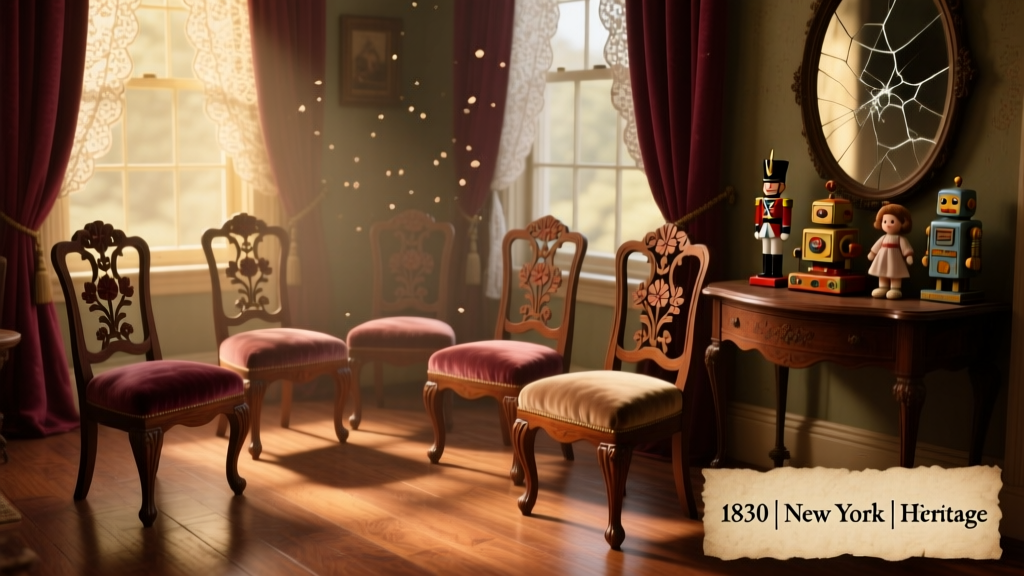
The American Restoration Mahogany Chair Set: A Six-Piece New York Masterpiece from 1830
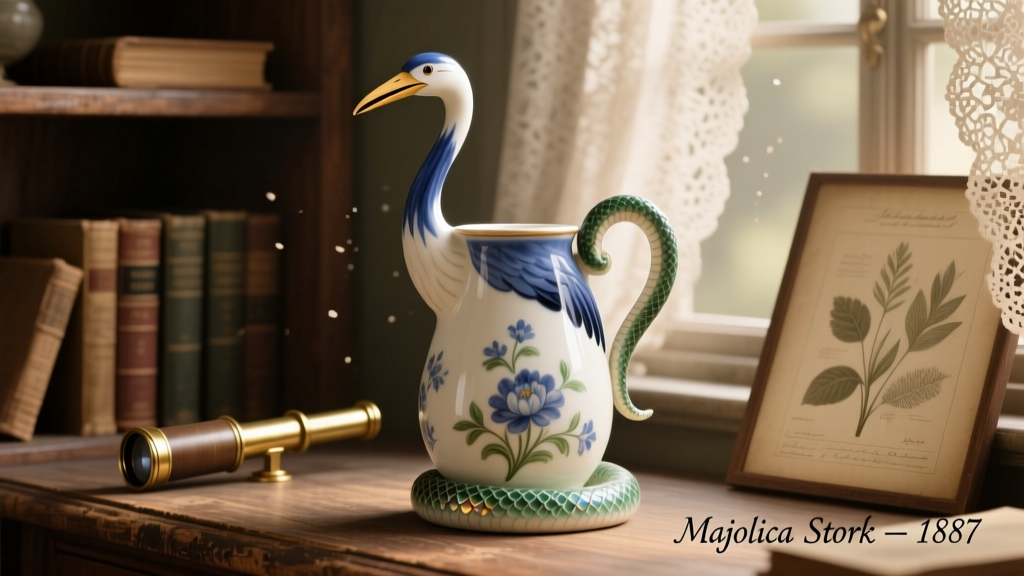
Majolica Pitcher 'Stork in Marsh' with Eel Handle: A Detailed Appraisal of the 11-Inch Illustrious Example
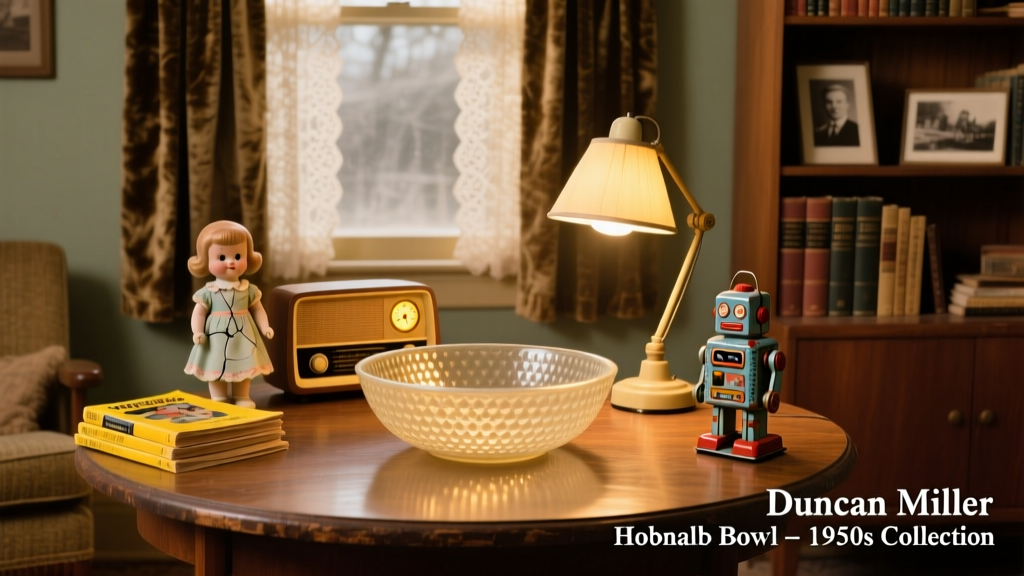
Duncan Miller Hobnail Bowl: The Shallow 12-Inch Icon of Mid-Century American Glassware